Corruption
-

This event is co-sponsored by the Arab Studies Institute

ABSTRACT

This talk is based on the speaker's new book Cleft Capitalism: The Social Origins of Failed Market Making in Egypt (Stanford University Press, 2020). Egypt has undergone significant economic liberalization under the auspices of the International Monetary Fund, the World Bank, USAID, and the European Commission. Yet after more than four decades of economic reform, the Egyptian economy still fails to meet popular expectations for inclusive growth, better standards of living, and high-quality employment. While many analysts point to cronyism and corruption, this study finds the root causes of this stagnation in the underlying social and political conditions of economic development. It offers a new explanation for why market-based development can fail to meet expectations: small businesses in Egypt are not growing into medium and larger businesses. The practical outcome of this missing middle syndrome is the continuous erosion of the economic and social privileges once enjoyed by the middle classes and unionized labor, without creating enough winners from market making. This in turn set the stage for alienation, discontent, and, finally, revolt. With this book, Adly uncovers both an institutional explanation for Egypt's failed market making, and sheds light on the key factors of arrested economic development across the Global South.

SPEAKER BIO

Image
amr jpg 1

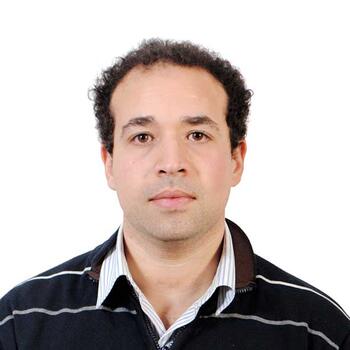
Amr Adly is an assistant professor in the department of political science at The American University in Cairo. He worked as a non-resident scholar at the Carnegie Middle East Center. He has also worked as a project manager at the Center on Democracy, Development, and the Rule of Law at Stanford University, where he was a postdoctoral fellow. Adly received his Ph.D. from the European University Institute in Florence. He is also author of Cleft Capitalism: The Social Origins of Egypt’s Failed Market Making (Stanford University Press, 2020) and State Reform and Development in the Middle East: The Cases of Turkey and Egypt (Routledge, 2012). He has been published in a number of peer-reviewed journals, including Geo-forum, Business and Politics, Turkish Studies, and Middle Eastern Studies. Adly is also a frequent contributor to print and online news sources.

Online; via Zoom: REGISTER

Seminars
-

ABSTRACT

This talk examines the multiple crises manifesting in Lebanon today and their impact on the fate of the uprising that began in October 2019. While the currency, fiscal, and infrastructural crises were central to the making of Lebanon’s uprising, the novel strategic innovations that the protesters made were key to shaping its trajectory relative to past protests. More recently, the COVID-19 pandemic has both exacerbated existing dynamics while also providing respite to the government and some of the traditional political parties. The presentation therefore engages these complexities to take stock of the current status of popular mobilizations, elite efforts to contain them, and the economic structures that undergird both.

SPEAKER BIO

Image
ziad abu rish
Ziad Abu-Rish is Assistant Professor of History at Ohio University, where he is founding director of the Middle East & North Africa Studies Certificate Program. His research explores state formation, economic development, and popular mobilizations in the Middle East, with a particular focus on Lebanon and Jordan. Abu-Rish is co-editor of The Dawn of the Arab Uprisings: End of an Old Order? (2012). He currently serves as Senior Editor at Arab Studies Journal, co-editor at Jadaliyya e-zine, and board member of the Lebanese Studies Association. He is also a Research Fellow at the Lebanese Center for Policy Studies (LCPS).

Online, via Zoom: REGISTER

Ziad Abu-Rish Ohio University
-

Sponsored by: Center on Democracy, Development, and the Rule of Law and the Center for Latin American Studies


Image
ivan velasquez and laura alonso event invitations

About the Speakers:


Image
laura alonso 2018

Laura Alonso has an extensive and unique cross-sector career in government, Congress and the NGO sector for almost two decades. She was the head of the Anticorruption Office (AO) in Argentina for four years. Member of Congress for six and Executive Director and program manager of the chapter of Transparency International in Argentina for eight years. Publicly acknowledged as a democracy activist and a fierce advocator for institutional reforms, Laura is a profound analyst of Argentina and Latin American politics and institutions. 

After her four-years term leading the anticorruption and integrity policy, Argentina reached its highest assessment and position in the Corruption Perceptions Index of Transparency International in 2020.

She promoted the enactment of the corporate liability legislation, asset recovery regulations and the whistleblower act. She has been a leader of the ethics and compliance revolution in private and State-owned enterprises in Argentina. She promoted the presidential decrees that regulated gift policy, the prevention of conflicts of interest in public procurement and the network of ethics focal points throughout the public sector. Under her leadership the AO has developed new courses and tools to train officials. She also promoted new procedures to control the assets and interests of +55 thousand officials and produced historic decisions about the creation of the first presidential trust and divestment.  
  
The AO opened more than 2,000 investigations and it also participated in historic corruption investigations against former Presidents and more than 300 high-rank officials and businessmen. A former Vicepresident, a super powerful Infrastructure minister and other officials were convicted.  
  
She also co-chaired the Anticorruption Working Group of G20 in 2018 producing and negotiating the documents on transparency and integrity in State Owned Enterprises and on integrity in the public sector that were endorsed by G20 Leaders. She was the chief of delegation at the OECD Bribery Working Group and the Senior Public Integrity Officials Group, the OAS and the G20. She promoted Argentina´s access into the the EITI (Extractive Industries Transparency Initiative). 

As a member of Congress (2009-2015), she promoted the access to public information law, political and campaign funding reform and open government policies. She also drafted legislation about judicial and criminal reforms, electoral issues and gender parity. 

Laura is a British Chevening Scholar, an Eisenhower Fellow and a Draper Hills Fellow. She was an US International Visitor in 1995 and 1998. She was selected Young Global Leader by the World Economic Forum in 2012 and received an award by Vital Voices Global Partnership in 2008 for her public leadership. 
  
Laura has been a speaker at the OECD, IMF, CAF, World Bank, IADB, OAS, the Aspen Ideas Festival, Women in the World, Chicago Council on Global Affairs, Harvard, Stanford and Columbia universities, the B20, the NYC Bar Association, among others. 

She is a political scientist from the University of Buenos Aires and holds a master degree on public administration and public policy from the London School of Economics. 


Image
ivan photo

Iván Velásquez Gómez was born in Medellín, Colombia.  He studied law at the University of Antioquia, Medellín, and received his law degree in 1983.

After serving as an independent lawyer, he was appointed Deputy Prosecutor of the Department of Antioquia between 1991 and 1994, during which he conducted administrative investigations against civil servants, including members of law enforcement for activities related to torture, extrajudicial executions and abuses against the civilian population.

On October 1997, he was appointed Regional Director of Public Prosecutions in Medellin (1997 - 1999), which put him, along with a brave team of prosecutors and investigators, in charge of conducting investigations against various types of criminal structures, especially paramilitaries and drug traffickers.

He later became an Auxiliary Judge of the Supreme Court of Justice of Colombia in May of 2000. As such, he led the Commission of Investigative Support of the Criminal Chamber, from the second half of 2006 to August 2012, where he was in charge of investigating the relations between members of the Colombian Congress and paramilitary groups. As a result of these investigations, about 70 congressmen were convicted of criminal conspiracy.

After resigning on September 30, 2012, he practiced law between October 1, 2012 and September 30, 2013.

On October 1, 2013, he was appointed Deputy Secretary General of the International Commission Against Impunity in Guatemala (CICIG) by the Secretary General of the United Nations and led the commission until its end on September 3, 2019. At the request of the Secretary General of the United Nations, he assumed his charges from outside of Guatemala beginning on September 3, 2018, since the Guatemalan president had prohibited his entry into the country and tried to expulse him in August 2017, declaring him a persona non grata.

CICIG was an international organization in charge of supporting the Guatemalan Attorney General's Office in the investigations of powerful criminal structures known in that country as illegal groups and clandestine security apparatus (CIACS). As a result of these investigations, under the direction of the commissioner, dozens of the highest state officials (including former presidents, ministers, congressmen and judges of the Supreme Court of Justice) and numerous businessmen were prosecuted for corruption-related crimes and illegal electoral financing. Other people have been prosecuted for extrajudicial executions, violent dispossession of land and money laundering.

He has also received many international accolades:

In 2011, the International Bar Association (IBA) presented him with the World Human Rights Award.

In 2012, the Association of German Judges awarded him for his commitment to the fight against impunity and respect for fundamental rights.

In 2016, the prestigious Americas Quarterly magazine distinguished him as one of the top 5 “corruption-hunters” in Latin America.

In 2018, he was awarded the 2018 WOLA Human Rights Awards and Right Livelihood, known as the Alternative Nobel Prize, for "his innovative work in exposing the abuse of power and prosecuting corruption, thus rebuilding people's trust in public institutions" .

In 2019, Berkeley Journal of International Law awarded him the Stefan A. Riesenfeld award "for his courageous commitment and leadership in the fight against corruption".


Discussants:

Francis Fukuyama, Mosbacher Director of the Center on Democracy, Development, and the Rule of Law

Irma Alicia Velásquez Nimatuj, Tinker Visiting Professor


The Future of Accountability and Anti-Corruption Efforts in Latin America: Guatemala and Argentina
Laura Alonso
Iván Velásquez Gómez
Panel Discussions
Authors
News Type
News
Date
Paragraphs

In a talk dated May 31, 2019, UC Santa Cruz scholars Muriam Haleh Davis and Thomas Serres examined Algeria’s recent uprising, which led to the resignation of President Abdelaziz Bouteflika. The talk shed light on the protests, analyzing them both in a historical lens while also addressing the future prospects for democratic change and their implications for regional geopolitics. The speakers explored the role of the war of independence (1954-1962) and civil war (1992-1999) in political contestation, questions of language and national identity, and the landscape of the current political opposition.


Hero Image
screen shot 2019 12 10 at 12 54 29 pm
All News button
1
-

DAY 1: Friday October 11


8:30 – 9:00am         Breakfast


9:00 – 9:15am         Introductory Remarks


9:15 – 11:15am       Panel 1: The Boundaries of Authoritarianism post-Arab Uprisings

Amr Hamzawy, Stanford University

“The Discourse of Authoritarianism in Egypt”

Sean Yom, Temple University

“Mobilization without Movement: The Curse of the Arab Spring in Jordan”

Samia Errazzouki, University of California, Davis

“Political and Economic Stagnation in Morocco: Twenty Years into King Mohamed VI’s Reign”

Chair: Lisa Blaydes, Stanford University


11:15-11:30am        Coffee Break


11:30-1:30pm          Panel 2: Popular Uprisings and Uncertain Transitions

Thomas Serres, University of California, Santa Cruz

“Beyond the ‘Isaba: A Political Economy of the Algerian Hirak”

Lindsay Benstead, Portland State University

“Religious Ideology or Clientelism? Explaining Voter Preferences in Tunisia’s Transitional Elections”

Khalid Medani, McGill University

"The Prospects and Challenges of Democratic Consolidation in Sudan: Understanding the Roots, Dynamics and Potential of an “Impossible” Revolution""

Chair: Hicham Alaoui, Harvard University


1:30-2:30pm             Lunch


2:30-4:30pm             Panel 3: Politics, Succession and Sectarianism in the GCC States

Toby Matthiesen, Oxford University

“Saudi Arabia and the Arab Counter-Revolution”

Michael Herb, Georgia State University

“Monarchical Institutions and the Decay of Family Rule in the Gulf”

Farah Al-Nakib, California Polytechnic State University

“Kuwait's New Urbanism: Palace Projects and the Erosion of the Public”                                   

Chair: Hesham Sallam, Stanford University


DAY 2: Saturday October 12


8:30 – 9:00am          Breakfast


9:00 – 11:00am       Panel 4: Social Strife and Proxy Conflict in the Middle East

Lina Khatib, Chatham House

“Syria’s Conflict: The Intersections of the International and the Domestic”

Stacey Philbrick Yadav, Hobart and William Smith Colleges,

“Can Allies in War Become Partners in Peace? 
Foreign Agendas, Foreign Investment, and Peacebuilding in Yemen”

David Patel, Brandeis University

“Institutions and Competition in Post-Occupation Iraq”

Chair: Amr Hamzawy, Stanford University


11:00-11:15am        Coffee Break


11:15-1:15pm          Panel 5: International Forces in the Arab Political Arena

Lisa Blaydes, Stanford University

“Will China's 'Belt and Road' Initiative Steady or Destabilize Arab Authoritarians?”  

Abbas Milani, Stanford University,

“Iran and its Role in the Prospects of Democracy in the Arab World”

Colin Kahl, FSI, Stanford University

“US Policy Toward a Changing Middle East”

Ayca Alemdaroglu, FSI, Stanford University

“The Rise and Fall of ‘neo-Ottomanism’”

Chair: Larry Diamond, Stanford University


SPEAKER BIOS


Image
hicham alaoui

Hicham Alaoui is an established voice calling for political reform in the Arab world. He is currently a research fellow based at the Weatherhead Center for International Affairs at Harvard University, and is pursuing a D.Phil. at the University of Oxford.  Previously at Stanford, he was a Consulting Professor at the Center for Democracy, Development, and Rule of Law, and advisory board member at the Freeman Spogli Institute. He has published on democratic reforms in the Middle East for journals such as Politique Internationale, Le Debat, Pouvoirs, Le Monde Diplomatique, and Journal of Democracy. He has contributed to The New York Times, Le Monde, La Nouvelle Observateur, El Pais, and Al-Quds. He also served on the MENA Advisory Committee for Human Rights Watch. He holds degrees from Princeton and Stanford. [Back to top]


Image
ayca

Ayça Alemdaroğlu (Ph. D. Cambridge, 2011) (Ph. D. Cambridge, 2011) is the associate director of the Keyman Modern Turkish Studies Program and research assistant professor of sociology at Northwestern University. Her research has engaged with a broad range of theoretical and ethnographic issues, including youth culture and politics, gender and sexuality, experiences of modernity, nationalism, eugenics and higher education. Between 2011-2015, Alemdaroğlu taught in the Anthropology Department and Introductory Studies at Stanford University. Her most publications include "Spatial Segregation and Class Subjectivity in Turkey” published in Social and Cultural Geography; and “Dialectics of Reform and Repression: Unpacking Turkey’s Authoritarian Turn” (with Sinan Erensu) in ROMES. [Back to top]


Image
lindsay b 2

Lindsay J. Benstead  is Associate Professor of Political Science in the Mark O. Hatfield School of Government and Director of the Middle East Studies Center (MESC) at Portland State University. Previously, she served as Fellow in the Middle East Program and the Women’s Global Leadership Initiative at the Woodrow Wilson International Center for Scholars in Washington, DC (2018-2019) and Kuwait Visiting Professor at SciencesPo in Paris (fall 2016). She is an Affiliated Scholar in the Program on Governance and Local Development (GLD) at the University of Gothenburg and Yale University. Benstead has conducted surveys in Morocco, Algeria, Tunisia, Libya, and Jordan and contributes to the Transitional Governance Project. Her research on women and politics, public opinion, and survey methodology has appeared in Perspectives on Politics, International Journal of Public Opinion Research, Governance, and Foreign Affairs. She holds a Ph.D. in Public Policy and Political Science from the University of Michigan in Ann Arbor and served as a doctoral fellow at Yale University and a post-doctoral fellow at Princeton University. [Back to top]


Image
lisa blaydes

Lisa Blaydes is a Professor of Political Science at Stanford University and a Senior Fellow at the Freeman Spogli Institute for International Studies. She is the author of Elections and Distributive Politics in Mubarak’s Egypt (Cambridge University Press, 2011). Her articles have appeared in the American Political Science ReviewInternational Studies QuarterlyInternational OrganizationJournal of Theoretical PoliticsMiddle East Journal, and World Politics. She holds degrees in Political Science (PhD) from the University of California, Los Angeles and International Relations (BA, MA) from Johns Hopkins University. [Back to top]


Image
Larry Diamond

Larry Diamond is a senior fellow at the Hoover Institution and at the Freeman Spogli Institute for International Studies. For more than six years, he directed FSI’s Center on Democracy, Development, and the Rule of Law, where he now leads its Program on Arab Reform and Democracy and its Global Digital Policy Incubator. He is the founding co-editor of the Journal of Democracy and also serves as Senior Consultant at the International Forum for Democratic Studies of the National Endowment for Democracy. His research focuses on democratic trends and conditions around in the world, and on policies and reforms to defend and advance democracy. His 2016 book, In Search of Democracy, explores the challenges confronting democracy and democracy promotion, gathering together three decades of his writing and research, particularly on Africa and Asia. He is author of Ill Winds: Saving Democracy from Russian Rage, Chinese Ambition, and American Complacency, published in 2019 by Penguin Press. He is now writing a textbook on democratic development. [Back to top]


Image
samia e

Samia Errazzouki is a PhD student focusing on early modern Northwest African history. Prior to UC Davis, she worked as a journalist based in Morocco reporting for the Associated Press, and later, with Reuters. Samia also worked as a research associate in Morocco with the University of Cambridge, researching the dynamics of surveillance and citizen media in light of the "Arab Spring." She is currently a co-editor with Jadaliyya. Her work and commentary has appeared in various platforms including The Washington PostBBCForeign PolicyThe GuardianAl Jazeera, the Carnegie Endowment's Sada Journal, the Journal of North African Studies, and the Middle East Institute, among others. Samia holds an MA in Arab Studies from Georgetown University and a BA in Global Affairs from George Mason University. [Back to top]


Image
amr hamzawy cropped

Amr Hamzawy is a Senior Research Scholar at CDDRL. He studied political science and developmental studies in Cairo, The Hague, and Berlin. He was previously an associate professor of political science at Cairo University and a professor of public policy at the American University in Cairo. Between 2016 and 2017, he served as a senior fellow in the Middle East program and the Democracy and Rule of Law program at the Carnegie Endowment for International Peace, Washington, DC. His research and teaching interests as well as his academic publications focus on democratization processes in Egypt, tensions between freedom and repression in the Egyptian public space, political movements and civil society in Egypt, contemporary debates in Arab political thought, and human rights and governance in the Arab world. He is currently writing a new book on contemporary Egyptian politics, titled Egypt’s New Authoritarianism. Hamzawy is a former member of the People’s Assembly after being elected in the first Parliamentary elections in Egypt after the January 25, 2011 revolution. He is also a former member of the Egyptian National Council for Human Rights. Hamzawy contributes a weekly op-ed to the Egyptian independent newspaper al-Shorouk and a weekly op-ed to the London based newspaper al-Quds al-Arabi[Back to top]


Image
michael herb square 620x620

Michael Herb is professor and chair of political science at Georgia State University. His work focuses on Gulf politics, monarchism and the resource curse. He is the author of The Wages of Oil: Parliaments and Economic Development in Kuwait and the UAE (Cornell University Press, 2014) and All in the Family: Absolutism, Revolution, and Democracy in the Middle Eastern Monarchies (SUNY ‎‎1999), in addition to numerous articles. He maintains the Kuwait Politics Database, a comprehensive and authoritative source of information on Kuwaiti elections.  He has twice won Fulbright awards to study in Kuwait. [Back to top]


Image
colin kahl

Colin H. Kahl is co-director of the Center for International Security and Cooperation, the inaugural Steven C. Házy Senior Fellow at the Freeman Spogli Institute for International Studies, and a Professor, by courtesy, in the Department of Political Science at Stanford University. He is also a Strategic Consultant to the Penn Biden Center for Diplomacy and Global Engagement. From October 2014 to January 2017, he was Deputy Assistant to the President and National Security Advisor to the Vice President. In that position, he served as a senior advisor to President Obama and Vice President Biden on all matters related to U.S. foreign policy and national security affairs, and represented the Office of the Vice President as a standing member of the National Security Council Deputies’ Committee. From February 2009 to December 2011, Dr. Kahl was the Deputy Assistant Secretary of Defense for the Middle East at the Pentagon. In this capacity, he served as the senior policy advisor to the Secretary of Defense for Egypt, Iran, Iraq, Israel and the Palestinian territories, Saudi Arabia, Syria, Yemen, and six other countries in the Levant and Persian Gulf region. In June 2011, he was awarded the Secretary of Defense Medal for Outstanding Public Service by Secretary Robert Gates. From 2007 to 2017 (when not serving in the U.S. government), Dr. Kahl was an assistant and associate professor in the Security Studies Program at Georgetown University's Edmund A. Walsh School of Foreign Service. From 2007 to 2009 and 2012 to 2014, he was also a Senior Fellow at the Center for a New American Security (CNAS), a nonpartisan Washington, DC-based think tank. From 2000 to 2007, he was an assistant professor of political science at the University of Minnesota. In 2005-2006, Dr. Kahl took leave from the University of Minnesota to serve as a Council on Foreign Relations International Affairs Fellow in the Office of the Secretary of Defense, where he worked on issues related to counterinsurgency, counterterrorism, and responses to failed states. In 1997-1998, he was a National Security Fellow at the John M. Olin Institute for Strategic Studies at Harvard University. Current research projects include a book analyzing American grand strategy in the Middle East in the post-9/11 era. A second research project focuses on the implications of emerging technologies on strategic stability. He has published numerous articles on international security and U.S. foreign and defense policy in Foreign Affairs, Foreign Policy, International Security, the Los Angeles Times, Middle East Policy, the National Interest, the New Republic, the New York Times, Politico, the Washington Post, and the Washington Quarterly, as well as several reports for CNAS. His previous research analyzed the causes and consequences of violent civil and ethnic conflict in developing countries, focusing particular attention on the demographic and natural resource dimensions of these conflicts. His book on the subject, States, Scarcity, and Civil Strife in the Developing World, was published by Princeton University Press in 2006, and related articles and chapters have appeared in International Security, the Journal of International Affairs, and various edited volumes. Dr. Kahl received his B.A. in political science from the University of Michigan (1993) and his Ph.D. in political science from Columbia University (2000). [Back to top]


Image
lina khatib

Lina Khatib is Head of the Middle East and North Africa Program at Chatham House. She was formerly director of the Carnegie Middle East Center in Beirut and co-founding Head of the Program on Arab Reform and Democracy at Stanford University’s Center on Democracy, Development, and the Rule of Law. Her research focuses on the international relations of the Middle East, Islamist groups and security, political transitions and foreign policy, with special attention to the Syrian conflict. She is a research associate at SOAS, was a senior research associate at the Arab Reform Initiative and lectured at Royal Holloway, University of London. She has published seven books and also written widely on public diplomacy, political communication and political participation in the Middle East. She is a frequent commentator on politics and security in the Middle East and North Africa at events around the world and in the media. [Back to top]


Image
toby m press photo tm

Toby Matthiesen is a Senior Research Fellow in the International Relations of the Middle East at the Middle East Centre, St. Antony’s College, University of Oxford. He was previously a Research Fellow at Pembroke College, Cambridge, and at the London School of Economics and Political Science and gained his doctorate from the School of Oriental and African Studies (SOAS). He is the author of Sectarian Gulf: Bahrain, Saudi Arabia, and the Arab Spring That Wasn't (Stanford University Press, 2013), and The Other Saudis: Shiism, Dissent and Sectarianism (Cambridge University Press, 2015). His current research focuses on Sunni-Shii relations and the legacies of the Cold War in the Middle East. [Back to top]


Image
Medani 2 sc

Khalid Medani is currently associate professor of political science and Islamic studies at McGill University, and has also taught at Oberlin College and Stanford University. Dr. Medani received an A.B. in development studies from Brown University (1987), an MA in development studies from the Center for Contemporary Arab Studies at Georgetown University (1994), and a PhD in political science from the University of California, Berkeley (2003). His research focuses on the political economy of Islamic and ethnic politics in Egypt, Sudan and Somalia. He has published widely on the roots of civil conflict and the funding of the Islamic movement in Sudan, the question of informal finance and terrorism in Somalia, the obstacles to state building in Iraq, and the role of informal networks in the rise of Islamic militancy. Dr. Medani has worked as a researcher at the Brookings Institution and at Stanford University’s Center for International Security and Cooperation (CISAC). He also served as a Homeland Security Fellow at Stanford University from 2006-2007, and has worked with a variety of international organizations including the United Nations Development Program (UNDP), and the UN Office of the Coordinator of Humanitarian Affairs. Dr. Medani has also served as a senior consultant for a variety of governments on issues such as the roots of Islamic militancy, the Darfur crisis, youth politics in Sudan, and electoral reforms in Morocco including the governments of the United States, the Netherlands, the United Kingdom, and Norway. He is a previous recipient of a Carnegie Scholar on Islam award from the Carnegie Corporation of New York. [Back to top]


Image
milani

Abbas Milani is the Hamid & Christina Moghadam Director of Iranian Studies and Adjunct Professor at the Center on Democracy, Development and Rule of Law at the Freeman Spogli Institute at Stanford University. He has been one of the founding co-directors of the Iran Democracy Project and a research fellow at the Hoover Institution. His expertise is U.S.-Iran relations as well as Iranian cultural, political, and security issues. Until 1986, he taught at Tehran University’s Faculty of Law and Political Science, where he was also a member of the Board of Directors of the university’s Center for International Relations. After moving to the United States, he was for fourteen years the Chair of the Political Science Department at the Notre Dame de Namur University. For eight years, he was a visiting Research Fellow in University of California, Berkeley’s Middle East Center. [Back to top]


Image
al nakib headshot

Farah Al-Nakib is Assistant Professor of History at California Polytechnic State University in San Luis Obispo.  She received her PhD (2011) and MA (2006) in History from the School of Oriental and African Studies in London. Her book Kuwait Transformed: A History of Oil and Urban Life (Stanford University Press, 2016) analyzes the relationship between the urban landscape, the patterns and practices of everyday life, and social behaviors and relations in Kuwait, and traces the historical transformation of these three interrelated realms in the shift from the pre-oil to oil eras. Her current research focuses on collective memory and forgetting in Kuwait, and on the Iraqi invasion and occupation of Kuwait in 1990-91.  Her articles have been published in numerous peer reviewed journals and various edited volumes. Until 2018 Al-Nakib was Associate Professor of History and Director of the Center for Gulf Studies at the American University of Kuwait. [Back to top]


Image
dspatel medium

David Siddhartha Patel is the Associate Director for Research at the Crown Center for Middle East Studies at Brandeis University. His research focuses on religious authority, social order, and identity in the contemporary Arab world. He conducted independent field research in Iraq on the role of mosques and clerical networks in generating order after state collapse, and his book, Order Out of Chaos: Islam, Information, and Social Order in Iraq, is being prepared for publication by Cornell University Press. Patel has also recently written about the Jordanian Muslim Brotherhood; ISIS in Iraq; and dead states in the Middle East. He teaches courses on Middle Eastern politics, research design, and GIS and spatial aspects of politics. Before joining the Crown Center, Patel was an assistant professor of government at Cornell University. Patel received his B.A. from Duke University in Economics and Political Science and his Ph.D. from Stanford University in Political Science, where he also was a fellow at CDDRL and CISAC. He studied Arabic in Lebanon, Yemen, Morocco, and Jordan. [Back to top]


Image
hesham sallam headshot

Hesham Sallam is a Research Associate at CDDRL and serves as the Associate-Director of the Program on Arab Reform and Democracy. He is also a co-editor of Jadaliyya ezine and a former program specialist at the U.S. Institute of Peace. His research focuses on Islamist movements and the politics of economic reform in the Arab World. Sallam’s research has previously received the support of the Social Science Research Council and the U.S. Institute of Peace. Past institutional affiliations include Middle East Institute, Asharq Al-Awsat, and the World Security Institute. He is editor of Egypt's Parliamentary Elections 2011-2012: A Critical Guide to a Changing Political Arena (Tadween Publishing, 2013). Sallam received a Ph.D. in Government (2015) and an M.A. in Arab Studies (2006) from Georgetown University, and a B.A. in Political Science from the University of Pittsburgh (2003). [Back to top]


Image
thomas

Thomas Serres is a lecturer in the Politics Department at UC Santa Cruz and a specialist of North African and Mediterranean politics and his scholarship focuses on questions of crisis, economic restructuring and authoritarian upgrading. His first book was published in French by Karthala in 2019. It studies the politics of catastrophization in post-civil war Algeria and is entitled Algeria and the Suspended Disaster: Managing the Crisis and Blaming the People under Bouteflika. He has also recently co-edited the volume North Africa and the Making of Europe: Governance, Institutions, Culture, which was published by Bloomsbury Academic Press in 2018. [Back to top]


Image
stacey philbrick yadav

Stacey Philbrick Yadav is Associate Professor and chair of the Department of Political Science at Hobart and William Smith Colleges. She has written extensively about Islamist-Leftist and intra-Islamist dynamics in Yemen, including Islamists and the State: Legitimacy and Institutions in Yemen and Lebanon, and was a contributor to the “Rethinking Political Islam” project at the Brookings Institution. Focusing increasingly on Yemen’s evolving war dynamics, she co-edited Politics, Governance, and Reconstruction in Yemen’s War for the Project on Middle East Political Science and the spring 2019 issue of Middle East Report devoted to the conflict. Philbrick Yadav serves on the executive committee of the American Institute for Yemeni Studies, and is currently a non-resident fellow at the Crown Center for Middle East Studies at Brandeis University. [Back to top]


Image
sean yom headshot closeup

Sean Yom is Associate Professor of Political Science at Temple University and Senior Fellow in the Middle East Program at the Foreign Policy Research Institute. His research explores authoritarian politics, institutional stability, and historical identity in these countries, as well as their implications for US foreign policy. His publications include From Resilience to Revolution: How Foreign Interventions Destabilize the Middle East (Columbia University Press, 2016); the Routledge textbooks Societies of the Middle East and North Africa (2019) and Government and Politics of the Middle East and North Africa (2019); and numerous articles in academic journals and popular media. He is currently writing a new book, under contract, on the history and politics of Jordan. [Back to top]

Conferences
Encina Hall, E112 616 Jane Stanford Way Stanford, CA 94305-6055  
0
CDDRL Postdoctoral Scholar, 2019-20
tesalia.jpg

Tesalia Rizzo holds a Ph.D. in Political Science at the Massachusetts Institute of Technology (MIT). Her research focuses on the demand and supply side of political mediation. Specifically, on how political (formal, informal or clientelist) intermediaries shape citizens’ attitudes and political engagement. She also works with non-governmental practitioners in Mexico to develop and test policies that disincentivize citizen reliance on clientelist and corrupt avenues of engaging with government and strengthen citizen demand for accountability. Her work with Mexican practitioners was awarded the 2017 Innovation in Transparency Award given by the Mexican National Institute for Access to Information (INAI). She is also a Research Fellow at MIT GOV/LAB and the Political Methodology Lab, at MIT. She is a graduate of the Instituto Tecnológico Autónomo de México (ITAM) in Mexico City. Prior to arriving at Stanford, she was a pre-doctoral fellow at the Center for US-Mexican Studies at University of California, San Diego and will join the Political Science Faculty at the University of California, Merced in 2020.

CV
0
CDDRL Postdoctoral Scholar, 2019-20
carothers_headshot.jpeg

I am a scholar of comparative politics and currently a postdoctoral fellow at the University of Pennsylvania’s Center for the Study of Contemporary China. My research is on authoritarianism and corruption control with a regional focus on East Asia—especially China, the Koreas, and Taiwan. My first book, Corruption Control in Authoritarian Regimes: Lessons from East Asia (Cambridge University Press, 2022), is about why some autocrats are motivated to curb corruption, why their efforts succeed or fail, and what the political consequences of such efforts are. I received my Ph.D. in Government from Harvard University in 2019.

My writing has been published or is forthcoming in numerous academic and policy journals, including Perspectives on Politics, Government and Opposition, the Journal of Democracy, Politics and Society, the Journal of Contemporary China, the Journal of East Asian Studies, Foreign Affairs, Foreign Policy, the China Leadership Monitor, and The National Interest.

Before academia, I lived and traveled in East Asia for several years, learning Chinese and Korean along the way. I worked for The Wall Street Journal Asia in Hong Kong, taught English in Xinjiang, and studied Korean in Seoul. I received my B.A. (summa cum laude), also from Harvard, in Social Studies and East Asian Studies.

Please join Larry Diamond, Senior fellow at the Freeman Spogli Institute for International Affairs and the Hoover Institution for the launch of his latest book, "Ill Winds: Saving Democracy from Russian Rage, Chinese Ambition, and American Complacency."


Featuring a Panel Conversation with:


Zin Mar Aung

Burmese MP and political activist


Vladimir Kara-Murza

Russian journalist and anti-corruption crusader


Cara McCormick

CEO, Chamberlain Project, Co-founder/Co-leader of The

Committee for Ranked Choice Voting in Maine


*Reception to follow

Bechtel Conference Center

Encina Hall

616 Serra Mall

Stanford, CA 94305

-

Kleptocracy--well-organized elite corruption--has come to characterize Russia and much of the post-Communist space, and is one of the chief obstacles to democratic development as well as economic growth in Russia and Ukraine.  This panel will feature three experts who have focused on anti-corruption measures in these countries, and will discuss the origins, effects, and future of kleptocracy in the region.

Please join Charles Davidson, the publisher of The American Interest and Director of The Kleptocracy Initiative at the George Mason School of Public Policy, Jeffrey Gedmin, the editor of The American Interest, who previously was president of the Legatum Institute in London and of Radio Liberty/Radio Free Europe in Prague and Oleksandra Ustinova, Ukrainian Emerging Leaders Fellow 2019 and a leading Ukrainian anti-corruptian activist for a conversation on kleptocracy in Russia and Ukraine and how it is abetted by American institutions. The discussion will be moderated by Francis Fukuyama, CDDRL Mosbacher Director and FSI Olivier Nomellini Senior Fellow. 


This event is co-sponsored by the Center on Democracy, Development and the Rule of Law, The Humanities Center, The Europe Center and the Center for Russian, East European and Eurasian Studies. 

Image
charles davidson
Charles Davidson
 is Publisher of The American Interest magazine (co-founded with Francis Fukuyama in 2005), and Senior Policy Fellow, Schar School of Policy and Government, George Mason University.  Since 2006, co-founder of Global Financial Integrity, one of the founders of the FACT Coalition, Executive Producer of Sundance documentary We’re Not Broke, and until recently Executive Director of the Kleptocracy Initiative at Hudson Institute. The Kleptocracy Initiative has published a quiver of reports focusing on the civilizational threats we face from the marriage of authoritarianism and kleptocracy. The Kleptocracy Initiative engaged in a broad set of activities for a think tank program, from organizing the first “Klepto Tours” of London, to the premiere of “From Russia with Cash” in DC, the dubbing of a Russian documentary explaining Putin’s rise to power, the establishment of an extensive archive of primary source material, hosting many events, and serving as a platform for anti-kleptocracy convening and information sharing.  Regarding the national security threats associated with kleptocracy, Davidson has testified to the Senate Committee of the Judiciary, the Helsinki Commission, and the Subcommittee on Europe, Eurasia, and Emerging Threats. Prior to 2006, Davidson spent his career in the information technology industry, in various technical/managerial positions, as CIO of a large pan-European logistics company, and in a venture capital partnership until 2008.  Bowdoin College 1981, B.A.  Duke University 1988, MBA
 
Image
jeffrey gedmin 2008
Dr. Jeffrey Gedmin
is editor-in-chief of The American Interest, a publication of politics, public policy, and international affairs. From 2015 to 2018, he was senior adviser at Blue Star Strategies. From 2011 to 2014, Gedmin was President and CEO of the London-based Legatum Institute. Prior to joining the Legatum Institute in early 2011, Gedmin served for four years as President and CEO of Radio Free Europe/Radio Liberty (RFE/RL) headquartered in Prague. Before RFE/RL, Gedmin served as President and CEO of the Aspen Institute in Berlin. Before that, he was Resident Scholar at the American Enterprise Institute (AEI) in Washington, D.C and Executive Director of the New Atlantic Initiative. He is the author/editor of several books, including The Hidden Hand: Gorbachev and the Collapse of East Germany (1992).Gedmin also served as co-executive producer for two major PBS documentaries: "The Germans, Portrait of a New Nation" (1995), and "Spain's 9/11 and the Challenge of Radical Islam in Europe" (2007).  He is a member of the Council on Foreign Relations and serves on several advisory boards, including Georgetown University’s School of Foreign Service Masters Program, the Institute for State Effectiveness, the Kleptocracy Initiative (based at the Hudson Institute), the International Republican Institute’s Beacon Project, the Justice for Journalists Foundation, and the Tocqueville Conversations. Together with former U.S. Ambassador to the Czech Republic, Norm Eisen, Gedmin is co-chair of the Transatlantic Democracy Working Group.
 
Image
ustinova
Oleksandra Ustinova
is the head of communications and Anti-Corruption in HealthCare Projects at the Anti-Corruption Action Center (ANTAC), in Kyiv, Ukraine. ANTAC is one of the leading watchdog organizations on anti-corruption reform in Ukraine and was one of the founders of new anti-corruption institutions in Ukraine. Serving as a communication and advocacy expert over the last 10 years, Ustinova has successfully advocated for more than 20 national laws. Among them are laws that established new anticorruption and investigative bodies, that now investigate more than 500 criminal cases against politicians including Members of Parliament, Ministers, heads of the Central Election Committee, and the head of the tax service. Ustinova was the first Secretary of the Civil Oversight Council of the National Anti-Corruption Bureau of Ukraine (NABU)  - the first independent anti-corruption law enforcement institution in Ukraine. At ANTAC, Ustinova also manages the project “Anti-Corruption in Healthcare” and in 2015 advocated changes to the legislation so all medicine in Ukraine is procured via international organizations. As a result of this legislation, Ukraine has saved up to 40 percent of the state budget for medicine procurement each year.


Levinthal Hall, The Humanities Center

Encina Hall, 10D MIP Suite, 616 Jane Stanford Way Stanford, CA 94305
(650) 723-7818
0
chonira_aturupane.jpg

Dr. Chonira Aturupane is a Senior Research Scholar at the Center on Democracy, Development and the Rule of Law, and Associate Director, Academic and Student Affairs, at the Ford Dorsey Master’s in International Policy (MIP) program at the Freeman Spogli Institute (FSI), Stanford University. She teaches the MIP courses, The Global Economy, Trade and Development, and Economics of Corruption. Her research interests include economic growth, international trade, international finance, and corruption. Prior to coming to Stanford in 2004, she was an Economist at the International Monetary Fund (IMF) in Washington D.C., where she focused on IMF policy and review, and participated in IMF missions to Azerbaijan, Mongolia, and Samoa. She was also an external consultant to the IMF’s Independent Evaluation Office (IEO) on international trade policy. Additionally, she served on the FSI Racial Equity, Diversity, and Inclusion (REDI) Task Force in 2020-2021. She received a BA in Economics summa cum laude (with highest honors in Economics) from Smith College, Massachusetts, and an MA and Ph.D. in Economics from Stanford University.

Associate Director, Academic and Student Affairs at the Ford Dorsey Master's in International Policy
Senior Research Scholar, Center on Democracy, Development, and the Rule of Law
CV
Date Label
Subscribe to Corruption