Society

FSI researchers work to understand continuity and change in societies as they confront their problems and opportunities. This includes the implications of migration and human trafficking. What happens to a society when young girls exit the sex trade? How do groups moving between locations impact societies, economies, self-identity and citizenship? What are the ethnic challenges faced by an increasingly diverse European Union? From a policy perspective, scholars also work to investigate the consequences of security-related measures for society and its values.

The Europe Center reflects much of FSI’s agenda of investigating societies, serving as a forum for experts to research the cultures, religions and people of Europe. The Center sponsors several seminars and lectures, as well as visiting scholars.

Societal research also addresses issues of demography and aging, such as the social and economic challenges of providing health care for an aging population. How do older adults make decisions, and what societal tools need to be in place to ensure the resulting decisions are well-informed? FSI regularly brings in international scholars to look at these issues. They discuss how adults care for their older parents in rural China as well as the economic aspects of aging populations in China and India.

-

Abstract:

Colombia’s government set out to reduce crime and violence and increase state legitimacy by raising state presence on the streets of Bogotá, either doubling police patrol time or delivering cleanup and lighting services. We evaluate the effects of those interventions over an 8-month window. Interventions at this scale, in a dense network of streets, require us to account for spillovers into control segments. The policy implications also hinge on these spillovers. We show how to design place-based experiments to test for spatial spillovers over varying distances, and estimate direct and spillover effects using randomization inference. Using administrative data alongside a citywide survey, we find that increasing state presence reduces insecurity on targeted streets, and that there may be increasing returns to state presence and to targeting the least secure places. But data suggests that targeted state presence simply pushes insecurity around the corner.


Speaker Bio:

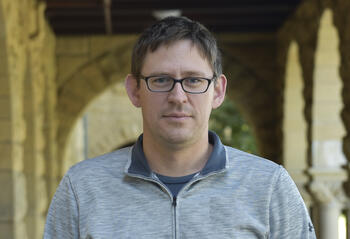
Image
chris blattman
Chris Blattman is the Ramalee E. Pearson Professor of Global Conflict Studies at the University of Chicago’s Harris School of Public Policy. He is an economist and political scientist who studies poverty and violence in developing countries, and has worked mainly in Colombia, Liberia, Uganda, and Ethiopia. Professor Blattman was previously faculty at Columbia and Yale Universities, and holds a PhD in Economics from the University of California at Berkeley and a Master’s in Public Administration and International Development (MPA/ID) from the Harvard Kennedy School.

Chris Blattman Professor of Global Conflict Studies at the University of Chicago’s Harris School of Public Policy
Seminars
-

Abstract:

One policy option for countries reliant on natural resources is to share part of the revenues directly with citizens, an idea known as oil to cash. Technological innovation, such as biometric identification and mobile money, now allow direct payments to people on a massive scale. Additional changes in the global marketplace, experiments in India and Kenya, and shifting political views of cash transfers have all affected the potential of cash to boost governance.


Speaker Bio:

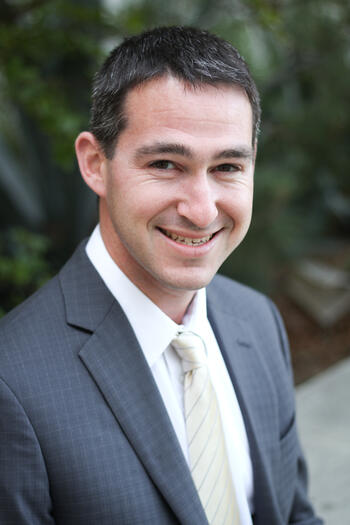
Image
todd moss
Todd Moss is senior fellow at the Center for Global Development in Washington DC and nonresident scholar at the Center for Energy Studies at Rice University’s Baker Institute. A former Deputy Assistant Secretary of State, Moss is the author of Oil to Cash: Fighting the Resource Curse with Cash Transfers and The Golden Hour, a diplomatic thriller set in West Africa.

Todd Moss Senior fellow at the Center for Global Development in Washington DC
Seminars
-

Abstract:

This paper provides an account of the strategies of extortion and co-optation used by drug trafficking organizations (DTOs) toward civil society in Mexico. Our theoretical approach focuses on levels of territorial contestation among armed actors, as well as state capture by DTOs, to explain variation in co-opting or coercing civil society. Through the use of list experiments in a nationally representative survey, the paper measures extortion and assistance by DTOs in Mexico. We find that territorial contestation among rival DTOs increases predation on civil society while reducing DTOs assistance, which is found to occur in uncontested municipalities. Additionally, we find that extortion is higher in municipalities where DTOs have captured the state. These results suggest that territorial contestation and state capture are important in determining the strategy toward civil society during drug wars.


Speaker Bio:

Image
gustavo
Gustavo Robles is a Research Scholar for the Program on Poverty and Governance (POVGOV) at CDDRL. He finished his PhD in Political Science at Stanford University in 2017 with specialization in Political Methodology and Comparative Politics. His PhD dissertation focused on the dynamics and consequences of drug-related violence in Mexico. His research interests include the economics of crime and violence in Latin America, political economy of development, and legislative studies. He is involved in POVGOV’s projects on police accountability and use of force, crime and security, and violence prevention in Brazil and Mexico. He holds a M.A. in Economics from Stanford University and a BA in Economics and Political Science from ITAM.

Research Scholar for the Program on Poverty and Governance (POVGOV) at CDDRL
Seminars
-

Abstract:

The Allied occupation of Japan is remembered as the "good occupation." An American-led coalition successfully turned a militaristic enemy into a stable and democratic ally. Of course, the story was more complicated, but the occupation did forge one of the most enduring relationships in the postwar world. Recent events, from the occupations of Iraq and Afghanistan to protests over American bases in Japan to increasingly aggressive territorial disputes between Asian nations over islands in the Pacific, have brought attention back to the subject of the occupation of Japan. But where did occupation policy come from? This talk considers the role of presidents, bureaucrats, think tanks, the media, and Congress as part of an informal policy network created to manage the postwar world during World War II.


Speaker Bio:

Image
dbarnes1
Dr. Dayna Barnes is a specialist in 20th century international history, American foreign policy, and East Asia. She is a visiting scholar at Stanford University's Center on Democracy, Development and Rule of Law, and is an incoming assistant professor of history at City, University of London. Her book, Architects of Occupation: American Experts and the Planning for Postwar Japan, was published in Cornell University Press in March 2017.

Dana Barnes Visiting scholar at CDDRL
Seminars
-

Abstract:

In India, the world’s largest democracy, the symbiotic relationship between crime and politics raises complex questions. For instance, how can free and fair democratic elections exist alongside rampant criminality? Why do political parties actively recruit candidates with reputations for wrongdoing? Why do voters elect (and even reelect) them, to the point that a third of state and national legislators assume office with pending criminal charges? In a new book, When Crime Pays: Money and Muscle in Indian Politics, Milan Vaishnav takes readers deep into the marketplace for criminal politicians by drawing on fieldwork on the campaign trail, large surveys, and an original database on politicians’ backgrounds. The result is the first systematic study of an issue that has profound implications for democracy both with and beyond India’s borders.


Speaker Bio:

Image
milan vaishnav
Milan Vaishnav is a senior fellow in the South Asia Program at the Carnegie Endowment for International Peace. His primary research focus is the political economy of India, and he examines issues such as corruption and governance, state capacity, distributive politics, and electoral behavior. He is the author of When Crime Pays: Money and Muscle in Indian Politics (Yale University Press, 2017) and co-editor (with Pratap Bhanu Mehta and Devesh Kapur) of Rethinking Public Institutions in India (Oxford University Press, 2017). He was previously a fellow at the Center for Global Development and has taught at Columbia, Georgetown, and George Washington Universities. He holds a Ph.D. in political science from Columbia University.

Milan Vaishnav Senior Fellow, South Asia Program Carnegie Endowment for International Peace
Seminars
Subscribe to Society