Society

FSI researchers work to understand continuity and change in societies as they confront their problems and opportunities. This includes the implications of migration and human trafficking. What happens to a society when young girls exit the sex trade? How do groups moving between locations impact societies, economies, self-identity and citizenship? What are the ethnic challenges faced by an increasingly diverse European Union? From a policy perspective, scholars also work to investigate the consequences of security-related measures for society and its values.

The Europe Center reflects much of FSI’s agenda of investigating societies, serving as a forum for experts to research the cultures, religions and people of Europe. The Center sponsors several seminars and lectures, as well as visiting scholars.

Societal research also addresses issues of demography and aging, such as the social and economic challenges of providing health care for an aging population. How do older adults make decisions, and what societal tools need to be in place to ensure the resulting decisions are well-informed? FSI regularly brings in international scholars to look at these issues. They discuss how adults care for their older parents in rural China as well as the economic aspects of aging populations in China and India.

-


This event is co-sponsored by the WSD HANDA Center for Human Rights and International Justice and the Center on Democracy, Development, and the Rule of Law. 


Abstract:

Unchecked greed is the primary driver of conflict and mass atrocities in Africa. Most often, it manifests itself in the form of violent kleptocracies, in which governments are hijacked by networks of senior officials, military officers, bankers, mining and oil company representatives, and arms dealers. Conventional foreign policy approaches have failed to address the hell on earth that these networks have created. The principal vulnerability of the networks is their exposure in the international financial system, as most corrupt actors use that system to move their money and hide their wealth. The tools of financial pressure that have been honed in the aftermath of 9/11 hold great promise for countering the kleptocrats that are destroying parts of Africa through war and resource pillaging. Examining how those policies can be used and how a hopeful political constituency is being built is a major focus of this presentation.


Speaker Bio:

Image
john prendergast headshot 1
John Prendergast is a human rights activist and New York Times best-selling author who has focused on peace in Africa for over thirty years. He is the Founding Director of the Enough Project, an initiative to end genocide and crimes against humanity. With George Clooney, he also co-founded The Sentry, a new investigative initiative focused on dismantling the networks financing conflict and atrocities. John has worked for the Clinton White House, the State Department, two members of Congress, the National Intelligence Council, UNICEF, Human Rights Watch, the International Crisis Group, and the U.S. Institute of Peace.  He has been a Big Brother for three decades, as well as a youth counselor and a basketball coach.  John is the author or co-author of ten books. John also co-founded the Satellite Sentinel Project, which used satellite imagery to spotlight mass atrocities.  With NBA stars, John launched the Darfur Dream Team Sister Schools Program to fund schools in Darfuri refugee camps. He also created Enough’s Raise Hope for Congo Campaign, highlighting the issue of conflict minerals, and its student arm the Conflict-Free Campus Initiative. John also runs Not On Our Watch, the organization founded by Matt Damon, Don Cheadle, Brad Pitt and George Clooney.  John has been awarded six honorary doctorates. He has been a visiting professor at Yale Law School, Stanford University, Columbia University, Dartmouth College, Duke University, and others. John has appeared in four episodes of  60 Minutes, for which the team won an Emmy Award, and helped create African stories for two episodes of Law and Order: Special Victims Unit. John has also traveled to Africa with NBC’s Dateline, ABC’s Nightline, PBS’ NewsHour, CNN’s  Inside Africa, and Newsweek and The Daily Beast. He also appears in the motion picture “The Good Lie,” starring Reese Witherspoon and Emmanuel Jal, as well as documentaries including Merci Congo, When Elephants Fight, Blood in the Mobile, Sand and Sorrow, Darfur Now, 3 Points, and  War Child.


[[{"fid":"225275","view_mode":"crop_870xauto","fields":{"format":"crop_870xauto","field_file_image_description[und][0][value]":"","field_file_image_alt_text[und][0][value]":false,"field_file_image_title_text[und][0][value]":false,"field_credit[und][0][value]":"","field_caption[und][0][value]":"","field_related_image_aspect[und][0][value]":"","thumbnails":"crop_870xauto"},"type":"media","field_deltas":{"1":{"format":"crop_870xauto","field_file_image_description[und][0][value]":"","field_file_image_alt_text[und][0][value]":false,"field_file_image_title_text[und][0][value]":false,"field_credit[und][0][value]":"","field_caption[und][0][value]":"","field_related_image_aspect[und][0][value]":"","thumbnails":"crop_870xauto"}},"attributes":{"width":"870","class":"media-element file-crop-870xauto","data-delta":"1"},"link_text":null}]]


John Prendergast Human Rights Activist
Seminars
-

Abstract:

There is a growing backlash against the liberal and neoliberal economic, political and social ideologies that have dominated the globe since the 1980s. On economic fronts, critiques of free-market, privatization, and deregulation policies are on the rise, especially since the financial crisis of 2008. Even mainstream economists at the International Monetary Fund now report that the benefits of neoliberalism have been “oversold” and may contribute to increasing inequality. On political fronts, we see a decline in liberal democracy; for instance, Freedom House reports that more countries have experienced losses than gains in freedoms since 2005. We argue that just as there is a groundswell of opposition against dominant global economic and political ideologies, there is rising resistance to the social dimensions of a world culture rooted in Western liberalism. To illustrate our argument, we examine the rise of legal restrictions on foreign funding to non-governmental organizations in more than 50 countries over the period 1994-2015.

Speaker Bio:

Image
bromley patricia gse
Patricia Bromley is an Assistant Professor of Education and (by courtesy) Sociology at Stanford University. Her work has focused on the rise and globalization of a culture emphasizing rational, scientific thinking and expansive forms of rights. It spans a range of fields including comparative education, organization theory, the sociology of education, and public administration and policy. A recent book, Hyper-organization: Worldwide organizational expansion, explains the global proliferation of organization, both in numbers and internal complexity (Oxford University Press 2015, with J.W. Meyer). Other recent publications appear in American Sociological Review, Administration & Society, and Nonprofit and Voluntary Sector Quarterly.

Patricia Bromley Assistant Professor of Education and (by courtesy) Sociology at Stanford University.
Seminars
-

Abstract:

Join Professor Larry Diamond and the winners of the 10x10K Cuba competition for a talk on the emerging entrepreneurial scene in Cuba. The 10x10K Cuba is an international competition seeking to help talented programmers and entrepreneurs in Cuba. This event will feature Janse Lazo Valdes and Victor Manuel Moratón, the entrepreneurs leading the startups MiKMa and NinjaCuba.


Speaker(s) Bio:

Janse Lazo Valdes is a Computer Science engineer from the Havana University of Technologies José Antonio Echeverría. Valdes and his team Sírvete participated in Havana’s first Startup Weekend, coming in 2nd place. At Stanford, he is hoping to learn more about business opportunities, marketing, human resources, and leadership to promote entrepreneurship and development in Cuba. Valdes is representing the startup MiKMa.

MiKMa is a startup that will guarantee the advertising of houses for rent in national currency in Cuba and hopes to revolutionize the way in which the user makes the reservations of these properties.


Victor Manuel Moratón is a Computer Science engineer from the Havana University of Technologies José Antonio Echevarría. He specializes in software development and is the product developer of Ninjas Cuba. At Stanford, he wants to represent the emerging entrepreneurial Cuban community and meet leaders in the sector of entrepreneurship and development. Moratón is representing the startup NinjaCuba.

NinjaCuba is a website oriented to the search of talents of computer science in Cuba thought for the thousands of computer engineers, cybernetics, designers, companies and groups of development. NinjaCuba hopes to connect people in the technology space with employment opportunities.


Image
development and entrepreneurship in cuba

Janse Lazo Valdes Computer Science Engineer, Havana University of Technologies José Antonio Echeverría
Victor Manuel Moratón Computer Science Engineer, Havana University of Technologies José Antonio Echevarría.
Seminars
-

Abstract:

Commentators have vigorously debated whether international criminal justice mechanisms favor conflict or peace. Others have debated whether decapitation (i.e., assassination of leaders) strengthens or weakens militias, insurgencies, and terrorist groups. This study examines how arrests of, and threats to arrest, militia leaders pursuant to international criminal warrants have affected demobilization of Rwandan militias in the eastern Democratic Republic of the Congo.


Speaker Bio:

Image
rsteinberg

Richard Steinberg  writes and teaches in the areas of international law and international relations. He currently teaches International Trade Law, International Business Transactions, and Theories of International Law, and directs Law School clinics that work with the Office of the Prosecutor of the International Criminal Court and conduct research in conflict and post-conflict zones.  He is also Director of the Sanela Diana Jenkins Human Rights Project, and Editor-in-Chief of the award-winning  www.ICCforum.com (link is external). In addition to his UCLA appointment, Professor Steinberg is currently Visiting Professor of Stanford Global Studies at the WSD Handa Center for Human Rights and International Justice, and the Center on Democracy, Development, and the Rule of Law at Stanford.


Co-sponsor:  HANDA Center for Human Rights & International Justice


Richard Steinberg Visiting Professor at Stanford Global Studies and on faculty at UCLA School of Law
Seminars
News Type
Commentary
Date
Paragraphs

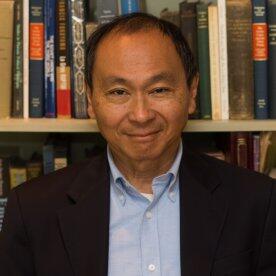
"I don't think anyone, including many in the media themselves, would say that they are somehow completely political neutral, but a much deeper assertion was made where even factual statements and fact-checking done by organizations like the New York Times or CNN were called into question, and they were called into question by people purporting to put forward facts that really had no actual empirical basis other than the fact that someone had said it on the Internet," says CDDRL Mosbacher Director Francis Fukuyama.  


Hero Image
frank quote
All News button
1
-

Abstract:

In Revolution and Rebellion in the Early Modern World, I showed that turning points in global population trends have been driving waves of political stability or crisis for at least the last 500 years. We are currently seeing a new turning point, as rich countries enter a period of workforce decline and emerging markets divide into those with falling fertility vs. stable and still-high fertility. Drawing on experience from previous centuries in Europe and Asia, we can forecast political trends; these include a new wave of revolutions in Africa and the Middle East and a surge in populist and protectionist politics in Europe and the U.S., but also eventual peaceful transitions to democracy in Russia and China.


Speaker Bio:

Image
jack goldstone
Jack A. Goldstone (PhD Harvard) is the Virginia E. and John T. Hazel, Jr. Professor of Public Policy at George Mason University. Previously, Dr. Goldstone was on the faculty of Northwestern University and the University of California, and has been a visiting scholar at Cambridge University and the California Institute of Technology. He is the author of Revolution and Rebellion in the Early Modern World, awarded the 1993 Distinguished Scholarly Research Award of the American Sociological Association; Why Europe? The Rise of the West in World History; and co-editor of Political Demography: How Population Changes are Reshaping International Security and National Politics. He has been a Fellow at the Center for Advanced Study at Stanford University, and won Fellowships from the Guggenheim Foundation, the MacArthur Foundation and the American Council of Learned Societies. He has also won the Arnoldo Momigliano Award of the Historical Society, the Myron Weiner award of the International Studies Association, and been Holbrooke lecturer at the American Academy in Berlin. His current research focuses on conditions for building democracy and stability in developing nations, the impact of population change on the global economy and international security, and the cultural origins of modern economic growth.

Jack A. Goldstone Virginia E. and John T. Hazel, Jr. Professor of Public Policy at George Mason University
Seminars
-

Abstract:

When villages in China began to introduce local elections in the 1980s it was, for many, a moment of great optimism about the prospects for local democracy in the Peoples' Republic. Yet village self-government has not curbed the power of local officials in China to confiscate the wealth from the rural poor. Following the introduction of village elections, over 60 million villagers have had their land seized by their local governments. These land seizures amount to a redistribution of trillions of dollars of wealth from smallholders to the government. In this talk, I argue that local self-government in China is a strikingly effective tool for top-down authoritarian control. I focus on the consequences of including communal elites, like the leaders of lineages or religious groups, in village institutions of self-government. The view that local democracy nurtures accountability would suggest that the inclusion of communal elites in village government would strengthen villagers' land rights. After all, these communal elites face strong social expectations that they cooperate with their group and enact policies that benefit them. Drawing on case studies and a new dataset, I show that when communal elites join local institutions of self-government, the state is instead able to expropriate more land than when these elites remain outside of government. I argue that these communal elites are important intermediaries that help China's authoritarian state control and extract from their groups.


Speaker Bio:

Image
daniel embedded
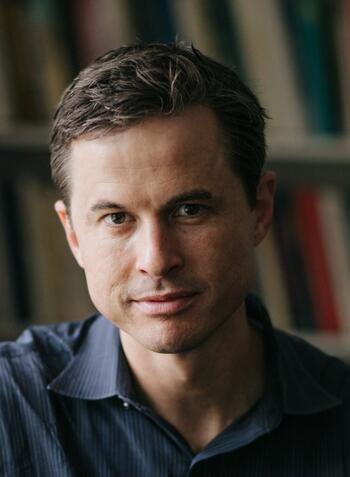
Daniel Mattingly is a Postdoctoral Fellow at the Center on Democracy, Development, and the Rule of Law at Stanford University. He received a Ph.D. in political science from the University of California, Berkeley in 2016. Starting in summer 2017, he will join the department of political science at Yale as an assistant professor. Dan’s dissertation focuses on the sources of state power in China, and shows how the ruling party uses democratic institutions to strengthen its political control over rural China. More broadly he is interested in local governance, state-building, authoritarian rule, and political accountability. His work appears in Comparative Political Studies and World Politics.

CDDRL Postdoctoral Fellow, 2016-17
Seminars
-

Abstract:

Media censorship is considered as the hallmark of authoritarian regimes. Why don’t citizens acquire uncensored info despite the low cost availability? What does it take to expose citizens to uncensored information, and how does exposure affect their beliefs, attitudes, and behaviors? We conduct a field experiment directly varying the supply of uncensored information (by providing free access to uncensored internet to university students in China), and students’ demand for information (by providing informational and monetary incentives) over the course of 18 months. We measure and trace students’ media consumption, beliefs and attitudes regarding media, as well as a broad range of economic and political attitudes and behaviors. We find that censorship successfully prevents information consumption due to the combination of restricted supply of and low demand for uncensored information. The low demand is primarily driven by students’ skeptical beliefs regarding uncensored media outlets, and such beliefs can be persistently changed after a period of exposure. Having exposed to uncensored information makes students more knowledgeable, more pessimistic of the Chinese economy, more critical of the government, and more likely to plan on leaving China in the near future.


Speaker Bio:

Image
david yang
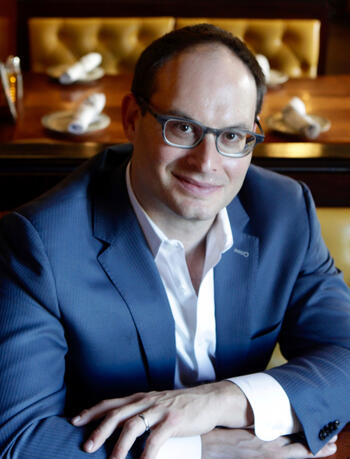
David Y. Yang is a PhD candidate in Economics at Stanford University. He received B.A. in statistics and B.S. in business administration from University of California, Berkeley. His research interests center on political economy, behavioral and experimental economics, and economic history. In particular, he is interested in the causes and consequences of political beliefs, attitudes, and preferences.

David Y. Yang PhD candidate in Economics at Stanford University
Seminars
-

Abstract:

Property rights are important for economic exchange, but in much of the world they are not publicly provided. Private market organizations can fill this gap by providing an institutional structure to enforce agreements, but with this power comes the ability to extort from the group’s members. Under what circumstances will private organizations provide a stable environment for economic activity? Using survey data collected from 1,878 randomly sampled traders across 269 markets, 68 market leaders, and 55 government revenue collectors in Lagos, I find that strong markets maintain institutions to support trade not in the absence of government, but rather as a response to active interference. I argue that organizations develop pro-trade institutions when threatened by politicians they perceive as predatory, and when the organization can respond with threats of its own. Under this balance of power, the organization will not extort because it needs trader support to keep threats credible.


Speaker Bio:

Image
shelby embedded
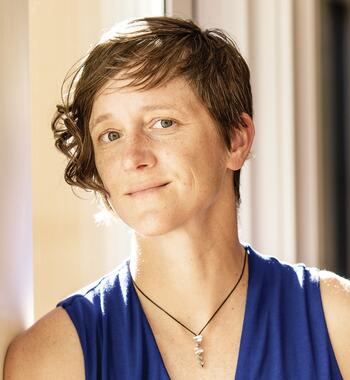
Shelby Grossman is a Postdoctoral Fellow at Stanford University’s Center on Democracy, Development, and the Rule of Law. Her primary research interests are in comparative politics and political economy. Her book manuscript explores the politics of property rights in informal markets in Nigeria. Other research projects include a study on the political economy of diversified business groups, a project on casual inter-group interactions in the informal economy, and a paper on the politics of non-compliance with polio vaccination in northern Nigeria. Shelby received her Ph.D. from the Department of Government at Harvard University in 2016.

Postdoctoral Fellow at CDDRL.
Seminars
Paragraphs

In this paper published by the International Journal of Educational Development, we investigate the impact of drug-related violence in Mexico on academic achievement. We use panel of elementary and lower secondary schools and locality-level firearm homicides from 2006 to 2011. We rely on school fixed-effects models to estimate the impact on math test scores of turf war exposure and turf war persistence (e.g. months of exposure) during the academic year. According to the results, both exposure and persistence of criminal violence reduces math test scores. The analysis of heterogeneous effects shows that schools located in poor urban settings experience the largest negative effects. Further, we find stronger negative effects of drug-related violence exposure in lower secondary schools with street gang presence nearby. Finally, we further examine potential mechanisms driving the effects of criminal violence on test scores. Our findings indicate that turf war exposure and persistence are associated with a loss of instructional time due to higher teacher absenteeism and turnover, as well as student absenteeism, tardiness, and propensity to leave school days early.


All Publications button
1
Publication Type
Journal Articles
Publication Date
Journal Publisher
International Journal of Educational Development
Authors
Brenda Jarillo Rabling
Beatriz Magaloni
Subscribe to Society