Policy Analysis
-

On November 14-15, the Program on American Democracy in Comparative Perspective hosted a conference on Lobbying and Campaign Finance. The conference brought together academics, practitioners, and lawyers to understand the impact of money in politics on a variety of outcomes, including special interest capture, democratic distortion, and inequality. The conference provided a rare opportunity to combine discussions of potential political reforms with evaluation of recent empirical findings in the area of lobbying and campaign finance. Participants covered a range of topics, including lobbying in Congress and in executive agencies; the relationship between patterns of campaign finance and partisan polarization; campaign finance laws, political parties, and special interest influence; and the regulation of lobbying and political money in other advanced democracies. The conference report summarizes the reform ideas that emerged from the conference discussions, including increasing soft money to political parties, disclosure of dark money, limiting lobbying access through the revolving door, and increasing the capacity of government.


The conference was held at the William and Flora Hewlett Foundation, a donor to the Program on American Democracy.

Agenda and Participants
Download pdf
Conference Report
Download pdf
Conferences
-

ABSTRACT

The Buddhist Compassion Relief Tzu Chi (Ciji) Foundation from Taiwan is perhaps one of the largest Buddhist charities in the Chinese world today. This talk traces how Tzu Chi developed under the “regime of civility” in Taiwan. The same regime also contributed to the recent controversies between Tzu Chi and the Aborigines. I argue that the tension between the Buddhist non-governmental organization and the Christian Aborigines has to do with the inequality under the regime of civility: on the one hand, the Aborigines have been marginalized as the “subject” of the civility campaign by the state; and, on the other hand, the same regime of civility is what allows the Buddhist charity to thrive in civil society. This talk raises the question whether civility could turn against civil society.

SPEAKER BIO

Image
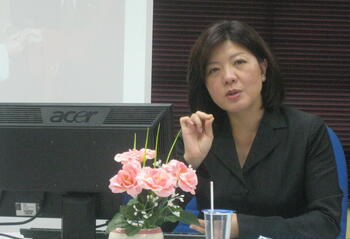
huang julia

C. Julia Huang is a Professor of Anthropology at National Tsing Hua University, Taiwan, and currently a Visiting Scholar at the Ho Center for Buddhist Studies at Stanford University. Huang has published articles in the Journal of Asian Studies, Ethnology, Positions, Nova Religio, the Eastern Buddhist, and the European Journal for East Asian Studies. Her book, Charisma and Compassion: Cheng Yen and the Buddhist Tzu Chi Movement (Harvard University Press, 2009) is an ethnography of a lay Buddhist movement that began as a tiny group in Taiwan and grew into an organization with ten million members worldwide. Huang has recently completed a book manuscript, The Social Life of Goodness: Religious Philanthropy in Chinese Societies (with Robert P. Weller and Keping Wu). She is currently working on a project on the Buddhist influences on cadaver donations for medical education in Taiwan.


This event is part of the Taiwan Democracy Project.

Ends of Compassion--presentation
Download pdf
C. Julia Huang Professor of Anthropology National Tsing Hua University, Taiwan
Seminars
-

Abstract

In 2010-2011, the "Arab Spring" brought unexpected revolutions to many Middle Eastern and North African countries. Why did these seemingly invincible regimes fall, while China remained durably authoritarian? Many observers credited global media for the political transformations. While the hopes of Arab Spring democracy have proven to be fragile or short-lived, we can effectively explore the relationship between political communication and regime stability by turning our attention to Taiwan’s remarkable democratization, which remains under-appreciated by the international community.

This talk considers political communication in Taiwan from the martial law era to the heady days of democratic activism beginning in the late 1970s and lasting till the 1990s. Professor Esarey argues that the Chiang Ching-kuo administration’s diminishing capacity to control a small but influential opposition (dangwai) media, and even mainstream newspapers, gradually permitted reformers to reframe debates, reset the political agenda, and challenge state narratives and legitimacy claims. 

When viewed in comparative perspective, Taiwan’s successful democratization suggests that seeking regime change is impracticable, and even perilous, without considerable and sustainable media freedom as well as opportunities for the public to advocate, evaluate, and internalize alternative political views. A balance of “communication power” between state and societal actors facilitates a negotiated and peaceful transition from authoritarianism.


Bio

Professor Ashley Esarey received his PhD in Political Science from Columbia University and was awarded the An Wang Postdoctoral Fellowship by Harvard University. He has held academic appointments at Middlebury College, Whitman College, and the University of Alberta, where he is an instructor in the departments of East Asian Studies and Political Science and a research associate of the China Institute. Esarey has written on democratization and authoritarian resilience, digital media and politics, and information control and propaganda. His recent publications include My Fight for a New Taiwan: One Woman’s Journey from Prison to Power (with Lu Hsiu-lien) and The Internet in China: Cultural, Political, and Social Dimensions (with Randolph Kluver).


Communication Power and Taiwan's Democratization
Download pdf
Ashley Esarey Research Associate, China Institute University of Alberta
Seminars
-

Please note that this CDDRL seminar will be held on Wednesday. 


Abstract:

Recent estimates place half of the world’s poorest people in fragile and conflict-affected states by 2015. As the world moves towards the next phase of global development goals, which includes a central emphasis on eradicating extreme poverty, it will be necessary to understand the challenges for countries in the most difficult contexts. Is addressing and resolving fragility a condition (or precondition) for successfully addressing poverty?  Or, are there ways to significantly and sustainably reduce poverty even while countries remain fragile?

USAID is seeking to answer these questions as it recommits to working with its partners to end extreme poverty by 2030. And while we acknowledge that ending extreme poverty will not be easy, progress and gains already achieved over the past couple of decades have made us certain that it is possible. As the global community coalesces around this goal, USAID seeks to increase shared understanding of the nature of extreme poverty, where there has been success and why, and what we are already doing and will need to do differently to catalyze and invest in global solutions.


Speaker Bio: 

Alex Thier
Alex Thier is USAID’s assistant to the Administrator for Policy, Planning, and Learning (PPL). The PPL Bureau is USAID’s center for policy development, strategic planning, learning and evaluation, and partner engagement. From June 2010‐ June 2013, Thier served as assistant to the administrator for Afghanistan and Pakistan affairs, overseeing USAID’s two largest missions in the world.
Before joining USAID, Thier served with the U.S. Institute of Peace as senior rule of law adviser and director for Afghanistan and Pakistan from 2005‐ 2010. While at the Institute, he co‐authored The Future of Afghanistan (2009) as well as The Next Chapter: The United States and Pakistan, the 2008 report of the Pakistan Working Group. Thier also served as director of the Institute’sConstitution Making, Peacebuilding, and National Reconciliation project, during which he advised numerous governments and civil society organizations engaged in ongoing constitutional drafting and national reconciliation exercises. Thier was also a principal staffer on the Institute’s Genocide Prevention Task Force, and a coauthor of its final report, Preventing Genocide: A Blueprint for U.S. Policymakers. The recommendations from this report formed the backbone of President Barack Obama’s 2011 Directive on Mass Atrocities.
Thier previously served as director of the Project on Failed States at Stanford University’s Center on Democracy, Development, and the Rule of Law. From 2002 to 2004, he was legal adviser to Afghanistan’s Constitutional and Judicial Reform Commissions in Kabul, where he assisted in the development of a new constitution and judicial system. He has also worked as a senior analyst for the International Crisis Group, a legal and constitutional expert to the British Department for International Development, and as an adviser to the Constitutional Commission of Southern Sudan.
From 1993 to 1996, Thier worked as a U.N. and NGO official in Afghanistan and Pakistan during the Afghan civil war. He also served as coordination officer for the U.N. Iraq Program in New York.
An attorney, Thier was a Skadden fellow and a graduate fellow at the U.S. National Security Council’s Directorate for Near‐East and South Asia. He received the Richard S. Goldsmith award for outstanding work on dispute resolution from Stanford University in 2000.
Thier has a J.D. from Stanford Law School, a master’s degree in law and diplomacy from the Fletcher School of Law and Diplomacy at Tufts University, and a Bachelor’s Degree from Brown University.
Discussion Paper: Ending extreme poverty in fragile contexts
Download pdf

Philippines Conference Room

Encina Hall, 3nd Floor
616 Serra St
Stanford, CA 94305

Alex Thier Assistant to the Administrator for Policy, Planning, and Learning Assistant to the Administrator for Policy, Planning, and Learning United States Agency for International Development
Seminars
-

[[{"fid":"209960","view_mode":"crop_870xauto","fields":{"format":"crop_870xauto","field_file_image_description[und][0][value]":"","field_file_image_alt_text[und][0][value]":false,"field_file_image_title_text[und][0][value]":false,"field_credit[und][0][value]":"Arlene Hsu","field_caption[und][0][value]":"Taipei at night with Taipei 101. 28 February 2009.","field_related_image_aspect[und][0][value]":"0","thumbnails":"crop_870xauto"},"type":"media","field_deltas":{"1":{"format":"crop_870xauto","field_file_image_description[und][0][value]":"","field_file_image_alt_text[und][0][value]":false,"field_file_image_title_text[und][0][value]":false,"field_credit[und][0][value]":"Arlene Hsu","field_caption[und][0][value]":"Taipei at night with Taipei 101. 28 February 2009.","field_related_image_aspect[und][0][value]":"0","thumbnails":"crop_870xauto"}},"link_text":null,"attributes":{"width":"870","class":"media-element file-crop-870xauto","data-delta":"1"}}]]


Over the past year and more, Taiwan’s political elite has been deadlocked over the question of deepening economic relations with the People’s Republic of China. This controversial issue has led to a standoff between the executive and legislative branches, sparked a frenzy of social activism and a student occupation of the legislature, and contributed to President Ma Ying-jeou’s deep unpopularity.

On October 17-18, the Taiwan Democracy Project at CDDRL, with the generous support of the Taipei Economic and Culture Office, will host its annual conference at Stanford University to examine the politics of polarization in Taiwan.

This conference will bring together specialists from Taiwan, the U.S., and elsewhere in Asia to examine the sources and implications of this political polarization in comparative perspective. It will include a special case study of the Trade in Services Agreement with China that triggered this past year’s protests, as well as a more general overview of the politics of trade liberalization in Taiwan, prospects for Taiwan’s integration into the Trans-Pacific Partnership and other regional trade agreements, and a consideration of the implications for Taiwan’s long-term democratic future.

Conference speakers will include: Chung-shu Wu, the president of the Chung-hwa Institute of Economic Research (CIER) in Taipei; Steve Chan of the University of Colorado; Roselyn Hsueh of Temple University; Yun-han Chu, the president of the Chiang Ching-kuo Foundation; and Thitinan Pongsudhirak of Chulalongkorn University in Bangkok.


Panels will examine the following questions:

1. What are the sources and implications of political polarization in Taiwan, and how have these changed in recent years?

2. How does Taiwan’s recent experience compare to political polarization in other countries in Asia (e.g. South Korea, Thailand) and elsewhere (the US)?

3. To what extent does the latest political deadlock in Taiwan reflect concern over the specific issue of trade with the People’s Republic of China, versus a deeper, systemic set of problems with Taiwan’s democracy?

4. How are globalization and trade liberalization reshaping Taiwan’s domestic political economy, and what are the prospects for forging a stronger pro-trade coalition in Taiwan that transcends the current partisan divide?


The conference will take place October 17-18 in the Bechtel Conference Room in Encina Hall at Stanford University. It is free and open to the public. 


Conference Resources


Agenda

Speaker Bios

Presentations

Conference Report

Conference Flyer


Conference Papers


How Cross-Strait Trade and Investment Is Affecting Income and Wealth Inequality in Taiwan by Chien-Fu Lin, National Taiwan University


Generational Differences in Attitudes towards Cross-Straits Trade by Ping-Yin Kuan, Department of Sociology & International Program in Asia-Pacific Studies, National Chengchi University


Change and the Unchanged of Polarized Politics in Taiwan by Min-Hua Huang, National Taiwan University; Center for East Asia Policy Studies, The Brookings Institution


Social Media, Social Movements and the Challenge of Democratic Governability by Boyu Chen, National Sun Yat-sen University, Institute of Political Science 


Coping with the Challenge of Democratic Governance under Ma Ying-jeou by Yun-han Chu, National Taiwan University


Taiwan’s Bid for TPP Membership and the Potential Impact on Taiwan-U.S. Relations by Kwei-Bo Huang, National Chengchi University, Department of Diplomacy


In the Wake of the Sunflower Movement: Exploring the Political Consequences of Cross-Strait Integration by Pei-shan Lee, National Chung Cheng University, Political Science Department 


The Roots of Thailand’s Political Polarization in Comparative Perspective by Thitinan Pongsudhirak, Chulalongkorn University; The Institute of Security and International Studies


The Role of the United States in Cross-Strait Economic Integration by Chen-Dong Tso, National Taiwan University


The China Factor and the Generational Shift over National Identity by Mark Weatherall, Taiwan Foundation for Democracy


Taiwan’s Strategy for Regional Economic Integration by Chung-Shu Wu, Chung-Hua Institution for Economic Research


Polarized Electorates in South Korea and Taiwan: The Role of Political Trust under Conservative Governments by Hyunji Lee, Institute of Asian Research, University of British Columbia


Polarization in Taiwan Politics by Steve Chan, University of Colorado, Boulder


Agenda
Conference Biographies
Taiwan Polarization Conference Flyer
Politics of Polarization in Taiwan: Conference Report
Conferences
0
erin_baggot_carter_2025.jpg

Erin Baggott Carter (赵雅芬) is an Associate Professor at the Department of Political Science and International Relations at the University of Southern California and a Hoover Fellow at Stanford University's Hoover Institution. She is also a non-resident scholar at the UCSD 21st Century China Center. She has previously held fellowships at Stanford's Center on Democracy, Development and the Rule of Law and the Center for International Security and Cooperation. She received a Ph.D. in Political Science from Harvard University.

Dr. Carter's research focuses on Chinese politics and propaganda. Her first book, Propaganda in Autocracies (Cambridge University Press), explores how political institutions determine propaganda strategies with an original dataset of eight million articles in six languages drawn from state-run newspapers in nearly 70 countries. She is currently working on a book on how domestic politics influence US-China relations. Her other work has appeared in the British Journal of Political ScienceJournal of Conflict ResolutionSecurity Studies, and International Interactions. Her work has been featured by a number of media platforms, including the New York Times and the Little Red Podcast.

Her research has been supported by the Chiang Ching-kuo Foundation, the Smith Richardson Foundation, the Center for International Studies at the University of Southern California, the Weatherhead Center for International Affairs at Harvard University, the Fairbank Center for Chinese Studies at Harvard University, and the Institute for Quantitative Social Science at Harvard University.

Dr. Carter regularly tweets about Chinese politics and propaganda at @baggottcarter. She can be reached via email at baggott [at] usc.edu or ebaggott [at] stanford.edu.

Hoover Fellow
CDDRL Affiliated Scholar
CDDRL Visiting Scholar, 2020-2021
CISAC Affiliate
Date Label
Paragraphs

Keynote address by Rt. Hon. Aminu Waziri Tambuwal CFR, Speaker, House of Representatives, National Assembly of Nigeria on the occasion of the Omidyar Network African Democracy and Leadership Forum organized by the Stanford University Center on Democracy, Development, and the Rule of Law (CDDRL) on the 26th of June, 2014, at the Sheraton Hotel, Abuja.

This address was delivered as part of the conference on 'The Future of Human Rights and Good Governance in Africa' held from June 26 - 28, 2014, in Abuja, Nigeria, which convened many members of the Omidyar Network's Africa Leadership Forum.

All Publications button
1
Publication Date
-


Abstract: 

The recently concluded 16th Lok Sabha elections in India was the biggest democratic election in history. It produced the first absolute majority in Indian national elections in thirty years and catapulted BJP and its leader Narendra Modi to power after a sustained presidential style campaign. The election decisively changed the political landscape in India and seemed to reverse a longstanding trend towards fragmentation of Indian politics along lines of region and caste.

What are the underlying dynamics that made this historic vote possible? Can BJP and Modi deliver the economic growth and employment that they promise? What are the necessary reforms and challenges that confront the new government? Will BJP remain focused on development, or will the older cultural and majoritarian agenda of the RSS and its associated organizations re-appear? What is the prospects for India’s multiple minorities in this new dispensation?

These and other questions will be debated by a panel of three Stanford based academics. 


Speaker Bios:

Thomas Blom Hansen (Moderator/Speaker) is the Reliance-Dhirubhai Ambani Professor of Anthropology at Stanford University. He is also the director of the Center for South Asia at Stanford. He has worked extensively on Hindu-Muslim relations, communal violence and the rise of Hindu nationalism in India. His books include The Saffron Wave. Hindu Nationalism and Democracy in Modern India (Princeton University Press 1999) and Wages of Violence, Naming and identity in postcolonial Bombay (Princeton University Press 2001).


Harish S. Wankhede (Speaker) research interest is to imagine theoretical spaces by interconnecting certain approaches and themes of social science mainly, Justice, politics of recognition and redistribution, secularism, nationalism and the Caste identity. The emphasis of his work is on the marginalized communities in India especially the Muslims, Dalits and the Tribals.

Currently, he is a visiting scholar at the Center for South Asia, Stanford University and working on a research project on the Dalit Panthers’ Movement in Maharashtra. He teaches at the Department of Political Science, University of Delhi.


Alexander Lee (Speaker) is a postdoctoral fellow at the Center on Democracy, Development, and the Rule of Law. In the fall of 2014 he will be an assistant professor of political science at the University of Rochester. His research focuses on the historical factors governing the success or failure of political institutions, particularly in South Asia and other areas of the developing world. His work has been published in World Politics and the Quarterly Journal of Political Science. Alex earned his PhD from Stanford in 2013. More information on his work can be found on his website.


This event is hosted by the Center for South Asia and the Center for Democracy, Development and the Rule of Law. 


CISAC Conference Room

Thomas Blom Hansen Director Moderator Center for South Asia
Harish S. Wankhede Visiting Scholar Speaker Center for South Asia

Encina Hall
616 Serra Street
Stanford, CA 94305-6055

0
CDDRL Postdoctoral Fellow, 2013-14
Lee_HS.jpg

Alexander Lee's research focuses on the historical factors governing the success or failure of political institutions, particularly in South Asia and other areas of the developing world. His dissertation examined the ways in which colonialism changed the distribution of wealth in Indian society, and the ways in which these changes affected the development of caste identities. Additional research areas include the study of colonialism and European expansion in a cross- national perspective, and the causes of political violence, especially terrorism. His work has been published in World Politics and the Quarterly Journal of Political Science. Alex earned his PhD from Stanford in 2013. More information on his work can be found on his website: https://people.stanford.edu/amlee/

Alexander Lee Postdoctoral Fellow Speaker Center on Democracy, Development, and the Rule of Law
Seminars
Subscribe to Policy Analysis