Are Americans Fully Committed to Democracy?
Center on Democracy, Development and the Rule of Law is part of the Freeman Spogli Institute for International Studies
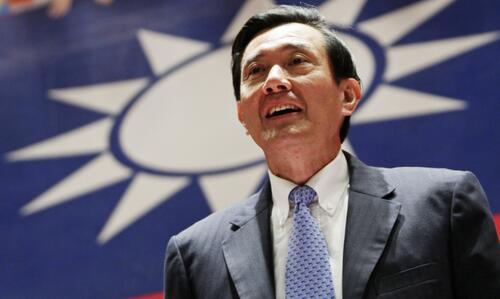
The eight-year presidency of Ma Ying-jeou (2008-2016) in Taiwan left a complex legacy of political achievements, confrontations, and disappointments that defies easy characterization. It began with President Ma and the Kuomintang’s (KMT) commanding electoral victories in the 2008 elections, and ended with the KMT’s overwhelming loss to the resurgent Democratic Progressive Party (DPP) and its leader Tsai Ing-wen in 2016.
It featured rapid conclusions to a broad set of agreements on cross-Strait cooperation with the People’s Republic of China (PRC). But worries about closer ties with the PRC also triggered a popular backlash against growing mainland Chinese influence in Taiwan’s economy and culminated in a student-led occupation of the Legislative Yuan.
It coincided with contradictory trends in public opinion, including both the consolidation of a separate Taiwanese identity and support for the status quo in cross-Strait relations, as well as the increasing salience of divisions over social and environmental issues such as same-sex marriage and green energy at the same time as rising concerns about economic inequality.
It also marked a return to unified government after the acrimonious partisan fights of the Chen Shui-bian years, but long-standing intra-KMT divisions and the decentralized organization of the legislature continued to frustrate the administration, especially in President Ma’s second term.
Finally, the Ma era produced no consensus about how to move beyond Taiwan’s developmental state legacies. Plans for domestic economic liberalization and greater integration into the global economy were only partially carried out, and the Ma administration ignored or struggled to address rising inequality, stagnant wages, increasing economic dependence on the PRC market, and a skewed tax system favoring investors and corporations over salaried workers.
The 11th Annual Conference on Taiwan Democracy will bring together scholars from Taiwan, the US, and Europe to consider these political achievements, confrontations, and disappointments in depth, and to assess the strengths and weaknesses of Taiwan’s democracy at the end of the Ma Ying-jeou’s presidency. Conference participants will discuss trends in public opinion, party politics and elections, cross-Strait relations, governance and media, and the performance of political institutions. The conference papers will be revised and included in an edited volume covering democratic practice during the Ma Ying-jeou era in Taiwan.
The conference is free and open to the public. Those interested in attending are requested to RSVP at the link above. This event is organized by the Taiwan Democracy Project in the Center on Democracy, Development, and the Rule of Law.
Thursday, March 9
9:15-10:45. Panel I. Public Opinion and Elections
11:00-12:45. Panel II. Party Politics
12:45-1:45. Lunch
1:45-3:30. Panel III. Economics, Security, and Cross-Strait Relations
Friday, March 10
9:15-10:45. Panel IV. Governance, Media, and Civil Society
11:00-12:30. Panel V. Political Institutions
12:30-1:30. Lunch
Oksenberg Room, 3rd Floor, Encina Hall Central
CDDRL
Stanford University
Encina Hall, C147
616 Jane Stanford Way
Stanford, CA 94305-6055
Larry Diamond is the William L. Clayton Senior Fellow at the Hoover Institution, the Mosbacher Senior Fellow in Global Democracy at the Freeman Spogli Institute for International Studies (FSI), and a Bass University Fellow in Undergraduate Education at Stanford University. He is also professor by courtesy of Political Science and Sociology at Stanford, where he lectures and teaches courses on democracy (including an online course on EdX). At the Hoover Institution, he co-leads the Project on Taiwan in the Indo-Pacific Region and participates in the Project on the U.S., China, and the World. At FSI, he is among the core faculty of the Center on Democracy, Development and the Rule of Law, which he directed for six and a half years. He leads FSI’s Israel Studies Program and is a member of the Program on Arab Reform and Development. He also co-leads the Global Digital Policy Incubator, based at FSI’s Cyber Policy Center. He served for 32 years as founding co-editor of the Journal of Democracy.
Diamond’s research focuses on global trends affecting freedom and democracy and on U.S. and international policies to defend and advance democracy. His book, Ill Winds: Saving Democracy from Russian Rage, Chinese Ambition, and American Complacency, analyzes the challenges confronting liberal democracy in the United States and around the world at this potential “hinge in history,” and offers an agenda for strengthening and defending democracy at home and abroad. A paperback edition with a new preface was released by Penguin in April 2020. His other books include: In Search of Democracy (2016), The Spirit of Democracy (2008), Developing Democracy: Toward Consolidation (1999), Promoting Democracy in the 1990s (1995), and Class, Ethnicity, and Democracy in Nigeria (1989). He has edited or coedited more than fifty books, including China’s Influence and American Interests (2019, with Orville Schell), Silicon Triangle: The United States, China, Taiwan the Global Semiconductor Security (2023, with James O. Ellis Jr. and Orville Schell), and The Troubling State of India’s Democracy (2024, with Sumit Ganguly and Dinsha Mistree).
During 2002–03, Diamond served as a consultant to the US Agency for International Development (USAID) and was a contributing author of its report, Foreign Aid in the National Interest. He has advised and lectured to universities and think tanks around the world, and to the World Bank, the United Nations, the State Department, and other organizations dealing with governance and development. During the first three months of 2004, Diamond served as a senior adviser on governance to the Coalition Provisional Authority in Baghdad. His 2005 book, Squandered Victory: The American Occupation and the Bungled Effort to Bring Democracy to Iraq, was one of the first books to critically analyze America's postwar engagement in Iraq.
Among Diamond’s other edited books are Democracy in Decline?; Democratization and Authoritarianism in the Arab World; Will China Democratize?; and Liberation Technology: Social Media and the Struggle for Democracy, all edited with Marc F. Plattner; and Politics and Culture in Contemporary Iran, with Abbas Milani. With Juan J. Linz and Seymour Martin Lipset, he edited the series, Democracy in Developing Countries, which helped to shape a new generation of comparative study of democratic development.
Download full-resolution headshot; photo credit: Rod Searcey.
The populist backlash against globalization is being felt acutely across Europe as well as here in the US. And yet whether you look at it from an economic, political or military perspective, transnational cooperation has become an integral part of our global landscape. Hear CDDRL Mosbacher Director Francis Fukuyama on the future of globalization for World Affairs.
Larry Kramer of the Hewlett Foundation, Nathaniel Persily of Stanford Law School, and Shanto Iyengar of Stanford University will join a conversation with Cass Sunstein about the perils and promise of digital technology on democracy.
Cass Sunstein is the Robert Walmsley University Professor at Harvard Law School. From 2009 to 2012, he was Administrator of the White House Office of Information and Regulatory Affairs. He is the founder and director of the Program on Behavioral Economics and Public Policy at Harvard Law School. Mr. Sunstein has testified before congressional committees on many subjects, and he has been involved in constitution-making and law reform activities in a number of nations. His many books include the New York Times bestsellers Nudge: Improving Decisions about Health, Wealth, and Happiness (with Richard H. Thaler) and The World According to Star Wars. He lives in Cambridge, Massachusetts.
Larry Kramer became President of the William and Flora Hewlett Foundation in Menlo Park, California, in September 2012. Before joining the foundation, Larry served from 2004 to 2012 as Richard E. Lang Professor of Law and Dean of Stanford Law School. His teaching and scholarly interests include American legal history, constitutional law, federalism, separation of powers, the federal courts, conflict of laws, and civil procedure. Larry is a fellow of the American Academy of Arts and Sciences and a member of the American Philosophical Society and the American Law Institute.
Nathaniel Persily is the James B. McClatchy Professor of Law at Stanford Law School. He focuses on the law of democracy, addressing issues such as voting rights, political parties, campaign finance and redistricting. A sought-after nonpartisan voice in voting rights, he has served as a court-appointed expert to draw legislative districting plans for Georgia, Maryland and New York and as special master for the redistricting of Connecticut’s congressional districts. Most recently, he also served as the Senior Research Director for the Presidential Commission on Election Administration, a bipartisan commission created by the President to deal with the long lines at the polling place and other administrative problems witnessed in the 2012 election.
Shanto Iyengar is the Chandler Chair in Communication at Stanford University where he is also Director of the Political Communication Laboratory. Iyengar’s areas of expertise include the role of mass media in democratic societies, public opinion, and political psychology. He is the recipient of the Philip Converse Award of the American Political Science Association for the best book in the field of public opinion, the Murray Edelman Lifetime Achievement Award, and the Goldsmith Book Prize from Harvard University. Iyengar is author or co-author of several books, including News That Matters (University of Chicago Press, 1987), Going Negative (Free Press, 1995), and Media Politics: A Citizen’s Guide (Norton, 2011).
The Center on Democracy, Development and the Rule of Law (CDDRL) at Stanford University collaborates widely with academics, policymakers and practitioners around the world to advance knowledge and practice about democracy, broad-based economic development, human rights, and the rule of law. We are deeply concerned by the recent executive order on immigration issued by the new administration. This order impacts members of our community - students, practitioners, academics, and visitors - who come to Stanford to attend our training programs, conferences and conduct research. Ultimately, barring entry into the country of citizens from a specific set of countries compromises the quality of our research, programming and intellectual activities. It also violates our shared values and integrity as an academic research institute.
CDDRL is currently in the process of reviewing the applications for our 2017 Draper Hills Summer Fellowship program and we want to assure everyone that each applicant will be equally considered, regardless of their country of origin.
In over a decade of working and training democracy activists from all over the world – including Muslim majority countries – we have developed friendships with colleagues who are working against great odds to build democratic institutions. The overwhelming majority is risking their lives to do so. These fellows together with students and researchers challenge our theories about democratic development and help inspire new projects and ideas to enrich our research agenda, not only for our center, but also for our broader institute - The Freeman Spogli Institute for International Studies.
We will continue to build our relationships equally with all countries around the world regardless of this new policy, and will stand in solidarity with those who are targeted by the adverse effects. The one lesson that recent events have conveyed is the resounding importance of the work we do to understand how countries become just, democratic and well-governed states.
This talk examines the ways through which successive Egyptian governments have utilized lawmaking to eliminate opponents and silence voices of dissent since the coup of 3 July 2013. Key examples include the adoption of a draconian protest law and anti-terrorism laws. Most recently, the legislature passed a bill that, subject to the president’s approval, is poised to significantly curtail the autonomy of civil society organizations. By restricting freedom of expression and association and clamping down on voices of dissent, these legal initiatives have helped upgrade the repressive bureaucratic tools at the disposal of the government.
"I don't think anyone, including many in the media themselves, would say that they are somehow completely political neutral, but a much deeper assertion was made where even factual statements and fact-checking done by organizations like the New York Times or CNN were called into question, and they were called into question by people purporting to put forward facts that really had no actual empirical basis other than the fact that someone had said it on the Internet," says CDDRL Mosbacher Director Francis Fukuyama.
Six years post Egypt’s January 25 revolution, the country remains in a state of volatility and political turmoil marked by an ailing economy, a security crisis, and unprecedented levels of repression. In this talk, Jack Shenker will discuss his recent book The Egyptians: A Radical History of Egypt's Unfinished Revolution (The New Press). The book examines the roots of Egypt’s revolution, arguing for a much more nuanced, and far-reaching view of the forces that are reshaping the region.
CISAC Central Conference Room
Encina Hall, 2nd Floor
616 Serra St
Stanford, CA 94305
Stanford’s Center on Democracy, Development and the Rule of Law (CDDRL) is proud to announce the launch of a new practice-based program to train emerging leaders from Ukraine. The Ukrainian Emerging Leaders Program will welcome three mid-career practitioners for a 10-month immersive academic experience at Stanford University this fall. During the duration of their residency, the fellows will bolster their academic knowledge, build connections across campus, receive mentorship from leading faculty members, and work on a dedicated fellowship project.
Fellows will hail from both inside and outside of government working as policymakers, legal professionals, entrepreneurs, and civil society leaders. They will be selected based on their professional track record, contributions to their field, and the scope of their anticipated fellowship project. The hope is that they will emerge with a deeper academic foundation and stronger network to make a greater contribution to democratic, political and social development in Ukraine and the broader region.
"As the political and security situation continues to shift in and around Ukraine, it's more important than ever to support sound principles of good governance,” said Michael McFaul, the director of Stanford’s Freeman Spogli Institue (FSI). “With CDDRL's commitment to civil society, FSI’s deep expertise in the region and Stanford University's unparalleled opportunities for scholarship, we anticipate that this program will nurture a new generation of dedicated and effective leaders."
The Ukrainian Emerging Leaders Program joins two other practice-based programs at CDDRL, which include the Draper Hills Summer Fellows Program and the Leadership Academy for Development. All of these programs have a similar goal of connecting practitioners to academic knowledge and have built a global network of over 500 professionals committed to democratic development. Collectively these programs highlight CDDRL’s unique commitment to train practitioners from across the developing world, which also helps to deepen the Center’s understanding of democratic conditions around the world.
The Ukrainian Emerging Leaders Program is CDDRL’s first yearlong global fellowship program, and will allow fellows to enroll in Stanford courses and work on a concrete project that will be presented at the end of their fellowship. While they will be based at CDDRL, the fellows will also benefit from connections to other academic units across campus as well as the broader Silicon Valley community.
“CDDRL is very happy to initiate the new Ukrainian Emerging Leaders Program,” said Francis Fukuyama the Mosbacher Director at CDDRL and Olivier Nomellini Senior Fellow at FSI. “Ukraine is a country that has been seeking to establish viable democratic institutions and to fight corruption, and is also at the center of a geopolitical struggle. Stanford can play a very important role in helping to build intellectual capital there.”
Interested applicants will have through Feb. 15, 2017 to apply and must meet a firm set of criteria that can be found here. Fellows will receive a $70,000 stipend for the 10-month fellowship program and a supplement for additional costs and relocation.
Stanford’s John S. Knight (JSK) Fellow Oleksandr Akymenko (2015-16) and Kateryna Akymenko, JSK Affiliate (2015-16) conceptualized the program as a way to connect Stanford with practitioners in Ukraine and contribute to the reformation process in the country. The program is funded by generous support from Western NIS Enterprise Fund, Svyatoslav Vakarchuk and Tomas Fiala.
WNISEF is a regional private equity fund, a pioneer in Ukraine and Moldova with more than two decades of successful experience in investing in small and medium-sized companies. WNISEF is supported by the United States Agency for International Development.
Svyatoslav Vakarchuk is a civic activist, Ukrainian musician, the lead vocalist and founder of the band “Okean Elzy“. Vakarchuk is also the founder of a charity fund called “Lyudi Maybutnyogo” (People of the Future) and co-founder of the Center for Economic Strategy, an independent policy think tank dedicated to supporting reforms and sustainable economic growth in Ukraine. He was a Yale World Fellow in 2015.
Tomas Fiala is the Chief Executive Officer of Dragon Capital, a leading investment bank in Ukraine. Fiala has over twenty years’ experience in Central and Eastern European securities markets. He served as elected President of the European Business Association (2010-’15) where he lead the top association for foreign businesses in Ukraine uniting over 900 companies with more than a million employees. In October 2016, Fiala was elected to the Board of Transparency International Ukraine.
For more information about the program and to apply, please visit the program page.
For the press release in Ukrainian click here.
To download the flyer in Ukrainian click here.
To download the flyer in English click here.
"The president-elect could enhance confidence in his presidency by endorsing the call of Senators McCain, Graham, Schumer, and Reed for a bipartisan select committee of Congress to undertake a 'comprehensive investigation of Russian interference' and develop 'comprehensive recommendations and, as necessary, new legislation to modernize our nation’s laws, governmental organization, and related practices to meet this challenge'” writes Larry Diamond, Senior Fellow at the Freeman Spogli Institute for International Studies in his latest article in The Atlantic. Read it here.