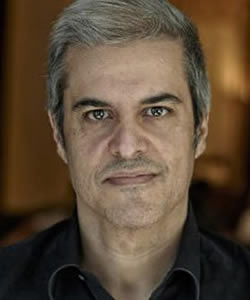
Coit Blacker is a senior fellow at the Freeman Spogli Institute for International Studies, the Olivier Nomellini Professor in International Studies in the School of Humanities and Sciences, and the Olivier Nomellini Family University Fellow in Undergraduate Education. He served as FSI's director between 2003 and August 2012. From 2004 to 2007, he was a member of the Stanford Board of Trustees Committee on Development. Since 2005 he has served as faculty co-chair of the International Initiative.
During the first Clinton administration, Blacker served as special assistant to the president for National Security Affairs and senior director for Russian, Ukrainian and Eurasian affairs at the National Security Council (NSC). At the NSC, he oversaw the implementation of U.S. policy toward Russia and the New Independent States, while also serving as principal staff assistant to the president and the National Security Advisor on matters relating to the former Soviet Union.
Following his government service, Blacker returned to Stanford to resume his research and teaching. From 1998 to 2003, he also co-directed the Aspen Institute's U.S.-Russia Dialogue, which brought together prominent U.S. and Russian specialists on foreign and defense policy for discussion and review of critical issues in the bilateral relationship. He was a study group member of the U.S. Commission on National Security in the 21st Century (the Hart-Rudman Commission) throughout the commission's tenure.
In 2001, Blacker was the recipient of the Laurence and Naomi Carpenter Hoagland Prize for Undergraduate Teaching at Stanford.
Blacker holds an honorary doctorate from the Russian Academy of Sciences' Institute of Far Eastern Studies for his work on U.S.-Russian relations. He is a graduate of Occidental College (A.B., Political Science) and the Fletcher School of Law and Diplomacy (M.A., M.A.L.D., and Ph.D).
Blacker's association with Stanford began in 1977 when he was awarded a post-doctoral fellowship by the Arms Control and Disarmament Program, the precursor to the Center for International Security and Cooperation at FSI.
Larry Diamond is a senior fellow at the Hoover Institution, the Mosbacher Senior Fellow in Global Democracy at the Freeman Spogli Institute for International Studies (FSI), and a Bass University Fellow in Undergraduate Education at Stanford University. He is also professor by courtesy of Political Science and Sociology at Stanford. He leads the Hoover Institution’s programs on China’s Global Sharp Power and on Taiwan in the Indo-Pacific Region. At FSI, he leads the Program on Arab Reform and Democracy, based at the Center on Democracy, Development and the Rule of Law, which he directed for more than six years. He also co-leads with (Eileen Donahoe) the Global Digital Policy Incubator, based at FSI’s Cyber Policy Center. He is the founding co-editor of the Journal of Democracy and also serves as senior consultant at the International Forum for Democratic Studies of the National Endowment for Democracy. His research focuses on democratic trends and conditions around the world and on policies and reforms to defend and advance democracy. His latest edited book (with Orville Schell), China's Influence and American Interests (Hoover Press, 2019), urges a posture of constructive vigilance toward China’s global projection of “sharp power,” which it sees as a rising threat to democratic norms and institutions. He offers a massive open online course (MOOC) on Comparative Democratic Development through the edX platform and is now writing a textbook to accompany it.
Diamond’s book, Ill Winds: Saving Democracy from Russian Rage, Chinese Ambition, and American Complacency, analyzes the challenges confronting liberal democracy in the United States and around the world at this potential “hinge in history,” and offers an agenda for strengthening and defending democracy at home and abroad. A paperback edition with a new preface was released by Penguin in April 2020. His other books include: In Search of Democracy (2016), The Spirit of Democracy (2008), Developing Democracy: Toward Consolidation (1999), Promoting Democracy in the 1990s (1995), and Class, Ethnicity, and Democracy in Nigeria (1989). He has also edited or coedited more than forty books on democratic development around the world, most recently, Dynamics of Democracy in Taiwan: The Ma Ying-jeou Years.
During 2002–03, Diamond served as a consultant to the US Agency for International Development (USAID) and was a contributing author of its report, Foreign Aid in the National Interest. He has also advised and lectured to universities and think tanks around the world, and to the World Bank, the United Nations, the State Department, and other governmental and nongovernmental agencies dealing with governance and development. During the first three months of 2004, Diamond served as a senior adviser on governance to the Coalition Provisional Authority in Baghdad. His 2005 book, Squandered Victory: The American Occupation and the Bungled Effort to Bring Democracy to Iraq, was one of the first books to critically analyze America's postwar engagement in Iraq.
Among Diamond’s other edited books are Democracy in Decline?; Democratization and Authoritarianism in the Arab World; Will China Democratize?; and Liberation Technology: Social Media and the Struggle for Democracy, all edited with Marc F. Plattner; and Politics and Culture in Contemporary Iran, with Abbas Milani. With Juan J. Linz and Seymour Martin Lipset, he edited the series, Democracy in Developing Countries, which helped to shape a new generation of comparative study of democratic development.
Francis Fukuyama is the Olivier Nomellini Senior Fellow at the Freeman Spogli Institute for International Studies (FSI), and Director of the Ford Dorsey Master's in International Policy. He is also a professor (by courtesy) of Political Science. From 2015 to 2021, he served as the Mosbacher Director of FSI's Center on Democracy, Development, and the Rule of Law (CDDRL).
Dr. Fukuyama has written widely on issues in development and international politics. His 1992 book, The End of History and the Last Man, has appeared in over twenty foreign editions. His book, Identity: The Demand for Dignity and the Politics of Resentment, was published in Sept. 2018. His most recent book, Liberalism and Its Discontents, was published in the spring of 2022.
Francis Fukuyama received his B.A. from Cornell University in classics, and his Ph.D. from Harvard in Political Science. He was a member of the Political Science Department of the RAND Corporation, and of the Policy Planning Staff of the US Department of State. From 1996-2000 he was Omer L. and Nancy Hirst Professor of Public Policy at the School of Public Policy at George Mason University, and from 2001-2010 he was Bernard L. Schwartz Professor of International Political Economy at the Paul H. Nitze School of Advanced International Studies, Johns Hopkins University. He served as a member of the President’s Council on Bioethics from 2001-2004.
Dr. Fukuyama holds honorary doctorates from Connecticut College, Doane College, Doshisha University (Japan), Kansai University (Japan), and Aarhus University (Denmark), and the Pardee Rand Graduate School. He is a non-resident fellow at the Carnegie Endowment for International Peace and at the Center for Global Development. He is a member of the Board of Governors of the Pardee Rand Graduate School and the Volcker Alliance. He is a member of the American Political Science Association and the Council on Foreign Relations. He is married to Laura Holmgren and has three children.
Michael McFaul is Director at the Freeman Spogli Institute for International Studies, the Ken Olivier and Angela Nomellini Professor of International Studies in the Department of Political Science, and the Peter and Helen Bing Senior Fellow at the Hoover Institution. He joined the Stanford faculty in 1995.
Dr. McFaul also is an International Affairs Analyst for NBC News and a columnist for The Washington Post. He served for five years in the Obama administration, first as Special Assistant to the President and Senior Director for Russian and Eurasian Affairs at the National Security Council at the White House (2009-2012), and then as U.S. Ambassador to the Russian Federation (2012-2014).
He has authored several books, most recently the New York Times bestseller From Cold War to Hot Peace: An American Ambassador in Putin’s Russia. Earlier books include Advancing Democracy Abroad: Why We Should, How We Can; Transitions To Democracy: A Comparative Perspective (eds. with Kathryn Stoner); Power and Purpose: American Policy toward Russia after the Cold War (with James Goldgeier); and Russia’s Unfinished Revolution: Political Change from Gorbachev to Putin.
His current research interests include American foreign policy, great power relations, and the relationship between democracy and development. Dr. McFaul was born and raised in Montana. He received his B.A. in International Relations and Slavic Languages and his M.A. in Soviet and East European Studies from Stanford University in 1986. As a Rhodes Scholar, he completed his D. Phil. in International Relations at Oxford University in 1991. He is currently writing a book on great power relations in the 21st century.
Kathryn Stoner is the Mosbacher Director of the Center on Democracy, Development, and the Rule of Law (CDDRL), and a Senior Fellow at CDDRL and the Center on International Security and Cooperation at FSI. From 2017 to 2021, she served as FSI's Deputy Director. She is Professor of Political Science (by courtesy) at Stanford and she teaches in the Department of Political Science, and in the Program on International Relations, as well as in the Ford Dorsey Master's in International Policy Program. She is also a Senior Fellow (by courtesy) at the Hoover Institution.
Prior to coming to Stanford in 2004, she was on the faculty at Princeton University for nine years, jointly appointed to the Department of Politics and the Princeton School for International and Public Affairs (formerly the Woodrow Wilson School). At Princeton, she received the Ralph O. Glendinning Preceptorship awarded to outstanding junior faculty. She also served as a Visiting Associate Professor of Political Science at Columbia University, and an Assistant Professor of Political Science at McGill University. She has held fellowships at Harvard University as well as the Woodrow Wilson Center in Washington, DC.
In addition to many articles and book chapters on contemporary Russia, she is the author or co-editor of six books: Transitions to Democracy: A Comparative Perspective, written and edited with Michael A. McFaul (Johns Hopkins 2013); Autocracy and Democracy in the Post-Communist World, co-edited with Valerie Bunce and Michael A. McFaul (Cambridge, 2010); Resisting the State: Reform and Retrenchment in Post-Soviet Russia (Cambridge, 2006); After the Collapse of Communism: Comparative Lessons of Transitions (Cambridge, 2004), coedited with Michael McFaul; and Local Heroes: The Political Economy of Russian Regional Governance (Princeton, 1997); and Russia Resurrected: Its Power and Purpose in a New Global Order (Oxford University Press, 2021).
She received a BA (1988) and MA (1989) in Political Science from the University of Toronto, and a PhD in Government from Harvard University (1995). In 2016 she was awarded an honorary doctorate from Iliad State University, Tbilisi, Republic of Georgia.
Didi Kuo is the Associate Director for Research and Senior Research Scholar at the Center on Democracy, Development and the Rule of Law at Stanford University. She is a scholar of comparative politics, with a focus on democratization, corruption and clientelism, political parties and institutions, and political reform. Her recent work examines changes to party organization, and the impact these changes have on the ability of governments to address challenges posed by global capitalism. She is the author of Clientelism, Capitalism, and Democracy: the rise of programmatic politics in the United States and Britain (Cambridge University Press, 2018), which examines the role of business against clientelism and the development of modern political parties in the nineteenth century.
She has been at Stanford since 2013 as the manager of the Program on American Democracy in Comparative Perspective, which examines problems such as polarization, inequality, and responsiveness, and recommends possibilities for reform. She also teaches in the Fisher Family Honors Program at CDDRL. She is a non-resident fellow in political reform at New America, where she was a 2018 Eric and Wendy Schmidt Fellow. She received a PhD in political science from Harvard University, an MSc in Economic and Social History from Oxford University, where she studied as a Marshall Scholar, and a BA from Emory University.
The Autocratic Challenge to Liberal Democracy and the Future of Global Development: The World 20 Years After the Founding of CDDRL is a one-day workshop that will examine the state of democracy and development today. The workshop brings together current and former CDDRL scholars to understand the causes and consequences of these global challenges, and to advance a research agenda that can underpin an era of democratic renewal.
8:30 – 9:00 AM — Breakfast
9:00 – 9:15 AM — Welcome, CDDRL Mosbacher Director, Kathryn Stoner
9:15 – 10:45 AM — The End of the End of History? The Rise and Fall of Democracy as a Dominant Developmental Paradigm
Beatriz Magaloni (Stanford CDDRL)
Why Democracies Fail
Kate Bersch (Davidson College)
Does Democracy Deliver? Opening the Black Box of the State
Jeremy Weinstein (Stanford CDDRL)
How Technology Changed the Game on Democratic Development
Amichai Magen (Reichman University)
Searching for Eunomia Once Again: Organizing Principles for Liberal Order in the 21st Century
Chair: Gerhard Casper
10:45 – 11:00 AM — Coffee Break
11:00 AM – 12:30 PM — The Democratic Beachhead: Ukraine and the Future of DDRL
Natalia Forrat (University of Michigan)
Russian civil society before, during, and after the war in Ukraine
Anna Grzymala-Busse (Stanford CDDRL)
The Limits of Authoritarian Diffusion
Kathryn Stoner (Stanford CDDRL)
Putin’s Nation Building Project and the End of Russia’s Post-Communist Development: Implications for Europe and Global Democracy
Chair: Erik Jensen
12:30 – 1:15 PM — Lunch
1:15 – 2:45 PM — How Autocracies Live and Die
Lucan Way (University of Toronto)
Why Pluralism Persists: Understanding post-post Cold War regime trajectories
Jason Brownlee (University of Texas - Austin)
State Collapse, Economic Recession, and the Authoritarian Specter
Lisa Blaydes (Stanford CDDRL)
A League of Authoritarian States? The Middle East and Autocratization in Eurasia
Michael Albertus (University of Chicago)
Shadows of the Authoritarian Past
Chair: Saumitra Jha
2:45 – 3:00 PM — Coffee Break
3:15 – 4:30 PM — Defending Democracy at Home and Abroad
Laura Jakli (Society of Fellows/Harvard Business School)
Political Apathy and Alienation as Harbingers of Democratic Decline
Alex Thier (Center for Strategic and International Studies)
Anything, Anywhere, All at Once: The Case for a National Democracy Strategy
Hakeem Jefferson (Stanford CDDRL)
Democracy’s Racism Problem
Alberto Diaz-Cayeros (Stanford CDDRL)
Challenges and opportunities for local direct democracy among indigenous communities in Latin America
Chair: Steve Stedman
Alberto Diaz-Cayeros joined the FSI faculty in 2013 after serving for five years as the director of the Center for US-Mexico studies at the University of California, San Diego. He earned his Ph.D at Duke University in 1997. He was an assistant professor of political science at Stanford from 2001-2008, before which he served as an assistant professor of political science at the University of California, Los Angeles. Diaz-Cayeros has also served as a researcher at Centro de Investigacion Para el Desarrollo, A.C. in Mexico from 1997-1999. His work has focused on federalism, poverty and violence in Latin America, and Mexico in particular. He has published widely in Spanish and English. His book Federalism, Fiscal Authority and Centralization in Latin America was published by Cambridge University Press in 2007 (reprinted 2016). His latest book (with Federico Estevez and Beatriz Magaloni) is: The Political Logic of Poverty Relief Electoral Strategies and Social Policy in Mexico. His work has primarily focused on federalism, poverty and economic reform in Latin America, and Mexico in particular, with more recent work addressing crime and violence, youth-at-risk, and police professionalization.
Alex Thier is Senior Advisor at Moby Media. He served as CEO of the Global Fund to End Modern Slavery; Co- Director of the Task Force on US Strategy to Support Democracy and Counter Authoritarianism; and Senior Democracy Fellow at Freedom House. He was the ninth Executive Director of the Overseas Development Institute in London, a leading global think tank on sustainable development, conflict, climate, and governance. He was appointed by President Obama to serve as chief of USAID’s Bureau for Policy, Planning, and Learning from 2013 to 2015, and as chief of Afghanistan and Pakistan Affairs from 2010 to 2013. He worked previously at the US Institute of Peace, the United Nations, and Oxfam. He was a CDDRL and Hoover Fellow in 2004-2005, and is a graduate of Stanford Law School.
Amichai Magen is a Senior Lecturer (US Associate Professor), Head of the MA Program in Diplomacy & Conflict Studies, and Director of the Program on Democratic Resilience and Development (PDRD) at the Lauder School of Government, Diplomacy and Strategy, Reichman University. His research and teaching interests address democracy, the rule of law, liberal orders, risk and political violence. Amichai Magen received the Yitzhak Rabin Fulbright Award (2003), served as a pre-doctoral fellow at the Center on Democracy, Development, and the Rule of Law (CDDRL), and was a National Fellow at the Hoover Institution. In 2016 he was named Richard von Weizsäcker Fellow of the Robert Bosch Academy, an award that recognizes outstanding thought-leaders around the world. Between 2018 and 2022 he was Principal Investigator in two European Union Horizon 2020 research consortia, EU-LISTCO and RECONNECT. Amichai Magen served on the Executive Committee of the World Jewish Congress (WJC) and is a Board Member of the Israel Council on Foreign Relations (ICFR) and the International Coalition for Democratic Renewal (ICDR). In 2023 he will join the Freeman Spogli Institute as its inaugural Visiting Fellow in Israel Studies.
Anna Grzymala-Busse is a professor in the Department of Political Science, the Michelle and Kevin Douglas Professor of International Studies, senior fellow at the Freeman Spogli Institute for International Studies and the director of The Europe Center. Her research interests include political parties, state development and transformation, informal political institutions, religion and politics, and post-communist politics.
In her first book, Redeeming the Communist Past, she examined the paradox of the communist successor parties in East Central Europe: incompetent as authoritarian rulers of the communist party-state, several then succeeded as democratic competitors after the collapse of these communist regimes in 1989.
Rebuilding Leviathan, her second book project, investigated the role of political parties and party competition in the reconstruction of the post-communist state. Unless checked by a robust competition, democratic governing parties simultaneously rebuilt the state and ensured their own survival by building in enormous discretion into new state institutions.
Anna's most recent book project, Nations Under God, examines why some churches have been able to wield enormous policy influence. Others have failed to do so, even in very religious countries. Where religious and national identities have historically fused, churches gained great moral authority, and subsequently covert and direct access to state institutions. It was this institutional access, rather than either partisan coalitions or electoral mobilization, that allowed some churches to become so powerful.
Other areas of interest include informal institutions, the impact of European Union membership on politics in newer member countries, and the role of temporality and causal mechanisms in social science explanations.
Beatriz Magaloni is the Graham H. Stuart Professor of International Relations, a Professor in the Department of Political Science, Senior Fellow at the Freeman Spogli Institute for International Studies (FSI), and affiliated faculty at the Center on Democracy, Development and the Rule of Law, the Center for Global Ethnography, and the Stanford Center on Global Poverty and Development.
Her first book, Voting for Autocracy: Hegemonic Party Survival and its Demise in Mexico (Cambridge University Press, 2006), won the Best Book Award from the Comparative Democratization Section of the American Political Science Association and the 2007 Leon Epstein Award for the Best Book published in the previous two years in the area of political parties and organizations. Her second book, Strategies of Vote Buying: Democracy, Clientelism, and Poverty Relief in Mexico (co-authored with Alberto Diaz Cayeros and Federico Estévez), studies the politics of poverty relief. Why clientelism is such a prevalent form of electoral exchange, how it distorts policies aimed at aiding the poor, and when it can be superseded by more democratic and accountable forms of electoral exchange are some of the central questions that the book addresses.
In 2010 she founded the Poverty, Violence, and Governance Lab (POVGOV). There she pursues a research agenda focused on violence, human rights and poverty reduction. The mission of POVGOV is to develop action-oriented research through the elaboration of scientific knowledge that is anchored on state-of-the-art methodologies, multidisciplinary work, and innovative on-the-ground research and training. The Lab regularly incorporates undergraduate, masters, Ph.D. and post-doctoral students to pilot and evaluate interventions to reduce violence, combat human rights abuses and improve the accountability of law enforcement and justice sytems.
Her work has appeared in the American Journal of Political Science, World Development, Comparative Political Studies, Annual Review of Political Science, Latin American Research Review, Journal of Theoretical Politics and other journals.
Prior to joining Stanford in 2001, Professor Magaloni was a visiting professor at UCLA and a professor of Political Science at the Instituto Tecnológico Autónomo de México (ITAM). She earned a Ph.D. in Political Science from Duke University. She also holds a law degree from ITAM.
Hakeem Jefferson is an assistant professor of political science at Stanford University where he is also a faculty affiliate with the Center for Comparative Studies in Race and Ethnicity and the Stanford Center for American Democracy. During the 2021-22 academic year he was also the SAGE Sara Miller McCune Fellow at the Center for Advanced Study in the Behavioral Sciences.
Hakeem’s work focuses primarily on the role identity plays in structuring political attitudes and behaviors in the U.S. His in-progress book project builds on his award-winning dissertation to consider how Black Americans come to support punitive social policies that target members of their racial group.
In other projects, Hakeem examines the causes of the racial divide in Americans’ reactions to officer-involved shootings; works to evaluate the meaningfulness of key political concepts, like ideological identification among Black Americans; and considers how white Americans navigate an identity that many within the group perceive as increasingly stigmatized. In these and other projects, Hakeem sets out to showcase and clarify the important and complex ways that identity matters across all domains of American life.
A public-facing, justice-oriented scholar, Hakeem is an academic contributor at FiveThirtyEight and his writings and commentary have been featured in places like the New York Times, The Washington Post, NPR, and other major outlets. He is also active on Twitter, and you can follow him @hakeemjefferson.
Jason Brownlee is delighted to be returning to Palo Alto and CDDRL, where he once spent a pleasant post-doc year turning his dissertation into the book Authoritarianism in an Age of Democratization (Cambridge University Press, 2007). These days he is a professor of Government at the University of Texas at Austin, where he teaches and writes about war, diplomacy, and dictatorships. His latest article, co-authored with Kenny Miao and titled “Why Democracies Survive,” appeared in the October issue of the Journal of Democracy. Brownlee has also been collaborating with Professor Ashley Anderson (UNC-Chapel Hill) and Professor Killian Clarke (Georgetown) on creating a substantive concept of authoritarianism. His current solo project compares the political methods of US military occupations in Iraq and Afghanistan. In his spare time Brownlee enjoys reading novels, practicing piano, and watching his kids play tennis.
Jeremy M. Weinstein is a Professor of Political Science and Senior Fellow at the Freeman Spogli Institute for International Studies. He is also a non-resident fellow at the Center for Global Development in Washington, D.C.
His research focuses on civil wars and political violence; ethnic politics and the political economy of development; and democracy, accountability, and political change. He is the author of Inside Rebellion: The Politics of Insurgent Violence (Cambridge University Press), which received the William Riker Prize for the best book on political economy. He is also the co-author of Coethnicity: Diversity and the Dilemmas of Collective Action (Russell Sage Foundation), which received the Gregory Luebbert Award for the best book in comparative politics, and System Error: Where Big Tech Went Wrong and How We Can Reboot (HarperCollins, 2021). He has published articles in the American Political Science Review, American Journal of Political Science, Annual Review of Political Science, Journal of Conflict Resolution, Foreign Affairs, Foreign Policy, Journal of Democracy, World Policy Journal, and the SAIS Review.
Weinstein received the International Studies Association’s Karl Deutsch Award in 2013. The award is given to a scholar younger than 40 or within 10 years of earning a Ph.D. who has made the most significant contribution to the study of international relations. He also received the Dean’s Award for Distinguished Teaching at Stanford in 2007.
He has also worked at the highest levels of government on major foreign policy and national security challenges, engaging in both global diplomacy and national policy-making. Between 2013 and 2015, Weinstein served as the Deputy to the U.S. Ambassador to the United Nations and, before that, as the Chief of Staff at the U.S. Mission to the United Nations. As Deputy, Weinstein was a standing member of the National Security Council Deputies’ Committee – the sub-cabinet policy committee with primary responsibility for advising the National Security Council, the Cabinet, and the President on the full range of foreign policy issues, including global counterterrorism, nonproliferation, U.S. policy in the Middle East, the strategic rebalance to Asia, cyber threats, among a wide variety of other issues.
During President Obama’s first term, he served as Director for Development and Democracy on the National Security Council staff at the White House between 2009 and 2011. In this capacity, he played a key role in the National Security Council’s work on global development, democracy and human rights, and anti-corruption, with a global portfolio. Before joining the White House staff, Weinstein served as an advisor to the Obama campaign and, during the transition, as a member of the National Security Policy Working Group and the Foreign Assistance Agency Review Team.
Weinstein obtained a BA with high honors from Swarthmore College, and an MA and PhD in political economy and government from Harvard University. He is a member of the Council on Foreign Relations and serves on a number of nonprofit boards and advisory groups.
Katherine Bersch is a Kellogg Fellow at the University of Notre Dame (2022-23) and the Nancy Akers and J. Mason Wallace Assistant Professor of Political Science at Davidson College. A research affiliate of the CDDRL Stanford Governance Project, she is also a co-founder of the Global Survey of Public Servants. Her research focuses on democratic quality in developing countries, with an emphasis on governance reform and state capacity in Latin America. She is the author of When Democracies Deliver: Governance Reform in Latin America (Cambridge University Press, 2019), which won the Van Cott Best Book Prize from LASA, the Levine Book Prize from IPSA, and the ASPA Prize for the Best Book Published in Public Administration.
Kathryn Stoner is the Mosbacher Director of the Center on Democracy, Development, and the Rule of Law (CDDRL), and a Senior Fellow at CDDRL and the Center on International Security and Cooperation at FSI. From 2017 to 2021, she served as FSI's Deputy Director. She is Professor of Political Science (by courtesy) at Stanford and she teaches in the Department of Political Science, and in the Program on International Relations, as well as in the Ford Dorsey Master's in International Policy Program. She is also a Senior Fellow (by courtesy) at the Hoover Institution.
Laura Jakli is a Junior Fellow at the Harvard Society of Fellows and an incoming assistant professor at Harvard Business School’s Business, Government & the International Economy unit. Previously, she was a Predoctoral Fellow at Stanford’s Center on Democracy, Development, and the Rule of Law and the Program on Democracy and the Internet. She holds a PhD in Political Science from the University of California, Berkeley.
Her research is primarily in the field of comparative politics and examines how information communication technologies shape political identity and behavior. Her dissertation won APSA’s Ernst B. Haas Award for the best dissertation on European politics. She is currently working on her book project, Engineering Extremism, which is substantively focused on political extremism, destigmatization, and radicalization, examining the role of popularity cues in political identity formation through experimental methods. Her related research examines a broad range of threats to democratic governance, including apathy engineering, autocratizers’ removal of oversight mechanisms, ethnic prejudice in public goods allocation, and misinformation.
Her published work has appeared in the American Political Science Review, Governance, International Studies Quarterly, Public Administration Review, and the Virginia Journal of International Law, along with an edited volume in Democratization (Oxford University Press).
Lisa Blaydes is a Professor of Political Science at Stanford University. She is the author of State of Repression: Iraq under Saddam Hussein (Princeton University Press, 2018) and Elections and Distributive Politics in Mubarak’s Egypt (Cambridge University Press, 2011). Professor Blaydes received the 2009 Gabriel Almond Award for best dissertation in the field of comparative politics from the American Political Science Association for this project. Her articles have appeared in the American Political Science Review, International Studies Quarterly, International Organization, Journal of Theoretical Politics, Middle East Journal, and World Politics. During the 2008-2009 and 2009-2010 academic years, Professor Blaydes was an Academy Scholar at the Harvard Academy for International and Area Studies. She holds degrees in Political Science (PhD) from the University of California, Los Angeles and International Relations (BA, MA) from Johns Hopkins University.
Lucan Way’s research focuses on global patterns of democracy and dictatorship. His most recent book (with Steven Levitsky), Revolution and Dictatorship: The Violent Origins of Durable Authoritarianism (forthcoming Princeton University Press) provides a comparative historical explanation for the extraordinary durability of autocracies (China, Cuba, USSR) born of violent social revolution. Way’s solo-authored book, Pluralism by Default: Weak Autocrats and the Rise of Competitive Politics (Johns Hopkins, 2015), examines the sources of political competition in the former Soviet Union. Way argues that pluralism in the developing world often emerges out of authoritarian weakness: governments are too fragmented and states too weak to monopolize political control. His first book, Competitive Authoritarianism: Hybrid Regimes after the Cold War (with Steven Levitsky), was published in 2010 by Cambridge University Press. Way’s work on competitive authoritarianism has been cited thousands of times and helped stimulate new and wide-ranging research into the dynamics of hybrid democratic-authoritarian rule.
Michael Albertus is a professor in the Department of Political Science at the University of Chicago. His research examines democracy and dictatorship, inequality and redistribution, property rights, and civil conflict. His most recent book, Property Without Rights: Origins and Consequences of the Property Rights Gap, published by Cambridge University Press in 2021, examines why governments that implement land reform programs only rarely grant property rights to land beneficiaries and how that impacts development and inclusion. Albertus' work has been published in the American Journal of Political Science, World Politics, Journal of Conflict Resolution, Journal of Development Economics, Quarterly Journal of Political Science, British Journal of Political Science, Comparative Political Studies, International Studies Quarterly, World Development, and elsewhere.
Michael McFaul is Director at the Freeman Spogli Institute for International Studies, the Ken Olivier and Angela Nomellini Professor of International Studies in the Department of Political Science, and the Peter and Helen Bing Senior Fellow at the Hoover Institution. He joined the Stanford faculty in 1995.
Dr. McFaul also is an International Affairs Analyst for NBC News and a columnist for The Washington Post. He served for five years in the Obama administration, first as Special Assistant to the President and Senior Director for Russian and Eurasian Affairs at the National Security Council at the White House (2009-2012), and then as U.S. Ambassador to the Russian Federation (2012-2014).
He has authored several books, most recently the New York Times bestseller From Cold War to Hot Peace: An American Ambassador in Putin’s Russia. Earlier books include Advancing Democracy Abroad: Why We Should, How We Can; Transitions To Democracy: A Comparative Perspective (eds. with Kathryn Stoner); Power and Purpose: American Policy toward Russia after the Cold War (with James Goldgeier); and Russia’s Unfinished Revolution: Political Change from Gorbachev to Putin.
His current research interests include American foreign policy, great power relations, and the relationship between democracy and development. Dr. McFaul was born and raised in Montana. He received his B.A. in International Relations and Slavic Languages and his M.A. in Soviet and East European Studies from Stanford University in 1986. As a Rhodes Scholar, he completed his D. Phil. in International Relations at Oxford University in 1991. He is currently writing a book on great power relations in the 21st century.
Natalia Forrat is a social scientist at the University of Michigan and Freedom House. Her research focuses on the state, state-society relations, political regimes, and social movements. She is the author of a book manuscript The Social Roots of Authoritarian Power, which is based on her fieldwork in Russian regions, and a chapter on Russian civil society in Russian Politics Today (edited by Susanne Wengle, forthcoming at Oxford University Press). Her earlier research includes a study of the political economy of Russian higher education, which argues it was influenced by the color revolutions in the neighboring states, and a study of schoolteachers’ role in electoral manipulations in Russia. Recently, she has been a co-PI of a research project Civic Mobilizations in Authoritarian Contexts at Freedom House. She is also a Research Affiliate at CDDRL’s Governance Project. In the past, she was a pre- and postdoctoral fellow at Stanford’s CDDRL, Kellogg Institute at the University of Notre Dame, and Weiser Center for Emerging Democracies at the University of Michigan.