Governance

FSI's research on the origins, character and consequences of government institutions spans continents and academic disciplines. The institute’s senior fellows and their colleagues across Stanford examine the principles of public administration and implementation. Their work focuses on how maternal health care is delivered in rural China, how public action can create wealth and eliminate poverty, and why U.S. immigration reform keeps stalling. 

FSI’s work includes comparative studies of how institutions help resolve policy and societal issues. Scholars aim to clearly define and make sense of the rule of law, examining how it is invoked and applied around the world. 

FSI researchers also investigate government services – trying to understand and measure how they work, whom they serve and how good they are. They assess energy services aimed at helping the poorest people around the world and explore public opinion on torture policies. The Children in Crisis project addresses how child health interventions interact with political reform. Specific research on governance, organizations and security capitalizes on FSI's longstanding interests and looks at how governance and organizational issues affect a nation’s ability to address security and international cooperation.

News Type
News
Date
Paragraphs

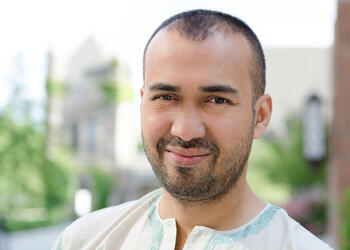
The Program on Arab Reform and Democracy at Stanford’s Center on Democracy, Development, and the Rule of Law is pleased to welcome Egyptian academic and Former Member of Parliament Amr Hamzawy as a visiting scholar for the 2015-16 academic year. Hamzawy, who teaches political science at Cairo University and the American University in Cairo, brings to the program a deep knowledge of Middle East politics and specific expertise on democratization and reform processes in the region. A former Senior Associate at the Carnegie Endowment for International Peace, Hamzawy’s research focuses on questions of political change, human rights, and the rule of law in Egypt. He is a daily columnist for Al-Sherouk, an independent Egyptian newspaper, and writes regularly on the role of civil society actors and parties in Egypt’s often restricted political arena. Hamzawy is a former member of the Egyptian National Council for Human Rights, and was elected to serve in Egypt’s first parliament after the outset of the January 25 Revolution before it was dissolved in the summer of 2012.

Hamzawy will spend his residency at CDDRL working on a research project on the liberal elite and reemergence of autocracy in Egypt. His residency is generously funded by a grant from the Carnegie Corporation to support scholars from the Arab world. In the interview below, Hamzawy describes his current project and research plans. Hamzawy will be sharing his research findings with the CDDRL community in a seminar on October 27.


What are your research goals and priorities?

While at CDDRL, my research objective is to analyze contemporary liberal discourses on democracy and human rights in Egypt. The fact that the majority of Egyptian liberals called on the military establishment - prior to the July 3, 2013 coup which deposed the elected president Mohamed Morsi - to interfere in politics and terminate the emerging pluralist dynamics warrants an in-depth examination. Equally puzzling, is the readiness of Egyptian liberals to allow the former minister of defense and current president Abdel-Fattah al-Sisi’s rise to power, to accept a subordinate role in an increasingly restricted public space, and to tolerate without any noticeable resistance the emergence of a new autocracy in Egypt.


What has your research uncovered?

The research journey has been going in some fascinating directions and yielding some interesting answers. For instance, one set of factors pertains to the formation of the modern Egyptian state and the long-standing dependency of liberal elites on successive autocratic rulers and governments. Another revolves around historical legacies of mistrust and fear towards religious-based social movements and political actors. These legacies have contributed to the tendency of liberals to side with autocrats against popular opposition currents. Finally, the predominance of rent-seeking tendencies inside the state bureaucracy and among economic elites has limited the integration of liberals into Egypt’s social fabric. While there are fascinating historical analogies between the current moment and previous experiences in Egypt from the nineteenth and twentieth centuries, my research will remains focused on the contemporary era.


How is your experience in Egyptian politics informing your current projects?

Throughout the last four years, and while putting on different institutional hats and operating in very different contexts, I have collected first-hand insights on liberal narratives on the formation of the Egyptian state and state-society relations. These experiences also deepened my understanding of liberals’ discourses on their historical encounters with religious forces, their social and political preferences, and their views on the wider public—which some key liberal figures have been willing to disenfranchise to avoid Islamist victories in the polls. These insights, as well as my own experiences as an elected member of the Egyptian People’s Assembly of 2012, the first legislature that was elected freely and without government manipulation, will inform the research.  


What are the most important factors that undermined the movement that supported the January 25, 2011 Revolution in Egypt?

That is a tough question. It is easy to state that neither the military establishment nor the vastly entrenched security apparatus wanted the January 25, 2011 Revolution. They feared that it could lead to a democratic transition in which their roles, benefits, and privileges would have been limited or at least subjected to greater scrutiny. Also, there is no doubt that the rent-seeking economic elites and various forces of the Mubarak regime were heavily invested in blocking an orderly transition to democracy. These are facts that have been well documented and researched.

However, no less significant is the recurrent retreat of liberal elites from pluralist processes and procedures. It appears as if Egyptian liberals have never been ready to support a democratic opening that could bring Islamists to power. Liberals have also been reluctant to shoulder the burden of standing against the autocratic ways of the military and the security establishment, or to help civil society and human rights groups garner more popular support. To explain the root causes and impacts of Egypt’s illiberal liberals is the task of my current research project.

Hero Image
5893917234 02bda8a077 z
Amr Hamzawy. Photo from Bündnis 90/Die Grünen flickr page
All News button
1
-

This is a four-and-a-half-day intensive program for a small number of mid- and high-level government officials and business leaders, exploring how government can encourage and enable the private sector to play a larger, more constructive role as a force for economic growth and development. The process includes small team interactions, with case studies drawn from Asia, Africa and Latin America. Major themes are 1) Industry promotion 2) Investment promotion 3) Public private partnerships in infrastructure, and 4) Access to finance. 

Syllabus (English)
Download pdf

Universidad ESAN

Lima, Peru

Workshops
News Type
News
Date
Paragraphs
From September 13-19, 2015, CDDRL honors students attended the annual Honors College in Washington, D.C., gaining firsthand exposure to how the federal government, policy organizations and think tanks work to advance democracy and development around the world.
 
Throughout the week, students had the opportunity to learn about the government's vision for democracy at the State Department and the National Security Council. The Honors College agenda also included visits to regional organizations such as the Asia Institute, the Inter-American Dialogue and the Tahrir Institute for the Middle East Policy, where students were able to get a sense of how policy is implemented on the ground.
 
Scholars at the World Bank and Johns Hopkins School of Advanced International Studies provided an academic view of development, while speakers at Freedom House and the National Endowment for Democracy explain the challenges and advantages of empowering local democratic activists, particularly in countries hostile to democracy. This year, the students also had the privilege of meeting Gayle Smith, President Obama's nominee to lead the United States Agency for International Development.
 
CDDRL's Interdisciplinary Undergraduate Honors Program aims to provide an opportunity for eligible seniors focusing on democracy, economic development, and rule of law subjects in any university department to earn honors in democracy, development, and rule of law (DDRL). Beyond Honors College, students also meet weekly as a group and with advisors to develop their honors theses. This year's Honors College was led by Steve Stedman, director the honors program, alongside CDDRL scholars Francis Fukuyama and Larry Diamond. To view student testimonials and photos from this year's honors college, see below.
 

Photo Album


Student Testimonials


Image
potter

"I had never spent a significant amount of time in D.C. before honors college. Throughout the entire week I was amazed as I realized that there is an entire city that is passionate about interests similar to mine. After meeting some influential and motivating people, I feel compelled to work in D.C. at some point in my future."

-Hannah Potter


Image
sorensen

"Even though I had already spent a lot of time in D.C., spending a week there with CDDRL faculty and students showed me a side of the city I hadn't experienced before. Meeting with senior staff at think tanks, nonprofits, academic institutions and government agencies helped me understand how the academic concepts I've learned at Stanford are actually applied by people working to promote democracy and development around the world."

-Zachary Sorensen


Image
reid

"One thing that was really amazing about Honors College was the ability to explore D.C., even beyond meeting with leaders in the fields of democracy and development. We were able to walk around and see what an interesting, historical, and hip city D.C. actually is. One morning, my roommate on the trip, Hannah Potter, and I took a run down to the Georgetown Waterfront and explored the beautiful walkway there. 

-Hadley Reid


Image
meropol

"The CDDRL Honor's Program trip to Washington, D.C., was a unique opportunity to experience many different facets of policy-making and academia in the United States. From think tanks to government agencies, I was fascinated by the plethora of ways in which I can work in the realm of democracy and development."

-Hannah Meropol


To find out more about CDDRL's Interdisciplinary Undergraduate Honors Program, please click here. Applications for our 2016-2017 cohort of honors students will be due in February 2016. 


Hero Image
img 3571
2015-2016 Undergraduate Honors Students pose for a group photo outside the White House. | Didi Kuo
All News button
1
-

The Program on American Democracy in Comparative Perspective is holding a conference on Democracy and its Discontents on October 8-10 in Budapest, Hungary. The conference, co-hosted with Central European University, will bring together scholars of American and European politics to examine topics such as democratic backsliding, inequality, and money in politics. Saskia Sassen of Columbia University will deliver the keynote address. 

Democracy and its Discontents Agenda
Download pdf
Conferences
-

This event is sponsored by the Center on Democracy, Development and the Rule of Law (CDDRL) and the Center for South Asia.


When the Indian Constitution was adopted in 1950, its egalitarian and inclusive spirit was widely seen as ahead of its time and out of sync with India’s many entrenched inequalities. Due to the efforts of its main author, the renowned Dalit leader B.R. Ambedkar, the Constitution contained multiple safeguards of cultural, religious and political rights as well as the most ambitious affirmative action program in the world. Over the following six decades, the Constitution shaped Indian society in numerous ways but its most profound impact was in framing public discourse and the way citizens and communities present their claims and demands in public. Despite deep and often violent social and political conflicts, the Constitution and many of its key provisions – religious tolerance, uplift of the historically disadvantaged, recognition of the rights of distinct communities, unity of the nation – are invoked and claimed by all sides in these conflicts. At the same time, the Supreme Court of India has emerged as an active and activist court that is widely respected as the guardian of the Constitution.


In this seminar, two distinguished speakers will highlight and analyze why and how the Indian Constitution acquired this key role in the nation’s life.

Professor Rajeev Bhargava is a renowned political theorist who has published seminal studies of Indian secularism and law, and the Director of the well known Center for the Study of Developing Societies in New Delhi. 

Dr. Rohit De is a legal scholar and Assistant Professor of History at Yale University. His forthcoming book is entitled Litigious Citizens, Constitutional Law and Everyday Life in the Indian Republic.


The two presentations will be followed by shorter commentaries from:

Francis Fukuyama, Senior Fellow at FSI and Director of CDDRL

Erik Jensen, Professor at the Stanford School of Law

Dr. Vivek Srinivasan, Program Manager for CDDRL's Program on Liberation Technology


Rajeev Bhargava Director, Center for the Study of Developing Societies Director, Center for the Study of Developing Societies
Rohit De Assistant Professor of History at Yale University Assistant Professor of History at Yale University
Seminars
-

The LAD Program in Georgia will take place on January 18-22, 2016 and will be implemented jointly by CDDRL and the Economic Policy Research Center (EPRC) - a local think tank based in Tbilisi, Georgia. LAD in Georgia is supported by the Ilia State University.

"The Role of Public Policy in Private Sector Development" workshop is an intensive, five-day executive level training program that will teach selected participants how to be effective reform leaders, promoting sound public policies in complex and contentious settings. The LAD Program in Georgia will be led by CDDRL Director Francis Fukuyama of Stanford University and Professor Alan Trager of Johns Hopkins School of Advanced International Studies. 

The application deadline has been extended to November 6th, 2015. 

Application Selection Announcement
Download pdf
Application Form
Download docx

Ilia State University

Tbilisi, Georgia

Workshops

For more information, please visit: http://positivepeace2015.splashthat.com/


Positive Peace is a transformative concept. It constitutes a new approach to building peace by focusing attention on the attitudes, institutions and structures of more peaceful nations. Countries with higher levels of Positive Peace are less likely to slip into major conflicts, experience less violence, and are better equipped to bounce back from internal or external shocks such as a civil war or natural disaster.

Despite this great promise, Positive Peace has yet to reach its full potential. In 2014, over 13 percent of the global economy was spent on containing or dealing with the consequences of violence yet by comparison little is spent on strengthening Positive Peace factors such as good governance, the creation of a sound business environment, acceptance of the rights of others and control of corruption. And despite a rhetorical commitment to prevention – investing in countries before they descend into violence and chaos – all too often the global policymaking community careens from one crisis to another, intervening too late to make any meaningful impact. By contrast, Positive Peace offers a road map for building an environment in which peace can flourish over the long haul.

The inaugural Positive Peace conference will be held at Stanford University’s Paul Brest Hall on October 5, 2015. This daylong event is meant to kickstart a conversation about the role Positive Peace can play in tackling some of the most difficult problems faced by the world today.

Influenced by the Global Peace Index and other groundbreaking research, a growing number of academics, practitioners and policymakers are working on Positive Peace, defined as the attitudes, institutions and structures of more peaceful nations. The inaugural Positive Peace conference is meant to bring together leading Positive Peace practitioners together with policymakers, business leaders and representatives of other related fields like atrocity and conflict prevention and humanitarian assistance. An estimated 100 participants will gather to address a series of fundamental questions, such as:

  • How do you build support for longer-term investments in Positive Peace in a world dominated by crisis response?

  • Does Positive Peace provide a potential road map for more effective humanitarian, and business, investments?

  • How can the principles of Positive Peace be used in designing interventions for countries that are currently undergoing conflict?

  • What lessons can be learned from countries that have avoided descents into chaos and despair despite facing similar risk factors to those that have?

  • And how is information about Positive Peace best communicated in a way that is understandable and useful?


Paul Brest Hall

555 Salvatierra Walk

Stanford University 

Encina Hall, C149
616 Jane Stanford Way
Stanford, CA 94305

(650) 725-0500
0
Senior Fellow, Freeman Spogli Institute for International Studies
Professor, by courtesy, of Political Science
alberto_diaz-cayeros_2024.jpg MA, PhD

Alberto Díaz-Cayeros is a Senior Fellow at Stanford University's Freeman Spogli Institute for International Studies (FSI), and co-director of the Democracy Action Lab (DAL), based at FSI's Center on Democracy, Development and Rule of Law (CDDRL). His research interests include federalism, poverty relief, indigenous governance, political economy of health, violence, and citizen security in Mexico and Latin America.

He is the author of Federalism, Fiscal Authority and Centralization in Latin America (Cambridge, reedited 2016), coauthored with Federico Estévez and Beatriz Magaloni, of The Political Logic of Poverty Relief (Cambridge, 2016), and of numerous journal articles and book chapters.

He is currently working on a project on cartography and the developmental legacies of colonial rule and governance in indigenous communities in Mexico.

From 2016 to 2023, he was the Director of the Center for Latin American Studies at Stanford University, and from 2009 to 2013, Director of the Center for US-Mexican Studies at UCSD, the University of California, San Diego.

Affiliated faculty at the Center on Democracy, Development and the Rule of Law
Co-director, Democracy Action Lab
Director of the Center for Latin American Studies (2016 - 2023)
CV
Date Label
Senior Fellow, FSI Senior Fellow, FSI

CDDRL
Stanford University
Encina Hall, C147
616 Jane Stanford Way
Stanford, CA 94305-6055

(650) 724-6448 (650) 723-1928
0
Mosbacher Senior Fellow in Global Democracy at the Freeman Spogli Institute for International Studies
William L. Clayton Senior Fellow at the Hoover Institution
Professor, by courtesy, of Political Science and Sociology
diamond_encina_hall.png MA, PhD

Larry Diamond is the William L. Clayton Senior Fellow at the Hoover Institution, the Mosbacher Senior Fellow in Global Democracy at the Freeman Spogli Institute for International Studies (FSI), and a Bass University Fellow in Undergraduate Education at Stanford University. He is also professor by courtesy of Political Science and Sociology at Stanford, where he lectures and teaches courses on democracy (including an online course on EdX). At the Hoover Institution, he co-leads the Project on Taiwan in the Indo-Pacific Region and participates in the Project on the U.S., China, and the World. At FSI, he is among the core faculty of the Center on Democracy, Development and the Rule of Law, which he directed for six and a half years. He leads FSI’s Israel Studies Program and is a member of the Program on Arab Reform and Development. He also co-leads the Global Digital Policy Incubator, based at FSI’s Cyber Policy Center. He served for 32 years as founding co-editor of the Journal of Democracy.

Diamond’s research focuses on global trends affecting freedom and democracy and on U.S. and international policies to defend and advance democracy. His book, Ill Winds: Saving Democracy from Russian Rage, Chinese Ambition, and American Complacency, analyzes the challenges confronting liberal democracy in the United States and around the world at this potential “hinge in history,” and offers an agenda for strengthening and defending democracy at home and abroad.  A paperback edition with a new preface was released by Penguin in April 2020. His other books include: In Search of Democracy (2016), The Spirit of Democracy (2008), Developing Democracy: Toward Consolidation (1999), Promoting Democracy in the 1990s (1995), and Class, Ethnicity, and Democracy in Nigeria (1989). He has edited or coedited more than fifty books, including China’s Influence and American Interests (2019, with Orville Schell), Silicon Triangle: The United States, China, Taiwan the Global Semiconductor Security (2023, with James O. Ellis Jr. and Orville Schell), and The Troubling State of India’s Democracy (2024, with Sumit Ganguly and Dinsha Mistree).

During 2002–03, Diamond served as a consultant to the US Agency for International Development (USAID) and was a contributing author of its report, Foreign Aid in the National Interest. He has advised and lectured to universities and think tanks around the world, and to the World Bank, the United Nations, the State Department, and other organizations dealing with governance and development. During the first three months of 2004, Diamond served as a senior adviser on governance to the Coalition Provisional Authority in Baghdad. His 2005 book, Squandered Victory: The American Occupation and the Bungled Effort to Bring Democracy to Iraq, was one of the first books to critically analyze America's postwar engagement in Iraq.

Among Diamond’s other edited books are Democracy in Decline?; Democratization and Authoritarianism in the Arab World; Will China Democratize?; and Liberation Technology: Social Media and the Struggle for Democracy, all edited with Marc F. Plattner; and Politics and Culture in Contemporary Iran, with Abbas Milani. With Juan J. Linz and Seymour Martin Lipset, he edited the series, Democracy in Developing Countries, which helped to shape a new generation of comparative study of democratic development.

Download full-resolution headshot; photo credit: Rod Searcey.

Former Director of the Center on Democracy, Development and the Rule of Law
Faculty Chair, Jan Koum Israel Studies Program
Date Label
Senior Fellow, Hoover Senior Fellow, Hoover

Dept. of Political Science
Encina Hall, Room 436
Stanford University,
Stanford, CA

(650) 724-5949
0
Senior Fellow at the Freeman Spogli Institute for International Studies
Graham H. Stuart Professor of International Relations
Professor of Political Science
beatriz_magaloni_2024.jpg MA, PhD

Beatriz Magaloni Magaloni is the Graham Stuart Professor of International Relations at the Department of Political Science. Magaloni is also a Senior Fellow at the Freeman Spogli Institute, where she holds affiliations with the Center on Democracy, Development and the Rule of Law (CDDRL) and the Center for International Security and Cooperation (CISAC). She is also a Stanford’s King Center for Global Development faculty affiliate. Magaloni has taught at Stanford University for over two decades.

She leads the Poverty, Violence, and Governance Lab (Povgov). Founded by Magaloni in 2010, Povgov is one of Stanford University’s leading impact-driven knowledge production laboratories in the social sciences. Under her leadership, Povgov has innovated and advanced a host of cutting-edge research agendas to reduce violence and poverty and promote peace, security, and human rights.

Magaloni’s work has contributed to the study of authoritarian politics, poverty alleviation, indigenous governance, and, more recently, violence, crime, security institutions, and human rights. Her first book, Voting for Autocracy: Hegemonic Party Survival and its Demise in Mexico (Cambridge University Press, 2006) is widely recognized as a seminal study in the field of comparative politics. It received the 2007 Leon Epstein Award for the Best Book published in the previous two years in the area of political parties and organizations, as well as the Best Book Award from the American Political Science Association’s Comparative Democratization Section. Her second book The Politics of Poverty Relief: Strategies of Vote Buying and Social Policies in Mexico (with Alberto Diaz-Cayeros and Federico Estevez) (Cambridge University Press, 2016) explores how politics shapes poverty alleviation.

Magaloni’s work was published in leading journals, including the American Political Science Review, American Journal of Political Science, Criminology & Public Policy, World Development, Comparative Political Studies, Annual Review of Political Science, Cambridge Journal of Evidence-Based Policing, Latin American Research Review, and others.

Magaloni received wide international acclaim for identifying innovative solutions for salient societal problems through impact-driven research. In 2023, she was named winner of the world-renowned Stockholm Prize in Criminology, considered an equivalent of the Nobel Prize in the field of criminology. The award recognized her extensive research on crime, policing, and human rights in Mexico and Brazil. Magaloni’s research production in this area was also recognized by the American Political Science Association, which named her recipient of the 2021 Heinz I. Eulau Award for the best article published in the American Political Science Review, the leading journal in the discipline.

She received her Ph.D. in political science from Duke University and holds a law degree from the Instituto Tecnológico Autónomo de México.

Director, Poverty, Violence, and Governance Lab
Co-director, Democracy Action Lab
CV
Date Label
Associate Professor of Political Science & Director, Program On Poverty And Governance, FSI Associate Professor of Political Science & Director, Program On Poverty And Governance, FSI
Conferences
-

Abstract:

With the proliferation of online social media, political actors have a new means of reaching their constituents directly, circumventing the mainstream news media. Indian Prime Minister Narendra Modi has had a very significant presence on social media with almost 30 million “likes” on Facebook and 15 million followers on Twitter. Modi's rise on Twitter offers an important example on political brand management, in this talk we examine specific outreach strategies and how these have evolved over time. We examine the frequency, tenor, and popularity of messages, the evolution of thematic discussions, and the use of political metaphor in Modi's sharpening of a new populist discourse as leader of an aspirational, global India.


Speaker Bio:

Image
joyojeet pal

Joyojeet Pal is an assistant professor at the University of Michigan's School of Information where his work focuses on user experience and accessibility in low- and middle-income countries. His recent research looks at the use of social media in political communication in India, specifically on the role of political branding online in India. He is one of the technical collaborators on the Unfinished Sentences project examining oral histories of the El Salvador civil war, and leads the Colombia Digital Culture project at the University of Michigan. He researched and produced the award-winning documentary, "For the Love of a Man" based on the fan following of South Indian film star Rajnikanth.

Assistant Professor, University of Michigan's School of Information
Seminars
Subscribe to Governance