Governance

FSI's research on the origins, character and consequences of government institutions spans continents and academic disciplines. The institute’s senior fellows and their colleagues across Stanford examine the principles of public administration and implementation. Their work focuses on how maternal health care is delivered in rural China, how public action can create wealth and eliminate poverty, and why U.S. immigration reform keeps stalling. 

FSI’s work includes comparative studies of how institutions help resolve policy and societal issues. Scholars aim to clearly define and make sense of the rule of law, examining how it is invoked and applied around the world. 

FSI researchers also investigate government services – trying to understand and measure how they work, whom they serve and how good they are. They assess energy services aimed at helping the poorest people around the world and explore public opinion on torture policies. The Children in Crisis project addresses how child health interventions interact with political reform. Specific research on governance, organizations and security capitalizes on FSI's longstanding interests and looks at how governance and organizational issues affect a nation’s ability to address security and international cooperation.

-

Abstract:

Within the last fifteen years, nine multilateral development banks (MDBs) have established internal accountability offices (IAOs).  These IAOs, the most well-known of which is the World Bank Inspection Panel, allow communities within borrowing states to bring complaints against MDBs if loan programs cause them harm and violate MDB policies.  The IAOs have been touted as effective fire-alarm mechanisms and remedies to the democratic deficit problem; they have also been criticized as broadly ineffective and toothless.  What explains the variation in IAO impact and efficacy?  I argue that borrowing states significantly constrain the impact of MDB IAOs and that borrowing state influence varies depending on regime type.  Democratic borrowing states will be more willing to absorb the potential costs associated with MDB IAOs—including program changes and possible program termination—than will autocratic states.  The argument is supported with quantitative evidence from a new dataset of all complaints filed through 2015.

Speaker Bio:

Image
erica gould
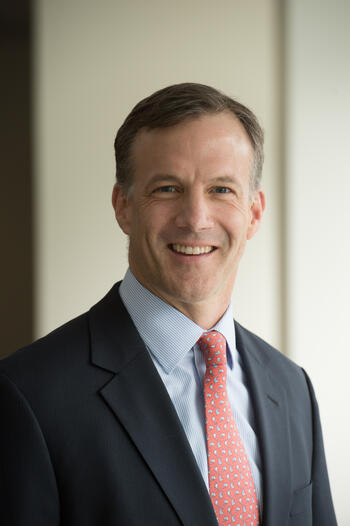
Erica Gould is the Director of the International Relations Honors Program at Stanford University. She teaches courses on honors thesis writing, international political economy and international organizations.  She has taught previously at the University of Virginia and Johns Hopkins University.  Dr. Gould’s research has centered mainly around the question of how international organizations are controlled.  She is currently working on a project concerning international organizational decision-making rules and also one on the accountability mechanisms associated with international organizations.  Her publications include Money Talks: The International Monetary Fund, Conditionality and Supplementary Financiers (Stanford University Press, 2006), as well as articles in academic journals and several edited volumes. In addition to her research and teaching, Dr. Gould serves on the Board of Accountability Counsel, an international NGO based in San Francisco.  She received her PhD in Political Science from Stanford University and her BA from Cornell University.

Erica Gould Director of the International Honors Program at Stanford University
Seminars
-

Speaker Bio:

Image
zeynep tufekci1
Zeynep Tufekci, a contributing opinion writer for The New York Times, writes about the social impacts of technology. She is an assistant professor in the School of Information and Library Science at the University of North Carolina, a faculty associate at the Berkman Center for Internet and Society at Harvard, and a former fellow at the Center for Internet Technology Policy at Princeton. Her research revolves around politics, civics, movements, privacy and surveillance, as well as data and algorithms. Originally from Turkey, Ms. Tufekci was a computer programmer by profession and academic training before turning her focus to the impact of technology on society and social change. She switched to social science, and started calling herself a “technosociologist.” She has been published widely on the interaction of new technologies with society, politics and culture. Her forthcoming book from Yale University Press is tentatively titled “Beautiful Tear Gas: The Ecstatic, Fragile Politics of Networked Protest in the 21st Century.”

Zeynep Tufekci Writer for The New York Times
Seminars
-

Abstract: 

How do autocrats manipulate the beliefs of their citizens during political crises? We argue that they cultivate a reputation for neutrality so that, during moments of crisis, their pro-regime arguments have some measure of credibility. To test the argument, we employ a corpus of 24 state-affiliated newspapers from Africa and Asia. Using a differences-in-differences estimation strategy, we find that propaganda in autocracies is generally indistinguishable from state-affiliated newspapers in democracies, save for the 15 days prior to an election, when positive coverage of the autocrat and the ruling party triples. This increase, we show, is driven not by more effusive articles, but an increase in the share of articles about the regime. Consequently, the aggregate volume of pro-regime coverage increases, but per article positive coverage does not. We find no evidence that autocrats employ propaganda to issue threats of repression during election seasons, and that their propaganda apparatuses generally avoid defaming the opposition. State-affiliated newspapers in democracies -- much like their autocratic counterparts outside of election seasons -- exhibit generally neutral coverage.

Speaker Bio:

Image
carter brett
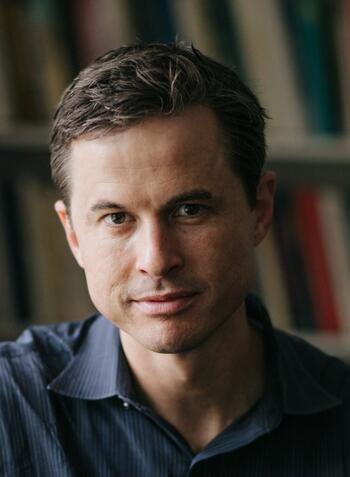
Dr. Brett Carter is an Assistant Professor at the School of International Relations at the University of Southern California and co-PI of the Lab on Non-Democratic Politics. He holds a Ph.D. from Harvard University, where he was a Graduate Fellow at the Harvard Academy for International and Area Studies. He was previously a fellow at Stanford University's Center on Democracy, Development, and the Rule of Law, as well as the Hoover Institution. His research focuses on autocratic politics in the Information Age. He is currently working on three book projects: one on autocratic survival in Post-Cold War Africa, one on autocratic propaganda, and one that exploits the Foreign Agents Registration Act to explore the role of autocratic money in American politics.
 
0
brett_carter_2025.jpg

Brett Carter is an Associate Professor in the Department of Political Science and International Relations at the University of Southern California, a Hoover Fellow at Stanford University's Hoover Institution, and a Faculty Affiliate at Stanford's Center on Democracy, Development and the Rule of Law. He received a Ph.D. from Harvard University, where he was a fellow at the Harvard Academy for International and Area Studies.

Carter studies politics in the world's autocracies. His first book, Propaganda in Autocracies: Institutions, Information, and the Politics of Belief (Cambridge University Press), draws on the largest archive of state propaganda ever assembled — encompassing over eight million newspaper articles in six languages from nearly 60 countries around the world — to show how political institutions shape the propaganda strategies of repressive governments. It received the William Riker Prize for the Best Book in Political Economy, the International Journal of Press/Politics Hazel Gaudet-Erskine Best Book Award, Honorable Mention for the Gregory Luebbert Award for the Best Book in Comparative Politics, and Honorable Mention for the APSA Democracy & Autocracy Section's Best Book Award.

His second book, in progress, shows how politics in Africa’s autocracies changed after the fall of the Berlin Wall and how a new era of geopolitical competition — marked by the rise of China and the resurgence of Russia — is changing them again.

Carter’s other work has appeared in the Journal of Politics, British Journal of Political Science, Perspectives on Politics, Journal of Conflict Resolution, Security Studies, China Quarterly, Journal of Democracy, and Foreign Affairs, among others. His work has been featured by The New York Times, The Economist, The National Interest, and NPR’s Radiolab.

Hoover Fellow
CDDRL Affiliated Scholar
CDDRL Visiting Scholar, 2020-2021
Date Label
Assistant Professor at the School of International Relations at the University of Southern California
Seminars
-

Abstract:

Duncan Green, Oxfam Strategic Adviser and LSE Professor of Practice in International Development, introduces the arguments of his new book, How Change Happens (OUP, October 2016). How Change Happens explores how political and social change takes place, and the role of individuals and organizations in influencing that change. He discusses the challenges that 'systems thinking' creates for traditional aid practices, and how a 'power and systems approach' requires activists, whether in campaigns, companies or governments, to fundamentally rethink the way they understand the world and try to influence it.


Speaker Bio:

Image
duncan green
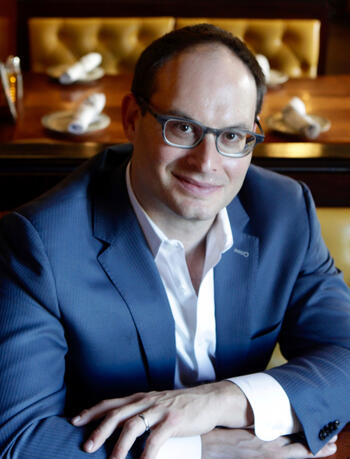
Dr. Duncan Green is Senior Strategic Adviser at Oxfam GB, Professor in Practice in International Development at the London School of Economics, honorary Professor of International Development at Cardiff University and a Visiting Fellow at the Institute for Development Studies. He is author of How Change Happens (OUP, October 2016) and From Poverty to Power: How Active Citizens and Effective States can Change the World (Oxfam International, 2008, second edition 2012). His daily development blog can be found on http://www.oxfamblogs.org/fp2p/.

He was previously Oxfam’s Head of Research, a Visiting Fellow at Notre Dame University, a Senior Policy Adviser on Trade and Development at the Department for International Development (DFID), a Policy Analyst on trade and globalization at CAFOD, the Catholic aid agency for England and Wales and Head of Research and Engagement at the Just Pensions project on socially responsible investment.


Dr. Duncan Green Senior Strategic Adviser at Oxfam GB
Seminars
News Type
Commentary
Date
Paragraphs

In the interview for CBCNews, Kathryn Stoner, FSI/CDDRL Senior Fellow and the Director of the Ford Dorsey Program in International Policy Studies at Stanford University, claims Russians left trails and didn't fight much to deny their interference in the U.S. 2016 elections because they wanted everyone to know that it was them, to emerge as a great power. Watch the video here.

Hero Image
screen shot 2017 03 21 at 3 44 20 pm
All News button
1
-
Co-sponsored by the Center on Democracy, Development, and the Rule of Law and the Southeast Asia Program
 
The Philippines is typically characterized as a weak, even patrimonial, state in which powerful oligarchs and political families dominate politics and policymaking.  By implication, the elite should be able to easily suppress reform and the state should be unwilling or incapable of carrying out reforms.   Yet some efforts to achieve socioeconomic and governance reform have succeeded.  How and why is this the case?  And what does this suggest about the changing nature of the Philippine state?

This presentation will examine the dynamics and outcomes of three extended efforts at social, economic and governance reform in the Philippines:  1) agrarian reform; 2) liberalization of the telecommunications sector and 3) fiscal and budget reforms.

Theory and practice will be bridged in an examination of interlinked factors including the autonomy and capacity of the state, the limits on reform imposed by elite-dominated democracy, and the conditions and strategies that have enabled some reforms to succeed.
Particular questions to be addressed will include:
·       What are the political and institutional barriers to reform in the Philippines?  How have these changed over time?
·       How have these barriers been overcome in the cases of “successful” reform?  What does “successful” mean?  
·       How have attempts at reform strengthened or weakened the state?
·       Looking forward, will the typically partial or incremental character of reform result in transformational change, or deflect it?

David Timberman is a political analyst and development practitioner with 30 years of experience analyzing and addressing political, governance and conflict-related challenges, principally in Southeast and South Asia.  As a Visiting Scholar at Stanford/APARC he is working on a book on the contemporary Philippine political economy.  During 2015-2016 he was a Visiting Professor of Political Science at De La Salle University in Manila. He has lived and worked in the Philippines, Indonesia and Singapore, including experiencing first-hand the democratic transitions in the Philippines (1986-1988) and Indonesia (1998-2001). He has written extensively on political and governance issues in the Philippines and has edited or co-edited multi-author volumes on the Philippines, Cambodia, and economic policy reform in Southeast Asia.

David G. Timberman 2016-2017 Lee Kong Chian NUS-Stanford Fellow on Contemporary Southeast Asia
Seminars
Paragraphs

"What should states in the developing world do and how should they do it? How have states in the developing world addressed the challenges of promoting development, order, and inclusion? States in the developing world are supposed to build economies, control violence, and include the population. How they do so depends on historical origins and context as well as policy decisions. This volume presents a comprehensive theory of state capacity, what it consists of, and how it may be measured. With historical empirical illustrations it suggests that historical origins and political decisions help drive the capacity of states to meet their goals."

All Publications button
1
Publication Type
Books
Publication Date
Journal Publisher
Cambridge University Press
Authors
Subscribe to Governance