Governance

FSI's research on the origins, character and consequences of government institutions spans continents and academic disciplines. The institute’s senior fellows and their colleagues across Stanford examine the principles of public administration and implementation. Their work focuses on how maternal health care is delivered in rural China, how public action can create wealth and eliminate poverty, and why U.S. immigration reform keeps stalling. 

FSI’s work includes comparative studies of how institutions help resolve policy and societal issues. Scholars aim to clearly define and make sense of the rule of law, examining how it is invoked and applied around the world. 

FSI researchers also investigate government services – trying to understand and measure how they work, whom they serve and how good they are. They assess energy services aimed at helping the poorest people around the world and explore public opinion on torture policies. The Children in Crisis project addresses how child health interventions interact with political reform. Specific research on governance, organizations and security capitalizes on FSI's longstanding interests and looks at how governance and organizational issues affect a nation’s ability to address security and international cooperation.

News Type
News
Date
Paragraphs

Fellows will arrive at Stanford in July to begin the three-week academic training program taught by Stanford faculty, policymakers and thought-leaders in the technology sector.


Image
collagewebsite2


Stanford's Center on Democracy, Development, and the Rule of Law is proud to announce the 2017 class of Draper Hills Summer Fellows, which is composed of 28 leaders – selected from among hundreds of applications – advancing democratic development in some of the most challenging corners of the world.

In Bahrain, Burma, Rwanda and Sudan our fellows are working on peace-building initiatives to create more tolerant and inclusive societies. Judges and lawyers are holding government and criminals accountable and reforming the rule of law in Argentina, Guatemala and the Philippines. Gender rights activists are creating new tools and programs to protect the safety and freedom of women and girls in India, Kuwait and Papua New Guinea.

In Egypt, Morocco, Pakistan, Serbia and Ukraine, our fellows are serving inside the government as members of Parliament and senior civil servants to advance reform and new policy agendas. Business leaders in Jordan and India launched initiatives to support more inclusive economic growth and social development.

CDDRL is excited to launch another powerful network of leaders determined to advance change in their communities. They will emerge with new tools, frameworks and connections to enhance their work and deepen their impact on democratic reform.

The 2017 class will mark the 13th cohort of the Draper Hills Summer Fellows Program and the fellows will join the Omidyar Network Leadership Forum, an alumni community of over 300 alumni in 75 countries worldwide.

Hero Image
collagewebsite2
All News button
1
-

Speaker(s) Bio:

Image
zandanshatar
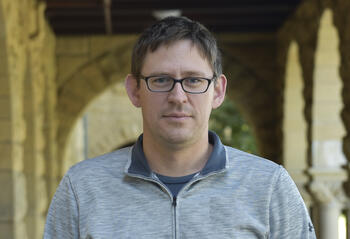
Zandanshatar Gombojav, Member of Parliament, having recently served as the General Secretary of the Mongolian People's Party, Mongolia's largest party by membership. From 2004 until 2012, he was a Member of the Parliament of Mongolia, and from 2009 to 2012, he was Mongolia's Minister of Foreign Affairs and Trade. Before his appointment as Foreign Minister, during which he had many foreign policy accomplishments from renewing the country's foreign policy concept to adopting new trade agreements with several partners, he had a successful career in Mongolia's banking sector, working at the Agricultural Bank, Khan Bank, and the Central Bank of Mongolia. He also served as the Deputy Minister of Agriculture, before being elected to Parliament. After graduating from the State Institute of Finance in Russia, he began his career as a Lecturer on Economics and Finance at Mongolia's Institute of Commerce and Industry. His current research interest focuses on issues related to the democratic and political development of Mongolia given its geostrategic situation. At Stanford, he will be working on a larger research project encompassing regional democratic and political development from Mongolia's unique perspective. He has published extensively on various banking issues and also on topics regarding the international relations process in refereed journals and different conference proceedings. He has been a strong supporter of the reform process, being actively involved in the organisation of youth development.


Image
fishkin 2
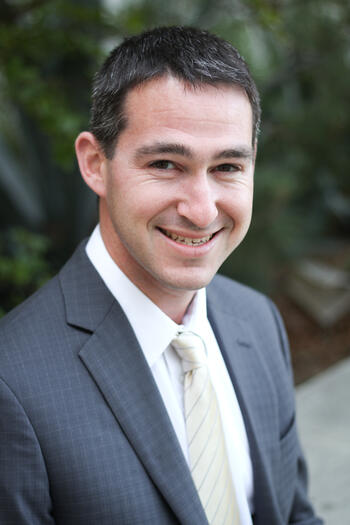
James S. Fishkin holds the Janet M. Peck Chair in International Communication at Stanford University, where he is Professor of Communication and (by courtesy) Professor of Political Science. He is also Director of Stanford’s Center for Deliberative Democracy. He is the author of Democracy and Deliberation (Yale 1991), When the People Speak: Deliberative Democracy and Public Consultation (Oxford 2009) and other books. He is a Guggenheim Fellow, a Fellow of the American Academy of Arts and Sciences, and a fellow at the Center for Advanced Study in the Behavioral Sciences, Stanford, California.


Co-sponsors:

Center for Deliberative Democracy

Stanford Global Studies


Encina Hall
616 Serra Street
Stanford, CA 94305-6055

0
Zandanshatar.jpg

Zandanshatar Gombojav comes to Stanford as a Visiting Scholar at CDDRL, having recently served as the General Secretary of the Mongolian People's Party, Mongolia's largest party by membership. From 2004 until 2012, he was a Member of the Parliament of Mongolia, and from 2009 to 2012, he was Mongolia's Minister of Foreign Affairs and Trade.

Before his appointment as Foreign Minister, during which he had many foreign policy accomplishments from renewing the country's foreign policy concept to adopting new trade agreements with several partners, he had a successful career in Mongolia's banking sector, working at the Agricultural Bank, Khan Bank, and the Central Bank of Mongolia. He also served as the Deputy Minister of Agriculture, before being elected to Parliament. After graduating from the State Institute of Finance in Russia, he began his career as a Lecturer on Economics and Finance at Mongolia's Institute of Commerce and Industry.
His current research interest focuses on issues related to the democratic and political development of Mongolia given its geostrategic situation. At Stanford, he will be working on a larger research project encompassing regional democratic and political development from Mongolia's unique perspective.

He has published extensively on various banking issues and also on topics regarding the international relations process in refereed journals and different conference proceedings. He has been a strong supporter of the reform process, being actively involved in the organisation of youth development.

Visiting Scholar, 2016, 2014-15
Member of Parliament

Encina Hall, E102
616 Jane Stanford Way
Stanford, CA 94305

(650) 723-4611
0
Janet M. Peck Professor of International Communication
Professor of Political Science (by courtesy)
Senior Fellow, Freeman Spogli Institute for International Studies
fishkin_2.jpg PhD

James S. Fishkin holds the Janet M. Peck Chair in International Communication at Stanford University, where he is a Professor of Communication and Professor of Political Science (by courtesy). He is also Director of the Deliberative Democracy Lab at CDDRL (formerly the Center for Deliberative Democracy).

He is the author of a number of books, including Democracy and Deliberation: New Directions for Democratic Reform (Yale University Press, 1991), The Dialogue of Justice (Yale University Press, 1992 ), The Voice of the People: Public Opinion and Democracy (Yale University Press 1995). With Bruce Ackerman, he is the co-author of Deliberation Day (Yale University Press, 2004). And more recently, When the People Speak: Deliberative Democracy and Public Consultation (Oxford University Press, 2009 and Democracy When the People Are Thinking (Oxford University Press, 2018).

He is best known for developing Deliberative Polling® — a practice of public consultation that employs random samples of the citizenry to explore how opinions would change if they were more informed. Professor Fishkin and his collaborators have conducted Deliberative Polls in the US, Britain, Australia, Denmark, Bulgaria, China, Greece, Mongolia, Uganda, Tanzania, Brazil,  and other countries.

Fishkin has been a Visiting Fellow Commoner at Trinity College, Cambridge, as well as a Fellow of the Center for Advanced Study in the Behavioral Sciences at Stanford, a Guggenheim Fellow, and a Fellow of the American Academy of Arts and Sciences.

Fishkin received his B.A. from Yale in 1970 and holds a Ph.D. in Political Science from Yale as well as a second Ph.D. in Philosophy from Cambridge.

Director, Deliberative Democracy Lab
Professor, Political Science
Seminars
-
 
Two CDDRL honor students will present their theses at this week's CDDRL Research Seminar on Thursday, May 25, from 12-1:30.
 
Whitney McIntosh's thesis, "France and the Internationalization of Security: A Conceptual History of Security During the Interwar Years (1919-1933)" will receive a Firestone Medal, given to the top 10% of all honors theses.

Image
whitney
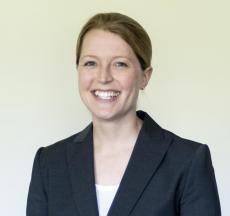
About Whitney: Whitney McIntosh is from Melbourne, Australia. At Stanford, she studied International Relations and English before pursuing an interdisciplinary honors thesis through CDDRL. Her thesis explores the way that the conception of ‘security’ rose to prominence over the 20th century, gathering new referents and meanings with changes to the international order. The term ‘security’ came into common parlance following World War I, specifically through the experience of France who felt threatened by potential German aggression. This research reflects general interests in intellectual history, post-conflict reconstruction, and French culture and politics. Outside of her studies, Whitney volunteers with kids with special needs through Kids with Dreams and is the Managing Editor of Liminal Magazine. After Stanford, Whitney hopes to pursue graduate studies in Political Science, before a career in academia.


Sofia Filippa's thesis, "NGO Family Planning Programs and Indigenous Women's Motivations for Collective Action: A Case Study of Solola, Guatemala ," will receive the CDDRL Award for Outstanding Thesis.

Image
honor jpeg
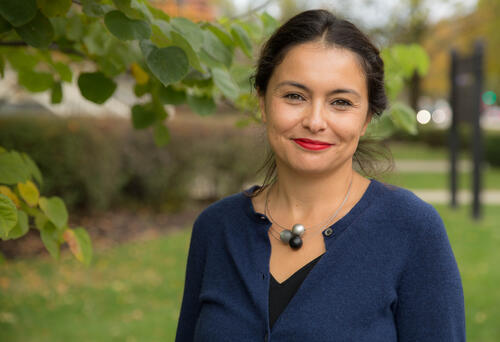
About Sofia:  Sofia was born in Washington, D.C. and grew up in Buenos Aires, Argentina. As she prepares to graduate, she is looking for ways to get involved with organizations that work to advance women's reproductive rights in Latin America or in the U.S. Writing her thesis has definitely been the driving inspiration behind this decision, and so she is very thankful for having had this opportunity!

Whitney McIntosh CDDRL Honors Student
Sofia Filippa CDDRL Honors Student
Seminars
-

Image
Michael Chase

This event is co-sponsored by the Taiwan Democracy Project and the U.S.-Asia Security Initiative.


Abstract

Taiwan's defense policy faces several daunting challenges. President Tsai has inherited a complex security situation from her predecessors. The DPP's defense policy blue papers, published prior to Taiwan's January 2016 election, and Taiwan's newly published Quadrennial Defense Review (QDR) outline President Tsai's plans for Taiwan's defense policy. Some of the major defense policy issues Taiwan must face under President Tsai include uncertainties about US Asia policy and Trump's approach to handling relations with China, growing Chinese military capabilities and increasing Chinese air and naval activities around Taiwan, defense budget constraints, and problems associated with Taiwan's attempt to transition to an all-volunteer military. Taiwan's proposed responses as outlined in the 2017 QDR include a defense strategy of "Resolute defense, multi-domain deterrence" and strengthening the island's domestic defense industries, a project that has both defense policy and economic implications. This presentation will assess Taiwan's approach and consider the implications for US policy in Asia.


Bio

Michael S. Chase is a senior political scientist at RAND, a professor at the Pardee RAND Graduate School, and an adjunct professor in the China Studies and Strategic Studies Departments at Johns Hopkins University's School of Advanced International Studies (SAIS) in Washington, D.C.

A specialist in China and Asia-Pacific security issues, he was previously an associate professor at the U.S. Naval War College (NWC) in Newport, Rhode Island, where he served as director of the strategic deterrence group in the Warfare Analysis and Research Department and taught in the Strategy and Policy Department. Prior to joining the faculty at NWC, he was a research analyst at Defense Group Inc. and an associate international policy analyst at RAND. He is the author of the book Taiwan's Security Policy and numerous chapters and articles on China and Asia-Pacific security issues. His work has appeared in journals such as Asia Policy, Asian Security, China Brief, Survival, and the Journal of Strategic Studies.

His current research focuses on Chinese military modernization, China's nuclear policy and strategy and nuclear force modernization, Taiwan's defense policy, and Asia-Pacific security issues. Chase holds a Ph.D. in international affairs and M.A. in China Studies from SAIS and a B.A. in politics from Brandeis University. In addition, he studied Chinese at the Hopkins-Nanjing Center in Nanjing, China.

Goldman Room, 4th Floor

Encina Hall

616 Serra St.

Michael S. Chase Professor Pardee RAND Graduate School
Lectures
-

Image
Shawna Yang Ryan

Green Island: A Novel

A stunning story of love, betrayal, and family set against the backdrop of a changing Taiwan over the course of the 20th century. 

February 28, 1947: Trapped inside the family home amid an uprising that has rocked Taipei, Dr. Tsai delivers his youngest daughter, the unnamed narrator of Green Island, just after midnight as the city is plunged into martial law. In the following weeks, as the Chinese Nationalists act to crush the opposition, Dr. Tsai becomes one of the many thousands of people dragged away from their families and thrown into prison. His return, after more than a decade, is marked by alienation from his loved ones and paranoia among his community - conflicts that loom over the growing bond he forms with his youngest daughter. Years later, this troubled past follows her to the United States, where, as a mother and a wife, she too is forced to decide between what is right and what might save her family - the same choice she witnessed her father make many years before. 

As the novel sweeps across six decades and two continents, the life of the narrator shadows the course of Taiwan's history from the end of Japanese colonial rule to the decades under martial law and, finally, to Taiwan's transformation into a democracy. But, above all, Green Island is a lush and lyrical story of a family and a nation grappling with the nuances of complicity and survival, raising the question: How far would you be willing to go for the ones you love?

 
About the Author
Shawna Yang Ryan teaches fiction in the Creative Writing Program at the University of Hawaii at Manoa. She is the author of Water Ghosts and Green Island, a novel set during Taiwan's White Terror. In 2015, she was the recipient of the Elliot Cades Emerging Writer Award, Hawaii's highest literary honor.


Oksenberg Room, 3rd Floor

Encina Hall

616 Serrra St.

Shawna Yang Ryan Author University of Hawai'i, Manoa
Lectures
-

Join Hillel at Stanford and Stanford in Government as Mohamed Abubakr shares his perspective on the global refugee crisis. He will discuss the high rate of sexual assault of women and girls in the immigration process, why gender-based violence is being used as a tool of war against refugees, and how and why the international legal system is failing refugees as well as give insight into what Stanford students can do to help these issues.

Wednesday, May 3, 2017 
4:30 - 6:00pm 
Freienrich Room 
Koret Pavillion, Stanford Hillel


Professor Larry Diamond is Senior Fellow at the Hoover Institution, Stanford University, and founding co-editor of the Journal of Democracy. At Stanford University, he is professor by courtesy of political science and sociology, and he coordinates the democracy program of the Center on Democracy, Development, and the Rule of Law (CDDRL), within the Freeman Spogli Institute for International Studies (FSI).

Mohamed Abubakr is a Sudanese human rights activist and President of the the African Middle Eastern Leadership Project (AMEL), an NGO that mobilizes, empowers, and unites millennial leaders and activists from the Middle East and Africa to build resilient, inclusive societies that are free from discrimination, persecution, and violent coercion, and to advocate for policies in support of these goals.


Co-sponsor is Stanford In Government (SIG)

Freienrich Room

Koret Pavillion, Stanford Hillel

CDDRL
Stanford University
Encina Hall, C147
616 Jane Stanford Way
Stanford, CA 94305-6055

(650) 724-6448 (650) 723-1928
0
Mosbacher Senior Fellow in Global Democracy at the Freeman Spogli Institute for International Studies
William L. Clayton Senior Fellow at the Hoover Institution
Professor, by courtesy, of Political Science and Sociology
diamond_encina_hall.png MA, PhD

Larry Diamond is the William L. Clayton Senior Fellow at the Hoover Institution, the Mosbacher Senior Fellow in Global Democracy at the Freeman Spogli Institute for International Studies (FSI), and a Bass University Fellow in Undergraduate Education at Stanford University. He is also professor by courtesy of Political Science and Sociology at Stanford, where he lectures and teaches courses on democracy (including an online course on EdX). At the Hoover Institution, he co-leads the Project on Taiwan in the Indo-Pacific Region and participates in the Project on the U.S., China, and the World. At FSI, he is among the core faculty of the Center on Democracy, Development and the Rule of Law, which he directed for six and a half years. He leads FSI’s Israel Studies Program and is a member of the Program on Arab Reform and Development. He also co-leads the Global Digital Policy Incubator, based at FSI’s Cyber Policy Center. He served for 32 years as founding co-editor of the Journal of Democracy.

Diamond’s research focuses on global trends affecting freedom and democracy and on U.S. and international policies to defend and advance democracy. His book, Ill Winds: Saving Democracy from Russian Rage, Chinese Ambition, and American Complacency, analyzes the challenges confronting liberal democracy in the United States and around the world at this potential “hinge in history,” and offers an agenda for strengthening and defending democracy at home and abroad.  A paperback edition with a new preface was released by Penguin in April 2020. His other books include: In Search of Democracy (2016), The Spirit of Democracy (2008), Developing Democracy: Toward Consolidation (1999), Promoting Democracy in the 1990s (1995), and Class, Ethnicity, and Democracy in Nigeria (1989). He has edited or coedited more than fifty books, including China’s Influence and American Interests (2019, with Orville Schell), Silicon Triangle: The United States, China, Taiwan the Global Semiconductor Security (2023, with James O. Ellis Jr. and Orville Schell), and The Troubling State of India’s Democracy (2024, with Sumit Ganguly and Dinsha Mistree).

During 2002–03, Diamond served as a consultant to the US Agency for International Development (USAID) and was a contributing author of its report, Foreign Aid in the National Interest. He has advised and lectured to universities and think tanks around the world, and to the World Bank, the United Nations, the State Department, and other organizations dealing with governance and development. During the first three months of 2004, Diamond served as a senior adviser on governance to the Coalition Provisional Authority in Baghdad. His 2005 book, Squandered Victory: The American Occupation and the Bungled Effort to Bring Democracy to Iraq, was one of the first books to critically analyze America's postwar engagement in Iraq.

Among Diamond’s other edited books are Democracy in Decline?; Democratization and Authoritarianism in the Arab WorldWill China Democratize?; and Liberation Technology: Social Media and the Struggle for Democracy, all edited with Marc F. Plattner; and Politics and Culture in Contemporary Iran, with Abbas Milani. With Juan J. Linz and Seymour Martin Lipset, he edited the series, Democracy in Developing Countries, which helped to shape a new generation of comparative study of democratic development.

Download full-resolution headshot; photo credit: Rod Searcey.

Former Director of the Center on Democracy, Development and the Rule of Law
Faculty Chair, Jan Koum Israel Studies Program
Date Label
Senior Fellow at the Hoover Institution, Stanford University, and founding co-editor of the Journal of Democracy
Mohamed Abubakr A Sudanese human rights activist and President of the the African Middle Eastern Leadership Project (AMEL)
Panel Discussions
Subscribe to Governance