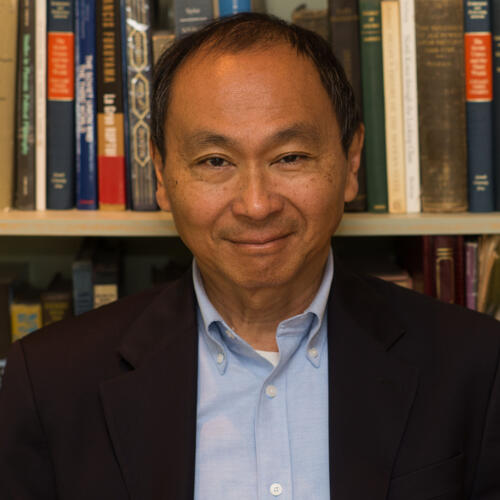
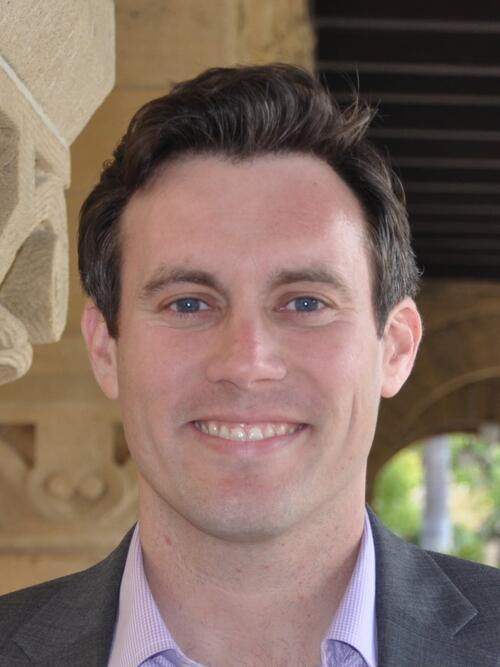
Governance

FSI's research on the origins, character and consequences of government institutions spans continents and academic disciplines. The institute’s senior fellows and their colleagues across Stanford examine the principles of public administration and implementation. Their work focuses on how maternal health care is delivered in rural China, how public action can create wealth and eliminate poverty, and why U.S. immigration reform keeps stalling. 

FSI’s work includes comparative studies of how institutions help resolve policy and societal issues. Scholars aim to clearly define and make sense of the rule of law, examining how it is invoked and applied around the world. 

FSI researchers also investigate government services – trying to understand and measure how they work, whom they serve and how good they are. They assess energy services aimed at helping the poorest people around the world and explore public opinion on torture policies. The Children in Crisis project addresses how child health interventions interact with political reform. Specific research on governance, organizations and security capitalizes on FSI's longstanding interests and looks at how governance and organizational issues affect a nation’s ability to address security and international cooperation.

-

ABSTRACT

Despite security surveillance, forced dismissals of labor activists, and referrals of labor activists and protesters to military trials, labor activism remains at the forefront of societal resistance to authoritarian policies and practices in today’s Egypt. Unionized workers in public and private industrial facilities, as well as civil servants inside the state bureaucracy, continue to demonstrate and organize strikes to articulate their economic and social demands and to defend workers’ rights to freedoms of expression and association. Protests by labor activists have even impacted key sectors, such as public transportation and healthcare. While the Ministry of Manpower and Immigration has settled some formal complaints and requests filed by workers and civil servants, most cases have been referred to labor courts. The ministry has also resorted to providing temporary financial assistance and other short-term benefits to appease some workers and civil servants and to address the upsurge in labor protests. This talk will examine the various administrative, security, legislative, and judicial tools that the regime of Abdel-Fattah Al-Sisi has employed to undermine labor activism. Joel Beinin will serve as a discussant.


SPEAKER BIO

Image
Amr Hamzawy is a Senior Research Scholar at CDDRL. He studied political science and developmental studies in Cairo, The Hague, and Berlin. He was previously an associate professor of political science at Cairo University and a professor of public policy at the American University in Cairo. Between 2016 and 2017, he served as a senior fellow in the Middle East program and the Democracy and Rule of Law program at the Carnegie Endowment for International Peace, Washington, DC. 

His research and teaching interests as well as his academic publications focus on democratization processes in Egypt, tensions between freedom and repression in the Egyptian public space, political movements and civil society in Egypt, contemporary debates in Arab political thought, and human rights and governance in the Arab world. He is currently writing a new book on contemporary Egyptian politics, titled Egypt’s New Authoritarianism.

Hamzawy is a former member of the Egyptian parliament, and was elected to office in the country’s first legislative elections following the January 25, 2011 revolution. He is also a former member of the Egyptian National Council for Human Rights. Hamzawy contributes a weekly op-ed to the Egyptian independent newspaper al-Shorouk and a weekly op-ed to the London based newspaper al-Quds al-Arabi.


DISCUSSANT BIO

Image
Joel Beinin is the Donald J. McLachlan Professor of History and Professor of Middle East History at Stanford University.  He received his Ph.D. from the University of Michigan in 1982 before coming to Stanford in 1983.  From 2006 to 2008 he served as Director of Middle East Studies and Professor of History at the American University in Cairo.  In 2002 he served as president of the Middle East Studies Association of North America.

Beinin’s research and writing focus on the social and cultural history and political economy of modern Egypt, Palestine, and Israel and on US policy in the Middle East.  He has written or edited eleven books, most recently Workers and Thieves: Labor Movements and Popular Uprisings in Tunisia and Egypt (Stanford University Press, 2015); Social Movements, Mobilization, and Contestation in the Middle East and North Africa, 2nd edition (Stanford University Press, 2013) co-edited with Frédéric Vairel; and The Struggle for Worker Rights in Egypt (Solidarity Center, 2010).

 Reuben Hills Conference Room
 2nd Floor East Wing E207
 Encina Hall
 616 Serra Street
 Stanford, California 94305

0
amr.jpg

Amr Hamzawy is the director of the Carnegie Middle East Program. He studied political science and developmental studies in Cairo, The Hague, and Berlin. He was previously an associate professor of political science at Cairo University and a professor of public policy at the American University in Cairo.

His research and teaching interests as well as his academic publications focus on democratization processes in Egypt, tensions between freedom and repression in the Egyptian public space, political movements and civil society in Egypt, contemporary debates in Arab political thought, and human rights and governance in the Arab world. His new book On The Habits of Neoauthoritarianism – Politics in Egypt Between 2013 and 2019 appeared in Arabic in September 2019.

Hamzawy is a former member of the People’s Assembly after being elected in the first Parliamentary elections in Egypt after the January 25, 2011 revolution. He is also a former member of the Egyptian National Council for Human Rights. Hamzawy contributes a weekly op-ed to the Arab daily al-Quds al-Arabi.


Former Senior Research Scholar, CDDRL
Senior Research Scholar, CDDRL
Seminars
-

Abstract:

Economists and others have argued that when business managers are rewarded to maximize profits and stock prices, the outcome will be efficient. However, in the name of creating “shareholder value,” corporate managers have incentives to engage in conduct that harms and endangers the corporation and its stakeholders inefficiently, as well as to lobby and influence governments so as to get away with such conduct. Thus, corporate governance as practiced today works poorly for most shareholders and for society as a whole, and governments often tolerate or exacerbate corporate governance distortions even in well-developed democracies. The persistence of these problems contribute to unfocused public discontent. I will draw extreme examples of the lack of political will to design and enforce proper rules for corporations from the financial sector. The problems are particularly challenging when the policy issues are not well understood by the public.


Speaker Bio:

Image
anat admati
Anat Admati is the George G.C. Parker Professor of Finance and Economics at the Graduate School of Business, Stanford University. She has written extensively on information dissemination in financial markets, trading mechanisms, portfolio management, financial contracting, and, most recently, on corporate governance and banking.

Since 2010, she has been active in the policy debate on financial regulation, writing many research and policy papers as well as media commentary. She is a coauthor of the book, The Bankers’ New Clothes: What’s Wrong with Banking and What to Do about It. In 2014, Admati was named by Time Magazine as one of the 100 most influential people in the world and by Foreign Policy Magazine as one of the 100 global thinkers.

Professor Admati received her BS from the Hebrew University in Jerusalem and her MA, MPhil and PhD from Yale University and an honorary doctorate from the University of Zurich. She is a fellow of the Econometric Society, and has served as a board member of the American Finance Association and has served on multiple editorial boards. She currently serves on the FDIC Systemic Resolution Advisory Committee and the CFTC Market Risk Advisory Committee.

The Political Economy of Corporate Governance
Download pdf
Anat Admati George G.C. Parker Professor of Finance and Economics at the Graduate School of Business, Stanford University
Seminars
-

Abstract

Speculation about the course of cross-Strait relations after the upcoming 19th Chinese Communist Party Congress ranges from greater PRC flexibility to substantially increased pressure on Taiwan. The Mainland’s persistent suspicion about President Tsai Ing-wen’s motives has only deepened with her appointment of avowed independence supporter Lai Ching-te as premier, especially because of the prospect that Lai could eventually become president. As a result, once the internal tugging and hauling leading up to the Party Congress has been settled, some people predict that Beijing will resort to military intimidation or even actual use of force to bring Tsai to heel. What are the PRC’s goals? What are Taipei’s? What role can and should the United States play in seeking not only to avoid conflict but to reestablish a reliable level of stability in cross-Strait relations and to prevent Taiwan from once more becoming a highly divisive issue in U.S.-PRC relations? Alan Romberg will address these issues in his talk on October 30th.


Bio

Image
Alan Romberg

Alan Romberg is a Distinguished Fellow and the Director of the East Asia program at Stimson. Before joining Stimson in September 2000, he enjoyed a distinguished career working on Asian issues including 27 years in the State Department, with over 20 years as a U.S. Foreign Service Officer. Romberg was the Principal Deputy Director of the State Department's Policy Planning staff, Principal Deputy Assistant Secretary of State for Public Affairs and Deputy Spokesman of the department. He served in various capacities dealing with East Asia, including director of the Office of Japanese Affairs, member of the Policy Planning staff for East Asia, and staff member at the National Security Council for China. He served overseas in Hong Kong and Taiwan.

Additionally, Romberg spent almost 10 years as the CV Starr Senior Fellow for Asian Studies at the Council on Foreign Relations, and was special assistant to the secretary of the navy.

Romberg holds an M.A. from Harvard University, and a B.A. from the Woodrow Wilson School of Public and International Affairs at Princeton University.

This event is co-sponsored by the Taiwan Democracy Project in the Center on Democracy, Development, and the Rule of Law (CDDRL) and the U.S.-Asia Security Initiative in the Shorenstein Asia-Pacific Research Center (APARC), both part of the Freeman Spogli Institute for International Studies.

Alan Romberg Distinguished Fellow Stimson Center
Lectures
-

Abstract 

Scholars have credited a model of state-led capitalism called the developmental state with producing the first wave of the East Asian economic miracle. Using historical evidence based on original archival research, this talk offers a geopolitical explanation for the origins of the developmental state. In contrast to previous studies that have emphasized colonial legacies or domestic political factors, I argue that the developmental state was the legacy of the rivalry between the United States and Communist China during the Cold War. Responding to the acute tensions in Northeast Asia in the early postwar years, the United States supported emergency economic controls in Japan, South Korea, and Taiwan to enforce political stability. In response to the belief that the Communist threat would persist over the long term, the U.S. strengthened its clients by laying the foundations of a capitalist, export-oriented economy under bureaucratic guidance. The result of these interventions was a distinctive model of state-directed capitalism that scholars would later characterize as a developmental state.

I verify this claim by examining the rivalry between the United States and the Chinese Communists and demonstrating that American threat perceptions caused the U.S. to promote unorthodox economic policies among its clients in Northeast Asia. In particular, I examine U.S. relations with the Chinese Nationalists on Taiwan, where American efforts to create a bulwark against Communism led to the creation of an elite economic bureaucracy for administering U.S. economic aid. In contrast, the United States decided not to create a developmental state in the Philippines because the Philippine state was not threatened by the Chinese Communists. Instead, the Philippines faced a domestic insurgency that was weaker and comparatively short-lived. As a result, the U.S. pursued a limited goal of maintaining economic stability instead of promoting rapid industrialization. These findings shed new light on the legacy of statism in American foreign economic policy and highlight the importance of geopolitics in international development.


Bio

Image
James Lee

James Lee is a Ph.D. Candidate in the Department of Politics at Princeton University. He specializes in International Relations with a focus on U.S. foreign policy in East Asia and relations across the Taiwan Strait. James also serves as the Senior Editor for Taiwan Security Research, an academic website that aggregates news and commentary on the economic and political dimensions of Taiwan's security.


This event is co-sponsored by the Taiwan Democracy Project in the Center on Democracy, Development, and the Rule of Law (CDDRL) and the U.S.-Asia Security Initiative in the Shorenstein Asia-Pacific Research Center (APARC), both part of the Freeman Spogli Institute for International Studies.

James Lee Ph.D. Candidate Princeton University
Lectures
News Type
News
Date
Paragraphs

Draper Hills Summer Fellowship Program at CDDRL is now accepting applications. Deadline is 5:00 pm PST on Wednesday, November 15, 2017.

Launched in 2005, the Draper Hills Summer Fellowship on Democracy and Development Program (DHSFDD) is a three-week academic training program that is hosted annually at Stanford University's Center on Democracy, Development, and the Rule of Law. The program brings together a group of 25 to 30 mid-career practitioners in law, politics, government, private enterprise, civil society, and international development from transitioning countries. This training program provides a unique forum for emerging leaders to connect, exchange experiences, and receive academic training to enrich their knowledge and advance their work.

For three weeks during the summer, fellows participate in academic seminars that expose them to the theory and practice of democracy, development, and the rule of law. Delivered by leading Stanford faculty from the Stanford Law School, the Graduate School of Business, and the departments of economics and political science, these seminars allow emerging leaders to explore new institutional models and frameworks to enhance their ability to promote democratic change in their home countries.

Guest speakers from private foundations, think tanks, government, and the justice system provide a practitioners viewpoint on such pressing issues in the field. Summer Fellows also visit Silicon Valley technology firms such as Benetech, Google and Twitter to explore how technology tools and social media platforms are being used to catalyze democratic practices on a global scale. 

The  program is funded  by the generous support from Bill and Phyllis Draper and Ingrid von Mangoldt Hills.

Learn more here.

Hero Image
rsd17 063 0508a
All News button
1
-

Abstract:

The concept of identity is a modern one in which individuals and groups seek recognition of the dignity of a hidden inner self. The concept can be traced back to Luther, but takes its characteristically modern form in the thought of Kant and Rousseau. In the 19th century identity manifests itself as nationalism and in the 21st as Islamism, both of which are triggered by the modernization of agrarian societies and the identity confusion that process entails. In liberal societies identity takes an individualistic rather than a collective form, though the two forms begin eventually to converge in what we understand as contemporary identity politics. In today’s America, the Left has defined itself in terms of various identity groups, which has triggered a search for identity on the Right in the rise of Donald Trump. The demand for recognition of narrow group rights is dangerous for liberal societies, and needs to be replaced by more integrative forms of national identity.


Speaker Bio:

Image
bb fukuyama
Francis Fukuyama is the Olivier Nomellini Senior Fellow at the Freeman Spogli Institute for International Studies (FSI) and the Mosbacher Director of FSI's Center on Democracy, Development, and the Rule of Law (CDDRL).  He is also a professor by courtesy in the Department of Political Science. He was previously at the Paul H. Nitze School of Advanced International Studies (SAIS) of Johns Hopkins University, where he was the Bernard L. Schwartz Professor of International Political Economy and director of SAIS' International Development program.


Encina Hall, C148
616 Jane Stanford Way
Stanford, CA 94305

0
Olivier Nomellini Senior Fellow at the Freeman Spogli Institute for International Studies
Director of the Ford Dorsey Master's in International Policy
Research Affiliate at The Europe Center
Professor by Courtesy, Department of Political Science
yff-2021-14290_6500x4500_square.jpg

Francis Fukuyama is the Olivier Nomellini Senior Fellow at Stanford University's Freeman Spogli Institute for International Studies (FSI), and a faculty member of FSI's Center on Democracy, Development and the Rule of Law (CDDRL). He is also Director of Stanford's Ford Dorsey Master's in International Policy, and a professor (by courtesy) of Political Science.

Dr. Fukuyama has written widely on issues in development and international politics. His 1992 book, The End of History and the Last Man, has appeared in over twenty foreign editions. His book In the Realm of the Last Man: A Memoir will be published in fall 2026.

Francis Fukuyama received his B.A. from Cornell University in classics, and his Ph.D. from Harvard in Political Science. He was a member of the Political Science Department of the RAND Corporation, and of the Policy Planning Staff of the US Department of State. From 1996-2000 he was Omer L. and Nancy Hirst Professor of Public Policy at the School of Public Policy at George Mason University, and from 2001-2010 he was Bernard L. Schwartz Professor of International Political Economy at the Paul H. Nitze School of Advanced International Studies, Johns Hopkins University. He served as a member of the President’s Council on Bioethics from 2001-2004. He is editor-in-chief of American Purpose, an online journal.

Dr. Fukuyama holds honorary doctorates from Connecticut College, Doane College, Doshisha University (Japan), Kansai University (Japan), Aarhus University (Denmark), the Pardee Rand Graduate School, and Adam Mickiewicz University (Poland). He is a non-resident fellow at the Carnegie Endowment for International Peace. He is a member of the Board of Trustees of the Rand Corporation, the Board of Trustees of Freedom House, and the Board of the Volcker Alliance. He is a fellow of the National Academy for Public Administration, a member of the American Political Science Association, and of the Council on Foreign Relations. He is married to Laura Holmgren and has three children.

(October 2025)

CV
Date Label
The Mosbacher Director of FSI's Center on Democracy, Development, and the Rule of Law (CDDRL).
Seminars
0
Visiting Scholar, Ukrainian Emerging Leaders Program 2017-18
oleksandars_copy.jpg

Olexandr Starodubtsev is a Ukrainian reformer who is deeply involved in the creation of a new electronic public procurement system Prozorro, which is one of the most famous reforms in the country. Currently Starodubtsev is the Head of the Public Procurement Regulation Department in The Ministry of Economic Development and Trade of Ukraine, and is an official policy maker in the spheres of public procurement and economic development in Ukraine.

The Prozorro system is famous for its different approaches to bottom-up reform based on the close collaboration between government, business and civil society. In 2016, the Prozorro system won several distinguished international awards, such as the Open Government Partnership Award, the Public Procurement Award, and was also recognized by the European Bank of Reconstruction and Development and Open Contracting Partnership. Moreover, Prozorro and its principles became an inspirational example for other Ukrainian reforms.

Starodubtsev was born in Kharkiv, Ukraine in 1979. He graduated from Kharkiv National University in 2002. Previously he worked on the stock market where he made his career as a back-office specialist up to a managing partner of a Ukrainian branch of a multinational financial institution. He received an MBA degree from the Kyiv-Mohyla Business School and became Alumnus of the Year in its first competition in 2015. He is married and has a son and a daughter.


-

Abstract:

Since 2013, my collaborators and I have conducted research on how rumors and misinformation spread through social media during crisis events. Recently, our work has revealed how a subsection of the alternative media ecosystem facilitates the spread of disinformation—in the form of conspiracy theories or “alternative narratives” about man-made crisis events. This disinformation is often employed as part of a political agenda and poses new information security risks. In this talk, I’ll present highlights from our research on alternative narratives, describing some of the specific tactics being used to spread disinformation. I’ll also share some preliminary findings on more recent work examining the structure and dynamics of the media ecosystem that has taken shape around the ongoing crisis in Syria. Finally, I’ll discuss some of the broader implications of online disinformation for emergency and humanitarian responders as well as society at large.


Speaker Bio:

Image
kate starbird
Kate Starbird is an Assistant Professor at the Department of Human Centered Design & Engineering (HCDE) at the University of Washington (UW). Kate's research is situated within human-computer interaction (HCI) and the emerging field of crisis informatics—the study of the how information-communication technologies (ICTs) are used during crisis events. One aspect of her research focuses on how online rumors spread—and how online rumors are corrected—during natural disasters and man-made crisis events. More recently, she has begun exploring the propagation of disinformation and political propaganda through online spaces. Kate earned her PhD from the University of Colorado at Boulder in Technology, Media and Society and holds a BS in Computer Science from Stanford University.

William J. Perry Conference Room,  Encina Hall, 2nd Floor, 616 Serra St, Stanford, CA 94305

Kate Starbird Assistant Professor at the Department of Human Centered Design & Engineering (HCDE) at the University of Washington
Seminars
News Type
News
Date
Paragraphs

Stanford’s Center on Democracy, Development and the Rule of Law (CDDRL) is pleased to welcome Sviatoslav Vakarchuk as a visiting scholar for the fall quarter. Vakarchuk is a Ukrainian civic activist, musician and the lead vocalist and founder of the band “Okean Elzy.“ He will be in residence at CDDRL this fall to attend courses and study with some of the leading intellectuals and academics at CDDRL. He holds a doctorate degree in theoretical physics from the Ivan Franko National University of Lviv.

Vakarchuk is also the founder of a charity fund called “Lyudi Maybutnyogo” (People of the Future) and co-founder of the Center for Economic Strategy, an independent policy think tank dedicated to supporting reforms and sustainable economic growth in Ukraine. He served as a Yale World Fellow in 2015.

Vakarchuk will be interacting with the Ukrainian Emerging Leaders Program during his residency at CDDRL. Launched in 2016, the Program seeks to provide Ukrainian leaders with opportunities for professional growth and development, as well as the chance to work on a project over the course of a 10-month residency at Stanford.

“We look forward to welcoming Slava Vakarchuk to the CDDRL community this fall,” said Francis Fukuyama the Mosbacher director of CDDRL. “His presence will add a great deal towards our understanding of Ukraine's democratic transition.”

During his stay in the US, Vakarchuk will be offering a set of open lectures on Ukraine and participating in several events at CDDRL. More information on these public events will be forthcoming.

Hero Image
slavav
Left to right: Michael McFaul, Director FSI; Olena Sotnyk, Member of Parliament, Ukraine; Sviatoslav Vakarchuk, Visiting Scholar CDDRL; Victor Liakh, President at East Europe Foundation.
All News button
1
-

Cosponsored by The Abbasi Program in Islamic Studies


Abstract:

Half a decade after Arabs across the Middle East poured into the streets to demand change, hopes for democracy have disappeared in a maelstrom of violence and renewed state repression. Egypt remains an authoritarian state, Syria and Yemen are in the midst of devastating civil wars, Libya has descended into anarchy, and the self-declared Islamic State rules a large swath of territory. Even Turkey, which also experienced large-scale protests, has abandoned its earlier shift toward openness and democracy and now more closely resembles an autocracy. How did things go so wrong so quickly across a wide range of regimes? In False Dawn: Protest, Democracy, and the New Middle East, noted Middle East regional expert Steven A. Cook looks at the trajectory of events across the region from the initial uprising in Tunisia to the failed coup in Turkey to explain why the Middle Eastern uprisings did not succeed.


Speaker Bio:

Image
cookfdheadshot
Steven A. Cook is Eni Enrico Mattei senior fellow for Middle East and Africa studies at the Council on Foreign Relations (CFR). He is an expert on Arab and Turkish politics as well as U.S.-Middle East policy. Cook is also the author of The Struggle for Egypt: From Nasser to Tahrir Square, which won the Washington Institute for Near East Policy's gold medal in 2012; and Ruling But Not Governing: The Military and Political Development in Egypt, Algeria, and Turkey.


[[{"fid":"228192","view_mode":"crop_870xauto","fields":{"format":"crop_870xauto","field_file_image_description[und][0][value]":"Steven Cook flyer","field_file_image_alt_text[und][0][value]":false,"field_file_image_title_text[und][0][value]":false,"field_credit[und][0][value]":"","field_caption[und][0][value]":"","thumbnails":"crop_870xauto","alt":"","title":""},"type":"media","field_deltas":{"2":{"format":"crop_870xauto","field_file_image_description[und][0][value]":"Steven Cook flyer","field_file_image_alt_text[und][0][value]":false,"field_file_image_title_text[und][0][value]":false,"field_credit[und][0][value]":"","field_caption[und][0][value]":"","thumbnails":"crop_870xauto","alt":"","title":""}},"link_text":null,"attributes":{"class":"media-element file-crop-870xauto","data-delta":"2"}}]]

Philippines Conference Room
Encina Hall, 3rd Floor
616 Serra St
Stanford, CA 94305

Steven A. Cook Council on Foreign Relations
Seminars
Subscribe to Governance