Governance

FSI's research on the origins, character and consequences of government institutions spans continents and academic disciplines. The institute’s senior fellows and their colleagues across Stanford examine the principles of public administration and implementation. Their work focuses on how maternal health care is delivered in rural China, how public action can create wealth and eliminate poverty, and why U.S. immigration reform keeps stalling. 

FSI’s work includes comparative studies of how institutions help resolve policy and societal issues. Scholars aim to clearly define and make sense of the rule of law, examining how it is invoked and applied around the world. 

FSI researchers also investigate government services – trying to understand and measure how they work, whom they serve and how good they are. They assess energy services aimed at helping the poorest people around the world and explore public opinion on torture policies. The Children in Crisis project addresses how child health interventions interact with political reform. Specific research on governance, organizations and security capitalizes on FSI's longstanding interests and looks at how governance and organizational issues affect a nation’s ability to address security and international cooperation.

-

Abstract:

While populism takes different forms in different countries, the success of populist parties and leaders comes from their ability to represent grievances. Current analyses emphasize the personality, background and rhetoric of populist leaders, but, often neglect the intermediary mechanisms that help populists not only address and represent but also generate “the people” from a diverse set of constituencies. By focusing on the authoritarian populist context of Turkey, this paper examines the role of pro- government and government-organized NGOs in helping the ruling Justice and Development Party connect with, represent, and shape the youth public in the aftermath of the uprisings across the wider Middle East. The paper argues that the making of authoritarian Turkey and the resilience of President Erdoğan should be traced as much to the mechanisms of consent-building as to the mechanisms of coercion.


Speaker Bio:

Image
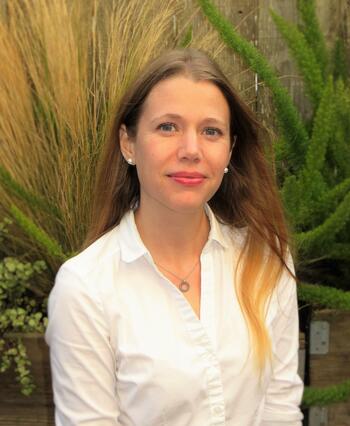
ayca alemdaroglu
Ayça Alemdaroğlu is a research assistant professor of sociology and the associate director of the Keyman Modern Turkish Studies Program at Northwestern University. She previously worked as a postdoctoral researcher in the Department of Anthropology and a teaching fellow in the Thinking Matters Program at Stanford. Her research engages with a broad range of theoretical and ethnographic issues including youth culture and politics, gender and sexuality, constructions of space and place, nationalism, eugenics, and higher education. She has B.Sc. and M.A. in Political Science and Public Administration from the Middle East Technical University and Bilkent University, and Ph.D. in sociology from the University of Cambridge.

Ayça Alemdaroğlu Visiting Scholar, CDDRL
Seminars
-

Abstract:

What are the e ffects of mass media campaigns on the norms and behaviors of police officers as pertains to human tra fficking? Namely, can mass media campaigns be employed to induce shifts in knowledge, attitudes, beliefs and practices (KABP) of law enforcement officers, that might reduce the incidence of modern forms of slavery and assist victims of human traffi cking? Mass media, especially `entertainment education, (e.g. comic books, radio soap operas, and street theater) is frequently used as a tool for social change to convey messages around issues such as public health, gender rights, conflict resolution, or development strategies through stories that are both realistic and entertaining. Yet how can we know the e ffects of such campaigns? Speci fically, do diff erences in message formats and content a ffect the impact of campaigns against human tra fficking? The research presented here shows that mass media entertainment campaigns can e ffectively convey messages around human traffi cking, influencing attitudes, norms and behaviors of law enforcement officers around the issue. It also demonstrates how messages whose content emphasizes victim empowerment appear to be more e ffective than negative, fear-inducing appeals.


Speaker Bio:


Image
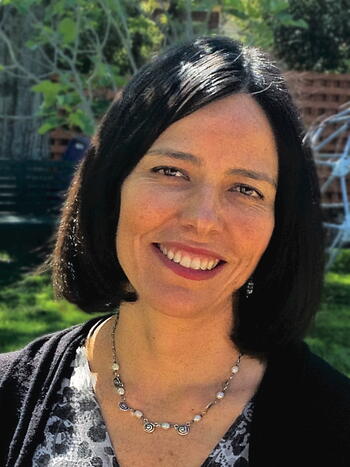
boittin margaret
Margaret Boittin is an Assistant Professor of Law at Osgoode Hall Law School (York University, Canada). Her first book, entitled The Whore, the Hostess and the Honey: Policing, Health, Business and the Regulation of Prostitution in China, is under contract with Cambridge University Press.

Margaret Boittin Assistant Professor of Law at Osgoode Hall Law School (York University, Canada)
Seminars
-

Abstract:

Throughout the world, voters lack access to information about politicians, government performance, and public services. Efforts to remedy these informational deficits are numerous. Yet do informational campaigns influence voter behavior and increase democratic accountability? Through the inaugural Metaketa Initiative, sponsored by the Evidence in Governance and Politics (EGAP) research network, we aim to address this substantive question and at the same time introduce a new model for cumulative learning that increases coordination among otherwise independent researcher teams. We present the cumulative results (meta-analysis) from six independently conducted but coordinated field experimental studies, the findings from a related evaluation of whether practitioners utilize this information as expected, and discuss lessons learned from EGAP’s efforts to coordinate field experiments, increase replication of theoretically important questions across contexts, and increase the external validity of field experimental research.


Speaker(s) Bio:

Image
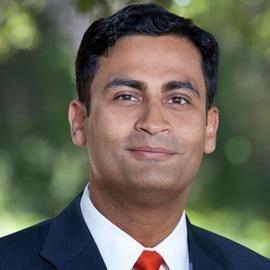
susan hyde
Susan D. Hyde is Professor of Political Science and Avice M. Saint Chair in Public Policy at the University of California, Berkeley. She is the Executive Director of the EGAP (Evidence in Governance and Politics) research network. Her research examines attempts by international actors to change politics or policies within sovereign states, particularly in the developing world. She earned her Ph.D. from the University of California, San Diego in 2006, and has held residential fellowships at the Brookings Institution in Washington, D.C. and Princeton University's Niehaus Center for Globalization and Governance. Her first book, The Pseudo-Democrat's Dilemma: Why Election Observation Became an International Norm, was published by Cornell University Press in 2011, and has received the Chadwick F. Alger Prize for the best book on the subject of international organization and multilateralism, the best book award from the Comparative Democratization section of the American Political Science Association, and Yale’s 2012 Gustav Ranis International Book Prize. Her articles have appeared in the American Journal of Political Science, the ANNALS of the American Academy of Political and Social Sciences, the British Journal of Political Science, Comparative Political Studies, International Organization, The Journal of Politics, Perspectives on Politics, Political Analysis, and World Politics.


Image
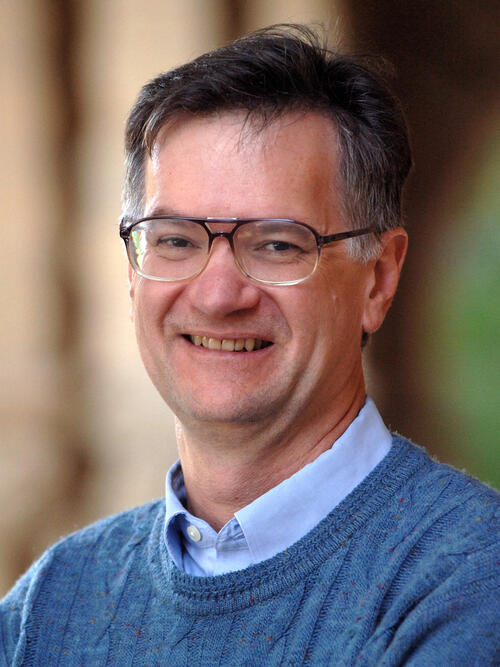
thad dunning
Thad Dunning is Robson Professor of Political Science at the University of California, Berkeley and directs the Center on the Politics of Development. He studies comparative politics, political economy, and research methodology. His current work on ethnic and other cleavages draws on field and natural experiments and qualitative fieldwork in Latin America, India, and Africa. Dunning has written on a range of methodological topics, including causal inference, statistical analysis, and multi-method research. He is chairing the inaugural EGAP Metaketa initiative, which aims to achieve greater cumulation of findings from experimental research on international development and political accountability. Dunning is the author of several award-winning books, including Natural Experiments in the Social Sciences: A Design-Based Approach (2012, Cambridge University Press—winner of the Best Book Award from the American Political Science Association’s Experiments Section), and Crude Democracy: Natural Resource Wealth and Political Regimes (2008, Cambridge University Press—winner of the Best Book Award from APSA’s Comparative Democratization Section). He also co-authored Brokers, Voters, and Clientelism: The Puzzle of Distributive Politics (Cambridge University Press, 2013), which won the 2014 Luebbert Prize for best book in comparative politics. Dunning’s articles have appeared in several journals, including the American Political Science Review, Comparative Political Studies, International Organization, Journal of Conflict Resolution, and Political Analysis. He received a Ph.D. in political science and an M.A. in economics from the University of California, Berkeley (2006). Before returning to Berkeley, he was Professor of Political Science at Yale University.

Susan Hyde Professor of Political Science at the University of California, Berkeley
Thad Dunning Professor of Political Science at the University of California, Berkeley
Seminars
-

Abstract:

Election forensics adds distinctive value to current efforts to promote the integrity of elections around the world by developing special forensic tools and techniques designed to detect the presence of election fraud and to estimate its magnitude based on the reported results of elections. By utilizing electoral data, election forensics provides statistical evidence, which could refute or support various sorts of accusations related to the presence of election fraud. What methods and techniques are currently used by election forensics? Can election forensics measures be validated by the auxiliary data, such as election observation? What election forensics tells us about election fraud at the Russian elections? To address these questions I’ll discuss election forensics methodology, and present key findings from the analysis of the Russian presidential and parliamentary elections 2000-2016.


Speaker Bio:

Image
kalinin photo2
Kirill Kalinin is a W. Glenn Campbell and Rita Ricardo-Campbell National Fellow at the Hoover Institution. His research focuses on election studies, election forensics, survey methodology, and Russian politics. Kirill is one of the creators of the Election Forensics Toolkit website with funding from USAID, a prototype that implements election forensics methods that have been proposed as useful accuracy diagnostics for detecting election fraud. Currently Kirill is also engaged in data management and analysis of the Survey of Russian Elites: 1993–2016. Kirill received a PhD in Political Science from the University of Michigan (2017).

Kirill Kalinin W. Glenn Campbell and Rita Ricardo-Campbell National Fellow at the Hoover Institution
Seminars
-

Abstract:

At their best, decentralizing reforms make government more accountable to citizens and empower local governments to invest in their own development. Yet, successful decentralization requires that local governments raise at least some revenue to finance new service delivery responsibilities, and the capacity of local governments to generate tax revenue varies. This variation is evident in the Philippines, where capacity to tax varies greatly across cities despite uniform tax powers. I argue that business associations contribute to this variation by endorsing tax increases to enable cities to spend on infrastructure, but only if they can sustain distributional consensus and forestall local officials from diverting revenues away from business-friendly projects. I present a controlled comparison of two cities, Iloilo and Batangas, to show that business associations resolve distributional conflict by dispersing benefits across members, and monitor public spending by participating in legislative hearings and jointly managing public projects.


Speaker Bio:

Image
tans
I am a postdoctoral fellow at the Center on Democracy, Development, and the Rule of Law at Stanford University. My research explores the developmental implications of public-private linkages in decentralizing, developing countries, especially in Southeast Asia. I received a PhD in political science at Emory University and an MA in Southeast Asian studies from National University of Singapore.

Postdoctoral fellow at the Center on Democracy, Development, and the Rule of Law
Seminars
-

Abstract:

Societies with deep-seated ethnic or religious divisions pose a challenge for governance: how can a single set of political institutions govern a fragmented population peacefully and effectively? As the institution responsible for implementing and enforcing laws, the police are an especially critical piece of the governance puzzle. I explore the role of sectarian inclusion in the police forces in Iraq and Israel, two countries with legacies of violent conflict along identity lines. I argue that integrating minority groups into the rank-and-file of the police addresses common motives for anti-state violence by shaping citizens' expectations about how they will be treated by the state. I present survey, experimental, and observational evidence showing that citizens interpret police integration as a credible signal that the government does not intend to harm them, which in turn reduces citizens’ willingness to turn to violence.


Speaker Bio:

Image
matthew nanes
Matthew Nanes is a Postdoctoral Fellow at Stanford's Center on Democracy, Development, and the Rule of Law. His research explores the way that political institutions shape the citizen-state relationship, particularly in societies plagued by violent conflict and low state legitimacy. Most of his work is in the Middle East, where he has conducted field work in a number of countries including Jordan, Israel, Egypt, and Oman. He is also involved in ongoing research on policing in the Philippines. Matthew received a Ph.D. in Political Science from the University of California San Diego and holds a B.A. from Rice University.

Postdoctoral Fellow at Stanford's Center on Democracy, Development, and the Rule of Law
Seminars
-

ABSTRACT

The formation of Saudi Arabia’s anti-corruption commission and the arrest of dozens of princes and former ranking officials have brought to focus the prospects for political and economic reform in the Kingdom. Many observers have characterized these recent steps as an attempt by Crown Prince Mohammed Bin Salman to sideline opponents of his bold, far-reaching reforms. Yet a closer analysis suggests that these measures are part of an effort to consolidate and centralize power in ways that will only move the Kingdom farther away from greater political inclusion and participation. They also threaten the future of stability inside the Kingdom and the region at large. More generally, these recent developments raise critical questions regarding the feasibility of advancing the Crown Prince’s proposed economic reforms in the absence of meaningful political reform that could allow for monitoring and holding accountable the proclaimed leaders of economic reforms.


SPEAKER BIO

Image
unnamed 5

Jamal Khashoggi is a Saudi journalist, columnist, and author. Born in Medina, Saudi Arabia, in 1958, where he completed high school, Jamal graduated from Indiana State University in 1982. Khashoggi began his career as a correspondent for the English language Saudi Gazette. Between 1987-90, he was a foreign correspondent for the pan-Arab Arabic daily Alsharq Alawsat and the Jeddah-based, English language daily Arab News. He became widely recognized for his coverage of the Afghan War and the first Gulf War (1990-91). From 1990 to 1999, Jamal was foreign correspondent for the other prominent pan-Arab Arabic daily, Al-Hayat. There he reported on Afghanistan, Algeria, Lebanon, Sudan, and various conflicts in the Middle East. As a result of his extensive experience, he became known as an expert in political Islam and related movements. In 1999, Jamal was appointed Deputy Editor-in-Chief of Arab News, the leading English newspaper of Saudi Arabia. In 2003, he became Editor-in-Chief of Al-Watan, the country’s pioneering reformist newspaper. In less than two month he lost his job because of his editorial policies. He was then appointed as the media advisor to Prince Turki Al-Faisal, then-Saudi Ambassador in London and later Washington. In 2007, he returned to Al-Watan as Editor-in-Chief. In 2010, again due to his editorial style, pushing boundaries of discussion and debate within Saudi society, he was fired. In June 2010, Prince Alwaleed Bin Talal appointed Jamal to lead a new 24-hour Arabic news channel, Al-Arab. He launched the station in Manama, Bahrain, in 2015. On the air less than 11 hours, the government ordered Al-Arab to cease broadcasting. Jamal is now an independent writer based in Washington, DC.


Reuben Hills Conference Room
2nd Floor East Wing E207
Encina Hall
616 Serra Street
Stanford, California 94305

Jamal Khashoggi Independent Writer
Seminars
Graduate School of Business 655 Knight Way Stanford, CA 94305
(650) 721 1298
0
Associate Professor of Political Economy, GSB
Associate Professor, by courtesy, of Economics and of Political Science
saumitra_jha.jpg

Along with being a Senior Fellow at the Freeman Spogli Institute for International Studies, Saumitra Jha is an associate professor of political economy at the Stanford Graduate School of Business, and convenes the Stanford Conflict and Polarization Lab. 

Jha’s research has been published in leading journals in economics and political science, including Econometrica, the Quarterly Journal of Economics, the American Political Science Review and the Journal of Development Economics, and he serves on a number of editorial boards. His research on ethnic tolerance has been recognized with the Michael Wallerstein Award for best published article in Political Economy from the American Political Science Association in 2014 and his co-authored research on heroes with the Oliver Williamson Award for best paper by the Society for Institutional and Organizational Economics in 2020. Jha was honored to receive the Teacher of the Year Award, voted by the students of the Stanford MSx Program in 2020.

Saum holds a BA from Williams College, master’s degrees in economics and mathematics from the University of Cambridge, and a PhD in economics from Stanford University. Prior to rejoining Stanford as a faculty member, he was an Academy Scholar at Harvard University. He has been a fellow of the Niehaus Center for Globalization and Governance and the Center for the Study of Democratic Politics at Princeton University, and at the Center for Advanced Study in the Behavioral Sciences at Stanford. Jha has consulted on economic and political risk issues for the United Nations/WTO, the World Bank, government agencies, and for private firms.


Senior Fellow at the Freeman Spogli Institute for International Studies
Dan C. Chung Faculty Scholar at the Freeman Spogli Institute for International Studies
Senior Fellow at the Stanford Institute for Economic Policy Research
Date Label
Stanford Law School Neukom Building, Room N230 Stanford, CA 94305
650-725-9875
0
James B. McClatchy Professor of Law at Stanford Law School
Senior Fellow, Freeman Spogli Institute
Professor, by courtesy, Political Science
Professor, by courtesy, Communication
headshot_3.jpg

Nathaniel Persily is the James B. McClatchy Professor of Law at Stanford Law School, with appointments in the departments of Political Science, Communication, and FSI.  Prior to joining Stanford, Professor Persily taught at Columbia and the University of Pennsylvania Law School, and as a visiting professor at Harvard, NYU, Princeton, the University of Amsterdam, and the University of Melbourne. Professor Persily’s scholarship and legal practice focus on American election law or what is sometimes called the “law of democracy,” which addresses issues such as voting rights, political parties, campaign finance, redistricting, and election administration. He has served as a special master or court-appointed expert to craft congressional or legislative districting plans for Georgia, Maryland, Connecticut, New York, North Carolina, and Pennsylvania.  He also served as the Senior Research Director for the Presidential Commission on Election Administration. In addition to dozens of articles (many of which have been cited by the Supreme Court) on the legal regulation of political parties, issues surrounding the census and redistricting process, voting rights, and campaign finance reform, Professor Persily is coauthor of the leading election law casebook, The Law of Democracy (Foundation Press, 5th ed., 2016), with Samuel Issacharoff, Pamela Karlan, and Richard Pildes. His current work, for which he has been honored as a Guggenheim Fellow, Andrew Carnegie Fellow, and a Fellow at the Center for Advanced Study in the Behavioral Sciences, examines the impact of changing technology on political communication, campaigns, and election administration.  He is codirector of the Stanford Program on Democracy and the Internet, and Social Science One, a project to make available to the world’s research community privacy-protected Facebook data to study the impact of social media on democracy.  He is also a member of the American Academy of Arts and Sciences, and a commissioner on the Kofi Annan Commission on Elections and Democracy in the Digital Age.  Along with Professor Charles Stewart III, he recently founded HealthyElections.Org (the Stanford-MIT Healthy Elections Project) which aims to support local election officials in taking the necessary steps during the COVID-19 pandemic to provide safe voting options for the 2020 election. He received a B.A. and M.A. in political science from Yale (1992); a J.D. from Stanford (1998) where he was President of the Stanford Law Review, and a Ph.D. in political science from U.C. Berkeley in 2002.   

CV
Date Label
-

Co-sponsored by the Center on Democracy, Development, and the Rule of Law, Center for East Asian Studies, and the Southeast Asia Program

Who is Rodrigo Duterte?  How did he become president of the Philippines?  How has his rule impacted Philippine democracy and society?  Is his ascent part of a broader “Duterte wave” of strongman leadership in Russia, Turkey, India, China, and Southeast Asia?  What is his foreign policy?  How has it affected Sino-US rivalry in Asia including the situation in the South China Sea?  Richard Heydarian will address these and other questions drawing on field research for his latest book, The Rise of Duterte.  Regarding China, he will argue that Duterte’s willingness to realign Manila with Beijing at Washington’s expense offers a glimpse of what China’s rise could imply for nations around the world.  The book will be available for sale at his talk. 

Image
javad richard heydarian
Richard Javad Heydarian is the most prolific and interviewed geopolitical analyst currently writing and speaking not only in the Philippines but arguably in Southeast Asia as well. Outlets for his articles and remarks have included Aljazeera English, The Atlantic, BBC, Bloomberg, The Economist, The Financial Times, Foreign Affairs, The Guardian, The New York Times, Nikkei Asian Review, South China Morning Post, The Straits Times, The Wall Street Journal, and The Washington Post. In addition to the 2017 book that entitles his talk, he has written two others: Asia's New Battlefield: US, China, and the Struggle for Western Pacific (2015) and How Capitalism Failed the Arab World (2014). He lectures widely; has taught political science at Ateneo de Manila University and De La Salle University in the Philippines; has published in leading scholarly journals on Asian politics and security; and is a regular contributor to the Center for Strategic and International Studies and the Council on Foreign Relations. 


Richard Javad Heydarian Resident Political Analyst, GMA Network, and Non-resident Fellow, Stratbase-ADR Institute, Manila
Seminars
Subscribe to Governance