Governance

FSI's research on the origins, character and consequences of government institutions spans continents and academic disciplines. The institute’s senior fellows and their colleagues across Stanford examine the principles of public administration and implementation. Their work focuses on how maternal health care is delivered in rural China, how public action can create wealth and eliminate poverty, and why U.S. immigration reform keeps stalling. 

FSI’s work includes comparative studies of how institutions help resolve policy and societal issues. Scholars aim to clearly define and make sense of the rule of law, examining how it is invoked and applied around the world. 

FSI researchers also investigate government services – trying to understand and measure how they work, whom they serve and how good they are. They assess energy services aimed at helping the poorest people around the world and explore public opinion on torture policies. The Children in Crisis project addresses how child health interventions interact with political reform. Specific research on governance, organizations and security capitalizes on FSI's longstanding interests and looks at how governance and organizational issues affect a nation’s ability to address security and international cooperation.

-

Abstract:

While numerous studies examine the relationship between social media and political behavior, scholars continue to debate its effects on political polarization. To inform this debate, we measure the effect of social media echo chambers on public opinion by evaluating 40,000 tweets around major breaking news stories, and comparing pre-and post-event policy positions amongst far and moderate right, and far and moderate left groups on Twitter. Our research improves on current approaches of measuring polarization by combining network analysis with supervised machine learning to examine what sampled individuals within different social media networks actually say about political topics. We find that individuals’ opinions on a variety of political issues converge on the modal opinion of media elites within their echo chamber following large-scale media events. We use this evidence to argue that people become more ideologically sorted—rather than more ideologically polarized—vis-à-vis social media echo chambers.  


Speaker Bio:

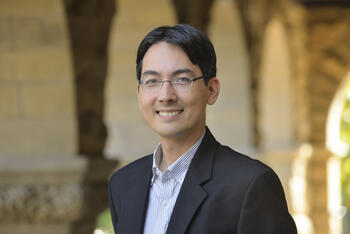
Image
jakli headshot

Laura Jakli is a Predoctoral Fellow at the Center on Democracy, Development and the Rule of Law at Stanford University, and a Ph.D. Candidate in the Department of Political Science at the University of California, Berkeley. Her dissertation draws on digital survey and ad experiments, machine learning, and qualitative fieldwork to examine the relationship between digital politics and political radicalization. Her related research examines how digital networks shape migration patterns and refugee behavior. Her research appears in International Studies Quarterly and the Virginia Journal of International Law. Her co-authored book chapter is forthcoming in Democratization (Oxford University Press).


Encina Hall, C147 616 Jane Stanford Way Stanford, CA 94305-6055
0
CDDRL Predoctoral Fellow, 2018-20
Fellow, Program on Democracy and the Internet, 2018-20
jakli.jpg

​I am a Junior Fellow at the Harvard Society of Fellows. Starting in 2023, I will be an Assistant Professor at Harvard Business School's Business, Government and the International Economy (BGIE) unit.

My research examines political extremism, destigmatization, and radicalization, focusing on the role of popularity cues in online media. My related research examines a broad range of threats to democratic governance, including authoritarian encroachment, ethnic prejudice in public goods allocation, and misinformation. 

​My dissertation won APSA's Ernst B. Haas Award for the best dissertation on European Politics. I am currently working on my book project, Engineering Extremism, with generous funding from the William F. Milton Fund at Harvard.

My published work has appeared in the American Political Science Review,  Governance,  International Studies QuarterlyPublic Administration Review, and the Virginia Journal of International Law, along with an edited volume in Democratization (Oxford University Press). My research has been featured in KQED/NPRThe Washington Post, and VICE News.

I received my Ph.D. in Political Science at the University of California, Berkeley in 2020. I was a Predoctoral Research Fellow at the Center on Democracy, Development and the Rule of Law at Stanford University and the Stanford Program on Democracy and the Internet. I hold a B.A. (Magna Cum Laude; Phi Beta Kappa) from Cornell University and an M.A. (with Distinction) from the University of California, Berkeley.

CV
Predoctoral Fellow at the Center on Democracy, Development and the Rule of Law at Stanford University
Seminars
News Type
Commentary
Date
Paragraphs

"History is directional and progressive, and the modernization process points to liberal democracy as its fullest embodiment. But getting there is harder than it seemed back in 1992, and the possibility of institutional decay is ever-present," writes CDDRL Mosbacher Director Francis Fukuyama. Read here.

Hero Image
gettyimages 642714258
All News button
1
-

Abstract:

Please join Stanford's Center on Democracy, Development, and the Rule of Law (CDDRL) on Sept. 27 for the launch of Francis Fukuyama's latest book, "Identity: The Demand for Dignity and the Politics of Resentment." Fukuyama, the Mosbacher Director of CDDRL, will be joined in conversation with Michael McFaul, the director and Senior Fellow at the Freeman Spogli Institute for International Affairs. The event will begin promptly at 4:00 pm and be followed by a light reception and book signing from 5:30-6:30 pm. 

Please note that there is only 1 ticket permitted per person. 

In 2014, Francis Fukuyama wrote that American institutions were in decay, as the state was progressively captured by powerful interest groups. Two years later, his predictions were borne out by the rise to power of a series of political outsiders whose economic nationalism and authoritarian tendencies threatened to destabilize the entire international order. These populist nationalists seek direct charismatic connection to the people, who are usually defined in narrow identity terms that offer an irresistible call to an in-group and exclude large parts of the population as a whole. Demand for recognition of one's identity is a master concept that unifies much of what is going on in world politics today.

The universal recognition on which liberal democracy is based has been increasingly challenged by narrower forms of recognition based on nation, religion, sect, race, ethnicity, or gender, which have resulted in anti-immigrant populism, the upsurge of politicized Islam, the fractious identity liberalism of college campuses, and the emergence of white nationalism. Populist nationalism, said to be rooted in economic motivation, actually springs from the demand for recognition and therefore cannot simply be satisfied by economic means. The demand for identity cannot be transcended; we must begin to shape identity in a way that supports rather than undermines democracy.


Paul Brest Hall East, Munger Building 4

Encina Hall, C148
616 Jane Stanford Way
Stanford, CA 94305

0
Olivier Nomellini Senior Fellow at the Freeman Spogli Institute for International Studies
Director of the Ford Dorsey Master's in International Policy
Research Affiliate at The Europe Center
Professor by Courtesy, Department of Political Science
yff-2021-14290_6500x4500_square.jpg

Francis Fukuyama is the Olivier Nomellini Senior Fellow at Stanford University's Freeman Spogli Institute for International Studies (FSI), and a faculty member of FSI's Center on Democracy, Development and the Rule of Law (CDDRL). He is also Director of Stanford's Ford Dorsey Master's in International Policy, and a professor (by courtesy) of Political Science.

Dr. Fukuyama has written widely on issues in development and international politics. His 1992 book, The End of History and the Last Man, has appeared in over twenty foreign editions. His book In the Realm of the Last Man: A Memoir will be published in fall 2026.

Francis Fukuyama received his B.A. from Cornell University in classics, and his Ph.D. from Harvard in Political Science. He was a member of the Political Science Department of the RAND Corporation, and of the Policy Planning Staff of the US Department of State. From 1996-2000 he was Omer L. and Nancy Hirst Professor of Public Policy at the School of Public Policy at George Mason University, and from 2001-2010 he was Bernard L. Schwartz Professor of International Political Economy at the Paul H. Nitze School of Advanced International Studies, Johns Hopkins University. He served as a member of the President’s Council on Bioethics from 2001-2004. He is editor-in-chief of American Purpose, an online journal.

Dr. Fukuyama holds honorary doctorates from Connecticut College, Doane College, Doshisha University (Japan), Kansai University (Japan), Aarhus University (Denmark), the Pardee Rand Graduate School, and Adam Mickiewicz University (Poland). He is a non-resident fellow at the Carnegie Endowment for International Peace. He is a member of the Board of Trustees of the Rand Corporation, the Board of Trustees of Freedom House, and the Board of the Volcker Alliance. He is a fellow of the National Academy for Public Administration, a member of the American Political Science Association, and of the Council on Foreign Relations. He is married to Laura Holmgren and has three children.

(October 2025)

CV
Date Label
Olivier Nomellini Senior Fellow at the Freeman Spogli Institute for International Studies (FSI), and Mosbacher Director of FSI's Center on Democracy, Development, and the Rule of Law.

Encina Hall
616 Jane Stanford Way
Stanford, CA 94305-6055

0
Senior Fellow, Freeman Spogli Institute for International Studies
Ken Olivier and Angela Nomellini Professor of International Studies, Department of Political Science
Peter and Helen Bing Senior Fellow, Hoover Institution
mcfaul_headshot_2025.jpg PhD

Michael McFaul is the Ken Olivier and Angela Nomellini Professor of International Studies in Political Science, Senior Fellow at the Freeman Spogli Institute for International Studies, and the Peter and Helen Bing Senior Fellow at the Hoover Institution, all at Stanford University. He joined the Stanford faculty in 1995 and served as FSI Director from 2015 to 2025. He is also an international affairs analyst for MSNOW.

McFaul served for five years in the Obama administration, first as Special Assistant to the President and Senior Director for Russian and Eurasian Affairs at the National Security Council at the White House (2009-2012), and then as U.S. Ambassador to the Russian Federation (2012-2014).

McFaul has authored ten books and edited several others, including, most recently, Autocrats vs. Democrats: China, Russia, America, and the New Global Disorder, as well as From Cold War to Hot Peace: An American Ambassador in Putin’s Russia, (a New York Times bestseller) Advancing Democracy Abroad: Why We Should, How We Can; and Russia’s Unfinished Revolution: Political Change from Gorbachev to Putin.

He is a recipient of numerous awards, including an honorary PhD from Montana State University; the Order for Merits to Lithuania from President Gitanas Nausea of Lithuania; Order of Merit of Third Degree from President Volodymyr Zelenskyy of Ukraine, and the Dean’s Award for Distinguished Teaching at Stanford University. In 2015, he was the Distinguished Mingde Faculty Fellow at the Stanford Center at Peking University.

McFaul was born and raised in Montana. He received his B.A. in International Relations and Slavic Languages and his M.A. in Soviet and East European Studies from Stanford University in 1986. As a Rhodes Scholar, he completed his D. Phil. in International Relations at Oxford University in 1991. 

CV
Date Label
Director and Senior Fellow at the Freeman Spogli Institute for International Affairs, and the Peter and Helen Bing Senior Fellow at the Hoover Institution.
Panel Discussions
-

Abstract:

The Islamization of universities has been the cornerstone of the Iranian regime’s higher educational policy since its ascent to power in 1979. Since the victory of the 1979 Iranian Revolution, the Islamic Republic of Iran (IRI) has relentlessly attempted to control and suppress dissident students and professors in an effort to train a new generation of ideologically driven students. Although the Islamic Republic was successful in co-opting a group of university students by means of ideological and materialistic incentives, a majority of students became less ideological and more critical of both the regime and its staple ideologies. These continuous struggles between the state and universities have given rise to several important questions: Why and how has the Islamic Republic Islamized and controlled universities? To what extent have these strategies succeeded or failed? Why and how have students responded to state domination?


Speaker Bio:

Image
golkar 49 srt 1

Saeid Golkar is a visiting Assistant Professor in the Department of Political Science and Public Service at the University of Tennessee at Chattanooga, and concurrently, a non-resident Senior Fellow on Middle East Policy at the Chicago Council on Global Affairs (CCGA). His research focuses on international and comparative politics of authoritarian regimes with an emphasis on the Middle East. His book, Captive Society: The Basij Militia and Social Control in Post-revolutionary Iran (Columbia University Press, 2015), was awarded the Washington Institute silver medal prize.

Saeid Golkar Visiting Assistant Professor in the Department of Political Science and Public Service at the University of Tennessee at Chattanooga
Seminars
-

Speaker Bio:

Image
ilya zaslavskiy high resolution

Ilya Zaslavskiy is a member of the Advisory Board at the Hudson Institute's Kleptocracy Initiative for which he wrote a report How Non-State Actors Export Kleptocratic Norms to the West. He is also Head of Research at Washington-based non-profit Free Russia Foundation and head of Underminers.info, a research project exposing kleptocrats from Eurasia in the West. Ilya is an Academy Associate at Chatham House where he was a Fellow and also continues as an energy consultant for western companies working in developing countries. In September 2018 Council on Foreign Relations will publish Ilya's report on Energy Reform in Ukraine.

Ilya Zaslavskiy Member of the Advisory Board at the Hudson Institute's Kleptocracy Initiative
Seminars
0
Visiting Practitioner, Ukrainian Emerging Leaders Program 2018-19
natalia.jpg
Nataliya Mykolska is the Trade Representative of Ukraine - Deputy Minister of Economic Development and Trade. In the government, Mykolska is responsible for developing and implementing consistent, predictable and efficient trade policy. She focuses on export strategy and promotion, building an effective system of state support for Ukrainian exports, free trade agreements, protecting Ukrainian trade interests in the World Trade Organization (WTO), dialogue with Ukrainian exporters, and removing trade barriers. Mykolska is the Vice-Chair of the International Trade Council and the Intergovernmental Committee on International Trade.   In her position, Mykolska developed and adopted the first ever Export Strategy of Ukraine: Strategic Trade Development Roadmap of Ukraine for 2017-2021. She has concluded and launched free trade agreements with Canada and Israel, and initiated additional trade preferences by the EU. Due to her efforts, Ukraine has started actively using WTO mechanisms and procedures. Moreover, the Ministry initiated WTO proceedings against Russia in response to trade aggression. Mykolska established the Export Promotion Office at the Ministry to assist Ukrainian business, help them succeed on international markets and open new markets.   Mykolska has fifteen years of experience working as a legal counsel with a focus on international trade including WTO and free trade agreements, trade financing, cross-border trade transactions and contracts, franchising and other areas. Mykolska worked with governmental institutions to bring Ukraine in compliance with international obligations, including the EU-Ukraine Deep and Comprehensive Free Trade Area. She has been recognized as the No. 1 International Trade lawyer by Ukrainian Law Firms, and was recommended by the International Who’s Who of Business Lawyers and the International Who's Who of Trade & Customs Lawyers.   Mykolska graduated from the Ivan Franko National University of Lviv Faculty of Law in 2001, and completed her Master of European Studies Program at the Europa-Kolleg-Hamburg in 2002.  
0
Visiting Scholar, Ukrainian Emerging Leaders Program, 2018-19
sasha.jpg
Oleksandra Ustinova is the head of communications and Anti-Corruption in HealthCare Projects at the Anti-Corruption Action Center (ANTAC), in Kyiv, Ukraine. ANTAC is one of the leading watchdog organizations on anti-corruption reform in Ukraine and was one of the founders of new anti-corruption institutions in Ukraine.   Serving as a communication and advocacy expert over the last 10 years, Ustinova has successfully advocated for more than 20 national laws. Among them are laws that established new anticorruption and investigative bodies, that now investigate more than 500 criminal cases against politicians including Members of Parliament, Ministers, heads of the Central Election Committee, and the head of the tax service. Ustinova was the first Secretary of the Civil Oversight Council of the National Anti-Corruption Bureau of Ukraine (NABU)  - the first independent anti-corruption law enforcement institution in Ukraine. At ANTAC, Ustinova also manages the project “Anti-Corruption in Healthcare” and in 2015 advocated changes to the legislation so all medicine in Ukraine is procured via international organizations. As a result of this legislation, Ukraine has saved up to 40 percent of the state budget for medicine procurement each year.   Ustinova is an author and anchor of the investigative TV program called “Expensive Healthcare” on the TV-channel 24. She runs her own column on corruption in the Ukrainian healthcare system in one of the top media sites, Ukrainska Pravda. Before joining ANTAC, Ustinova worked as a consultant for the Strategic Advisory Group (SAG) on Healthcare Reform in Ukraine, the All Ukrainian Network of People Living with HIV,  Patients of Ukraine, and managed communications in national advocacy campaigns for reduction of tobacco use    Ustinova has an MA in Political Science from the National University of Kyiv-Mohyla Academy.  
0
Visiting Scholar, Ukrainian Emerging Leaders Program, 2018-19
ivan.jpg
Ivan Prymachenko is an educational technology innovator and a co-founder of the largest Ukrainian massive open online courses platform Prometheus with 600,000 users. Structured as a non-profit organization, Prometheus creates and publish on its platform massive online courses from leading Ukrainian universities, companies, international organizations, and government. Prometheus also works on making its online courses a part of the curriculum of Ukrainian educational facilities in the blended learning format: twenty-two Ukrainian universities are already participating in this program. In addition, Prymachenko is a lead educational expert in the largest NGO coalition in Ukraine, the Reanimation Package of Reforms, the most influential non-governmental reform advocate in the country.    In 2011, Prymachenko saw the first massive open online courses launched by Stanford and was inspired to create similar courses in Ukraine. In 2013, while still pursuing a master’s degree, he launched the first massive open online course in post-soviet countries. In 2014, Prymachenko co-founded Prometheus and initially funded the project with six months' of his university scholarship. In four years, the volunteer initiative grew into one of the largest educational projects in independent Ukraine’s history. To date, the platform hosts 75 massive online courses from top-rated Ukrainian universities, international organizations such as United Nations Development Program, the Council of Europe, OSCE, and leading companies — Microsoft Ukraine and EY Ukraine. To support the implementation of key Ukrainian reforms, such as the public procurement system - Prozorro, Prometheus worked with the state authorities to create several governmental massive online courses and enrolled tens of thousands of civil servants as students.  
Paragraphs
In 2014, Francis Fukuyama wrote that American institutions were in decay, as the state was progressively captured by powerful interest groups. Two years later, his predictions were borne out by the rise to power of a series of political outsiders whose economic nationalism and authoritarian tendencies threatened to destabilize the entire international order. These populist nationalists seek direct charismatic connection to “the people,” who are usually defined in narrow identity terms that offer an irresistible call to an in-group and exclude large parts of the population as a whole.
Demand for recognition of one’s identity is a master concept that unifies much of what is going on in world politics today. The universal recognition on which liberal democracy is based has been increasingly challenged by narrower forms of recognition based on nation, religion, sect, race, ethnicity, or gender, which have resulted in anti-immigrant populism, the upsurge of politicized Islam, the fractious “identity liberalism” of college campuses, and the emergence of white nationalism. Populist nationalism, said to be rooted in economic motivation, actually springs from the demand for recognition and therefore cannot simply be satisfied by economic means. The demand for identity cannot be transcended; we must begin to shape identity in a way that supports rather than undermines democracy.
 
Publication info:
 
US publisher:  Farrar, Straus and Giroux
Link to Amazon
All Publications button
1
Publication Type
Books
Publication Date
Authors
Francis Fukuyama
Paragraphs

Political parties in the United States and Britain used clientelism and patronage to govern throughout the nineteenth century. By the twentieth century, however, parties in both countries shifted to programmatic competition. This book argues that capitalists were critical to this shift. Businesses developed new forms of corporate management and capitalist organization, and found clientelism inimical to economic development. Drawing on extensive archival research in the United States and Britain, this book shows how national business organizations pushed parties to adopt programmatic reforms, including administrative capacities and policy-centered campaigns. Parties then shifted from reliance on clientelism as a governing strategy in elections, policy distribution, and bureaucracy. They built modern party organizations and techniques of interest mediation and accommodation. This book provides a novel theory of capitalist interests against clientelism, and argues for a more rigorous understanding of the relationship between capitalism and political development.

Published by: Cambridge University Press

Amazon link 

All Publications button
1
Publication Type
Books
Publication Date
Authors
Didi Kuo
Subscribe to Governance