Governance

FSI's research on the origins, character and consequences of government institutions spans continents and academic disciplines. The institute’s senior fellows and their colleagues across Stanford examine the principles of public administration and implementation. Their work focuses on how maternal health care is delivered in rural China, how public action can create wealth and eliminate poverty, and why U.S. immigration reform keeps stalling. 

FSI’s work includes comparative studies of how institutions help resolve policy and societal issues. Scholars aim to clearly define and make sense of the rule of law, examining how it is invoked and applied around the world. 

FSI researchers also investigate government services – trying to understand and measure how they work, whom they serve and how good they are. They assess energy services aimed at helping the poorest people around the world and explore public opinion on torture policies. The Children in Crisis project addresses how child health interventions interact with political reform. Specific research on governance, organizations and security capitalizes on FSI's longstanding interests and looks at how governance and organizational issues affect a nation’s ability to address security and international cooperation.

0
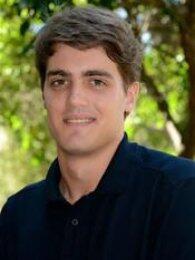
CDDRL Postdoctoral Scholar, 2020-21
thumbnail_leah1_small.jpg

My research centers on topics in comparative politics and the political economy of development. I focus on the micro-foundations of political behavior to gain leverage on macro-political questions. How do autocrats survive? How can citizen-state relations be improved and government accountability strengthened? Can shared identities mitigate out-group animosity? Adopting a multi-method approach, I use lab-in-the-field and online experiments, surveys, and in-depth field research to examine these questions in sub-Saharan Africa and the US. My current book project reexamines the role of elections in authoritarian endurance and explains why citizens vote in elections with foregone conclusions in Tanzania and Uganda. Moving beyond conventional paradigms, my theory describes how a social norm of voting and accompanying social sanctions from peers contribute to high turnout in semi-authoritarian elections. In other ongoing projects, I study how national and pan-African identification stimulated through national sports games influence attitudes toward refugees, the relationship between identity, emotions, and belief in fake news, and how researchers can use Facebook as a tool for social science research.

-


EMERGING ISSUES IN CONTEMPORARY ASIA

A Special Seminar Series


RSVP required by February 22, 2019 at: https://goo.gl/forms/ZCwcHC0qTec2rzj63

VALID STANFORD ID CARD MUST BE PRESENTED UPON ARRIVAL


ABSTRACT: The United States has been the world’s dominant power for more than a century.  Now many analysts believe China is taking its place. Is China an emerging superpower? Should the United States gear up for a new cold war in Asia? In this seminar, I show that China actually lags far behind the United States by the most important measures of national wealth and power—and will probably fall further behind in the coming decades. The most likely threat to American security, therefore, is not a confident Chinese peer competitor, but a deeply insecure China that lashes out after failing to live up to the global hype about its rise. I will discuss how the United States can contain this threat without starting a cold or hot war with Beijing.   

Image
Michael Beckley
PROFILE: Michael Beckley is an assistant professor of political science at Tufts University and a fellow at Harvard's Kennedy School of Government. His research focuses on the rise of China and has received “best article” awards from the American Political Science Association and the International Studies Association and has been featured by numerous media, including CNN, Fox News, the Financial Times, the New York Times, NPR, and the Washington Post. Previously, Professor Beckley worked at the U.S. Department of Defense, the RAND Corporation, and the Carnegie Endowment for International Peace. He currently consults for the Pentagon’s Office of Net Assessment, the Joint Staff, and the National Intelligence Council. He holds a PhD in political science from Columbia University and his first book, Unrivaled: Why America Will Remain the World’s Sole Superpower, was published last fall by Cornell University Press. Part of his talk is based on a Foreign Affairs web article that was named one of the ten “best of 2018.”

Michael Beckley Assistant Professor of Political Science Tufts University
-

Stanford’s Global Digital Policy Incubator (GDPi), the Office of the United Nations High Commissioner for Human Rights (OHCHR), the HANDA Center for Human Rights and International Justice, UC Berkeley’s Human Rights Center, and the Civic Space Initiative invite you to participate in a roundtable discussion with Clément Voule, United Nations Special Rapporteur on the Rights to Freedom of Peaceful Assembly and Association, on the role of technology companies in defending freedom of assembly and association online.

In recent years, the right to free assembly and association online has been challenged from numerous sides, often under the pretext of national security, public order, morality, and prevention of abuse. These restrictions include blocking of groups and websites focused on minority groups, large-scale Internet shutdowns, mass online harassment and doxing campaigns, and the use of facial recognition software to identify protesters. Violations of offline rights are spilling over into online spaces, where their impact ripples through entire societies. This creates an urgent need for the protection of these rights in new domains. The United Nations is seeking input from the private sector, academic experts, and the broader public on how to protect these shrinking spaces.

Participants are invited to share cases in which individual and collective rights to peacefully assemble online were violated. The conversation will inform the Special Rapporteur’s report to the United Nations Human Rights Council on threats to free assembly in the digital realm and how they can be addressed.

 Lunch will be provided prior to the event.

We Look forward to your attendance at this special event.

Clément Voule United Nations Special Rapporteur on the Rights to Freedom of Peaceful Assembly and Association
Panel Discussions
This event is open to Stanford undergraduate students only. 
 
The Center on Democracy, Development, and the Rule of Law (CDDRL) is currently accepting applications from eligible juniors due February 15, 2019 who are interested in writing their senior thesis on a subject touching upon democracy, economic development, and rule of law (DDRL) from any university department. CDDRL faculty and current honors students will be present to discuss the program and answer any questions.
 
For more information on the Fisher Family CDDRL Honors Program, please click here.
 
Image
honors info session 2019 1


Ground Floor Conference Rm E008 Encina Hall616 Serra MallStanford, CA 94305-6055


CDDRL
Encina Hall, C152
616 Jane Stanford Way
Stanford, CA 94305-6055

(650) 725-2705 (650) 724-2996
0
Senior Fellow at the Freeman Spogli Institute for International Studies
Professor, by courtesy, of Political Science
Stedman_Steve.jpg PhD

Stephen Stedman is a Senior Fellow at the Freeman Spogli Institute for International Studies (FSI) and the Center on Democracy, Development and the Rule of Law (CDDRL), an affiliated faculty member at CISAC, and professor of political science (by courtesy) at Stanford University. He is director of CDDRL's Fisher Family Honors Program in Democracy, Development and Rule of Law, and will be faculty director of the Program on International Relations in the School of Humanities and Sciences effective Fall 2025.

In 2011-12 Professor Stedman served as the Director for the Global Commission on Elections, Democracy, and Security, a body of eminent persons tasked with developing recommendations on promoting and protecting the integrity of elections and international electoral assistance. The Commission is a joint project of the Kofi Annan Foundation and International IDEA, an intergovernmental organization that works on international democracy and electoral assistance.

In 2003-04 Professor Stedman was Research Director of the United Nations High-level Panel on Threats, Challenges and Change and was a principal drafter of the Panel’s report, A More Secure World: Our Shared Responsibility.

In 2005 he served as Assistant Secretary-General and Special Advisor to the Secretary- General of the United Nations, with responsibility for working with governments to adopt the Panel’s recommendations for strengthening collective security and for implementing changes within the United Nations Secretariat, including the creation of a Peacebuilding Support Office, a Counter Terrorism Task Force, and a Policy Committee to act as a cabinet to the Secretary-General.

His most recent book, with Bruce Jones and Carlos Pascual, is Power and Responsibility: Creating International Order in an Era of Transnational Threats (Washington DC: Brookings Institution, 2009).

Director, Fisher Family Honors Program in Democracy, Development and Rule of Law
Director, Program in International Relations
Affiliated faculty at the Center for International Security and Cooperation
Date Label

Encina Hall, C150
616 Jane Stanford Way
Stanford, CA 94305

0
Center Fellow, Freeman Spogli Institute for International Studies
didi_kuo_2023.jpg

Didi Kuo is a Center Fellow at the Freeman Spogli Institute for International Studies (FSI) at Stanford University. She is a scholar of comparative politics with a focus on democratization, corruption and clientelism, political parties and institutions, and political reform. She is the author of The Great Retreat: How Political Parties Should Behave and Why They Don’t (Oxford University Press) and Clientelism, Capitalism, and Democracy: the rise of programmatic politics in the United States and Britain (Cambridge University Press, 2018).

She has been at Stanford since 2013 as the manager of the Program on American Democracy in Comparative Perspective and is co-director of the Fisher Family Honors Program at CDDRL. She was an Eric and Wendy Schmidt Fellow at New America and is a non-resident fellow with the Carnegie Endowment for International Peace. She received a PhD in political science from Harvard University, an MSc in Economic and Social History from Oxford University, where she studied as a Marshall Scholar, and a BA from Emory University.

Date Label
Subscribe to Governance