Governance

FSI's research on the origins, character and consequences of government institutions spans continents and academic disciplines. The institute’s senior fellows and their colleagues across Stanford examine the principles of public administration and implementation. Their work focuses on how maternal health care is delivered in rural China, how public action can create wealth and eliminate poverty, and why U.S. immigration reform keeps stalling. 

FSI’s work includes comparative studies of how institutions help resolve policy and societal issues. Scholars aim to clearly define and make sense of the rule of law, examining how it is invoked and applied around the world. 

FSI researchers also investigate government services – trying to understand and measure how they work, whom they serve and how good they are. They assess energy services aimed at helping the poorest people around the world and explore public opinion on torture policies. The Children in Crisis project addresses how child health interventions interact with political reform. Specific research on governance, organizations and security capitalizes on FSI's longstanding interests and looks at how governance and organizational issues affect a nation’s ability to address security and international cooperation.

0
George G.C. Parker Professor of Finance and Economics, Stanford Graduate School of Business
Director of the Corporations and Society Initiative, Stanford Graduate School of Business
Director of the Program on Capitalism and Democracy, Center on Democracy, Development and the Rule of Law
Senior Fellow, Stanford Institute for Economic Policy Research
Senior Fellow (by courtesy), Freeman Spogli Institute for International Studies
anat_admati-stanford-2021.jpg

Anat R. Admati is the George G.C. Parker Professor of Finance and Economics at Stanford University Graduate School of Business (GSB), a Faculty Director of the GSB Corporations and Society Initiative, and a senior fellow at Stanford Institute for Economic Policy Research. She has written extensively on information dissemination in financial markets, portfolio management, financial contracting, corporate governance and banking. Admati’s current research, teaching and advocacy focus on the complex interactions between business, law, and policy with focus on governance and accountability.

Since 2010, Admati has been active in the policy debate on financial regulations. She is the co-author, with Martin Hellwig, of the award-winning and highly acclaimed book The Bankers’ New Clothes: What’s Wrong with Banking and What to Do about It (Princeton University Press, 2013; bankersnewclothes.com). In 2014, she was named by Time Magazine as one of the 100 most influential people in the world and by Foreign Policy Magazine as among 100 global thinkers.

Admati holds BSc from the Hebrew University, MA, MPhil and PhD from Yale University, and an honorary doctorate from University of Zurich. She is a fellow of the Econometric Society, the recipient of multiple fellowships, research grants, and paper recognition, and is a past board member of the American Finance Association. She has served on a number of editorial boards and is a member of the FDIC’s Systemic Resolution Advisory Committee, a former member of the CFTC’s Market Risk Advisory Committee, and a former visiting scholar at the International Monetary Fund.

Date Label
Paragraphs

American democracy is in trouble. Since the 2016 election, a sizable literature has developed that focuses on diagnosing and assessing the state of American democracy, most of which concludes that our system of government is in decline.[2] These authors point to the rise in party polarization, the increasingly bipartisan abandonment of the norms of the democratic process, the rise of populism, the degradation of the public sphere, and the proliferation of gerrymandered districts and voting restrictions to illustrate the breakdown. And while attributing varying levels of significance to these factors, a common theme is that American democracy, once stable, is now threatened. On closer observation, however, it is unclear that American democracy was ever really as healthy as it may have appeared. This Essay argues that the stability of the American system has always been built and dependent upon racial exclusion; over the course of our history, each major movement toward a more fully representative participatory democracy has prompted a backlash that was resolved only by the adoption of policies that worked to undermine the full citizenship of communities of color. The point of this reframing is not to suggest that the United States has made no progress over its history. Nor does it diminish the accomplishments of those who have advocated for equality over the course of our history or minimize the importance of working to repair our democratic institutions. Rather, this reframing is necessary to avoid romanticizing our democratic history and to inform the choices in this moment as we seek to stabilize our country.

All Publications button
1
Publication Type
Journal Articles
Publication Date
Journal Publisher
Michigan Law Review Online
Authors
Didi Kuo
Authors
News Type
News
Date
Paragraphs

In a webinar dated June 8, 2020, American University in Cairo Scholar Amr Adly presented findings from his new book Cleft Capitalism: The Social Origins of Failed Market Making in Egypt (Stanford University Press, 2020). Egypt has undergone significant economic liberalization under the auspices of the International Monetary Fund, the World Bank, USAID, and the European Commission. Yet after more than four decades of economic reform, the Egyptian economy still fails to meet popular expectations for inclusive growth, better standards of living, and high-quality employment. While many analysts point to cronyism and corruption, this study finds the root causes of this stagnation in the underlying social and political conditions of economic development. It offers a new explanation for why market-based development can fail to meet expectations: small businesses in Egypt are not growing into medium and larger businesses. The practical outcome of this missing middle syndrome is the continuous erosion of the economic and social privileges once enjoyed by the middle classes and unionized labor, without creating enough winners from market making. This in turn set the stage for alienation, discontent, and, finally, revolt. With this book, Adly uncovers both an institutional explanation for Egypt's failed market making, and sheds light on the key factors of arrested economic development across the Global South.


Hero Image
screen shot 2020 06 09 at 2 41 41 pm
All News button
1
Authors
News Type
News
Date
Paragraphs

In a webinar dated, May 27, 2020, Ohio University Historian Ziad Abu-Rish analyzed the trajectory of Lebanon's Uprising and the impact of the Covid-19 crisis on the contemporary political scene. Abu-Rish examined the multiple crises manifesting in Lebanon today and their impact on the fate of the uprising that began in October 2019. While the currency, fiscal, and infrastructural crises were central to the making of Lebanon’s uprising, he argued, the novel strategic innovations that the protesters made were key to shaping its trajectory relative to past protests. More recently, the COVID-19 pandemic has both exacerbated existing dynamics while also providing respite to the government and some of the traditional political parties. To watch the recording of the talk, please click below.


Hero Image
screen shot 2020 05 29 at 9 10 19 am
All News button
1
-

This event is co-sponsored by the Arab Studies Institute

ABSTRACT

This talk is based on the speaker's new book Cleft Capitalism: The Social Origins of Failed Market Making in Egypt (Stanford University Press, 2020). Egypt has undergone significant economic liberalization under the auspices of the International Monetary Fund, the World Bank, USAID, and the European Commission. Yet after more than four decades of economic reform, the Egyptian economy still fails to meet popular expectations for inclusive growth, better standards of living, and high-quality employment. While many analysts point to cronyism and corruption, this study finds the root causes of this stagnation in the underlying social and political conditions of economic development. It offers a new explanation for why market-based development can fail to meet expectations: small businesses in Egypt are not growing into medium and larger businesses. The practical outcome of this missing middle syndrome is the continuous erosion of the economic and social privileges once enjoyed by the middle classes and unionized labor, without creating enough winners from market making. This in turn set the stage for alienation, discontent, and, finally, revolt. With this book, Adly uncovers both an institutional explanation for Egypt's failed market making, and sheds light on the key factors of arrested economic development across the Global South.

SPEAKER BIO

Image
amr jpg 1

Amr Adly is an assistant professor in the department of political science at The American University in Cairo. He worked as a non-resident scholar at the Carnegie Middle East Center. He has also worked as a project manager at the Center on Democracy, Development, and the Rule of Law at Stanford University, where he was a postdoctoral fellow. Adly received his Ph.D. from the European University Institute in Florence. He is also author of Cleft Capitalism: The Social Origins of Egypt’s Failed Market Making (Stanford University Press, 2020) and State Reform and Development in the Middle East: The Cases of Turkey and Egypt (Routledge, 2012). He has been published in a number of peer-reviewed journals, including Geo-forum, Business and Politics, Turkish Studies, and Middle Eastern Studies. Adly is also a frequent contributor to print and online news sources.

Online; via Zoom: REGISTER

Seminars
-

ABSTRACT

This talk examines the multiple crises manifesting in Lebanon today and their impact on the fate of the uprising that began in October 2019. While the currency, fiscal, and infrastructural crises were central to the making of Lebanon’s uprising, the novel strategic innovations that the protesters made were key to shaping its trajectory relative to past protests. More recently, the COVID-19 pandemic has both exacerbated existing dynamics while also providing respite to the government and some of the traditional political parties. The presentation therefore engages these complexities to take stock of the current status of popular mobilizations, elite efforts to contain them, and the economic structures that undergird both.

SPEAKER BIO

Image
ziad abu rish
Ziad Abu-Rish is Assistant Professor of History at Ohio University, where he is founding director of the Middle East & North Africa Studies Certificate Program. His research explores state formation, economic development, and popular mobilizations in the Middle East, with a particular focus on Lebanon and Jordan. Abu-Rish is co-editor of The Dawn of the Arab Uprisings: End of an Old Order? (2012). He currently serves as Senior Editor at Arab Studies Journal, co-editor at Jadaliyya e-zine, and board member of the Lebanese Studies Association. He is also a Research Fellow at the Lebanese Center for Policy Studies (LCPS).

Online, via Zoom: REGISTER

Ziad Abu-Rish Ohio University
Authors
News Type
Commentary
Date
Paragraphs

[The following article originally appeared in French in Le Soir]

Over the past 20 years of exile, I returned to Morocco sporadically to visit family and friends. Now, I am here indefinitely until the coronavirus pandemic passes. I have observed its effects upon my homeland as not just a proud Moroccan, but also a trained social scientist assessing how the Moroccan state has responded – and how new social dynamics can emerge from it. 

Officially, Moroccan containment and mitigation measures have been described as a model of responsiveness. Notwithstanding testing shortages, and the failure to repatriate Moroccans abroad, new resources like personal protective equipment have been supplied to hospitals. Emergency funds are supporting the economy. The military and security forces have enforced strict quarantine and sheltering policies. Despite that infectious rates are among the highest in Africa, deaths from COVID-19 still remain comparatively low, a reality for which all Moroccans are grateful. 

However, the aggressiveness of these responses stems from a troubling reality. The state moved quickly to contain the pandemic because it could not afford to do otherwise. It already lagged behind in providing basic goods like education and jobs, due to the unbridled neoliberal economic model espoused by national planners for two decades at the expense of social development. The healthcare sector could not absorb even a modest surge in hospitalizations and deaths. In sum, Morocco’s response was optimal given its resources, but suboptimal given its potential. 

Why is this troubling? Not only do medical projections suggest a second wave of the pandemic looms this winter, but there will be more existential threats to come of this type. Climate change will further accentuate these dangers. Further, entire swathes of the Moroccan economy will remain in crisis for the foreseeable future. Vast numbers of the labor force work in the informal sector, the product of unfettered neoliberalism that did not produce any trickle-down effects due to weak rule of law. Grinding inequality means that successful treatments for COVID-19 will not reach most of the population. As Moroccans, we need only to consider the Rif to acknowledge the dangers that lie ahead. 

In the context of this crisis, many Moroccans have put aside standing grievances and put faith in their state. Politically, Moroccans do not labor under the extreme polarization often seen in other Arab countries. True, Morocco does not have the democratic system of Tunisia, where electoral institutions keep things in place. But, neither does it feature the deep schisms of Algeria, where the Hirak protest movement last year exposed the eroding legitimacy of the military and its civilian façade. If anything, Algerian politics will become even more fractured after the pandemic. 

Morocco stands in the middle. Unlike Tunisia, where democratic institutions absorb and mediate this crisis, here the state can only deflect and postpone it. However, neither has Moroccan politics splintered across irreconcilable rifts, partly due to the unifying presence of the monarchy. This gives Moroccans the chance to envision a future of improved governance that compensates for past deficiencies, and leaves us better prepared for future threats. This is not a substitute for genuine pluralism, but it can facilitate its onset. 

Recently, King Mohamed pronounced the prevailing paradigm of economic development to have floundered. As the Chinese proverb holds that with every crisis comes opportunity, we now have an opening to realign it, despite that more hardships will likely ensue as the pandemic continues to have long-lasting consequences. For instance, remittances, long a vital source of economic funding, will decline, as Moroccans abroad will more likely keep their cash close. The tourism sector will take many years to recover. But Morocco can also take advantage of global supply chain disruptions to secure new modes of production. Self-sufficiency and social spending must be priorities. 

Crucially, we cannot merely tweak the neoliberal model in favor of a master turn-key monarchical plan. The focus here falls upon not just the ideas behind national development, but the process through which those ideas come to fruition. Major ruptures that allow such soul- searching are rare in Morocco. One came after the passing of my uncle, King Hassan II, in 1999. A second came with the Arab Spring in 2011. Today marks another such inflection point, which allows all of society sharing common trauma and frustration to step back from the brink. 

That process will not be easy. Many Moroccans have lost faith in political engagement after too many failed reform promises. The Arab Spring’s impetus to demand voice and dignity will become more omnipresent. New social and economic initiatives must be formulated in close concertation with society, through inclusive dialogues that favor participation over top-down imposition. 

The state must avoid succumbing to the huge temptation of stoking false patriotism, or aggrandizing its authoritarian impulse by securitizing the pandemic. For instance, surveillance technologies utilized to ensure social distancing cannot be retooled to suppress political mobilization, as is happening in Russia and China. Indeed, many have wrongly assumed that autocracies are better equipped for the current crisis by comparing China with the US. However, this is a false dichotomy. For every China, there are successful democracies like South Korea and Taiwan where close state-society coordination is mediated not by the army or police, but rather by trust, transparency, and citizen engagement. 

In short, an historical opportunity now presents itself for Morocco; let us not squander it.

Hero Image
hicham alaoui ls
All News button
1
-

Speaker Bio:

Image
alberto diaz
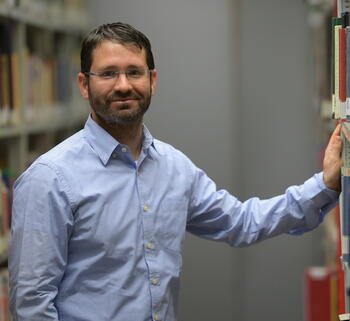
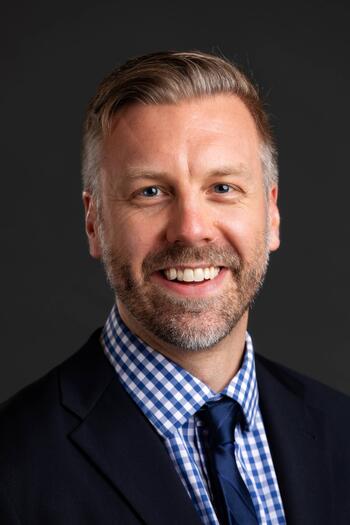
Alberto Diaz-Cayeros joined the FSI faculty in 2013 after serving for five years as the director of the Center for US-Mexico studies at the University of California, San Diego. He earned his Ph.D at Duke University in 1997. He was an assistant professor of political science at Stanford from 2001-2008, before which he served as an assistant professor of political science at the University of California, Los Angeles. Diaz-Cayeros has also served as a researcher at Centro de Investigacion Para el Desarrollo, A.C. in Mexico from 1997-1999. His work has focused on federalism, poverty and violence in Latin America, and Mexico in particular. He has published widely in Spanish and English. His book Federalism, Fiscal Authority and Centralization in Latin America was published by Cambridge University Press in 2007 (reprinted 2016). His latest book (with Federico Estevez and Beatriz Magaloni) is: The Political Logic of Poverty Relief Electoral Strategies and Social Policy in Mexico. His work has primarily focused on federalism, poverty and economic reform in Latin America, and Mexico in particular, with more recent work addressing crime and violence, youth-at-risk, and police professionalization. 

Online, via Zoom: REGISTER

Encina Hall, C149
616 Jane Stanford Way
Stanford, CA 94305

(650) 725-0500
0
Senior Fellow, Freeman Spogli Institute for International Studies
Professor, by courtesy, of Political Science
alberto_diaz-cayeros_2024.jpg MA, PhD

Alberto Díaz-Cayeros is a Senior Fellow at Stanford University's Freeman Spogli Institute for International Studies (FSI), and co-director of the Democracy Action Lab (DAL), based at FSI's Center on Democracy, Development and Rule of Law (CDDRL). His research interests include federalism, poverty relief, indigenous governance, political economy of health, violence, and citizen security in Mexico and Latin America.

He is the author of Federalism, Fiscal Authority and Centralization in Latin America (Cambridge, reedited 2016), coauthored with Federico Estévez and Beatriz Magaloni, of The Political Logic of Poverty Relief (Cambridge, 2016), and of numerous journal articles and book chapters.

He is currently working on a project on cartography and the developmental legacies of colonial rule and governance in indigenous communities in Mexico.

From 2016 to 2023, he was the Director of the Center for Latin American Studies at Stanford University, and from 2009 to 2013, Director of the Center for US-Mexican Studies at UCSD, the University of California, San Diego.

Affiliated faculty at the Center on Democracy, Development and the Rule of Law
Co-director, Democracy Action Lab
Director of the Center for Latin American Studies (2016 - 2023)
CV
Date Label
Senior Fellow at CDDRL and Director for Latin American Studies
Seminars
-

ABSTRACT

The absence of an internationally mandated or internally negotiated peace process has allowed the Syrian regime to craft an illiberal peace as an outcome to the nearly decade-long conflict. This illiberal peace is shaped through a politics of exclusion in which Syrian society is bifurcated into the loyal and disloyal through processes of reconciliation, settlement, and new legal regimes of citizenship. These forms of ‘peace’ are productive of new forms of post-conflict citizenship in Syria structured around loyalty to the regime that also serve to punish anyone suspected of betraying ‘the homeland’. The division of society into the loyal and disloyal is being consecrated in new laws and practices that are shaping Syria’s post-conflict trajectory. The prospect of a progressive Syrian future that motivated many of the early protestors has been quelled by the circumscription of political space and the reinvigoration of pre-conflict forms of governance underpinned by violence and exclusion. The emergence of new forms of citizenship shaped by illiberal peace is determining the terrain of politics in Syria today.  


SPEAKER BIO

Image
samer abboud headshot web
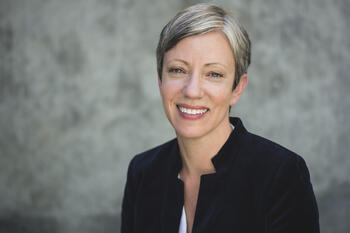
Samer Abboud is Associate Professor of Global Interdisciplinary Studies at Villanova University. He is the author of Syria (Polity 2018) as well as a number of journal articles and book chapters on Syria. He has published in journals such as Security DialogueCitizenship StudiesMiddle East Policy, and New Political Science and is a Senior Fellow at the Center for Syrian Studies at St. Andrew’s University, Scotland.  

Online, via Zoom: REGISTER

Samer Abboud Villanova University
Seminars
-

ABSTRACT

Democracy promotion has been a longstanding goal of US foreign policy in the Middle East and elsewhere. President George W. Bush championed democracy promotion as a way to counter the ideology and extremism that led to the September 11, 2001 terror attacks against the United States. After Bush’s attempts ended in abject failure, President Barack Obama sought to repair relations with the Muslim world but also withdraw the US footprint in the Middle East. But Obama was forced to take a far more hands-on approach with the outbreak of the 2010-2011 uprisings known as the Arab Spring. President Donald Trump, who has displayed an almost allergic aversion to Obama’s policies, has openly embraced the region’s autocrats with little regard for their abuse of human rights or absence of attention to political or economic freedom. How the United States approaches the region matters – both for aspiring democrats and for those who wish to silence them. Despite the rise of Russia and China, the United States remains the sole superpower, with the loudest voice on the world stage. Thus, the shift from democracy promoter – albeit reluctantly at times – to authoritarian enabler has made the task of democratic political reform far more challenging for people across the Middle East. This discussion will examine the recent democracy promotion efforts of the United States, with a focus on the Obama and Trump years.

SPEAKER BIO

Image
yerkes color large 2017
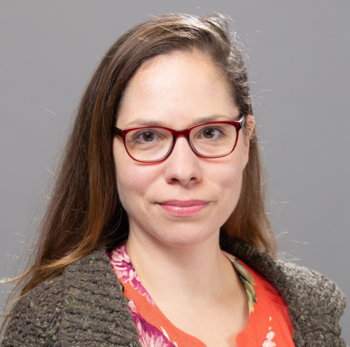
Sarah Yerkes is a fellow in the Carnegie Endowment for International Peace’s Middle East Program, where her research focuses on Tunisia’s political, economic, and security developments as well as state-society relations in the Middle East and North Africa.  She has been a visiting fellow at the Brookings Institution and a Council on Foreign Relations international affairs fellow and has taught in the Security Studies Program at Georgetown University and at the Elliott School of International Affairs at the George Washington University. Yerkes is a former member of the State Department’s policy planning staff, where she focused on North Africa. Previously, she was a foreign affairs officer in the State’s Department’s Office of Israel and Palestinian affairs. Yerkes also served as a geopolitical research analyst for the U.S. military’s Joint Staff Strategic Plans and Policy Directorate (J5) at the Pentagon, advising the Joint Staff leadership on foreign policy and national security issues.

Online, via Zoom: REGISTER

Sarah Yerkes Carnegie Endowment for International Peace
Seminars
Subscribe to Governance