International Development

FSI researchers consider international development from a variety of angles. They analyze ideas such as how public action and good governance are cornerstones of economic prosperity in Mexico and how investments in high school education will improve China’s economy.

They are looking at novel technological interventions to improve rural livelihoods, like the development implications of solar power-generated crop growing in Northern Benin.

FSI academics also assess which political processes yield better access to public services, particularly in developing countries. With a focus on health care, researchers have studied the political incentives to embrace UNICEF’s child survival efforts and how a well-run anti-alcohol policy in Russia affected mortality rates.

FSI’s work on international development also includes training the next generation of leaders through pre- and post-doctoral fellowships as well as the Draper Hills Summer Fellows Program.

-

Economic security, sustainable development, clean energy and energy security, better regulations, greater innovativeness and the growing share of Polish economy in the international market; these are the main priorities of the Polish government and Ministry of Economy. How is Poland going to handle the 21st Century challenges? How will Poland find its niche in the globalized economy? These are the questions that will be discussed by the Polish Deputy Prime Minister and Minister of Economy, Mr. Waldemar Pawlak.

Born in 1959, Mr. Waldemar Pawlak graduated from the Warsaw University of Technology with an engineering degree in automotive and construction machinery. He has served as a member of the Polish Parliament since 1989; as President of the board of the Warsaw Commodities Exchange from 2001 to 2005; as Prime Minister of Poland in 1992 and again in 1993 to 1995; and as Deputy Prime Minister and Minister of Economy of Poland since November 2007.


This seminar is jointly sponsored by the Forum on Contemporary Europe, the Center for Democracy, Development and the Rule of Law, the U.S.-Polish Trade Council, and the Consulate General of the Republic of Poland in Los Angeles.

Oksenberg Conference Room
Waldemar Pawlak Deputy Prime Minister and Minister of Economy, Poland Speaker
Seminars
-

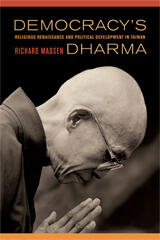
This is a CDDRL's Special Event within our Democracy in Taiwan Program. It is also co-sponsored by the Public Diplomacy/Emerging Publics Project of the Center for the Pacific Rim at University of San Francisco. In this seminar, Dr. Richard Madsen will talk about his new book that explores the religious renaissance that has reformed, revitalized, and renewed the practices of Buddhism and Daoism in Taiwan and how this religious renaissance embraces democracy modernity.  

Image
10896
Richard Madsen is distinguished professor and chair of the sociology department at the University of California, San Diego and a co-author (with Robert Bellah et al.) of The Good Society and Habits of the Heart which received the Los Angeles Times Book Award and was jury nominated for the Pulitzer Prize. He has authored or co-authored five books on China, including Morality and Power in a Chinese Village for which he received the C. Wright Mills Award; China's Catholics: Tragedy and Hope in an Emerging Civil Society; and China and the American Dream.  He also co-edited (with Tracy B. Strong) The Many and the One: Religious and Secular Perspectives on Ethical Pluralism in the Modern World. His latest book is Democracy’s Dharma: Religious Renaissance and Political Development in Taiwan.

Richard Madsen received an MA in Asian studies and a Ph.D. in sociology from Harvard.

"Madsen is a genial and well-informed guide, both to social-political change in Taiwan and to the ins and outs of religious movements. His engaging writing skillfully interweaves profound insights and themes into the descriptive analytical narrative. Democracy's Dharma presents new material based on recent research while offering a fresh spin on thinking about Asian religions."–Thomas Gold, editor of Social Connections in China: Institutions, Culture, and the Changing Nature of Guanxi

Philippines Conference Room

Richard Madsen Distinguished Professor Speaker Department of Sociology at the University of California, San Diego
Conferences
-
Explore how breakthrough socially and environmentally responsible supply chain practices can fundamentally change business models, lead to overall improved business performance, and strengthen organizations

A part of the Responsible Supply Chain Conference at the Graduate School of Business.

Sponsored by The Stanford Center for Social Innovation, and Stanford Global Supply Chain Management Forum

Stanford Graduate School of Business
Stanford University
Stanford, CA 94305

Conferences
-
Since 2003 Dr. Blix has been chairman of the Weapons of Mass Destruction Commission (WMDC), an independent body funded by the Swedish government and based in Stockholm. He began his career as an associate professor in international law at Stockholm University. From 1963 to 1976 he served as the Adviser on International Law in the Swedish Ministry for Foreign Affairs. In 1976-78 he was State Secretary for International Development Co-operation and in 1978-79 he was Minister for Foreign Affairs. He served as Director General of the International Atomic Energy Agency, Vienna, from 1981 to 1997 and as Executive Chairman of the UN Monitoring, Verification and Inspection Commission (UNMOVIC) from March 2000 to June 2003. Dr. Blix has written several books on subjects associated with international and constitutional law and international affairs.

CISAC Conference Room

Dr. Hans Blix Chairman, Weapons of Mass Destruction Commission Speaker
Conferences
News Type
News
Date
Paragraphs
Larry Diamond has been appointed as a Senior Fellow in the Freeman Spogli Institute for International Studies (FSI). Currently a Senior Fellow at the Hoover Institution, a renowned scholar of democratization, and prolific in both editorial and policy work, Diamond is an active member of FSI’s Center on Democracy, Development, and the Rule of Law (CDDRL). He coordinates the Program on Democracy - Completed, which examines the comparative dynamics of democratic functioning and change in the contemporary world, with a particular focus on the countries of Africa, the Middle East, Asia, Latin America, and the post-communist world. He has also established the offshoot program, The Taiwan Democracy Project, in 2006, and is a central participant in the The Taiwan Democracy Project.

Primarily an Africanist, Diamond received his Ph.D. in Sociology from Stanford University in 1980. He currently serves as the co-director for the National Endowment for Democracy’s International Forum for Democratic Studies in Washington DC, as a member of U.S. Agency for International Development (USAID) Advisory Committee on Voluntary Foreign Aid, and as adviser and lecturer at the World Bank, the United Nations, and the U.S. Department of State. Previously he was senior adviser to the Coalition Provisional Authority in Iraq and consultant to USAID.

He is also founding co-editor of the Journal of Democracy, the premier journal in the field, and a co-director of the International Forum for Democratic Studies of the National Endowment for Democracy. He has an impressive record of public service, which includes numerous board memberships and government appointments, and he has published widely. In his prolific portfolio of books and papers, he has advanced the knowledge on the conceptualization, determinants, and importance of democracy by examining the relationship between development and democracy, the multidimensional nature of the democratization process, and the significance of democratic consolidation.

Diamond’s commitment and contributions to teaching are also reflected in his receipt of Stanford’s 2007 Lloyd W. Dinkelspiel Award for Distinctive Contributions to Undergraduate Education, a strong testament to the breadth and depth of his engagement at the University.
All News button
1
Authors
News Type
News
Date
Paragraphs

Addressing a packed auditorium on March 5, Vicente Fox, the former president of Mexico, spoke with intensity about Latin America’s prospects for both social welfare and economic well-being in the coming century. Mexico, which Goldman Sachs recently projected to be the world’s fifth largest economy by 2040, was emblematic of this electrifying future, he said. On the one hand, there is great promise for economic growth, stability, and entrepreneurship; and with this great promise, he was careful to note, comes great responsibility for the reduction of poverty and inequality through a “package of powerful social policies.”

Fox’s lecture was sponsored by FSI as part of the 2008 Robert G. Wesson Lecture Series in International Relations Theory and Practice, and was hosted by the Graduate School of Business. Before being elected president of Mexico, a position he held from 2000-06, Fox was president of Coca-Cola Mexico. Since leaving office, Fox has been involved with a sweeping initiative to construct a social agenda for democracy in Latin America for the next 20 years, launched by Alejandro Toledo, former president of Peru from 2001 to 2006. Toledo is a Payne Distinguished Visiting Lecturer at Stanford this year.

"It is a pleasure to welcome my friend, former President Vicente Fox, to Stanford, the Freeman Spogli Institute, and the Center on Democracy, Development, and the Rule of Law, where serious scholars and practitioners are committed to develop democracy that delivers concrete results for the poor and fosters social inclusion," said Toledo.

Fox also discussed issues specific to the relationship between Mexico and the U.S., such as trade, immigration, and NAFTA—all of which benefit both countries, he said. Looking ahead, he hoped that Latin American democracy would not to be taken for granted; “it has to be nourished, it has to be taken care of, it has to be promoted.” But his outlook for Latin America was resoundingly positive, that this is a time for its countries to consolidate democracies and freedoms, consolidate economies, and promote new leadership. After years of military dictatorships, corruption, inefficiency, and poor development, “People decided to go for change,” Fox said, “and change is a magic word. It moves people to action.”

The Wesson Lecture Series provides support for a public address at Stanford by a prominent scholar or practicing professional in the field of international relations. The series is made possible by a gift from the late Robert G. Wesson, a scholar of international affairs, prolific author, and senior research fellow at the Hoover Institution. Previous Wesson Lecturers have included such distinguished speakers as McGeorge Bundy, Willi DeClerq, Condoleezza Rice, Mikhail Gorbachev, Fernando Henrique Cardoso, and Mary Robinson.

Hero Image
presidente fox[1]
All News button
1
-

Lant Pritchett is Professor of the Practice of Economic Development at the Kennedy School of Government at Harvard University (as of July 1, 2007).

In addition he works as a consultant to Google.org, is a non-resident fellow of the Center for Global Development, and is a senior fellow of BREAD. He is also co-editor of the Journal of Development Economics.

He graduated from Brigham Young University in 1983 with a B.S. in Economics and in 1988 from MIT with a PhD in Economics.

After finishing at MIT Lant joined the World Bank, where he held a number of positions in the Bank's research complex between 1988 and 1998, including as an adviser to Lawrence Summers when he was Vice President 1991-1993. From 1998 to 2000 he worked in Indonesia. From 2000 to 2004 Lant was on leave from the World Bank as a Lecturer in Public Policy at the Kennedy School of Government at Harvard University. In 2004 he returned to the World Bank and moved to India where he worked until May 2007.

He has been part of the team producing many World Bank reports, including: World Development Report 1994: Infrastructure for Development, Assessing Aid: What Works, What Doesn't and Why (1998), Better Health Systems for Indias Poor: Findings, Analysis, and Options (2003), World Development Report 2004: Making Services Work for the Poor, Economic Growth in the 1990s: Learning from a Decade of Reforms (2005).

In addition he has authored (alone or with one of his 22 co-authors) over 50 papers published in refereed journals, chapters in books, or as articles, as least some of which are sometimes cited. In addition to economics journals his work has appeared in specialized journals in demography, education, and health. In 2006 he published his first solo authored book Let Their People Come.

Lant, an American national, was born in Utah in 1959 and raised in Boise Idaho. Perhaps because of this, he has worked in, or traveled to, over forty countries and has lived in three other countries: Argentina (1978-80), Indonesia (1998-2000), and India (2004-2007).

CISAC Conference Room

Lant Pritchett Professor, Practice of Economic Development at the Kennedy School of Government Speaker Harvard University
Seminars
-
Teh-wei Hu is a Professor Emeritus of health economics at the University of California, Berkeley.  At Berkeley, he served as associate dean (1999-2002) and department chair (1990-1993) in the School of Public Health.  He received his PhD in Economics from the University of Wisconsin.  

During the past 40 years, Professor Hu has been teaching and conducting research in health economics, particularly in healthcare financing and the economics of tobacco control.  Hu was a Fulbright scholar in China. He has served as consultant or advisor to the World Bank, the World Health Organization, the National Institutes of Health, the Institute of Medicine, the Rand Corporation, the Ministry of Health in the People's Republic of China, Department of Health and Welfare in Hong Kong, Department of Health in the Republic of China (Taiwan), and many private research institutions and foundations. 

Professor Hu will speak to us immediately after an April trip to China, sharing his research and perspectives on the economics of tobacco control and the debate about healthcare system reforms in China (including a possible link between the two through financing expansions in coverage through increased tobacco taxation).

Philippines Conference Room

Teh-wei Hu Professor Emeritus Speaker University of California, Berkeley, School of Public Health
Seminars

This is the second meeting of the “Just Supply Chains” working group, to be held at Stanford University on May 16-17, 2008. It will builds on the themes and debates that came out of our first meeting, held at MIT in January, 2008, but extends them by focusing more on issues related to national level and global regulation. Please find, attached, a description of the Just Supply Chains project.  

Our first meeting brought together an exciting group of academics, business managers, leaders of various labor-rights NGOs, and representatives of the ILO to discuss the role of corporate codes of conduct and other private voluntary efforts have played in promoting just employment relations in global supply chains. We focused on issues of fair compensation, decent and healthy working conditions, and rights of association. Although this first meeting also discussed some innovative experiments taking place within certain sectors or even within individual nation-states, the bulk of our time was spent debating the possibilities and limitations of private voluntary regulatory efforts promoted by both corporations and NGOs.

Five key themes/questions emerged from our January meeting: 

  1. What are the costs and benefits associated with traditional labor compliance programs and how are these costs and benefits distributed among the different actors operating across global supply chains?
  2. Related to this first theme is a second set of questions about “ethical consumption.”
  3. A third issue that emerged from our discussions in January centered on independent unions and the rights of individual workers to associate and bargain collectively for improved wages, working conditions, and work hours.
  4. Our fourth set of concerns builds directly on the previous issues: What can we learn from various national-level experiments with regulatory reform, especially in some of the larger developing countries?
  5. Finally, how do global governance arrangements, in particular as they relate to bilateral and multilateral trade arrangements impact the promotion of just working conditions across global supply chains?

These five themes will be the focus of our May 16-17 workshop at Stanford. As with our first workshop, our minimal hope is to establish a common basis of knowledge and generate lively discussions around these important issues. Our more ambitious agenda is to generate a collaborative research agenda on these issues – research that will have an important impact not only on various academic disciplines but also on real-world practice and policy. To facilitate these two goals, we have once again invited a diverse group of academics, business managers, and NGO and IGO representatives to share their respective knowledge and engage in collective discussions and debates.

» Just Supply Chains - May Papers and Powerpoints (password protected)

Bechtel Conference Center

Program on Global Justice
Encina Hall West, Room 404
Stanford University
Stanford, CA 94305

(650) 723-0256
0
Marta Sutton Weeks Professor of Ethics in Society, and Professor of Political Science, Philosophy, and Law
cohen.jpg MA, PhD

Joshua Cohen is a professor of law, political science, and philosophy at Stanford University, where he also teaches at the d.school and helps to coordinate the Program on Liberation Technology. A political theorist trained in philosophy, Cohen has written extensively on issues of democratic theory—particularly deliberative democracy and the implications for personal liberty, freedom of expression, and campaign finance—and global justice. Cohen is author of On Democracy (1983, with Joel Rogers); Associations and Democracy (1995, with Joel Rogers); Philosophy, Politics, Democracy (2010); The Arc of the Moral Universe and Other Essays (2011); and Rousseau: A Free Community of Equals (2011). Since 1991, he has been editor of Boston Review, a bi-monthly magazine of political, cultural, and literary ideas. Cohen is currently a member of the faculty of Apple University.

CDDRL Affiliated Faculty
CV
Joshua Cohen Director of the Program on Global Justice Panelist
Richard Locke Professor of Political Science Speaker MIT
Conferences
Subscribe to International Development