Institutions and Organizations
Authors
News Type
Commentary
Date
Paragraphs

To mark five years since the onset of the January 25 Revolution, five Egypt scholars examined the evolving political landscape in Egypt as part of a panel titled “The Containment of Politics in Egypt,” organized by the Program on Arab Reform and Democracy (ARD). The panel featured Stanford Historian Joel Beinin, Associate Professor of Political Science at Stanford Lisa Blaydes, ARD Visiting Scholar Amr Hamzawy, Executive Director of the Tahrir Institute on Middle East Policy Nancy Okail, and ARD Associate Director Hesham Sallam. The discussion revolved around a number of key issues, including the recent legislative elections, the cohesion of the ruling coalition, the regime’s responses to various economic challenges, and the impact of state repression on spaces for political contestation and resistance.

Hero Image
slide1
All News button
1
-

Abstract

After nearly five years since the start of the uprising, Syria finds itself divided and embattled, with no end in sight. More significantly, more than half of the Syrian population is displaced and the death toll surpassed 300,000 by all counts. The Syrian tragedy persists and, more than any other case of mass uprising in the region, continues to be shrouded in political power-plays and contradictions at the local, regional, and international levels. Defined increasingly by an absence of a clear favorable outcome, considering existing parties to the conflict, the logic of the lesser evil reigns supreme. This lecture is an attempt to understand the roots and dynamics of the tragic Syrian uprising, with particular attention to its background and to the recent Russian intervention.

Speaker Bio

Image
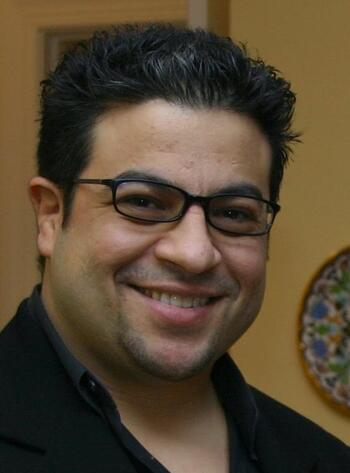
unnamed
Bassam Haddad is Director of the Middle East Studies Program and Associate Professor in the Department of Public and International Affairs at George Mason University, and is Visiting Professor at Georgetown University. He is the author of Business Networks in Syria: The Political Economy of Authoritarian Resilience (Stanford University Press, 2011). Haddad is currently editing a volume on Teaching the Middle East After the Arab Uprisings, a book manuscript on pedagogical and theoretical approaches. His most recent books include two co-edited volumes: Dawn of the Arab Uprisings: End of an Old Order? (Pluto Press, 2012) and Mediating the Arab Uprisings (Tadween Publishing, 2013). Haddad serves as Founding Editor of the Arab Studies Journal a peer-reviewed research publication and is co-producer/director of the award-winning documentary film, About Baghdad, and director of the critically acclaimed film series, Arabs and Terrorism, based on extensive field research/interviews. More recently, he directed a film on Arab/Muslim immigrants in Europe, titled The "Other" Threat. Haddad is Co-Founder/Editor of Jadaliyya Ezine and serves on the Editorial Committee of Middle East Report. He is the Executive Director of the Arab Studies Institute, an umbrella for five organizations dealing with knowledge production on the Middle East and Founding Editor of Tadween Publishing.


This event is co-sponsored by The Markaz: Resource Center at Stanford University.


[[{"fid":"221861","view_mode":"crop_870xauto","fields":{"format":"crop_870xauto","field_file_image_description[und][0][value]":"Bassam Haddad January 21","field_file_image_alt_text[und][0][value]":"","field_file_image_title_text[und][0][value]":"","field_credit[und][0][value]":"","field_caption[und][0][value]":"","field_related_image_aspect[und][0][value]":"","thumbnails":"crop_870xauto"},"type":"media","attributes":{"width":"870","class":"media-element file-crop-870xauto"}}]]


CISAC Central Conference Room
Encina Hall, 2nd Floor
616 Serra St
Stanford, CA 94305

Bassam Haddad Associate Professor George Mason University
Seminars
Paragraphs

At the end of Chen Shui-bian’s two terms as the president of Taiwan, his tenure was widely viewed as a disappointment, if not an outright failure. Today, the Chen years (2000-2008) are remembered mostly for relentless partisan fighting over cross-Strait relations and national identity questions, prolonged political gridlock, and damaging corruption scandals—as an era that challenged, rather than helped consolidate, Taiwan’s young democracy and squandered most of the promise with which it began.

Yet as Taiwan’s Democracy Challenged: The Chen Shui-bian Years documents, this conventional narrative obscures a more complex and more positive story. The chapters here cover the diverse array of ways in which democratic practices were deepened during this period, including the depoliticization of the military and intelligence forces, the ascendance of an independent and professional judicial system, a strengthened commitment to constitutionalism and respect for the rule of law, and the creation of greater space for civil society representatives in the policy-making process. Even the conventional wisdom about unprecedented political polarization during this era is misleading: while elite politics became more divided and acrimonious, mass public opinion on cross-Strait relations and national identity was actually converging.

Not all developments were so positive: strong partisans on both sides of the political divide remained only weakly committed to democratic principles, the reporting of news organizations became more sensationalist and partisan, and the Taiwanese state’s exceptional autonomy from sectoral interests and vaunted capacity for long-term planning deteriorated. But on the whole, the authors argue, these years were not squandered. By the end of the Chen Shui-bian era, Taiwan’s democracy was firmly consolidated. 


Yun-han Chu is professor of political science at National Taiwan University, distinguished research fellow at the Institute of Political Science at Academia Sinica, and president of the Chiang Ching-kuo Foundation. Larry Diamond is senior fellow at the Freeman Spogli Institute for International Studies and the Hoover Institution, Stanford University. Kharis Templeman is research associate at the Spogli Institute's Center on Democracy, Development, and the Rule of Law and also manages the institute's Taiwan Democracy Project.
 

      Click here to purchase


All Publications button
1
Publication Type
Books
Publication Date
Journal Publisher
Lynne Rienner Publishing
Authors
Larry Diamond
Paragraphs

Francis Fukuyama discusses Congress's dysfunctional budgetary politics in "The American Interest", asking why the United States is one of the only advanced democracies under constant threat of government shutdown. Given America's peculiar institutions, technical and institutional reforms to the budgeting process may be limited in their impact. 


All Publications button
1
Publication Type
Journal Articles
Publication Date
Authors
Francis Fukuyama
0
kateb02_-_katherine_bersch.jpeg

Katherine Bersch is a Kellogg Fellow at the University of Notre Dame (2022-23) and the Nancy Akers and J. Mason Wallace Assistant Professor of Political Science at Davidson College. A research affiliate of the CDDRL Stanford Governance Project, she is also a co-founder of the Global Survey of Public Servants. Her research focuses on democratic quality in developing countries, with an emphasis on governance reform and state capacity in Latin America. She is the author of When Democracies Deliver: Governance Reform in Latin America (Cambridge University Press, 2019), which won the Van Cott Best Book Prize from LASA, the Levine Book Prize from IPSA, and the ASPA Prize for the Best Book Published in Public Administration.


CDDRL Postdoctoral Fellow, 2015-16
-

Sponsored by the Taiwan Democracy Project and the U.S. Asia Security Initiative at the Asia-Pacific Research Center (APARC)

Abstract

During the recent meeting between PRC President Xi Jinping and Taiwan President Ma Ying-jeou, the “1992 One China Consensus” served as a mutually acceptable paradigm for maintaining “peaceful and stable” conditions across the Taiwan Strait.  For Xi Jinping, the warmth of the visit thinly veiled a message to Taiwan’s leaders and electorate, as well as to onlookers in Washington.  Chinese officials and media clearly link the talks and confirmation of the 1992 Consensus to “the great rejuvenation of the Chinese nation”—a concept that is increasingly unpalatable to many in Taiwan.  Xi hopes to keep DPP presidential candidate Tsai Ing-wen (and perhaps even future KMT leaders) in the 1992 Consensus “box” and to co-opt the U.S. in this effort, but perhaps underestimates the political transformation underway on Taiwan. 

The Xi administration has also hardened its position regarding “core interests” such as Taiwan, embodied in a “bottom line principle” policy directive that eschews compromise.  Although many commentators and most officials across the region have shied away from stating that the PRC and Taiwan are at the crossroads of crisis, the collision of political transformation on Taiwan and the PRC’s “bottom line principle” will challenge the fragile foundations of peaceful cross-Strait co-existence.  Changes in the regional balance of military power brought about by a more muscular People’s Liberation Army compounds the potential for increased friction, providing Beijing with more credible options for coercion and deterrence.

This talk will consider the politics and principles involved in cross-Taiwan Strait relations in light of the upcoming 2016 Taiwan elections and the policies of the Xi Jinping administration; and will discuss some of the possible implications for China’s national security policy, regional stability, and the future of cross-Strait relations.

Bio

Image
Cortez Cooper
Mr. Cortez A. Cooper III joined RAND in April 2009, providing assessments of security challenges across political, military, economic, cultural, and informational arenas for a broad range of U.S. government clients.  Prior to joining RAND, Mr. Cooper was the Director of the East Asia Studies Center for Hicks and Associates, Inc.  He has also served in the U.S. Navy Executive Service as the Senior Analyst for the Joint Intelligence Center Pacific, U.S. Pacific Command.  As the senior intelligence analyst and Asia regional specialist in the Pacific Theater, he advised Pacific Command leadership on trends and developments in the Command’s area of responsibility.  Before his Hawaii assignment, Mr. Cooper was a Senior Analyst with CENTRA Technology, Inc., specializing in Asia-Pacific political-military affairs.  Mr. Cooper’s 20 years of military service included assignments as both an Army Signal Corps Officer and a China Foreign Area Officer.  In addition to numerous military decorations, the Secretary of Defense awarded Mr. Cooper with the Exceptional Civilian Service Award in 2001.

2016 Taiwan Elections and Implications for Cross-Strait and Regional Security
Download pdf
Cortez Cooper Senior International Policy Analyst RAND Corporation
Seminars

Tickets are no longer available for this event. If you are interested in signing up for the notifications list, please visit the Stanford Ticket Office.  

This is a ticketed event, only guests with tickets will be admitted. Directions and parking information is available below. This event is hosted by the Program on Arab Reform and Democracy at the Center on Democracy, Development and the Rule of Law and co-sponsored by OpenXChange, Stanford in Government and the Abbasi Program in Islamic Studies.  


[[{"fid":"220434","view_mode":"crop_870xauto","fields":{"format":"crop_870xauto","field_file_image_description[und][0][value]":"Bassem Flyer 9.24.15","field_file_image_alt_text[und][0][value]":"","field_file_image_title_text[und][0][value]":"","field_credit[und][0][value]":"","field_caption[und][0][value]":"Bassem Flyer 9.24.15","field_related_image_aspect[und][0][value]":"","thumbnails":"crop_870xauto"},"type":"media","attributes":{"width":"870","style":"font-size: 13.008px; font-weight: normal; line-height: 1.538em;","class":"media-element file-crop-870xauto"}}]]Abstract

International media sensation and Egyptian political satirist Bassem Youssef, also known as the “Arab Jon Stewart,” will share with the Stanford community his thoughts on why political satire has come to embody an important element of modern day politics. He will also reflect on his own experience as the co-founder and host of the internationally acclaimed political satire talk show “Al-Bernameg.” Youssef will discuss the challenges and obstacles he faced in providing the Egyptian public alternative viewpoints on politics not represented by the mainstream news media.


Speaker Bio

Image
media01

Named one of TIME’s “100 most influential people in the world” in 2013, Bassem Youssef is an Egyptian satirist, columnist, and talk show host. A cardiac surgeon by training, Youssef turned to comedy after he was inspired by the Egyptian revolution. He uploaded the first episode of his homemade newscast, “The B+ Show,” to YouTube in May 2011. After it garnered more than 5 million views in three months, Youssef was named the host of “Al-Bernameg,” a satirical newscast modeled after Jon Stewart’s “The Daily Show.” Youssef’s bold, intelligent, and humorous critiques of Egyptian politics quickly became a hit with audiences in the country and garnered more than 40 million viewers. In 2012, Mohamed Morsi’s government pursued charges against Youssef for "insulting the president," “insulting Islam," and “reporting false news.” In March 2013, Youssef was briefly detained, released on bail, and fined. CBC suspended the broadcast of “Al-Bernameg” in November 2013. In 2014, Youssef announced that he was ending the program due to the dangerous political climate in Egypt. In the spring of 2015 Youssef served as a resident fellow at the Institute of Politics at the John F Kennedy School of Government at Harvard University. He has recently been announced as the host of the International Emmy Awards gala of 2015.


Directions 

Via I-280 (north or south): LINK

From the east bay via CA-92 (San Mateo Bridge): LINK

Via US 101 (north or south): LINK

Additional directions are available here


Parking 

Parking Structure 7 offers underground parking at the Knight Management Center. Permits are required and enforced Monday through Friday from 8 am to 4 pm. Click here to access Campus Maps.

One-day visitor permits (called “scratchers”) allow for parking in any pay-and-display or metered space, and are available for purchase at the Parking and Transportation Services (P&TS) office for $12 each. Be sure to scratch off the correct date and hang your permit facing outward from your rear-view mirror. "A," "C," and "shared" resident/commuter lots are enforced Monday-Friday, 6 a.m. to 4 p.m. You are free to park in these areas after enforcement hours.

You can also pay for parking using the pay-by-space kiosks located in Structure 7. Simply enter the number for your parking space and pay with cash or card. You do not need to display your receipt in your vehicle. The receipt is not valid in any other location.

Other nearby parking locations include:

  • Parking lot at Bonair Siding Rd. and Serra St. — coin-meter spaces, two-minute walk
  • Parking lot at Memorial Way and Galvez St. — pay-and-display machine, five-minute walk
  • Visitor Center parking lot at 295 Galvez St. — pay-and-display machine, ten-minute walk
  • Parking Structure 6 at Campus Dr. East and Wilbur Way — pay-and-display machine, ten-minute walk

Meters are generally enforced 8 a.m. to 4 p.m., unless otherwise posted. You are free to park in these areas after enforcement hours.

More parking and permit information is available here.

We honor any state's disabled person placards in nearly all marked parking spaces on campus. Please visit the Persons with Disabilities page for more information.

Event Flyer
Download pdf

Cemex Auditorium, Knight Management Center

655 Knight Way
Stanford, CA 94305

Bassem Youssef Egyptian Political Satirist Egyptian Political Satirist
Seminars
Subscribe to Institutions and Organizations