Security

FSI scholars produce research aimed at creating a safer world and examing the consequences of security policies on institutions and society. They look at longstanding issues including nuclear nonproliferation and the conflicts between countries like North and South Korea. But their research also examines new and emerging areas that transcend traditional borders – the drug war in Mexico and expanding terrorism networks. FSI researchers look at the changing methods of warfare with a focus on biosecurity and nuclear risk. They tackle cybersecurity with an eye toward privacy concerns and explore the implications of new actors like hackers.

Along with the changing face of conflict, terrorism and crime, FSI researchers study food security. They tackle the global problems of hunger, poverty and environmental degradation by generating knowledge and policy-relevant solutions. 

0
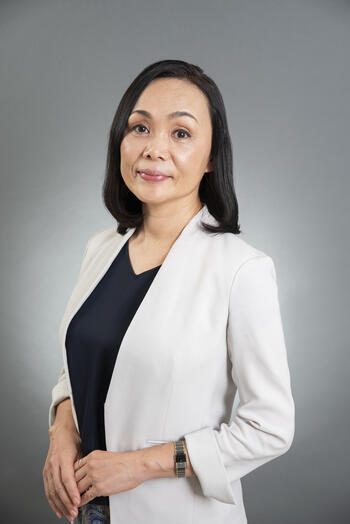
Research Scholar, Global Digital Policy Incubator
charles_mok.jpg

Charles is a Research Scholar at the Global Digital Policy Incubator of the Center on Democracy, Development and the Rule of Law at Stanford University, a member of the Board of Trustees of the Internet Society, and a board member of the International Centre for Trade Transparency and Monitoring. Charles served as an elected member of the Legislative Council in the Hong Kong Special Administrative Region, representing the Information Technology functional constituency, for two terms from 2012 to 2020. In 2021, he founded Tech for Good Asia, an initiative to advocate positive use of technology for businesses and civil communities. As an entrepreneur, Charles co-founded HKNet in 1994, one of the earliest Internet service providers in Hong Kong, which was acquired by NTT Communications in 2000. He was the founding chair of the Internet Society Hong Kong, honorary president and former president of the Hong Kong Information Technology Federation, former chair of the Hong Kong Internet Service Providers Association, and former chair of the Asian, Australiasian and Pacific Islands Regional At-Large Organization (APRALO) of ICANN. Charles holds a BS in Computer and Electrical Engineering and an MS in Electrical Engineering from Purdue University.

Date Label
Authors
News Type
Commentary
Date
Paragraphs

A year ago, a crowd on the National Mall violently breached the halls of the U.S. Capitol with the intent of disrupting the formal ratification of the 2020 presidential election. Despite the chaos, Joe Biden was inaugurated as the president, the prosecution of individual perpetrators has begun, and the House of Representatives January 6 Commitee's investigation is ongoing. Yet there remains a sense that something fundamental to American democracy has changed. Where is America now, one year from the attack?

To mark the first anniversary of the January 6 Capitol riot, scholars from across the Freeman Spogli Institute for International Studies share their thoughts on what has happened in the year since, and what the ongoing effects of the violence signal about the future of democracy and the integrity of America’s image at home and abroad.


Intensifying Divisions

Larry Diamond, Mosbacher Senior Fellow in Global Democracy

The January 6 insurrection was the gravest assault on American democracy since the Civil War, and it came much closer to disrupting the peaceful transfer of power (and possibly our democracy itself) than we realized at the time.

Rather than providing a sobering lesson of the dangers of political polarization, the insurrection seems only to have intensified our divisions, and the willingness to contemplate or condone the use of violence. According to a recent Washington Post survey, a third of Americans feel violence against the government could be justified in some circumstances —a sharp increase from 16 percent in 2010 and 23 percent in 2015.

Sadly, many politicians have not been the least bit chastened by the close brush with a constitutional catastrophe. The “Big Lie” that Biden did not legitimately win the 2020 election retains the support of most Republicans and a substantial proportion of independents. Around the country, Republican legislatures have been introducing, and in many states adopting, bills that would give Republican legislatures the ability to reverse or sabotage legitimate electoral outcomes, and other bills that make it more difficult for people (especially Democratic-leaning groups) to vote. All of this is doing deep damage to the global reputation and hence “soft power” of American democracy.

Although they are generally relieved that Trump is no longer president, our allies remain deeply worried about the stability and effectiveness of American democracy.

What gives me some hope is the expanding network of civil society organizations documenting the multiple threats to electoral integrity in the U.S. But we are going to need much more widespread and resourceful mobilization to counter the downward spiral of our democracy.

Professor Larry Diamond

Larry Diamond

Mosbacher Senior Fellow in Global Democracy at FSI
Full Profile

Problems at Home, Issues Abroad

Francis Fukuyama, Olivier Nomellini Senior Fellow

The Capitol uprising on January 6 marked a grave crisis in American institutions, when a sitting President refused to transfer power peacefully and sought to actively overturn an election.  The Republican Party, rather than repudiating the uprising and marginalizing its organizers, instead rallied in subsequent weeks to normalize the event.  These developments, while bad in themselves from the standpoint of US politics, also sent an unmistakable geopolitical signal that the Biden presidency would not represent an American return to “normal” internationalism.  The Administration would lead a deeply polarized country uncertain of its own global role.

This is the point at which geopolitics and domestic unrest come together. The single greatest weakness of the United States today does not lie in its economy or military power, but in the deep polarization that has affected American politics.  This is not just speculation, but something underlined by Kremlin-linked commentators, as Françoise Thom has detailed: in the words of one, "the decrepit empire of the Stars and Stripes, weakened by LGBT, BLM, etc." makes "it is clear that it will not survive a two-front war."  They see that a significant number of Republicans believe that the Democratic Party represents a bigger threat to the American way of life than does Russia.  A country that cannot rally around sensible public health measures during a pandemic will not rally around defense of freedom abroad.  This is the significance of January 6:  it has hardened partisan divisions rather than being the occasion for national soul-searching.

Read Francis Fukuyama's full commentary in American Purpose.

Francis Fukuyama

Francis Fukuyama

Olivier Nomellini Senior Fellow at FSI
Full Profile

Democracy vs. Partisanship

Didi Kuo, Senior Research Scholar at CDDRL

It has been a year since rioters stormed the United States Capitol in an effort—an organized, violent effort—to declare Donald Trump the rightful winner of the 2020 presidential election. The riots signaled a dangerous turn in American politics, an attack on the basic, fundamental institutions of democracy. For democracy to work, all sides must agree on the rules of the game: the fairness of the balloting and counting process, the routine and peaceful transfer of power. We now see what happens when the institutions and procedures of elections are delegitimated.

Our political leaders can act now to restore confidence in elections. They can do so by protecting election administrators from threats of violence, by depoliticizing oversight of elections, and by passing democratic reforms. Although President Biden’s Freedom to Vote Act and John Lewis Voting Rights Advancement Act have been blocked by Republicans, narrower versions of these bills could create stricter federal election standards. And Americans can organize to protect democracy through civic groups that push for ballot access and election integrity, particularly at the state level. Politicians and activists alike must make clear that election administration is not a partisan issue. As the nation enters the third year of a global pandemic and an upcoming midterm election, our leaders must make strengthening democracy their utmost priority.

Watch Kuo's conversation with Hakeem Jefferson about the anniversary of the riots at the U.S. Capitol.

Didi Kuo

Didi Kuo

Senior Research Scholar at CDDRL
Full Profile

Epistemic Fractures and Exploitation

Herbert Lin, Senior Research Scholar at CISAC

The failure of the Jan. 6 insurrection provided an opportunity for the United States to collectively take a step back from the conspiracy theories and lies that pervaded American political discourse in the preceding couple of years. But alas, the nation failed to take advantage of that opportunity, with tens of millions of Americans maintaining their delusions as strongly as ever. Substantial numbers of Americans continue to believe that Donald Trump really won the 2020 election, and the number of QAnon adherents and believers was virtually unchanged.

Even more alarming has been the cynical exploitation of such trends by elected officials in their quest to gain or retain political power. Rather than standing up for the rule of law and defending the conclusions of an independent judiciary regarding various allegations of election fraud, they have pointed to such outcomes as yet more evidence of a system rigged against them. We now live in a environment in which no conceivable evidence can persuade true believers to change their minds, and the resulting epistemic fractures translate into a once-unified nation sharply divided against itself.  A worse national posture to meet the challenges of coming great-power competition could not be imagined.

Read more of Herbert Lin's analysis of contemporary security issues and power competition in his latest book, Cyber Threats and Nuclear Weapons (Stanford University Press, 2021).

Dr. Hebert Lin

Herbert Lin

Senior Research Scholar at CISAC
Full Profile

The Need to Protect and Invest In Elections

Matthew Masterson, Non-resident Fellow at the Stanford Internet Observatory

The insurrection on January 6th left a scar on American Democracy. For the first time in our history, America did not have a peaceful transition of power. The effects of that day continue to be felt every day in election offices across the United States. Election officials, the guardians of our Democracy, are targets of harassment and threats fueled by the ongoing lies regarding the integrity and accuracy of the election. Worse yet, there have been little no consequences for these threats against our democracy. While some who participated in January 6th are being investigated and prosecuted, those responsible for the threats against election officials have faced little to no accountability for their actions. Facing ongoing threats and little support from law enforcement election officials are leaving their jobs out of fear for their own safety and the safety of their families.

Healing the wound of January 6th won’t be easy; there must be accountability for the damage done to our democracy. American democracy is resilient and strong, but can not survive the unchecked attacks against it. Those who seek to profit from the lies about 2020 need to be held accountable for selling out democracy in pursuit of their own political and financial gain. They must be defeated at the ballot box or their businesses made to pay the price  by Americans unwilling to accept holding democracy for ransom. As we bring accountability, we need to invest in continuing to improve the security, accessibility and integrity of the process. We need to fund elections on an ongoing basis like the national security issue they are. The only response to this sustained attack on our democracy is a sustained investment in protecting it.  

Matt Masterson

Matthew Masterson

Non-resident Fellow at the Stanford Internet Observatory
Full Profile

Read More

Capitol Building
News

Stanford Scholars React to Capitol Hill Takeover

FSI scholars reflect on the occupation of the U.S. Capitol on Wednesday and suggest what needs to happen next to preserve democracy.
Stanford Scholars React to Capitol Hill Takeover
Hero Image
Protesters attack the U.S. Capitol on January 6, 2021.
Protesters attacked the U.S. Capitol on January 6, 2021 in an attempt to disrupt the verification of the 2020 election results.
Getty
All News button
1
Subtitle

On the first anniversary of the riot at the U.S. Capitol, scholars from across FSI reflect on the ongoing ramifications the violence is having on America's domestic politics and international influence.

Date Label
-

About the Seminar: For centuries, the world’s dominant power has been the state that wielded the world’s dominant navy. More recently, globalization has been remade, as a sea-based trade—85% of all global trade moves by sea. As does nearly 2/3rds of the world trade in oil and gas, while 93% of all data in the world moves along undersea cables that line the ocean floor. The oceans are vital, too, to our changing climate. All of which highlights the drama of China’s return to the high seas, and its rapid maritime and naval build-up. The net result: a new arms race, centered in the Western Pacific but reaching out into the Arctic and the Indian Oceans, and pulling in Russia, India, Japan and Europe.  Bruce Jones, author of To Rule the Waves, will explore how our security, our prosperity, and our environment are being reshaped by the dynamics of sea power.

Register Now

About the Speaker: 

Image
Bruce Jones Headshot

Bruce Jones is a senior fellow and director of the project on international order and strategy at the Brookings Institution. The author or co-author of several books on international order, his most recent work is “To Rule the Waves: How Control of the World’s Oceans Shapes the Fate of the Superpowers”.


Online, via Zoom.

Bruce Jones The Brookings Institution
Seminars
All Publications button
1
Publication Type
Journal Articles
Publication Date
Subtitle
Is it possible to reduce crime without exacerbating adversarial relationships between police and citizens? Community policing is a celebrated reform with that aim, which is now adopted on six continents. However, the evidence base is limited, studying reform components in isolation in a limited set of countries, and remaining largely silent on citizen-police trust. We designed six field experiments with Global South police agencies to study locally designed models of community policing using coordinated measures of crime and the attitudes and behaviors of citizens and police. In a preregistered meta-analysis, we found that these interventions led to mixed implementation, largely failed to improve citizen-police relations, and did not reduce crime. Societies may need to implement structural changes first for incremental police reforms such as community policing to succeed.
Journal Publisher
Science
Authors
Number
Issue 6571
-

Turkey-US relations have been going through the most turbulent episode since 2016. While occasional divergence of opinion between partners is natural, the frequency and the intensity of such disagreements have sharply increased over time, creating major trust issues between the allies. This talk will address the main causes behind the rift between Turkey and the US,  and warning against the path-dependent foreign policy behavior, will make specific policy recommendations to manage the bilateral tensions.
 

Register Now


Image
​Oya Dursun-Özkanca
Oya Dursun-Özkanca is the Endowed Chair of International Studies Professor of Political Science at Elizabethtown College and the author of Turkey–West Relations: The Politics of Intra-alliance Opposition (Cambridge University Press 2019), and The Nexus Between Security Sector Reform/Governance and Sustainable Development Goal-16: An Examination of Conceptual Linkages and Policy Recommendations (The Geneva Centre for Security Sector Governance 2021). Her edited volumes include The European Union as an Actor in Security Sector Reform (Routledge, 2014) and External Interventions in Civil Wars (with Stefan Wolff, Routledge, 2014).

In Fall 2021, she is a visiting scholar at the Weatherhead Center for International Affairs, Harvard University. 

Online via Zoom

Oya Dursun-Özkanca Professor Endowed Chair of International Studies and Professor of Political Science Elizabethtown College
Seminars
Paragraphs

How can societies restrain their coercive institutions and transition to a more humane criminal justice system? We argue that two main factors explain why torture can persist as a generalized practice even in democratic societies: weak procedural protections and the militarization of policing, which introduces strategies, equipment, and mentality that treats criminal suspects as though they were enemies in wartime. Using a large survey of the Mexican prison population and leveraging the date and place of arrest, this paper provides causal evidence about how these two explanatory variables shape police brutality. Our paper offers a grim picture of the survival of authoritarian policing practices in democracies. It also provides novel evidence of the extent to which the abolition of inquisitorial criminal justice institutions—a remnant of colonial legacies and a common trend in the region—has worked to restrain police brutality.

All Publications button
1
Publication Type
Journal Articles
Publication Date
Journal Publisher
American Political Science Review
Authors
Beatriz Magaloni
Number
Issue 4
-

*For fall quarter 2021, CISAC will be hosting hybrid events. Many events will offer limited-capacity in-person attendance for Stanford faculty, staff, fellows, visiting scholars, and students in accordance with Stanford’s health and safety guidelines, and be open to the public online via Zoom. All CISAC events are scheduled using the Pacific Time Zone.


REGISTRATION


Seminar Recording

About the Event: As relations between the West and Russia plunge to a post-Cold War nadir, how strong a competitor will the Kremlin prove? Will constraints on Putin's autocracy hinder his ability to have Russia play a great power role, or has Russia alrealdy successfully resurrected itself and is now able to exercise significant influence on the global stage? On November 10, Timothy Frye (author of Weak Strongman: The Limits of Power in Putin's Russia) and Kathryn Stoner (author of Russia Resurrected: Its Power and Purpose in a New Global Order) will discuss the nature and depth of the Russian challenge to the West.


About the Speakers: 

Timothy Frye is the Marshall D. Shulman Professor of Post-Soviet Foreign Policy at Columbia University. Professor Frye received a B.A. in Russian language and literature from Middlebury College, an M.A. from Columbia's School of International and Public Affairs, and a Ph.D. in Political Science from Columbia. His research and teaching interests are in comparative politics and political economy with a focus on the former Soviet Union and Eastern Europe. His most recent book is Weak Strongman: The Limits of Power in Putin’s Russia (Princeton University Press, 2021). He co-directs the International Center for the Study of Institutions and Development at the Higher School of Economics in Moscow and edits Post-Soviet Affairs.

Kathryn Stoner is the Deputy Director at the Freeman Spogli Institute for International Studies (FSI) at Stanford University and a Senior Fellow at the Center on Democracy, Development, and the Rule of Law, and at the Center on International Security and Cooperation at FSI. She teaches in the Department of Political Science at Stanford, and in the Program on International Relations, as well as in the Ford Dorsey Master's in International Policy Program. Prior to coming to Stanford in 2004, she was on the faculty at Princeton University for nine years, jointly appointed to the Department of Politics and the Princeton School for International and Public Affairs (formerly the Woodrow Wilson School). At Princeton she received the Ralph O. Glendinning Preceptorship awarded to outstanding junior faculty. She also served as a Visiting Associate Professor of Political Science at Columbia University, and an Assistant Professor of Political Science at McGill University. She has held fellowships at Harvard University as well as the Woodrow Wilson Center in Washington, DC. In addition to many articles and book chapters on contemporary Russia, she is the author or co-editor of six books: "Transitions to Democracy: A Comparative Perspective," written and edited with Michael A. McFaul (Johns Hopkins 2013); "Autocracy and Democracy in the Post-Communist World," co-edited with Valerie Bunce and Michael A. McFaul (Cambridge, 2010); "Resisting the State: Reform and Retrenchment in Post-Soviet Russia" (Cambridge, 2006); "After the Collapse of Communism: Comparative Lessons of Transitions" (Cambridge, 2004), coedited with Michael McFaul; and "Local Heroes: The Political Economy of Russian Regional" Governance (Princeton, 1997). Her most recent book is Russia Resurrected: Its Power and Purpose in a New Global Order" (Oxford University Press, 2021). She received a BA (1988) and MA (1989) in Political Science from the University of Toronto, and a PhD in Government from Harvard University (1995). In 2016 she was awarded an honorary doctorate from Iliad State University, Tbilisi, Republic of Georgia.

Virtual Only. This event will not be held in person.

Timothy Frye

FSI
Stanford University
Encina Hall C140
Stanford, CA 94305-6055

(650) 736-1820 (650) 724-2996
0
Satre Family Senior Fellow, Freeman Spogli Institute for International Studies
kathryn_stoner_1_2022_v2.jpg MA, PhD

Kathryn Stoner is the Mosbacher Director of the Center on Democracy, Development, and the Rule of Law (CDDRL), and a Senior Fellow at CDDRL and the Center on International Security and Cooperation at FSI. From 2017 to 2021, she served as FSI's Deputy Director. She is Professor of Political Science (by courtesy) at Stanford and she teaches in the Department of Political Science, and in the Program on International Relations, as well as in the Ford Dorsey Master's in International Policy Program. She is also a Senior Fellow (by courtesy) at the Hoover Institution.

Prior to coming to Stanford in 2004, she was on the faculty at Princeton University for nine years, jointly appointed to the Department of Politics and the Princeton School for International and Public Affairs (formerly the Woodrow Wilson School). At Princeton she received the Ralph O. Glendinning Preceptorship awarded to outstanding junior faculty. She also served as a Visiting Associate Professor of Political Science at Columbia University, and an Assistant Professor of Political Science at McGill University. She has held fellowships at Harvard University as well as the Woodrow Wilson Center in Washington, DC. 

In addition to many articles and book chapters on contemporary Russia, she is the author or co-editor of six books: "Transitions to Democracy: A Comparative Perspective," written and edited with Michael A. McFaul (Johns Hopkins 2013);  "Autocracy and Democracy in the Post-Communist World," co-edited with Valerie Bunce and Michael A. McFaul (Cambridge, 2010);  "Resisting the State: Reform and Retrenchment in Post-Soviet Russia" (Cambridge, 2006); "After the Collapse of Communism: Comparative Lessons of Transitions" (Cambridge, 2004), coedited with Michael McFaul; and "Local Heroes: The Political Economy of Russian Regional" Governance (Princeton, 1997); and "Russia Resurrected: Its Power and Purpose in a New Global Order" (Oxford University Press, 2021).

She received a BA (1988) and MA (1989) in Political Science from the University of Toronto, and a PhD in Government from Harvard University (1995). In 2016 she was awarded an honorary doctorate from Iliad State University, Tbilisi, Republic of Georgia.

Download full-resolution headshot; photo credit: Rod Searcey.

Mosbacher Director, Center on Democracy, Development and the Rule of Law
Professor of Political Science (by courtesy), Stanford University
Senior Fellow (by courtesy), Hoover Institution
CV
Date Label
Seminars
-

The Center on Democracy, Development, and the Rule of Law (CDDRL) will be accepting applications from eligible juniors on who are interested in writing their senior thesis on a subject touching upon democracy, economic development, and rule of law (DDRL) from any university department.  The application period opens on January 10, 2022 and runs through February 11, 2022.   For more information on the Fisher Family CDDRL Honors Program, please click here.

Join us online via Zoom on Friday, January 21st at 12:00pm (PST) to learn more! 

REGISTER NOW

CDDRL faculty and current honors students will be present to discuss the program and answer any questions.


Online via zoom. REGISTER HERE.

CDDRL
Encina Hall, C152
616 Jane Stanford Way
Stanford, CA 94305-6055

(650) 725-2705 (650) 724-2996
0
Senior Fellow at the Freeman Spogli Institute for International Studies
Professor, by courtesy, of Political Science
Stedman_Steve.jpg PhD

Stephen Stedman is a Senior Fellow at the Freeman Spogli Institute for International Studies (FSI) and the Center on Democracy, Development and the Rule of Law (CDDRL), an affiliated faculty member at CISAC, and professor of political science (by courtesy) at Stanford University. He is director of CDDRL's Fisher Family Honors Program in Democracy, Development and Rule of Law, and will be faculty director of the Program on International Relations in the School of Humanities and Sciences effective Fall 2025.

In 2011-12 Professor Stedman served as the Director for the Global Commission on Elections, Democracy, and Security, a body of eminent persons tasked with developing recommendations on promoting and protecting the integrity of elections and international electoral assistance. The Commission is a joint project of the Kofi Annan Foundation and International IDEA, an intergovernmental organization that works on international democracy and electoral assistance.

In 2003-04 Professor Stedman was Research Director of the United Nations High-level Panel on Threats, Challenges and Change and was a principal drafter of the Panel’s report, A More Secure World: Our Shared Responsibility.

In 2005 he served as Assistant Secretary-General and Special Advisor to the Secretary- General of the United Nations, with responsibility for working with governments to adopt the Panel’s recommendations for strengthening collective security and for implementing changes within the United Nations Secretariat, including the creation of a Peacebuilding Support Office, a Counter Terrorism Task Force, and a Policy Committee to act as a cabinet to the Secretary-General.

His most recent book, with Bruce Jones and Carlos Pascual, is Power and Responsibility: Creating International Order in an Era of Transnational Threats (Washington DC: Brookings Institution, 2009).

Director, Fisher Family Honors Program in Democracy, Development and Rule of Law
Director, Program in International Relations
Affiliated faculty at the Center for International Security and Cooperation
Date Label

Encina Hall, C150
616 Jane Stanford Way
Stanford, CA 94305

0
Center Fellow, Freeman Spogli Institute for International Studies
didi_kuo_2023.jpg

Didi Kuo is a Center Fellow at the Freeman Spogli Institute for International Studies (FSI) at Stanford University. She is a scholar of comparative politics with a focus on democratization, corruption and clientelism, political parties and institutions, and political reform. She is the author of The Great Retreat: How Political Parties Should Behave and Why They Don’t (Oxford University Press) and Clientelism, Capitalism, and Democracy: the rise of programmatic politics in the United States and Britain (Cambridge University Press, 2018).

She has been at Stanford since 2013 as the manager of the Program on American Democracy in Comparative Perspective and is co-director of the Fisher Family Honors Program at CDDRL. She was an Eric and Wendy Schmidt Fellow at New America and is a non-resident fellow with the Carnegie Endowment for International Peace. She received a PhD in political science from Harvard University, an MSc in Economic and Social History from Oxford University, where she studied as a Marshall Scholar, and a BA from Emory University.

Date Label
Paragraphs

I was supposed to be a lawyer. That’s what my parents had told me; I was good at arguing, I liked school, and I was really interested in politics. But something went terribly wrong (or right, depending on your perspective) and my professional life took another path into political science and specifically the study of the Soviet Union and then Russia. Try as I might, by my sophomore year at the University of Toronto, I couldn’t get my mind off of the changes happening in the Soviet Union at the time (in the mid-1980s). In March 1985, Mikhail Gorbachev had become General Secretary of the Communist Party of the Soviet Union and was a Soviet leader of a very different sort. He popped out of limousines to shake hands with people lining the streets of the European cities he visited, he spoke of reconstructing the Soviet system in a program he called perestroika, and he threw the doors open to Soviet society, politics, and history in the ensuing years under “glasnost” or openness. Suddenly, the Soviets seemed human, maybe even friendly, and to me as a Canadian, their weather, sports, and outdoors were familiar. No longer would we need to drill for a nuclear attack by hiding under our desks in school (true story), as Gorbachev proceeded to sign arms control and then reduction agreements with presidents Ronald Reagan and George H.W. Bush.

All Publications button
1
Publication Type
Journal Articles
Publication Date
Subtitle
Part of an essay series on Learning the Scholar’s Craft: Reflections of Historians and International Relations Scholars
Journal Publisher
H-Diplo
Authors
Kathryn Stoner
Number
Essay 372
-

 Register for System Error, Live!

This event will be held outside on Stanford's campus. In accordance with Santa Clara County Public Health, masks are encouraged to be worn by all at crowded outdoor events.

Join Profs. Rob Reich, Mehran Sahami, and Jeremy Weinstein — the authors of System Error: Where Big Tech Went Wrong and How We Can Reboot — for a discussion hosted by Professor Michael McFaul, director of the Freeman Spogli Institute for International Studies. The operating system of Big Tech is broken, and this panel discussion will explore the path to a reboot. Plus, it will also allow you experience Professor Sahami’s famous tradition of throwing candy into the audience!

A forward-thinking manifesto from three Stanford professors — experts who have worked at ground zero of the tech revolution for decades — System Error reveals how Big Tech’s obsession with optimization and efficiency has sacrificed fundamental human values and demands that we change course to renew our democracy and save ourselves.

Armed with an understanding of how technologists think and exercise their power, these three Stanford professors—a philosopher working at the intersection of tech and ethics, the director of the undergraduate computer science program who was also an early Google engineer, and a political scientist who served under Barack Obama—reveal how we can hold that power to account. Troubled by the values that permeate the university and Silicon Valley, these professors worked together to chart a new path forward, creating a popular course to transform how tomorrow’s technologists might better approach their profession. Now, as the dominance of Big Tech becomes an explosive societal conundrum, join us as they share their provocative insights and concrete solutions to help everyone understand what is happening, what is at stake, and what we can do to control technology instead of letting it control us.

Books will be available for purchase at the event, and the authors will be signing copies as well.

This event is hosted by Professor Michael McFaul, director of the Freeman Spogli Institute for International Studies, and it is co-sponsored by the Center on Philanthropy and Civil Society, the McCoy Family Center for Ethics in Society, the Stanford School of Engineering, and the Stanford School of Humanities and Sciences.

Rob Reich | FSI Affiliate
Mehran Sahami | Associate Chair for Education, Computer Science Department Associate Chair for Education, Computer Science Department
Jeremy Weinstein | FSI Senior Fellow at CDDRL
Lectures
Subscribe to Security