Authors
News Type
News
Date
Paragraphs

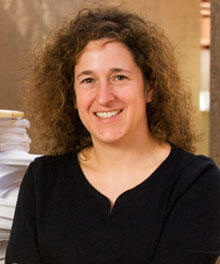
The Center on Democracy, Development, and the Rule of Law congratulates Belinda Tang for being awarded the David M. Kennedy Honors Thesis Prize for her original research on the implementation of female quota systems in electoral districts in Lesotho. Her honors thesis entitled, "Gender, Policy-making, and Politics: Evidence from a Randomized Policy Experiment in Lesotho," explored mandated quotas for female representation in electoral districts, combining intensive fieldwork and sophisticated econometric analysis. Tang’s research was conducted under the consultation of Jeremy Weinstein, FSI senior fellow, and Pascaline Dupas, associate professor of economics.

Belinda Tang won the David M. Kennedy Prize for her thesis work on female quota systems in local governments in Lesotho.
Photo Credit: Alice Kada

Designed to address the issue of under-representation of women in local electoral districts in Lesotho - female quota systems- Tang concluded, actually decreased female favorability compared to those females who were freely elected into local seats. Tang also found that females experienced bargaining disadvantages compared to males in achieving local infrastructure projects, such as roads.

Four undergraduate Stanford students are awarded the Kennedy Prize each year for their outstanding honors theses in the humanities, social sciences, engineering and the applied sciences. Tang was recognized for her advanced and extensive research approach as well as her strong initiative in gathering and collecting data, despite several setbacks in Lesotho. After graduating this June in the department of economics, she will be working as a research associate at the National Bureau for Economic Research.

Tang is part of a cohort of eight graduating CDDRL senior honors students who were recognized for their original and outstanding theses during a recent luncheon. Many past research projects have been published in distinguished journals and have informed policy on national and international levels, receiving wide recognition. Danna Seligman received the “Best Thesis Award” for her exemplary and original research on America’s political polarization entitled, “The Origins of Political Gridlock in the United States: Modeling Institutional Gridlock as Moral Hazard in the United States Congress.”

CDDRL recognized Danna Seligman with the "Best Thesis Award" under the CDDRL Senior Honors Program for her original work on the origins of policial gridlock in the United States Congress. She is seen here with Francis Fukuyama, advisor to the Senior Honors Program, and CDDRL Director Larry Diamond.
Photo Credit: Alice Kada

The CDDRL Undergraduate Senior Honors Program trains students from any academic department at Stanford to prepare them to write a policy-relevant research thesis with global impact on a subject touching on democracy, development, and the rule of law. Honors students participate in research methods workshops, attend honors college in Washington, D.C., connect to the CDDRL research community, and write their thesis in close consultation with a faculty advisor to graduate with a certificate of honors in democracy, development, and the rule of law. The program is advised under the leadership of Olivier Nomellini Senior Fellow Francis Fukuyama.

Over the course of the year-long program, students worked in consultation with CDDRL affiliated faculty members and attended honors research workshops to develop their thesis project. Many traveled abroad to collect data, conduct interviews, and to spend time in the country they were researching. Collectively, their topics documented some of the most pressing issues impacting democracy today in sub-Saharan Africa, Sri Lanka, Vietnam, Pakistan, Lesotho, Ghana, and Nepal, among others.  

A list of the 2014 graduating class of CDDRL Undergraduate Honors students, their theses advisors, and a link to their theses can be found here:


Meaghan Conway


Science, Technology & Society

Blended Return on Investment (ROI)?: Analyzing the Economic and Social Returns of Private Equity Investment in sub-Saharan African Electricity Utilities

Advisors: Francis Fukuyama and William Meehan III

Mahilini Kailaiyangirichelvam


International Relations

The Prolonged Threat to Food Production: The Impact of the Civil War on Food Production in Northern and Eastern Sri Lanka 

Advisor: Rosamond Naylor

Haiy Le


International Relations

Framing the Discourse: State Media and Social Media in Vietnam

Advisor: Larry Diamond

Devanshi Patel


International Relations

Education or Prosecution: Institutional Efforts to Combat Sexual Violence in the United States Military

Advisor: Francis Fukuyama

Janani Ramachandran


International Relations

Determinants of Anti-Americanism in Pakistan

Advisor: Francis Fukuyama

Danna Seligman


Political Science

The Origins of Political Gridlock in the United States: Modeling Institutional Gridlock as Moral Hazard in the United States Congress

Advisors: Gary Cox and Francis Fukuyama

Belinda Tang


Economics

Gender, Policy-making, and Politics: Evidence from a Randomized Policy Experiment in Lesotho 

Advisors: Pascaline Dupas and Jeremy Weinstein

Aditya Todi


International Relations

Democratizing Parties: Intra-Party Democracy in Political Parties in Ghana and Nepal

Advisor: Larry Diamond

Hero Image
Belinda
Belinda Tang won the David M. Kennedy Prize for her thesis work on female quota systems in local government in Lesotho.
Alice Kada
All News button
1
Authors
News Type
News
Date
Paragraphs

Scholars, law enforcement officials, business leaders and community activists gathered at Stanford for a two-day conference to examine violence and policing in Latin America and the United States.

The April conference highlighted the work being implemented by law enforcement, entrepreneurs and grassroots organizations to reduce violence in major cities. Practitioners from Latin America and the U.S. shared their experiences and best practices to reduce violence. Many violence-plagued cities in the U.S. have implemented innovative initiatives to address the challenge that have included community policing tools and youth violence interventions. Similar initiatives are also taking place in Latin America with varying degrees of success.

The event was hosted by the Program on Poverty and Governance (PovGov) at the Center on Democracy, Development and the Rule of Law, and held in partnership with the Bill Lane Center for the American West, the Center for Latin American Studies, the ‘Mexico Initiative’ at the Freeman Spogli Institute for International Studies (FSI) and the Center for International Security and Cooperation, the conference

“Our conference was a success in terms of facilitating a dialogue among scholars, practitioners, grassroots organizations, police, and policy-makers whom might not otherwise interact. The conference gathered experiences about violence-reducing initiatives, innovative ways to engage the youth population at high risk and ways to enhance police accountability and police-community relationships that are taking place in major cities in the US, Mexico, Brazil and Colombia,” said Beatriz Magaloni, an associate professor of political science who directs PovGov, a program that studies the links between public action, governance and poverty.

 Photo Credit: Christian Ollano

“Our conference was part of our on-going effort to build a network of scholars, practitioners, and policy-makers dedicated to understanding and finding solutions to the ongoing problems of violence and weak rule of law in the Western hemisphere. We will follow up with a workshop in the fall convened by the World Justice Project, Carnegie Endowment for International Peace and the Program on Poverty and Governance at CDDRL in Washington DC,” said Magaloni, who is also a senior fellow at FSI. 

Conference sessions were led by CDDRL faculty members and affiliates, including: FSI Director Mariano-Florentino Cuéllar; Francis Fukuyama, the Olivier Nomellini Senior Fellow; FSI senior fellow and CDDRL affiliated faculty member Alberto Díaz-Cayeros; and former President of Peru and CDDRL Visiting Lecturer Alejandro Toledo.

One of three featured keynote speakers, Sergio Fajardo, the current governor of Antioquia, Colombia, spoke about how he and his team implemented an effective strategy to reduce the level of violence in Medellin while he was mayor of the Colombian city. The two other keynotes included Mariano Beltrame, minister of security of Rio de Janeiro who is credited for the enactment and implementation of the Pacification Police Unites to reduce violence in the favelas of the city and Hector Robles, major of the municipality of Zapopan who has implemented various innovative policies to give better opportunities to the youth in Mexico, including an initiative called Jovenes con Porvenir (Youth with a Bright Future). 

The conference built upon a PovGov research project that is focused on the Brazilian military police in Rio de Janeiro. Targeting an important initiative in the city's favelas, the "Pacifying Police Units", the ongoing project investigates the use of lethal force by the police and reforms aimed at controlling violence.

Conference resources, including a full report, presentations and videos, are available. To access, please use the links below.  


Conference Resources:

Full Report

Executive Summary

Videos

PowerPoint Presentations

Agenda

Speaker Bios

Facebook Album  

Social Media Thread: #PovGov 


Hero Image
povgov Christian Ollano and Zaira Razu
All News button
1
Authors
Christian E. Ollano
News Type
News
Date
Paragraphs

This summer Stanford’s Center on Democracy, Development, and the Rule of Law (CDDRL) is welcoming new leadership to oversee the growth and development of the Program on Arab Reform and Democracy (ARD), one of the Center's principal research programs examining contemporary issues of political development in the Arab world.

Lisa Blaydes, assistant professor of political science at Stanford, will assume the role of faculty co-director, working together with CDDRL Director Larry Diamond to help shape the program's research agenda. Blaydes will be joined by Hesham Sallam, currently a CDDRL pre-doctoral fellow completing his Ph.D. in government at Georgetown University. He will serve as the program's new associate director, assuming operational management and developing the program's research initiatives and activities at Stanford and throughout the Arab world, in partnership with the faculty co-directors. Sallam is also joining CDDRL as a research associate. In that capacity he will produce research and publications on questions related to political and economic reform in the Arab World.

Sallam is replacing ARD's founding director Lina Khatib, who left CDDRL last year to assume directorship of the Carnegie Endowment for Peace's Middle East office in Beirut.

"We are very excited to have Hesham Sallam assuming this leadership role in the ARD program, and joining the research staff of CDDRL,” said Diamond. “Hesham is not only a superb scholar of Arab politics and political economy, but has also been deeply engaged in analytic and public policy debates about the future of the region. His deep knowledge and broad credibility in the field will be strong and immediate assets to the program, and will help us build on the strong foundation laid by our founding program leader, Lina Khatib."

“I am extremely delighted to join the CDDRL and FSI family,” said Sallam. “I look forward to working closely with the Stanford community, faculty, students, and staff, to expand interdisciplinary discussions of Arab politics and society on campus.”

“By enhancing its intellectual engagement with scholars and activists in Arab world, ARD will continue to nuance our understanding of conflicts over political, social and economic rights in the region by supporting critical scholarship and by developing innovative research agendas,” he said.

Sallam’s dissertation examines how Islamist movements have impacted the politics of economic reform in Egypt before and after the Arab uprisings in 2011. His previous research has received the support of the United States Institute of Peace and the Social Science Research Council. Sallam also serves as co-editor of the Jadaliyya, a leading online magazine, which invites critical debate and analysis of current events in the Arab world from academics, activists and journalists. 

Diamond expressed great enthusiasm over the addition of Lisa Blaydes to the program’s faculty leadership. “Over the past several years, Lisa has rapidly emerged as one of the most original and influential scholars of politics and social change in the Arab world,” he said. “She brings to the program intense intellectual curiosity, scholarly distinction and a keen interest in advancing social science studies of the Arab world."

Blaydes, a specialist in comparative politics and politics in the Middle East, recently published the book, Elections and Distributive Politics in Mubarak’s Egypt, which examines the complex relationships among regimes, rent-seeking elites and citizens fostered by authoritarian elections.

“The Arab world is at a critical juncture,” said Blaydes. “Although mass protests have transformed public political consciousness, the long-term impact of the protest movement on more concrete forms of power has yet to be determined. Policy-relevant scholarly research such as that conducted by the Program on Arab Reform and Democracy may help us to identify pathways to political reform.”

Blaydes and Sallam, together with Diamond, participated in the most recent ARD Program conference on political change in the Arab world. Held in collaboration with the Center for Research on Globalization and Democratic Governance at Koc University in Turkey, the conference brought together leaders in policy, academia and government to address issues of violence and government transitions in the region following continuous civil unrest and political uncertainty.

Founded in 2010 with annual support from the Moulay Hicham Foundation, CDDRL's Program on Arab Reform and Democracy aims to be a hub for intellectual capital about issues related to good governance, social change and political reform in the region, producing rigorous and policy-relevant academic research. Conferences and seminars in the U.S. and the Arab world provide innovative forums for academics and policy-makers to advance new ideas and approaches to the most pressing issues facing the region today.

For more information on the Program on Arab Reform and Development, please visit: http://arabreform.stanford.edu/. 

Hero Image
encinaardimage
All News button
1
-

Abstract:

The United States spends over 17 percent of GDP on health care; the next six highest countries spend over 11 percent. This six percent differential indicates an excess spending of approximately one trillion dollars per year. Depending on the benefit from the extra spending, this suggests the possibility of a huge misallocation of resources. Also, because the federal government funds almost half of total health care spending, there are significant effects on the deficit and the debt. The main reasons for the excess are (1) the U.S. pays higher prices for drugs, devices, and equipment and higher fees to specialists and sub-specialists; (2) higher administrative costs; and (3) a more expensive mix of medical care. The seminar will focus on institutional and political explanations for the three proximate reasons.


Speaker Bio:

Victor R. Fuchs is the Henry J. Kaiser Jr Professor Emeritus at Stanford University, in the Departments of Economics and Health Research and Policy.  He is also a Research Associate of the National Bureau of Economic Research and a Senior Fellow at SIEPR.  He applies economic analysis to social problems of national concern, with special emphasis on health and medical care.  He is author of nine books, the editor of six others, and has published over two hundred papers and shorter pieces.  His current research focuses on male-female differences in mortality, reform of medical education, and the future of U.S. health care.

His best known work, Who Shall Live?  Health, Economics, and Social Choice (1974; expanded edition 1998, 2nd expanded edition 2011), helps health professionals and policy makers to understand the economic and policy problems in health that have emerged in recent decades.  Other books include The Service Economy (1968), How We Live (1983), The Health Economy (1986), Women’s Quest For Economic Equality (1988), and The Future of Health Policy (1993).  He is the editor of Individual and Social Responsibility: Child Care, Education, Medical Care, and Long-term Care in America (1996).

Professor Fuchs was elected president of the American Economic Association in 1995.  He has also been elected to the American Philosophical Society, the American Academy of Arts and Sciences, the Institute of Medicine of the National Academy of Sciences, and is an Honorary Member of Alpha Omega Alpha.  He has received the John R. Commons Award, Emily Mumford Medal for Distinguished Contributions to Social Science in Medicine, Distinguished Investigator Award (Association for Health Services Research), Baxter Foundation Health Services Research Prize, and Madden Distinguished Alumni Award (New York University).  ASHE’s (American Society of Health Economists) Career Award for Lifetime Contributions to the Field of Health Economics and the RAND Corporation prize for the Best Paper published in the Forum for Health Economics and Policy are named and awarded in honor of Professor Fuchs.

This event is sponsored by the Stanford Center on Democracy, Development and the Rule of Law and the Center for Health Policy/Center for Primary Care and Outcomes Research.


CISAC Conference Room

Victor Fuchs the Henry J. Kaiser Jr Professor Emeritus Speaker Stanford University
Seminars
Subscribe to United States