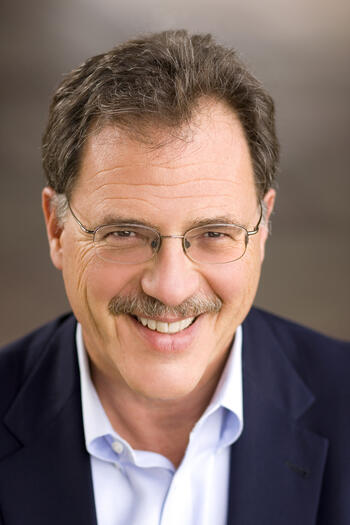
In an article in "The American Interest", Larry Diamond advocates electoral system reforms, including top-two and ranked-choice voting, as a potential antidote to partisan polarization. Such reforms could decrease the likelihood of extremist candidates, could increase the potential for third-party candidates, and could ensure fewer wasted votes.
In an article in the American Interest, Didi Kuo argues that understanding the causes of polarization -- whether rooted in a polarized electorate, or rooted in the ideological extremism of campaign donors and candidates -- has different implications on political reforms. If polarization is an elite phenomenon, institutional and legal reforms have a much greater chance of success.
Stephen Stedman argues in 'The American Interest" that efforts to improve American electoral integrity through reforms such as non-partisan election administration can protect the vote and restore public faith in the electoral process. American election administration falls short of international standards for conducting elections, and can be improved in significant ways.
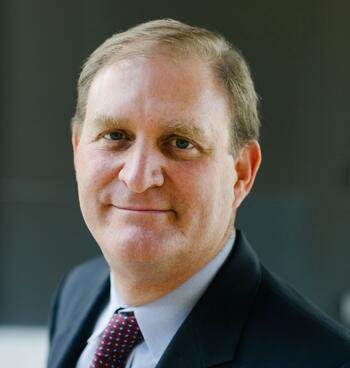
Bruce Cain argues in "The American Interest" that greater transparency can undermine good governance by allowing undue influence of discrete interests and by creating inefficiencies. However, more transparency is needed in bureaucratic policy implementation through private contractors and organizations.
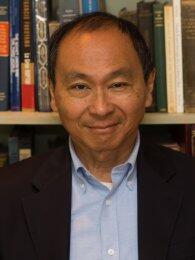
Scholars with the American Democracy in Comparative Perspective Program at Stanford’s Center on Democracy, Development, and the Rule of Law published a series of articles in the latest edition of the “The American Interest,” on the current challenges facing American democracy. In the run up to the U.S. Presidential elections, Francis Fukuyama, Larry Diamond, Bruce Cain, Nate Persily, Stephen Stedman, and Didi Kuo weigh in on polarization, campaign finance, and the structural challenges of reform that grip the American system. This collection of articles outline concrete policy reforms that can improve the performance of the American political system.
While John Boehner was able to avoid a government shutdown this month, his successor as Speaker of the House will face another potential shutdown in December over budgetary matters. The politics of Congressional budgeting are unique among advanced democracies, since most countries insulate their budgetary procedures from partisan politics.
America is unique in experiencing shutdowns; most advanced democracies have budgetary procedures that are insulated from partisan politics. Francis Fukuyama, the Olivier Nomellini Senior Fellow at the Freeman Spogli Institute, and the Program on American Democracy in Comparative Perspective hosted a conference on budgeting in May 2014 to think through possible reforms to the Congressional budgeting process. The conference brought scholars of American institutions and comparative budget policy with policymakers who have worked in American agencies such as the Office of Management and Budget and the Congressional Budget Office. Further, the conference included experts from the World Bank, the International Monetary Fund, and the Organisation for Economic Co-operation and Development to compare the United States budgeting process to international benchmarks and standards. The conference report recommended institutional and technical reforms to decrease the likelihood of shutdowns.
Hero Image
The fiscal year 2015 United States federal budget proposal offered by President Barack Obama, in book format.
The Program on American Democracy in Comparative Perspective at Stanford's Center on Democracy, Development and the Rule of Law has long explored problems of partisan polarization, voter discontent, and inequality in the context of American governance. These trends are becoming more pronounced across advanced democracies, and it is worth asking how challenges faced in the United States are similar to those in Europe. In October, the Program on American Democracy hosted a conference - Democracy and its Discontents - in partnership with Central European University to explore democratic dysfunction through a comparative lens. Specific topics included democratic backsliding, money in politics, and inequality. Scholars from across the United States and Europe discussed the rise of illiberal democracy in Eastern and Central Europe, the rise of populist parties in the U.S. and Western Europe, growing income inequality and perceptions of political corruption, and curtailment of voting rights. The conference showed that problems with democracy are not isolated to any particular region of the globe, and that comparing trends across advanced democracies can help academics and policymakers understand the causes of dysfunction and the potential impact of political reforms.
To view highlights from the conference and full conference proceedings, please see the links below:
From September 13-19, 2015, CDDRL honors students attended the annual Honors College in Washington, D.C., gaining firsthand exposure to how the federal government, policy organizations and think tanks work to advance democracy and development around the world.
Throughout the week, students had the opportunity to learn about the government's vision for democracy at the State Department and the National Security Council. The Honors College agenda also included visits to regional organizations such as the Asia Institute, the Inter-American Dialogue and the Tahrir Institute for the Middle East Policy, where students were able to get a sense of how policy is implemented on the ground.
Scholars at the World Bank and Johns Hopkins School of Advanced International Studies provided an academic view of development, while speakers at Freedom House and the National Endowment for Democracy explain the challenges and advantages of empowering local democratic activists, particularly in countries hostile to democracy. This year, the students also had the privilege of meeting Gayle Smith, President Obama's nominee to lead the United States Agency for International Development.
CDDRL's Interdisciplinary Undergraduate Honors Program aims to provide an opportunity for eligible seniors focusing on democracy, economic development, and rule of law subjects in any university department to earn honors in democracy, development, and rule of law (DDRL). Beyond Honors College, students also meet weekly as a group and with advisors to develop their honors theses. This year's Honors College was led by Steve Stedman, director the honors program, alongside CDDRL scholars Francis Fukuyama and Larry Diamond. To view student testimonials and photos from this year's honors college, see below.
Photo Album
Student Testimonials
Image
"I had never spent a significant amount of time in D.C. before honors college. Throughout the entire week I was amazed as I realized that there is an entire city that is passionate about interests similar to mine. After meeting some influential and motivating people, I feel compelled to work in D.C. at some point in my future."
-Hannah Potter
Image
"Even though I had already spent a lot of time in D.C., spending a week there with CDDRL faculty and students showed me a side of the city I hadn't experienced before. Meeting with senior staff at think tanks, nonprofits, academic institutions and government agencies helped me understand how the academic concepts I've learned at Stanford are actually applied by people working to promote democracy and development around the world."
-Zachary Sorensen
Image
"One thing that was really amazing about Honors College was the ability to explore D.C., even beyond meeting with leaders in the fields of democracy and development. We were able to walk around and see what an interesting, historical, and hip city D.C. actually is. One morning, my roommate on the trip, Hannah Potter, and I took a run down to the Georgetown Waterfront and explored the beautiful walkway there.
-Hadley Reid
Image
"The CDDRL Honor's Program trip to Washington, D.C., was a unique opportunity to experience many different facets of policy-making and academia in the United States. From think tanks to government agencies, I was fascinated by the plethora of ways in which I can work in the realm of democracy and development."
-Hannah Meropol
To find out more about CDDRL's Interdisciplinary Undergraduate Honors Program, please click here. Applications for our 2016-2017 cohort of honors students will be due in February 2016.
Hero Image
2015-2016 Undergraduate Honors Students pose for a group photo outside the White House.