“Accommodate a despotic ruler if you have to,” says Stephen Krasner, a Senior Fellow at Stanford University’s Freeman Spogli Institute for International Studies in his forthcoming book How to Make Love to a Despot: An Alternative Foreign Policy for the Twenty-first Century (Liveright, 2020). Krasner suggests that by embracing rational choice institutionalism, the U.S. should be working with the elites the way they are, rather than expecting them to abide by our standards; aiming for not more and not less than “good enough governance.” We talked with Professor Krasner in more detail about his “third approach.”
Q: Your book How to Make Love to A Despot is coming out in April. The main takeaway is that the United States is permanently oscillating between two bad foreign policies and you are suggesting a third way. You say that the United States lives in a delusion that the rest of the world can and should be like us?
Krasner: I think the problem is that the United States has assumed that every other country could be a consolidated democracy. I think the clearest example of that is China. The assumption was that China would get richer, would have a large middle class, and it would become democratic. They'd be just like us. In the 20th century the United States, basically since it entered World War One, and then later through Vietnam, Iraq, Afghanistan, etc. wanted to turn the world into a set of consolidated democracies. That has worked sometimes but most of the time it hasn't worked. What I suggest in the book is what we should aim for is good enough governance that may turn into consolidated democracy at some point in the future, or it may not. It requires luck for that to happen, not just having the right conditions. But at least we wouldn't be inhibiting consolidated democracy from ultimately emerging.
Q: I can't resist but to ask about these examples you mentioned: Vietnam, Afghanistan, Iraq, these are all countries where the US has intervened with military force. So, when you say democracy promotion, what do you mean by it? Does this entitle military interventions too?
Krasner: I don't think it entitles a military intervention. Most of our military interventions have failed. I worked in the Bush administration, I think that President George W. Bush definitely believed that if you invaded Iraq and you demonstrated the benefits of democracy, that people would become democratic. And I think the fallacy here is that it was a kind of naturalness that if we intervene, we will be successful. I think the problem with active efforts at democracy promotion is that most of the time having a consolidated democracy means that you'll undermine the position of the traditional elite or the ruling elite. And they were not going to accept that. And they know more about the country than we do. So even things that are very well funded, have very well intentions, very well designed, often fail.
Q: So, do you honestly believe that the tendency of war in Iraq was democracy promotion?
Krasner: I do. I honestly believe that. I was in the administration at the time and I completely believe it. I think that Bush really believed that if we took the sewer cover off in Iraq, that that freedom would spring forth. In fact, that's not what sprang forth. I think that we did believe that it was relatively easy. When you're rationalizing why you're doing things in the rest of the world, why you're intervening in other parts of the world the standard American line would be that we're intervening to promote consolidated democracy, which actually turns out to be extremely difficult.
Q: From all the reasons that you just mentioned, you're suggesting the third course, with an awareness that we can't fix the world the way it is, but we can't ignore it either. So, in which way do you suggest that the United States should interact with the world? And how deep should it go and for how long?
Krasner: I think the problem is that we have entered a world in which in the near future it will be relatively easy to create malicious germs, nuclear weapons, etc. At this point, we kind of assumed that more information was better, and great information would rise to the top. That hasn't necessarily been the case. So, we can't detach ourselves from the rest of the world because even non-state actors with relatively limited capabilities, which is what Al-Qaeda was, are able to use weapons against the thousands or hundreds of thousands or even millions of Americans. So, I don't think we can ignore the world. What we can do is to aim for good enough governance. The first thing is that you must be supported by national elites. Even if those national elites are autocratic. I think that way we could provide better security. We can provide some improvement in services, especially in health, which has been a big, big success story since 1945. We also must accept that the idea that we can eliminate corruption is entirely impossible. As you know, patronage is better than stealing a $100 million and moving it outside of the country. But that's the best that we can hope to do.
Q: So, the question is—how do you create this index of what is going to be tolerated and what is not going to be tolerated? What is good enough governance in practice?
Krasner: I don't have a clear answer to that. Good enough governance has to mean that we're trying to create a security environment in other countries, where governments are capable of policing their own territory, which might not always be possible. I don't think we can eliminate, but certainly, try to minimize threats that might arise elsewhere. The problem would be if the government is so repressive that it engenders a large-scale domestic reaction. Now, for the most part, you have to be really, really repressive and really stupid to have that happen, but it does happen sometimes, as it did in Sudan. Ideally, we should try and find government leaders who are inclusive enough that they'll be able to support and maintain the support of backers, necessary to keep them in power. And that's a part I'm uncertain about. I don't have a general rule for that. I think you'd just have to look at a particular situation.
Q: You must agree that there are many regions of the world where many countries are actually relying heavily on the help from the outside and count on active engagement with the U.S.?
Krasner: Yes. So, let me say something which I have to say I'm not certain about. I think acting because we assume that there are some things that are morally intolerable to people who lead the revolution is in general a mistake. Most of the time, if the government is able to keep a relatively stable situation and people are able to satisfy the material resources, I don't think they're likely to revolt. Now, if you look at the bigger revolts we've had, I mean, for instance, the revolt in Russia that led to the Soviet Union, the Romanovs were pretty inefficient and pretty ineffective. They were able to carry on a war for three years until the regime finally collapsed. But it took a lot of fairly bad policies to make that happen. So, what I'm arguing is that in general, I think that we assume that you can't have lasting peace unless you have a peace that's morally sustainable. I am, I should say assuming, because I haven't really done the empirical work in this, but assuming that people are willing to tolerate a lot of things that they consider immoral provided that the government provides them with some basic level of services including security.
Q: When you rely on local elites, as you say in your book, and they always serve their own interests, what would be the foreign policy mechanisms to limit how far that can go? Since the ramifications could be serious and lead the countries deeper into corruption and partocracy.
Krasner: I think that there is no formula for that. We've engaged, we've spent a lot of money directly on democracy promotion. Often the money is basically undermined. Azerbaijan, in the last election, had 50 election observers. 49 said the elections were okay. Only one, which was in the European Union, said the elections were corrupt. If you looked at CICIG in Guatemala, here was an organization that was set up by an agreement between the Guatemalan government and the secretary-general of the United Nations. What are the results? CICIG was disbanded within the last year and the effort to create something like CICIG in Honduras basically failed. In some cases, domestic leaders may misunderstand how threatening some of these organizations are and you have to assume that they know more about their country than we do. And they're not going to accept things which would result in their losing power, possibly being killed, possibly being exiled.
Q: In your book, you’re criticizing modernization theory saying that it just assumes that democracy and welfare can be attained relatively easily. You are also not so sure that putting an effort into building institutional capacity in those countries is enough. Still, in many cases, education on building institutional capacity dramatically helped in reforms.
Krasner: It may work, and it may not. I'm not saying I'm opposed to doing these things, but we shouldn't assume that they're going to easily lead to a consolidated democracy in the end. Hobbes, Samuel Huntington, they both say that you need institutional capacity, but the problem is what is going to prevent leaders who have lots of institutional capacity from acting in ways that serve their own interests, opposed to interests of a population? You're not going to be able to build institutions if they threaten the local political elite. If you look historically only for a relatively short period of time, generously the last couple of hundred years, have you had consolidated democracies in which the political elite could lose power as a result of decisions that were taken by the electorate and most of the world. It's pretty unusual. It’s happened in North America, Western Europe, and East Asia. It hasn't happened in other parts of the world. We shouldn't assume then it's kind of the natural order of things. If you look at recent developments in the United States, it is important that rulers have a set of norms in which they value the foundational values of the country. But if you get a ruler who isn't very interested in those norms, you can have a lot of bad things happen.
Q: The theory that you suggest and call rational choice institutionalism relies on the elites and it stresses that elites will be willing to tie their own hands and adopt policies that benefit the population as a whole only under certain conditions. But when we take a step back and we do look at consolidated democracies, we see that many of the values in those societies are actually the foundation for the policies in those countries. And these values were nurtured over time.
Krasner: I agree with that. In consolidated democracies people have the elite, the political leaders adopted a set of values. It's true in most of the United States, it's true in the American military, it's true in parts of Western Europe in which people do actually cherish these values. But I think often they came later, and they weren't necessarily there in the beginning. I also think religion is one set of values that really matters to people. You have these Evangelical Christians in the United States who, you know, they see Trump, I think they see Trump as being a sinful individual, but they see him as the best bet to defend values that they endorse. Many people in the rest of the United States, they're looking around and seeing a world in which their material wellbeing has just deteriorated for 30 or 40 or 50 years, whether there’s Democrats or Republicans in office, they don't have any belief in anything anymore. Also, if you look at race relations in the United States, they are very troubled. They have been troubled for 300 years.
Q: So, does this mean that your overall understanding of the world today is that it's so bad that the United States should focus on self-preservation and just look at how to protect our safety?
Krasner: So, I think we should do two things. First of all, I think we should be concerned with how well our own society is functioning. In this sense, I think Donald Trump isn't so, isn't to the extent that he's tapping into that, is not wrong. I think there are always things that we can do internationally, but we shouldn't expect that if we do these things, we're going to have great outcomes. We may make things a little better. There are things that we can do at the international level, but not expect that everyone's going to be just like us.

 Erin Baggott Carter is an Assistant Professor at the Department of Political Science and International Relations at the University of Southern California. There, she is also a Co-PI at the Lab on Non-Democratic Politics. She received a Ph.D. in Government from Harvard University, is currently a visiting scholar at the Stanford Center on Democracy, Development and the Rule of Law, and was previously a Fellow at the Stanford Center for International Security and Cooperation.

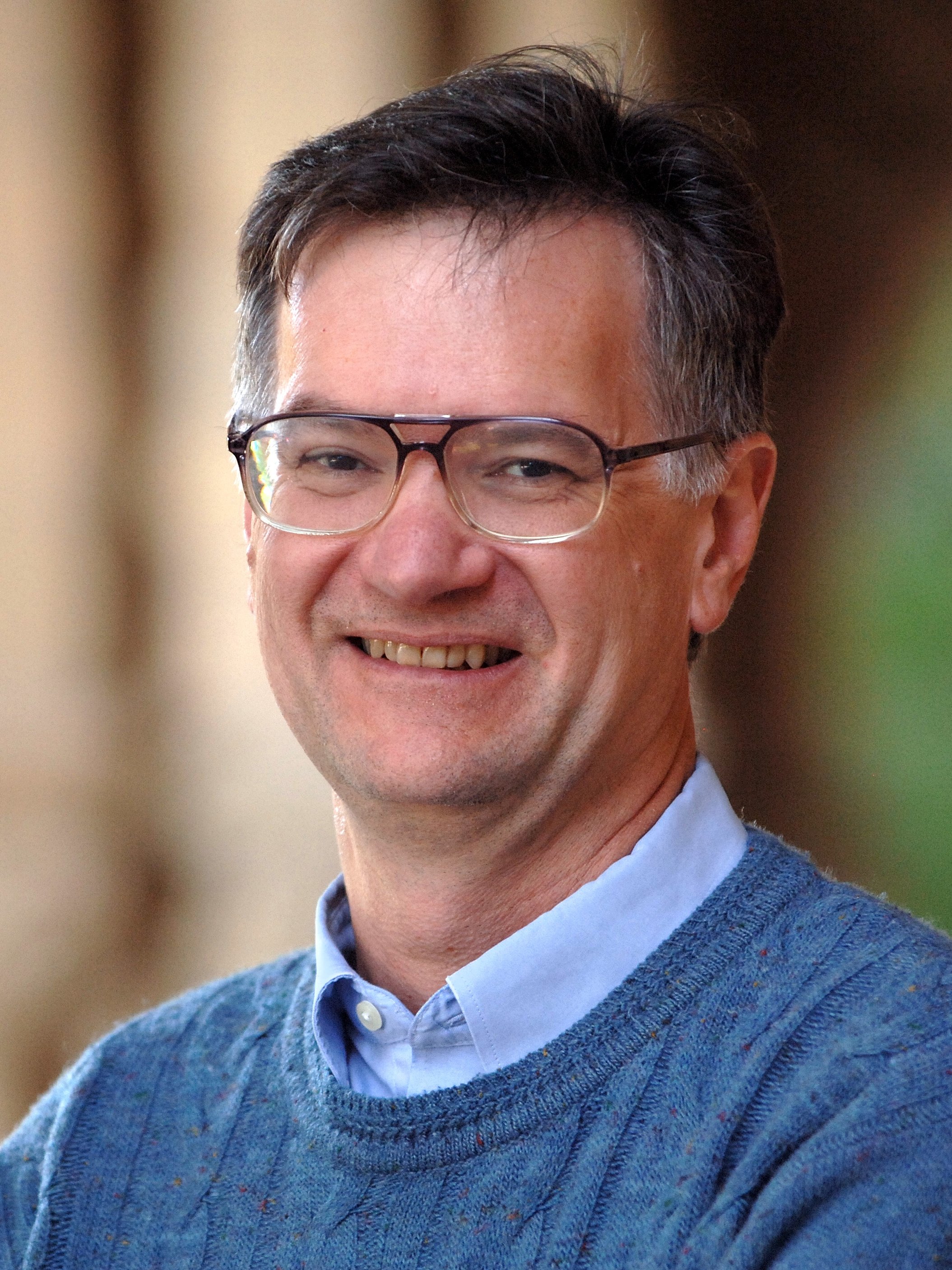 Stephen Stedman is a Freeman Spogli senior fellow at the Center on Democracy, Development, and the Rule of Law and FSI, an affiliated faculty member at CISAC, and professor of political science (by courtesy) at Stanford University.
