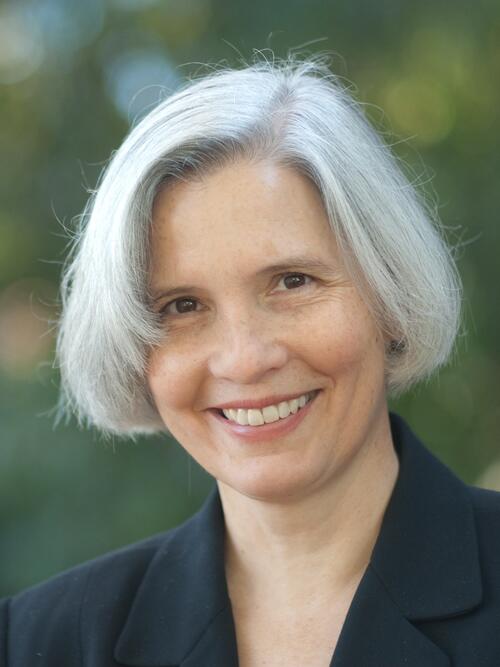
While the reelection of Taiwan’s president, Ma Ying-jeou, relieved concerns about an immediate deterioration in cross-Strait relations, the future of ties between Beijing and Taipei remain uncertain. Much will depend on the PRC’s policy. Moreover, calls in the United States either to abandon Taiwan or, conversely, to embrace it ever more closely as a hedge against the Mainland’s growing strength, have yet to play themselves out. Alan D. Romberg will address the implications of the election for these issues, as well as for Sino-American relations and for the region.
Speaker Bio:
Alan Romberg is the director of the East Asia program at Stimson.
Before joining Stimson in September 2000, he enjoyed a distinguished career working on Asian issues, both in and out of government, including twenty years as a US Foreign Service Officer. Romberg was the principal deputy director of the State Department's Policy Planning staff and deputy spokesman of the department. He served in various capacities dealing with East Asia, including director of the Office of Japanese Affairs, member of the Policy Planning staff for East Asia, and staff member at the National Security Council for China. He served overseas in Hong Kong and Taiwan.
Additionally, Romberg spent almost ten years as the CV Starr Senior Fellow for Asian Studies at the Council on Foreign Relations, and was special assistant to the Secretary of the Navy.
Romberg holds an MA from Harvard University, and a BA from the Woodrow Wilson School of Public and International Affairs at Princeton University.
CISAC Conference Room
Alan Romberg
Distinguished Fellow
Speaker
the Stimson Center
In developing countries, the efficacy of subsidized food delivery systems is particularly challenged by corruption that can disproportionately affect less powerful areas or less powerful households, thereby steering aid away from the most vulnerable beneficiaries. In this paper, Sriniketh Nagavarapu and others examine how the identity of food delivery agents affects the take-up of vulnerable populations. Specifically, they investigate the take-up of subsidized goods in Uttar Pradesh, India, under the Targeted Public Distribution System (TPDS), a system undermined by widespread corruption. Using rich household survey data from the first year of the TPDS, they establish that households from the historically disadvantaged Scheduled Castes exhibit lower take-up when facing non-Scheduled Caste delivery agents. After showing that several potentially reasonable explanations (e.g. discrimination or elite capture) are not consistent with the data, they assess the quantitative impact of the most plausible remaining explanation, which involves monitoring and enforcement.
Speaker Bio:
Sriniketh Nagavarapu is an assistant professor of economics and environmental studies at Brown University. His research is focused on environmental and labor economics in developing countries. Specifically, he is interested in understanding how local institutions manage natural resources and service delivery, and how management effectiveness is shaped by market incentives and the nature of the institutions. His recent work in this area examines the management of fisheries by cooperatives in Mexico and the delivery of food assistance by government-appointed authorities in India. In other work, he has examined how the labor market mediates the link between ethanol production expansion and deforestation in Brazil. Nagavarapu received his Ph.D., M.A., and B.A. from Stanford University. At Brown, he is a faculty associate of the Population Studies and Training Center, Spatial Structures in the Social Sciences, and the Environmental Change Initiative.
CISAC Conference Room
Sriniketh Nagavarapu
Assistant Professor of Economics and Environmental Studies
Speaker
Brown University
Abstract A global struggle for control of the Internet is now underway. At stake are no less than civil liberties, privacy and even the character of democracy in the 21st century.
Many commentators have debated whether the Internet is ultimately a force for freedom of expression and political liberation, or for alienation, and repression. Rebecca MacKinnon moves the debate about the Internet’s political impact to a new level. It is time, she says, to stop arguing over whether the Internet empowers individuals and societies, and address the more fundamental and urgent question of how technology should be structured and governed to support the rights and liberties of all the world’s Internet users.
Rebecca MacKinnon is a Bernard L. Schwartz Senior Fellow at the New America Foundation, where she conducts research, writing and advocacy on global Internet policy, free expression, and the impact of digital technologies on human rights. She is author of Consent of the Networked: The Worldwide Struggle for Internet Freedom (Basic Books, January 2012). MacKinnon is also cofounder of Global Voices, an international citizen media network. She also serves on the Boards of Directors of the Committee to Protect Journalists and the Global Network Initiative.
Fluent in Mandarin Chinese, MacKinnon worked as a journalist for CNN in Beijing for nine years and was Beijing Bureau Chief and Correspondent from 1998-2001, then served as CNN’s Tokyo Bureau Chief and Correspondent from 2001-03. From 2004-06 she was a Research Fellow at Harvard’s Berkman Center for Internet and Society, where she began her ongoing research and writing about the Chinese Internet in addition to launching Global Voices with colleague Ethan Zuckerman. In 2007-08 she taught online journalism at the University of Hong Kong’s Journalism and Media Studies Centre. In 2009 she conducted research and writing as an Open Society Fellow, and in the Spring of 2010 she was a Visiting Fellow at Princeton’s Center or Information Technology Policy.
MacKinnon received her AB magna cum laude from Harvard University and was a Fullbright scholar in Taiwan in 1991-92.
Sloan Mathematics Center
Rebecca MacKinnon
Bernard L. Schwartz Senior Fellow
Speaker
New America Foundation
Michael A. McFaul, a Stanford political science professor and senior fellow at the university’s Freeman Spogli Institute for International Studies, was confirmed by the Senate to be the next ambassador to Russia.
McFaul, President Barack Obama’s top advisor on Russia and a Bing Senior Fellow at Stanford’s Hoover Institution, will succeed John Beyrle.
"Mike will bring to his new posting in Moscow the same intensity, clarity of vision and imagination that he demonstrated as President Obama's point person on Russia at the White House," said Coit D. Blacker, FSI’s director and the Olivier Nomellini Professor in International Studies.
The Dec. 17 voice vote confirming McFaul came on the last day the Senate was in session before its winter break. Sen. Mark Kirk, R-Ill., had held up McFaul's approval over issues with U.S. policies toward Russia.
During confirmation hearings before the Senate Foreign Relations Committee in October, McFaul discussed the overall status of U.S.-Russian relations, missile defense, arms reduction agreements and trade relations.
Since the beginning of the Obama administration, McFaul has been the special assistant to the president for national security affairs and senior director for Russia and Eurasia at the National Security Council.
He served as senior adviser on Russia and Eurasia to Obama during the presidential campaign and continued to advise on foreign policy issues during the transition.
The Obama administration has achieved new momentum in relations with Russia with McFaul's involvement.
The two countries have signed the New Start arms control treaty, which calls for significant cuts in nuclear arsenals; finalized a civilian nuclear cooperation pact; forged agreement on tougher sanctions on Iran; and expanded the supply route to Afghanistan through the territory of the former Soviet Union.
The two powers now turn to the efforts to forge cooperation on missile defense in Europe and to gain Russia's admission to the World Trade Organization, as well as the challenges posed by Iran and Libya.
"This is a complex and sensitive time in the ever-evolving relationship between the United States and the Russian Federation," Blacker said. "Having an ambassador in place who gets the relationship has never been more important. For this reason above all others, Mike is the perfect choice. We are all deeply proud of Mike and all that he has accomplished."
McFaul, who has served as FSI’s deputy director and director of the institute’s Center on Democracy, Development, and the Rule of Law, received a bachelor’s degree in international relations and Slavic languages and an master’s in Slavic and East European studies from Stanford in 1986. He was awarded a Rhodes Scholarship to Oxford, where he completed his PhD in international relations in 1991.
On December 6, the Program on Arab Reform and Democracy at the Center on Democracy, Development, and the Rule of Law together with the Safadi Foundation USA inaugurated the Safadi-Stanford Initiative for Policy Innovation (SSIPI) at a conference hosted by the Woodrow Wilson International Center for Scholars in Washington, DC and supported by the Center for International Private Enterprise. This gathering convened an upwards of 100 guests to explore the conference's theme of economic reform and development in the Arab world.
The keynote addresses were delivered by IMF Head Christine Lagarde who commented on the economic landscape in the region and suggested methods to stimulate growth for emerging Arab economics, and Lebanese Finance Minister Mohammad Safadi who stressed the importance of institution building and transparent accountable governance practices for development in the region, particularly in relation to how Arab governments handle international aid.
Safadi Scholar of the Year Katarina Uherova Hasbani presented the findings of a research study she authored on electricity sector reform in Lebanon while in residence at CDDRL this fall. The SSIPI research partnership was initiated to promote policy-relevant research on Lebanon and supported Hasbani's visiting fellowship at Stanford. Hasbani, an energy policy expert, presented her findings to the policy- making community, arguing that reliable and stable electricity supplies are a pre-condition for economic development. Hasbani cautioned that the failing electricity sector in Lebanon threatens the country's progress diverting resources from social development and education.
Deputy Assistant Secretary of State for Near Eastern Affairs Tamara Wittes and Mara Rudman, Assistant Administrator for the bureau for Middle East at USAID, both commented on the development challenges and opportunities that lie in the wake of the Arab Spring. "What is happening in the region is about the people writing their own story," said Wittes. "The United States has to approach this with a sense of humility but we have a role to play because we are a major presence in the region." Rudman added that USAID is reaching out to new audience and partners in Egypt, many of whom are outside Cairo, to engage new actors after the January 25 revolution.
Miriam Allam, an economist with the OECD and Safadi Scholar first runner-up stressed the importance of public consultation and good regulation as best practices for cultivating active and democratic citizenship. Undersecretary of State for Economic, Energy, and Agricultural Affairs Robert D. Hormats, underscored the fact that economic reform must match social and political change in the region to create diverse economies that support growth, investment, and trade.
Inger Anderson, Vice-President for MENA at the World Bank, commented on the funding shortages from European countries that are resulting in decreased investment in the Arab world, when they need it the most. Both Anderson and Lagarde advocated for the reform of government subsidies, according to Lagarde, "governments need sustainable fiscal policies, including better targeted subsidies to help low-income groups."
Lagarde added that a key way forward is encouraging private sector investment to spur job creation but stressed that this requires predictability, a stable legal and tax environment, absence of corruption, and the elimination of regulatory loopholes.
Through this conference and ongoing research, the Safadi-Stanford Initiative for Policy Innovation seeks to offer new approaches and recommendations to advance development and governance practices in the region.
Encina Hall
616 Serra Street
Stanford, CA 94305-6055
(650) 724-2996
0
gabcal@stanford.edu
CDDRL Postdoctoral Fellow 2012-13
Calderon_HS.jpg
PhD
Gabriela Calderon holds a Ph.D. in Economics from Stanford University. Her research interests include policies that affect gender differences in developing countries, policy evaluation, violence in Latin America and the effect of institutions and governance on the provision of public goods and health/education outcomes. She did her master's degree in economic theory and bachelor's degree in economics at the Instituto Tecnológico Autónomo de México. Currently, in the Program on Poverty and Governance, her research analyzes the way institutions and democracy affect the provision of public goods, and the impact they have on health outcomes like infant mortality trends. She is also studying the effects of government interventions that combat drug-trafficking organizations over violence in Mexico.
Her research has focused on the topics of development, public finance, and the evaluation of public policy programs in Mexico. For example, during the summers of 2009/2010, she conducted a field experiment in Zacatecas, Mexico with Giacomo de Giorgi, an assistant professor from Stanford University, and Jesse Cuhna, a former Stanford student. The main task was to evaluate the impact of financial literacy classes on underprivileged women entrepreneurs in the region. To successfully complete an evaluation in an untreated region, they proposed collaborating with the Mexican NGO CREA on a joint project. They contacted local interviewers, trained them, and identified all women entrepreneurs in the 17 communities, in which we conducted the experiment. Preliminary results suggest that the female entrepreneurs who were randomly assigned to treatment earned higher profits, had larger revenues, and served a greater number of clients. They also found that they were more likely to implement formal accounting techniques.
She has also studied programs that are not randomly assigned as an experiment. For example, she has analyzed the effects of a national policy in Mexico of child care services, called Estancias Infantiles para apoyar a Madres Trabajadoras (EI), using administrative, census and household data. Her empirical research strategy identifies the effects of the program on both the men and women who were eligible for the program. She used time, location and eligibility variation, and considered a major threat to identification of the actual effects: for example, a manufacturer who moves into a municipality at approximately the same time as the EI program and who happens to disproportionately demand the skills of women who were eligible to the program happened to have. To ensure that such scenarios do not affect her results, she chose not triple difference strategy, in which all ineligible people are treated as “controls” for the EI-eligible families. Instead, she employs Synthetic Control Methods, using the same methodology as Abadie and Gardeazabal (2003) and Abadie, Diamond and Hainmueller (2010) to ensure that her control group has the same mix of skills and preferences as the EI-eligible group. She adapted the Synthetic Control Method to analyze repeated cross-sectional household data, which are data that are typically available in developing countries
European leaders converged in Brussels to figure a way out of a worsening debt crisis and agreed to greater financial oversight and centralization. England refuses to go along with the plan, and Stanford political scientist Francis Fukuyama says he expects some countries will start bailing out of the eurozone.
Fukuyama talks about the summit, the euro’s chances of survival and what’s at stake for America if the currency collapses.
What does the Brussels agreement mean for Europe’s debt crisis?
We will have to see how much of a binding constraint this agreement actually is. It’s just an informal agreement at this point. Political leaders can promise anything at this kind of summit and fail to deliver.
I think the most interesting thing going on is the eurozone – the 17 countries that participate in the euro – is actually splitting off from the greater EU. The reason that’s happening is that in order to save the eurozone, they need to make certain decisions on this type of deepening control. And countries like Britain will never go along with this. The 17 countries have to create their own unit that can make decisions at the expense of the larger EU.
Explain Britain’s refusal to have its budget reviewed by the European Commission
The UK is like the United States – they’ve always been jealous of their sovereignty. If you go to England and talk about crossing the Channel, they’ll say, “Oh, so you’re going to go to Europe.” While an American would say “England is a part of Europe.”
There’s a strong strain – especially within the conservative party – that really does not want to give up authority to what they regard as a bunch of French socialists in Brussels. That’s their vision of what the EU really represents. So they’re resistant about being dragged into any German scheme to deepen the powers in Brussels to include control over national budgets because that is a core element of sovereignty. The majority of people in Britain will say that will happen over their dead bodies.
What is the likelihood that countries will begin exiting the eurozone?
I don’t think it makes sense for a country like Greece to stay in the eurozone. It’s a matter of national pride that they don’t want to be the first country out, but it’s very hard to see how they actually return to growth under a system that links them to Germany in terms of the price of their currency. Long before there’s any kind of centralized fiscal reform that’s imposed on Greece, Portugal and these other peripheral countries, I think it’s more likely that they’ll exit. The euro will probably remain, but it will be at the core of the more stable countries.
What mechanism is there for countries to exit the eurozone?
There is no mechanism. Not only is there no legal way of exiting, there’s no disciplining mechanism. You have a stability pact where countries agreed they wouldn’t run a budget deficit greater than 3 percent, and Germany was really one of the first counties to violate that. But there were no sanctions. That’s the problem right now – there’s neither discipline nor an exit mechanism. That’s why everyone is fearing a disorderly, messy breakup of the EU, which would be extremely damaging.
President Obama has said the U.S. “stands ready to do our part" to help Europe resolve its crisis. What can America really do?
It’s an indication of how far we’ve fallen, but there’s really nothing concretely we can do apart from possibly increasing our International Monetary Fund share. But the IMF doesn’t have the ammunition to really help at all in this particular crisis. So all we can do is sit on the sidelines and try to get the Europeans to take our advice, which a lot of them are not inclined to do given the mess that happened on Wall Street three years ago. It’s a mark of the diminishment of overall American influence that we’re simply relegated to the sidelines of this crisis.
What’s at stake for America in the wake of a total European financial meltdown?
There’s a lot at stake. We are slowly crawling out of the biggest recession since the Great Depression. The one thing that could really send us back into a second leg of a recession is collapse of the European financial system and panic in Europe. If Europe doesn’t do well, the United States isn’t going to do well.
John Prendergast is an author and human rights activist who for over 25 years has worked for peace in Africa. He is Co-Founder of the Enough Project, an initiative to end genocide and crimes against humanity. During the Clinton administration, Prendergast was involved in a number of peace processes in Africa while he was Director of African Affairs at the National Security Council and Special Advisor to Susan Rice at the Department of State. Prendergast has also worked for two members of Congress, UNICEF, Human Rights Watch, the International Crisis Group, and the U.S. Institute of Peace. He has also been a youth counselor, a basketball coach and a Big Brother for over 25 years.
He has authored ten books on Africa, including Not on Our Watch: The Mission to End Genocide in Darfur and Beyond, a New York Times bestseller and NAACP non-fiction book of the year that he co-authored with actor Don Cheadle. His most current book, The Enough Moment, also co-authored with Mr. Cheadle and released on September 7, 2010, focuses on building a popular movement against genocide and other human rights crimes. His other forthcoming book draws on his many years in the Big Brothers/Big Sisters program.
Prendergast has worked with a number of television shows to raise awareness about human rights issues in Africa. He has appeared in four episodes of “60 Minutes,” for which the team won an Emmy Award, and has consulted on two episodes of “Law and Order: Special Victims Unit,” one focusing on the recruitment of child soldiers and the other on rape as a war strategy. He has also traveled to Africa with ABC’s Nightline, PBS’ The Lehrer NewsHour, and CNN’s Inside Africa.
He has appeared in several documentaries including: "Sand and Sorrow," "Darfur Now," "3 Points," and "War Child." He also co-produced "Journey into Sunset," about Northern Uganda, and partnered with Downtown Records and Mercer Street Records to create the compilation album “Raise Hope for Congo,” which shines a spotlight on sexual violence against women and girls in the Congo.
With Tracy McGrady and other NBA stars, John co-founded the Darfur Dream Team Sister Schools Program to fund schools in Darfurian refugee camps and create partnerships with schools in the United States. He also helped create the Raise Hope for Congo Campaign, highlighting the issue of conflict minerals that fuel the war in Congo. John is a board member and serves as Strategic Advisor to Not On Our Watch, the organization founded by George Clooney, Matt Damon, Don Cheadle, and Brad Pitt.
Prendergast’s op-eds have appeared in The New York Times, The Wall Street Journal, USA Today, The Washington Post, and The International Herald Tribune, and he has been profiled in Vanity Fair, Men's Vogue,Time, Entertainment Weekly, GQ Magazine, Oprah Magazine, Capitol File, Arrive Magazine, Interview Magazine, The Washington Post, The Los Angeles Times, The Philadelphia Inquirer, and Kenneth Cole’s Awearness.
Prendergast has been a visiting professor at the University of San Diego, Eckerd College, St. Mary’s College, the University of Maryland, and the American University in Cairo, and will be at Columbia University and the University of Pittsburgh. He has been awarded six honorary doctorates.
Philippines Conference Room
John Prendergast
Human rights activist and co-founder
Speaker
Enough Project
Ten years into the war in Afghanistan, Payne Distinguished Lecturer Lt. Gen. Karl W. Eikenberry, the former U.S. Ambassador to Afghanistan and the former Commander of the American-led Coalition Forces there, set out to examine the transition to Afghan sovereignty. Eikenberry laid out three broad sets of questions: How well are we doing in the campaign in Afghanistan, what are the significant challenges we’ll face in achieving our goals and objectives, and what are the implications for American power and influence in the 21st century.
Watch the video below.
Bechtel Conference Center
Karl Eikenberry
Payne Distinguished Lecturer; Retired United States Army Lieutenant General; Former United States Ambassador to Afghanistan
Speaker
CDDRL pre-doctoral Alex Ruiz Euler will explore the evolution of inequality at the municipal level in Mexico with original measures constructed using household-level data from 1990, 2000 and 2010. Euler will analyze how increasing electoral competition at both the federal and local level correlates with these patterns of inequality.
Speaker Bio:
Alex Ruiz Euler is a 2011-2012 pre-doctoral fellow at CDDRL and a PhD candidate in political science from the University of California, San Diego. His dissertation focuses on the effects of democratization and economic inequality on the provision of education. His case study is Mexico and is developing novel databases for these indicators at the municipal and locality level. He is also part of a collaborative effort to analyze more broadly the relation between governance and the provision of public goods, including water, health and public security.
Encina Ground Floor Conference Room
Alex Ruiz Euler
Pre-doctoral Fellow, 2011-2012
Speaker
CDDRL