-

This is a virtual event. Please click here to register and generate a link to the talk. 
The link will be unique to you; please save it and do not share with others.


Sponsored by the Stanford China Program and the Stanford Center at Peking University.
 

International institutions established after WWII and shaped by the Cold War facilitated attainment of unprecedented peace and prosperity.  But what worked well in the past may no longer be adequate to address the challenges and opportunities in the world these institutions helped to create.  Should legacy institutions be reformed, replaced, or supplemented by new mechanisms to manage new global challenges?  This program will examine whether existing institutions of global governance are adequate, and if not, why changing them will be difficult.


Image
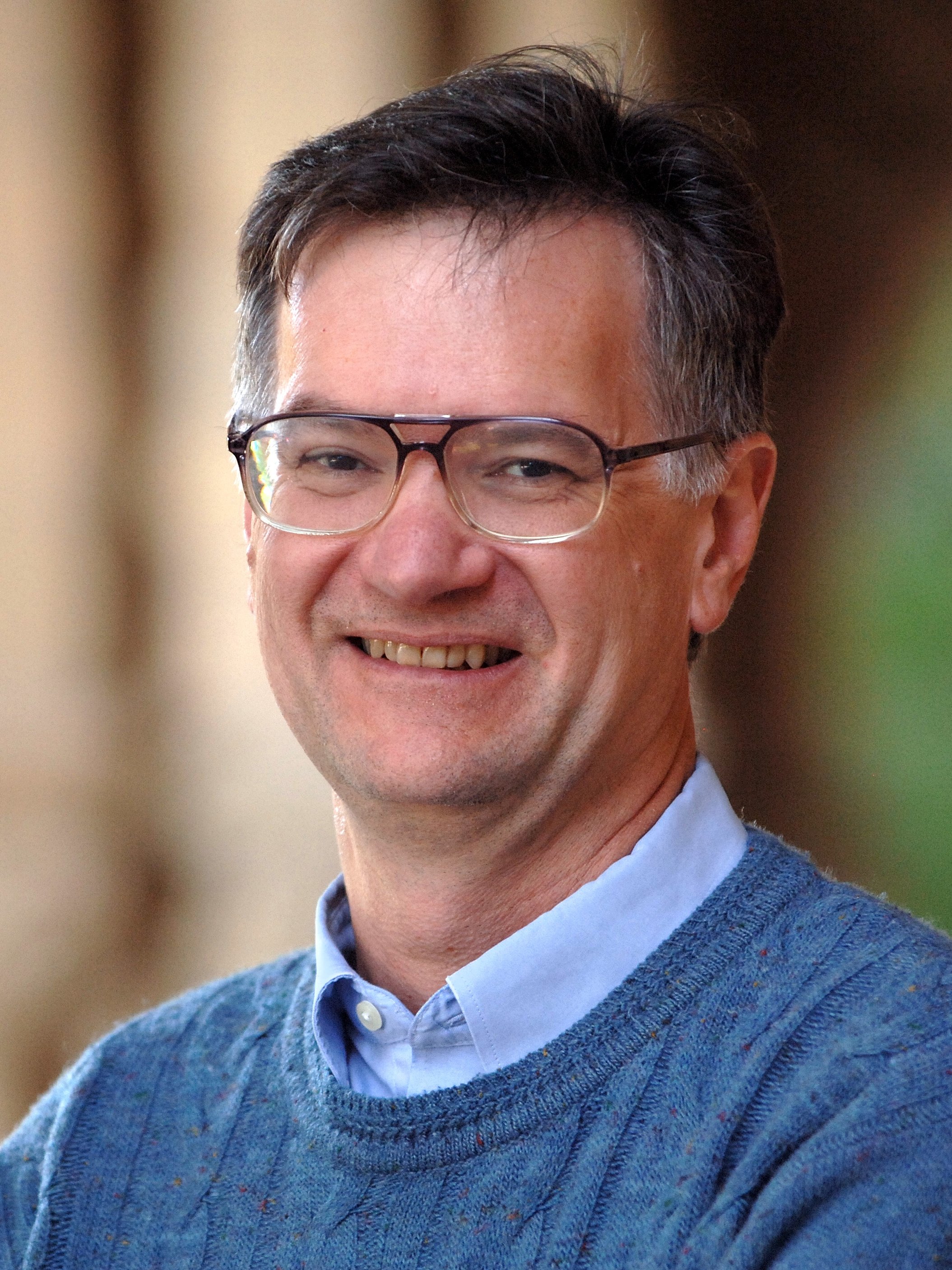
Dr. Thomas Fingar
Thomas Fingar is a Shorenstein APARC Fellow in the Freeman Spogli Institute for International Studies at Stanford University. He was the inaugural Oksenberg-Rohlen Distinguished Fellow from 2010 through 2015 and the Payne Distinguished Lecturer at Stanford in 2009. From 2005 through 2008, he served as the first deputy director of national intelligence for analysis and, concurrently, as chairman of the National Intelligence Council. Fingar served previously as assistant secretary of the State Department’s Bureau of Intelligence and Research (2000-01 and 2004-05), principal deputy assistant secretary (2001-03), deputy assistant secretary for analysis (1994-2000), director of the Office of Analysis for East Asia and the Pacific (1989-94), and chief of the China Division (1986-89). Between 1975 and 1986 he held a number of positions at Stanford University, including senior research associate in the Center for International Security and Arms Control.

Fingar's most recent books are The New Great Game: China and South and Central Asia in the Era of Reform, editor (Stanford, 2016), Uneasy Partnerships: China and Japan, the Koreas, and Russia in the Era of Reform (Stanford, 2017), and Fateful Decisions: Choices that will Shape China’s Future, co-edited with Jean Oi (Stanford, 2020).


Dr. Stephen J. StedmanStephen Stedman is a Freeman Spogli senior fellow at the Center on Democracy, Development, and the Rule of Law and FSI, an affiliated faculty member at CISAC, and professor of political science (by courtesy) at Stanford University. 

In 2011-12 Professor Stedman served as the Director for the Global Commission on Elections, Democracy, and Security, a body of eminent persons tasked with developing recommendations on promoting and protecting the integrity of elections and international electoral assistance. The Commission is a joint project of the Kofi Annan Foundation and International IDEA, an intergovernmental organization that works on international democracy and electoral assistance. In 2003-04 Professor Stedman was Research Director of the United Nations High-level Panel on Threats, Challenges and Change and was a principal drafter of the Panel’s report, A More Secure World: Our Shared Responsibility. In 2005 he served as Assistant Secretary-General and Special Advisor to the Secretary- General of the United Nations, with responsibility for working with governments to adopt the Panel’s recommendations for strengthening collective security and for implementing changes within the United Nations Secretariat, including the creation of a Peacebuilding Support Office, a Counter Terrorism Task Force, and a Policy Committee to act as a cabinet to the Secretary-General.  His most recent book, with Bruce Jones and Carlos Pascual, is Power and Responsibility: Creating International Order in an Era of Transnational Threats (Washington DC: Brookings Institution, 2009).

Via Zoom Webinar. Register at: https://bit.ly/3b6qmKT

Thomas Fingar Shorenstein APARC Fellow, Stanford University
Stephen Stedman Deputy Director, Center on Democracy, Development and Rule of Law, Stanford University
Seminars
Paragraphs
Ill Winds book cover

Larry Diamond has made it his life’s work to secure democracy’s future by understanding its past and by advising dissidents fighting autocracy around the world. Deeply attuned to the cycles of democratic expansion and decay that determine the fates of nations, he watched with mounting unease as illiberal rulers rose in Hungary, Poland, Turkey, the Philippines, and beyond, while China and Russia grew increasingly bold and bullying. Then, with Trump’s election at home, the global retreat from freedom spread from democracy’s margins to its heart.

Ill Winds’ core argument is stark: the defense and advancement of democratic ideals relies on U.S. global leadership. If we do not reclaim our traditional place as the keystone of democracy, today’s authoritarian swell could become a tsunami, providing an opening for Vladimir Putin, Xi Jinping, and their admirers to turn the twenty-first century into a dark time of despotism.

We are at a hinge in history, between a new era of tyranny and an age of democratic renewal. Free governments can defend their values; free citizens can exercise their rights. We can make the internet safe for liberal democracy, exploit the soft, kleptocratic underbelly of dictatorships, and revive America’s degraded democracy. Ill Winds offers concrete, deeply informed suggestions to fight polarization, reduce the influence of money in politics, and make every vote count.

In 2019, freedom’s last line of defense still remains “We the people.”

All Publications button
1
Publication Type
Books
Publication Date
Subtitle
From America’s leading scholar of democracy, a personal, passionate call to action against the rising authoritarianism that challenges our world order—and the very value of liberty.
Authors
Larry Diamond
Book Publisher
Penguin Books
Paragraphs

Western observers have raised concerns over the rise and now predominance of Chinese state-backed bilateral lending in international infrastructure development. These range from China's growing geopolitical influence to the increasingly unsustainable debt levels of some of the nations receiving investments as part of the Belt and Road Initiative (BRI). In fact the BRI today is simply the next phase of a decades-long shift in the infrastructure sector towards China and away from traditional western development lending institutions. In this study we observe the scale of this trend and its root causes in China's domestic and international development policies for infrastructure and the safeguards policies of western development programs. We use aggregate reporting on infrastructure lending and project-level case studies in nations that have transitioned from western institutions to the BRI. We highlight the need for reforms for China's lending programs, to increase transparency and the financial sustainability of projects, and for western development institutions to maintain environmental and social safeguards while still achieving their stated missions.

Read

.

All Publications button
1
Publication Type
Working Papers
Publication Date
Authors
Francis Fukuyama
Michael Bennon
Authors
Larry Diamond
News Type
News
Date
Paragraphs

The following report was originally published by the Hoover Institution.

Scholars from the Hoover Institution, the Freeman Spogli Institute for International Studies, and other organizations today issued a report that examines China’s efforts to influence US institutions and calls for protecting American values, norms, and laws from such interference, while also warning against “demonizing” any group of people.

According to the 192-page document, which was unveiled today (Nov. 29) at a Hoover DC press event, China is attempting on a wide scale to manipulate state and local governments, universities, think tanks, media, corporations, and the Chinese American community. (Click here to read the report, titled “Chinese Influence & American Interests: Promoting Constructive Vigilance.”)

The document was produced by researchers convened by the Hoover Institution and the Asia Society’s Center on US-China Relations, along with support from The Annenberg Foundation Trust at Sunnylands. The working group included leading China scholars who researched the issue for more than a year and a half. Project cochairs are Larry Diamond, senior fellow at the Freeman Spogli Institute for International Studies and the Hoover Institution, and Orville Schell, the Arthur Ross Director at Asia Society Center on US-China Relations.

The objective of the Chinese entities is to promote sympathetic views of China, especially its government, policies, society and culture, the report concludes. The work is described as a “summons to greater awareness of the challenges our country faces and greater vigilance in defending our institutions,” and explicitly not intended to cause unfairness or recklessness towards any group of Americans.

On this point, Diamond and Schell wrote in the afterword, “At the same time that we fortify ourselves against harmful outside interference, we must also be mindful to do no harm. In particular, we must guard against having this report used unfairly to cast aspersions on Chinese, whether Chinese American immigrants who have become (or are becoming) United States citizens, Chinese students, Chinese businesspeople, or other kinds of Chinese visitors, whose contributions to America’s progress over the past century have been enormous.”

The report’s findings include the following:

  • The Chinese Communist party-state leverages a broad range of party, state, and non-state actors to advance its influence-seeking objectives, and in recent years it has significantly accelerated both its investment and the intensity of these efforts.
  • In American federal and state politics, China seeks to identify and cultivate rising politicians. Chinese entities employ prominent lobbying and public relations firms and cooperate with influential civil society groups.
  • On American university campuses, Confucius Institutes provide the Chinese government access to US student bodies, and Chinese Students and Scholars Associations sometimes report on their compatriots on American campuses and put pressure on American universities that host events deemed politically offensive to China.
  • At think tanks, researchers, scholars, and other staffers report regular attempts by Chinese diplomats and other intermediaries to influence their activities within the United States. China has also begun to establish its own network of US think tanks.
  • In business, China is using its companies to advance strategic objectives abroad, gaining political influence and access to critical infrastructure and technology. China has made foreign companies’ continued access to its domestic market conditional on their compliance with Beijing’s stance on Taiwan and Tibet.
  • In the technology sector, China is engaged in a multifaceted effort to misappropriate technologies it deems critical to its economic and military success. Beyond economic espionage, theft, and the forced technology transfers that are required of many joint venture partnerships, China also captures much valuable new technology through its investments in US high-tech companies and by exploiting the openness of the American economy.
  • In the American media, China has all but eliminated independent Chinese-language media outlets that once served Chinese American communities. It has co-opted existing Chinese-language outlets and established its own new media outlets.

Policy principles

Looking to the future, the scholars offer a set of policy principles for guiding American relationships with Chinese entities. These include:

  • promoting greater transparency of financial and other relationships that with Chinese entities which may be subject to improper influence;
  • promoting the integrity of American institutions; and
  • seeking greater reciprocity for American institutions to operate in China to an extent commensurate with Chinese institutions’ ability to operate in the United States.

For example, the report urges that the US media should undertake careful, fact-based investigative reporting of Chinese influence activities, and it should enhance its knowledge base for undertaking responsible reporting.  Also, Congress should perform its constitutional role by continuing to investigate, report on, and recommend appropriate action concerning Chinese influence activities in the United States.

However, the report should not be viewed as an invitation to a McCarthy era-like reaction against Chinese in America, the researchers noted.

“We reiterate: it is absolutely crucial that whatever measures are taken to counteract harmful forms of Chinese influence seeking not end up demonizing any group of Americans, or even visitors to America, in ways that are unfair or reckless,” wrote Diamond and Schell.


MEDIA CONTACTS:

Clifton B. Parker, Hoover Institution: 650-498-5204, cbparker@stanford.edu


Hero Image
gettyimages 184287950 Getty Images
All News button
1
Encina Hall, 10D MIP Suite, 616 Jane Stanford Way Stanford, CA 94305
(650) 723-7818
0
chonira_aturupane.jpg

Dr. Chonira Aturupane is a Senior Research Scholar at the Center on Democracy, Development and the Rule of Law, and Associate Director, Academic and Student Affairs, at the Ford Dorsey Master’s in International Policy (MIP) program at the Freeman Spogli Institute (FSI), Stanford University. She teaches the MIP courses, The Global Economy, Trade and Development, and Economics of Corruption. Her research interests include economic growth, international trade, international finance, and corruption. Prior to coming to Stanford in 2004, she was an Economist at the International Monetary Fund (IMF) in Washington D.C., where she focused on IMF policy and review, and participated in IMF missions to Azerbaijan, Mongolia, and Samoa. She was also an external consultant to the IMF’s Independent Evaluation Office (IEO) on international trade policy. Additionally, she served on the FSI Racial Equity, Diversity, and Inclusion (REDI) Task Force in 2020-2021. She received a BA in Economics summa cum laude (with highest honors in Economics) from Smith College, Massachusetts, and an MA and Ph.D. in Economics from Stanford University.

Associate Director, Academic and Student Affairs at the Ford Dorsey Master's in International Policy
Senior Research Scholar, Center on Democracy, Development, and the Rule of Law
CV
Date Label
News Type
Commentary
Date
Paragraphs

"If the threat posed by North Korea’s nuclear weapons were easy to solve, the problem would have been solved long ago. In addressing the threat from North Korea, a very real threat in which the North Korean’s could develop ICBMs that could deliver nuclear weapons to the American mainland, the United States must confront two very difficult challenges," explains Stephen Krasner in the Lawfare. Read the whole article here

Hero Image
ao 1191861 1920
All News button
1
News Type
Q&As
Date
Paragraphs

Stanford University’s Center on Democracy, Development and the Rule of Law (CDDRL) is proud to announce our four incoming fellows who will be joining us in the 2016-2017 academic year to develop their research, engage with faculty and tap into our diverse scholarly community. 

The pre- and postdoctoral program will provide fellows the time to focus on research and data analysis as they work to finalize and publish their dissertation research, while connecting with resident faculty and research staff at CDDRL. 

Fellows will present their research during our weekly research seminar series and an array of scholarly events and conferences.

Topics of the incoming cohort include electoral fraud in Russia, how the elite class impacts state power in China, the role of emotions in support for democracy in Zimbabwe, and market institutions in Nigeria. 

Learn more in the Q&A below.


Image
natalia embedded
Natalia Forrat

CDDRL Pre-Doctoral Fellow

Hometown: Tomsk, Russia

Academic Institution: Northwestern University

Discipline and expected date of graduation: Sociology, April 2017

Research Interests: authoritarianism, state capacity, social policy, civil society, trust, Russia and post-communist countries

Dissertation Title: The State that Betrays the Trust: Infrastructural State Power, Public Sector Organizations, and Authoritarian Resilience in Putin's Russia

What attracted you to the CDDRL Pre/post-doctoral program? I study the connection between state capacity and political regimes - the topic that is at the core of many research initiatives at CDDRL. Learning more about this work and receiving feedback for my dissertation will enrich and sharpen my analysis, while helping me to place it into a comparative context. I am looking forward to discussing my work with the faculty who study the post-Soviet region. I also will explore policy implications of my work with the help of policy experts at CDDRL.

What do you hope to accomplish during your nine-month residency at the CDDRL? Besides finishing writing my dissertation, I will workshop three working papers to prepare them for publication. The first one argues that Putin's regime used the school system to administer a large-scale electoral fraud in 2012 presidential elections; the second one shows how the networks of social organizations were used by subnational autocrats to strengthen the regime; and the third one will look at the factors that make the abuse of such organizations more difficult in some regions. In addition to these papers I will continue developing my post-graduation research project exploring the relationship between social trust and distrust, institutions, political competition, and democratization.

Fun fact: I have spent 25 years of my life in Siberia, and I can tell you: Chicago winters are worse!


Image
shelby embedded
Shelby Grossman

CDDRL Postdoctoral Fellow

Hometown: Reading, MA

Academic Institution: Harvard University

Discipline & Graduation Date:  Government, Summer 2016

Research interests: political economy of development, private governance, market institutions, Sub-Saharan Africa, survey methods

Dissertation Title: The Politics of Order in Informal Markets: Evidence from Lagos

What attracted you to the CDDRL post-doctoral program? I was attracted to CDDRL largely for its community of scholars. Affiliated faculty work on the political economy of development and medieval and modern market institutions, topics that are tied to my own interests.

What do you hope to accomplish during your nine-month residency at the CDDRL? I plan to prepare a book manuscript based on my dissertation, a project that explains variation in the provision of pro-trade institutions in private market organizations through the study of physical marketplaces in Nigeria. In addition, I will continue to remotely manage an on-going project in Nigeria (with Meredith Startz) investigating whether reputation alleviates contracting frictions. I also plan to work on submitting to journals a few working papers, including one on the politics of non-compliance with polio vaccination in Nigeria (with Jonathan Phillips and Leah Rosenzweig). 

Fun fact: Contrary to popular belief, not all cheese is vegetarian. I have a website to help people determine if a cheese is vegetarian or not: IsThisCheeseVegetarian.com. 


Image
daniel embedded
Daniel Mattingly

CDDRL Postdoctoral Fellow

Hometown: Oakland, California

Academic Institution: University of California, Berkeley

Discipline & Graduation Date: Political Science, Summer 2016

Research Interests: Governance, rule of law, state building, authoritarian politics, Chinese politics

Dissertation Title: The Social Origins of State Power: Democratic Institutions and Local Elites in China

What attracted you to CDDRL?  The Center has a fantastic community of scholars and practitioners who work on the areas that I'm interested in, including governance and the rule of law. I'm excited to learn from the CDDRL community and participate in the Center's events. The fellowship also provides me with valuable time to finish my book manuscript before I start teaching.

What do you hope to accomplish during your nine-month residency at the CDDRL? While at CDDRL, I plan to prepare my book manuscript and to work on some related projects on local elites and state power in China and elsewhere. 

Fun fact: I grew up on an organic farm in Vermont.


Image
lauren embedded
Lauren E. Young

CDDRL Postdoctoral Fellow

Hometown: Saratoga, CA

Academic Institution: Columbia University 

Discipline & Graduation Date: Political Science (Comparative Politics, Methods), May 2016 (defense), Oct 2016 (degree conferral)

Research Interests: political violence, political economy of development, autocratic persistence, democratization, protest, electoral violence

Dissertation Title: The Psychology of Repression and Dissent in Autocracy

What attracted you to the CDDRL post-doctoral program? As a graduate of the CISAC honors program when I was an undergraduate at Stanford, I have seen first-hand how intellectually stimulating, collaborative, and plugged into policy CDDRL is. While at the center I will be revising my dissertation work on the political psychology of participation in pro-democracy movements in Zimbabwe for submission as a book manuscript, and moving forward new projects that similarly seek to understand how different forms of violence by non-state actors affects citizens' preferences and decision-making. Because of its deep bench of experts on autocracy, narco-trafficking, and insurgency, CDDRL will add enormous value to these projects.

What do you hope to accomplish during your nine-month residency at the CDDRL?  During my fellowship year, my primary goal is to revise my research on Zimbabwe into a book manuscript. I defended my dissertation as three stand-alone articles, including two experiments showing that emotions influence whether opposition supporters in Zimbabwe express their pro-democracy preferences and a descriptive paper showing that repression has a larger effect on the behavior of the poor. To prepare the book manuscript during my fellowship, I will bring in additional quantitative and qualitative descriptive evidence and tie the three papers together into a cohesive argument about how opposition supporters make decisions about participation in protest, why emotions have such a large effect on these decisions, and how this affects variation across individuals and the strategic choices of autocrats and activists.

Fun fact: During my fieldwork I took an overnight train from Victoria Falls to a southern city in Zimbabwe and hitch-hiked into a national park. It got a little nerve-wracking when night started to fall, but ended with  an invitation to a barbecue! 


Hero Image
cddrl fellows 2016 logo
All News button
1
-

In this talk, Wellington Shih will provide a historical and legal overview of the Republic of China’s territorial claims in the South China Sea. He will also review the latest developments in the ongoing dispute between the People’s Republic of China, the ROC on Taiwan, and other claimants in the region, including the Philippines, and discuss the South China Sea Peace Initiative proposed by the administration of President Ma Ying-jeou. 

The Possible Approaches for Defusing Tensions in the South China Sea: A Taiwanese Perspective
Download pdf
Visiting scholar Ministry of Foreign Affairs, Republic of China (Taiwan)
Lectures
-

**LIVE WEBCAST WILL BE AVAILABLE HERE IMMEDIATELY PRIOR TO THE EVENT.**


[[{"fid":"219129","view_mode":"crop_870xauto","fields":{"format":"crop_870xauto","field_file_image_description[und][0][value]":"","field_file_image_alt_text[und][0][value]":"","field_file_image_title_text[und][0][value]":"","field_credit[und][0][value]":"","field_caption[und][0][value]":"","field_related_image_aspect[und][0][value]":"","thumbnails":"crop_870xauto","pp_lightbox":false,"pp_description":false},"type":"media","attributes":{"width":"870","class":"media-element file-crop-870xauto"}}]]

On June 2, 2015, the Taiwan Democracy Project at Stanford's Center on Democracy, Development and the Rule of Law (CDDRL) will host a special panel session featuring the President of the Republic of China (Taiwan), Ma Ying-jeou. President Ma will speak via live video feed to commemorate the 70th anniversary of the end of World War II and the long history of the U.S.-R.O.C. relationship. Following his prepared remarks, the president will engage in a question-and-answer session with the audience and a distinguished panel of leading Stanford faculty and fellows, chaired and moderated by the former Secretary of Defense of the United States, William J. Perry.


About the Speaker

Ma Ying-jeou has served as the President of the Republic of China (Taiwan) since May 2008. As president, Ma Ying-jeou has worked to address the repercussions of the global financial crisis, stepping up efforts to bring about a more diversified industrial structure and to jump-start new engines for economic growth in Taiwan. President Ma has also attached great importance to promoting energy conservation and carbon reduction, which has helped Taiwan’s energy efficiency to exceed two percent. In addition, his administration worked to craft a response to regional economic integration, successfully negotiating the landmark Economic Cooperation Framework Agreement (ECFA) with the People's Republic of China in 2010. President Ma's creative diplomacy has brought a significant improvement in cross-Strait relations while putting an end to a long and vituperative standoff between the two sides in the diplomatic sphere.


About the Panelists

William J. Perry is the Michael and Barbara Berberian Professor (emeritus) and a senior fellow at the Freeman Spogli Institute and the Hoover Institution, and serves as the director of the Preventive Defense Project at Stanford University. He was the Secretary of Defense for the United States from 1994-1997.


Lanhee J. Chen is the David and Diane Steffy Research Fellow at the Hoover Institution, as well as Lecturer in Public Policy and Law at Stanford University. He served as the chief policy adviser to 2012 U.S. presidential candidate Mitt Romney.


Karl Eikenberry is the William J. Perry Fellow in International Security at the Center for International Security and Cooperation at Stanford University.  He served as the U.S. Ambassador to Afghanistan and is a Lieutenant General, Retired, U.S. Army.


Thomas Fingar is the Oksenberg-Rohlen Distinguished Fellow in the Freeman Spogli Institute for International Studies at Stanford University. He served as the first deputy director of national intelligence for analysis and as chairman of the National Intelligence Council from 2005-2008.


Event Details

The live panel will take place in the Bechtel Conference Room of the Freeman Spogli Institute at Stanford University, at 616 Serra Street, from 5:45-7:00pm on June 2, 2015. An informal reception in the lobby of Encina Hall will follow.


This event is co-sponsored with the Taipei Economic and Cultural Office, San Francisco and the Office of the President of the Republic of China (Taiwan). It is free and open to the public. RSVP is required.


President Ma Ying-jeou
Lanhee J. Chen
Thomas Fingar
William J. Perry
Panel Discussions
-

Abstract

On November 29, 2014, Taiwan's electorate will go to the polls to select thousands of ward chiefs, hundreds of council members, and dozens of mayors and county executives. This special roundtable will bring together experts who will analyze the results of the election and discuss the ramifications for Taiwan's future, including cross-Strait relations. The speakers will give a broad overview of the elections, put the results in historical perspective, and discuss relevant public opinion data. 


Speaker Bios

Thomas Fingar is the inaugural Oksenberg-Rohlen Distinguished Fellow in the Freeman Spogli Institute for International Studies at Stanford University. He was the Payne Distinguished Lecturer at Stanford during January to December 2009. From May 2005 through December 2008, he served as the first deputy director of national intelligence for analysis and, concurrently, as chairman of the National Intelligence Council. He served previously as assistant secretary of the State Department’s Bureau of Intelligence and Research (2004–2005), principal deputy assistant secretary (2001–2003), deputy assistant secretary for analysis (1994–2000), director of the Office of Analysis for East Asia and the Pacific (1989–1994), and chief of the China Division (1986–1989). Between 1975 and 1986 he held a number of positions at Stanford University, including senior research associate in the Center for International Security and Arms Control. Professor Fingar's most recent book is Reducing Uncertainty: Intelligence Analysis and National Security (Stanford University Press, 2011).


Kharis Templeman is the Program Manager for CDDRL's Taiwan Democracy Program. He received his B.A. (2002) from the University of Rochester and his Ph.D. in political science (2012) from the University of Michigan. As a graduate student, he worked in Taipei at the Election Study Center, National Cheng Chi University, and later was a dissertation research fellow at the Taiwan Foundation for Democracy.  His dissertation examined the development of Taiwan’s competitive party system from a comparative perspective, including a large study of the origins and decline of dominant party systems around the world over the last 60 years. Current research interests include democratization, party system development in newly-contested regimes, and political institutions, with a regional focus on the new and transitioning democracies of Pacific Asia.  


Dennis Lu-Chung Weng is a Visiting Assistant Professor in the Department of Government at Wesleyan University. He received his doctorate in Political Science from the University of Texas at Dallas in 2014. Prior to joining Wesleyan University, he was a business consultant, journalist and new anchor, as well as an instructor in Political Science at UT-Dallas. Dr. Weng's research interests include comparative politics, international relations, and political methodology. Specifically, his research focuses on political behavior, international political economy, international security And Asian politics. His dissertation explored a set of thematically related research questions on political participation and democratic citizenship in Asia, East Asia in particular. Dr Weng has presented papers at national and international academic meetings and conferences, and his research has been published in a number of Asian news media outlets.


Winnie Lin is a junior at Stanford University. She is majoring in mathematics and pursues a minor in Art Practice. She works as a research assistant for the Taiwan Democracy Project, and will be voting in the 2014 Taipei municipal elections.


Lunch will be served.

Templeman Presentation
Download pdf
Weng Presentation
Download pdf

2nd Floor, Encina Hall Central. 616 Serra Street, Stanford, 94305

Kharis Templeman Panelist CDDRL, Stanford University
Dennis Weng Panelist Wesleyan University
Thomas Fingar Panelist A/PARC, Stanford University
Winnie Lin Panelist Stanford University
Panel Discussions
Subscribe to Northeast Asia