-

Due to overwhelming demand, the Center on Democracy, Development and the Rule of Law has closed registration for this event. If you are still interested in attending the talk, please sign up for the wait list.

We will contact you should additional seats become available. 

Abstract:

Image
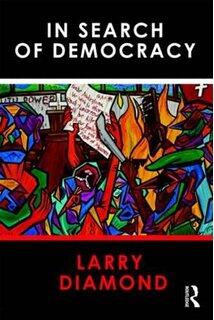
InSearchofDemocracy

This seminar will reflect on my three decades of research seeking to identify the conditions for sustainable democracy.  What have we learned about the conditions that support and undermine democracy?  What is the relationship between democratic quality and democratic persistence?  Is "democratic consolidation" a useful concept?  Can consolidated democracies become "de-consolidated"--and if so, when and why?  Do the current travails of the advanced democracies represent merely ongoing challenges of governance, or are we entering a period of more fundamental challenge to democratic norms and institutions?  Finally, what does all of this imply for the policy agendas of democracy reform and promotion?

Bio:

Image
Larry Diamond hs (2)

Larry Diamond is a senior fellow at the Hoover Institution and at the Freeman Spogli Institute for International Studies. He also serves as the Peter E. Haas Faculty Director of the Haas Center for Public Service at Stanford. For more than six years, he directed FSI’s Center on Democracy, Development, and the Rule of Law, and he continues to lead its programs on Liberation Technology, Arab Reform and Democracy, and Democracy in Taiwan.  He is the founding co-editor of the Journal of Democracy and also serves as Senior Consultant at the International Forum for Democratic Studies of the National Endowment for Democracy. His sixth and most recent book, In Search of Democracy (Routledge, 2016), explores the challenges confronting democracy and democracy promotion, gathering together three decades of his work on democratic development, particularly in Africa and Asia.  He has also edited or co-edited more than 40 books on democratic development around the world.


[[{"fid":"220591","view_mode":"crop_870xauto","fields":{"format":"crop_870xauto","field_file_image_description[und][0][value]":"In Search of Democracy Flyer","field_file_image_alt_text[und][0][value]":"","field_file_image_title_text[und][0][value]":"","field_credit[und][0][value]":"","field_caption[und][0][value]":"In Search of Democracy Flyer","field_related_image_aspect[und][0][value]":"","thumbnails":"crop_870xauto"},"type":"media","attributes":{"width":"870","class":"media-element file-crop-870xauto"}}]]

CDDRL
Stanford University
Encina Hall, C147
616 Jane Stanford Way
Stanford, CA 94305-6055

(650) 724-6448 (650) 723-1928
0
Mosbacher Senior Fellow in Global Democracy at the Freeman Spogli Institute for International Studies
William L. Clayton Senior Fellow at the Hoover Institution
Professor, by courtesy, of Political Science and Sociology
diamond_encina_hall.png MA, PhD

Larry Diamond is the William L. Clayton Senior Fellow at the Hoover Institution, the Mosbacher Senior Fellow in Global Democracy at the Freeman Spogli Institute for International Studies (FSI), and a Bass University Fellow in Undergraduate Education at Stanford University. He is also professor by courtesy of Political Science and Sociology at Stanford, where he lectures and teaches courses on democracy (including an online course on EdX). At the Hoover Institution, he co-leads the Project on Taiwan in the Indo-Pacific Region and participates in the Project on the U.S., China, and the World. At FSI, he is among the core faculty of the Center on Democracy, Development and the Rule of Law, which he directed for six and a half years. He leads FSI’s Israel Studies Program and is a member of the Program on Arab Reform and Development. He also co-leads the Global Digital Policy Incubator, based at FSI’s Cyber Policy Center. He served for 32 years as founding co-editor of the Journal of Democracy.

Diamond’s research focuses on global trends affecting freedom and democracy and on U.S. and international policies to defend and advance democracy. His book, Ill Winds: Saving Democracy from Russian Rage, Chinese Ambition, and American Complacency, analyzes the challenges confronting liberal democracy in the United States and around the world at this potential “hinge in history,” and offers an agenda for strengthening and defending democracy at home and abroad.  A paperback edition with a new preface was released by Penguin in April 2020. His other books include: In Search of Democracy (2016), The Spirit of Democracy (2008), Developing Democracy: Toward Consolidation (1999), Promoting Democracy in the 1990s (1995), and Class, Ethnicity, and Democracy in Nigeria (1989). He has edited or coedited more than fifty books, including China’s Influence and American Interests (2019, with Orville Schell), Silicon Triangle: The United States, China, Taiwan the Global Semiconductor Security (2023, with James O. Ellis Jr. and Orville Schell), and The Troubling State of India’s Democracy (2024, with Sumit Ganguly and Dinsha Mistree).

During 2002–03, Diamond served as a consultant to the US Agency for International Development (USAID) and was a contributing author of its report, Foreign Aid in the National Interest. He has advised and lectured to universities and think tanks around the world, and to the World Bank, the United Nations, the State Department, and other organizations dealing with governance and development. During the first three months of 2004, Diamond served as a senior adviser on governance to the Coalition Provisional Authority in Baghdad. His 2005 book, Squandered Victory: The American Occupation and the Bungled Effort to Bring Democracy to Iraq, was one of the first books to critically analyze America's postwar engagement in Iraq.

Among Diamond’s other edited books are Democracy in Decline?; Democratization and Authoritarianism in the Arab WorldWill China Democratize?; and Liberation Technology: Social Media and the Struggle for Democracy, all edited with Marc F. Plattner; and Politics and Culture in Contemporary Iran, with Abbas Milani. With Juan J. Linz and Seymour Martin Lipset, he edited the series, Democracy in Developing Countries, which helped to shape a new generation of comparative study of democratic development.

Download full-resolution headshot; photo credit: Rod Searcey.

Former Director of the Center on Democracy, Development and the Rule of Law
Faculty Chair, Jan Koum Israel Studies Program
Date Label
Seminars
-

The Program on American Democracy in Comparative Perspective is holding a conference on Democracy and its Discontents on October 8-10 in Budapest, Hungary. The conference, co-hosted with Central European University, will bring together scholars of American and European politics to examine topics such as democratic backsliding, inequality, and money in politics. Saskia Sassen of Columbia University will deliver the keynote address. 

Democracy and its Discontents Agenda
Download pdf
Conferences
Paragraphs

This book evaluates the global status and prospects of democracy, with an emphasis on the quality of democratic institutions and the effectiveness of governance as key conditions for stable democracy. Bringing together a wide range of the author’s work over the past three decades, it advances a framework for assessing the quality of democracy and it analyzes alternative measures of democracy. Drawing on the most recent data from Freedom House, it assesses the global state of democracy and freedom, as of the beginning of 2015, and it explains why the world has been experiencing a mild but now deepening recession of democracy and freedom since 2005.

A major theme of the book across the three decades of the author’s work is the relationship between democratic quality and stability. Democracies break down, Diamond argues, not so much because of economic factors but because of corrupt, inept governance that violates individual rights and the rule of law. The best way to secure democracy is to ensure that democracy is accountable, transparent, genuinely competitive, respectful of individual rights, inclusive of diverse forms and sources of participation, and responsive to the needs and aspirations of ordinary citizens. Viable democracy requires not only a state that can mobilize power to achieve collective goals, but also one that can restrain and punish the abuse of power—a particularly steep challenge for poor countries and those with natural resource wealth.

The book examines these themes both in broad comparative perspective and with a deeper analysis of historical trends and future prospects in Africa and Asia,. Concluding with lessons for sustaining and reforming policies to promote democracy internationally, this book is essential reading for students and scholars interested in democracy, as well as politics and international relations more generally.

All Publications button
1
Publication Type
Books
Publication Date
Journal Publisher
Routledge
Authors
Larry Diamond
News Type
News
Date
Paragraphs

In a recent piece in Stanford News, FSI Senior Fellow Larry Diamond expresses his thoughts on the ebbing of global democratic expansion, highlighting that not all countries have equal opportunities at achieving democracy and that democratic change should be approached multilaterally.

Hero Image
12011158 881826491904431 3526552461415235585 n
Larry Diamond speaks on his new book "In Search of Democracy," at the National Endowment for Democracy (NED) in Washington, D.C. | National Endowment for Democracy
All News button
1
Authors
Larry Diamond
News Type
News
Date
Paragraphs

In an op-ed for The New York TimesLarry Diamond presents a timeline of democracy charting the spread, regression, and sometimes even collapse, of democracy in the last 40 years.

Hero Image
11115641744 973cd026aa k 2
Anti-government protesters wave national flags during a demonstration in Bangkok on November 25, 2013. | AFP Photo / Pornchai Kittiwongsakul
All News button
1
-

Abstract:

Scholars of governance reforms in developing countries often argue that the surest way to address the maladies of the state—corruption, cronyism, inefficiency, and red tape—is swift, dramatic change enacted by political leaders during moments of upheaval. This research finds that a very different type of change is not only possible but also more effective and enduring. A comparison of attempts to increase accountability, transparency, and institutional strength in Brazil and Argentina demonstrates that incremental changes sequenced over time in response to failings in previous policy provide two crucial advantages over wholesale and rapid overhauls of the state: (1) continual adjustments and modifications benefit from learning; and (2) an incremental approach makes reform more durable and helps preserve bureaucratic autonomy.


Speaker Bio:

Image
bersch 1
Katherine Bersch is a Postdoctoral Fellow at the Center for Democracy, Development, and the Rule of Law at Stanford University. Her research is broadly focused on democratic quality in developing countries, with an emphasis on governance reform and state capacity in Latin America. She employs a range of research methods to understand the political conditions under which policies designed to reduce corruption, increase transparency, and enhance accountability are successful and durable. Bersch’s work has been published or is forthcoming in Comparative Politics, the European Journal of Development Research, Information Polity, and in Miguel Centeno, Atul Kohli, and Deborah Yashar's edited volume with Dinsha Mistree, States in the Developing World. Her research on state capacity with Sérgio Praça and Matthew M. Taylor recently won the LAPIS Best Paper Award from the Latin American Studies Association. Bersch received her PhD in Government from the University of Texas at Austin.

Katherine Bersch Postdoctoral Fellow at the Center for Democracy, Development, and the Rule of Law at Stanford University
Seminars
-

Abstract

New President of the United States Institute of Peace, Nancy Lindborg, will discuss the global challenge of fragility and conflict, including a vision of the way forward. Ms. Lindborg’s remarks reflect a lifetime of working in the world’s most fragile regions and a time when the global humanitarian system is at a breaking point, with record numbers of people forcibly displaced globally.   


Speaker Bio

nancy lindborg presidential portrait Nancy Lindborg
Nancy Lindborg has served since February, 2015, as President of the United States Institute of Peace, an independent institution founded by Congress to provide practical solutions for preventing and resolving violent conflict around the world.   

Ms. Lindborg has spent most of her career working in fragile and conflict affected regions around the world.   Prior to joining USIP, she served as the Assistant Administrator for the Bureau for Democracy, Conflict and Humanitarian Assistance (DCHA) at USAID.  From 2010 through early 2015, Ms. Lindborg led USAID teams focused on building resilience and democracy, managing and mitigating conflict and providing urgent humanitarian assistance.   Ms. Lindborg led DCHA teams in response to the ongoing Syria Crisis, the droughts in Sahel and Horn of Africa, the Arab Spring, the Ebola response and numerous other global crises.

Prior to joining USAID, Ms. Lindborg was president of Mercy Corps, where she spent 14 years helping to grow the organization into a globally respected organization known for innovative programs in the most challenging environments.   She started her international career working overseas in Kazakhstan and Nepal. 

Ms. Lindborg has held a number of leadership and board positions including serving as co-president of the Board of Directors for the U.S. Global Leadership Coalition; co-founder and board member of the National Committee on North Korea; and chair of the Sphere Management Committee. She is a member of Council on Foreign Relations.

She holds a B.A and M.A. in English Literature from Stanford University and an M.A. in Public Administration from the John F. Kennedy School of Government at Harvard University.

Nancy Lindborg President of the United States Institute of Peace President of the United States Institute of Peace
Seminars
-

Abstract:

This research explores the conditions under which government actors and citizens recognize and incorporate the interests of others in their policy decisions and actions. To do so requires a change in beliefs about whose interests are intertwined and what it is possible and appropriate to do as a polity. This in turn demands changes in governance arrangements and, ultimately, norms of behavior.


Speaker Bio:

Image
margaret levi
Director of Center for Advanced Study in Behavioral Sciences (CASBS) and Professor of Political Science, Stanford. President, American Political Science Association, 2004-5. Member, National Academy of Sciences. Many publications include: Of Rule and Revenue (1988), and In the Interest of Others, with John Ahlquist (2013).


Margaret Levi Professor of Political Science, Stanford University Professor of Political Science, Stanford University
Seminars
Subscribe to The Americas