


CDDRL Senior Honors Program Information Session
-
This event is open to Stanford undergraduate students only.
The Center on Democracy, Development, and the Rule of Law (CDDRL) is currently accepting applications from eligible juniors due February 12, 2016 who are interested in writing their senior thesis on a subject touching upon democracy, economic development, and rule of law (DDRL) from any university department. CDDRL faculty and current honors students will be present to discuss the program and answer any questions.
For more information on the CDDRL Senior Honors Program, please click here.
Image

Stephen J. Stedman
CDDRL
Encina Hall, C152
616 Jane Stanford Way
Stanford, CA 94305-6055
0
sstedman@stanford.edu
Senior Fellow at the Freeman Spogli Institute for International Studies
Professor, by courtesy, of Political Science
Stephen Stedman is a Senior Fellow at the Freeman Spogli Institute for International Studies (FSI) and the Center on Democracy, Development and the Rule of Law (CDDRL), an affiliated faculty member at CISAC, and professor of political science (by courtesy) at Stanford University. He is director of CDDRL's Fisher Family Honors Program in Democracy, Development and Rule of Law, and will be faculty director of the Program on International Relations in the School of Humanities and Sciences effective Fall 2025.
In 2011-12 Professor Stedman served as the Director for the Global Commission on Elections, Democracy, and Security, a body of eminent persons tasked with developing recommendations on promoting and protecting the integrity of elections and international electoral assistance. The Commission is a joint project of the Kofi Annan Foundation and International IDEA, an intergovernmental organization that works on international democracy and electoral assistance.
In 2003-04 Professor Stedman was Research Director of the United Nations High-level Panel on Threats, Challenges and Change and was a principal drafter of the Panel’s report, A More Secure World: Our Shared Responsibility.
In 2005 he served as Assistant Secretary-General and Special Advisor to the Secretary- General of the United Nations, with responsibility for working with governments to adopt the Panel’s recommendations for strengthening collective security and for implementing changes within the United Nations Secretariat, including the creation of a Peacebuilding Support Office, a Counter Terrorism Task Force, and a Policy Committee to act as a cabinet to the Secretary-General.
His most recent book, with Bruce Jones and Carlos Pascual, is Power and Responsibility: Creating International Order in an Era of Transnational Threats (Washington DC: Brookings Institution, 2009).
Director, Fisher Family Honors Program in Democracy, Development and Rule of Law
Director, Program in International Relations
Affiliated faculty at the Center for International Security and Cooperation
Hide publication sections
Off
Francis Fukuyama
Encina Hall, C148
616 Jane Stanford Way
Stanford, CA 94305
0
f.fukuyama@stanford.edu
Olivier Nomellini Senior Fellow at the Freeman Spogli Institute for International Studies
Director of the Ford Dorsey Master's in International Policy
Research Affiliate at The Europe Center
Professor by Courtesy, Department of Political Science
Francis Fukuyama is the Olivier Nomellini Senior Fellow at Stanford University's Freeman Spogli Institute for International Studies (FSI), and a faculty member of FSI's Center on Democracy, Development and the Rule of Law (CDDRL). He is also Director of Stanford's Ford Dorsey Master's in International Policy, and a professor (by courtesy) of Political Science.
Dr. Fukuyama has written widely on issues in development and international politics. His 1992 book, The End of History and the Last Man, has appeared in over twenty foreign editions. His book In the Realm of the Last Man: A Memoir will be published in fall 2026.
Francis Fukuyama received his B.A. from Cornell University in classics, and his Ph.D. from Harvard in Political Science. He was a member of the Political Science Department of the RAND Corporation, and of the Policy Planning Staff of the US Department of State. From 1996-2000 he was Omer L. and Nancy Hirst Professor of Public Policy at the School of Public Policy at George Mason University, and from 2001-2010 he was Bernard L. Schwartz Professor of International Political Economy at the Paul H. Nitze School of Advanced International Studies, Johns Hopkins University. He served as a member of the President’s Council on Bioethics from 2001-2004. He is editor-in-chief of American Purpose, an online journal.
Dr. Fukuyama holds honorary doctorates from Connecticut College, Doane College, Doshisha University (Japan), Kansai University (Japan), Aarhus University (Denmark), the Pardee Rand Graduate School, and Adam Mickiewicz University (Poland). He is a non-resident fellow at the Carnegie Endowment for International Peace. He is a member of the Board of Trustees of the Rand Corporation, the Board of Trustees of Freedom House, and the Board of the Volcker Alliance. He is a fellow of the National Academy for Public Administration, a member of the American Political Science Association, and of the Council on Foreign Relations. He is married to Laura Holmgren and has three children.
(October 2025)
Global Populisms
A new project examining the global surge in populist movements and what it means for established democratic rules and institutions.
Read More
CV
Document
francis_fukuyama_cv_april_2024.pdf
(223.42 KB)
Hide publication sections
Off
Brett Carter
0
blcarter@stanford.edu
brett_carter_2025.jpg
Brett Carter is an Associate Professor in the Department of Political Science and International Relations at the University of Southern California, a Hoover Fellow at Stanford University's Hoover Institution, and a Faculty Affiliate at Stanford's Center on Democracy, Development and the Rule of Law. He received a Ph.D. from Harvard University, where he was a fellow at the Harvard Academy for International and Area Studies.
Carter studies politics in the world's autocracies. His first book, Propaganda in Autocracies: Institutions, Information, and the Politics of Belief (Cambridge University Press), draws on the largest archive of state propaganda ever assembled — encompassing over eight million newspaper articles in six languages from nearly 60 countries around the world — to show how political institutions shape the propaganda strategies of repressive governments. It received the William Riker Prize for the Best Book in Political Economy, the International Journal of Press/Politics Hazel Gaudet-Erskine Best Book Award, Honorable Mention for the Gregory Luebbert Award for the Best Book in Comparative Politics, and Honorable Mention for the APSA Democracy & Autocracy Section's Best Book Award.
His second book, in progress, shows how politics in Africa’s autocracies changed after the fall of the Berlin Wall and how a new era of geopolitical competition — marked by the rise of China and the resurgence of Russia — is changing them again.
Carter’s other work has appeared in the Journal of Politics, British Journal of Political Science, Perspectives on Politics, Journal of Conflict Resolution, Security Studies, China Quarterly, Journal of Democracy, and Foreign Affairs, among others. His work has been featured by The New York Times, The Economist, The National Interest, and NPR’s Radiolab.
Hoover Fellow
CDDRL Affiliated Scholar
CDDRL Visiting Scholar, 2020-2021
Hide publication sections
Off
Didi Kuo
Encina Hall, C150
616 Jane Stanford Way
Stanford, CA 94305
0
jdkuo@stanford.edu
Center Fellow, Freeman Spogli Institute for International Studies
Didi Kuo is a Center Fellow at the Freeman Spogli Institute for International Studies (FSI) at Stanford University. She is a scholar of comparative politics with a focus on democratization, corruption and clientelism, political parties and institutions, and political reform. She is the author of The Great Retreat: How Political Parties Should Behave and Why They Don’t (Oxford University Press) and Clientelism, Capitalism, and Democracy: the rise of programmatic politics in the United States and Britain (Cambridge University Press, 2018).
She has been at Stanford since 2013 as the manager of the Program on American Democracy in Comparative Perspective and is co-director of the Fisher Family Honors Program at CDDRL. She was an Eric and Wendy Schmidt Fellow at New America and is a non-resident fellow with the Carnegie Endowment for International Peace. She received a PhD in political science from Harvard University, an MSc in Economic and Social History from Oxford University, where she studied as a Marshall Scholar, and a BA from Emory University.
Hide publication sections
Off
Crafting Democratic Transitions: Learning from Experience
-
Abstract:
Drawing upon personal interviews Abraham Lowenthal and Sergio Bitar of Chile conducted with 13 former presidents and prime ministers from 9 countries in Africa, Asia, Europe and Latin America who played leading roles in managing successful and unreversed transitions from authoritarian rule toward democratic governance, Lowenthal will discuss recurrent challenges that democratic transitions pose, and what can be learned from prior experiences. He will introduce and provide background and highlights from Democratic Transitions:Conversations with World Leaders,recently published by Johns Hopkins University Press and International IDEA.The book will appear this semester in Arabic, Spanish, French, Dutch and Burmese.
Speaker Bio:
Image

Abraham Lowenthal
Professor Emeritus of International Relations, University of Southern California
Seminars
Program on Human Rights
The Program on Human Rights (PHR) at Stanford’s Center on Democracy, Development and the Rule of Law (CDDRL) will be phasing out its program in 2015 with the retirement of PHR’s Director Helen Stacy.
The Great Surge: The Ascent of the Developing World
-
** Note room changed to CISAC Central**
Abstract:
We live at a time of the greatest progress amongst the global poor in human history. Never before have so many people in so many developing countries made so much progress in reducing poverty, improving health, increasing incomes, expanding health, reducing conflict, and encouraging democracy. The Great Surge tells the story of this unprecedented progress over the last two decades, why it happened, and what it may portend for the future.
“A brilliant new book” ~ Francis Fukuyama
“A stunning, wise, and deeply hopeful book that anyone concerned about global human development must read.”~ Larry Diamond
“Powerful, lucid, and revelatory” ~ George Soros
“A terrific book” ~ Nicholas Kristof
“With his typical care and detail, Steven Radelet describes humanity’s greatest hits over the last twenty years—never have we lived in a time when so many are doing so well” ~ Bono
Speaker Bio:
Image
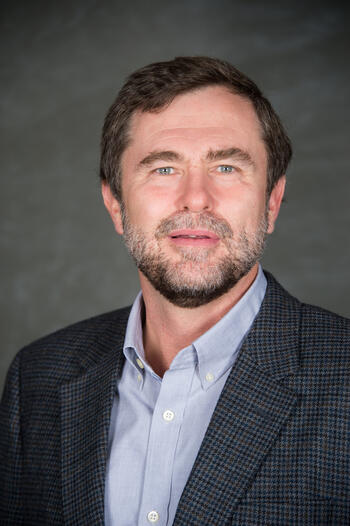
Steven Radelet
Director, Global Human Development Program at Georgetown University
Seminars
Institutional Legacies and the End of Egypt’s Second Republic
-
Abstract:
The coup of July 3, 2013 brought a decisive end to Egypt’s brief experiment with elected civilian governance that followed the downfall of President Hosni Mubarak in February 2011. Early attempts to understand the downfall of the “Second Egyptian Republic” focused largely around the events that immediately preceded the ouster of President Mohamed Morsi. This presentation adds historical depth to these discussions by analyzing the role of institutional legacies in contributing to that outcome. Specifically, decades-old state interventions have structured Egypt’s political field in ways that encourage defections from pacted transitions in the present moment.
Speaker Bio:
Hesham Sallam is a research associate at CDDRL and serves as the associate director of the Program on Arab Reform and Democracy. He is also a co-editor of Jadaliyya ezine and a former program specialist at the U.S. Institute of Peace. His research focuses on Islamist movements and the politics of economic reform in the Arab World. Sallam’s research has previously received the support of the Social Science Research Council and the U.S. Institute of Peace. Past institutional affiliations include Middle East Institute, Asharq Al-Awsat, and the World Security Institute. He is editor of Egypt's Parliamentary Elections 2011-2012: A Critical Guide to a Changing Political Arena (Tadween Publishing, 2013). Sallam received a Ph.D. in government (2015) and an M.A. in Arab studies (2006) from Georgetown University, and a B.A. in political science from the University of Pittsburgh (2003).Image

Hesham Sallam
Associate Director, Program on Arab Reform and Democracy
Seminars
How New is the “New” National Front?
-
*Please note room changed to CISAC central*
Abstract:
Image

Since she took over the National Front in 2011, Marine Le Pen has carried the far right party to first place, winning an unprecedented 30% of the votes in France’s latest December 2015 elections. What does she say that resonates with French voters so strongly? And how did she manage to turn the once infamous “FN” into an almost mainstream party that claims to be the last champion of French republican values?
Using text mining software and textual analyses, Cécile Alduy has ciphered more than 500 speeches and texts by Jean-Marie and Marine Le Pen to pinpoint exactly how, and on what topics, the daughter’s discourse differs from that of her father.
In this talk, literary studies meet digital humanities and political science to crack the new National Front rhetorical code and uncover the deeper ideological and mythological structures beyond the stylistic polishing.
Speaker Bio:
Cécile Alduy is Associate Professor of French literature and culture at Stanford University. She is the author of Marine Le Pen prise aux mots. Décryptage du nouveau discours frontiste (Seuil, 2015) and Politique des “Amours” (Droz, 2007) and co-editor of the special issue “The Charlie Hebdo Attacks and their Aftermath” for Occasion, a Stanford University online peer-reviewed publication. A specialist of the National Front and French political discourse, she is a contributor to Politico, The Nation, The Atlantic, The New Yorker, Al Jazeera America, The Boston Review, The Los Angeles Review of Books, Rue89 and Le Monde.Image
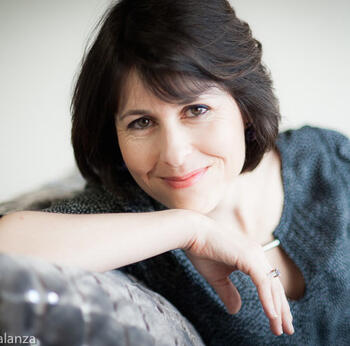
Cécile Alduy
Associate Professor, Stanford University
Seminars
Election Ethics: Fair Play & Due Process
-
Abstract:
Electoral competition, like athletic competition, requires its own norms of fair play. While the rules of the game, and the institutional umpire to enforce those rules, are important components for achieving the goal that the competition be fair, they do not suffice. The participants themselves must have their own standards of fair play apart from the rules and the referee. This need is particularly acute with respect to negative campaign ads, since the First Amendment bars the government from umpiring the fairness of those ads. But the same problem applies to other aspects of electoral competition, including compliance with campaign finance rules. What are these norms of fair electoral competition? Are they only intuitive, or can they be systematized? More specifically, insofar as incumbent candidates are officeholders, does due process constrain the use of their power to attain an unfair advantage in their race for reelection?
Speaker Bio:
Edward Foley directs Election Law @ Moritz at Ohio State’s law school, where he also holds the Ebersold Chair in Constitutional Law. His book Ballot Ballots: The History of Disputed Elections in the United States, published by Oxford University Press, was available as of December 2015. Ned also serves as the reporter for the American Law Institute’s Election Law Project, which is developing nonpartisan rules for the resolution of disputed elections. (The American Law Institute is the well-respected professional society responsible for the Restatements of Law and the Model Penal Code, among many other projects.) While Ned has special expertise on the topics of recounts, he is conversant in all topics of election law, including redistricting and campaign finance, and recently co-authored a casebook Election Law and Litigation: The Judicial Regulation of Politics (Aspen 2014), which covers all aspects of election law. He and his casebook co-authors also have a contract with Oxford University Press to write a treatise on election law—remarkably the first of its kind in the United States in over a century. He is also a co-author of From Registration to Recounts: The Ecosystems of Five Midwestern States (2007).Image
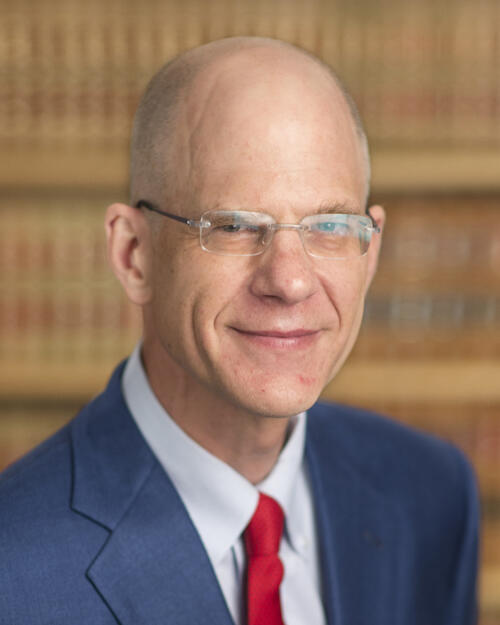
Edward B. Foley
The Ohio State University Moritz College of Law
Seminars
Diamond comments on US response to terrorist threats
News Type
News
Date
Paragraphs
A day after President Obama's address on the San Bernardino shootings, FSI Senior Fellow Larry Diamond speaks with Michael Krasny of NPR News on the U.S. response to global terrorist threats. In addition to a unified, international coalition, Diamond believes one of the keys to defeating ISIS lies with empowerment of the people of Iraq and Syria, addressing the need for political change in the region. Diamond was accompanied by Jessica Stern, research professor at Boston University and Shibley Telhami, senior fellow at the Center for Middle East Policy at the Brookings Institution.
Hero Image

All News button
1
The Case for Compulsory Voting
-
Abstract:
Compulsory voting reinforces the distinctive and valuable role that elections play in contemporary democracy. Some scholars have suggested that mandatory voting laws can improve government responsiveness to members of poor and marginalized groups who are less likely to vote. Critics of compulsory voting object that citizens can participate in a wide variety of ways; voting is not important enough to justify forcing people to do it. These critics neglect the importance of voting’s particular role in contemporary democratic practice, though. The case for compulsory voting rests on an implicit, but widely shared, understanding of elections as special moments of mass participation that manifest the equal political authority of all citizens. The most prominent objections to mandatory voting fail to appreciate this distinctive role for voting and the way it is embedded within a broader democratic framework.
Speaker Bio:
Image

Emilee is an assistant professor of Political Science at Stanford. Her current research project examines the distinctive value of voting in contemporary democratic practice, and its significance for electoral reform and the ethics of participation.
Emilee Chapman
Assistant Professor of Political Science at Stanford
Seminars