The Center on Democracy, Development, and the Rule of Law (CDDRL) at Stanford University is pleased to announce the 2018 class of undergraduate senior honors students.
Honors students spend three quarters participating in research seminars to refine their theses, while working under the supervision of their thesis advisors. In September, the class travels to Washington, D.C. for a weeklong Honors College, where they visit leading government and development organizations to witness policymaking in practice and to consult with key decision-makers.
Please join CDDRL in congratulating the 2018 Fisher Family CDDRL Honors students and welcoming them to the Center.
Below are profiles of the 14 honors students highlighting their academic interests, why they applied to CDDRL, and some fun facts.

Suraj Bulchand
Major: Management Science and Engineering
Hometown: Kuala Lumpur, Malaysia
Tentative Thesis Title: Technology and Political Influence: Exploring the Impact of Technology on Support for Singapore’s Government
Why is this topic important to the field of democracy, development, and the rule of law? Singapore, among the world’s richest countries never to have changed its ruling party, is an anomaly. In recent times, the Little Red Dot has been forced to navigate the choppy waters of a new global political climate. Access to technology and increased globalization have prompted the proliferation of paradigm-shifting ideologies. The internet, for example, sometimes represents a challenge for Singapore’s government. Some question whether access to the internet in Singapore should be managed, and whether this will have cascading political effects. Others question whether the increased spread of individual political and social views online will lead to shifts in the way Singaporeans think about their government. Understanding technology’s role in shaping Singaporeans’ political stances and views on democracy is important in projecting the effects any variations in these can have on Singapore’s economic development and political atmosphere.
What attracted you to the CDDRL undergraduate honors program? The CDDRL honors program grants me the opportunity to effectively tackle fundamental questions about a shifting political landscape that has development implications for Singapore. The program would also enable me to expand my abilities as a researcher and garner diverse opinions on democracy, development and the rule of law from professors and peers in the honors cohort.
Future aspirations post-Stanford: After my undergraduate career, I plan to complete a coterminal Master's degree in Management Science and Engineering. In the future, I hope to work at the intersection of strategy, technology and policy.
What are you summer research plans? This summer, I will be interning with the Corporate Strategy and Development team of an asset management firm. Alongside this, I plan to break ground on research for my thesis by dissecting available online data, reading relevant literature, conducting interviews and testing my hypotheses.
A fun fact about yourself: I discovered a love for running while serving in the Singapore military and hope to complete an ultramarathon someday.

Marin Callaway
Major: International Relations; Spanish (minor)
Hometown: Encinitas, CA
Tentative Thesis Title: Land, Power, and Changing Borders: California After the Treaty of Guadalupe Hidalgo
Why is this topic important to the field of democracy, development, and the rule of law? My topic relates to rule of law and democracy by examining what happens to non-citizens who become incorporated into a new country through a changed border and how the country treats this minority. I plan on touching on this broader issue by studying in detail the case of the Mexican Land Cession in the 19th century. How were Mexican citizens and other non-citizens in California treated after the Treaty and specifically what happened to their land? What is the legacy of policies that stripped many of their land and power?
What attracted you to the CDDRL undergraduate honors program? I was drawn to the collaborative and interdisciplinary nature of the CDDRL program. I am excited to learn from my peers' different perspectives and work together.
Future aspirations post-Stanford: Post-Stanford, I hope to attend law school and possibly focus on international or immigration law. Ultimately, I would like to pursue a career in public service related to policy and government.
A fun fact about yourself: When I was a kid, I wanted to be an architect. I was constantly drawing floor plans and asked for a subscription to Architectural Digest for Hanukah when I was eight. I still love going to random open houses!

Qitong (Thomas) Cao
Major: Political Science; Computer Science (minor); MS&E (Computational Social Science) (coterm)
Hometown: Nanjing, China
Tentative Thesis Title: The Internet Maneuvers of the Chinese Government
Why is this topic important to the field of democracy, development, and the rule of law? While there have been many studies on the internet and social media’s effects on promoting democratization, research on the internet maneuvers of a strong state has been a relatively recent development. In the case of China, in particular, the academic community have made tremendous progress in understanding what exactly the government has been doing, but so far, little research has focused on the strategic level in explaining why it is doing so from a governance perspective. In this sense, my research project seeks to provide a preliminary step toward filling this gap
What attracted you to the CDDRL undergraduate honors program? My talks with Professors Francis Fukuyama and Larry Diamond since I just got into Stanford.
Future aspirations post-Stanford: I would like to pursue a PhD in political science focusing on methods and the politics of internet/information.
What are you summer research plans? I will be interning at Google, using social network analysis, natural language processing, and unsurprised learning to analyze social media dynamics.
A fun fact about yourself: I learned English from reading Harry Potter!

Trey Hale
Major: International Relations; Music
Hometown: Forsyth, Missouri
Tentative Thesis Title: Post Apartheid South Africa's Restructured Health Care System and the Political Oversight of Community Health Workers
Why is this topic important to the field of democracy, development, and the rule of law? In transitional states such as South Africa in the early 1990s, state health care systems are often in a state of flux. In 1994, the ANC-led coalition chose not to include community health workers as part of the government's primary health care system. My historical analysis will place this political decision by the ANC in conversation with current efforts by the South African government to employ the thousands of community health workers under the Department of Health's umbrella. This research project will hopefully shed light on the political factors present in transitional states as they attempt to restructure their health care systems. It will also highlight the importance of community health workers in settings with high burdens of infectious diseases (i.e. HIV/AIDS).
What attracted you to the CDDRL undergraduate honors program? I was first attracted to the CDDRL honors program because of the interdisciplinary nature of the cohort. Everyone in the program has a different academic background, and it is incredibly useful to have so many perspectives in the room when discussing our research topics. Additionally, I saw the CDDRL honors program as an opportunity to return to the work I had started with community health workers in Cape Town where I studied abroad for six months.
Future aspirations post-Stanford: After undergrad, I hope to pursue a Master of Public Health and spend some time working abroad before attending law school. At the moment, a career in health care law seems most exciting.
What are you summer research plans? I will be interning at the Center for Democratic Development in Accra, Ghana for most of the summer. In late August, I will be traveling to Cape Town to conduct field research for my honors thesis with support from the Freeman Spogli Institute.
A fun fact about yourself: When I was ten years old, a vampire bat bit me on the back of the neck and I had to get the rabies vaccine.

Claire Howlett
Major: Symbolic Systems
Hometown: Stamford, Connecticut
Tentative Thesis Title: Predictors of Acute Malnutrition Incidence and Severity in Southern Malawi
Why is this topic important to the field of democracy, development, and the rule of law? Nearly half of Malawian children under five are malnourished, and this condition has a huge impact on economic and social development nationwide. A better understanding of malnutrition could improve how NGOs and policymakers approach this issue and add to the global body of literature on malnutrition and food insecurity.
What attracted you to the CDDRL undergraduate honors program? I was drawn to the CDDRL honors program because of its interdisciplinary nature, which allows students to combine quantitative and qualitative analysis to explore issues in development. I was excited by the prospect of working closely with the cohort and awesome faculty associated with the program.
Future aspirations post-Stanford: I hope to explore social and environmental determinants of health disparities in resource-poor settings through work and (maybe eventually) graduate school.
What are you summer research plans? I will be interning at a NGO that facilitates women's political participation in post-conflict societies. I will also conduct preliminary research for my thesis.
A fun fact about yourself: I love to run and used to be on the Stanford cross country/track team -- now I sometimes do trail races!
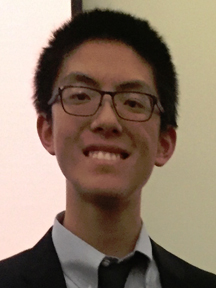
Steven Jiang
Major: Mathematics
Hometown: Sugar Land, TX
Tentative Thesis Title: A Comparative Evaluation of Property Rights Indices
Why is this topic important to the field of democracy, development, and the rule of law? This project evaluates different property rights indices by their correlation with measures of democracy, rule of law, and development.
What attracted you to the CDDRL undergraduate honors program? It's a great opportunity to do extended research.
What are you summer research plans? Some travel and some research work.
A fun fact about yourself: I biked from here to Monterey without knowing how to shift gears.
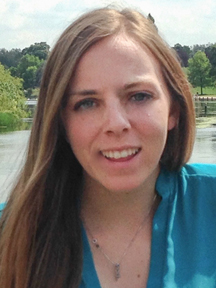
Alexis Kallen
Major: Political Science; Feminist, Gender, and Sexuality Studies; Human Rights (minor); Spanish (minor)
Hometown: Camarillo, CA
Tentative Thesis Title: Sexual Assault in the Face of Genocide: Exploring Burundian Refugee Journeys to Rwanda and Tanzania
Why is this topic important to the field of democracy, development, and the rule of law? Currently, I think the general public is largely unaware of the use of sexual assault as a tool of war against Burundian women. I would like to shed light on this human rights issue and examine why international law is seemingly completely failing in Burundi. I think that this topic directly covers democracy, development, and the rule of Law, as I will examine the interaction between governmental, regional, and international legal systems to understand why these human rights abuses are permitted to occur.
What attracted you to the CDDRL undergraduate honors program? CDDRL was specialized in development and law with an international focus especially, which was of great interest to me. I liked that it is an interdisciplinary program, and offers great mentorship from FSI faculty as well as abundant resources to help me write my thesis, such as the preparation class my cohort is taking this spring.
Future aspirations post-Stanford: I would like to get a dual JD/ MPP degree and practice international human rights law in the future. I am especially interested in pursuing cases dealing with war crimes against women and girls.
What are you summer research plans? I will be doing research in refugee camps in Rwanda and Tanzania at the end of the summer.
A fun fact about yourself: I have a bit of an obsession with the Kennedy family and can be found analyzing Kennedy conspiracy theories in my spare time.

Jason Li
Major: Human Biology
Hometown: Hacienda Heights, CA
Tentative Thesis Title: Controlling Chronic Disease in China: Evaluating National Pilot Programs for Evidence-Based Policy Improvement
Why is this topic important to the field of democracy, development, and the rule of law? As global health advances have greatly decreased mortality in the developing world, low and middle income countries are now tackling the largest emerging global health threat of this century—non-communicable diseases. Global health is now entering an unprecedented stage: for the first time in the world, child mortality will be lower than adult mortality and more people will be obese than malnourished. After rapid economic development and successfully and aggressively controlling infectious diseases, China has now been called the “microcosm” of this global health transition. Grappling with an aging population and—with it—a substantial and growing NCD burden, China’s strategies and health system response will serve as a representative research opportunity for how other countries should address these issues as they develop and go through similar epidemiological transitions
What attracted you to the CDDRL undergraduate honors program? Interested in global health issues, I’ve found myself craving different perspectives necessitated by such a multidisciplinary field. How do policy strategies, development principles, governance and community dynamics, and cultures and histories translate into public health advances? The CDDRL honors program brings such a variety of skills and stories to the table, which I know will complicate and enrich my research and personal and professional goals.
Future aspirations post-Stanford: After graduating, I hope to take a year to work on global health policy issues and eventually apply to medical school.
What are you summer research plans? I will first be working with the Stanford Rural Education Action Plan to conduct field research on rural children’s health and education in China. I will then come back to Stanford to work on my honors thesis research.
A fun fact about yourself: I used to be an avid fan fiction writer for trashy young adult novels.

Riya Mehta
Major: Earth Systems; Spanish (minor)
Hometown: Overland Park, Kansas
Tentative Thesis Title: The Power of Land Tenure: The Food Security Implications of Increasing Women’s Access to Land Rights
Why is this topic important to the field of democracy, development, and the rule of law? In more than half of the countries on this planet, laws or customs challenge women’s ownership and access to land. Yet, more than 400 million women across the planet work in agriculture. The topic I have proposed is important to the field of democracy, development, and the rule of the law because it expands on existing research focused on gender-sensitive land tenure reform. A number of studies have begun to link secure land rights for women to increased agricultural productivity and food security. Moreover, existing data suggest that strengthening women’s land rights also leads to more sustainable resource use. This project attempts to discover the ways in which the world’s most food insecure regions must reexamine and restructure their existing land tenure laws—both customary and statutory—so that they have a tangible and positive impact on women farmers, and by proxy, the well-being of their communities and the sustainability of the planet’s natural resources.
What attracted you to the CDDRL undergraduate honors program? As an Earth Systems major, I have benefitted from both my “breadth” requirements that span classes in chemistry, biology, environmental science, and economics, and my “depth” requirements, which have allowed me to specifically concentrate on the topic of global food security, through courses such as Food and Security, Feeding Nine Billion and World Food Economy. My academic career thus far has emphasized to me the importance of having both general and specialized knowledge, and I believe the nature of the CDDRL program will allow me to further develop both. Particularly, as I develop my own specific research question starting this spring in the CDDRL research seminar, I will be able to engage with and learn from the other students in my cohort, each of whom is pursuing a question that falls under the broad banner of “democracy, development, and the rule of the law.” Later, as I develop my own thesis and become an expert on my specific topic, I will be able to seek out mentors and fellow students within CDDRL to help me reflect on and assess my research and its broader implications.
Future aspirations post-Stanford: After graduating from Stanford, I hope to gain some work experience and then go on to graduate school. I am considering both law school and a number of PhD programs that would allow me to delve deeper into the emerging field of food security.
What are you summer research plans? This summer, I will be working at the Landesa Center for Women’s Land Rights in Seattle, Washington.
A fun fact about yourself: I am a certified yoga instructor, and I enjoy waking up very early in the morning to practice and/or teach yoga.

Lucienne Oyer
Major: Economics
Hometown: Menlo Park, CA
Tentative Thesis Title: Energy Infrastructure Outcomes in Ghana: Comparative Analysis of Chinese & Western Investments
Why is this topic important to the field of democracy, development, and the rule of law? Infrastructure is a major bottleneck for development and countless sources have identified the large returns poor countries can generate by investing in major infrastructure projects. My topic explores a poorly understood trend in international infrastructure development: the rapid emergence of China as a development lender. Developing countries are increasingly choosing Chinese policy bank loans, as they offer attractive financing packages with few strings attached. The Chinese infrastructure building model differs significantly from the one used by traditional multi-lateral development banks, and thus it is pertinent to understand if the differing approaches effect the final productive outcomes of the infrastructure that is built. This knowledge can help inform the decisions of developing countries seeking finance for infrastructure development.
What attracted you to the CDDRL undergraduate honors program? The CDDRL undergraduate honors program offers a unique opportunity to work with students and faculty across disciplines, which I believe will help me view my research topic, approach, and analysis from a wide range of perspectives. I am also excited about the strong network of peer support that I will receive as a member of the honors cohort.
Future aspirations post-Stanford: I would like to work in the field of international development, though I am not yet sure in what capacity. I am particularly excited by infrastructure development, so I hope that I will be able to pursue this interest in my career and future education.
What are you summer research plans? I will travel to Ghana to conduct field research, funded through an FSI Large Research Grant. I will base my research in Accra, and also visit energy generation plants throughout the country to interview key stakeholders and gather data about the plants' operation and production patterns.
A fun fact about yourself: I love to ski and during winter quarter you can find me in Tahoe, studying Chinese vocabulary on the chair lift between runs.

Kelsey Page
Major: Political Science; Spanish (minor)
Hometown: Saratoga, CA
Tentative Thesis Title: Mercosur: Testing the trade union's potential for democratic and economic development amidst changing tides in the international system
Why is this topic important to the field of democracy, development, and the rule of law? Examining and understanding the role of regional trade blocs, like Mercosur, in the South America region and beyond offers valuable insights into the role of international organizations in democratic and economic development on a larger scale. Looking at the practices and policies that have led to credible enforcement powers for the union and mutually beneficial policies for member states are key to analyzing its impact on democratic development in the region and its relations to other regions. Through my thesis, I plan to research more deeply how Mercosur is or is not promoting democracy, development, and the rule of Law and apply this research to answering specific questions about its capacity to do so in the future.
What attracted you to the CDDRL undergraduate honors program? The CDDRL Honors Thesis program not only offers a unique opportunity to develop a thesis as a undergraduate, but also to do so with an interdisciplinary approach that has an emphasis on mentorship, peer-to-peer feedback, and meaningful conversations with top policy makers and government officials. Through CDDRL, I could puruse a topic that combines my interests in South America, democratic development, and economics with the support of the CDDRL cohort and faculty as well.
Future aspirations post-Stanford: After Stanford, I hope to be able to continue to pursue my interest in international political economy and development in some manner, whether it be business, field work, or graduate school. I am looking forward to working on my thesis to give me more insight as to how I can best contribute to this field.
What are you summer research plans? Thanks to the FSI Summer Research Grants program, I will be traveling to Uruguay, Argentina, and Brazil to interview relevant Mercosur stakeholders at the end of the summer. Then, I will head to DC a few days early before the CDDRL trip to meet other interviewees at embassies, government agencies, and think tanks.
A fun fact about yourself: I was a competitive Irish dancer growing up; I wore the wigs and dresses and everything!

Zoe Savellos
Major: Political Science; Creative Writing (Minor)
Hometown: Austin, TX
Tentative Thesis Title: Teaching Peace? : Education Policy’s Role in Post-Conflict Reconciliation in Cyprus
Why is this topic important to the field of democracy, development, and the rule of law? School isn’t just a place for learning formulas and facts—this is the place where we guide new generations towards learning what citizenship is and what it means to them. Post-conflict reconciliation studies haven’t focused enough on the role of education policy in bringing together fractured communities. Hopefully my thesis will help illuminate how education policy can be better incorporated into post-conflict reconciliation efforts.
What attracted you to the CDDRL undergraduate honors program? The CDDRL program strength is in its interdisciplinary approach. I’ve been interested in international development for a long time, so I knew that I wanted to write a thesis with the CDDRL, but it’s commitment to promoting diverse perspective and opinions is what really drew me to the program
Future aspirations post-Stanford: After Stanford, I’m planning on teaching for a year or two abroad. I’d love to get an MPP and work in global development policy.
What are you summer research plans? This summer, I’ll be doing some background research while interning in the Bay Area. In August, I’ll be traveling to Cyprus to gather more data and conduct interviews!
A fun fact about yourself: I’ve broken both of my pinky toes multiple times and I’ve accidentally stepped on a sea urchin!

Benjamin Chang Sorensen
Major: Political Science; Statistics (minor); History (minor)
Hometown: Stanford, California
Tentative Thesis Title: Large-scale political leaks and American democratic institutions
Why is this topic important to the field of democracy, development, and the rule of law? We live in an age of "leaktivism," where individual actors and organizations can release large amounts of sensitive or damaging information to the public in order to advance an agenda. Due to the recent prominence of cases like Edward Snowden's and Chelsea Manning's, the debate around the appropriateness of large-scale leaks has tended to center around issues of security. But during the 2016 U.S. election cycle, when leaks were central to the campaign narratives of both candidates, it became clear that leaks could have an impact on our democratic institutions, as well. My thesis will explore the ways in which politicians, members of the media, and the public interact with these leaks, which look to become a persistent feature of American democracy.
What attracted you to the CDDRL undergraduate honors program? I've known since I arrived at Stanford how helpful and kind the faculty and staff at CDDRL are, and while writing a thesis will certainly be challenging, I'm confident that I'll be supported at every step of the way. I'm also looking forward to working with my cohort, whose diversity of interests and expertise will certainly provide a powerful way to learn more about democracy, development, and the rule of law.
Future aspirations post-Stanford: I'd like to keep working on issues in democracy, both at home and abroad, either by working in politics, at an NGO, or as a writer. I'd also like to travel and spend time with my family before possibly heading off to graduate school.
What are you summer research plans? I'll be working for the National Endowment for Democracy in Washington, D.C., and plan to take full-advantage of my environment by talking to experts in the fields of democratic theory. I also hope to interview people involved in American politics and the media who might help me hone my question.
A fun fact about yourself: After moving to California before the 5th grade, my wardrobe consisted entirely of 15 or 20 different Boston Red Sox shirts. I refused to wear anything else for two years, somehow without shame.

Katie Welgan
Major: Chemistry; Anthropology (minor)
Hometown: Portland, Oregon
Tentative Thesis Title: Health Insurance for Indigenous Oaxacans: Changes in Obstetric Care Provider Preference After Seguro Popular
Why is this topic important to the field of democracy, development, and the rule of law? Prior to 2013, access to health insurance in Mexico remained largely limited to laborers within the formal economy, leaving low-income families with informal employment to choose between visiting Department of Health clinics of varying quality, paying large fractions of their income for private care, or forgoing formal medical treatment altogether. A specific goal of Seguro Popular was to increase visits to government clinics for pregnancy care services, particularly in low-income indigenous populations. However, in Latin America, government-sponsored public health programming may function differently in indigenous populations due to cultural barriers and the history of government- indigenous conflict. Because of this potential for discrepancy in function, an understanding of the influence of insurance programs on health decision-making specifically in indigenous populations is important for both the evaluation of program success and the development of future, universally effective health policy.
What attracted you to the CDDRL undergraduate honors program? My interest in in the program was primarily motivated by its interdisciplinary nature—I’m interested in the intersection between law, health, and development, and hope through my thesis to apply the quantitative analysis and analytical reasoning skills I’ve learned through work in chemistry to questions in global public health development. I also look forward to interacting with and learning from peers and professors from a variety of fields as I develop my project over the next year.
Future aspirations post-Stanford: I hope to go to medical school and eventually become a pediatric intensive care specialist. I'll be taking a gap year first, and plan to spend the time getting a masters in bioethics or working in community health in Latin America.
What are you summer research plans? I'll be spending a month living in Oaxaca conducting interviews with patients, visiting obstetric care providers, and taking classes in Zapotec, an indigenous language spoken in the state. For the rest of the summer, I'll be working in D.C. with the World Justice Project on an index evaluating rule of law in Mexico.
A fun fact about yourself: I work at a high altitude running camp in the mountains of Oregon when I'm home for the summer.