-

Abstract:

Anti-corruption efforts by authoritarian regimes are often assumed to be political charades or excuses to purge rivals. The common view is that meaningful corruption control involves strengthening democratic institutions, such as judicial independence and the rule of law, which autocrats are largely unwilling to do. However, I argue that successful anti-corruption reform by nondemocratic governments is more common than is widely acknowledged. Using a novel scoring system for anti-corruption efforts, I show that there have been at least nine successful reforms in autocracies in recent decades. Moreover, my research finds that in these cases autocrats did not reduce corruption through the conventional democratic approach, but instead used decidedly authoritarian methods, and often strengthened their regimes in the process. I illustrate these points by analyzing Xi Jinping’s ongoing anti-corruption campaign in China, alongside cases in authoritarian South Korea, Taiwan, and elsewhere.


Speaker Bio:

Image
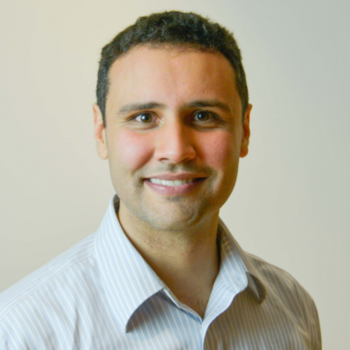
carothers headshot
Christopher Carothers is a postdoctoral fellow at the Center on Democracy, Development and the Rule of Law at Stanford University. His research in comparative politics focuses on East Asia, authoritarianism, and the politics of corruption, and has previously been published in the Journal of Democracy and various media outlets. He received his Ph.D. in Government from Harvard University in 2019.

0
CDDRL Postdoctoral Scholar, 2019-20
carothers_headshot.jpeg

I am a scholar of comparative politics and currently a postdoctoral fellow at the University of Pennsylvania’s Center for the Study of Contemporary China. My research is on authoritarianism and corruption control with a regional focus on East Asia—especially China, the Koreas, and Taiwan. My first book, Corruption Control in Authoritarian Regimes: Lessons from East Asia (Cambridge University Press, 2022), is about why some autocrats are motivated to curb corruption, why their efforts succeed or fail, and what the political consequences of such efforts are. I received my Ph.D. in Government from Harvard University in 2019.

My writing has been published or is forthcoming in numerous academic and policy journals, including Perspectives on Politics, Government and Opposition, the Journal of Democracy, Politics and Society, the Journal of Contemporary China, the Journal of East Asian Studies, Foreign Affairs, Foreign Policy, the China Leadership Monitor, and The National Interest.

Before academia, I lived and traveled in East Asia for several years, learning Chinese and Korean along the way. I worked for The Wall Street Journal Asia in Hong Kong, taught English in Xinjiang, and studied Korean in Seoul. I received my B.A. (summa cum laude), also from Harvard, in Social Studies and East Asian Studies.

Postdoctoral fellow at Center on Democracy, Development and the Rule of Law (CDDRL)
Seminars
Authors
News Type
News
Date
Paragraphs

Every summer, the Draper Hills Summer Fellows Program brings together international leaders who are pioneering new approaches to advance social and political change in some of the most challenging global contexts. The fellows spend three weeks living and taking classes on the Stanford campus, visiting Silicon Valley tech companies and building a network.

Representing business, government and the nonprofit sector, fellows are working on the frontlines of democratic change to combat the global rise of authoritarianism and populism. The Freeman Spogli Institute for International Studies spoke to five of the fellows about the impact of the Draper Hills program on their work and activism. These are their stories.

Shaili Chopra, India

shaili3 Shaili Chopra, founder of SheThePeopleTv. Photo: Alice Wenner
“I run a platform called SheThePeopleTv. It's a platform for women, and it aims to share news, opinions, data and statistics through a gendered lens. Women are a critical part of democracy — from where I come, in India, we have 600 million women. That's half of the country's population. I think they must also have half of the country’s voice, which they don't.

“I think a big plus of a program like Draper Hills is that when we are all working in the general construct of democracy, we have shared problems, and we also look for shared solutions. It's very empowering to be around people who understand these situations, or have found solutions or overcame them in their countries, or are going through similar problems. You can discuss them and get a sense of solidarity and a sense of empathy.”

Wiem Zarrouk, Tunisia

wiem1 Wiem Zarrouk, senior advisor to the Minister of Development, Investment and International Cooperation in Tunisia. Photo: Alice Wenner

“I’ve been working for the Tunisian government for three years as an advisor to the Minister of Development, Investment and International Cooperation. I am leading the government reforms to improve Tunisia's ranking in the World Bank Competitiveness Report - Doing Business.

“In Tunisia, we’ve set up most of our democratic institutions, and now we want to improve the business environment to attract more investment in local businesses. Eight years ago, the people went into the streets demanding more jobs. The challenge in Tunisia right now is economic, that’s why economic reforms are important to our government.

“I think the impact of the Draper Hills program will be immediate. I’ve learned a lot here about the link between development and democracies, so it really covers the scope of my work. And it's been great to learn about the theoretical side — the professors are really speaking about things that impact our daily work.” 


Ujwal Thapa, Nepal

ujwal1 Ujwal Thapa, president of the BibekSheel Nepali youth movement. Photo: Alice Wenner

“Bibeksheel Nepali is basically a political startup. It’s a youth-led movement, and we’re focused on changing the norms and mindsets of the culture in Nepal. We work a lot with citizens to instill the values of transparency, empathy and humility because we think democracy needs to be more emotional instead of just logical. I think liberal democracy needs to be understood more in the context of humanity. So it’s an experiment that we're doing in Nepal.

“When we started with the experiment, we decided not to focus only on the state, but thought about a few more components: one is our citizens, another is the society and the third is the government. Nepal recently came out of a violent civil war, and we just built a new constitution that is much more tolerant. Transparency is another value that we want to instill, because of the long isolationist and autocratic dictatorship that has existed in the past.

“Draper Hills is bringing all of these practitioners together who are experimental and innovative. And the world needs better collaboration from people who really believe in the ideals of the 21st century, which are liberal, democratic and more humanistic. That’s one of the strongest aspects of the Draper Hills program.”


N.S. Nappinai, India

nappinai1 N.S. Nappinai, senior practitioner in the Supreme Court of India and Bombay High Court. Photo: Alice Wenner

“I'm a lawyer — I specialize in cyber laws. My work throughout my career has been focused on ensuring responsible technology and the use of technology to fight crime. Two years ago I was appointed by the Supreme Court of India as Amicus Curiae on a matter related to protecting against the uploading of videos and images of gang rape and child pornography online.

“Some of the social media platforms had very good reporting mechanisms, whereas it was more hidden on other platforms. So we ensured that this issue was brought to the forefront so that people know that these are things that can be reported and some action can be taken. The whole idea was that as long as you identify such content at the earliest possible time, then you help the victim that much more.

“For me, balancing victims' rights with free speech is very important. This was a big dilemma that I faced, in terms of ‘How much of what I am doing is likely to stifle free speech?’ A lot of discussions at Draper Hills have helped formulate and structure my thoughts, and it's very nice to get the perspective from people from 26 other countries.”


Hinda Bouddane, Morocco

hinda1 Hinda Bouddane, the first vice president of the elected provincial council of the city of Fez. Photo: Alice Wenner

“I'm involved in women's empowerment and education for girls in Morocco. And especially for women in rural areas — they are less privileged, and many of them don't know their rights. So my fight through JA Worldwide and my activism is to empower these women and to raise awareness about their rights and the importance of education for girls.

“Education for girls is really important in fighting discrimination against women. Education empowers women to become financially independent, say no to violence, and to get engaged in the public sphere. Through that, women can be a part of the democratic process not only by voting, but also by taking part from within and running for office.

At Draper Hills, we're deepening our knowledge about topics like the rule of law, democracy and human rights, and hearing many different perspectives. And importantly, we are building a great network to connect many intelligent people from around the world, and we will work together to foster democratic values.”


Hero Image
draper hills for web
The 2019 Draper Hills Class of 2019 at the Freeman Spogli Institute for International Studies. Photo: Stanford Center on Democracy, Development and the Rule of Law
All News button
1
Paragraphs

In the second decade of the 21st century, the world experienced the rise of a global populist movement built around ethnic nationalism and hostility to foreigners and immigration. This movement has been led by the United States after the election of Donald J. Trump as President in 2016, and today includes leaders in Turkey, Hungary, Poland, Italy, Brazil, and a host of parties throughout Europe that challenge the liberal international order. Canada, Australia, and the United States are three former British colonies that were settled by successive waves of immigrants from abroad. By 2017, the percentage of people born outside the country was nearly 22% in Canada, 29% in Australia, and 14% in the United States. Despite having higher levels of immigration, it is remarkable that neither Canada nor Australia has generated a strong populist movement, or a leader as has the United States. Both countries have achieved political consensus around policies that welcome substantial numbers of immigrants, while controlling their character though a point system and providing substantial support for their settlement and integration. The United States, by contrast, has tried repeatedly since the 1980s to establish a clear policy on immigration and has failed to do so. The US has neither been able to legalize the situation of the 11-12 million undocumented immigrants already in the country nor to effectively enforce its existing immigration laws. The country is highly polarized between pro- and anti-immigration camps, a polarization that has only deepened over time. The three countries had very similar immigration policies up until the 1960s. All three sought to encourage immigration, but were highly selective in where those immigrants could come from: Canada’s Immigration Act of 1910, the “White Australia” policy, and America’s Reed-Johnson Act establishing national origin quotas strongly favored immigrants from northern Europe. All three countries gradually relaxed these controls in the 20th century, accepting first Southern and Eastern Europeans in the first half of the century, and then opening up their societies to immigration from other parts of the world in the 1960s.

the paper.

All Publications button
1
Publication Type
Working Papers
Publication Date
Authors
Francis Fukuyama
News Type
Commentary
Date
Paragraphs

In the honor of publication of Larry Diamond's "Ill Winds: Saving Democracy from Russian Rage, Chinese Ambition, and American Complacency" Foreign Affairs are providing past the paywall article "Democracy Demotion: How the Freedom Agenda Fell Apart" by Larry Diamond. Read here


Hero Image
iraqi voters inked fingers
All News button
1
-

Two CDDRL honors students will present their theses at this week's CDDRL Research Seminar on Wednesday, June 5, from 12-1:30pm.  


Image
sophiapinkheadshot
Sophia Pink's thesis, "Think like a Scientist: Interventions to Reduce Politically Motivated Reasoning" will receive the CDDRL Award for Outstanding Thesis 2019


About Sophia: 

Hometown: Washington, DC

Major: Product Design

Thesis Advisor: Robb Willer

Thesis Title: Think like a Scientist: Interventions to Reduce Politically Motivated Reasoning


Why is this topic important to the field of democracy, development, and the rule of law? When we are faced with information about political issues, our ability to reason is easily hijacked by our biases. We often have a conclusion in mind and use the information to justify our pre-existing views. This is called “politically motivated reasoning.” If our society wants to continue to have the meaningful political discussions essential for a functioning democracy, we need tools to defend ourselves against these biases.

This thesis includes a thorough literature review of the research on motivated reasoning with hypotheses for interventions that may reduce motivated reasoning. It also tests an intervention to reduce politically motivated reasoning with a experimental study. Instead of blaming individuals, we need to design tools to equip people to analyze political information without biases getting in the way.

What attracted you to the CDDRL undergraduate honors program? I was excited to learn from the cohort of amazing students. Working with students from different departments over the course of a year helped me produce stronger research and be a better colleague.

Future aspirations post-Stanford: I hope to use the tools of ethnographic research, behavioral science, and data science to design experiences that help people make better decisions and live more fulfilling lives.


Image
alex profile
Alex Trivella's Thesis,"Thwarting Electoral Revolution: The Communal State and Authoritarian Consolidation in Venezuela" will receive a Firestone Medal, given to the top 10% of all honors theses.  

About Alex: 

Hometown: Caracas, Venezuela

Major: History

Thesis Advisor: Beatriz Magaloni

Thesis Title: Thwarting Electoral Revolution: The Communal State and Authoritarian Consolidation in Venezuela

Why is this topic important to the field of democracy, development, and the rule of law?  As Venezuela faces a new political era of single-party dictatorship, the future of the country remains uncertain. It is still unclear how the party will proceed in its consolidation of power and what institutions will remain relevant. Studying the evolution of Communal State structures exposes the political framework available to the Venezuelan government and may reveal a path to redemocratization.

What attracted you to the CDDRL undergraduate honors program? The CDDRL honors program provided me the opportunity to engage with some of the complex questions I had about the socioeconomic collapse of my country. I was also excited for the new perspectives available through the program's multidisciplinary focus.

Future aspirations post-Stanford: I would like to pursue a Master's in International Policy and possibly work in something relating to democratization. I also hope to help rebuild Venezuela in the future.

Reuben Hills Conference room
Encina Hall, 2nd floor East


Alex Trivella CDDRL Honor Student
Sophia Pink CDDRL Honor Student
Seminars
Subscribe to The Americas