-

In October, the Justice Department sued Google for violating antitrust laws.These antitrust concerns are motivated by the potential economic harms caused by the tech giants’ monopoly positions, but there might be greater reason to worry about the political harms that the platforms pose to American democracy because of their control over the modern information ecosystem. If the antitrust laws are designed to address economic harms, how should policymakers confront the political harms from dominant digital platforms?

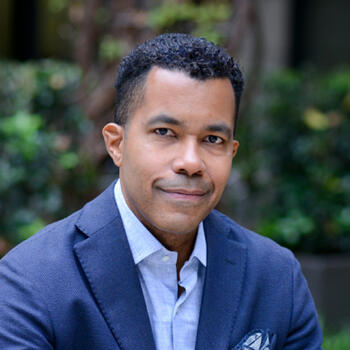
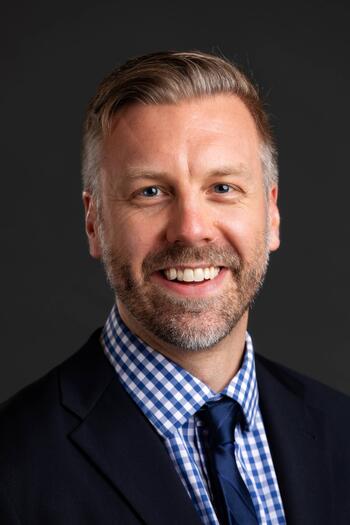
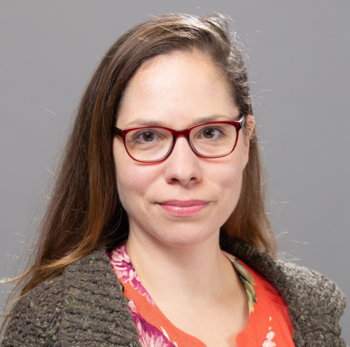
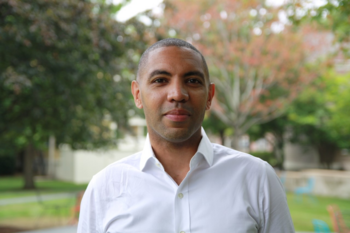
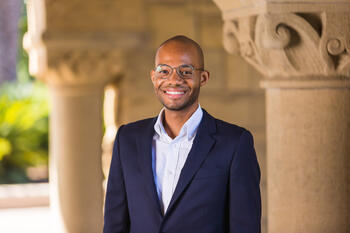
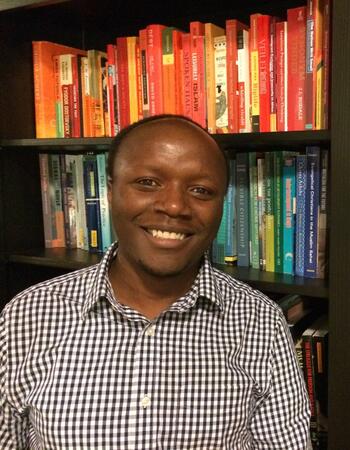
Join us on November 18th at 10 a.m. PST to discuss recommendations from the new White Paper of the Stanford Working Group on Platform Scale, where we will assess how today’s digital platforms pose threats to American democracy and a proposal for how creative technological interventions might mitigate the platform’s growing power. Panelists include Francis Fukuyama, Mosbacher Director of Stanford University’s Center for Democracy, Development and the Rule of Law and a leader at the Cyber Policy Center’s Program on Democracy and the Internet, Ashish Goel, Professor of Management Science and Engineering and (by courtesy) Computer Science at Stanford University, Barak D. Richman, Professor of Law and Business Administration at Duke University, Luigi Zingales, Professor of Economics at the Chicago Booth School of Business and Co-host of the podcast Capitalisn't, and Dick Costolo, former CEO of Twitter, founder and CEO of multiple startups, and now a Managing Partner at 01 Advisors, in conversation with Kelly Born, Executive Director of the Cyber Policy Center as they discuss new ideas in antitrust.

Dick Costolo

Encina Hall, C148
616 Jane Stanford Way
Stanford, CA 94305

0
Olivier Nomellini Senior Fellow at the Freeman Spogli Institute for International Studies
Director of the Ford Dorsey Master's in International Policy
Research Affiliate at The Europe Center
Professor by Courtesy, Department of Political Science
yff-2021-14290_6500x4500_square.jpg

Francis Fukuyama is the Olivier Nomellini Senior Fellow at Stanford University's Freeman Spogli Institute for International Studies (FSI), and a faculty member of FSI's Center on Democracy, Development and the Rule of Law (CDDRL). He is also Director of Stanford's Ford Dorsey Master's in International Policy, and a professor (by courtesy) of Political Science.

Dr. Fukuyama has written widely on issues in development and international politics. His 1992 book, The End of History and the Last Man, has appeared in over twenty foreign editions. His book In the Realm of the Last Man: A Memoir will be published in fall 2026.

Francis Fukuyama received his B.A. from Cornell University in classics, and his Ph.D. from Harvard in Political Science. He was a member of the Political Science Department of the RAND Corporation, and of the Policy Planning Staff of the US Department of State. From 1996-2000 he was Omer L. and Nancy Hirst Professor of Public Policy at the School of Public Policy at George Mason University, and from 2001-2010 he was Bernard L. Schwartz Professor of International Political Economy at the Paul H. Nitze School of Advanced International Studies, Johns Hopkins University. He served as a member of the President’s Council on Bioethics from 2001-2004. He is editor-in-chief of American Purpose, an online journal.

Dr. Fukuyama holds honorary doctorates from Connecticut College, Doane College, Doshisha University (Japan), Kansai University (Japan), Aarhus University (Denmark), the Pardee Rand Graduate School, and Adam Mickiewicz University (Poland). He is a non-resident fellow at the Carnegie Endowment for International Peace. He is a member of the Board of Trustees of the Rand Corporation, the Board of Trustees of Freedom House, and the Board of the Volcker Alliance. He is a fellow of the National Academy for Public Administration, a member of the American Political Science Association, and of the Council on Foreign Relations. He is married to Laura Holmgren and has three children.

(October 2025)

CV
Date Label
Ashish Goel
Luigi Zingales
Barak Richman
Authors
News Type
News
Date
Paragraphs

On September 29, the APARC China Program hosted Thomas Fingar and Stephen Stedman for the program “Rebuilding International Institutions.” The program, which was moderated by China Program Director Jean Oi, examined the future of international institutions such as the United Nations (UN), World Trade Organization (WTO), and World Health Organization (WHO) in our evolving global political landscape. While Fingar and Stedman acknowledged that such institutions facilitated attainment of unprecedented peace and prosperity after WWII, they also asked difficult questions: Are these institutions still adequate? And if not, how will we change them?

Shorenstein APARC Fellow Thomas Fingar kicked off the session by asking whether or not US-China tensions would impede cooperation on major global challenges, or if those challenges were so serious as to render such rivalries immaterial. Perhaps the most obvious example of such a crisis is the current COVID-19 pandemic. The efforts to curb the virus’ spread not only by individual countries, but also by international organizations like the WHO, have proven largely inadequate. According to Fingar, our existing institutions need to be reformed or supplemented to deal with these types of threats. However, such an overhaul of our international systems will be difficult, he says.

How, then, will we go about such a massive project? Stephen Stedman, Deputy Director at Stanford’s Center on Democracy, Development, and the Rule of Law (CDDRL), responded by explaining that the current failure of international cooperation makes such undertakings tough. Globalization has been a double-edged sword: On one hand, more contact, perhaps inherently, leads to increased tension. The resurgence of traditional notions of sovereignty in 2010, kickstarted by the opposition of countries like Russia and China to what was seen as UN overreaching, has led to a reduction of international cooperation overall. On the other hand, Fingar posits that our interconnectedness may force us toward cooperation despite rivalries as we face more and more transnational threats. International institutions create rules to organize and manage our many interconnected relationships so that we can deal with our problems effectively and reduce friction.

Stedman also pointed to the upcoming US elections and the major impact their outcome will have on how these problems are addressed—or not. In the last four year, the United States has pulled back significantly from international institutions and agreements, leaving a gap that China has started to fill. Furthermore, despite the US’s retreat from international responsibility, the country still remains a critical actor in global initiatives. China’s embrace of a global leadership role is not inherently negative, but its future relationship with the US will need to be “managed in a way that you get greater cooperation and not just paralysis.” Stedman says that it is likely that progress will need to be made on a bilateral front in order to have productive conversations about international issues with China.

Concluding on an optimistic note, Fingar voiced his hope that the current tensions and negative perceptions between rivals might ultimately “be mitigated by success in dealing with a common problem,” because “experience does shape perceptions.”

A video recording of this program is available upon request. Please contact Callista Wells, China Program Coordinator at cvwells@stanford.edu with any inquiries.

Read More

Hero Image
Photograph of the UN building in Geneva, Switzerland Image by Mat Reding on Unsplash
All News button
1
Subtitle

Fingar and Stedman spoke as part of the APARC program “Rebuilding International Institutions,” which examined the future of international institutions such as the United Nations (UN), World Trade Organization (WTO), and World Health Organization (WHO) in our evolving global political landscape.

Date Label
-

This event is open to Stanford undergraduate students only. 

Image
CDDRL Flyer 2021

The Center on Democracy, Development, and the Rule of Law (CDDRL) will be accepting applications from eligible juniors on who are interested in writing their senior thesis on a subject touching upon democracy, economic development, and rule of law (DDRL) from any university department.  The application period opens on January 11, 2021 and runs through February 12, 2021.   CDDRL faculty and current honors students will be present to discuss the program and answer any questions.

For more information on the Fisher Family CDDRL Honors Program, please click here.

**Please note all CDDRL events are scheduled using the Pacific Time Zone

 Online, via Zoom: REGISTER

CDDRL
Encina Hall, C152
616 Jane Stanford Way
Stanford, CA 94305-6055

(650) 725-2705 (650) 724-2996
0
Senior Fellow at the Freeman Spogli Institute for International Studies
Professor, by courtesy, of Political Science
Stedman_Steve.jpg PhD

Stephen Stedman is a Senior Fellow at the Freeman Spogli Institute for International Studies (FSI) and the Center on Democracy, Development and the Rule of Law (CDDRL), an affiliated faculty member at CISAC, and professor of political science (by courtesy) at Stanford University. He is director of CDDRL's Fisher Family Honors Program in Democracy, Development and Rule of Law, and will be faculty director of the Program on International Relations in the School of Humanities and Sciences effective Fall 2025.

In 2011-12 Professor Stedman served as the Director for the Global Commission on Elections, Democracy, and Security, a body of eminent persons tasked with developing recommendations on promoting and protecting the integrity of elections and international electoral assistance. The Commission is a joint project of the Kofi Annan Foundation and International IDEA, an intergovernmental organization that works on international democracy and electoral assistance.

In 2003-04 Professor Stedman was Research Director of the United Nations High-level Panel on Threats, Challenges and Change and was a principal drafter of the Panel’s report, A More Secure World: Our Shared Responsibility.

In 2005 he served as Assistant Secretary-General and Special Advisor to the Secretary- General of the United Nations, with responsibility for working with governments to adopt the Panel’s recommendations for strengthening collective security and for implementing changes within the United Nations Secretariat, including the creation of a Peacebuilding Support Office, a Counter Terrorism Task Force, and a Policy Committee to act as a cabinet to the Secretary-General.

His most recent book, with Bruce Jones and Carlos Pascual, is Power and Responsibility: Creating International Order in an Era of Transnational Threats (Washington DC: Brookings Institution, 2009).

Director, Fisher Family Honors Program in Democracy, Development and Rule of Law
Director, Program in International Relations
Affiliated faculty at the Center for International Security and Cooperation
Date Label
Deputy Director, CDDRL

Encina Hall, C150
616 Jane Stanford Way
Stanford, CA 94305

0
Center Fellow, Freeman Spogli Institute for International Studies
didi_kuo_2023.jpg

Didi Kuo is a Center Fellow at the Freeman Spogli Institute for International Studies (FSI) at Stanford University. She is a scholar of comparative politics with a focus on democratization, corruption and clientelism, political parties and institutions, and political reform. She is the author of The Great Retreat: How Political Parties Should Behave and Why They Don’t (Oxford University Press) and Clientelism, Capitalism, and Democracy: the rise of programmatic politics in the United States and Britain (Cambridge University Press, 2018).

She has been at Stanford since 2013 as the manager of the Program on American Democracy in Comparative Perspective and is co-director of the Fisher Family Honors Program at CDDRL. She was an Eric and Wendy Schmidt Fellow at New America and is a non-resident fellow with the Carnegie Endowment for International Peace. She received a PhD in political science from Harvard University, an MSc in Economic and Social History from Oxford University, where she studied as a Marshall Scholar, and a BA from Emory University.

Date Label
Associate Director for Research, CDDRL

Encina Hall
616 Jane Stanford Way
Stanford, CA 94305-6055

0
Research Scholar
mike_bennon_2022.jpg

Michael Bennon is a Research Scholar at CDDRL for the Global Infrastructure Policy Research Initiative. Michael's research interests include infrastructure policy, project finance, public-private partnerships and institutional design in the infrastructure sector. Michael also teaches Global Project Finance to graduate students at Stanford. Prior to Stanford, Michael served as a Captain in the US Army and US Army Corps of Engineers for five years, leading Engineer units, managing projects, and planning for infrastructure development in the United States, Iraq, Afghanistan and Thailand. 

Program Manager, Global Infrastructure Policy Research Initiative
-

**Please note all CDDRL events are scheduled using the Pacific Time Zone

About this Event:  This book offers a novel theory of the nuances in relationships between business and political elites in three authoritarian regimes in developing Asia: Indonesia under Suharto’s New Order, Malaysia under the Barisan Nasional (BN), and China under the Chinese Communist Party (CCP). How did business-state relations in all three regimes come to be seen as “crony,” and why do some crony arrangements generate growth and political stability and others stagnation or crisis? The book develops conceptual models of state-business relations (mutual alignment and mutual endangerment) and explains their genesis. I argue that the main factors explaining why one pattern dominates over the other are the political status of capitalists, determined during regime formation, and the political management of the financial system. The research draws on extensive archival and interview sources as well as novel datasets on corporate filings in each country.


Image
Meg Rithmere
About the Speaker:  Meg Rithmire is F. Warren MacFarlan associate professor in the Business, Government, and International Economy Unit. Professor Rithmire holds a PhD in Government from Harvard University, and her primary expertise is in the comparative political economy of development with a focus on China and Asia. Her first book, Land Bargains and Chinese Capitalism (Cambridge University Press, 2015), examines the role of land politics, urban governments, and local property rights regimes in the Chinese economic reforms. A new project, for which Meg conducted fieldwork in Asia 2016-2017, investigates the relationship between capital and the state and globalization in Asia. The project focuses on a comparison of China, Malaysia, and Indonesia from the early 1980s to the present. The research has two components; first, examining how governments attempt to discipline business and when those efforts succeed and, second, how business adapts to different methods of state control. 


Online, via Zoom: REGISTER

Meg Rithmire F. Warren MacFarlan associate professor in the Business, Government, and International Economy Unit
Seminars
-

**Please note all CDDRL events are scheduled using the Pacific Time Zone


About the Event:   As we enter the stretch run of the 2020 US election campaign, join us for an inside look at how public policy is formulated on political campaigns, and the key policy debates animating the election.


Image
Lanhee Chen
About the Speaker:  Lanhee J. Chen, Ph.D. is the David and Diane Steffy Fellow in American Public Policy Studies at the Hoover Institution; Director of Domestic Policy Studies and Lecturer in the Public Policy Program at Stanford University; and an affiliated faculty member of the Center on Democracy, Development and the Rule of Law at Stanford’s Freeman Spogli Institute. 

A veteran of several high-profile political campaigns, Chen has worked in government, the private sector, and academia. 

Chen has advised numerous major campaigns, including four presidential efforts.  In 2012, he was policy director of the Romney-Ryan campaign, serving as Governor Mitt Romney’s chief policy adviser and a senior strategist on the campaign.  Chen also advised Florida Senator Marco Rubio’s 2016 bid; Romney’s 2008 effort; and the Bush-Cheney reelection campaign in 2004.  In the 2014 and 2018 campaign cycles, he was the Senior Adviser on Policy to the National Republican Senatorial Committee (NRSC). 

He earned his Ph.D. in Political Science, A.M. in Political Science, J.D. cum laude, and A.B. magna cum laude in Government, all from Harvard University.   

Online, via Zoom: REGISTER

the David and Diane Steffy Fellow in American Public Policy Studies at the Hoover Institution; Director of Domestic Policy Studies and Lecturer in the Public Policy Program at Stanford University
Seminars
-

This event is being live-streamed on Zoom. Registration is required: https://stanford.zoom.us/webinar/register/WN_PTnI4nwGRLCERCHdP-cogw

On August 9, 2020, Belarus held a presidential election, which Alexander Lukashenko — Belarus' president of 26 years — claimed to have won with 80 percent of the vote. Exit polling, however, demonstrated that the opposition leader, Svetlana Tikhanovskaya, actually garnered wide popular support. Since the election, Belarusians have taken to the streets to demand a new election and/or that Lukashenko step down. But the regime appears intent on remaining in power and has used force against peaceful protesters. Workers in key factories have since gone on strike, and widespread protests continue. 

Join us for a special zoom seminar on Wednesday, August 19 from 11:30 a.m. to 12:45 p.m. PDT with Michael A. McFaul, Director of the Freeman Spogli Institute and former US Ambassador to Russia; Anna Grzymala-Busse, senior fellow at the Freeman Spogli Institute for International Studies and the director of The Europe Center; and Francis Fukuyama, Senior Fellow and Mosbacher Director of the Center on Democracy, Development and the Rule of Law and Director of the Ford Dorsey Master's in International Policy Program at FSI in a session on the events in Belarus that will be moderated by Kathryn Stoner, Senior Fellow and Deputy Director of the Freeman Spogli Institute.

Panel Discussions
-

**Please note all CDDRL events are scheduled using the Pacific Time Zone

About the Event:

On November 3, in the midst of a pandemic, America elects its next President. CDDRL scholars will discuss the election results (or election challenges), Trump and Biden, key Congressional races, and what to expect between November and Inauguration Day. Join Bruce Cain, Nate Persily, Hakeem Jefferson, and Didi Kuo.

About the Speakers:

Bruce E. Cain is a Professor of Political Science at Stanford University and Director of the Bill Lane Center for the American West. He received a BA from Bowdoin College (1970), a B Phil. from Oxford University (1972) as a Rhodes Scholar, and a Ph D from Harvard University (1976). He taught at Caltech (1976-89) and UC Berkeley (1989-2012) before coming to Stanford. Professor Cain was Director of the Institute of Governmental Studies at UC Berkeley from 1990-2007 and Executive Director of the UC Washington Center from 2005-2012. His areas of expertise include political regulation, applied democratic theory, representation and state politics.

Nathaniel Persily is the James B. McClatchy Professor of Law at Stanford Law School, with appointments in the departments of Political Science, Communication and FSI.  Prior to joining Stanford, Professor Persily taught at Columbia and the University of Pennsylvania Law School, and as a visiting professor at Harvard, NYU, Princeton, the University of Amsterdam, and the University of Melbourne. Professor Persily’s scholarship and legal practice focus on American election law or what is sometimes called the “law of democracy,” which addresses issues such as voting rights, political parties, campaign finance, redistricting, and election administration. He has served as a special master or court-appointed expert to craft congressional or legislative districting plans for Georgia, Maryland, Connecticut, and New York, and as the Senior Research Director for the Presidential Commission on Election Administration. In addition to dozens of articles (many of which have been cited by the Supreme Court) on the legal regulation of political parties, issues surrounding the census and redistricting process, voting rights, and campaign finance reform.

Hakeem Jefferson is an Assistant Professor of Political Science at Stanford University. His research interests move at the intersection of American politics and social psychology. In particular, his current work examines the conditions under which members of stigmatized groups punish group members who transgress social norms. Moving beyond a study of identity that centers largely on the attitudes and predilections of dominant social groups, his work explores the psychological and instrumental considerations stigmatized individuals bring to bear in response to “bad” (negatively stereotyped) behavior from within their own group. Using African-Americans as the test case, this work builds on scholarship about the politics of respectability and in-group policing to inform conversations about Blacks’ attitudes toward punitive social policies.

Didi Kuo is the Associate Director for Research and Senior Research Scholar at the Center on Democracy, Development, and the Rule of Law at Stanford University. She is a scholar of comparative politics, with a focus on democratization, corruption and clientelism, political parties and institutions, and political reform. Her recent work examines changes to party organization, and the impact these changes have on the ability of governments to address challenges posed by global capitalism. She is the author of Clientelism, Capitalism, and Democracy: the rise of programmatic politics in the United States and Britain (Cambridge University Press, 2018), which examines the role of business against clientelism and the development of modern political parties in the nineteenth-century.

Online, via Zoom: REGISTER

Bruce Cain Professor of Political Science at Stanford University
Stanford Law School Neukom Building, Room N230 Stanford, CA 94305
650-725-9875
0
James B. McClatchy Professor of Law at Stanford Law School
Senior Fellow, Freeman Spogli Institute
Professor, by courtesy, Political Science
Professor, by courtesy, Communication
headshot_3.jpg

Nathaniel Persily is the James B. McClatchy Professor of Law at Stanford Law School, with appointments in the departments of Political Science, Communication, and FSI.  Prior to joining Stanford, Professor Persily taught at Columbia and the University of Pennsylvania Law School, and as a visiting professor at Harvard, NYU, Princeton, the University of Amsterdam, and the University of Melbourne. Professor Persily’s scholarship and legal practice focus on American election law or what is sometimes called the “law of democracy,” which addresses issues such as voting rights, political parties, campaign finance, redistricting, and election administration. He has served as a special master or court-appointed expert to craft congressional or legislative districting plans for Georgia, Maryland, Connecticut, New York, North Carolina, and Pennsylvania.  He also served as the Senior Research Director for the Presidential Commission on Election Administration. In addition to dozens of articles (many of which have been cited by the Supreme Court) on the legal regulation of political parties, issues surrounding the census and redistricting process, voting rights, and campaign finance reform, Professor Persily is coauthor of the leading election law casebook, The Law of Democracy (Foundation Press, 5th ed., 2016), with Samuel Issacharoff, Pamela Karlan, and Richard Pildes. His current work, for which he has been honored as a Guggenheim Fellow, Andrew Carnegie Fellow, and a Fellow at the Center for Advanced Study in the Behavioral Sciences, examines the impact of changing technology on political communication, campaigns, and election administration.  He is codirector of the Stanford Program on Democracy and the Internet, and Social Science One, a project to make available to the world’s research community privacy-protected Facebook data to study the impact of social media on democracy.  He is also a member of the American Academy of Arts and Sciences, and a commissioner on the Kofi Annan Commission on Elections and Democracy in the Digital Age.  Along with Professor Charles Stewart III, he recently founded HealthyElections.Org (the Stanford-MIT Healthy Elections Project) which aims to support local election officials in taking the necessary steps during the COVID-19 pandemic to provide safe voting options for the 2020 election. He received a B.A. and M.A. in political science from Yale (1992); a J.D. from Stanford (1998) where he was President of the Stanford Law Review, and a Ph.D. in political science from U.C. Berkeley in 2002.   

CV
Date Label
James B. McClatchy Professor of Law at Stanford Law School
Hakeem Jefferson Assistant Professor of Political Science at Stanford University

Encina Hall, C150
616 Jane Stanford Way
Stanford, CA 94305

0
Center Fellow, Freeman Spogli Institute for International Studies
didi_kuo_2023.jpg

Didi Kuo is a Center Fellow at the Freeman Spogli Institute for International Studies (FSI) at Stanford University. She is a scholar of comparative politics with a focus on democratization, corruption and clientelism, political parties and institutions, and political reform. She is the author of The Great Retreat: How Political Parties Should Behave and Why They Don’t (Oxford University Press) and Clientelism, Capitalism, and Democracy: the rise of programmatic politics in the United States and Britain (Cambridge University Press, 2018).

She has been at Stanford since 2013 as the manager of the Program on American Democracy in Comparative Perspective and is co-director of the Fisher Family Honors Program at CDDRL. She was an Eric and Wendy Schmidt Fellow at New America and is a non-resident fellow with the Carnegie Endowment for International Peace. She received a PhD in political science from Harvard University, an MSc in Economic and Social History from Oxford University, where she studied as a Marshall Scholar, and a BA from Emory University.

Date Label
Associate Director for Research and Senior Research Scholar at the Center on Democracy, Development, and the Rule of Law at Stanford University.
Seminars
-

**Please note all CDDRL events are scheduled using the Pacific Time Zone


About the Event:

Please join CDDRL as we kick off our 2020-21 seminar series with a panel on American democracy and the 2020 elections. Julia Azari (Marquette University), Ted Johnson (Brennan Center), and David Brady (Hoover Institute) will discuss the critical issues heading in to the Presidential elections this November.


About the Speakers:

Image
Julia Azari
Julia Azari is Associate Professor and Assistant Chair in the Department of Political Science at Marquette University. She holds Ph.D., M.A. and M.Phil. degrees in political science from Yale University, and a B.A. in political science from the University of Illinois at Urbana-Champaign. Her research and teaching interests include the American presidency, American political parties, the politics of the American state, and qualitative research methods.


Image
Theodore Johnson
Theodore R. Johnson is a senior fellow at the Brennan Center for Justice. In this role, he explores the intersection of race, politics, and public policy outcomes related to democratic reform. Prior to joining the Brennan Center, Dr. Johnson was a career military officer, research manager at Deloitte, and a national fellow at New America.

His work has appeared in The New York Times Magazine, The Washington Post, The Atlantic, and other national and niche publications. He is the author of the forthcoming book When the Stars Begin to Fall, which explores how national solidarity can help overcome the effects of racism. As a military officer served as a speechwriter to the Chairman of the Joint Chiefs of Staff and as a White House Fellow during the Obama administration, among other roles.
 
Dr. Johnson holds a B.S. in mathematics from Hampton University, an A.L.M. with a concentration in International Relations from Harvard University, and a Doctorate of Law and Policy from Northeastern University.


Image
David Brady
David Brady is deputy director and senior fellow at the Hoover Institution. He is also the Bowen H. and Janice Arthur McCoy Professor of Political Science and Ethics in the Stanford Graduate School of Business and professor of political science in the School of Humanities and Sciences at the university.  Brady is an expert on the U.S. Congress and congressional decision making.

Online, via Zoom: REGISTER


Julia Azari Associate Professor and Assistant Chair in the Department of Political Science at Marquette University
Theodore (Ted) R. Johnson Senior fellow at the Brennan Center for Justice

Hoover Memorial Bldg, Room 350
Stanford, California, 94305-6010

(650) 723-9702 (650) 723-1687
0
Morris M. Doyle Centennial Professor in Public Policy, Bowen H. & Janice Arthur McCoy Professor in Leadership Values, Professor of Political Science
brady.jpg

David Brady is deputy director and senior fellow at the Hoover Institution. He is also the Bowen H. and Janice Arthur McCoy Professor of Political Science and Ethics in the Stanford Graduate School of Business and professor of political science in the School of Humanities and Sciences at the university.

Brady is an expert on the U.S. Congress and congressional decision making. His current research focuses on the political history of the U.S. Congress, the history of U.S. election results, and public policy processes in general.

His recent publications include, with John Cogan, "Out of Step, Out of Office," American Political Science Review, March 2001; with John Cogan and Morris Fiorina, Change and Continuity in House Elections (Stanford University Press, 2000); Revolving Gridlock: Politics and Policy from Carter to Clinton (Westview Press, 1999); with John Cogan and Doug Rivers, How the Republicans Captured the House: An Assessment of the 1994 Midterm Elections (Hoover Essays in Public Policy, 1995); and The 1996 House Elections: Reaffirming the Conservative Trend (Hoover Essays in Public Policy, 1997). Brady is also author of Congressional Voting in a Partisan Era (University of Kansas Press, 1973) and Critical Elections in the U.S. House of Representatives (Stanford University Press, 1988).

Brady has been on continuing appointment at Stanford University since 1987. He was associate dean from 1997 to 2001 at Stanford University; a fellow at the center for Advanced Study in the Behavioral Sciences from 1985 to 1986 and again in 2001-2; the Autrey Professor at Rice University, 1980-87; and an associate professor and professor at the University of Houston, 1972-79.

In 1995 and 2000 he received the Congressional Quarterly Prize for the "best paper on a legislative topic." In 1992 he received the Dinkelspiel Award for Excellence in Undergraduate Teaching from Stanford University, and in 1993 he received the Phi Beta Kappa Award for best teacher at Stanford University.

Brady taught previously at Rice University, where he was honored with the George Brown Award for Superior Teaching. He also received the Richard F. Fenno Award of the American Political Science Association for the "best book on legislative studies" published in 1988-89.

He is a member of the American Academy of Arts and Sciences.

Brady received a B.S. degree from Western Illinois University and an M.A. in 1967 and a Ph.D. in 1970 from the University of Iowa. He was a C.I.C. scholar at the University of Michigan from 1964 to 1965.

Deputy director and senior fellow at the Hoover Institution
Seminars
-

**Please note all CDDRL events are scheduled using the Pacific Time Zone


About the Event:  American democracy has been more prone to crisis than we commonly recognize. Comparative studies of democracy suggest that four threats imperil democracy: political polarization, conflict over who belongs as a full member of society, high and rising economic inequality, and excessive executive power. We survey five periods of American history in which these threats have appeared in different configurations, posing recurring challenges to American democracy. When even one threat was present – as in the 1790s, the 1930s, or the 1970s – the nation risked backsliding. Twice – in the 1850s and again in the 1890s – three threats converged, leading to civil war and then precipitating the disenfranchisement of millions of African American men. Today, all four threats are present for the first time, presenting unprecedented danger to the American experiment.

Image

About the Speaker:  Robert C. Lieberman is Krieger-Eisenhower Professor of Political Science at Johns Hopkins University. He is the author of several award-winning books on American politics and previous served as provost of Johns Hopkins and dean of Columbia University’s School of International and Public Affairs.


Image
Image

Suzanne Mettler is the John L. Senior Professor of American Institutions in the Government Department at Cornell. She is the author five previous books, including, most recently, The Government-Citizen Disconnect and Degrees of Inequality: How the Politics of Higher Education Sabotaged the American Dream. She was recently awarded a Radcliffe Fellowship and a Guggenheim Award, and inducted into the American Academy of Arts and Sciences.


Image
Image

Online, via Zoom: REGISTER

Robert Liberman Krieger-Eisenhower Professor of Political Science at Johns Hopkins University
Suzanne Mettler John L. Senior Professor of American Institutions in the Government Department at Cornell University
Seminars
Subscribe to The Americas