1
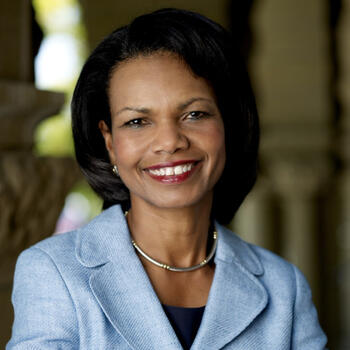
CDDRL Predoctoral Scholar, 2021-22
alejandra_aldridge.jpg

Alejandra Aldridge is a PhD candidate in the Political Science department at Stanford University. Her dissertation examines how partisanship colors citizens' approval of presidential actions that violate democratic norms. Broadly, her research interests include  executive politics, public opinion, democratic norms, experimental methods, survey methodology, and gender and politics. Alejandra graduated from Brigham Young University with a BA in Political Science. On the side, she loves tennis, Crossfit, Sprinkles cupcakes, and dark chocolate.


-

About the Event:

The Autocratic Middle Class studies the post-communist middle classes – not as a force for democracy, but as a source of support for autocracy and authoritarian resilience. It helps to explain why authoritarianism deepened across the ex-Soviet region over a period when the middle class was rapidly expanding; why anti-Putin protests in Russia have thus far failed to achieve a critical mass; and why it has been so difficult to consolidate democracy in Ukraine. Drawing on attitudinal surveys, unique data on protest participation, and extensive fieldwork in the former Soviet Union, this book shows that state dependence weakens the middle classes’ incentives to prefer and pursue democracy and sheds light on why development doesn’t necessarily lead to democratization.


About the Speaker:

Image
Bryn Rosenfeld
Bryn Rosenfeld is Assistant Professor of Government at Cornell University. Her research interests include political behavior, development and democratization, protest, post-communist politics, and survey methodology. Her new book, The Autocratic Middle Class examines how middle-class economic dependence on the state impedes democratization and contributes to authoritarian resilience. She is the recipient of a Juan Linz Best Dissertation Prize and a Best Article Award honorable mention, both by the American Political Science Association’s Democracy & Autocracy Section. Her work appears in the American Political Science Review, the American Journal of Political Science, the Journal of Politics, Comparative Political Studies, and Sociological Methods & Research. She holds a PhD from Princeton.

Online, via Zoom:  REGISTER

Bryn Rosenfeld Assistant Professor of Government at Cornell University
Seminars
Authors
News Type
News
Date
Paragraphs

On April 21, 2021, the APARC China Program hosted Professor Erin Baggott Carter, Assistant Professor in the Department of Political Science and International Relations, University of Southern California, and Visiting Scholar at the Stanford Center on Democracy, Development and the Rule of Law. Her program, "When Beijing Goes to Washington: Autocratic Lobbying Influence in Democracies," explored how lobbying from China and China-based companies can affect policy in the United States. Professor Jean Oi, William Haas Professor of Chinese Politics and director of the APARC China Program, moderated the event.

Professor Baggot Carter based her talk on a dataset drawn from the public records of the US Foreign Agents Registration Act, which includes over 10,000 lobbying activities undertaken by the Chinese government between 2005 and 2019. According to Baggot Carter, the evidence suggests that Chinese government lobbying makes legislators at least twice as likely to sponsor legislation that is favorable to Chinese interests. Moreover, US media outlets that participated in Chinese-government sponsored trips subsequently covered China as less threatening. Coverage pivoted away from US-China military rivalry and the CCP’s persecution of religious minorities and toward US-China economic cooperation. These results suggest that autocratic lobbying poses an important challenge to democratic integrity. Watch now: 

Read More

Hero Image
United States Capitol Building from an angle Photo by Harold Mendoza on Unsplash
All News button
1
Subtitle

Professor Erin Baggot Carter tells us how autocratic lobbying affects political outcomes and media coverage in democracies.

-

About this Event: There is no shortage of scholarship on the rise of strategic experts—campaign strategists, consultants, and the like—in Western politics. Some accounts treat the rise of the strategist as an effect of the functional demands of party competition, linked with technological change and the accumulation of political data; others see the rise of the strategist as a symptom of a larger process of party decline. In this seminar I'll present a different argument: the rise of the strategist was linked with a turn, especially on the left, toward prioritizing markets over constituents. This argument is built on an "inside-out" (or refraction) analysis that traces the rise and fall of dominant party experts, attending to the link between their social location and their conceptions of the economic world, democratic politics and experts' public roles.  I will conclude by outlining a new project that builds on this work, tentatively titled Strategy and Democracy.


Image
Stephanie Mudge
About the Speaker: Stephanie Mudge is Associate Professor of Sociology at the University of California, Davis and co-editor of a new book series, Cambridge Studies in Historical Sociology. Her recent book, Leftism Reinvented (2018, Harvard University Press), is a cross-national study of how Western parties of the mainstream left shifted from socialism, to Keynesianism, to neoliberalism over the course of the 20th Century. She has published on a range of topics including neoliberalism, the sociology of parties and European technocratic expertise in venues including the Socio-Economic Review, the American Journal of Sociology and the Annual Review of Sociology. She is presently developing projects on the trajectory of "independence" in the case of the European Central Bank and the rise of strategists in American politics.

Online, via Zoom: REGISTER

Stephanie Mudge Associate Professor of Sociology at the University of California, Davis
Seminars
-

About this Event: In this book project, we walk in the footsteps of the pioneers of the nonviolent approach to provide a reinterpretation of the histories of the great movements of the twentieth century from a game theoretic perspective, bringing to bear a host of new quantitative analyses to understand the challenges they faced, when they were successful at overcoming them and why. We develop a simple conceptual framework for understanding the strategies available to both the leaders and the followers of political movements, the media and outside audiences, as well as the regimes that they seek to influence, and how these decisions interact. We use this framework to highlight the presence of three key tensions that exist in many political movements.

These tensions include: those between the allure of violence and the seeming pedestrianism of nonviolence, between the need for numbers and the need for focus, and between organizations that depend on grassroots mobilization versus hierarchies and leadership. 

In light of the framework and new quantitative evidence, we then retrace and re-examine the decisions of the participants of the Indian Independence Movement in each of their three great nonviolent drives for change---the Non-Cooperation Movement of the 1920s, the Civil Disobedience Movement of the 1930s and the Quit India Movement of the 1940s---and how they succeeded or failed in addressing these tensions. At each step, we also discuss both grand strategy and the effectiveness of local tactics. We next compare the Indian experience with the movements that came after, including the Civil Rights Movement in the United States, the Arab Spring and recent protests around the world. Finally, we draw on what we have learned to suggest ideas for better implement nonviolent protests today.


About the Speaker:

Image
Saumitra Jha
Along with being a Senior Fellow at FSI, Saumitra Jha is an associate professor of political economy at Stanford’s Graduate School of Business, and, by courtesy, of economics and of political science, and convenes the Stanford Conflict and Polarization Lab. He is also a senior fellow at the Stanford Institute for Economic Policy Research. In 2020–21, he is a fellow at the Center for Advanced Study in the Behavioral Sciences.

Jha’s research has been published in leading journals in economics and political science, including Econometrica, the Quarterly Journal of Economics, the American Political Science Review and the Journal of Development Economics, and he serves on a number of editorial boards. His research on ethnic tolerance has been recognized with the Michael Wallerstein Award for best published article in Political Economy from the American Political Science Association in 2014 and his co-authored research on heroes with the Oliver Williamson Award for best paper by the Society for Institutional and Organizational Economics in 2020. Jha was honored to receive the Teacher of the Year Award, voted by the students of the Stanford MSx Program in 2020.


Online, via Zoom: REGISTER

Graduate School of Business 655 Knight Way Stanford, CA 94305
(650) 721 1298
0
Associate Professor of Political Economy, GSB
Associate Professor, by courtesy, of Economics and of Political Science
saumitra_jha.jpg

Along with being a Senior Fellow at the Freeman Spogli Institute for International Studies, Saumitra Jha is an associate professor of political economy at the Stanford Graduate School of Business, and convenes the Stanford Conflict and Polarization Lab. 

Jha’s research has been published in leading journals in economics and political science, including Econometrica, the Quarterly Journal of Economics, the American Political Science Review and the Journal of Development Economics, and he serves on a number of editorial boards. His research on ethnic tolerance has been recognized with the Michael Wallerstein Award for best published article in Political Economy from the American Political Science Association in 2014 and his co-authored research on heroes with the Oliver Williamson Award for best paper by the Society for Institutional and Organizational Economics in 2020. Jha was honored to receive the Teacher of the Year Award, voted by the students of the Stanford MSx Program in 2020.

Saum holds a BA from Williams College, master’s degrees in economics and mathematics from the University of Cambridge, and a PhD in economics from Stanford University. Prior to rejoining Stanford as a faculty member, he was an Academy Scholar at Harvard University. He has been a fellow of the Niehaus Center for Globalization and Governance and the Center for the Study of Democratic Politics at Princeton University, and at the Center for Advanced Study in the Behavioral Sciences at Stanford. Jha has consulted on economic and political risk issues for the United Nations/WTO, the World Bank, government agencies, and for private firms.


Senior Fellow at the Freeman Spogli Institute for International Studies
Dan C. Chung Faculty Scholar at the Freeman Spogli Institute for International Studies
Senior Fellow at the Stanford Institute for Economic Policy Research
Date Label
Senior Fellow, Center for Democracy, Development and the Rule of Law, FSI
Seminars
-

About the Event:

Even in today’s more informal world, dress codes still determine what we wear, when we wear it—and what our clothing means. People lose their jobs for wearing braided hair, long fingernails, large earrings, beards and tattoos or refusing to wear a suit and tie or make-up and high heels. In some cities, wearing sagging pants is a crime. And even when there are no written rules, implicit dress codes still influence opportunities and social mobility. Silicon Valley CEOs wear t-shirts and flip flops, setting the tone for an entire industry: women wearing fashionable dresses or high heels face ridicule in the tech world and some venture capitalists refuse to invest in any company run by someone wearing a suit.

Dress codes are as old as clothing itself. For centuries, clothing has been a wearable status symbol; fashion, a weapon in struggles for social change; and dress codes, a way to maintain political control. Merchants who dressed like princes and butchers’ wives wearing gem-encrusted crowns were public enemies in medieval societies structured by social hierarchy and defined by spectacle. In Tudor England, silk, velvet and fur were reserved for the nobility and ballooning pants called “trunk hose” could be considered a menace to good order. The Renaissance era Florentine patriarch Cosimo de Medici captured the power of fashion and dress codes when he remarked, “One can make a gentleman from two yards of red cloth.” Dress codes evolved along with the social and political ideals of the day, but they always reflected struggles for power and status. In the 1700s, South Carolina’s “Negro Act” made it illegal for Black people to dress “above their condition.” In the 1920s, the bobbed hair and form-fitting dresses worn by free-spirited flappers were banned in workplaces throughout the United States and in the 1940s the baggy zoot suits favored by Black and Latino men caused riots in cities from coast to coast.


About the Speaker:

Image
Richard Ford
Richard Thompson Ford is Professor of Law at Stanford Law School. He writes about law, social and cultural issues and race relations and has written for The New York TimesThe Washington PostThe San Francisco Chronicle, CNN and Slate.   He is the author of the New York Times notable books The Race Card and Rights Gone Wrong: How Law Corrupts the Struggle for Equality.  He has appeared on The Colbert ReportThe Rachel Maddow Show, andThe Dylan Rattigan Show.  He is a member of the American Law Institute and serves on the board of the Authors Guild Foundation. 

Online, via Zoom:  REGISTER

Richard Thompson Ford Professor of Law at Stanford Law School
Seminars
-

About the Event: 

Political violence is rising in the United States, alarming citizens and leaders alike. How many Americans endorse partisan violence and other forms of extreme hostility? What are its deep social, political, historical, and psychological roots? What can be done about it? And what does it mean for democracy? 

In this talk, Drs. Mason and Kalmoe make sense of our contentious politics with a groundbreaking study of radicalism among ordinary American partisans. Their individual-level studies utilize more than a dozen new nationally representative surveys and experiments to trace recent trends since 2017, reactions to elections and violent events, broader conditions that spur support for violence, links from violence attitudes to aggressive behavior, and the role of leaders in enflaming or pacifying their followers.

The results reshape the study of modern American political behavior by showing that ordinary partisanship is far more volatile than scholars have recognized in the past century of study.  


About the Speaker(s)

Image
Nathan Kalmoe
Dr. Nathan P. Kalmoe is an associate professor of political communication at Louisiana State University in the Manship School of Mass Communication and Department of Political Science. He is the author of With Ballots & Bullets: Partisanship & Violence in the American Civil War and co-author of Neither Liberal nor Conservative: Ideological Innocence in the American Public. He has also written essays for The Washington Post and Politico, and his work has been featured in The New York Times, The Atlantic, and Vox, among other popular outlets.


Image
Lillilana Mason
Lilliana Mason is associate professor of Government and Politics at the University of Maryland, College Park, and author of Uncivil Agreement: How Politics Became Our Identity (University of Chicago Press). Her research on partisan identity, partisan bias, social sorting, and American social polarization has been published in journals such as American Political Science Review, American Journal of Political Science, Public Opinion Quarterly, and Political Behavior, and featured in media outlets including the New York Times, the Washington Post, CNN, and National Public Radio.


Online, via Zoom:  REGISTER

Dr. Nathan P. Kalmoe Associate Professor of Political Communication, Louisiana State University
Lilliana Mason Associate professor of Government and Politics at the University of Maryland, College Park
Seminars
-

About the Speaker:

Image
Stephen Krasner
Stephen Krasner is the Graham H. Stuart Professor of International Relations. A former director of CDDRL, Krasner is also an FSI senior fellow, and a fellow of the Hoover Institution.

From February 2005 to April 2007 he served as the Director of Policy Planning at the US State Department. While at the State Department, Krasner was a driving force behind foreign assistance reform designed to more effectively target American foreign aid. He was also involved in activities related to the promotion of good governance and democratic institutions around the world.

At CDDRL, Krasner was the coordinator of the Program on Sovereignty. His work has dealt primarily with sovereignty, American foreign policy, and the political determinants of international economic relations. Before coming to Stanford in 1981 he taught at Harvard University and UCLA. At Stanford, he was chair of the political science department from 1984 to 1991, and he served as the editor of International Organization from 1986 to 1992.

He has been a fellow at the Center for Advanced Studies in the Behavioral Sciences (1987-88) and at the Wissenschaftskolleg zu Berlin (2000-2001). In 2002 he served as director for governance and development at the National Security Council. He is a fellow of the American Academy of Arts and Sciences and a member of the Council on Foreign Relations.

Online, via Zoom:  REGISTER

CDDRL
Stanford University
Encina Hall
Stanford, CA 94305-6055

(650) 723-0676 (650) 724-2996
0
Senior Fellow at the Freeman Spogli Institute for International Studies, Emeritus
Graham H. Stuart Professor of International Relations
Senior Fellow at the Hoover Institution, Emeritus
krasner.jpg MA, PhD

Stephen Krasner is the Graham H. Stuart Professor of International Relations. A former director of CDDRL, Krasner is also an FSI senior fellow, and a fellow of the Hoover Institution.

From February 2005 to April 2007 he served as the Director of Policy Planning at the US State Department. While at the State Department, Krasner was a driving force behind foreign assistance reform designed to more effectively target American foreign aid. He was also involved in activities related to the promotion of good governance and democratic institutions around the world.

At CDDRL, Krasner was the coordinator of the Program on Sovereignty. His work has dealt primarily with sovereignty, American foreign policy, and the political determinants of international economic relations. Before coming to Stanford in 1981 he taught at Harvard University and UCLA. At Stanford, he was chair of the political science department from 1984 to 1991, and he served as the editor of International Organization from 1986 to 1992.

He has been a fellow at the Center for Advanced Studies in the Behavioral Sciences (1987-88) and at the Wissenschaftskolleg zu Berlin (2000-2001). In 2002 he served as director for governance and development at the National Security Council. He is a fellow of the American Academy of Arts and Sciences and a member of the Council on Foreign Relations.

His major publications include Defending the National Interest: Raw Materials Investment and American Foreign Policy (1978), Structural Conflict: The Third World Against Global Liberalism (1985), Sovereignty: Organized Hypocrisy (1999), and How to Make Love to a Despot (2020). Publications he has edited include International Regimes (1983), Exploration and Contestation in the Study of World Politics (co-editor, 1999),  Problematic Sovereignty: Contested Rules and Political Possibilities (2001), and Power, the State, and Sovereignty: Essays on International Relations (2009). He received a BA in history from Cornell University, an MA in international affairs from Columbia University and a PhD in political science from Harvard.

CV
The Graham H. Stuart Professor of International Relations. A former director of CDDRL, Krasner is also an FSI senior fellow, and a fellow of the Hoover Institution
Seminars
-

About the Event:  Decentralization and community-driven development programs have become increasingly common policies to attempt to improve the distribution of public goods across low- and middle-income countries. We study a series of reforms in the city of Delhi that decentralized the administration of discretionary school-level budgets to elected bodies of parents. We find that parents have preferences for representatives that are substantially more educated than them and discriminate against Muslims. Parents act on these preferences when given the opportunity to elect SMC members. They elect parents that are wealthier and more educated and are also of higher status. The paper provides empirical evidence to the question of under what conditions decentralization leads to elite capture. When bureaucrats have a stronger say in the selection of representatives, budgets are captured to reflect the preferences of state representatives, rather than constituents.


Image
Emmerich Davies
About the Speaker:  Emmerich Davies is an Assistant Professor of Education at the Harvard Graduate School of Education, a Faculty Associate at the Weatherhead Center for International Affairs and Center for International Development, and a co-convener of the Brown-Harvard-M.I.T. Joint Seminar on South Asian Politics. He studies the political economy of education with a regional focus on South Asia. His work has been published in Comparative Political Studies and Governance. He received his Ph.D. and M.A. in political science from the University of Pennsylvania, and his B.A. in political science and economics from Stanford University.

Online, via Zoom:  REGISTER

Emmerich Davies Assistant Professor of Education at the Harvard Graduate School of Education
Seminars
-

About the Event:   The number of Americans arrested, brought to court, and incarcerated has skyrocketed in recent decades. Criminal defendants come from all races and economic walks of life, but they experience punishment in vastly different ways. How and why is the court process unequal? This talk draws on findings from my book Privilege and Punishment: How Race and Class Matter in Criminal Court (Princeton University Press, November 2020). Drawing on fieldwork and interviews in the Boston court system, I show that lawyers and judges often silence, coerce, and punish disadvantaged defendants when they try to learn their legal rights and advocate for themselves. These dynamics reveal how unwritten institutional norms devalue the exercise of legal rights among the disadvantaged, and that ensuring effective legal representation is no guarantee of justice. Drawing on other research and activism on the courts as a tool of racialized social control, I conclude with reflections on the democratic potential and possibilities of criminal court abolition.  


Image
Matthew Clair
About the Speaker:  Dr. Matthew Clair is Assistant Professor in the Department of Sociology and (by courtesy) the Law School. His research examines the law, culture, and inequality. Dr. Clair's research has been published in Criminology, Law & Social Inquiry, Social Science & Medicine, and Social Forces and has been supported by the National Science Foundation and the American Society of Criminology. He has received awards from the American Sociological Association, the American Society of Criminology, the Law & Society Association, and the Society for the Study of Social Problems. His first book Privilege and Punishment: How Race and Class Matter in Criminal Court was published by Princeton University Press in November 2020.


Online, via Zoom:  REGISTER

Matthew Clair Assistant Professor in the Department of Sociology and (by courtesy) at Stanford Law School
Seminars
Subscribe to The Americas