The Global Development and Poverty Initiative (GDP) seminar series returns with a reprise of its most popular seminar last year. Join us for a stimulating discussion on the opportunities, obstacles, and unforeseen events encountered while conducting field research in the developing world.
The panelists will share stories of challenges and successes from their own experiences and will offer insights on conducting effective research in the field.
Dept. of Political Science
Encina Hall, Room 436
Stanford University,
Stanford, CA
(650) 724-5949
0
magaloni@stanford.edu
Senior Fellow at the Freeman Spogli Institute for International Studies
Graham H. Stuart Professor of International Relations
Professor of Political Science
beatriz_magaloni_2024.jpg
MA, PhD
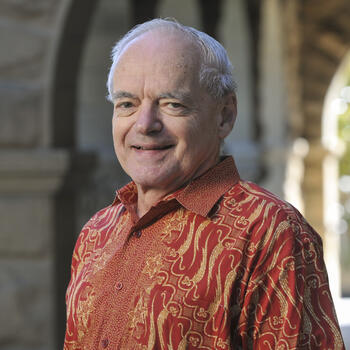
Beatriz Magaloni Magaloni is the Graham Stuart Professor of International Relations at the Department of Political Science. Magaloni is also a Senior Fellow at the Freeman Spogli Institute, where she holds affiliations with the Center on Democracy, Development and the Rule of Law (CDDRL) and the Center for International Security and Cooperation (CISAC). She is also a Stanford’s King Center for Global Development faculty affiliate. Magaloni has taught at Stanford University for over two decades.
She leads the Poverty, Violence, and Governance Lab (Povgov). Founded by Magaloni in 2010, Povgov is one of Stanford University’s leading impact-driven knowledge production laboratories in the social sciences. Under her leadership, Povgov has innovated and advanced a host of cutting-edge research agendas to reduce violence and poverty and promote peace, security, and human rights.
Magaloni’s work has contributed to the study of authoritarian politics, poverty alleviation, indigenous governance, and, more recently, violence, crime, security institutions, and human rights. Her first book, Voting for Autocracy: Hegemonic Party Survival and its Demise in Mexico (Cambridge University Press, 2006) is widely recognized as a seminal study in the field of comparative politics. It received the 2007 Leon Epstein Award for the Best Book published in the previous two years in the area of political parties and organizations, as well as the Best Book Award from the American Political Science Association’s Comparative Democratization Section. Her second book The Politics of Poverty Relief: Strategies of Vote Buying and Social Policies in Mexico (with Alberto Diaz-Cayeros and Federico Estevez) (Cambridge University Press, 2016) explores how politics shapes poverty alleviation.
Magaloni’s work was published in leading journals, including the American Political Science Review,American Journal of Political Science, Criminology & Public Policy, World Development, Comparative Political Studies, Annual Review of Political Science, Cambridge Journal of Evidence-Based Policing, Latin American Research Review, and others.
Magaloni received wide international acclaim for identifying innovative solutions for salient societal problems through impact-driven research. In 2023, she was named winner of the world-renowned Stockholm Prize in Criminology, considered an equivalent of the Nobel Prize in the field of criminology. The award recognized her extensive research on crime, policing, and human rights in Mexico and Brazil. Magaloni’s research production in this area was also recognized by the American Political Science Association, which named her recipient of the 2021 Heinz I. Eulau Award for the best article published in the American Political Science Review, the leading journal in the discipline.
She received her Ph.D. in political science from Duke University and holds a law degree from the Instituto Tecnológico Autónomo de México.
The study of autocracy is arguably one of the most visible fields in political science, producing an already voluminous and still growing literature. The field, however, is not without its problems. One fact perhaps stands out: The field has become extremely fragmented as the field has expanded. This state of fragmentation has its costs. We put forward an integrated and dynamic framework for understanding autocratic politics. An integrated framework allows us to better organize empirical data, reconcile diverging results and interpretations, and reveal neglected and hidden interactions of factors, mechanisms, and pathways. Equally important, an integrated framework exposes critical gaps within our knowledge and suggests new directions for further inquiries.
Speaker Bio:
Image
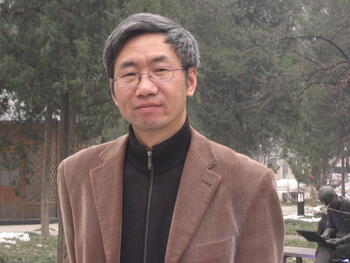
Shiping Tang is Fudan Distinguished Professor and Dr. Seaker Chan Chair Professor at the School of International Relations and Public Affairs (SIRPA), Fudan University, Shanghai, China. He is currently a Fulbright visiting research scholar (2015-16) at the School of Global Policy and Strategy, University of California at San Diego. Prof. Tang has very broad research interests and has published widely. His most recent book, The Social Evolution of International Politics (2013), received the International Studies Association (ISA) “Annual Best Book Award” in 2015. He is also the author of A General Theory of Institutional Change (2011), A Theory of Security Strategy for Our Time: Defensive Realism (2010), and many articles in journals in international relations, institutional economics, sociology, and philosophy of the social sciences.
This event is open to Stanford undergraduate students only.
The Center on Democracy, Development, and the Rule of Law (CDDRL) is currently accepting applications from eligible juniors due February 12, 2016 who are interested in writing their senior thesis on a subject touching upon democracy, economic development, and rule of law (DDRL) from any university department. CDDRL faculty and current honors students will be present to discuss the program and answer any questions.
For more information on the CDDRL Senior Honors Program, please click here.
CDDRL
Encina Hall, C152
616 Jane Stanford Way
Stanford, CA 94305-6055
(650) 725-2705
(650) 724-2996
0
sstedman@stanford.edu
Senior Fellow at the Freeman Spogli Institute for International Studies
Professor, by courtesy, of Political Science
Stedman_Steve.jpg
PhD
Stephen Stedman is a Senior Fellow at the Freeman Spogli Institute for International Studies (FSI) and the Center on Democracy, Development and the Rule of Law (CDDRL), an affiliated faculty member at CISAC, and professor of political science (by courtesy) at Stanford University. He is director of CDDRL's Fisher Family Honors Program in Democracy, Development and Rule of Law, and will be faculty director of the Program on International Relations in the School of Humanities and Sciences effective Fall 2025.
In 2011-12 Professor Stedman served as the Director for the Global Commission on Elections, Democracy, and Security, a body of eminent persons tasked with developing recommendations on promoting and protecting the integrity of elections and international electoral assistance. The Commission is a joint project of the Kofi Annan Foundation and International IDEA, an intergovernmental organization that works on international democracy and electoral assistance.
In 2003-04 Professor Stedman was Research Director of the United Nations High-level Panel on Threats, Challenges and Change and was a principal drafter of the Panel’s report, A More Secure World: Our Shared Responsibility.
In 2005 he served as Assistant Secretary-General and Special Advisor to the Secretary- General of the United Nations, with responsibility for working with governments to adopt the Panel’s recommendations for strengthening collective security and for implementing changes within the United Nations Secretariat, including the creation of a Peacebuilding Support Office, a Counter Terrorism Task Force, and a Policy Committee to act as a cabinet to the Secretary-General.
His most recent book, with Bruce Jones and Carlos Pascual, is Power and Responsibility: Creating International Order in an Era of Transnational Threats (Washington DC: Brookings Institution, 2009).
Director, Fisher Family Honors Program in Democracy, Development and Rule of Law
Director, Program in International Relations
Affiliated faculty at the Center for International Security and Cooperation
Encina Hall, C148
616 Jane Stanford Way
Stanford, CA 94305
0
f.fukuyama@stanford.edu
Olivier Nomellini Senior Fellow at the Freeman Spogli Institute for International Studies
Director of the Ford Dorsey Master's in International Policy
Research Affiliate at The Europe Center
Professor by Courtesy, Department of Political Science
yff-2021-14290_6500x4500_square.jpg
Francis Fukuyama is the Olivier Nomellini Senior Fellow at Stanford University's Freeman Spogli Institute for International Studies (FSI), and a faculty member of FSI's Center on Democracy, Development and the Rule of Law (CDDRL). He is also Director of Stanford's Ford Dorsey Master's in International Policy, and a professor (by courtesy) of Political Science.
Dr. Fukuyama has written widely on issues in development and international politics. His 1992 book, The End of History and the Last Man, has appeared in over twenty foreign editions. His book In the Realm of the Last Man: A Memoir will be published in fall 2026.
Francis Fukuyama received his B.A. from Cornell University in classics, and his Ph.D. from Harvard in Political Science. He was a member of the Political Science Department of the RAND Corporation, and of the Policy Planning Staff of the US Department of State. From 1996-2000 he was Omer L. and Nancy Hirst Professor of Public Policy at the School of Public Policy at George Mason University, and from 2001-2010 he was Bernard L. Schwartz Professor of International Political Economy at the Paul H. Nitze School of Advanced International Studies, Johns Hopkins University. He served as a member of the President’s Council on Bioethics from 2001-2004. He is editor-in-chief of American Purpose, an online journal.
Dr. Fukuyama holds honorary doctorates from Connecticut College, Doane College, Doshisha University (Japan), Kansai University (Japan), Aarhus University (Denmark), the Pardee Rand Graduate School, and Adam Mickiewicz University (Poland). He is a non-resident fellow at the Carnegie Endowment for International Peace. He is a member of the Board of Trustees of the Rand Corporation, the Board of Trustees of Freedom House, and the Board of the Volcker Alliance. He is a fellow of the National Academy for Public Administration, a member of the American Political Science Association, and of the Council on Foreign Relations. He is married to Laura Holmgren and has three children.
(October 2025)
Global Populisms
A new project examining the global surge in populist movements and what it means for established democratic rules and institutions.
Brett Carter is an Associate Professor in the Department of Political Science and International Relations at the University of Southern California, a Hoover Fellow at Stanford University's Hoover Institution, and a Faculty Affiliate at Stanford's Center on Democracy, Development and the Rule of Law. He received a Ph.D. from Harvard University, where he was a fellow at the Harvard Academy for International and Area Studies.
Carter studies politics in the world's autocracies. His first book, Propaganda in Autocracies: Institutions, Information, and the Politics of Belief (Cambridge University Press), draws on the largest archive of state propaganda ever assembled — encompassing over eight million newspaper articles in six languages from nearly 60 countries around the world — to show how political institutions shape the propaganda strategies of repressive governments. It received the William Riker Prize for the Best Book in Political Economy, the International Journal of Press/Politics Hazel Gaudet-Erskine Best Book Award, Honorable Mention for the Gregory Luebbert Award for the Best Book in Comparative Politics, and Honorable Mention for the APSA Democracy & Autocracy Section's Best Book Award.
His second book, in progress, shows how politics in Africa’s autocracies changed after the fall of the Berlin Wall and how a new era of geopolitical competition — marked by the rise of China and the resurgence of Russia — is changing them again.
Carter’s other work has appeared in the Journal of Politics, British Journal of Political Science, Perspectives on Politics, Journal of Conflict Resolution, Security Studies, China Quarterly, Journal of Democracy, and Foreign Affairs, among others. His work has been featured by The New York Times, The Economist, The National Interest, and NPR’s Radiolab.
Encina Hall, C150
616 Jane Stanford Way
Stanford, CA 94305
0
jdkuo@stanford.edu
Center Fellow, Freeman Spogli Institute for International Studies
didi_kuo_2023.jpg
Didi Kuo is a Center Fellow at the Freeman Spogli Institute for International Studies (FSI) at Stanford University. She is a scholar of comparative politics with a focus on democratization, corruption and clientelism, political parties and institutions, and political reform. She is the author of The Great Retreat: How Political Parties Should Behave and Why They Don’t (Oxford University Press) and Clientelism, Capitalism, and Democracy: the rise of programmatic politics in the United States and Britain (Cambridge University Press, 2018).
She has been at Stanford since 2013 as the manager of the Program on American Democracy in Comparative Perspective and is co-director of the Fisher Family Honors Program at CDDRL. She was an Eric and Wendy Schmidt Fellow at New America and is a non-resident fellow with the Carnegie Endowment for International Peace. She received a PhD in political science from Harvard University, an MSc in Economic and Social History from Oxford University, where she studied as a Marshall Scholar, and a BA from Emory University.
The Program on Human Rights (PHR) at Stanford’s Center on Democracy, Development and the Rule of Law (CDDRL) will be phasing out its program in 2015 with the retirement of PHR’s Director Helen Stacy.
India has the third largest system of higher education in the world, with many expecting this system to drive India's economic development going forward. And yet there is profound variation across this system, as some public universities perform admirably even as others suffer from endemic problems that we associate with weak states: absenteeism, bribery, and the like. What explains why some public universities seem to function so well even as others struggle? I argue that the presence or absence of meritocratic practices explains this variation, and in this talk, we shall examine the conditions under which meritocracy comes about. This research brings together five years of archival work, more than one-hundred interviews, as well as data from a large survey I conducted.
Speaker Bio:
Image
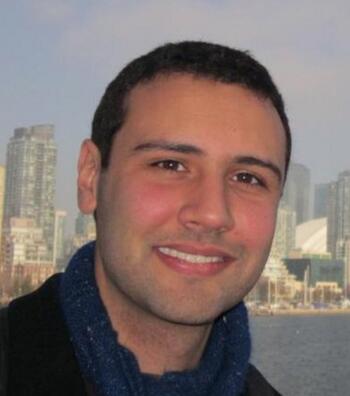
Dinsha Mistree is a Postdoctoral Fellow at CDDRL, where he studies governance in developing countries. He is currently working on a book project examining India's higher education sector. Dinsha's previous work has appeared or is forthcoming at Comparative Politics, Springer Press, and Cambridge University Press. Dinsha holds a PhD in Politics from Princeton as well as Bachelor's and Master's Degrees from MIT.
Dinsha Mistree is a research fellow at the Hoover Institution, where he manages the Program on Strengthening US-Indian Relations. He is also a research fellow in the Rule of Law Program at Stanford Law School and an affiliated scholar at the Center on Democracy, Development and the Rule of Law. Dr. Mistree studies the relationship between governance and economic growth in developing countries. His scholarship concentrates on the political economy of legal systems, public administration, and education policy, with a regional focus on India. He holds a Ph.D. and an M.A. in Politics from Princeton University, with an S.M. and an S.B. from MIT. He previously held a postdoctoral fellowship at CDDRL and was a visiting scholar at IIM-Ahmedabad.
Negotiators from 12 Pacific Rim countries recently reached an agreement on the Trans-Pacific Partnership (TPP), a sweeping trade pact that has been promoted by the Obama administration as a high-quality, next-generation deal that will set standards for international trade for years to come. While noting the agreement still requires ratification by each member state, Stanford scholars believe that the TPP will be approved and reshape not only trade but also security relations in the Asia-Pacific region and beyond.
The TPP negotiations originally began as an expansion of the Trans-Pacific Economic Partnership Agreement signed by Brunei, Chile, New Zealand and Singapore in 2005, and then took on broader significance in 2008 when the United States expressed interest. The number of members eventually grew to include the other North American Free Trade Agreement (NAFTA) economies of Canada and Mexico, as well as Australia, Peru, Vietnam, Malaysia and Japan. Even before the agreement was finalized, leaders of many other Asia-Pacific countries expressed interest in joining the next round of negotiations, including South Korea, Taiwan, the Philippines, Colombia, Thailand and most recently, Indonesia.
A summit with leaders of the member states of the Trans-Pacific Strategic Economic Partnership Agreement (TPP). Pictured, from left, are Naoto Kan (Japan), Nguyễn Minh Triết (Vietnam), Julia Gillard (Australia), Sebastián Piñera (Chile), Lee Hsien Loong (Singapore), Barack Obama (United States), John Key (New Zealand), Hassanal Bolkiah (Brunei), Alan García (Peru), and Muhyiddin Yassin (Malaysia). Six of these leaders represent countries that are currently negotiating to join the group.
The appeal of the TPP in the region is twofold. First, the repeated failure of new trade talks at the World Trade Organization (WTO) has forced countries seeking greater trade liberalization to pursue it through other bilateral or regional multilateral negotiations. Second, in the Asia-Pacific region, the number of these agreements has rapidly multiplied, creating myriad different standards, procedures and tariff rates that raise the costs of doing business across state borders and inhibit international trade and investment.
The TPP offers the prospect of a common set of rules governing investment, production and exchange across all member states, with significant improvements in economic efficiency. In addition, the danger of being excluded from a new trade regime that includes a huge share of the region’s economic activity has created a sense of urgency to seek membership from those countries not in the initial round of negotiations. By far the most conspicuous absence among the TPP members is China, which is now the world’s second-largest economy and a significant trading partner of all current member states.
The Trans-Pacific Partnership has been a research focus at the Freeman Spogli Institute for International Studies.
The Walter H. Shorenstein Asia-Pacific Research Center has organized several eventsexploring aspects of the TPP, and the Taiwan Democracy Project in the Center on Democracy, Development, and the Rule of Law held a conference in 2013 that examined the TPP from a Taiwanese perspective. The conference produced a comprehensive report on the topic, and an audio recording of an earlier Shorenstein APARC panel event was made available online. Now that negotiations have concluded, the Taiwan Democracy Project will revisit the topic in an upcoming conference on Feb. 9.
With the public release of the agreement in early October, three noted experts from Stanford University, Thomas Fingar, Michael Armacost, and Donald Emmerson, offered their analysis of the TPP’s prospects for ratification and its impact on the Asia-Pacific region.
Now that the agreement has been published, what is significant about the TPP? What does it mean for China?
Image
The TPP is a big deal for many reasons, perhaps the most important of which is that it will provide the impetus and the template for concluding the Trans-Atlantic Trade and Investment Partnership (TTIP) and myriad other regional and mini-lateral trade negotiations initiated in response to the failure of the Doha Round of WTO reform. As with all trade agreements, there will be winners and losers, pain will be local and benefits diffuse, and critics will find much to criticize. But the agreement is likely to be ratified and its provisions will affect corporate strategies, investment decisions and globalized production chains. The fact that North America (the United States, Canada and Mexico) are parties to the TPP virtually assures that the globally important NAFTA group will not accept terms in TTIP or other negotiations that are incompatible with the TPP because NAFTA governments and companies do not want to cope with multiple standards, requirements, and procedures. The same is true of other major trading states and international firms, so the TPP will quickly become the new standard for “everyone” wishing to take advantage of opportunities in a globalized world.
This means that the TPP will serve as a—the—decisive building block for beyond-WTO trade arrangements. Without success in the TPP (or TTIP, which also has the size and importance to have become the new global standard if it had been concluded before the TPP) negotiations, there was a danger that the advantages of an integrated global trading system would be degraded by adoption of multiple and partially incompatible sub-regional agreements. Now those negotiating bilateral and mini-lateral agreements are likely to strive for consistency with the requirements adopted by key trading nations and the firms based in them.
The TPP is often but erroneously described as part of a U.S. effort to contain or constrain China. It isn’t. The United States should and will seek to bring China into the TPP, not to exclude it. I anticipate that Beijing will join together with South Korea, Indonesia, and possibly other states that are not yet members.
Thomas Fingar is a Shorenstein APARC Distinguished in the Freeman Spogli Institute for International Studies. He served previously as assistant secretary of the State Department’s Bureau of Intelligence and Research, principal deputy assistant secretary, deputy assistant secretary for analysis, director of the Office of Analysis for East Asia and the Pacific, and chief of the China Division.
Does the TPP carry security benefits? What are possible consequences for the U.S.-Japan relationship?
Image
The TPP is a trade agreement, not a security pact. Security is generally a predicate for growth and trade. It does not thrive amidst turmoil, let alone conflict. But with greater economic interdependence, the incentives for avoiding conflict increase. And fortuitously Asia remains an unusually peaceful region despite some growing tensions between China and its neighbors.
The TPP agreement is certainly an integral feature of the Obama administration’s effort to “rebalance” toward the Asia-Pacific region. It embeds the United States in a new institution whose membership, I believe, is destined to grow. America’s engagement in the region is a source of reassurance to our friends and allies there. The United States has been bolstering its alliance with Japan, and this agreement will add a broader framework to the U.S. alliance, which was established through the Treaty of Mutual Cooperation and Security, and which contains a specific clause encouraging expanded economic collaboration.
I regret that selling the agreement publicly has included some explicitly anti-Chinese features such as the claim that if the United States and others don’t write the rules of trade, China will. The TPP is and should be open to new members who are prepared to live up to its requirements and that includes China.
Michael H. Armacost is a Shorenstein APARC Distinguished Fellow in the Freeman Spogli Institute for International Studies. He held a 24-year career in the public service, including having served as U.S. ambassador to Japan and the Philippines.
How does the TPP fit into the context of Southeast Asia and its possible alternative arrangements for economic cooperation in the Asia-Pacific region?
Image
In strictly economic terms, there is no exact alternative to the distinctively comprehensive and intrusive TPP. In loosely economic but mainly geopolitical terms, however, a competitor does exist: the Regional Comprehensive Economic Partnership (RCEP). The United States is in the TPP. China is not. In the RCEP, the reverse is true. The United States has propelled the TPP. China and the Association of Southeast Asian Nations (ASEAN) are driving the formation of RCEP by all ten ASEAN states plus Australia, China, India, Japan, New Zealand and South Korea.
Compared with the TPP, RCEP is far less robust. RCEP is mainly about straightening the overlapping and sometimes inconsistent free trade agreements that already complicate Asian regionalism—the tangled contents of Asia’s “noodle bowl” of overlapping FTAs. (Trade agreements in the Asia-Pacific have burgeoned from around 60 ten years ago to some 300 today.) Under pressure from the more detailed and thoroughgoing TPP, RCEP’s would-be progenitors have been trying to expand their agenda to include more intrusive proposals. Partly for that reason, observers are pessimistic that RCEP’s negotiators will be able to proclaim its successful completion before the end of 2015.
ASEAN is divided. Myanmar, Cambodia, Indonesia, Laos, the Philippines, and Thailand are inside RCEP but outside the TPP. The other four ASEAN members—Brunei, Malaysia, Singapore, and Vietnam—enjoy the advantage of sitting at both negotiating tables. If only one of the two projected partnerships fails, these four states would still have the other arrangement to fall back on, and so much the better for them if both schemes succeed. It is partly for this reason that varying degrees of interest in joining the TPP have been expressed by five of the six non-TPP states in Southeast Asia. The exception is Myanmar, but once the structure and character of its new government have been clarified, its leaders too may wish to consider the TPP. Even China’s initially hostile view of the TPP has softened.
Given the market-favoring and regulation stipulations of the TPP, new entrants may be unwilling to accept its detailed, full-spectrum rules. But the Doha Round is dead, and the proposal to replace it with a scaled-down “Global Recovery Round” has gone nowhere. For the time being, the best one can hope for in the Asia-Pacific region is a successful TPP that China could eventually join, or a successful RCEP that could someday welcome the United States, or the birth of both arrangements followed by effective steps to render them complementary rather than competitive.
Donald K. Emmerson is director of the Southeast Asia Program at the Walter H. Shorenstein Asia-Pacific Research Center in the Freeman Spogli Institute for International Studies, where he is also affiliated with the Center for Democracy, Development, and the Rule of Law and the Abbasi Program in Islamic Studies.
Interested in joining the conversation? The Taiwan Democracy Project will revisit this topic on Feb. 9. The one-day symposium will bring together scholars and practitioners to reconsider Taiwan's prospects for entry into the Trans-Pacific Partnership. RSVP here today.
President Barack Obama participates in a trilateral meeting with Prime Minister Tony Abbott of Australia and Prime Minister Shinzo Abe of Japan, right, at the Brisbane Convention and Exhibition Center, Brisbane, Queensland, Australia, Nov. 16, 2014. | Official White House Photo by Pete Souza
The JSK Journalism Fellowships at Stanford (jsk.stanford.edu) each year brings 20 outstanding journalists and journalism innovators to pursue their ideas for improving journalism. JSK Fellowships focuses on journalism innovation, entrepreneurship and leadership, as JSK fellows create new models, tools and approaches that are redefining journalism. Each fellow comes to Stanford with a “journalism challenge”: a question they seek to answer, a problem they seek to solve, an opportunity they seek to explore. JSK Fellows collaborate with each other, with students, with faculty, researchers and Silicon Valley innovator and entrepreneurs.
They are a diverse group, representing traditional news organizations like The Washington Post and Southern California Public Radio, as well as newer ventures like Vox or Re/code. Seven of them are international fellows, some coming from countries where the news media is well established, and others from countries like Ukraine and Venezuela, where independent journalists often are under siege. This class marks the 50th year of journalism fellowships at Stanford and the seventh under the program’s heightened emphasis on journalism innovation, entrepreneurship and leadership.
Oleksandr Akymenko: From Yanukovych Leaks to Implementing New Business Models to Sustain Independent Media in Ukraine
Oleksandr Akymenko is a Ukrainian entrepreneur, journalist with experience in online, television and magazine reporting. Cofounder of http://platfor.ma, a media website aimed at the Creative Class. In 2014, Akymenko participated in YanukovychLeaks, a collaborative effort by journalists to salvage and publish the archives of former Ukranian president Viktor Yanukoyvch that had been dumped in a river. Akymenko had previously created and led the investigative department of Forbes Ukraine, where his reporting included a 2-year investigation of a young oligarch, Sergey Kurchenko. When Kurchenko bought the magazine’s parent company in mid-2013, Akymenko and several other staff members resigned in protest. Before joining Forbes, Akymenko had helped found Svidomo, which produces investigative projects and worked at an investigative program on one of Ukraine’s largest television channels. Twitter: @akymenko_o
Subramaniam Vincent: The Digital Public of Bangalore
Subramaniam Vincent is a software engineer turned journalist entrepreneur. He first came to the United States to pursue a master’s in computer engineering at the University of Southern California. After graduating, he worked at Cisco Systems in San Jose, California. He kept up with news of home by reading Indian newspapers online. When he and a friend became frustrated with their coverage of socio-economic issues, they decided in 1998 to start India Together, an e-journal focused on tracking campaigns for reform in India. Five years later, in Bangalore, they turned India Together into the country’s first reader-financed publication covering development. He later co-founded and is also editor-in-chief of Citizen Matters, a Bangalore-focused civic newsmagazine that uses the work of citizen and professional journalists. It is owned by Oorvani Media, of which he is CEO and co-founder. Currently, the journalism in both publications is funded by the non-profit Oorvani Foundation, where he is a trustee. Journalism in Citizen Matters and India Together has been awarded 10 times in 11 years. Twitter: @subbuvincent
Jacob Fenton: Open Data for Political Accountability in the U.S.
Jacob Fenton is a journalism and software developer who's worked in newsrooms and nonprofits the U.S. for the last decade. Most recently, Fenton was an editorial engineer for the Sunlight Foundation in Washington, D.C. where he worked extensively on campaign finance, TV ad disclosure, and congressional expenditure reporting. His responsibilities were split between developing new web sites and transparency tools, and using them as a journalist. He led the development of Sunlight’s real-time, federal campaign finance site, which was widely cited in the 2012 and 2014 election cycles. He previously has worked as a software developer in Palo Alto, California, a reporter in the Philadelphia suburbs and in a variety of roles that drew on his reporting and coding skills. He was database editor at The Morning Call newspaper, in Allentown, Pennsylvania, where he started the paper’s data center and wrote some of its first news applications. In 2010, he was selected as the first director of computer-assisted reporting at the Investigative Reporting Workshop, a nonprofit investigative news startup at American University’s School of Communications. http://www.jacobfenton.com/
With the announcement on Monday that an agreement has been reached on the Trans-Pacific Partnership (TPP), the controversial trade accord is in the news all across Asia this week. Taiwan is not one of the founding participants, but its leaders have reiterated their determination to join the next round of negotiations if the agreement is ratified and comes into effect. Taiwan's prospects for entry remain uncertain, however, and will depend to a great degree on the attitudes of decision-makers in the United States and the People's Republic of China.
The Taiwan Democracy Project (TDP) at the Center on Democracy, Development, and the Rule of Law has been at the forefront of research and discussion on this topic. In the fall of 2013, the TDP held a conference to explore the prospects for Taiwan’s participation in the TPP that brought together policymakers and scholars from Taiwan along with with leading specialists from other Asian countries and the U.S. The key findings of the conference are summarized in a conference report. The key conclusions of the conference remain valid today: it is in Taiwan's national interest to join the TPP; external obstacles to Taiwan's accession to the partnership are signficant but not insurmountable; and Taiwanese policy-makers need to worry about domestic obstacles as much as international ones in seeking TPP membership.
The Taiwan Democracy Project will continue to monitor TPP-related developments over the coming months and plans to revisit Taiwan's prospects for TPP entry in a symposium in February 2016.
Hero Image
Container ship, Hyundai Freedom, at the Port of Kaohsiung. | Tommy Ian




 A summit with leaders of the member states of the Trans-Pacific Strategic Economic Partnership Agreement (TPP). Pictured, from left, are Naoto Kan (Japan), Nguyễn Minh Triết (Vietnam), Julia Gillard (Australia), Sebastián Piñera (Chile), Lee Hsien Loong (Singapore), Barack Obama (United States), John Key (New Zealand), Hassanal Bolkiah (Brunei), Alan García (Peru), and Muhyiddin Yassin (Malaysia). Six of these leaders represent countries that are currently negotiating to join the group.