Authors
News Type
News
Date
Paragraphs

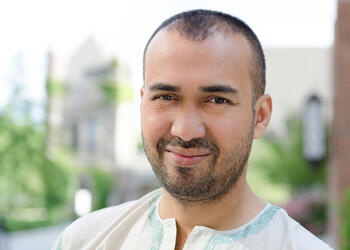
Prince Moulay Hicham Ben Abdallah, a consulting professor at the Center on Democracy, Development and the Rule of Law is leaving Stanford at the end of this academic year to pursue research in Islamic studies in the United Kingdom.

Ben Abdallah joined CDDRL – a center at the Freeman Spogli Institute for International Studies – as a visiting scholar in 2007, and then became a consulting professor. In 2010, Ben Abdallah worked with CDDRL Director Larry Diamond to launch one of the center’s principal research programs, the Program on Arab Reform and Democracy (ARD). Examining political and democratic reform in the Arab world, ARD is a multidisciplinary program that brings together policy-makers, academics and civil society members to advance policy-relevant research.

“We are very proud to have been able to engage Prince Moulay Hicham and provide him an intellectual home during this past formative period for the Program on Arab Reform and Democracy, and for his own scholarship and reflection. He has had a profound and enduring impact in helping to launch and shape a significant program of research on Arab politics and society at Stanford, and through that in stimulating the broader growth of Arab studies at Stanford,” said Diamond. “In giving so generously of his time, knowledge, and resources to our students, he has also supported and inspired many of them to make what I expect will be a lifelong commitment to study of and engagement with the Arab World. We wish him every success in this next phase of his intellectual journey.”

Written during his residence at CDDRL, Ben Abdallah's memoir entitled Journal d’un Prince Banni or the Diary of a Banished Prince debuted this spring. The autobiography shares his life story as a member of Morocco's royal family. The first cousin of Morocco's King Mohammed VI, Diary of a Banished Prince traces Ben Abdallah's evolution as a political activist against the historical backdrop of Morocco's authoritarian politics.

“At CDDRL, I found an intellectual community that was tightly knit, yet diverse enough to foster the cross-fertilization of ideas," said Ben Abdallah "Its cutting-edge research and classical scholarly debates provided an environment that broadened my expertise and offered opportunities to engage in real introspection.. All these elements were crucial in allowing me to write my book as well as explore new frontiers of research.”

Ben Abdallah has served on the FSI advisory board since November 2009, and has stepped down from that role this year.

Ben Abdallah will continue to stay engaged at Stanford through his role on the board of advisors for the American Middle Eastern Network for Dialogue at Stanford, a student group on campus. He will also stay involved with the ARD program as a principal advisor and supporter of the initiative.

Hero Image
myhicham
Moulay Hicham
All News button
1
Authors
Christian E. Ollano
News Type
News
Date
Paragraphs

This summer Stanford’s Center on Democracy, Development, and the Rule of Law (CDDRL) is welcoming new leadership to oversee the growth and development of the Program on Arab Reform and Democracy (ARD), one of the Center's principal research programs examining contemporary issues of political development in the Arab world.

Lisa Blaydes, assistant professor of political science at Stanford, will assume the role of faculty co-director, working together with CDDRL Director Larry Diamond to help shape the program's research agenda. Blaydes will be joined by Hesham Sallam, currently a CDDRL pre-doctoral fellow completing his Ph.D. in government at Georgetown University. He will serve as the program's new associate director, assuming operational management and developing the program's research initiatives and activities at Stanford and throughout the Arab world, in partnership with the faculty co-directors. Sallam is also joining CDDRL as a research associate. In that capacity he will produce research and publications on questions related to political and economic reform in the Arab World.

Sallam is replacing ARD's founding director Lina Khatib, who left CDDRL last year to assume directorship of the Carnegie Endowment for Peace's Middle East office in Beirut.

"We are very excited to have Hesham Sallam assuming this leadership role in the ARD program, and joining the research staff of CDDRL,” said Diamond. “Hesham is not only a superb scholar of Arab politics and political economy, but has also been deeply engaged in analytic and public policy debates about the future of the region. His deep knowledge and broad credibility in the field will be strong and immediate assets to the program, and will help us build on the strong foundation laid by our founding program leader, Lina Khatib."

“I am extremely delighted to join the CDDRL and FSI family,” said Sallam. “I look forward to working closely with the Stanford community, faculty, students, and staff, to expand interdisciplinary discussions of Arab politics and society on campus.”

“By enhancing its intellectual engagement with scholars and activists in Arab world, ARD will continue to nuance our understanding of conflicts over political, social and economic rights in the region by supporting critical scholarship and by developing innovative research agendas,” he said.

Sallam’s dissertation examines how Islamist movements have impacted the politics of economic reform in Egypt before and after the Arab uprisings in 2011. His previous research has received the support of the United States Institute of Peace and the Social Science Research Council. Sallam also serves as co-editor of the Jadaliyya, a leading online magazine, which invites critical debate and analysis of current events in the Arab world from academics, activists and journalists. 

Diamond expressed great enthusiasm over the addition of Lisa Blaydes to the program’s faculty leadership. “Over the past several years, Lisa has rapidly emerged as one of the most original and influential scholars of politics and social change in the Arab world,” he said. “She brings to the program intense intellectual curiosity, scholarly distinction and a keen interest in advancing social science studies of the Arab world."

Blaydes, a specialist in comparative politics and politics in the Middle East, recently published the book, Elections and Distributive Politics in Mubarak’s Egypt, which examines the complex relationships among regimes, rent-seeking elites and citizens fostered by authoritarian elections.

“The Arab world is at a critical juncture,” said Blaydes. “Although mass protests have transformed public political consciousness, the long-term impact of the protest movement on more concrete forms of power has yet to be determined. Policy-relevant scholarly research such as that conducted by the Program on Arab Reform and Democracy may help us to identify pathways to political reform.”

Blaydes and Sallam, together with Diamond, participated in the most recent ARD Program conference on political change in the Arab world. Held in collaboration with the Center for Research on Globalization and Democratic Governance at Koc University in Turkey, the conference brought together leaders in policy, academia and government to address issues of violence and government transitions in the region following continuous civil unrest and political uncertainty.

Founded in 2010 with annual support from the Moulay Hicham Foundation, CDDRL's Program on Arab Reform and Democracy aims to be a hub for intellectual capital about issues related to good governance, social change and political reform in the region, producing rigorous and policy-relevant academic research. Conferences and seminars in the U.S. and the Arab world provide innovative forums for academics and policy-makers to advance new ideas and approaches to the most pressing issues facing the region today.

For more information on the Program on Arab Reform and Development, please visit: http://arabreform.stanford.edu/. 

Hero Image
encinaardimage
All News button
1
-

*Open only to Stanford students.* 

Speaker Bio: 

Zahera Harb is one of the six 2013-2014 FSI-Humanities Center International Visitors and will be in residence at Stanford in May 2014. She is Senior Lecturer in International Journalism at City University London. She received her M.A. and Ph.D. in journalism studies from Cardiff University (United Kingdom). As an expert on Arab media, she has published widely on journalism ethics, conflict and war reporting, political communication and representation of Muslims and Islam in western media. Her recent publications include Narrating Conflict in the Middle East: Discourse, Image and Communications Practices in Lebanon and Palestine (2013) and Channels of Resistance: Liberation Propaganda, Hezbollah and the Media (2011). Dr. Harb also has 11 years of experience as a journalist in Lebanon working for Lebanese and international media organizations.


This event is co-sponsored by the Sohaib and Sara Abbasi Program in Islamic Studies, CDDRL Program on Arab Reform and Democracy, the Mediterranean Studies Forum, Stanford Humanities Center, Arab Studies Table, Stanford Language Center. 

Building 30, Room 102

Zahera Harb Senior Lecturer in International Journalism Speaker City University London
Seminars
Date
Paragraphs
CDDRL Director Larry Diamond addresses concerns of an intensifying democratic recession in a piece in The Atlantic. Despite recent turmoil in Ukraine and democratic breakdowns in Thailand and Turkey, among others, Diamond emphasizes the critical role economic development, globalization and the growth of civil society will play in the long-run inducement of democratic change worldwide.
Hero Image
democracy Logo
Protesters carry a large banner reading: ''Democracy'' as they participate in an anti-government protests organized by Bahrain's leading opposition Al Wefaq. Sept. 14, 2012.
Hamad I Mohammed / Reuters
All News button
1
-

Abstract:

Moulay Hicham’s newly published memoir, Journal d’un prince banni, retells his personal life within the context of devastating political critique against the Moroccan political system, its authoritarian monarchy, and the “deep state” within that resists democratic change, the Makhzen.  Written during Moulay Hicham's time as a fellow at the Center for Democracy, Development, and Rule of Law at Stanford University, the volume is neither a settlement of accounts nor a gossipy narrative of frivolous stories.  It instead uniquely ensconces vivid personal recollections within the context of authoritarian politics.  The prince witnessed the rise of the system under King Hassan II, the long-lasting ruler who eliminated all opposition, centralized power, and linked a loyal community of courtiers, elites, and cronies to his will—the Makhzen.  The memoir reveals how Moulay Hicham’s aspirations towards autonomy and independence were constantly blocked by this system, often by either the King himself or his coercive apparatus, comprising the intelligence services and military.  At the same time, the nearly half-century reign of King Hassan exposes critical insight into the development of Moroccan politics and identity, from his acumen regarding the Western Sahara problem to his ability to make the kingdom a focal point of Arab politics after the demise of Nasserism. 

Those personal observations on governance continue with the royal ascent of Hassan’s son, Mohamed VI, who assumed the throne in 1999 and is Moulay Hicham’s cousin.  Replacing Hassan’s powerfully intent personality was this more humane yet political disengaged new king.  His inability to curb the Makhzen and enact meaningful democratic reforms shows the system’s very success.  Whereas the pressures of conforming to the system crushed many of those personalities who grew up in the court, Moulay Hicham managed to elude this destructive side through his self-imposed exile to the United States and his intellectual decision to criticize an authoritarian machine to which he was meant to belong.  As the memoir concludes, such resistance to change implicates the monarchy’s future.  Decades of political exclusion, false promises, and rising inequality have alienated much of the Moroccan public.  As the Arab Spring showed, such discontentment portends to future social and political conflict that could well discredit the monarchy, resulting in its overthrow after 350 years of continuous reign.

Journal d’un prince banni has become a literary and political phenomenon in Morocco and the Moroccan diaspora worldwide.  Its release ignited tumultuous debates within the press, social media, and civil society.  Dubbed an “exceptional document” by Le Nouvel Observateur, the memoir has become one of the best-selling non-fiction works in France.  Though print versions are currently unavailable in Morocco, electronic versions have been downloaded and disseminated on an exponential scale.  Arabic, English, and other language-editions are scheduled for release in the near future.


Speaker Bio:

Hicham Ben Abdallah received his B.A. in Politics in 1985 from Princeton University, and his M.A. in Political Science from Stanford in 1997. His interest is in the politics of the transition from authoritarianism to democracy.

He has lectured in numerous universities and think tanks in North America and Europe. His work for the advancement of peace and conflict resolution has brought him to Kosovo as a special Assistant to Bernard Kouchner, and to Nigeria and Palestine as an election observer with the Carter Center. He has published in journals such Le Monde,  Le Monde Diplomatique,Pouvoirs, Le Debat, The Journal of Democracy, The New York Times, El Pais, and El Quds.

In 2010 he has founded the Moulay Hicham Foundation which conducts social science research on the MENA region. He is also an entrepreneur with interests in agriculture, real estate, and renewable energies. His company, Al Tayyar Energy, has a number of clean energy projects in Asia and Europe. 


Oksenberg Conference Room

CDDRL
Stanford University
Encina Hall
616 Serra Street
Stanford, CA 94305-6055

0
Consulting Professor
Ben_Abdallah.jpg MA

Hicham Ben Abdallah received his B.A. in Politics in 1985 from Princeton University, and his M.A. in Political Science from Stanford in 1997. His interest is in the politics of the transition from authoritarianism to democracy.

He has lectured in numerous universities and think tanks in North America and Europe. His work for the advancement of peace and conflict resolution has brought him to Kosovo as a special Assistant to Bernard Kouchner, and to Nigeria and Palestine as an election observer with the Carter Center. He has published in journals such Le Monde,  Le Monde Diplomatique,Pouvoirs, Le Debat, The Journal of Democracy, The New York Times, El Pais, and El Quds.

In 2010 he has founded the Moulay Hicham Foundation which conducts social science research on the MENA region. He is also an entrepreneur with interests in agriculture, real estate, and renewable energies. His company, Al Tayyar Energy, has a number of clean energy projects in Asia and Europe. 

Hicham Ben Abdallah Consulting Professor Speaker Stanford University
Conferences
Paragraphs

Abstract:

This article aims to explain the 2011 Tunisian transition by offering a historical institutional and a game-theoretic analysis of how the army played a crucial role in the fall of Ben Ali’s regime. What is the rationality behind the military’s decision to refuse Ben Ali’s order to open fire on the demonstrators? Why did the Tunisian army repressed protesters in the revolt of the Gafsa Mining Basin in 2008, and refused to do so in the decisive uprising of 2011? How to explain the speed at which the Tunisian regime fell? It is argued that the balance of power on the field was such that the army was better-off to back the population and used a strategic entry point to bring a decisive “coup” to the regime. The high degree of institutionalization of the Tunisian army is seen as a precondition to make such an independent decision. The army’s commitment to back the population constituted a strong signal to the protesters as well as to foreign allies, causing a rapid fall of the Tunisian dictatorship. This paper offers the first analysis applying game theory to explain the 2011 Tunisian transition and, more precisely, the interactions between Ben Ali’s regime and the army. While several analyses focus on the unprecedented popular mobilization to explain Ben Ali’s fall, only a few authors attempted to explain the role of the militaries. However, while they emphasize on the “disdain” of the army towards the regime, we, instead, claim that the rationality of one of the most professional army of the region to understand how and why the militaries refused to repress demonstrators in the 2011 national protests. 

All Publications button
1
Publication Type
Working Papers
Journal Publisher
CDDRL Working Papers
Authors
News Type
News
Date
Paragraphs
In a recent report, CDDRL Postdoctoral Fellow Amr Adly, with the support of the Center for International Private Enterprise, provides insight on post-revolution entrepreneurship in Egypt and Tunisia. He suggests that in order to advance their economies, governments must carry out comprehensive reforms that provide greater accessibility to formal institutional structures for the broadest base of private sector enterprises, namely, small business owners, rural enterprises, and female entrepreneurs.
Hero Image
Amr Pic 1
Cairo Nile city towers from Al Zamalek area just a few minutes after sunset.
Flickr/Marwa Morgan
All News button
1
Paragraphs

Ongoing upheaval in Egypt and Tunisia since the 2011 revolutions indicates high levels of dissatisfaction with the political order, and expresses a deep desire for a drastic remodeling of the economic system. Well-educated young men and women still find themselves marginalized and excluded from the political and economic order in their countries. Their initial demands for freedom and social justice have hitherto gone unheeded. At the heart of the ongoing political turmoil lies the demand for a sweeping socio-economic reform that may eventually create an economy that offers inclusive-growth, higher levels of productivity and competitiveness, and more job creation. However, unless certain complex and long-term questions are tackled, it is unlikely that political reform will lead to the creation of stable democracies.

Entrepreneurship is one of the most dynamic approaches to socio-economic transformation and development. It is intimately related to private sector development, micro, small, and medium-sized enterprise policies, job creation, innovation, and competitiveness. However, unlike the study of static policy and of regulatory areas or institutions and structures, analyzing the entrepreneurship ecosystem captures a picture in motion. Tackling the question of entrepreneurship links micro-level analysis that touches upon direct barriers to entry and growth with macro-level analysis that attempts to explain the lack of dynamism, low productivity, undercapitalization and the weak prospects of growth of the broadest base of the private sector in the region. Moreover, it may provide a way out of the spiral of failed development in which Egypt and Tunisia have been caught for decades.

This report wishes to answer two questions: Why has private entrepreneurship in Egypt and Tunisia remained that underdeveloped despite decades of economic liberalization and private sector-friendly incentives and reforms? And how can the entrepreneurship ecosystem in the two countries develop to meet the high expectations of the people of having a productive and just socio-economic order? 

See the following link to view the feature service article from the two sponsoring institutions: http://www.cipe.org/publications/detail/understanding-entrepreneurship-ecosystem-tunisia-and-egypt

All Publications button
1
Publication Type
Policy Briefs
Publication Date
Journal Publisher
Center on Democracy, Development, and the Rule of Law and the Center for International Private Enterprise
Authors
Amr Adly
-


Abstract:

Political polarization has paralyzed the functioning of democracy in Thailand, Bangladesh, and Taiwan, where students have recently occupied the parliament building.  Civil liberties and political opposition are under intensified assault by an abusive prime minister in Turkey.  Indian democracy is increasingly diminished by brazen corruption and rent-seeking. Several African democracies have failed, and others are slipping.  The Arab Spring has largely imploded, and Egypt is in the grip of military authoritarian rule more repressive than anything the country has seen in decades.  After invading and swallowing a piece of Ukraine, Russia now poses a gathering threat to its democratic postcommunist neighbors.  For the eighth consecutive year, Freedom House finds that the number of countries declining in freedom have greatly exceeded the number improving.  And most of the advanced industrial democracies, including the United States, seem unable to address their long-term fiscal and other policy challenges.  Is there an emerging global crisis of democracy?  And if so, why?

Speaker Bio:

Larry Diamond is a senior fellow at the Hoover Institution and at the Freeman Spogli Institute for International Studies, where he directs the Center on Democracy, Development, and the Rule of Law. Diamond also serves as the Peter E. Haas Faculty Co-Director of the Haas Center for Public Service at Stanford. He is the founding co-editor of the Journal of Democracy and also serves as Senior Consultant (and previously was co-director) at the International Forum for Democratic Studies of the National Endowment for Democracy. During 2002-3, he served as a consultant to the U.S. Agency for International Development (USAID) and was a contributing author of its report Foreign Aid in the National Interest. He has also advised and lectured to the World Bank, the United Nations, the State Department, and other governmental and nongovernmental agencies dealing with governance and development. His latest book, The Spirit of Democracy: The Struggle to Build Free Societies Throughout the World (Times Books, 2008), explores the sources of global democratic progress and stress and the prospects for future democratic expansion.


Image

Reuben W. Hills Conference Room

CDDRL
Stanford University
Encina Hall, C147
616 Jane Stanford Way
Stanford, CA 94305-6055

(650) 724-6448 (650) 723-1928
0
Mosbacher Senior Fellow in Global Democracy at the Freeman Spogli Institute for International Studies
William L. Clayton Senior Fellow at the Hoover Institution
Professor, by courtesy, of Political Science and Sociology
diamond_encina_hall.png MA, PhD

Larry Diamond is the William L. Clayton Senior Fellow at the Hoover Institution, the Mosbacher Senior Fellow in Global Democracy at the Freeman Spogli Institute for International Studies (FSI), and a Bass University Fellow in Undergraduate Education at Stanford University. He is also professor by courtesy of Political Science and Sociology at Stanford, where he lectures and teaches courses on democracy (including an online course on EdX). At the Hoover Institution, he co-leads the Project on Taiwan in the Indo-Pacific Region and participates in the Project on the U.S., China, and the World. At FSI, he is among the core faculty of the Center on Democracy, Development and the Rule of Law, which he directed for six and a half years. He leads FSI’s Israel Studies Program and is a member of the Program on Arab Reform and Development. He also co-leads the Global Digital Policy Incubator, based at FSI’s Cyber Policy Center. He served for 32 years as founding co-editor of the Journal of Democracy.

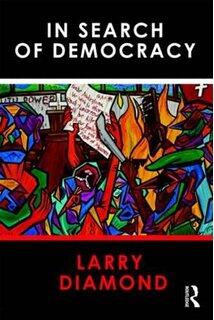
Diamond’s research focuses on global trends affecting freedom and democracy and on U.S. and international policies to defend and advance democracy. His book, Ill Winds: Saving Democracy from Russian Rage, Chinese Ambition, and American Complacency, analyzes the challenges confronting liberal democracy in the United States and around the world at this potential “hinge in history,” and offers an agenda for strengthening and defending democracy at home and abroad.  A paperback edition with a new preface was released by Penguin in April 2020. His other books include: In Search of Democracy (2016), The Spirit of Democracy (2008), Developing Democracy: Toward Consolidation (1999), Promoting Democracy in the 1990s (1995), and Class, Ethnicity, and Democracy in Nigeria (1989). He has edited or coedited more than fifty books, including China’s Influence and American Interests (2019, with Orville Schell), Silicon Triangle: The United States, China, Taiwan the Global Semiconductor Security (2023, with James O. Ellis Jr. and Orville Schell), and The Troubling State of India’s Democracy (2024, with Sumit Ganguly and Dinsha Mistree).

During 2002–03, Diamond served as a consultant to the US Agency for International Development (USAID) and was a contributing author of its report, Foreign Aid in the National Interest. He has advised and lectured to universities and think tanks around the world, and to the World Bank, the United Nations, the State Department, and other organizations dealing with governance and development. During the first three months of 2004, Diamond served as a senior adviser on governance to the Coalition Provisional Authority in Baghdad. His 2005 book, Squandered Victory: The American Occupation and the Bungled Effort to Bring Democracy to Iraq, was one of the first books to critically analyze America's postwar engagement in Iraq.

Among Diamond’s other edited books are Democracy in Decline?; Democratization and Authoritarianism in the Arab WorldWill China Democratize?; and Liberation Technology: Social Media and the Struggle for Democracy, all edited with Marc F. Plattner; and Politics and Culture in Contemporary Iran, with Abbas Milani. With Juan J. Linz and Seymour Martin Lipset, he edited the series, Democracy in Developing Countries, which helped to shape a new generation of comparative study of democratic development.

Download full-resolution headshot; photo credit: Rod Searcey.

Former Director of the Center on Democracy, Development and the Rule of Law
Faculty Chair, Jan Koum Israel Studies Program
Date Label
Larry Diamond Speaker
Seminars
-

Description:

Arab screens along with social networks have been flooded over the past three years with words, images and videos that were meant to shed light on the revolts and uprisings in Tunisia, Egypt, Yemen, Bahrain Libya and Syria. What started as a celebrated influx of information soon turned into means for disseminating sectarian and ethnic hatred, mainly in the cases of Syria and Egypt. Dr. Zahera Harb will discuss ethical boundaries that have been applied in Arab media coverage of the Arab revolts and uprisings, drawing on journalism epistemologies in the Arab world and focusing on recent developments in Syria and Egypt.

Speaker Profile:

Dr. Zahera Harb is a Lebanese journalist and academic. She is currently a senior lecturer in international journalism at City University London. Her recent publications include a co-edited collection titled Narrating conflict in the Middle East: Discourse Image and Communications Practices in Lebanon and Palestine (I.B. Tauris, 2013) and a monograph titled Channels of Resistance: Liberation propaganda Hezbollah and the Media (I.B. Tauris, 2011). She is a review editor for the Journal of Media Practice.

Dr. Harb has 11 years' experience as a journalist in Lebanon working for Lebanese and international media organizations. She started as a news reporter and distinguished herself in particular in the coverage of war operations in the battlefield of South Lebanon. She was then co-producer and presenter of a popular socio-political program (Khamseh Ala Sabaah, 5/7) before becoming one of the main news anchors at Tele Liban (the public service TV in Lebanon). At New TV she was appointed to a news anchor-editor post and hosted the main daily political show (Al Hadath). At Future TV (Pan Arab satellite channel) she produced and presented her own socio-political program (Ala Madar Assaa) while assigned as satellite news editor. She also produced several political and social documentaries for Lebanese TV stations and completed reporting assignments for BBC Arabic service (radio), CNN world report and Dutch TV. She hosted live coverage of distinguished political events inside and outside Lebanon.

Dr. Harb was trained in Lebanon, Holland and the UK and has a BA in Journalism, a Diploma in Broadcasting News and an MA and PhD in Journalism Studies and Political Communications.

She has been on the consultancy board of the Thomson Foundation UK for 7 years conducting media training in the UK and other parts of the world including Egypt, Tunisia, Kuwait, UAE, Malta, Spain, Armenia, Ukraine and Brussels.  


This event is sponsored by the Program on Arab Reform and Democracy, Sohaib and Sara Abbasi Program in Islamic Studies and Mediterranean Studies Forum and in partnership with the Stanford Humanities Center and Arab Studies Table. 


Image

Richard and Rhoda Goldman Conference Room

Zahera Harb Senior Lecturer in International Journalism Speaker City University London
Conferences
Subscribe to Middle East and North Africa