Armenia | Belarus | Brazil | Ethiopia | Georgia | Guatemala | India | Kazakhstan | Kenya | Kyrgyz Republic | Lebanon | Mexico | Mongolia | Nepal | Nigeria | Peru | Republic of Congo | Singapore | South Africa | Tanzania | Togo | Tunisia | Ukraine | Uyghur | Venezuela | Vietnam
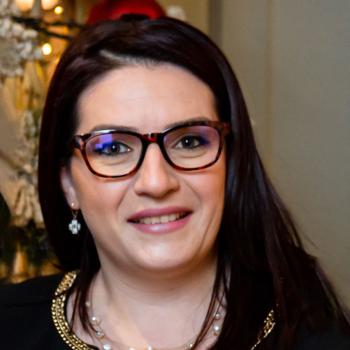
Tatevik Matinyan is an Armenian human rights lawyer and licensed advocate. She is currently the president of the Institute of Liberal Politics, a nonprofit organization and liberal think tank providing independent expertise to institutions and State agencies as well as organizing non-formal education for different groups of society aiming to promote liberal and democratic values and the principles of the rule of law, pluralistic democracy through non-formal education.
She has 12 years of professional experience in conducting strategic litigations on both local and international levels in particular up to the European Court of Human Rights where she won several cases. As a board member of the Center for Strategic Litigations, Tatevik Matinyan mainly works on documenting war crimes, representing prisoners of war, and providing legal assistance to victims of armed conflicts. She holds a Master's degree in Law from Mkhitar Gosh University in Armenia and is pursuing her Ph.D. from Public Administration Academy on the topic of evidence-based policy-making as a guarantee for the rule of law.
Daria Minsky is a media manager and co-founder of several online magazines in Belarus. After the crackdown on Belarusian media in the summer of 2020, the arrest of her business partner, and raids on their office, she and her remaining partner made a decision to urgently evacuate editorial teams due to the persecution and settle their work in exile. The team is currently implementing an innovative approach, working with user-generated content, amplifying messages through new distribution channels, and bypassing governmental censorship.
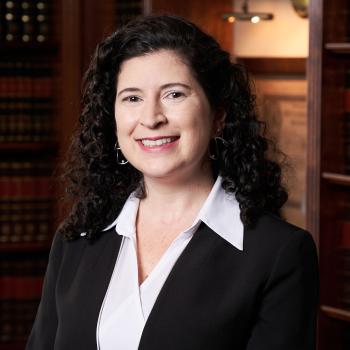
Mariana Mello was born and raised in the largest city in Brazil: São Paulo. She is a working mother, an active lawyer, the legal director of two Brazilian artists' associations (Abramus, for music and dramaturgy and Autvis, for visual arts), and a member of the Counsel of citizens of her neighborhood. She works in the field of copyright collective management, a system that guarantees copyright holders — musicians, playwrights, choreographers, and visual artists — receive a fair payment for the use of their work. Directly responsible for articulating the associations with the Federal Government and with other international societies, she coordinated the implementation of transparency measures and access to information policies and promoted changes in rules and procedures. She supports government and institutional relations, nationally and internationally.
In her second term as an elected member of the Counsel of citizens, Mello has been working to promote a more occupied and accessible city, especially for women and children. She is involved in projects to promote greater participation of women in the Art industry. She holds degrees in Law and in Language and Literature from the University of São Paulo and is currently on the board of the Brazilian Association of Author’s Right.
BRAZIL
Tainah Pereira is a Brazilian internationalist who works on democratic innovation issues with a specific focus on black women’s political participation, qualification of public debate, skills development, and networking for candidates. At present, Tainah works at Mulheres Negras Decidem movement, a group dedicated to black women’s promotion in politics with presence in the whole country, as a Political Coordinator working on themes including the deepening of democracy, open government data, and political articulation. Mulheres Negras Decidem is a political movement created in 2018 which qualifies and promotes the agenda led by black women in institutional politics, strengthening Brazilian democracy. The Movement took part in the advocacy initiative that helped women and black people who are candidates to guarantee equitable access to the resources and time of propaganda during Brazilian elections.
Tainah completed a BA in International Relations and a Master’s in Political Science from Federal University of the Rio de Janeiro State.
Assefa Getaneh is an Ethiopian human rights and peace activist who has worked on human rights, peacebuilding and conflict resolution, and development issues for over 20 years. He is a co-founder and Executive Director of the Center of Concern, an NGO that has been working on human rights, peace, and democracy issues in Ethiopia since 2005. Over the past 17 years as Executive Director, Mr. Assefa led the development and implementation of over 65 projects that focus on human rights, peace building, democracy, and development. Additionally, Mr. Assefa has successfully managed the civic and voter education campaign in the 2021 Ethiopian national and local elections.
Zurab Sanikidze has over 14 years of proven professional, managerial, and leadership experience in the fields of rule of law, justice, anti-corruption, good governance, public administration, service delivery, international law, and human rights as a civil servant and top manager working on questions of different institutional reforms and democratization.
His work experience includes roles at the Organization for Security and Co-operation in Europe (OSCE) and the International Criminal Court (ICC). He has also held several high-level positions at the Ministry of Justice of Georgia, including Chairman of the Public Service Development Agency where he ensured effective public service delivery through providing services to the citizens based on the principle of “everything in one space” (one of the most innovative and successful reforms made in Georgia). Additionally, Zurab served as the Head of the Analytical Department, ex-officio, and was the General Secretary of Criminal Justice Reform and of the Anti-Corruption Interagency Coordination Council of Georgia. He also represented the Government of Georgia as the Head of Delegation at several international organizations and platforms.
Zurab is an Assistant Professor of International Law, with over 10 years of experience lecturing on international law, human rights, anti-corruption, and public policy. He holds two LL.M and a Bachelor’s degree in International Law.
Gabriel Reyes Silva is a regional program officer for Central America at the National Democratic Institute (NDI) based in Guatemala, a political consultant, media columnist, and college professor. He holds a degree in Political Science and a Master's degree in Public Management and Leadership. He has over 8 years of experience working with civil society, Congress, electoral courts, and other political actors. Reyes Silva is also an enthusiast of the theoretical study of democracy and political ideologies.
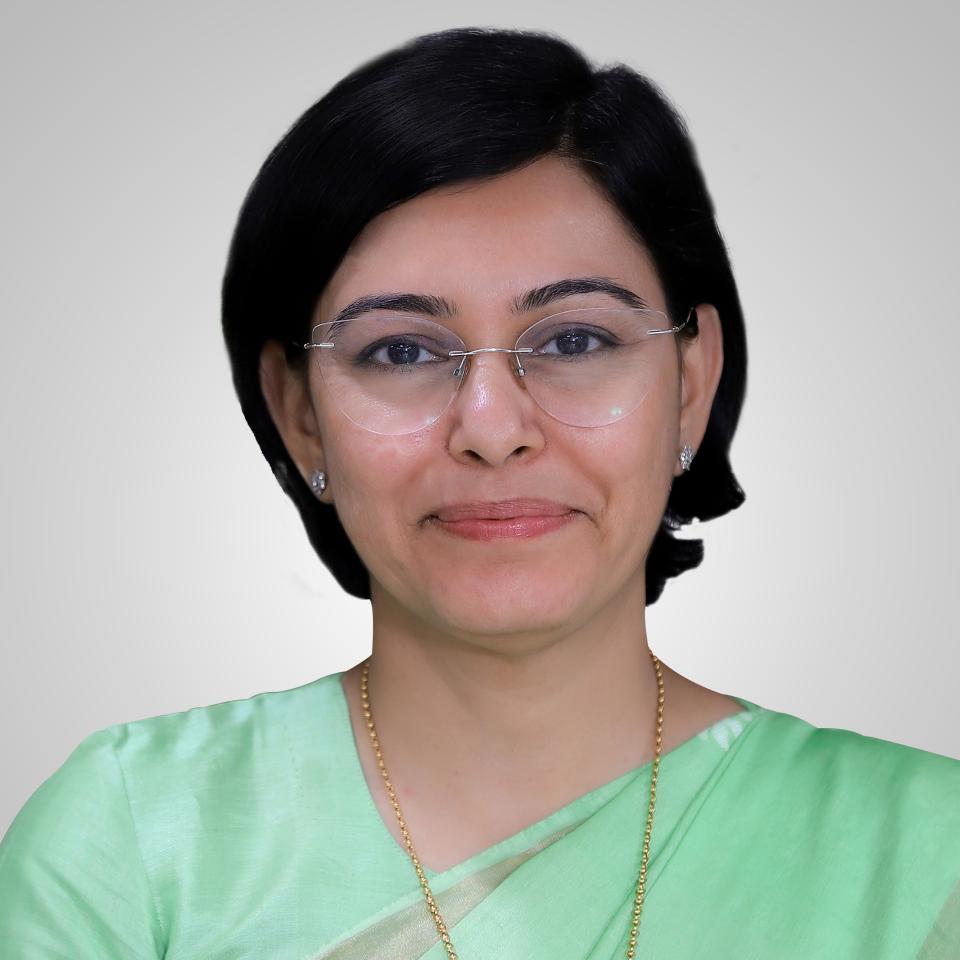
Ritu Sain is a career civil servant from India who has extensive experience in public administration, program implementation, and policy formulation spanning from grassroots to the Union government in India. Today, she works as Director General and CEO of the National Anti-Doping Agency with the vision of promoting fair play and integrity in sports. She catalyzed positive social change by organizing thousands of women in self-help groups and empowering them with awareness, education, and livelihood. She has been instrumental in sensitizing education administrators and building the capacity of millions of teachers for the inclusion of children with disabilities in the schooling process. Her zero-landfill model also transformed the waste management landscape and is being replicated in more than 150 cities in India.
Sain is a Chevening Gurukul Fellow from the University of Oxford and holds a Master’s degree in Politics with a specialization in international relations from Jawahar Lal Nehru University, and is a recipient of the Prime Minister’s Award for Excellence in Public Administration and President’s Silver Medal for outstanding zeal and high-quality service.
Aida Aidarkulova is a Kazakh international human rights lawyer with over 15 years of experience in the civil society sector. She is the Chair of the Executive Council of Soros Foundation-Kazakhstan, a national foundation of the Open Society Foundations network in Kazakhstan that serves to promote public policies to safeguard fundamental human rights, ensure budget transparency and accountability, and increase social activism.
Prior to joining the foundation, Aida was a deputy director of the Almaty branch of the Institute for Law Monitoring, Expertise and Analysis, a local think-tank where she was responsible for comparative-legal analysis of draft laws initiated by the Government of Kazakhstan. Her civil society career includes working for the Crisis Center for Women and Children.
Aida holds a Ph.D. in Law from Kunayev University, Almaty, Kazakhstan.
Carol Kiangura is a civil society activist who has spent the last 10 years working on fiscal governance and social justice issues across Africa. Carol is based in Nairobi, Kenya, and currently works for People Powered as the Director of Partnerships. People Powered is a global hub for participatory democracy, an organization that builds the power and impact of organizations and leaders around the world who are building more deliberative and participatory democracy, through programs such as participatory budgeting.
Prior to joining People Powered, Carol worked for the International Budget Partnership, where she supported African civil society and government efforts on open and accountable public budget systems, so that all citizens claim their right to understand and influence how public money is raised and spent. Before that, while working for Publish What You Pay (PWYP), Carol championed Pan-African campaigns for an open and accountable extractive industry so that revenues from oil, gas, and mining are used to drive development. She holds an MSc degree in Organizational Development from the United States International University, Africa.
KENYA
Jacqueline Akinyi Okeyo Manani is a lawyer whose work focuses on employment and labor relations, specifically on access to equal opportunities, employment rights and obligations, sustainable leadership and development, corporate governance and values, and principles of public service. Jacqueline currently works for the Public Service Commission in Nairobi Kenya as the Director of Legal Services. The Public Service Commission is an independent Commission established under the provisions of the Constitution of Kenya with a constitutional mandate to manage human resources in the public service.
From 2012 to 2014, Jacqueline was engaged in transitional justice as an Assisting Counsel at the Judges and Magistrates Vetting Board which was set up following the promulgation of a new Constitution in Kenya in 2010. The Judges and Magistrates Vetting Board was established to vet serving judges and magistrates to determine their suitability to continue serving in the new constitutional dispensation.
Jacqueline holds a Bachelor of Laws degree from Moi University, Kenya, and a Master of Law degree from the University of London, United Kingdom.
Ainura Usupbekova is the head of Civic Platform, an NGO in the Kyrgyz Republic (Kyrgyzstan). As a human rights activist, Usupbekova has promoted basic principles of democratic elections at all levels since 2007. Over many years, her advocacy efforts have led to the electoral legislation adopting amendments to make elections open, transparent, and competitive.
From 2007 to 2015, she created and organized a network of 17 NGOs to hold independent monitoring of the electoral process, using date-based methodology. As a member of the National Council for Sustainable Development, she was one of the experts who contributed to the National Sustainable Development Strategy 2013-2017, which established Kyrgyzstan as a Parliamentarian country.
In 2017, Usupbekova was awarded the Dank Medal for her contributions to the development of Kyrgyzstan as a democratic government. In partnership with other women-led NGOs and UN Women Kyrgyzstan, she conducted large campaigns to promote women's political rights. One such campaign promoted a 30% quota for women in all parliamentary levels and education through design thinking methodology for all female candidates, which allowed for more than 500 women from different regions of the country to participate in elections. Now, 21% of women are represented in the National Parliament, and at local levels have increased from 30% to 43%.
Alaa Al Sayegh is a political activist and social innovator who works on conceptualizing and implementing tools to solve political and socio-economic issues in Lebanon and the Middle East.
Alaa is the Co-founder and Director of Growth and Innovation at "The Solidarity Directory," a social innovation lab that supports solidarity initiatives, collectives, and MSMEs and conducts research with the aim of empowering local communities in their resilience economically and socially.
Alaa plays a leading role in the independent and secular political movement in Lebanon. Since 2015, he took part in mobilizing and organizing several grassroots structures and actively engaged in nationwide protests, lectures, and public debates. Being an agent for change, he ran for parliamentary elections in 2022, representing the alternative voice. He proposed a clear vision and reforms toward a secular, just, and democratic Lebanon.
LEBANON
Jad Maalouf is a judicial inspector at the Lebanese Judicial Inspection Commission, which is tasked with investigating and prosecuting corruption and misconduct in the judiciary. He also focuses on anti-corruption work and has participated in drafting some of the laws that have recently been enacted to combat and prevent systemic corruption and increase transparency and access to information.
Jad is dedicated to working with public institutions to initiate and implement sustainable reforms and promote integrity and transparency. During his previous judicial appointments, presiding over civil and commercial courts, Jad issued many innovative decisions in cases pertaining to due process rights, domestic gender-based violence, the freedom of speech, the protection of migrant domestic workers, and illegal detention. Jad holds an LL.B. and three master’s degrees.
LEBANON
Natasha E. Feghali is a Lebanese Canadian award-winning International Specialist Educator and Entrepreneur currently based in Kuwait. She is an Advanced Instructional Coach in Language Learning with Multi-Lingual Learners at the American Creativity Academy, and an independent real estate entrepreneur, investor, and philanthropist.
Feghali is the Founder of FG Family Homes Inc and Feghali Group, a sustainable and moderate living housing provider. In 2015, Feghali became the first Lebanese Canadian to be awarded the Sovereign Canadian Medal for her dedication to education and the future of youth and women in investing. Feghali was also the recipient of the 40 Under 40 United Way Leadership Windsor-Essex Award for her work in education and, in 2018, the University of Windsor Alumni of Excellence Odyssey Award for her career, entrepreneurship, and philanthropic endeavors in the Lebanese diasporic community.
Feghali is a 2x graduate from the University of Windsor and holds a professional Certification from Northwestern University.
Mariela Saldivar Villalobos is a Mexican activist and politician. She is currently the Executive Director of a non-governmental and non-partisan organization, advocating on behalf of thousands of small and independent business owners. She recently served two terms as a Congresswoman at Nuevo Leon State. Working hand-in-hand with her constituency, she ran successful campaigns to preserve hundreds of hectares of urban parks, promote women's rights, and fight corruption.
In 2018, she formally accused the State Governor of embezzling public resources for his presidential campaign. This accusation eventually led to his prosecution and arrest for electoral crimes. The case is ongoing and represents a watershed event in Mexican politics. Due to her anti-corruption efforts, in 2020 Mariela participated in the International Visitor Leadership Program (IVLP), a premier professional exchange program organized by the U.S. Department of State.
Mariela holds a BA in International Relations and a MA in Political Science from Monterrey Tech Institute in Mexico, and an MBA from Thunderbird School of Global Management in Arizona, USA.
Bulgantuya Khurelbaatar is a member of the Parliament of Mongolia and Deputy Chairman of the Mongolian People’s Party Caucus of the Parliament. She serves on the Budget Standing Committee, Economic Standing Committee, and Security and Foreign Policy Standing Committee, and chairs the Sub-Committee on Sustainable Development Goals.
Before being elected as a member of parliament, she worked as the Vice Minister of Finance of Mongolia which oversees Mongolia’s macroeconomic and financial policies, budgetary and investment policies, and taxation and state procurement policies. Prior to joining the Ministry of Finance, she served as Secretary of the Mongolian People’s Party in charge of party structure, international relations, and non-government institutions. She has worked in the private sector as Director of Business Development at Petrovis LLC, and Project Manager and Commercial Principal Advisor at Oyu Tolgoi LLC. She has also worked internationally as a consultant on World Bank projects in East Timor and Palestine to improve public financial management.
After completing high school in Australia, she obtained B.A. in Economics from Huazhong University of Science and Technology (PRC) and an M.A in International and Development Economics from Yale University (USA). Bulgantuya Khurelbaatar serves on the board of a number of women’s and youth organizations advocating for youth and women’s empowerment. She speaks Chinese, English, and Japanese.
Sarita Pariyar is a writer and social justice activist. She is also the Principal Investigator of the Samata Foundation’s Just Futures Initiative which aims to engender new narratives of Dalit women. Sarita is the founding convener of the international Darnal Award for Social Justice and serves on the board of Samata Foundation, the Madhesh Foundation, and Accountability Lab.
Sarita writes on politics of caste, gender, and sexuality with a particular focus on lived experiences of Dalit women. Her work has been published in newspapers, magazines, and journals. She is the author of Utsukta, a children's book that deals with caste questions from an intergenerational perspective. She holds a Master’s degree in Sociology and a Bachelor’s degree in Journalism and English Literature from Tribhuvan University.
Dr. Babatunde Omilola is an international development expert and Head of the Public Health, Security, and Human Development Division of the African Development Bank. He is responsible for managing the African Development Bank’s multi-billion-dollar response to the COVID-19 pandemic to save lives and livelihoods throughout Africa and to help African countries strengthen their health systems, stabilize their economies, and alleviate the economic and social impacts of the pandemic.
A global development leader, Babatunde served as Head of Development Planning with the United Nations Development Program (UNDP) in New York and led the United Nations Inter-Agency Task Force on the monitoring and implementation of the Sustainable Development Goals (SDGs) globally. He also co-chaired the United Nations Secretary-General’s High-Level Task Force on Global Food and Nutrition Security Technical Team. Babatunde was UNDP’s Regional Practice Leader for poverty reduction and the achievement of the Millennium Development Goals (MDGs) in Africa and UNDP’s Chief Economist and Head of Policy and Strategy in South Africa. He was also the Africa-wide Coordinator with the International Food Policy Research Institute (IFPRI). He handled the relationship of the Food and Agriculture Organization of the United Nations (FAO) with the African Union Commission and the United Nations Economic Commission for Africa. He has visited and delivered development assistance in over 80 countries worldwide in Africa, Europe, the Middle East, Asia and the Pacific, Latin America, and the Caribbean.
In 2022, Babatunde was selected as a Yale World Fellow at Yale University. He was also selected as a Fellow of Comparative Research Program for preventing and eradicating poverty by the International Social Science Council from 2014 to 2018. Since 2014, he has been an inaugural member of the Committee on Science for the Reduction of Poverty and Inequality of the Academy of Science of South Africa. He won the prestigious Ford Foundation International Fellowship in 2001 and the Graduate Research Fellowship of the International Development Research Centre in 2004 for his MPhil and PhD degrees in International Development and Development Economics from the University of Sussex. He is a writer and regular speaker on global development, democracy, and the rule of law.
Daniel Alfaro is a former Minister of Education and now an opinion leader in Peru on public policy issues. He has over 15 years of experience in managing positions in five different public administration sectors at the national level, including Culture, Production, and Tourism. With those learnings, he founded Pirka, an organization that seeks to promote the modernization of the State, teamwork development, innovation, and communication across all public sectors. In addition, along with other former ministers, he is part of Bicentennial Proposals, a project that seeks to promote public policies to overcome the current crisis and resume a path of economic and social development. He is also a member of the Board of Directors of IPAE and La Tarumba, nonprofit associations. For more than 60 years, IPAE has been promoting market development, institutions, and education in the country. Meanwhile, La Tarumba has 38 years of enhancing cultural development through unique artistic and pedagogical proposals based on theater, music, and circus.
Andréa Ngombet is a Congolese civil society leader, and founder of the Sassoufit Collective, a Paris-based organization. The Sassoufit Collective works on corruption issues, focusing on transnational kleptocracy, the People's Republic of China's influence on the political system within the Republic of the Congo, and democracy advocacy. Andrea works as Sassoufit Collective's Director of Anti-kleptocracy strategy.
He has authored several opinion papers and participated in investigations that have appeared in international journals and news outlets, including African Arguments, The New York Times, Der Spiegel, The Guardian, Le Monde, and Liberation. In September 2021, Andrea co-authored a report on Congo's oligarch looting strategy, moving their stolen-assets money from the USA to Dubai. Andrea completed his BA in History from la Sorbonne Paris IV University in Paris, France.
Jamus Lim is an associate professor of economics at the Asia-Pacific campus of ESSEC Business School, one of the top business schools in Europe, and a member of the 14th Parliament of Singapore, representing Sengkang. Previously, he was the chief economist of the ThirdRock Group, an investment management and wealth advisory; a lead economist at the Abu Dhabi Investment Authority where he oversaw economic inputs underlying tactical and strategic asset allocation for the sovereign fund's multi-hundred-billion dollar portfolio; and before that, a senior economist with the World Bank where he led a number of initiatives on macroeconomic forecasts, along with analysis of trade, finance, and governance issues in East Asia, the Middle East, and Africa.
His research expertise and interests lie at the intersection of international macro-finance, political economy, and development economics, and his work has appeared in leading academic journals such as the Journal of Monetary Economics and Journal of Money, Credit, and Banking, along with policy flagships such as the World Bank's Global Economic Prospects and the joint IMF-World Bank Global Monitoring Report. A seasoned communicator, Jamus’ ideas have been featured in print media such as the Financial Times and Straits Times, and he also regularly shares his views on radio and television outlets such as CNA.
An old Rafflesian, he graduated with first-class honors in economics from the University of Southern Queensland and went on to graduate work at the London School of Economics, the University of California, and Harvard University. In his wild, impetuous youth, Jamus was variously a drummer, rugby player, and Solitaire junkie; today, his more mundane pursuits have led him to the trails, gym, kitchen, and cellar (typically in reverse order).
Anchal Baniparsadh is a South African businesswoman and professional in the transport sector, serving as a Member of the Transport Appeals Tribunal at the National Department of Transport, South Africa. The Tribunal is a creature of statute that adjudicates appeals relating to public transport operating licenses. Decisions of the Tribunal are in terms of the rule of law and relative legislative framework, reflecting the democratic rights of citizens as entrenched in the Constitution of South Africa. Anchal also serves on the Municipal Bid Appeals Tribunal at the KwaZulu-Natal Provincial Department of Treasury, South Africa. She is a Chartered Member of the Chartered Institute of Logistics and Transport (CILT).
Anchal is passionate about transport and believes that mobility is essential to catalyzing economic development to achieve progression as a global nation. Anchal holds a Bachelor of Commerce and Honors from the University of South Africa, and a Master of Commerce degree from the University of KwaZulu-Natal, South Africa. She has attended various leadership programs at prestigious institutions including MIT in USA and IIMA in India.
Geline Alfred Fuko is a Tanzanian lawyer, human rights activist, and an advocate of the High Court of Tanzania. She works to promote democratic governance, development, and the Rule of Law. Currently, Adv. Geline is the Executive Director of Tangible Initiatives for Local Development Tanzania (TIFLD), a tech-driven NGO whose mission is to contribute to the development of policies and laws that promote democratic principles, strengthen institutions, mainstream the marginalized, and build resilient communities. The organization works to promote sustainable development through participatory approaches and innovative tools. Adv. Geline leads the team in the design and implementation of the organization’s mission as well as developing and managing govtech projects such as Bunge Forum, a citizen-driven digital tool that links citizens and their Members of the Parliament, a Law Reforms Monitoring Digital Tool, a digital database for Civic and Gender Digital innovators, and a tech-kit project for journalists.
Previously, Geline led a team to manage TACCEO election Observation (ICT Based) Centre under the umbrella of 17 CSOs in Tanzania. Geline is a self-taught music producer who uses digital audio workstations such as Logic Pro and Ableton Live.
Ornella Moderan is the head of the Sahel Programme at the Institute for Security Studies, a leading pan-African research organization that promotes evidence-based policy responses to Africa’s development, political, and security challenges. She also serves on the Advisory Committee of the Knowledge Platform Security and Rule of Law, a global network of experts who encourage the use of evidence in the field of security & rule of law. As a policy researcher, adviser, and programming specialist, her work focuses on human security, gender equality, and democratic governance in West Africa and the Sahel.
Moderan has spent the past twelve years supporting national governments and civil society actors to advance social justice, effective and accountable security and justice systems, and a durable resolution of large-scale conflict and instability. Her experience includes leadership positions in the humanitarian sector and multiple commitments with the African Union as an elections specialist (Guinea and Nigeria 2013, Egypt and Togo 2014, Liberia 2017, Sierra Leone 2018). She is a graduate of Sciences-Po Paris and the University of Grenoble, France.
Emna Krichene is a highly respected senior lawyer admitted to the Tunisian Bar Association, pioneering the development of personal data protection laws in Tunisia. Emna lends her expertise in providing training and capacity-building programs to public and private actors. She works closely with the Personal Data Protection National Authority in Tunisia and provides support to national and international institutions in designing legal frameworks for privacy.
As a law Visiting Professor at Paris Dauphine – Tunis International University, she is a member of the Jury for Data Protection Officers Graduates, with the State Councillor and European Law Representative at the Council of State in charge of the dedicated program at Paris-Dauphine University in France, as well as the President of the Personal Data National Authority in Tunisia.
Emna is involved in civil society activities and was a member of the National Executive Board of the Young Leaders' Center and of the Prestigious Think-Tank Tunisie Alternatives founded by the Former Prime Minister, Mr. Mehdi Jomaa. She completed her legal background with an internationally accredited Executive Master’s Degree in Business Administration from South Mediterranean University in Tunisia.
Denis Gutenko most recently served as the head of the State Fiscal Service of Ukraine. Holding this position from 2019-20 he was responsible for dismantling the large-scale State Fiscal Service into three accountable units: Tax Administration, Customs, and Tax police.
Before joining the State Fiscal Service, Gutenko had worked in the Ministry of Economy since 2015. Gutenko promoted deregulation and improvement of the business climate agenda. He initiated and successfully lobbied Parliament to adopt laws on the liberalization of international trade and currency, the transparency of scrap metal exports, and the reform of a corrupt ecological tax policy. Gutenko also led the removal of administrative barriers and outdated currency restrictions, resulting in the increased flow of services and payments for Ukrainian freelancers and small and medium enterprises.
Prior to this Gutenko began his career in the private sector as a banker, auditor, and agribusiness manager, experiences that sparked his interest in improving the Ukrainian state bureaucracy and fighting widespread corruption.
UKRAINE
Nariman Ustaiev is a director at Gasprinski Institute for Geostrategy and an external advisor for the Committee on Human Rights of the Verkhovna Rada of Ukraine. His work explores the multiple dimensions of Ukraine’s foreign and security policy and their intersection with good governance based on human rights. His areas of expertise are Ukraine, Russia, political and security challenges in Europe, human rights, and Crimean Tatar issues.
Prior to this Nariman had worked for governmental institutions responsible for Ukraine’s security policy, namely the National Security and Defense Council, the Secretariat of the Cabinet Ministers, and the State Service for the Autonomous Republic of Crimea and Sevastopol for many years.
Nariman graduated from the Diplomatic Academy at the Ministry of Foreign Affairs of Ukraine, the Ukrainian Academy for Foreign Trade, and Kyiv-Mohyla Business School.
UKRAINE
Yulia Bezvershenko is a Ukrainian policy-maker who works on science and innovation (S&I) policy with a specific focus on institution building, promoting science, and creating a knowledge-based economy and society in Ukraine. From 2020-2021, she served as a Director-General of the Directorate for Science and Innovation at the Ministry of Education and Science of Ukraine. It's a unit responsible for national-level S&I policy development, implementation of S&I programs, and international S&I cooperation.
As a scientist and activist, Bezvershenko has been deeply involved in the Ukrainian S&I reform since 2014, elaborating on legislation and creating institutions. She has been a co-founder and Vice-President of the NGO Unia Scientifica and the Young Scientists Council of the National Academy of Science of Ukraine.
Bezvershenko holds a Master of Public Policy and Governance from the Kyiv School of Economics, a Ph.D. in Theoretical Physics from the Bogolyubov Institute for Theoretical Physics, and an MSc in Physics from the National University Kyiv-Mohyla Academy.
Rayhan Asat is an internationally recognized human rights lawyer, Yale Law School Tom & Andi Bernstein Human Rights Fellow, and a senior fellow at The Atlantic Council. A graduate of Harvard Law School, Rayhan specializes in international human rights law, anti-corruption, and compliance with best business practices. Her legal and policy work centers around enforcing human rights norms, fighting against corruption, atrocity prevention, curtailing forced labor, and promoting corporate accountability. She previously advised the World Bank and OECD to design Human-Centered Business Integrity Principles. She testified before the US Congress, the UK, Canadian, European, and Lithuanian parliaments.
Rayhan's brother Ekpar Asat, an award-winning tech-entrepreneur and philanthropist who has disappeared into China’s concentration camps, has become a driving force in her mission as a human rights lawyer. Her human rights advocacy has been featured in various media outlets, including The New York Times, The Guardian, BBC, CNN, Foreign Policy, and The Hill, among others. Her writings have also appeared in The Wall Street Journal, Foreign Policy, NBC News, etc. She's a sought-after speaker at various international forums and conferences including the Geneva Summit, Oslo Freedom Forum, and most recently by invitation of President Joseph Biden as a featured speaker at the 2021 Summit for Democracy.
Jesús Armas is a Venezuelan activist who works to promote liberal democracy with a specific focus on the use of technology for grassroots organization. Through his NGO, Ciudadanía Sin Límites, he leads projects focusing on the humanitarian crisis and access to water and energy in Venezuela. Since 2018, he has promoted the creation of a network of more than 400 citizens who help collect data on failures in access to drinking water and energy.
He has also developed a career as a political leader within the Primero Justicia political party. In 2021, Jesús was a pre-candidate for mayor of Caracas, and in 2013, he was elected as a representative of the Caracas City Council, being the first opposition member to win that district in 14 years.
Jesús received a Chevening Fellowship that allowed him to do his master's degree in public policy at the University of Bristol in England. He completed his Engineering Degree at UCAB.
Tien Trung Nguyen is currently the Vice President of the Vietnamese Independent Union (VIU), which provides activism training for union leaders and improve workers’ legal understanding of their labor rights, and lobbies for foreign pressure on the Vietnamese government to follow the EU-Vietnam Free Trade Agreement (EVFTA). Trung oversees the recruitment of activists and fundraising management for many civil society organizations.
Since 2014, Trung has been advising a civil society association of literary writers and intellectuals that pushes for Vietnam’s cultural change and freedom by uploading YouTube videos and translating English books into Vietnamese on sensitive topics including politics, and democracy. From 2006-2008, Trung served as the Vice General Secretary of the Democratic Party of Vietnam, working to pressure the communist regime toward a multi-party democracy system in Vietnam. He founded the Viet Youth for Democracy, a civil society association that sought to spread democratic values to the young Vietnamese generation.
Trung has written many opinion pieces and political commentaries for BBC Vietnamese, VOA Vietnamese, Tieng Dan News, and US-Vietnam Review (University of Oregon).