-

About the Seminar: Better regulation or regulatory policy and governance has been on the agenda of Western governments for about 20 years. The OECD regularly publishes overviews and adopts recommendations.

In Germany, the adoption of the Normenkontrollrat Act in 2006 and the subsequent establishment of the National Regulatory Control Council (NKR) as the national oversight body marked the beginning of the Better Regulation Policy. The presentation explains the working methods of the NKR as well as the highlights of its work, especially with regard to efforts to reduce unnecessary bureaucracy, to improve the preparation of draft legislation, and to digitalize and modernize the administration in Germany.

Register Now

About the Speaker:

Image
Johannes
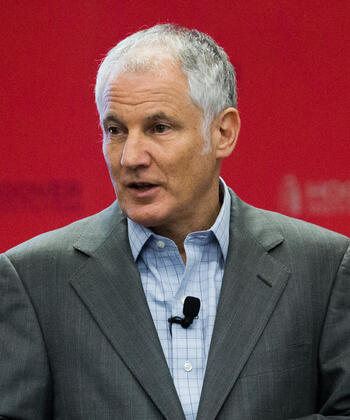
Dr. Johannes Ludewig, Chairman of NKR 2006-2021; Chairman of German Railways and afterwards Community of European Railways, Brussels 1997-2010; State Secretary Federal Ministry of Economics (1995-1997); Economic and Financial Advisor to the German Federal Chancellor, also responsible for the economic reconstruction of East Germany after Reunification 1990; PhD 1975 (University of Hamburg); MS 1972 (Stanford).


Online, via Zoom.

Dr. Johannes Ludewig
Seminars
Paragraphs

A growing literature examines democratic backsliding, but there is little consensus on when, where, and why it occurs. Reviewing more than 100 recent articles and working papers, this research note argues that inattention to the measurement of backsliding and the underlying concept of democracy drives this disagreement. We propose three remedies. First, we outline several questions that help researchers navigate common measurement challenges. Second, we argue that conceptual confusion around backsliding is driven in large part by inconsistent definitions of democracy. We show how outlining a comprehensive concept of democracy enables researchers to better account for the diversity of instances of democratic backsliding. Our third contribution is drawing attention to a previously overlooked form of backsliding: when governments lose the effective power to govern or voters and elites increasingly disagree about truths and facts. The research note urges scholars to pay closer attention to the conceptualization and measurement of backsliding prior to empirical analysis.

All Publications button
1
Publication Type
Journal Articles
Publication Date
Subtitle

A growing literature examines democratic backsliding, but there is little consensus on when, where, and why it occurs.

Journal Publisher
Democratization
Authors
Hans Lueders
-

Image
The American Passport in Turkey
The American Passport in Turkey explores the diverse meanings and values that people outside of the United States attribute to U.S. citizenship, specifically those who possess or seek to obtain U.S. citizenship while residing in Turkey. Özlem Altan-Olcay and Evren Balta interviewed more than one hundred individuals and families and, through their narratives, shed light on how U.S. citizenship is imagined, experienced, and practiced outside of the United States. Offering a corrective to citizenship studies where discussions of inequality are largely limited to domestic frames, Altan-Olcay and Balta argue that the relationship between inequality and citizenship regimes can only be fully understood if considered transnationally. Additionally, The American Passport in Turkey demonstrates that U.S. global power not only reveals itself in terms of foreign policy but also manifests in the active desires people have for U.S. citizenship, even when they do not live in the United States. These citizens, according to the authors, create a new kind of empire with borders and citizen-state relations that do not map onto recognizable political territories.

The American Passport in Turkey has recently won the American Sociological Association, Global and Transnational Sociology Section, Best Book by an International Scholar Award.
 

Register Now


ABOUT THE AUTHORS

Image
Özlem Altan-Olcay
Özlem Altan-Olcay is an associate professor in the Department of International Relations and the associate director of the Graduate School of Social Sciences and Humanities at Koç University in Istanbul, Turkey. She is also an editor of Gender, Place, and Culture as well as an assistant editor of Citizenship Studies. She has a Ph.D. degree from New York University, Department of Politics. Her primary research interests include citizenship studies and gender and development. Her research has been supported by the New York University International Center for Advanced Studies, the UN Population Council, the Middle East Research Competition, the Scientific and Technological Research Council of Turkey, the Turkish Science Academy, and the EU Marie Curie Individual Fellowship Program. Some of her recent articles have appeared in Development and Change, Ethnic and Racial Studies, Feminist Economics, Gender, Place and Culture, International Feminist Journal of Politics, Sociology, Social Politics, and Women’s Studies International Forum. She has recently co-authored (with E. Balta) The American Passport in Turkey: National Citizenship in the Age of Transnationalism, published by the University of Pennsylvania Press (2020).
 

Image
Evren Balta
Evren Balta is a Professor of International Relations and the chair of the International Relations Department at  Özyeğin University. She holds a Ph.D. in Political Science from The Graduate Center, CUNY. Her articles have appeared in journals such as Party Politics, Ethnic and Racial Studies, Sociology, Gender Place & Culture. She is the author of The American Passport in Turkey: National Citizenship in the Age of Transnationalism (with O Altan-Olcay, University of Pennsylvania, 2020), Age of Uneasiness (İletisim, 2019), and Global Security Complex (İletisim, 2012). She is the editor of Neighbors with Suspicion: Dynamics of Turkish-Russian Relations (with G. Ozcan and B. Besgul, İletisim, 2017); Introduction to Global Politics (Iletisim, 2014) and Military, State and Politics in Turkey (with I. Akca, Bilgi University, 2010). Her research has been supported by the American Association for the University Women, Mellon Foundation, Bella Zeller Scholarship Trust Fund, the Scientific and Technological Research Council of Turkey, and the Fulbright Scholar Program. In 2018, she received the Distinguished Alumni Award of the Political Science Program at the CUNY-The Graduate Center. Balta is a senior scholar at Istanbul Policy Center, a member of Global Relations Forum, and co-editor of International Relations Journal. She is appointed as the academic coordinator of the TÜSİAD Global Politics Forum in 2021.

Online via Zoom. Register here.

Özlem Altan-Olcay Koç University
Evren Balta Özyeğin University
Seminars
-
Image
Map of Turkey with image of Osman Kavala and text "Why is Osman Kavala in jail?"

Osman Kavala, a Turkish philanthropist and civil society leader, has been in jail for four years without conviction. He was previously acquitted from two lawsuits to attempt to overthrow the government and the constitutional order; now, he is standing trial for a third. The European Convention on Human Rights ruled in December 2020 that Turkey violated European Convention on Human Rights and ordered his immediate release.

Join us in this webinar about Kavala's work for democracy and his ongoing imprisonment at the intersection of law, politics, and human rights in Turkey.

Hosted by Francis Fukuyama (Stanford University) and Silvia von Steinsdorff (Humboldt University Berlin)

Speakers

  • Seyla Benhabib, Eugene Meyer Professor of Political Science and Professor of Philosophy at Yale University
  • Dani Rodrik, Ford Foundation Professor of International Political Economy at Harvard's John F. Kennedy School of Government and President of the International Economic Association
  • Ayşe Bingöl Demir, LL.M. Co-director of Turkey Litigation Support Project
     

Register Now


Co-organized by the Center for Comparative Research on Democracy (CCRD) at Humboldt University Berlin and the Transatlantic Platform for Democracy in Turkey

Online via Zoom. Register Now

Panel Discussions
Authors
News Type
News
Date
Paragraphs

In 2015, Volodymyr Zelenskyy was at the height of a successful career as an entertainer. Though trained as a lawyer at the Kryvyi Rih Institute of Economics in Eastern Ukraine, the then 37 year old Zelenskyy was a successful comedian and public personality. As the star of the popular TV show, Servant of the People, he played a local history teacher who inadvertently becomes the president of Ukraine following a viral video rant about corruption.

No one watching comedic President Zelenskyy then could have possibly imagined the real-life plot twist that would follow. In an incredible act of life imitating art, in April 2019, Volodymyr Zelenskyy once again stood on stage in front of a cheering crowd, but this time as the actual president of Ukraine.

He won in a landslide election against incumbent president Petro Poroshenko on a platform of systemic change and progress using an almost exclusively virtual campaign. Speaking from his headquarters on election night, he affirmed the exuberance and hope of his supporters: “I can say as a citizen of Ukraine to all countries of the post-Soviet Union: Look at us — everything is possible.”

This same message shaped the theme of President Zelenskyy’s remarks at his historic address from the Freeman Spogli Institute for International Studies (FSI) at Stanford University on September 2. The first Ukrainian president to ever visit California, President Zelenskyy, First Lady Olena Zelenska and their delegation joined a group of FSI faculty members led by FSI Director Michael McFaul at an outdoor event held in the Encina Courtyard.

In his remarks, Zelenskyy drew inspiration from Steve Jobs’ famous "How to Live Before You Die" commencement address given at Stanford in 2005.

"This is one of the most famous speeches ever given at Stanford,” he said. “It's about believing in dreams and overcoming the impossible. This is the same as my story. I am just a common guy from a common family from a common industrial town in Eastern Ukraine. Yet here I am today at Stanford, because everything is possible."

He continued, “It is the same for Ukraine. Many people look at us and think that it will be impossible to achieve the goals we hope for. But we know that our critics are wrong. The people of our country love democracy and freedom and will not let threats take those things away. We know that anything is possible."

Looking to the future, Zelenskyy outlined the steps his administration is undertaking to bring increased digitization to Ukraine. These efforts include launching fully electronic passports, moving business and legal services online and expanding the scope of e-goverance. The hope is that this meld of new technology will help curb corruption while simultaneously creating more equitable opportunities and better access to public services for more Ukranians.

Speaking on the ambitious scope of these plans, the president acknowledged, “There will be resistance to the changes and innovations that we are going to make.” Nonetheless, he remains committed to the work ahead of strengthening democratic institutions in Ukraine and building on the progress that has already been made.  “We do not have a ‘Ukrainian Dream,’ yet,” he said. “But we have a ‘Ukrainian Goal’ and a ‘Ukrainian Mission’ to make the future we want for our country.” An edited recording of his remarks is below.

Keeping with Stanford tradition, Zelenskyy took questions from the audience after his prepared remarks. A variety of students and Stanford community members from Russia, Burma, Belarus and beyond had the opportunity to engage the president on a range of issues including U.S.-Ukraine relations, armament sales abroad and concerns over Russian aggression in Crimea and influence Eastern Ukraine. Of particular meaning was Zelensky’s affirmation and support for the democratic movement in Belarus led by Svaitlana Tsikhanouskaya, whom FSI hosted earlier this summer at a faculty roundtable.

Image
Tweet from Franak Viačorka

Students and faculty alike were appreciative of the president’s candor and good nature in addressing difficult topics.

Image
Tweet from Rose Gottemoeller
Image
Tweet from Graham Webster
Image
Tweet from Me Me Khant
Image
Tweet from Omar Pimentel

Following the formal remarks, President Zelenskyy and First Lady Zelenska had an opportunity to meet with Stanford President Marc Tessier-Lavigne in the Memorial Church Courtyard. Prior to leaving, the First Lady also sat down with leaders and students from Stanford's Office of Accessible Education (OAE), an area of interest she would like to support and better develop in Ukraine.

For FSI, the president’s visit was another affirmation of the special connection between Ukraine and the Stanford community. Since 2016, the Center on Democracy, Development and the Rule of Law has hosted the Ukrainian Emerging Leaders Program, which provides a 10-month academic training fellowship in support of mid-career practitioners working actively as policy-makers, legal professionals, entrepreneurs and leaders of civil society organizations in Ukraine.

Speaking to this shared history in his opening introductions, FSI Director Michael McFaul emphasized the crucial need for ongoing support and intellectual investment into Ukraine. “The fight for democracy and independence in Ukraine is one of the most important causes in the world today,” he affirmed. “Not just for Ukrainians, but for all who cherish the ideals of democracy, liberty and sovereignty.”

To President Zelenskyy, McFaul extended a future invitation: “You are always welcome back, either as president or in retirement as a professor.”

“With the classes you offer, I will think about it,” Zelenskyy replied with a smile.

Read More

Larry Diamond speaking in the Bechtel Conference Center in Encina Hall
Commentary

"We Have Entered a New Historical Era": Larry Diamond on the Future of Democracy

Speaking at the April 2022 meeting of the FSI Council, Larry Diamond offered his assessment of the present dangers to global democracy and the need to take decisive action in support of liberal values.
"We Have Entered a New Historical Era": Larry Diamond on the Future of Democracy
Sviatlana Tsikhanouskaya discusses the future of democracy in Belarus with a roundtable of Stanford scholars.
News

Belarusian Leader Sviatlana Tsikhanouskaya Meets with Stanford Scholars for Roundtable on Democracy in Belarus

Democratic leader Sviatlana Tsikhanouskaya and her delegation joined an interdisciplinary panel of Stanford scholars and members of the Belarusian community to discuss the future of democracy in Belarus.
Belarusian Leader Sviatlana Tsikhanouskaya Meets with Stanford Scholars for Roundtable on Democracy in Belarus
Hero Image
President Volodymyr Zelenskyy of Ukraine speaks at the Freeman Spogli Institute for International Studies
Rod Searcey
All News button
1
Subtitle

President Zelenskyy outlined the steps his administration is undertaking to bring increased digitization to Ukraine, curb corruption and create more equitable access to public services for more Ukrainians.

-

Image
When The Stars Begin to Fall book cover
About the Seminar: Structural racism threatens the principles that undergird the American creed. A national, multiracial solidarity is the best means of mitigating racism’s effects. The sociopolitical strategies of Black America – grounded in moral claims consonant with the creed but fashioned to be in alignment with contemporary national interests – provide a model for the type of solidarity the United States desperately needs.

This argument is explored in detail in When the Stars Begin to Fall: Overcoming Racism and Renewing the Promise of America. Through an examination of political science and sociological frameworks, alongside personal and historical narratives, it argues that structural racism is a crime of the state, that color-conscious policy is preferable to colorblindness, and that the American civil religion is central to national solidarity. Concluding with policy recommendations, the book offers the next step forward on the intractable issue of racism.


Image
Theodore R. Johnson
About the Speaker: Theodore R. Johnson is a Senior Fellow and Director of the Fellows Program at the Brennan Center for Justice at the NYU School of Law, where he undertakes research on race, politics, and American identity. Prior to joining the Brennan Center, he was a National Fellow at New America and a Commander in the United States Navy, serving for twenty years in a variety of positions, including as a White House Fellow in the first Obama administration and as speechwriter to the Chairman of the Joint Chiefs of Staff. His work on race relations has appeared in prominent national publications across the political spectrum, including the New York Times Magazine, the Atlantic, the Washington Post, the Wall Street Journal, and National Review, among others.


In-person for Stanford Affiliates: Philippines Conference Room
Online: Zoom

Theodore R. Johnson Senior Fellow and Director, Fellows Program at the Brennan Center for Justice
Seminars
-

About the Seminar: From foreign influence operations disrupting democratically-held elections to anti-vaccine conspiracies undermining global public health, disinformation has drawn attention to the many ways technology engenders new and complex challenges for civic life. This talk will explore the role of identity-based propaganda in contemporary influence operations and its consequences for democracy and civic life.


Register Now


About the Speaker: Samantha Bradshaw is a postdoctoral fellow at CDDRL, the Digital Civil Society Lab, and the Program on Democracy and the Internet.

Image
Samantha

Online, via Zoom.

Postdoctoral Fellow, CDDRL
Seminars
-

About the Seminar: Domestic migration separates voters into nationally- and locally-minded electorates because migrants differ from non-migrants regarding the strength of their local identities. To demonstrate how migration alters the importance of local identities, I study sub-national variation in the nationalization of local elections: in out-migration areas, strong local identities mean that non-migrant voters are active in local politics and consider locally defined issues when voting, while weak local identities lower migrant voters' ability to do so in in-migration areas. I support my argument using household panel data and comprehensive data on cross-county migration, national and sub-national elections, and civil society organizations in contemporary Germany. My identification strategy uses a shift-share instrument for migration and exploits a large-scale welfare reform in 2005 that lastingly altered domestic migration flows. My focus on local identities calls for a reappraisal of conventional descriptions of contemporary democratic politics, which mostly examines divides in national politics. The paper identifies a new research agenda on the political consequences of domestic migration, which has important implications for our understanding of democratic polarization and local service delivery.


Image
Hans Lueders
About the Speaker: Hans Lueders holds a Ph.D. in Political Science from Stanford University and is currently a Postdoctoral Scholar at Stanford’s Center on Democracy, Development, and the Rule of Law. His research seeks to understand the causes and consequences of political inequality in different political contexts. Hans is currently working on a book project that links political inequality in contemporary democratic societies to domestic migration. Additionally, Hans researches political inequality in closed authoritarian regimes, where state institutions ensure that citizens have little political say. His work identifies little-acknowledged ways through which citizens can still influence politics despite this extreme inequality. Moreover, his research on unauthorized migration in the United States studies political inequality from the perspective of a politically marginalized group. It seeks to understand how unauthorized immigrants navigate life while being politically disenfranchised.  Hans’ work has been published in the Proceedings of the National Academy of Sciences (PNAS), the Journal of Politics, the Journal of Economics, Race, and Policy, and the European Political Science Review, among others.

Online, via Zoom

1
Hoover Fellow, Hoover Institution
CDDRL Affiliated Scholar
CDDRL Postdoctoral Scholar, 2021-22
hans_lueders.jpg

I hold a PhD in Political Science from Stanford University. My research seeks to understand the causes and consequences of inequality in political representation across different political contexts. I am currently working on a book project that links inequality in representation and rising societal and political polarization to domestic migration. The book project focuses on contemporary Germany and combines household surveys with comprehensive data on domestic migration, voting in national and local elections, civil society organizations, political campaigning, and political recruitment. In a separate, co-authored book project, I research inequality in political participation among domestic migrants in sub-Saharan Africa. My other research asks how citizens can influence policy-making in non-democratic regimes, where political inequality is extreme by construction, and how unauthorized immigrants in the United States navigate life while being marginalized. My work has been published in the American Political Science Review, Proceedings of the National Academy of Sciences (PNAS), the Journal of Politics, Democratization, the Journal of Economics, Race, and Policy, and the European Political Science Review, among others. Before coming to Stanford, I spent two years as Visiting Assistant in Research at Yale University and obtained BA and MA degrees in Political Science from Heidelberg University in Germany.

Date Label
Postdoctoral Scholar, CDDRL
Seminars
-

About the Seminar: Do voters value their political party over democracy? This paper examines how citizens make the trade-off between party loyalty and democracy when a president of their party violates essential democratic norms. Using two large-n original survey experiments, I show that partisanship is a predominant lens through which people view democracy. I find that, while in the aggregate people are fairly sensitive to differences in the severity of norm violations, they often choose their party and their president over support for those norms. Additionally, I demonstrate that members of the Democratic and Republican parties are starkly different in their treatment of democracy; Republican respondents have a higher tolerance for norm violations than Democratic respondents in all scenarios. This paper highlights the influence presidents have over democracy due to strong party allegiance.


About the Speaker: Alejandra is a PhD candidate in Political Science at Stanford University. She studies how Americans think about democracy in an era of polarized politics and how presidents influence conceptions of democratic norms. Broadly, her research interests include presidential influence, democratic norms, voter behavior, presidential elections, experimental methods, survey methodology, and gender and politics. She graduated from Brigham Young University with a BA in Political Science.

Image
Alejandra Aldridge

Online, via Zoom

1
CDDRL Predoctoral Scholar, 2021-22
alejandra_aldridge.jpg

Alejandra Aldridge is a PhD candidate in the Political Science department at Stanford University. Her dissertation examines how partisanship colors citizens' approval of presidential actions that violate democratic norms. Broadly, her research interests include  executive politics, public opinion, democratic norms, experimental methods, survey methodology, and gender and politics. Alejandra graduated from Brigham Young University with a BA in Political Science. On the side, she loves tennis, Crossfit, Sprinkles cupcakes, and dark chocolate.


PhD Candidate, Stanford University
Seminars
Authors
News Type
News
Date
Paragraphs

On August 9, 2020 citizens in the Republic of Belarus went to the polls to vote for their next president. The incumbent was Alexander Lukashenko, a 67-year-old military officer who has kept an iron grip on the presidency for the entire 26 years Bealrus has held elections. But the challenger was an unexpected, new face. Sviatlana Tsikhanouskaya is a 38-year-old English teacher, mother and pro-democracy activist who stepped into a campaign following her husband's arrest and imprisonment in May 2020 for political dissension. In four short months, she galvanized the nation with a message of democracy, freedom and fair elections that reached across opposition factions and gained enough momentum to become a serious contender for the presidency.

On election day, projections estimated an initial win for Tsikhanouskaya at 60%. But when the country's Central Elections Commission announced the election results, Lukashenko carried 80% of the vote, and Tsikhanouskaya a mere 10%. Given the long history of election engineering in Belarus, the results were expected. But what happened next was not. Outraged by the fraud, Tsikhanouskaya's supporters poured into city centers in Brest and Minsk by the tens of thousands, instigating the largest public protests in the history of post-Soviet Belarus. Caught off-guard, the regime hit back with a ruthless wave of violence and political imprisonments, prompting the European Union, NATO and other countries to impose sanctions and condemn Lukashenko as an illegitimate leader.

While Tsikhanouskaya's presidential campaign ended last August, her role as a democratic leader in Eastern Europe has not. In the year since the election, she has traveled the globe to meet with lawmakers, policy experts and heads of state to speak out against the ongoing repression of Lukashenko's regime and advocate for support of Belarus by the international community. The Freeman Spogli Institute for International Studies (FSI) was honored to host Tsikhanouskaya and her delegation at Stanford for a roundtable discussion on the challenges that lay ahead in preparing Belarus for a democratic transition. Director Michael McFaul hosted the discussion, which brought together scholars from across FSI, the Hoover Institute and the Belarusian expatriate community. The full recording is below.

Rather than holding a typical press conference, Tsikhanouskaya's visit at FSI gave members of the Belarusian delegation an opportunity to engage in back-and-forth dialogue with an interdisciplinary panel of experts on governance, history and policy. Tsikhanouskaya and her senior advisors shared their perspectives on the challenges they are facing to build and maintain pro-democracy efforts, while Stanford scholars offered insights from their extensive research and scholarship.

Presidents, Protests and Precedent in Belarus


As leader of the delegation, Sviatlana Tsikhanouskaya gave an overview of the brutality of Lukashenko's regime and the lawlessness that has enveloped the country. But she also reaffirmed the commitment of everyday Belarusians to defending their independence and continuing the work of building new systems to push back against the dictatorship, and encouraged the support of the international democratic community.

"Belarusians are doing their homework. But we also understand that we need the assistance and help of other democratic countries," said Tsikhanouskaya. "That support is vital, because our struggle relates not just to Belarusians, but to all countries who share these common values."

Speaking to the work that Belarusians have already undertaken, Franak Viačorka, a senior advisor to Sviatlana Tsikhanouskaya, described how citizens are creating new means of protesting and organizing. Though they learned some tactics from recent protests in Hong Kong and classic theories by political scientists like Gene Sharp, organizers in Belarus quickly realized that they needed to innovate in order to keep ahead of Lukashenko's crack-downs. Today the opposition is a tech-driven movement that spreads awareness and support quickly through digital spaces and underground channels while avoiding large in-person gatherings that attract government brutality.

By Tanya Bayeva's assessment, these methods of organizing have been effective in capturing widespread support amongst people. A member of the Belarusian diaspora, Bayeva described the sense of empowerment she felt in coming together in a common cause with like-minded people.

"By coming out like this, people have started realizing that it is up to us, the people, and our individual willpower to make a difference," said Bayeva. "We are realizing that the king has no clothes, and that working together we can forward the process of democratization."

But there is still plenty of work ahead. In order to facilitate a more peaceful future transition to a democratic system, there will need to be frameworks in place to bridge the divide between old systems and new. Valery Kavaleuski, the representative on foreign affairs in Sviatlana Tsikhanouskaya's delegation, is focusing extensively on these issues, such as reconciliation processes and plans for future investments between Belarus and the European Union.

"These are political moves that reinforce hope among Belarusians and tells that that they are not alone and that when the change comes, they will have friends by their side to overcome the challenges of the transition period," said Kavaleuski.

Advice from Stanford Scholars: Focus on Processes and People


Responding to the Belarusian delegation's questions and comments, the faculty from FSI and the broader Stanford community offered insights and considerations from a variety of perspectives and disciplines on 'next steps' for the pro-democracy movement.

Francis Fukuyama, the Olivier Nomellini Senior Fellow at FSI and Mosbacher Director at the Center on Democracy, Development and the Rule of Law (CDDRL), cautioned against the impulse to immediately take down the state and bureaucratic systems of the existing regime. While dismantling the mechanisms from the old state may feel emotionally satisfying, examples from history such as post-Nazi Germany and post-invasion Iraq illustrate the crippling effect on efficiency, functionality and the ability of the new order to govern in a vacuum of bureaucratic expertise.

FSI's Deputy Director, Kathryn Stoner, gave similar advice in regard to drafting and implementing a new constitution and conventions.

"People care to a great degree [about a new constitution], but not to months and months of debate and politicians yelling at one another. People can't eat constitutions," said Stoner. "You have to demonstrate that your system is going to be better than what was. When things have not gone well in transitioning countries, it's been because people don't see concrete change. So have a constitutional convention, but make it fast."

Amr Hamzawy, a senior research scholar for the Middle East Initiative at the Center for Democracy, Development and the Rule of Law, also pointed to the importance of engaging the public and building alliances within both the old and new political systems. Based on his observations of the failed Egyptian and Tunisian efforts at democratic transition, he cautioned against discussions of impunity, arguing that while politically and morally symbolic, this practice often backfires and alienates important factions of the state apparatus which are vital for the function and success of a new government.

Hamzawy similarly encouraged carefully blending nationalism and populism to keep divisions within the public sector in check. Imbuing such narratives with pro-democracy rhetoric, he believes, can create a powerful tool for unifying the population around the new government and emerging national identity.  

The advice from the Europe Center's director, Anna Grzymala-Busse, succinctly brought together many of the points made by the faculty panel: "No post-transitional government can achieve all the promises they've made right away," said Grzymala-Busse. "So make the transition about processes rather than specific outcomes, about ensuring the losers are heard along with the winners, and about making sure all people can participate."

Additional participants in the roundtable discussion not noted above include Hanna Liubakova, a journalist and non-resident fellow at the Atlantic Council, Dmytro Kushneruk, the Consul General of Ukraine in San Francisco, and Stanford scholars Larry Diamond, David Holloway, Norman Naimark, Erik Jensen, Kiyoteru Tsutsui and John Dunlop.

Read More

Protesters in Minsk, Belarus on 8/16/20
News

'In Being Together, We Had the Power' - A Belarusian Activist Describes Life on the Front Lines of Minsk Protests

On the World Class Podcast, Belarusian scholar and activist Aleś Łahviniec explains why people are protesting, and what it feels like to be out on the streets in Minsk.
'In Being Together, We Had the Power' - A Belarusian Activist Describes Life on the Front Lines of Minsk Protests
Tatiana Kouzina
News

CDDRL Statement Regarding the Arrest of Tatiana Kouzina by Belarusian Authorities

The faculty and staff of Stanford's Center on Democracy, Development and the Rule of Law, as well as the undersigned alumni of the Draper Hills Summer Fellows Program, wish to protest the completely unjustified arrest and pending trial of the researcher Tatiana Kouzina on June 28 by Belarusian authorities.
CDDRL Statement Regarding the Arrest of Tatiana Kouzina by Belarusian Authorities
Hero Image
Sviatlana Tsikhanouskaya discusses the future of democracy in Belarus with a roundtable of Stanford scholars.
Sviatlana Tsikhanouskaya, Michael McFaul, Franak Viačorka, and Francis Fukuyama participate in a roundtable discussion on democracy in Belarus. | Office of Sviatlana Tsikhanouskaya
All News button
1
Subtitle

Democratic leader Sviatlana Tsikhanouskaya and her delegation joined an interdisciplinary panel of Stanford scholars and members of the Belarusian community to discuss the future of democracy in Belarus.

Subscribe to Europe