
![presidente fox[1]](https://fsi9-prod.s3.us-west-1.amazonaws.com/s3fs-public/styles/300x185_x2/public/evnts/5229/presidente_fox%5B1%5D.jpg?itok=UFWvykp-)


Conference Report: Educational and Entrepreneurial Initiatives to Support Youth in Places of Violence [June 2015]
Paragraphs
Following in the footsteps of last year’s international conference on violence and policing in Latin American and U.S. Cities, on April 28th and 29th of 2015, the Program on Poverty and Governance (PovGov) at Stanford’s Center on Democracy, Development and the Rule of Law (CDDRL) turned Encina Hall at the Freeman Spogli Institute of International Studies (FSI) into a dynamic, instructive and stimulating discussion platform. The exchange of experiences, expertise and ideals that flourished within this space helped create a “dialogue for action,” as speakers and participants explored the various dimensions of youth and criminal violence in Mexico, Brazil and the United States, while advocating for the importance of opening up adequate pathways to hope. The event was sponsored by the Center for Latin American Studies, The Bill Lane Center for the America West, The Mexico Initiative at FSI, and the Center on International Security and Cooperation.
For a link to the conference event page, click here.
To find out more about CDDRL's Program on Poverty and Governance, click here.
All Publications button
1
Publication Date
Conference explores initiatives to curb youth violence in Latin America and US
News Type
News
Date
Paragraphs
In April, the Program on Poverty and Governance (PovGov) at Stanford’s Center on Democracy, Development and the Rule of Law welcomed academics, policymakers, practitioners and youth leaders from Latin America, the U.K. and the U.S. to explore educational and entrepreneurial initiatives to support youth in places of violence.
Building on last year’s theme on violence and policing, the conference examined the rise in criminality among youth in both Latin America and the U.S., calling on attendees to share best practices aimed at curbing this trend. The conference served as a platform for attendees to highlight innovative government and community-based programs that have been successful in steering youth away from violence and towards more promising pathways.
"This conference is the result of a long reflection on the connection of poverty, violence, inequality and corruption," said Associate Professor of Political Science and PovGov Director Beatriz Magaloni who organized the conference. "However, our goal is not to reflect on the costs of violence, but to highlight alternatives that organizations, public officials and individuals are helping create. We want to reflect on the work that has been happening on the ground and on the revolution that these players are making."
The two-day conference featured two keynote addresses. The first was delivered by Brazil’s Sub-Secretary of Youth and President of the National Council on Youth (CONJUVE) Angela Guimarães who remarked on violence and its negative impact on educational and employment opportunities for Brazilian youth.
“The current youth experience is marked by violence,” Guimarães said. “There has been an expansion in access to education, work, formalization and quality of life, but violence continues to mark this generation.”
The other keynote speaker Héctor Castillo Berthier highlighted his 28 year-old NGO, Circo Volador, one of the longest-running social interventions in Mexico. The organization supports excluded sectors of society, promoting culturally appropriate arts and culture programming to youth in collaboration with community partners.
 Keynote: Angela Guimarães, Sub-Secretary of Youth (Brazil)
“We created a new common language that we could all understand,” said Castillo Berthier. “We planned things with them. We drew with them. We produced things on the ground with them. We gave them respect, self-sustainability and the space. This example must be taken into account when forming public policies."
Both days of the conference featured research presentations, uncovering some of the innovative evaluation work underway by the PovGov team. PovGov Postdoctoral Fellow Brenda Jarillo Rabling spoke about the effect of drug-related violence on educational outcomes for children in areas of high crime, such as Ciudad Juarez in Mexico. Rabling’s study pointed to the strong connection between violence and loss of instructional time in schools where the quality and quantity of school days are lower than the national average, creating inequality within the education system.
Gustavo Robles Peiro, a PhD student at Stanford’s political science department and PovGov pre-doctoral fellow, shared the results of a comprehensive impact study, which evaluated the overall effectiveness of Jóvenes con Porvenir, a government program operating in Zapopan, Mexico, that offers work and educational opportunities for youth living in neighborhoods with high levels of crime. Robles Peiro’s research found that over a six-month period, youth exposed to the program exhibited greater interest in pursuing educational and career endeavors.
 Keynote: Hector Castillo Berthier, Circo Volador
Academic research was complemented by the individual experiences of youth and youth advocates. Among them was Christa Gannon, founder and executive director of Fresh Lifelines for Youth (FLY), a Bay Area-based organization, which works with local at-risk and incarcerated youth to build their skills and reduce delinquent behavior through leadership training, legal education and active mentorship.
“Our youth have incredible strengths, but often society does not see them,” said Gannon. “At FLY, we always ask ourselves how do we look for strengths and potential in everyone that we work with - how do we see our young people as resources and co-creators that have so much to offer us?”
Gannon’s remarks were echoed by a number of other speakers, highlighting the need to provide more platforms for youth to become active community citizens, whether through education, volunteering, leadership, or artistic and cultural production.
Former inmate Felix Lucero spoke about his 18-year incarceration experience as a student of the Prison University Project, an initiative that provides higher education to inmates of San Quentin State Prison in California. “[The program] affects people not only when they get out of prison, but also while they are in there… it gives us something to look up to,” Lucero said. “Education allows people to think critically about their surroundings and empower people to do things differently.”
Marcus Faustini, founder of Agência de Redes Para Juventude (Network for Youth Agency) in Rio de Janeiro, Brazil, expanded on the topic of youth opportunity, touching on his organization’s mission. “We knock from door to door in the favela. We don’t want to educate the youth, we want to walk alongside them. Social projects don’t have to give people fish, they need to teach people how to fish. At Agência, we go to the supermarket, buy the fish and cook it with the youth. We do things with them,” said Faustini.
Another theme emphasized by many of the conference speakers was the influence of arts and culture as an outlet for self-expression for many youth growing up in violent societies. To help illustrate the hopefulness of many of these youth projects, the PovGov Program hosted a photography exhibit inside the conference hall that contained a collection of twelve iconic photographs highlighting life in the slum neighborhoods – favelas – of Rio de Janeiro, Brazil. The collection was presented by Imagens do Povo, an arts initiative under Observatorio de Favelas (Favela’s Observatory), an NGO, which educates youth on critical urban issues affecting the under-resourced favela communities of Rio.
The conference concluded with a dynamic panel of youth activists and leaders who shared their inspirational accounts of experiencing and overcoming the challenge of criminality and violence in their hometowns. Drawing unconnected, but similar life stories of struggles and hardships, the panel provided examples of how individuals leveraged a variety of tools, resources, and community-based organizations to transform themselves – and others – to help bring about positive social change to their communities.
Mariluce de Souza, a social entrepreneur and artist from the Alemão favela in Rio, emphasized the significance of youth-to-youth assistance: “It is like a language from the community to the community,” she said. “We come together to demand respect and rights.”
 PovGov signs a Crime Lab partnership agreement with Marcus Faustini (Agência de Redes para Juventude)(right) and Jailson Silva (Observatório de Favelas)(second from left).
Seeking to broaden its network and impact globally, PovGov also used the conference to serve as a launching point for its new International Crime and Violence Lab – Crime Lab – a new platform for academics and practitioners to share their work and research on crime and violence throughout the U.S., Latin America, and beyond. The Lab seeks to develop scientific and action-oriented research by assisting community organizations, government agencies, policy-makers, police departments, and other relevant players in Latin America - and eventually elsewhere in the developing world - to reduce violent crime and its devastating consequences.
Two of Crime Lab’s newest partners – Jailson de Sousa e Silva, co-founder and director of Observatorio de Favelas, and Marcus Faustini of Agência – signed a partnership agreement during the conference, opening the door to future research collaborations with PovGov focused on improving the youth experience in Rio.
This year’s PovGov conference was held in partnership with the Bill Lane Center for the American West; the Center for Latin American Studies; the Freeman Spogli Institute’s Mexican Initiative; and the Center on International Security and Cooperation.
All speaker presentations were video recorded and can be found on the CDDRL YouTube page and below. To view other conference materials, including an executive summary and full conference report; agenda; speaker bios; and presentation slides, please see below or refer to the original conference event page.
Conference Video Playlist
Conference Materials
PovGov Conference 2015 - Full Conference Report
PovGov Conference 2015 - Executive Summary
Multimedia (Videos and Presentations)
Descriptions of Panels and Talks
Hero Image

All News button
1
Remarks for the Annual Meeting of the National Humanities Alliance
Related Multimedia


The Heart of the Matter: The Humanities and Social Sciences for a Vibrant, Competitive and Secure Nation
Related Multimedia
Ben Ahmed examines the challenge of youth alienation in the Tunisian transition [VIDEO]
News Type
Commentary
Date
Paragraphs
As part of the Arab Reform and Democracy Program's speaker series, Executive Director of the Mediterranean Development Initiative Ghazi Ben Ahmed examined the challenge of youth alienation in the context of the Tunisian transition. Social and economic grievances of Tunisian youth played a major role in igniting the uprising in Tunisia, and more generally, the so-called Arab Spring. Despite a successful political transition in the country, progress on addressing youth grievances has been slow in light of deteriorating living conditions, rampant corruption, and rising unemployment. These realities continue to pose a serious challenge to the prospects of building a sustainable democracy in Tunisia. Based on data gathered from meetings with a diverse group of 500 young Tunisians, this talk will shed light on youth’s perceived and actual exclusion from social, economic, and political opportunities. In doing so it will provide a critical assessment of the underlying causes of youth alienation in the country and prospects for greater political, social and economic inclusion.
Hero Image

All News button
1
Talk by ballroom dancing legend Pierre Dulaine
-
Abstract:
Ballroom dancing legend Pierre Dulaine will discuss his 'Dancing Classrooms' method which he applied in his award winning documentary 'Dancing in Jaffa' to bring Arab and Jewish children together through dance. Mr. Dulaine will speak about the film, his journey into the world of dance and his experience as a Judge on the Arabic version of the TV show 'So You Think You Can Dance.' Talk features audio-visual presentation and free lunch.
Speaker Bio:
Image
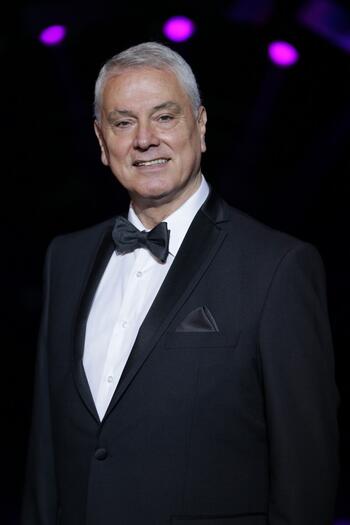
Pierre Dulaine was born in Jaffa, Palestine in 1944 to an Irish father and a Palestinian mother--both of whom fled the area in 1948. After eight months of moving several times, Dulaine's family settled in Amman, Jordan. In 1956, the Suez Crisis forced Dulaine's parents to flee the country, eventually resettling in Birmingham, England. In 1994 Dulaine founded the Dancing Classrooms program in New York City's public schools in which he encouraged children from various backgrounds to dance together. He later traveled to the city of his birth, Jaffa, to visit his childhood home and to make a film, 'Dancing in Jaffa,' where he brought Israeli Arabs and Jews together through dance and music. His life was also fictionalized in the film Take the Lead starring Antonio Banderas. More recently, Pierre Duaine has gained much acclaim in the Arab world for his role as Judge on the Arabic version of the TV show 'So You Think You Can Dance' where he encouraged young Arab men and women to pursue dance as way of dealing with difficult circumstances and certain outdated social
(See flyer for a list of the co-sponsors)
Note: A screening of 'Dancing in Jaffa' will take place on campus on May 29. For more information, click here.
[[{"fid":"218684","view_mode":"crop_870xauto","fields":{"format":"crop_870xauto","field_file_image_description[und][0][value]":"PD flyer","field_file_image_alt_text[und][0][value]":"","field_file_image_title_text[und][0][value]":"","field_credit[und][0][value]":"","field_caption[und][0][value]":"","field_related_image_aspect[und][0][value]":"","thumbnails":"crop_870xauto","pp_lightbox":false,"pp_description":false},"type":"media","attributes":{"height":1344,"width":870,"class":"media-element file-crop-870xauto"}}]]
Stanford Language Center,
Building 30-102,
Stanford, CA
Pierre Dulaine
Lectures
Mark Lorey of World Vision speaks on faith-based international NGOs
News Type
Commentary
Date
Paragraphs
Mark Lorey, vice president for Child Development and Program Effectiveness at World Vision International, spoke on his experience working for a faith-based international NGO on human rights issues at the Stanford Program on Human Rights’ Winter Speaker Series, U.S. Human Rights NGOs and International Human Rights, on February 18, 2015.
Lorey addressed the Stanford audience from the Christian perspective and outlined World Vision’s mission for the sustained well-being of children. The projects and other initiatives that World Vision has in place often have a strong religious component to them. For example, many of the projects aim to empower local religious leaders to mobilize marginalized populations through deep faith and commitment to their God. He focused on the stigma and judgment that is attached to HIV/AIDS, especially coming from those of strict religious orientation. In believing in the capability for change, he presented a video that highlighted the experience of a devout Armenian Orthodox priest that once spoke adamantly against those inflicted with HIV/AIDS, but that through a World Vision educative program became a strong advocate for the victims of the disease.
Nicolle Richards, a Stanford undergraduate whose commitment to faith-based organizations has shifted considerably throughout her Stanford career, moderated the event. Richards pressed Lorey on World Vision’s work and the work of faith-based organizations more broadly. She questioned the contrast between faith-based and secular NGOs’ mission and impact in the field; the ethics involved when working with children of secular backgrounds; incorporating religious differences into their community work; and the details of a particular World Vision controversy over their decision to not hire people of different sexual orientations. Lorey struggled to answer many of these sensitive and important questions, leaving the audience with an impression that World Vision battles internally with its constraints as a faith-based organization and that the work of faith-based organizations may not be as impactful as we hope. There was a particularly uncomfortable tension in the room when Helen Stacy, director of the Program on Human Rights, interjected in the discussion, asking Lorey to speak in more detail about World Vision’s recently revoked anti-gay policy that inhibited the hiring of peoples in same-sex marriages. Unwilling to speak about this in an open forum, Lorey asserted that while it is an important issue, it is not one that he wished to dwell on.
Questions from the silenced audience were sparse, but addressed the prevalent gender inequalities among faith-based leaders and concerns about being overly authoritarian in the Good Samaritan model towards human rights work abroad.
Dana Phelps, Program Associate, Program on Human Rights
Hero Image

All News button
1
Carolyn Miles, CEO and president of Save the Children, speaks at Stanford
News Type
Commentary
Date
Paragraphs
Carolyn Miles, CEO and president of Save the Children, spoke on her organization’s efforts to protect children’s rights in many countries of the world at the Stanford Program on Human Rights’ Winter Speaker Series U.S Human Rights NGOs and International Human Rights on February 11, 2015.
Throughout her talk, Miles addressed the Stanford audience about the importance of protecting the basic needs of children, proclaiming the Save the Children mission: Every child deserves a childhood. She spoke about the urgent needs of child refugees in Syria, the organization’s biggest and most challenging hurdle at present. The audience grew still when Miles played a Save the Children commercial capturing a Syrian child’s experience in one year of her life during the wake of the crisis. Miles raised other important issues, such as the critical importance of developing longer-term strategies that support children in the aftershock of crises, which often can be more damaging than the initial crisis itself. For example, in the aftermath of Hurricane Katrina when thousands of children were displaced, organizations such as the Red Cross had no plan in place for caring for children in shelters beyond a short period of time. Save the Children trained Red Cross workers in preparedness techniques and strategies for emergency aftermath.
Helen Stacy, director of the Program on Human Rights and moderator of the event, questioned Miles on the organization’s strategy for accessing marginalized communities; prioritizing children that are forgotten or ignored; and the concern of overeducating and preparing children in countries with a depleted workforce. Miles believes that focusing on the hard-to-reach populations will close the gap between the majority and the minority, and that studies show that this is achievable when governments are made to feel accountable to their marginalized peoples when witnessed on an international level. In relation to unrealistically preparing children for the workforce, Miles stated that in the Middle East this may potentially be a problem, but that Save the Children endeavors to prepare students through matching their skillsets to jobs that are already available. When Stacy challenged Miles on the Western mindset that frames the Save the Children mission that “every child deserves a childhood," Miles agreed that it is a Western attitude but stood by her stance that she believes that all children under the age of eighteen are entitled to certain basic rights, regardless of non-Western cultural norms indicating otherwise. Questions from the audience included fundraising issues, learning from undesirable program evaluation results, dealing with diversity when designing projects and innovation in children’s rights.
Dana Phelps, Program Associate, Program on Human Rights
Hero Image

All News button
1