Economic Affairs
-

The University of Cape Town’s Graduate School of Development Policy and Practice (GSDPP), in collaboration with the Leadership Academy for Development (LAD), an affiliate of Stanford University, will be offering a course in April 2015 that addresses some of the challenges faced by public sector leaders as they foster economic growth in politically-charged environments. 

This course was run successfully in both 2011 and 2013. The 2015 version – updated with new case studies – will also be facilitated by international and national trainers and experts. 

The course is a 5-day, intensive programme for a small number of high level government officials and business leaders from South Africa and other African countries (25-30 in total). It will explore how government can encourage and enable the private sector to play a more effective, productive role in economic growth and development. The curriculum is designed to reinforce and illustrate three critically important hypotheses about the role of public policy in private sector development.


Case studies for this course are available here.  

University of Cape Town and the Cape Milner Hotel

Johannesburg, South Africa

Workshops
-

Abstract

The Trans-Pacific Partnership (TPP) is widely regarded as the economic component of the US strategy of “rebalance” to Asia. As a major trading partner of many of the founding members, Taiwan has obvious economic and security interests at stake and is therefore seeking to join the TPP in the next round. But an overlooked aspect of the TPP for Taiwan is its potential impact on sovereignty. Trade agreements provide a revealing window into the evolving conceptions of modern sovereignty. The way Taiwan’s unique form of statehood and international status is defined in trade agreements could strengthen its position under international law and contribute to its national security. This talk will consider how Taiwan was defined as a sui generis legal entity in its application to join the World Trade Organization (WTO) and as a party to the Cross-Straits Economic Cooperation Framework Agreement (ECFA), with lessons for future negotiations to join the TPP.   


Speaker Bio

Image
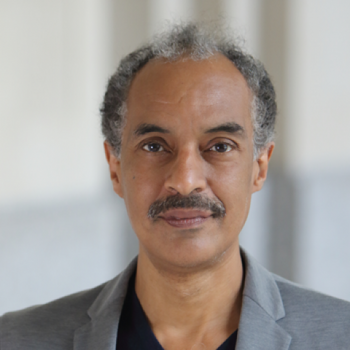
Joseph Yen-ching Chao
Joseph Yen-ching Chao is an Executive Officer in the Department of International Cooperation and Economic Affairs. A member of Taiwan’s Ministry of Foreign Affairs (MOFA) diplomatic corps since 2005, he has previously served as a German-language interpreter for the Presidential Office, an officer in the Department of Treaty and Legal Affairs, and as a deputy secretary of Taiwan’s permanent mission to the World Trade Organization in Geneva, Switzerland.  He holds an LL.M. from Ruprecht-Karls University in Heidelberg and a Doctor juris from Albert-Ludwige University, Frieberg, Germany. Dr. Chao is in residence at Stanford from May-July 2015, where his research examines Taiwan’s prospects for entry into the Trans-Pacific Partnership (TPP).


This event is hosted by the Taiwan Democracy Project.

TPP and Taiwan
Download pdf
Joseph Yen-ching Chao Visiting Fellow Ministry of Foreign Affairs, Republic of China (Taiwan)
Seminars
Authors
News Type
Commentary
Date
Paragraphs

As part of the Arab Reform and Democracy Program's speaker series, George Mason University scholar Noura Erakat examined the political and legal contexts for the 2014 Gaza war. In July and August of 2014, hostilities in the Gaza Strip left 2,131 Palestinians and 71 Israelis dead, including 501 Palestinian children and one Israeli child. Of Gaza’s 1.8 million residents, 475,000 are living in temporary shelters or with other families because their homes have been severely damaged. The extent of destruction has raised questions around culpability for war crimes on all sides of the conflict.


Hero Image
screen shot 2015 05 05 at 7 53 47 am
All News button
1
Authors
News Type
Commentary
Date
Paragraphs

As part of the Arab Reform and Democracy Program's speaker series, George Washington University scholar Mona Atia discussed her book Building a House in Heaven: Pious Neoliberalism and Islamic Charity in Egypt. Islamic charities occupied a critical space in Mubarak-era Egypt. While there are a plethora of organizational types and activities, Atia's book describes a particular type of work performed by Islamic charities as a merging of religious and capitalist subjectivity, or pious neoliberalism. Pious neoliberalism describes how Islamism works in conjunction with neoliberalism rather than as an alternative to it. It represents a new compatibility between business and piety that is not specific to any religion, but rather is a result of the ways in which religion and economy interact in the contemporary moment. In Egypt, pious neoliberalism produces new institutions, systems of knowledge production and subjectivities. The lecture explored the relationship between Islamic charity and Egypt’s variegated religious landscape. The author discussed how Islamic charities helped spread Islamic practices outside the space of the mosque and into everyday life/spaces and their impact on development in Egypt.

Hero Image
screen shot 2015 04 29 at 6 55 44 pm
All News button
1
Authors
News Type
Commentary
Date
Paragraphs

As part of the Arab Reform and Democracy Program's speaker series, Executive Director of the Mediterranean Development Initiative Ghazi Ben Ahmed examined the challenge of youth alienation in the context of the Tunisian transition. Social and economic grievances of Tunisian youth played a major role in igniting the uprising in Tunisia, and more generally, the so-called Arab Spring. Despite a successful political transition in the country, progress on addressing youth grievances has been slow in light of deteriorating living conditions, rampant corruption, and rising unemployment. These realities continue to pose a serious challenge to the prospects of building a sustainable democracy in Tunisia. Based on data gathered from meetings with a diverse group of 500 young Tunisians, this talk will shed light on youth’s perceived and actual exclusion from social, economic, and political opportunities. In doing so it will provide a critical assessment of the underlying causes of youth alienation in the country and prospects for greater political, social and economic inclusion.


Hero Image
screen shot 2015 04 22 at 7 51 10 am
All News button
1
-

Abstract

Social and economic grievances of Tunisian youth played a major role in igniting the uprising in Tunisia, and more generally, the so-called Arab Spring. Despite a successful political transition in the country, progress on addressing youth grievances has been slow in light of deteriorating living conditions, rampant corruption, and rising unemployment. These realities continue to pose a serious challenge to the prospects of building a sustainable democracy in Tunisia. Based on data gathered from meetings with a diverse group of 500 young Tunisians, this talk will shed light on youth’s perceived and actual exclusion from social, economic, and political opportunities. In doing so it will provide a critical assessment of the underlying causes of youth alienation in the country and prospects for greater political, social and economic inclusion.

Speaker Bio

Image
attachment 1

Ghazi Ben Ahmed leads the Mediterranean Development Initiative of the Center for Transatlantic Relations, Johns Hopkins SAIS in Tunisia. He is the founder and the Secretary General of the Club de Tunis, a Tunisian based foundation that helps policymakers and entrepreneurs devise strategies and development projects for inclusive growth. He has set up jointly with Dar El Dhekra (Remembrance House, the first Tunisian Jewish Association), a project to safeguard Tunisian Jewish Heritage by promoting its products on the US market. Ghazi Ben Ahmed is the Tunisia Coordinator for Leaders Engaged in New Democracies (LEND). He cooperates with the U.S. State Department, the Community of Democracies, and the Club de Madrid to provide peer advice, peer support, and capacity building to political leaders and policy makers in Tunisia. Previously he was the Lead Trade Expert in the African Development Bank (AfDB). Before joining the AfDB, he was a Senior Advisor at the United Nation agency for Trade and Development (UNCTAD), in the Africa and LDC Division. He also worked for almost 10 years in the European Commission in Brussels, in several Directorates-Generals: Trade, EuropeAid and External Relations, responsible for trade issues, EU trade and development policy, textile negotiations, macroeconomic analysis, structural adjustment and institutional building in the Mediterranean countries.


*This event is co-sponsored with the Mediterranean Studies Forum.*


[[{"fid":"218669","view_mode":"crop_870xauto","fields":{"format":"crop_870xauto","field_file_image_description[und][0][value]":"Ghazi Ben Ahmed flyer","field_file_image_alt_text[und][0][value]":"","field_file_image_title_text[und][0][value]":"","field_credit[und][0][value]":"","field_caption[und][0][value]":"","field_related_image_aspect[und][0][value]":"","thumbnails":"crop_870xauto","pp_lightbox":false,"pp_description":false},"type":"media","attributes":{"height":"540","width":"870","class":"media-element file-crop-870xauto"}}]]


Okimoto Conference Room
3rd Floor East Wing
Encina Hall
616 Serra Street
Stanford, California 94305

Ghazi Ben Ahmed Executive Director Mediterranean Development Initiative
Seminars
Authors
News Type
Commentary
Date
Paragraphs

As part of the Arab Reform and Democracy Program's speaker series, UC Santa Barbara Historian Sherene Seikaly discusses her research on Egypt's 1977 bread intifada. A return to the historical moment of the “Bread Intifada,” of 1977 interrupts the narrative resilience of the alternating sleep and wakefulness of the Egyptian, and more broadly the Arab people. By engaging 18-19 January 1977 as a moment of politics and popular sovereignty, Seikaly's project challenges who and what count as political, rational, and legitimate. The role food played in protestors’ and government strategies and demands reveals how basic needs function as a trigger of social upheaval as well as a vehicle of political containment. This project attends to the roles that poverty and hunger play in politics in order to detail critiques of the open door policy. It explores how government officials, journalists, and protestors defined and ultimately contained the “poor” and the “hungry.” More importantly, by studying how protestors narrated and represented themselves and the tools they used to make their claims, this project troubles the construction of the “people.”  In so doing, it explores continuity and rupture between 1977 and 2011.


Hero Image
screen shot 2015 04 11 at 11 18 29 am
All News button
1
-

Abstract:

Over the last four years of upheaval in the Arab world, the notion of “the people,” Egyptian and otherwise, has proven profoundly resilient.  It is these “people”—as individuals and a collective—that are problematically celebrated as subjects finally fulfilling their long-awaited destiny; dismissed as passive objects duped by external forces and incapable of politics; or incited against as dangerous masses capable of destroying the nation. A return to the historical moment of the “Bread Intifada,” of 1977 interrupts the narrative resilience of the alternating sleep and wakefulness of the Egyptian, and more broadly the Arab people. By engaging 18-19 January 1977 as a moment of politics and popular sovereignty, this project challenges who and what count as political, rational, and legitimate. The role food played in protestors’ and government strategies and demands reveals how basic needs function as a trigger of social upheaval as well as a vehicle of political containment. This project attends to the roles that poverty and hunger play in politics in order to detail critiques of the open door policy. It explores how government officials, journalists, and protestors defined and ultimately contained the “poor” and the “hungry.” More importantly, by studying how protestors narrated and represented themselves and the tools they used to make their claims, this project troubles the construction of the “people.”  In so doing, it explores continuity and rupture between 1977 and 2011. 

Speaker Bio:

sherenesphoto Sherene Seikaly

   
Sherene Seikaly is Assistant Professor of history at the University of California, Santa Barbara. She is the co-editor of the Arab Studies Journal, and co-founder and editor of Jadaliyya e-zine. Seikaly's Men of Capital in Times of Scarcity: Economy in Palestine (Stanford University Press, forthcoming) explores how Palestinian capitalists and British colonial officials used economy to shape territory, nationalism, the home, and the body.

This event is co-sponsored by the Arab Studies Institute and the Sohaib and Sara Abbasi Program in Islamic Studies.


[[{"fid":"217836","view_mode":"crop_870xauto","fields":{"format":"crop_870xauto","field_file_image_description[und][0][value]":"Sherene Seikaly Flyer","field_file_image_alt_text[und][0][value]":"","field_file_image_title_text[und][0][value]":"","field_credit[und][0][value]":"","field_caption[und][0][value]":"","field_related_image_aspect[und][0][value]":"","thumbnails":"crop_870xauto","pp_lightbox":false,"pp_description":false},"type":"media","attributes":{"width":"870","class":"media-element file-crop-870xauto"}}]]


Okimoto Conference Room
3rd Floor East Wing
Encina Hall
616 Serra Street
Stanford, California 94305

Sherene Seikaly Assistant Professor of History UCSB
Seminars
-

Abstract:

Arab workers participated prominently in the popular uprisings of 2011.  They shared the outrage of many of their compatriots over daily abuse by internal security forces, widespread corruption, and foreign policies subservient to U.S. interests. Their participation in those uprisings was also informed by struggles against the neoliberal economic restructuring of the region since the 1970s, which resulted in an indecent chasm between rich and poor, deteriorating working conditions and public social services, and high youth unemployment.

Egypt experienced a strike wave of unprecedented magnitude in the 2000s. Tunisia, with one exception, experienced less intense contestation by workers and others. Egyptian workers’ have had very limited influence on national politics in the post-Mubarak era.  Democratic development seems unlikely in the near future.  The Tunisian national trade union federation and its affiliates were the central force in installing procedural democracy. The nature of workers’ social movements in the 2000s partially explains these divergent outcomes.

Speaker Bio:

Image
Joel Beinin

Joel Beinin is the Donald J. McLachlan Professor of History and Professor of Middle East History. He received his A.B. from Princeton University in 1970, his M.A. from Harvard University in 1974, and his A.M.L.S. and Ph.D. from the University of Michigan in 1978 and 1982. He also studied at the American University of Cairo and and the Hebrew University of Jerusalem. He lived in Egypt in 1969, 1980-81, 1985, 1986, 1994, 2004-05, and 2006-08 and in Israel in 1965-66, 1970-73, 1987, 1988, 1993, and 1993. He has taught Middle East history at Stanford University since 1983. From 2006 to 2008 he served as Director of Middle East Studies and Professor of History at the American University in Cairo. His research and writing focuses on workers, peasants, and minorities in the modern Middle East and on Israel, Palestine, and the Arab-Israeli conflict.


Beinin has written or edited nine books, most recently Social Movements, Mobilization, and Contestation in the Middle East and North Africa; co-edited with Frédéric Vairel (Stanford University Press, 2011) and The Struggle for Worker Rights in Egypt (Solidarity Center, 2010). His articles have been published in leading scholarly journals as well as The Nation, Middle East Report, The Los Angeles Times, The San Francisco Chronicle, Le Monde Diplomatique, and others. He has appeared on Al-Jazeera TV, BBC radio, National Public Radio, and many other TV and radio programs throughout North America, and in France, Egypt, Singapore, and Australia, and has given frequent interviews to the global media. In 2002 he served as President of the Middle East Studies Association of North America.

This event is co-sponsored by the Arab Studies Institute.


[[{"fid":"217426","view_mode":"crop_870xauto","fields":{"format":"crop_870xauto","field_file_image_description[und][0][value]":"Beinin Flyer","field_file_image_alt_text[und][0][value]":"","field_file_image_title_text[und][0][value]":"","field_credit[und][0][value]":"","field_caption[und][0][value]":"Beinin Flyer","field_related_image_aspect[und][0][value]":"","thumbnails":"crop_870xauto","pp_lightbox":false,"pp_description":false},"type":"media","attributes":{"height":655,"width":870,"class":"media-element file-crop-870xauto"}}]]

Goldman Conference Room
4th Floor East Wing E409
Encina Hall
616 Serra Street
Stanford, California 94305

Joel Beinin Donald J. McLachlan Professor of History Stanford University
Seminars
Subscribe to Economic Affairs