Conflict
Paragraphs

It is well-established that the Conquest of the Americas by Europeans led to catastrophic declines in indigenous populations. However, less is known about the conditions under which indigenous communities were able to overcome the onslaught of disease and violence that they faced. Drawing upon a rich set of sources, including Aztec tribute rolls and early Conquest censuses (chiefly the Suma de Visitas (1548)), we develop a new disaggregated dataset on pre-Conquest economic, epidemiological and political conditions both in 11,888 potential settlement locations in the historic core of Mexico and in 1,093 actual Conquest-era city-settlements. Of these 1,093 settlements, we show that 36% had disappeared entirely by 1790. Yet, despite being subject to Conquest-era violence, subsequent coercion and multiple pandemics that led average populations in those settlements to fall from 2,377 to 128 by 1646, 13% would still end the colonial era larger than they started. We show that both indigenous settlement survival durations and population levels through the colonial period are robustly predicted, not just by Spanish settler choices or by their diseases, but also by the extent to which indigenous communities could themselves leverage nonreplicable and nonexpropriable resources and skills from the pre-Hispanic period that would prove complementary to global trade. Thus indigenous opportunities and agency played important roles in shaping their own resilience.

All Publications button
1
Publication Type
Journal Articles
Publication Date
Subtitle

In a new paper for the Journal of Historical Political Economy, Alberto Diaz-Cayeros and Saumitra Jha examine the conditions under which indigenous communities in Mexico were able to overcome the onslaught of disease and violence that they faced.

Journal Publisher
Journal of Historical Political Economy
Authors
Alberto Díaz-Cayeros
Saumitra Jha
Number
No. 1, pp 89-133
Authors
Nora Sulots
News Type
Commentary
Date
Paragraphs

Since the 2014 Russian annexation of Crimea and the onset of a Russian-backed separatist war in the Donbas region, Ukraine has been fighting a simultaneous battle for its democratic future. Pressure on Ukrainian democracy has increased, however, with the build-up of Russian military forces on Ukraine’s borders in recent months. Russia’s latest actions have prompted various reactions from the United States, the EU, and other Western allies, but the varying severity of these responses have raised concerns they may well not be sufficient to deter Putin from a further incursion into Ukraine. 

Regardless of the security guarantees that Russian President Putin claims to want, what is most at stake is the democratic future of Ukraine.


CDDRL has had a long investment in Ukraine’s success as a democracy. Our Ukrainian Emerging Leaders Program (UELP), a 10-month academic training fellowship that brings policy-makers, legal professionals, entrepreneurs, and leaders of civil society organizations from Ukraine to study at Stanford, was founded in 2016. Its goal is to help address enduring development challenges in Ukraine and across the broader region. Our two other practitioner-based training programs – the Leadership Academy for Development and the Draper Hills Summer Fellows Program (DHSF) – count hundreds of Ukrainian emerging civic leaders and social entrepreneurs among their alumni.  Most recently, in the fall of 2021, in partnership with the Freeman Spogli Institute for International Studies, CDDRL hosted former Ukrainian Prime Minister Oleksiy Honcharuk as the Bernard and Susan Liautaud Visiting Fellow

As the situation at the Russia-Ukraine border continues to evolve, we are bringing together our Ukrainian alumni to amplify their voices through public conversations about the crisis. Stay tuned for information about a forthcoming event.

Any conversation about Ukraine’s future must include Ukrainian voices.


It is not NATO or the European Union that have driven Ukraine’s political path since the dissolution of the Soviet Union in 1991. It is, of course, Ukrainians themselves who have been the driving force behind the country’s democratic path.  

Many of our program alumni have played important and influential roles in the country's political, economic, and social development, and have their own perspectives in what follows on why it is important for the international community to pay attention to what is going on in Ukraine and how the crisis is affecting them personally.


Image
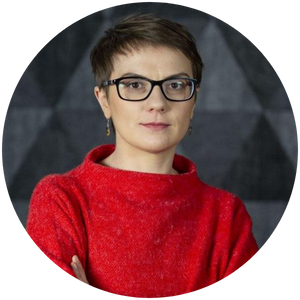
Nataliya Gumenyuk

Nataliya Gumenyuk
Founding Director of the Public Interest Journalism Lab
DHSF class of 2018


As a journalist who covers conflict, today I am 100% consumed by the current situation in Ukraine. It is my job to explain what’s going on to a global audience, as well as to the Ukrainian one. Yet I and other Ukrainian professionals feel a bit trapped. The situation is so uncertain, we cannot afford to cancel all other plans; we are always busy with so many things happening, we can neither cancel nor fully engage. I am saddened that so much of our strength and energy is wasted on this situation. And on top of everything we are thinking about our families and considering various scenarios. As for myself – I am on duty.

Russia’s demands are not about Ukraine, they are about changing the international security architecture, canceling the ‘open door’ policy by NATO, which undermines the whole idea of the alliance. If Russia is allowed to invade further (and by the way Russia has already occupied parts of Ukrainian territories since 2014) – we are essentially agreeing that it’s acceptable to conquer other states by force.

The key takeaways for me are that we really should be discussing the current international relations system and to what extent it is able to protect countries outside of these alliances, and young democracies when they are threatened and bullied. This is a discussion not only about Eastern Europe.

Nataliya Gumenyuk is a Ukrainian author and journalist specializing in foreign affairs and conflict reporting. Gumenyuk is the author of the book “The Lost Island: Tales From Occupied Crimea” (2020), based on six years of reporting from the annexed peninsula. You can read some of her recent work here: 


Image
Oleksiy Honcharuk


Oleksiy Honcharuk
Former Prime Minister of Ukraine
2021 Bernard and Susan Liautaud Visiting Fellow at CDDRL and the Freeman Spogli Institute


Democracy is one of the primary threats for Putin. Russia invaded Ukraine because of our choice to be a free, democratic country. That’s why the war between Ukraine and Russia is not a regional conflict – it is an important part of a larger war for democracy. 

Global democracy has been in a recession for at least the last 15 years due to a lack of democratic leadership around the world. It looks like the West has forgotten about the real value of democracy and has taken it for granted. This was a mistake and Ukraine is already paying a big price for it. Ukraine is now a beacon of democracy for millions of people in Eastern Europe and Asia, and we cannot lose this battle. 

I want Ukraine to be a successful, free country but Putin is trying to destroy it. I'm not scared and I am ready to fight for democracy.

More from Oleksiy Honcharuk:


Image
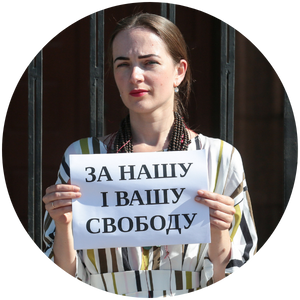
Oleksandra Matviichuk


Oleksandra Matviichuk
Head of the Center for Civil Liberties (Ukraine)
UELP 2017-18


Russia under Putin has finally turned back into an empire. Unfortunately, the empire cannot remain stable. Putin thinks in terms of the Soviet Union. But now Russia does not have enough resources to play a full game, so the Kremlin is betting on war.

This is not about the war between Russia and Ukraine – it is about the war between authoritarianism and democracy. Thus, Ukraine acts in an unexpected role as an outpost that protects the values of the free world. Putin does not fear NATO, but the values of freedom in the post-Soviet space because it threatens his authoritarian regime.

We are preparing for a new armed attack by Russia. Recently, the President of Ukraine gave a press conference to foreign media, which raised many questions. However, there is something that the Kremlin cannot understand and that is underestimated in the West: People in America and the EU have lived for years with efficient and stable state institutions. We have never had such a luxury in Ukraine, so we are not used to relying on the government at critical moments.

I have been working in the field of human rights for more than twenty years, the last eight of which were focused on the war with Russia, so I have no illusions. Human rights defenders, journalists, and civil society activists will be the first targets of Russia's armed aggression. We have seen this before during the seizure of Crimea and Donbas when in order to gain rapid control of the region a non-violent minority was physically destroyed or driven out for their resistance. I have talked to my fellow human rights defenders, and I can say the following: We will stay in Ukraine and protect human rights as much as we can.


Image
Nataliya Mykolska


Nataliya Mykolska
Strategic transformations expert, Member of the Board Ukrhydroenergo JSC
UELP 2018-19


The Russian aggression against Ukraine and potential military invasion is not only about Ukraine. It is about democracy prevailing in the former CIS region and Ukraine being a success story. A truly independent and successful Ukraine is a major threat to Putin’s autocratic regime in Russia and his short and long-term prospects in the region. 

We, Ukrainians, are ready to fight for our values, our freedom, our dignity, our country, our land, and the future of our children. We have done so in 2014 and have continued to do so for eight years. There is no other way for us to move forward.


Image
Ivan Prymachenko


Ivan Prymachenko
Founder, Prometheus
UELP 2018-19


In 1946 George Kennan famously wrote the following about the Soviet state: "impervious to the logic of reason it is highly sensitive to the logic of force. For this reason, it can easily withdraw – and usually does when strong resistance is encountered at any point."

In 2022, this description is still fitting for the self-declared successor of the USSR – Putin's Russia. The best way to provoke Putin now is to show weakness. The best way to achieve peace is to demonstrate strength by preparing a devastating sanctions package against Russia and delivering modern weapons to Ukraine.


Image
Artem Romaniukov


Artem Romaniukov
Co-founder at SaveDnipro / SaveEcoBot, Co-founder at Civil Control Platform
UELP 2019-20


There are two competing points of view here in Ukraine on what is going on. The first is that Ukraine is a bargaining chip between Russia and "the West.” This means there will be no exacerbation of war, just bluffing.  

Second is that Putin for some reason felt that this was the right time to push for his agenda and started to raise the stakes, but "the West" appeared to be more united than ever before, providing Ukraine with lethal weapons and making strong claims. This means he may find himself in a stalemate with no choice except to invade Ukraine and become a pariah in the international community. 

It looks like president Zelensky believes in the first scenario. But the relevant emptiness on Kyiv streets in recent days shows that Ukrainians do not always share the government's view.


Image
Igor Rozkladaj


Igor Rozkladaj
Deputy Director at the Center for Democracy and Rule of Law
DHSF class of 2018


Democracy is the best thing that we have in the modern world. But democracy needs to be trained – much like muscles on your body – or else it will become weak.

In a time of economic stress, pandemic, and uncertainty people seek simple explanations and decisions– that is the Achilles' heel of democracy. And in combination with disinformation and easy money, autocratic regimes can take hold. That's how the Soviet Union and modern Russia manipulated the Western world and did it with great success.

Russia always was and still is an authoritarian country. Nowadays under the autocratic Putin regime, we see increased militarization and pressure on independent people to stop their activities or face being arrested. 

Ukrainians, whose territories have been occupied by Russia, whose language and culture was under imperial pressure, whose identity is now denied now by Russia’s leadership, whose millions of people were killed in famines and wars know the real face of this country. The reforms we have made in Ukraine since 2014 are vitally important, from anti-corruption to decommunization. This conflict is not only about Ukraine, but about stopping Putin’s vision of  “Russkyi mir” from spreading throughout the region. 

We Ukrainians have made three attempts to wrench ourselves away from Russian influence: in 1991, 2004, and 2013-14. We have been at war with "unidentified little green men" for the last 8 years. We lose our best people to protect our country from Putin’s ambitions, and yet still fight. The question is what will prevail: corruption and kleptocracy from Putin or the democratic values that millions of Ukrainians have sacrificed for.


Image
Olexandr Starodubtsev


Olexandr Starodubtsev
Deputy Head at the National Agency for Corruption Prevention
UELP 2017-18


The war that Russia started in 2014 is hybrid in nature. Misinformation and cyber-attacks by Russia have become commonplace in Ukraine since then. Of course, Ukrainians feel worried today about the latest news, but we see the support of international partners, including supplies of weapons. We hope that these weapons will not have to be used and that the latest signals from Russia are just another attempt to intimidate Ukraine and the global community.

For our part, we at the National Agency on Corruption Prevention (NACP) are preparing for a new Russian cyber-attack. The NACP maintains several strategic portals, such as a register of e-declarations of all public officials, and has access to 17 other government databases. It is important for us that these data do not fall into the hands of the enemy. The last big cyber-attack did not affect us significantly because of the high level of training of our IT specialists. Therefore, we are confident that we will be able to resist future attacks.


Image
Svitlana Zalishchuk

Svitlana Zalishchuk
Advisor to the CEO of Naftogaz Group/Foreign Policy Advisor to the Deputy Prime Minister of Ukraine on European Integration
DHSF class of 2011


While the West is trying to negotiate a de-escalation of Russia’s buildup of forces on the borders of Ukraine, Putin renegotiates the world order. It’s not only Ukraine’s NATO integration he is concerned with. Putin wants informal veto power in NATO and the EU as well as a quiet funeral ceremony for the rule-based international order. The West needs two things to counteract such a scenario. First, unity and readiness to defend its redlines, which can be costly.  Second,  a long-term comprehensive strategy to withstand Putin. Because even if we succeed in stopping his invasion now, make no mistake, it will not be his last move.

More from Svitlana Zalishchuk:

Read More

Members of the Ukrainian military carry the flag of Ukraine during the 30th anniversary of the country's independence.
News

What the Ukraine-Russia Crisis Says about the Global Struggle for Democracy

Former prime minister of Ukraine Oleksiy Honcharuk joins Michael McFaul on the World Class Podcast to analyze Russia's aggression towards Ukraine and how it fits into Vladamir Putin's bigger strategy to undermine democracy globally.
What the Ukraine-Russia Crisis Says about the Global Struggle for Democracy
Left to right: Denis Gutenko, Nariman Ustaiev, Yulia Bezvershenko -- fellows of the Ukrainian Emerging Leaders Program -- and Francis Fukuyama, senior fellow at the Freeman Spogli Institute for International Studies.
News

Stanford welcomes Ukrainian emerging leaders after COVID-19 disruption

After a hiatus due to the pandemic, fellows of the Ukrainian Emerging Leaders Program are now on campus, ready to begin their ten months attending classes and working on projects tackling issues relevant in Ukraine.
Stanford welcomes Ukrainian emerging leaders after COVID-19 disruption
Oleksiy Honcharuk
News

Oleksiy Honcharuk Appointed the Bernard and Susan Liautaud Visiting Fellow

Honcharuk, formerly the prime minister of Ukraine, will focus on examining what Western allies can do to support Ukraine in its struggle to thrive as a democracy in Eastern Europe while at Stanford.
Oleksiy Honcharuk Appointed the Bernard and Susan Liautaud Visiting Fellow
Hero Image
Ukrainian DHSF alumni with Francis Fukuyama
All News button
1
Subtitle

Many of our program alumni have played important and influential roles in the country's political, economic, and social development, and have their own perspectives in what follows on why it is important for the international community to pay attention to what is going on in Ukraine and how the crisis is affecting them personally.

1
Postdoctoral Fellow at Stanford Impact Labs (SIL), affiliated with PovGov at CDDRL, 2021-22
External Collaborator, PovGov
Carlos Schmidt-Padilla

I received my PhD in Political Science from the University of California, Berkeley, where I was also a Research Associate at the Center on the Politics of Development. Broadly, my research interests encompass the political economy of development of Latin America and of sub-Saharan Africa. In particular, I study questions concerning crime, human capital, immigration, and policing in developing countries. I am from San Salvador, El Salvador.

1
CDDRL Predoctoral Scholar, 2021-22
nick_kuipers.jpg

Nicholas Kuipers is a Ph.D. candidate in political science at the University of California, Berkeley, studying comparative politics and political economy. Nicholas’ research has been supported by the Institute for International Studies, the National Science Foundation (NSF), the Southeast Asia Research Group (SEAREG), and the Weiss Family Fund. His research has been published in Asian Survey, British Journal of Political Science, Journal of Politics, and Journal of Experimental Political Science. A graduate of Oberlin College, he previously worked in Jakarta at Saiful Mujani Research & Consulting, a political consultancy specializing in public opinion surveys.

Paragraphs

Why do drug trafficking organizations (DTOs) sometimes prey on the communities in which they operate but sometimes provide assistance to these communities? What explains their strategies of extortion and co-optation toward civil society? Using new survey data from Mexico, including list experiments to elicit responses about potentially illegal behavior, this article measures the prevalence of extortion and assistance among DTOs. In support of our theory, these data show that territorial contestation among rival organizations produces more extortion and, in contrast, DTOs provide more assistance when they have monopoly control over a turf. The article uncovers other factors that also shape DTOs’ strategies toward the population, including the degree of collaboration with the state, leadership stability and DTO organization, and the value and logistics of the local criminal enterprise.

Read here.

All Publications button
1
Publication Type
Journal Articles
Publication Date
Authors
Beatriz Magaloni
Alberto Díaz-Cayeros
Graduate School of Business 655 Knight Way Stanford, CA 94305
(650) 721 1298
0
Associate Professor of Political Economy, GSB
Associate Professor, by courtesy, of Economics and of Political Science
saumitra_jha.jpg

Along with being a Senior Fellow at the Freeman Spogli Institute for International Studies, Saumitra Jha is an associate professor of political economy at the Stanford Graduate School of Business, and convenes the Stanford Conflict and Polarization Lab. 

Jha’s research has been published in leading journals in economics and political science, including Econometrica, the Quarterly Journal of Economics, the American Political Science Review and the Journal of Development Economics, and he serves on a number of editorial boards. His research on ethnic tolerance has been recognized with the Michael Wallerstein Award for best published article in Political Economy from the American Political Science Association in 2014 and his co-authored research on heroes with the Oliver Williamson Award for best paper by the Society for Institutional and Organizational Economics in 2020. Jha was honored to receive the Teacher of the Year Award, voted by the students of the Stanford MSx Program in 2020.

Saum holds a BA from Williams College, master’s degrees in economics and mathematics from the University of Cambridge, and a PhD in economics from Stanford University. Prior to rejoining Stanford as a faculty member, he was an Academy Scholar at Harvard University. He has been a fellow of the Niehaus Center for Globalization and Governance and the Center for the Study of Democratic Politics at Princeton University, and at the Center for Advanced Study in the Behavioral Sciences at Stanford. Jha has consulted on economic and political risk issues for the United Nations/WTO, the World Bank, government agencies, and for private firms.


Senior Fellow at the Freeman Spogli Institute for International Studies
Dan C. Chung Faculty Scholar at the Freeman Spogli Institute for International Studies
Senior Fellow at the Stanford Institute for Economic Policy Research
Date Label
0
Visiting Scholar, Ukrainian Emerging Leaders Program 2017-18
oleksandra_hs.jpg

Oleksandra Matviichuk is a human rights defender who works on issues in Ukraine and the OSCE region. At present she heads the human rights organization Center for Civil Liberties, and also coordinates the work of the initiative group Euromaidan SOS. The activities of the Center for Civil Liberties are aimed at protecting human rights and establishing democracy in Ukraine and the OSCE region. The organization is developing legislative changes, exercises public oversight over law enforcement agencies and judiciary, conducts educational activities for young people and implements international solidarity programs. 

The Euromaidan SOS initiative group was created in response to the brutal dispersal of a peaceful student rally in Kyiv on November 30, 2013. During three months of mass protests that were called the Revolution of Dignity, several thousand volunteers provided round-the-clock legal and other aid to persecuted people throughout the country. Since the end of the protests and beginning of Russian aggression in Ukraine, the initiative has been monitoring political persecution in occupied Crimea, documenting war crimes and crimes against humanity during the hybrid war in the Donbas and conducting the “LetMyPeopleGo” international campaign to release political prisoners detained by the Russian authorities. 

Oleksandra Matviichuk has experience in creating horizontal structures for massive involvement of people in human rights activities against attacks on rights and freedoms, as well as a multi-year practice of documenting violations during armed conflict. She is the author of a number of alternative reports to various UN bodies, the Council of Europe, the European Union, the OSCE and the International Criminal Court. In 2016 she received the Democracy Defender Award for "Exclusive Contribution to Promoting Democracy and Human Rights" from missions to the OSCE.

Paragraphs

The levels of violence in Mexico have dramatically increased in the last few years due to structural changes in the drug trafficking business. The increase in the number of drug trafficking organizations (DTOs) fighting over the control of territory and trafficking routes has resulted in a substantial increase in the rates of homicides and other crimes. This study evaluates the economic costs of drug-related violence. We propose electricity consumption as an indicator of the level of municipal economic activity and use two different empirical strategies to test this. To estimate the marginal effects of violence, we utilize an instrumental variable regression created by Mejía and Castillo (2012) based on historical seizures of cocaine in Columbia interacted with the distance of the Mexican border towns to the United States. We find that marginal increases of violence have negative effects on labor participation and the proportion of unemployed in an area. The marginal effect of the increase in homicides is substantive for earned income and the proportion of business owners, but not for energy consumption. We also employ the methodology of synthetic controls to evaluate the effect that inter-narco wars have on local economies. These wars in general begin with a wave of executions between rival criminal organizations and are accompanied by the deterioration of order and a significant increase in extortion, kidnappings, robberies, murders, and threats affecting the general population. To evaluate the effect that these wars between different drug trafficking organizations have on economic performance, we define the beginning of a conflict as the moment when we observe an increase from historical violence rates at the municipal level beyond a certain threshold, and construct counterfactual scenarios as a weighted average from optimal control units. The analysis indicates that the drug wars in those municipalities that saw dramatic increases in violence between 2006 and 2010 significantly reduced their energy consumption in the years after the change occurred.

All Publications button
1
Publication Type
Working Papers
Publication Date
Authors
Beatriz Magaloni
Gabriela Calderón
Paragraphs

The Allied occupation of Japan is remembered as the "good occupation." An American-led coalition successfully turned a militaristic enemy into a stable and democratic ally. Of course, the story was more complicated, but the occupation did forge one of the most enduring relationships in the postwar world. Recent events, from the occupations of Iraq and Afghanistan to protests over American bases in Japan to increasingly aggressive territorial disputes between Asian nations over islands in the Pacific, have brought attention back to the subject of the occupation of Japan.

In Architects of Occupation, Dayna L. Barnes exposes the wartime origins of occupation policy and broader plans for postwar Japan. She considers the role of presidents, bureaucrats, think tanks, the media, and Congress in policymaking. Members of these elite groups came together in an informal policy network that shaped planning. Rather than relying solely on government reports and records to understand policymaking, Barnes also uses letters, memoirs, diaries, and manuscripts written by policymakers to trace the rise and spread of ideas across the policy network. The book contributes a new facet to the substantial literature on the occupation, serves as a case study in foreign policy analysis, and tells a surprising new story about World War II.

All Publications button
1
Publication Type
Books
Publication Date
Journal Publisher
Cornell University Press
Authors
-

ABSTRACT

Political protests in non-democratic settings are not always contentious.  Some protests—even ones that harshly critique the ruling elite—can even become so routine that the protesters as well as the security agencies appear to be following a script.  Recognizing these routines is crucial to identifying precisely when ruptures or innovations do occur. This presentation will examine anti-Israeli protests in Jordan to explore such routines and ruptures in protest and policing repertoires before and after the outbreak of 2011 uprisings that spread across the Arab world.


SPEAKER BIO

Image
unnamed 2
Dr. Jillian Schwedler is Professor of Political Science at the City University of New York’s Hunter College and the Graduate Center, and Nonresident Senior Fellow of the Rafiq Hariri Center for the Middle East at the Atlantic Council.  She is member of the Board of Directors and the Editorial Committee of the Middle East Research and Information Project (MERIP), publishers of the quarterly Middle East Report.

Dr. Schwedler’s books include the award-winning Faith in Moderation: Islamist Parties in Jordan and Yemen (Cambridge 2006) and (with Laleh Khalili) Policing and Prisons in the Middle East (Columbia 2010).  Her articles have appeared in World Politics, Comparative Politics, Middle East Policy, Middle East Report, Journal of Democracy, and Social Movement Studies, among many others.  Her research has received support from the National Science Foundation, the United States Institute of Peace, the Fulbright Scholars Program, the American Institute for Yemen Studies, and the Social Science Research Council, among others. 


CISAC Central Conference Room
Encina Hall, 2nd Floor
616 Serra St
Stanford, CA 94305

Jillian Schwedler Professor of Political Science Hunter College
Seminars
Subscribe to Conflict