Islam
Paragraphs
ISIS in Iraq: The Social and Psychological Foundations of Terror

This study follows the human side of ISIS’s amazing rise and fall in Iraq. It does not do this as a battle-by-battle history of the group, but rather explores how common Iraqis viewed the group, interacted with the group, joined the group, fought in the group, and ultimately suffered under its brutal rule. Specifically, we seek to answer the following questions: What factors conditioned public support and opposition toward ISIS in Iraq? Why did some Iraqis move from passive support for the group to actively participating in the group’s activities, including fighting? This study uses a social psychological approach to understand the trajectory of ISIS in Iraq. The book argues that ISIS derived support from how it was perceived to either meet or threaten basic human needs for individual Iraqis. The three basic human needs in question are the physical needs for security and sustenance and the psychological need for a feeling of individual significance. Our analysis is based on a unique array of public opinion data from surveys, focus groups, and in-depth face-to-face interviews with forty detained ISIS foot soldiers and four senior leaders to explain why some Iraqis came to join and acquiesce to ISIS while others opposed it, why ISIS lost the hearts and minds of Iraqi Sunni Arabs, and how this contributed decidedly to its battlefield defeats.

All Publications button
1
Publication Type
Books
Publication Date
Subtitle

This book explores the social and psychological factors behind how ISIS was able to rise in Iraq, control most of it, and why most of that population eventually turned on it.

Authors
Michele Gelfand
Book Publisher
Oxford University Press
Paragraphs
Building resilient inter-ethnic peace: Hindus and Muslims in South Asia

A key challenge that many nations face in the 21st century is to build societies that not only are able to peacefully accommodate increasing ethnic diversity but also to leverage its potential benefits. This is not a straightforward task. Ethnically diverse communities tend to provide fewer public goods to their citizens (e.g. Alesina et al. 2004, Alesina and La Ferrara 2005) and are less likely to voice common priorities (e.g. Ban et al. 2012). With ethnic identities often coordinating political competition as well, it is perhaps not surprising that violent conflict is more likely in ethnically polarised countries and regions (e.g. Montalvo and Reynal-Querol 2005, Esteban et al. 2012, Jha 2023 and Figure 1). With 82.1 million people around the world forcibly displaced due to persecution and conflict in 2020, and widespread economic migration, the challenge of building resilient inter-ethnic peace is one faced not only by societies that have been diverse historically but increasingly in nations and communities with less experience navigating a diverse setting.

What can economic theory, in combination with the historical experiences of these communities, tell us about the necessary conditions for resilient inter-ethnic peace, and how these can be fostered?


This book presents a synthesis of key recent advances in political-economy research on the various approaches and strategies used in the process of building nations throughout modern history. It features chapters written by leading scholars who describe the findings of their quantitative analyses of the risks and benefits of different nation-building policies. The book is comprised of 26 chapters organized into six sections, each focusing on a different aspect of nation-building. The first chapter presents a unified framework for assessing nation-building policies, highlights potential challenges that may arise, provides a summary of each of the other chapters, and draws out the main lessons from them. The following chapters delve into the importance of social interactions for national identification, the role of education, propaganda and leadership, external interventions and wars, and the effects of representation and redistribution. The book offers a nuanced understanding of effective nation-building policies.

All Publications button
1
Publication Type
Book Chapters
Publication Date
Subtitle

Chapter in Nation Building: Big Lessons from Successes and Failures, edited by Dominic Rohner and Ekaterina Zhuravskaya

Authors
Saumitra Jha
Book Publisher
CEPR Press
Authors
Hesham Sallam
News Type
News
Date
Paragraphs

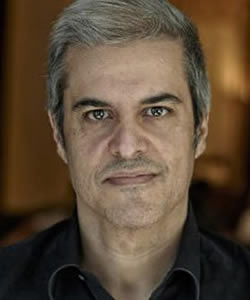
In a talk hosted by the Program on Arab Reform and Democracy on October 31, 2022, Hicham Alaoui, founder and director of the Hicham Alaoui Foundation, discussed his latest book – Pacted Democracy in the Middle East: Tunisia and Egypt in Comparative Perspective (Palgrave Macmillan, 2022).

During the event, co-sponsored by Stanford’s Abbasi Program in Islamic Studies and the Center for African Studies, Alaoui presented a new theory for how democracy can materialize in the Middle East, and the broader Muslim world. He explained that one pathway to democratization lays not in resolving important, but often irreconcilable, debates about the role of religion in politics. Rather, it requires that Islamists and their secular opponents focus on the concerns of pragmatic survival—that is, compromise through pacting, rather than battling through difficult philosophical issues about faith.

You can purchase the book online, and watch a recording of the event below:

Hero Image
Hicham Alaoui
All News button
1
Subtitle

To mark the 20th anniversary of the establishment of CDDRL, the Program on Arab Reform and Democracy (ARD) at CDDRL hosted a talk featuring Hicham Alaoui, founder and director of the Hicham Alaoui Foundation, who discussed his latest book – Pacted Democracy in the Middle East: Tunisia and Egypt in Comparative Perspective (Palgrave Macmillan, 2022).

-
Hicham Alaoui Pacted Democracy in the Middle East event

To mark the 20th anniversary of the establishment of CDDRL, Hicham Alaoui joins ARD to discuss his recently released book, Pacted Democracy in the Middle East: Tunisia and Egypt in Comparative Perspective (Palgrave Macmillan, 2022). Click here to order a copy of the book.

Pacted Democracy in the Middle East provides a new theory for how democracy can materialize in the Middle East, and the broader Muslim world. It shows that one pathway to democratization lays not in resolving important, but often irreconcilable, debates about the role of religion in politics. Rather, it requires that Islamists and their secular opponents focus on the concerns of pragmatic survival—that is, compromise through pacting, rather than battling through difficult philosophical issues about faith. This is the only book-length treatment of this topic, and one that aims to redefine the boundaries of an urgent problem that continues to haunt struggles for democracy in the aftermath of the Arab Spring.

ABOUT THE SPEAKER

Image
hicham alaoui
Hicham Alaoui is the founder and director of the Hicham Alaoui Foundation, which undertakes innovative social scientific research in the Middle East and North Africa. He is a scholar on the comparative politics of democratization and religion, with a focus on the MENA region.

In the past, he served as a visiting scholar and Consulting Professor at the Center for Democracy, Development and Rule of Law at Stanford University.  He more recently served as postdoctoral fellow and research associate at Harvard University. He was also Regents Lecturer at several campuses of the University of California system. Outside of academia, he has worked with the United Nations in various capacities, such as the peacekeeping mission in Kosovo. He has also worked with the Carter Center in its overseas missions on conflict resolution and democracy advancement. He has served on the MENA Advisory Committee for Human Rights Watch and the Advisory Board of the Carnegie Middle East Center. He served on the board of the Freeman Spogli Institute at Stanford University and has recently joined the Advisory Board of the Weatherhead Center for International Affairs at Harvard.

He holds an A.B. from Princeton University, M.A. from Stanford University, and D.Phil. from the University of Oxford. His latest book is Pacted Democracy in the Middle East: Tunisia and Egypt in Comparative Perspective (Palgrave, 2022). His memoirs, Journal d'un Prince Banni, were published in 2014 by Éditions Grasset, and have since been translated into several languages. He is also co-author with Robert Springborg of The Political Economy of Arab Education (Lynne Rienner, 2021), and co-author with the same colleague on the forthcoming volume Security Assistance in the Middle East: Challenges and the Need for Change (Lynne Rienner, 2023). His academic research has been widely published in various French and English journals, magazines, and newspapers of record.

This event is co-sponsored by ARD, the Abbasi Program in Islamic Studies, and the Center for African Studies at Stanford University.​

Image
ARD and Abbasi Program logos

Image
CAS

Larry Diamond

In-person
Encina Commons Room 123
615 Crothers Way, Stanford, CA

Hicham Alaoui
Lectures
Paragraphs
Classless Politics book cover

Since the 1970s, the Egyptian state has embarked on a far-reaching and destabilizing project of economic liberalization, reneging on its commitments to social welfare. Despite widespread socioeconomic grievances stemming from these policies, class politics and battles over wealth redistribution have largely been sidelined from elite-led national politics. Instead, conflicts over identity have raged, as Islamist movements became increasingly prominent political players.

Classless Politics offers a counterintuitive account of the relationship between neoliberal economics and Islamist politics in Egypt that sheds new light on the worldwide trend of “more identity, less class.” Hesham Sallam examines why Islamist movements have gained support at the expense of the left, even amid conflicts over the costs of economic reforms. Rather than highlighting the stagnancy of the left or the agility of Islamists, he pinpoints the historical legacies of authoritarian survival strategies. As the regime resorted to economic liberalization in the 1970s, it tacitly opened political space for Islamist movements to marginalize its leftist opponents. In the long run, this policy led to the fragmentation of opponents of economic reform, the increased salience of cultural conflicts within the left, and the restructuring of political life around questions of national and religious identity.

Historically rich and theoretically insightful, this book demonstrates how the participation of Islamist groups shapes the politics of neoliberal reform and addresses why economic liberalization since the 1970s has contributed to the surge in culture wars around the world today.

All Publications button
1
Publication Type
Books
Publication Date
Subtitle

Islamist Movements, the Left, and Authoritarian Legacies in Egypt

Authors
Hesham Sallam
Book Publisher
Columbia University Press
0
CDDRL Postdoctoral Fellow, 2022-2023
ahmed_ezzeldin_mohamed_headshot.jpeg

Ahmed Ezzeldin Mohamed is a postdoctoral fellow at the Center for Democracy, Development, and Rule of Law (CDDRL). He holds a Ph.D. (with distinction) in Political Science from Columbia University. He was a research fellow at the Middle East Initiative at Harvard Kennedy School in the academic year (2021-2022). He is a junior fellow of the Association for Analytic Learning about Islam and Muslim Societies (AALIMS).

Mohamed’s research focuses on the role of religion in political and economic development, with a special focus on the Middle East and the Muslim World. He utilizes a diverse set of tools for data collection and rigorous analysis. His work received several awards, including APSA 2022 Weber Best Conference Paper Award and MPSA 2019 Kellogg/Notre Dame Award for Best Paper in Comparative Politics. 

0
feyaad_allie_2022.jpg

Feyaad Allie is a Ph.D. candidate in political science at Stanford University focusing on comparative politics. Feyaad’s dissertation project examines the sustained exclusion of marginalized groups in multi-ethnic democracies with a focus on Muslims in India. In other ongoing research, he focuses on majority-minority relations, the intersection of technology and politics, and migration. To study these topics, Feyaad takes a mixed-methods approach, leveraging administrative data, original surveys, archival materials, in-depth interviews, and participant observation. Regionally, most of Feyaad’s work is focused on South Asia, primarily India.

Feyaad is a graduate fellow with Stanford’s Immigration Policy Lab and affiliated with the Abbasi Program in Islamic Studies. He is also a 2017 National Science Foundation Graduate Research Fellow, a Stanford EDGE Doctoral Fellow, and an APSA Minority Fellow. Prior to graduate school, Feyaad worked on an international development project in Nairobi, Kenya. He received his B.A. summa cum laude in Government from Dartmouth College.

CDDRL Predoctoral Fellow, 2022-2023
-
Rethinking Modern Sunni-Shii Relations: The State, Revolution, and Foreign Intervention

What explains the turn towards more politically relevant Sunni and Shii identities in the modern period? How do we account for a shift from Sunni-Shii cooperation against colonialism, for example, or in defense of the Ottoman Caliphate, towards polarisation? This lecture will look especially at the role of the modern state in regulating religion more broadly, coopting certain cultural groups and alienating others, and fostering sharpened sectarian identities. It will also look at the impact of the 1979 revolution in Iran, and reactions towards it, and of foreign intervention, especially the Iraq war of 2003 in sectarianizing the Middle Eastern regional system.

This event is sponsored by the Abbasi Program in Islamic Studies in partnership with the Center for International Security and Cooperation (CISAC) and the Program on Arab Reform and Democracy at CDDRL.

ABOUT THE SPEAKER

Image
Toby Matthieson
Toby Matthiesen is a scholar of Comparative Politics and International Relations with a focus on the Middle East. He is currently a Marie Curie Global Fellow at Stanford University and Ca’ Foscari University in Venice, leading a project on Sunni-Shii Relations in the Middle East.

Toby's aim in research and teaching is to study the Middle East in a global context. His research is characterized by the use of primary sources, archives, fieldwork, and engagement with social science and historiographical debates. He is the author of Sectarian Gulf: Bahrain, Saudi Arabia, and the Arab Spring That Wasn’t (Stanford University Press, 2013), a book on the impact of the Arab Spring on the Gulf States. His second book, The Other Saudis: Shiism, Dissent and Sectarianism (Cambridge University Press, 2015) dealt with the relationship between the Shii community in the Eastern Province and the Saudi state, and with transnational movements and Iran. It is based on fieldwork in Saudi Arabia and the wider region, and hitherto unused Arabic archives.

His forthcoming book, The Caliph and the Imam: The Making of Sunnism and Shiism, is a global history of Sunni-Shii relations and is published by Oxford University Press. Toby's work has also been translated into Arabic and Persian and apart from English, he publishes in German. His other research interests relate to the history of Leftist movements and the use of Islam as anti-Communism during the Cold War.

Encina Commons 123 or online via Zoom

Toby Matthiesen
Lectures
-
Black Markets and Militants: Informal Networks in the Middle East and Africa

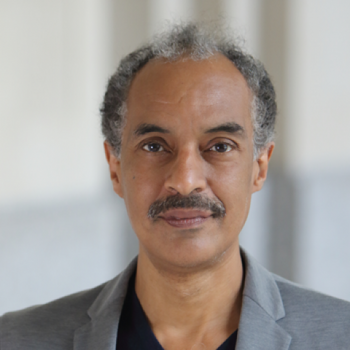
Khalid Mustafa Medani joins ARD to discuss his recently released book, Black Markets and Militants Informal Networks in the Middle East and Africa (Cambridge University Press, 2021).

Understanding the political and socio-economic factors which give rise to youth recruitment into militant organizations is at the heart of grasping some of the most important issues that affect the contemporary Middle East and Africa. In this book, Medani explains why youth are attracted to militant organizations, examining the specific role economic globalization, in the form of outmigration and expatriate remittance inflows, plays in determining how and why militant activists emerge. The study challenges existing accounts that rely primarily on ideology to explain militant recruitment.

Based on extensive fieldwork, Medani offers an in-depth analysis of the impact of globalization, neoliberal reforms, and informal economic networks as a conduit for the rise and evolution of moderate and militant Islamist movements and as an avenue central to the often violent enterprise of state-building and state formation. In an original contribution to the study of Islamist and ethnic politics more broadly, he thereby shows the importance of understanding when and under what conditions religious rather than other forms of identity become politically salient in the context of changes in local conditions.

ABOUT THE SPEAKER 

Image
Khalid Medani
Dr. Khalid Mustafa Medani is currently associate professor of political science and Islamic Studies at McGill University, and he has also taught at Oberlin College and Stanford University. Dr. Medani received a B.A. in Development Studies from Brown University, an M.A. in Development Studies from the Center for Contemporary Arab Studies at Georgetown University, and a Ph.D. in Political Science from the University of California, Berkeley. His research focuses on the political economy of Islamic and Ethnic Politics in Africa and the Middle East.

Dr. Medani is the author of Black Markets and Militants: Informal Networks in the Middle East and Africa (Cambridge University Press, 2021) and he is presently completing another book manuscript on the causes and consequences of Sudan’s 2018 popular uprising and the prospects and obstacles for Democracy in that country. In addition, he has published extensively on civil conflict with a special focus on the armed conflicts in Sudan and Somalia. His work has appeared in Political Science and Politics (PS), the Journal of Democracy, the Journal of North African StudiesCurrent HistoryMiddle East ReportReview of African Political EconomyArab Studies Quarterly, and the UCLA Journal of Islamic Law.

Dr. Medani is a previous recipient of a Carnegie Scholar on Islam award from the Carnegie Corporation of New York (2007-2009) and in 2020-2021 he received a fellowship from the Woodrow Wilson International Center for Scholars to conduct research on his current book manuscript on the democratic transition in Sudan.

This event is co-sponsored by the Abbasi Program in Islamic Studies and the Center for African Studies at Stanford University.

Hesham Sallam

Online via Zoom

Khalid Mustafa Medani Associate Professor of Political Science and Islamic Studies McGill University
Lectures
Subscribe to Islam