Society

FSI researchers work to understand continuity and change in societies as they confront their problems and opportunities. This includes the implications of migration and human trafficking. What happens to a society when young girls exit the sex trade? How do groups moving between locations impact societies, economies, self-identity and citizenship? What are the ethnic challenges faced by an increasingly diverse European Union? From a policy perspective, scholars also work to investigate the consequences of security-related measures for society and its values.

The Europe Center reflects much of FSI’s agenda of investigating societies, serving as a forum for experts to research the cultures, religions and people of Europe. The Center sponsors several seminars and lectures, as well as visiting scholars.

Societal research also addresses issues of demography and aging, such as the social and economic challenges of providing health care for an aging population. How do older adults make decisions, and what societal tools need to be in place to ensure the resulting decisions are well-informed? FSI regularly brings in international scholars to look at these issues. They discuss how adults care for their older parents in rural China as well as the economic aspects of aging populations in China and India.

0
CDDRL Honors Student, 2025-26
img_5464_-_anagali_malloy_duncan.jpeg

Major: Comparative Studies in Race and Ethnicity
Minor: Political Science
Hometown: Stilwell, Cherokee Reservation
Thesis Advisor: Michael Wilcox

Tentative Thesis Title: Flames of Unity; Two Governments One People: Tracing ᎠᏂᎩᏚᏩᎩ Relocation and Reunification in Oklahoma: Economic, Political, and Social Transformations

Future aspirations post-Stanford: After Stanford, I hope to serve my community in whatever capacity they need. I plan to continue my education to deepen my understanding of law and public policy, equipping myself to advocate for my community in both political and legal spaces. Above all, I am committed to centering Indigenous voices in academia, politics, and popular culture, ensuring our perspectives shape the conversations that impact our future.

A fun fact about yourself: A fun fact about me is that in 2021, I retraced my community’s forced removal from North Carolina to Oklahoma on the 1,000-mile Remember the Removal bike ride, which took a month to complete. Along the route, I advocated for an honest retelling of our history — moving beyond sugar-coated narratives to recenter the truth about the Trail of Tears. I continue to support new cohorts in their training and hope to take part in the ride again someday.

Date Label
Paragraphs

Chronic exposure to climate stress disproportionately affects low-income households; however, the psychological health and climate distress levels of climate-vulnerable adolescents in low-resource settings has rarely been explored. We investigated the association between increased flood exposure and adolescent psychological health, climate distress, and temporal discounting (long-term planning capacity).

All Publications button
1
Publication Type
Journal Articles
Publication Date
Journal Publisher
The Lancet Planetary Health
Authors
Liza Goldberg
Stephen P. Luby
Erik Jensen
Authors
News Type
News
Date
Paragraphs

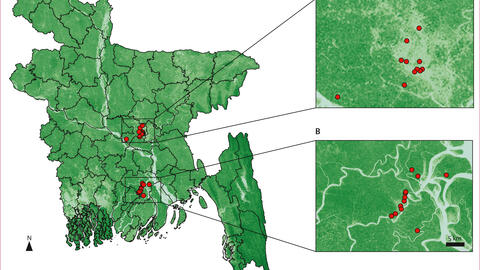
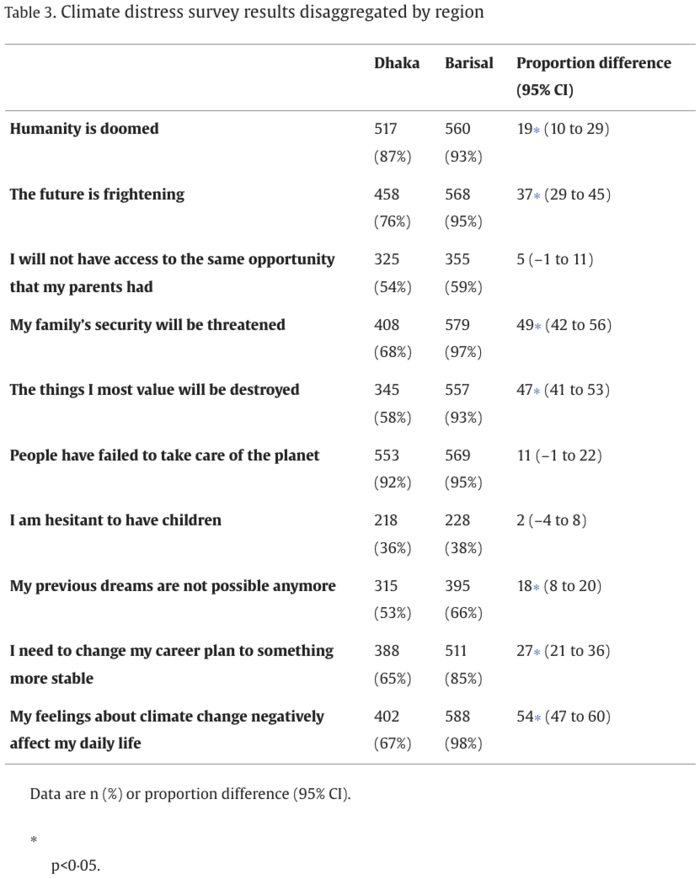
A new Stanford-led study sheds light on “an emerging psychological health crisis” that disproportionately affects girls. Published July 30 in The Lancet Planetary Health, the study is among the first to quantify how repeated climate stressors impact the psychological well-being and future outlook of adolescents in low-resource settings. Researchers from Stanford’s schools of Medicine, Law, and Sustainability partnered with health experts in Bangladesh to survey more than 1,000 teenagers and conduct focus groups across two regions with starkly different flood exposure.

“What we found really lifts the voices of frontline adolescents — a group whose perspectives and health outcomes are so rarely investigated and communicated,” said lead author Liza Goldberg, an incoming Earth system science PhD student in the Stanford Doerr School of Sustainability.

Read the full release from The Woods Institute for the Environment.

Hero Image
Stanford researchers and others conducting focus group discussions in Barisal, Bangladesh.
Shahid Atonu Sarkar
All News button
1
Subtitle

Adolescents living in flood-prone areas of Bangladesh face dramatically higher rates of anxiety and depression than their peers in lower-risk regions, according to a Stanford-led study by CDDRL Fisher Family Honors Program alumna Liza Goldberg ('24) that highlights a hidden cost of climate change with potentially devastating long-term consequences.

Date Label
News Type
News
Date
Paragraphs

Argument & Key Findings


The system of reentry institutions — including halfway houses, parole agencies, and housing assistance programs — can be extremely complicated for formerly incarcerated persons (FIPs) to navigate. These complications are not merely logistical, but also social and emotional: the ways in which FIPs interact with reentry institutions can affect their sense of belonging, dignity, and prosperity. When the rules and practices of reentry institutions undermine these needs, it becomes more likely that participants will violate rules, withdraw from the institutions altogether, or find themselves reincarcerated. 

In “Home But Not Free,” Gillian Slee offers a rich analysis of these socioemotional dynamics. The paper both increases our knowledge of reentry processes and deepens our understanding of FIPs and reentry staff. Previous scholars have focused more on how adverse outcomes stem from reentry institutions prioritizing surveillance or control. Slee pushes forward this conversation by highlighting how adverse outcomes also stem from failures to acknowledge and support the dignity of FIPs.

Slee’s paper is informed by over two years of ethnographic fieldwork with FIPs in Philadelphia. This includes observing over 200 appointments at a housing assistance program, analyzing more than 130 files of program participants, and both observing and assisting with programming at a women’s halfway house. 


Reentry institutions and their staff often fail to recognize or respond to the constraints and vulnerabilities faced by FIPs. These failures can undermine the dignity of FIPs and provoke their withdrawal from such institutions.


Three Mechanisms:


The core of the paper centers on Slee’s elaboration of three mechanisms that link socioemotional concepts, such as indignity, to outcomes like withdrawal or reincarceration. Each mechanism is clarified through a range of examples and case studies.

1. Unrecognized vulnerability:

Reentry institutions and their staff often fail to recognize or respond to the constraints and vulnerabilities faced by FIPs. These failures can undermine the dignity of FIPs and provoke their withdrawal from such institutions. In the realm of housing assistance, the Philadelphia program requires that rent falls between 30% and 45% of participants’ income. However, this is often unrealistic given the difficulties of finding fairly priced units or securing gainful employment with a felony conviction. Accordingly, FIPs must seek low-quality units or roommates. Yet most participants do not want roommates because it reminds them of being incarcerated. Participants are thus presented with an undignified set of choices. The program restrictions mean that many FIPs cannot or will not utilize housing assistance programs, deepening their sense of instability.

Another source of vulnerability concerns the mismatch between FIPs’ expectations and the realities of frontline bureaucracy. For example, many housing assistance programs have too few staff, some of whom struggle to juggle appointments or return phone calls. Because reentry staff are overburdened, they may ask participants to pick up the slack by searching for housing units. Yet many FIPs lack the requisite know-how, for example, calling about units too frequently or too early in the morning. Others may show up hours early for their appointments, in the process annoying reentry staff. Yet participants are not coached on how to improve these behaviors, leading to neglect. Other FIPs must learn that the majority of units are listed online as opposed to in newspapers, incurring the mockery from reentry staff in the process. 

A final source of vulnerability concerns participants’ lack of efficacy — the sense that their efforts make little difference or are inadequate. Reentry staff may have high expectations of people who feel “cryogenically frozen in time” (p. 32) because of years of incarceration. Some are unable to use modern cell phones or have no rental history.


A final source of vulnerability concerns participants’ lack of efficacy — the sense that their efforts make little difference or are inadequate.


2. Discretion’s Benefits and Drawbacks:

The discretion exercised by reentry staff introduces difficult choices for participants, forcing them to choose between (a) following the rules and becoming socially isolated or (b) breaking the rules and developing social connections. For example, some halfway houses are restrictive about time spent outside of the house. Participants who abide by the rules may miss out on socially important events, like a child’s basketball game. Some FIPs may lie about or conceal where they live in order to deal with less intrusive parole agents. Others may cross state lines to pursue important career opportunities. One participant parked their mobile home outside of the parole district lines because it was less expensive and easier than seeking alternative units, but these kinds of ‘rational’ behaviors cannot be accommodated. Discretion is a highly variable attribute: some reentry staff cancel meetings and inconvenience participants, while others remember individuals’ needs and accommodate them. Those who expect more discretion than they receive may break the rules out of frustration. Ultimately, discretion and its absence can provoke a host of socioemotional problems.


Instead of preventing noncompliance, program rules may serve to encourage it when they undermine participants’ sense of dignity.


3. Risk-Escalating Rules:

Instead of preventing noncompliance, program rules may serve to encourage it when they undermine participants’ sense of dignity. For example, 29 states prohibit associating with other FIPs, yet many participants have friends or family supervised by the system; as such, people violate the rules in order to preserve meaningful relationships. Some FIPs are faced with painful dilemmas, for example, choosing between living in halfway houses where drug use is common or breaking the rules by leaving. Others report using cocaine instead of marijuana because the latter can be detected in their bloodstream for much longer. Some halfway houses mandate spending a certain number of hours inside the house, but this leads to participants being unable to work multiple jobs to support themselves, a clear violation of their dignity.

For many FIPs in uncomfortable halfway houses, they cannot be placed in another house unless they break the rules of their existing house; some consider breaking the rules for the sake of their well-being, even though doing so might land them under even more restrictive supervision. One participant was refused permission to live in a camper that he could afford because the camper’s mobility posed a flight risk. Another participant broke the rules by traveling out of state because her son’s father had cancer, and a reentry professional later told her to return in a rather threatening way. The rules of reentry institutions thus incentivized FIPs to make very risky choices.


By highlighting socioemotional concepts — especially (in)dignity — as central to the experiences of formerly incarcerated persons, Slee shows how the rules and practices of reentry institutions can undermine reintegration.


By highlighting socioemotional concepts — especially (in)dignity — as central to the experiences of formerly incarcerated persons, Slee shows how the rules and practices of reentry institutions can undermine reintegration. Addressing sources of vulnerability and counterproductive rules may help reform reentry institutions in more humane and effective ways.

*Research-in-Brief prepared by Adam Fefer.

 
Hero Image
Prison corridor with jail cells on either side.
7500 RPM via Unsplash
All News button
0
Subtitle

CDDRL Research-in-Brief [4-minute read]

Date Label
Paragraphs

Over the weekend of June 5-9, a representative sample of registered Pennsylvania voters gathered in Philadelphia to deliberate in depth about issues facing the state and the nation. When first contacted, they answered an extensive questionnaire about policy proposals from across the political spectrum that could possibly address key issues facing the state and the nation. At the end of the weekend they completed the same questionnaire. 175 voters from across the state were successfully recruited to participate in the discussions. Another 502 were assigned to a control group that completed the same questionnaires over the same period, but did not deliberate. The process is called Deliberative Polling® and followed the format of 160 previous projects around the world. Like the other America in One Room events, this experiment was sponsored and convened by Helena, a global problem solving organization working with the Deliberative Democracy Lab at Stanford University, and Public Opinion Strategies, a leading public opinion research firm that conducted the recruitment and selection of the samples and administered the survey questionnaires.

What would the voters of Pennsylvania really think about the issues if they discussed them in depth in a civil and evidence-based environment for a long weekend? Summary results are sketched below.

All Publications button
1
Publication Type
Reports
Publication Date
News Type
News
Date
Paragraphs

America in One Room: Pennsylvania, a Deliberative Poll coordinated by global problem-solving organization Helena and the Deliberative Democracy Lab at Stanford University, today announced results revealing what Pennsylvania voters really think about pressing local and national issues ranging from the state of democracy and elections, to immigration, housing, and foreign affairs.

The landmark Deliberative Polling® experiment gathered a representative sample of 175 registered Pennsylvania voters for a weekend of civic engagement and civil discourse in Philadelphia. The participants answered a questionnaire about 65 policy proposals across domestic and foreign issue areas before and after engaging in deep deliberation on the topics. The deliberations included small group discussions, question-and-answer sessions with bipartisan and nonpartisan issue experts, and plenary sessions featuring leading state and federal policymakers and experts from both sides of the aisle.

The Deliberative Polling® process at America in One Room goes beyond snapshot opinions to reveal an authentic will of the people,  giving policymakers access to data about what voters actually think when given balanced information and the opportunity for meaningful discussion. Policymakers who engage with the data can craft policies that truly reflect what constituents want based on an understanding of the tradeoffs and stakes involved. At America in One Room: Pennsylvania, Speaker of the House Joanna McClinton committed to leveraging data related to voting proposals as she works to advance election reform policy in the commonwealth.

“America in One Room is designed to help policymakers understand the true ‘will of the people,’ said Henry Elkus, founder and CEO of Helena, a global problem-solving organization and co-creator of America in One Room. “What happened over four days in Pennsylvania was a deeply practical demonstration of democracy in action, both for Pennsylvania and national legislators to implement policy. Helena will continue working toward a future where deliberative democracy can play a bigger and bigger role in shaping decision-making in the US and abroad.”


What happened over four days in Pennsylvania was a deeply practical demonstration of democracy in action, both for Pennsylvania and national legislators to implement policy.
Henry Elkus
Founder and CEO, Helena


The results show dramatic opinion shifts and notable consensus-building across party lines. Most notably, dissatisfaction with American democracy dropped 21 points overall—from 75% to 54%—with Republicans, Democrats, and independents all showing significant improvement in democratic confidence at the end of the weekend.

"When Pennsylvanians were given the space for informed, civil conversation, they consistently depolarized on issues that dominate cable news narratives as hopeless partisan battles," said James Fishkin, Director of Stanford's Deliberative Democracy Lab. "This experiment proves that America's political divisions and opinions are not as intractable as they might seem. Voters, when presented with balanced information and the opportunity to listen to one another, emerged with considered judgments about what needed to be done as well as greater respect for those they disagree with. The results offer a look at what really matters to voters when they think in depth about the issues. In my view, it also offers an inspiring picture of how democracy could actually work better.”


This experiment proves that America's political divisions and opinions are not as intractable as they might seem. Voters emerged with considered judgments about what needed to be done as well as greater respect for those they disagree with.
James Fishkin
Director, Deliberative Democracy Lab


Key findings:
 

  • Immigration: Support for increasing visas for low-skilled workers doubled from 25% to 50%, with Democrats moving from 41% to 69% support and Republicans increasing from 9% to 30%. State-level DACA protections gained significant Republican backing, rising from 18% to 38%.
  • Voting Rights: Support for broad voter enfranchisement jumped to 96% (up from 83%), with Republicans increasing their support by 22 points. Democrats increased their support for voter ID requirements, increasing from 48% to 57%.
  • Election Integrity: An overwhelming majority of participants supported increases in election integrity, with 77% supporting random ballot audits, and 87% supporting criminal penalties for voter intimidation.
  • Healthcare: Rural healthcare initiatives achieved near-unanimous support, with 94% backing loan forgiveness for healthcare workers in underserved areas and 88% supporting tax credits for rural facilities.
  • Foreign policy: Support for providing military support to Taiwan in case of Chinese invasion doubled from 35% to 69%, with massive bipartisan increases among both Democrats (40-point jump) and Republicans (30-point jump).
  • Education: While trade school subsidies gained overwhelming support (81%), free college tuition support dropped from 59% to 47% as participants weighed budget realities.
  • Transformed relationships & Understanding: Perhaps most significantly, 91% of participants reported respecting opposing political viewpoints (up from 72%) following their experience at America in One Room: Pennsylvania and 90% expressed willingness to compromise with political opponents (up from 80%). As a whole, 97% of participants reported that A1R: PA was valuable in helping them clarify their positions on key public policy issues debated.


America in One Room: Pennsylvania is the fifth Deliberative Polling® event organized by Helena in collaboration with Stanford’s Deliberative Democracy Lab. Public Opinion Strategies conducted outreach, selected the representative samples, and administered the questionnaires.

Full results and executive summary are available below:

About America in One Room:
America in One Room inspires communities to ignite civic engagement, fostering collaborative solutions for their most pressing challenges. Since 2019, America in One Room has conducted groundbreaking Deliberative Polling® experiments across the country.

About Helena:
Helena is a global problem-solving organization that seeks to implement solutions to critical societal challenges through nonprofit, for-profit, and legislative actions. Helena’s nonprofit projects include America in One Room, which garnered the attention of President Barack Obama and The New York TimesBiosecurity in the Age of AI, which focuses on risks emerging at the intersection of AI and biotechnology; and The COVID Project, which supplied tens of millions of units of medical supplies and personal protective equipment to frontline responders during the COVID-19 pandemic. Since its founding in 2020, Helena Special Investments has supported innovations in grid-scale energy storage (Energy Vault), AI controls to dramatically reduce energy consumption in industrial processes (Phaidra); and an innovation in Digital Twin technology enabling chronic disease reversals (Twin Health), among others. Helena operates its projects alongside a diverse group of multidisciplinary leaders called Helena members.

About the Deliberative Democracy Lab at Stanford University:
The Deliberative Democracy Lab (formerly the Center for Deliberative Democracy), housed within the Center on Democracy, Development and the Rule of Law at Stanford University, is devoted to research about democracy and public opinion obtained through Deliberative Polling®

Read More

America in One Room: The Youth Vote
News

Historic America in One Room Deliberative Poll Releases Data on First-Time Voters' Political Attitudes Ahead of Presidential Election

Innovative project brings together first-ever representative sample of first-time voters from across the country to debate the key issues of our time.
Historic America in One Room Deliberative Poll Releases Data on First-Time Voters' Political Attitudes Ahead of Presidential Election
A voter casts their ballot in the Kentucky Primary Elections at Central High School on May 16, 2023 in Louisville, Kentucky.
Q&As

New National Deliberative Poll Shows Bipartisan Support for Polarizing Issues Affecting American Democracy

"America in One Room: Democratic Reform" polled participants before and after deliberation to gauge their opinions on democratic reform initiatives, including voter access and voting protections, non-partisan election administration, protecting against election interference, Supreme Court reform, and more. The results show many significant changes toward bipartisan agreement, even on the most contentious issues.
New National Deliberative Poll Shows Bipartisan Support for Polarizing Issues Affecting American Democracy
larry diamond
Q&As

America in One Room

Are we really more divided than ever, politically? The results of 'America in One Room' show we're not. Larry Diamond explains that when people meet face-to-face, with access to expert information and the ability to ask questions, the gap narrows.
America in One Room
Hero Image
America in One Room: Pennsylvania
America in One Room: Pennsylvania explored what voters really think about pressing local and national issues, ranging from the state of democracy and elections to immigration, housing, and foreign affairs.
Photo courtesy of Helena
All News button
1
Subtitle

America in One Room: Pennsylvania brings together a representative sample of registered Pennsylvania voters for a statewide Deliberative Poll in this crucial swing state, revealing surprising common ground and public opinion shifts on issues from immigration to healthcare to democratic reform.

Date Label
Authors
News Type
News
Date
Paragraphs

Culture is all around us — but we take it for granted, says Michele Gelfand, a professor of organizational behavior at Stanford Graduate School of Business.

“It’s often only until you get outside of your cultural context — your cultural bubble, we might call it — that you start realizing, wow, I’ve actually been socialized by my parents, by my teachers, by the institutions that reward or punish certain behaviors. I’ve been socialized my whole life to adopt a certain set of values and norms, to construct a self, so to speak, that fits into that cultural context,” she says.

Click here to read more and listen to the if/then podcast from the Stanford Graduate School of Business.

Hero Image
Michele Gelfand
All News button
1
Subtitle

Culture is all around us — but we take it for granted, says Michele Gelfand, a professor of organizational behavior at Stanford Graduate School of Business and an affiliated faculty member at CDDRL.

Date Label
Authors
Soraya Johnson
News Type
Q&As
Date
Paragraphs

The "Meet Our Researchers" series showcases the incredible scholars at Stanford’s Center on Democracy, Development and the Rule of Law (CDDRL). Through engaging interviews conducted by our undergraduate research assistants, we explore the journeys, passions, and insights of CDDRL’s faculty and researchers.

Ayça Alemdaroğlu is a Research Scholar at the Center on Democracy, Development and the Rule of Law (CDDRL),  Associate Director of the center’s Program on Turkey, and a Global Fellow at the Peace Research Institute Oslo (PRIO). Her research focuses on understanding authoritarian regimes and the opposition movements against them, particularly in Turkey.

What inspired you to pursue research in your current field, and how did your journey lead you to CDDRL?


During my childhood in Turkey, I grew up discussing political issues at dinner, as my family was always very engaged in politics. My mother founded two leftist political parties, while my father ran in numerous elections and served as the mayor in Ankara for five years. I then studied political science and sociology in school, focusing on cultural and class issues while doing my PhD at Cambridge.

I eventually came to CDDRL because I appreciated its interdisciplinary emphasis and its focus on current societal issues. My early research focused on how political regimes shape people as individuals through policies and institutions. I was especially curious about eugenics efforts intended to build up a healthier nation, though it often manifested negatively through policies like sterilization.

During my PhD, I began focusing on youth and how social hierarchies, regimes, and inequalities affected their identities. At the time, there was a lot of discourse about the threat of a “dangerous” Muslim youth, but these young people were not monolithic. Often, they were reacting to concerns like finding jobs in a way that any youth group would, meaning their behavior was less correlated to their religious and cultural background than people portrayed it.

Based on your research, how do regimes affect people’s view of their own identities and political factionalism?


I disagree with the cultural primordialist approach that inherent differences are largely unchanging between peoples. Instead, I believe that the way narratives about identities are articulated in politics can strongly exacerbate differences.

For example, the Kurds in Turkey do have distinctive qualities, such as their language and ethnic group. However, what really makes them different is the unfair historical processes that Kurds have been subjected to.


I believe that the way narratives about identities are articulated in politics can strongly exacerbate differences.
Ayça Alemdaroğlu


What is the most exciting or impactful finding from your research, and why do you think it matters for democracy, development, or the rule of law?


My current research examines the question of how opposition movements survive in authoritarian contexts, with a focus on recent local elections in Turkey, where conservative incumbents were defeated for the first time in decades. We found that the opposition successfully built bottom-up alliances at the local level, which may be more successful than parties trying to form coalitions at the national level. 

This is because top-down alliances, as were attempted to be formed in Turkey in 2023, tend to be fragile and lack sufficient power to win elections. Top-down efforts involve convincing leaders of ideologically opposed parties to join together, which often isn’t effective in convincing their base to join suit. 

On the other hand, bottom-up local action can be much more powerful, with alliances in municipalities formed through an intimate knowledge of how resources and power are distributed among groups. These opposition coalitions, bound together by substantive ideas and community knowledge, tend to be more persuasive. 

This research demonstrates the power of local government and how opposition can be strengthened through numerous bottom-up alliances, as opposed to a weak, top-down national approach. Still, there are difficulties in preventing authoritarian backlash as a response to oppositional successes. After the loss of many governing party candidates in Turkey recently, there has been a new wave of coercion against municipal leaders, such as the Istanbul mayor being jailed after running as a presidential candidate. Several other newly elected mayors have been in jail for months without even an indictment.

How does the increased authoritarianism in Turkey fit into the context of global democratic recession? Are these patterns of oppositional gains in local elections a sign of a more optimistic future for Turkey, or is it still in a state of democratic decline?


I believe our research suggests that the opposition is more effectively contesting the governing party; however, it is too early to say whether this could serve as a model for a broader shift. Despite being embedded in European organizations and experiencing a moment of democratization in the 2000s, Turkey has become increasingly authoritarian, becoming one of the earliest cases of modern democratic decline. Also, global influences are harming Turkey’s trajectory, such as the presence of a more undemocratic leader in the U.S.


I believe our research suggests that the opposition is more effectively contesting the governing party; however, it is too early to say whether this could serve as a model for a broader shift.
Ayça Alemdaroğlu


How do you see your research influencing policy or contributing to real-world change?


When starting research, I don’t think of writing policy as my main goal. Instead, it’s to understand big questions or add more nuance to a discussion about a phenomenon. My research today on local power dynamics and bottom-up coalition building continues to have real-world relevance in the battle against authoritarian regimes.

Returning to your research on Turkey and particularly the plight of the Kurdish minority, how can states mitigate the effects of ethnic fractionalism on development?


In Turkey, I think of democratization as being possible through the recognition of the cultural and political rights of the Kurds. The opening of systems to those who have been historically excluded would benefit not only democratic development but also economic development. This is because ethnically inclusive states are more prosperous, as otherwise, ethnic conflict hinders development, with national security concerns scaring off investment.

Amidst increasing authoritarianism, have situations for minorities like the Kurds worsened or improved over time?


While there have been gestures of peace with the Kurds, when those efforts fail, the Turkish government often strengthens authoritarian measures. This is exemplified by the peace negotiations from 2013 to 2015, which initially resulted in the Kurds amassing more political power. This caused the regime to fear being undermined and become more coercive toward the minority group in the long run.

Overall, improvements for the Kurds have not been linear. Peace negotiations are currently underway, though many believe them to be insincere. When looking at the regime’s other policies towards opposition, journalists, and students, it’s easy to be pessimistic. 

What gaps do you feel need to be addressed in your research field, and what do you anticipate you will study more in the future?


In the intellectual circles I have been a part of, academics tend to come from a political science background. I’m more interested in bringing in cultural and sociological perspectives, such as through discussions of social class or different ethnic groups. My research will continue to unite multi-disciplinary ideas to gain a deeper understanding of authoritarian regimes.

Could you elaborate further on your research into youth participation?


Currently, I’m working on a project comparing the U.S. and Turkey to better understand youth political behavior. In the recent elections in both countries, there was a lot of emphasis on the youth voice as a counter-authoritarian force, but this prediction did not necessarily hold true. In the US, many were persuaded by Trump’s agenda, especially young men. It’s important not to generalize too much when studying youth, as they are as diverse as the rest of the population. Still, there are notable trends among young people to monitor, like the Turkish youth’s growing secularism and how that might impact the Islamist parties’ power. 

You’ve discussed the importance of recognizing the impact of class when conducting research. How do you think politicians have capitalized on class to maintain power in Turkey, and is the opposition or current regime more supported by the working class?


The Islamist parties have been most known to garner support from lower economic groups. While the main opposition party is relearning how to succeed among the working class, it would be an overstatement to assume this shift has significantly expanded beyond the local level at this point.

President Erdogan was able to amass power by garnering support from the poor, going door-to-door and engaging in bottom-up efforts to get their votes. Now, opposition leaders appear to be learning from these strategies, leading to improved outcomes so far.


President Erdogan was able to amass power by garnering support from the poor, going door-to-door and engaging in bottom-up efforts to get their votes. Now, opposition leaders appear to be learning from these strategies, leading to improved outcomes so far.
Ayça Alemdaroğlu


Lastly, what books would you recommend for students interested in a research career in your field?


I may be expected to recommend political science books, but it is American sociologist Richard Sennett who especially influenced me early in my career. He focuses on how big social changes affect individuals. His book, The Hidden Injuries of Class, shaped my understanding of how social class is not just a reflection of an individual’s position in society, but also influences one’s sense of self. He also wrote Respect in a World of Inequality about how changes in the economy and labor market influence individuals. Sennet’s work successfully approaches issues in a humane, historical, and power-conscious way.

Read More

Ayça Alemdaroğlu leads a group of Knight-Hennessy Scholars on a tour of Turkey.
News

Traveling Turkey with Ayça Alemdaroğlu

Ayça Alemdaroğlu, associate director of Stanford's Program on Turkey, explores how national identities are created and how people voice dissent.
Traveling Turkey with Ayça Alemdaroğlu
Graphic novel
News

Studying Middle Eastern History Through Graphic Novels

A spring quarter course co-taught by CDDRL's Ayça Alemdaroğlu explored how graphic novels convey the visceral realities of living amidst political violence and conflict in a way traditional media struggle to match.
Studying Middle Eastern History Through Graphic Novels
Presidential Candidate Kemal Kilicdaroglu Holds Campaign Rally In Tekirdag
Q&As

Challenges and Opportunities in Turkey's 2023 Presidential and Parliamentary Elections

In this Q&A, Ayça Alemdaroğlu, Associate Director of the Program on Turkey at the Center on Democracy, Development and the Rule of Law, discusses the key issues and their implications for the country's future.
Challenges and Opportunities in Turkey's 2023 Presidential and Parliamentary Elections
Hero Image
Meet Our Researchers: Ayça Alemdaroğlu
All News button
1
Subtitle

Exploring how authoritarian regimes influence identity, opposition movements, and class dynamics with CDDRL Research Scholar Ayça Alemdaroğlu, Associate Director of the center's Program on Turkey.

Date Label
News Type
News
Date
Paragraphs

On Tuesday, June 3, a largely student audience gathered for an urgent and moving conversation: Persisting in Hard Times, a panel highlighting the work and insights of four extraordinary practitioners who have spent their lives confronting injustice, responding to crises, and working every day toward a more equitable and humane society.

The conversation was co-organized by Hakeem Jefferson, assistant professor of political science and faculty director of the Program on Identity, Democracy, and Justice at the Center on Democracy, Development and the Rule of Law (CDDRL), and Gillian Slee, the 2024-25 Gerhard Casper Postdoctoral Fellow in Rule of Law at CDDRL and incoming assistant professor of sociology at the University of Georgia. It was co-moderated by Jefferson and Karina Kloos, Executive Director of the Democracy Hub and ePluribus Stanford.

In organizing the event, Slee framed it as follows:

What does it mean to persist in hard times? The country is wrestling with major questions right now — about rights and resources, belonging and expression, well-being and justice. How we proceed will shape our understanding of American democracy and have real consequences for daily life within this country.

You are all here today because you recognize we are living through hard times. Throughout the year, we have had conversations across campus about democratic norms, the rule of law, and the exercise or availability of rights and resources. Students in the room today are wrapping up a quarter of asking critical questions about the state and health of American democracy. These questions and their answers are urgent and consequential.

Still, we seek a different kind of conversation today. Our focus is on persisting through hard times. Our orientation is particular. Today’s panelists draw on unique expertise working in the trenches to respond to crises that imperil dignity, justice, and well-being. When they think about the major questions of our times, each panelist has the capacity to see the faces of clients, constituents, workers, immigrants, students, neighbors, and more. They know what it means to address urgent, immediate crises through on-the-ground daily action. They also know what it means to engage in work that is sometimes underfunded, lonely, and pursued with long odds.

Importantly, their work is fueled by a vision of a wildly promising future in which people, especially those from marginalized groups, have opportunities to thrive.


The panelists brought this vision to life. Professor Pam Karlan, a renowned constitutional scholar and professor at Stanford Law, reflected on the role of history, poetry, and truth in helping her persist. She recommended three poems that offer solace and clarity in this moment: Langston Hughes’ Let America Be America Again, Marge Piercy’s The Low Road, and Tennyson’s Ulysses, with its enduring call: “To strive, to seek, to find, and not to yield.”

DeCarol Davis, Director of the Community Legal Services Program at Legal Aid at Work, spoke powerfully about being shaped by a Black family with deep roots in the South — roots that helped prepare her for navigating systems marked by discrimination and inequality. She reminded us that persisting is not new, and that her work is animated by a long legacy of Black resilience and clarity of purpose.

Alison Kamhi, Legal Director of the Immigrant Legal Resource Center, shared stories of the immigrants her work brings her into contact with — people for whom hard times are not new, but ongoing. She charted what has shifted — and what has not — in U.S. immigration policy and enforcement, and spoke to the emotional and moral weight of sustaining this work amid cruelty and complacency.

Poet, public servant, and Stanford PhD candidate Antonio López offered a stirring meditation on proximity to harm and the moral responsibility it demands. His poem, Opening Statement, anchored the room in both clarity and conviction. It was a poet who reminded us that we are all implicated — and that this implication opens up opportunities for all of us to act. López also pointed us to the many lessons embedded in Black liberation struggles and other freedom movements that offer enduring blueprints for persisting in this moment.

Throughout the conversation, Kloos invited panelists to reflect on where they find joy in the midst of struggle. Drawing from Ross Gay’s Inciting Joy, she asked what it means for joy to coexist with strain and uncertainty — a question that brought the panel back to the everyday practices that nourish courage and clarity.

The audience Q&A that followed surfaced difficult, generative questions: What can the law do — and what can it not do? What does solidarity require of us? And how do we ensure that the most vulnerable among us, including trans communities, are not forgotten in the push for change?

The conversation closed with a powerful exchange about community, belonging, and the intertwined nature of our fates. Jefferson ended by noting that perhaps a key part of persisting in this moment, especially for those of us with so much privilege, is to remember — as Dr. King reminded us — that our fates are inextricably bound together, that unfreedom for our neighbors is unfreedom for us, and that injustice anywhere is a threat to justice everywhere.

Read More

View of the huge crowd from the Lincoln Memorial to the Washington Monument, during the March on Washington
News

New Research Program Explores Intersection of Identity, Democracy, and Justice

Led by Professor Hakeem Jefferson, the program housed at the Center on Democracy, Development and the Rule of Law will advance innovative research on the multifaceted dimensions of identity and their role in democratic development, struggles for recognition, social justice, and inclusion.
New Research Program Explores Intersection of Identity, Democracy, and Justice
Hakeem Jefferson (L) and Jake Grumbach (R) moderate a panel with authors Steven Levitsky and Daniel Ziblatt.
News

Program on Identity, Democracy, and Justice (IDJ) Engages Campus on Multiracial Democracy

The launch events hosted by CDDRL's new research initiative invited undergraduates, graduate associates, and members of the public to discuss the future of multiracial democracy.
Program on Identity, Democracy, and Justice (IDJ) Engages Campus on Multiracial Democracy
Hero Image
Persisting in Hard Times panel
Hakeem Jefferson and Karina Kloos (L) moderated a panel discussion on June 3, 2025.
Hesham Sallam
All News button
1
Subtitle

A June 3 panel hosted by CDDRL’s Program on Identity, Democracy, and Justice brought together four leaders who shared their personal and professional insights on how to continue the work of justice when the road is long and the odds are steep.

Date Label
Paragraphs

Low-income individuals in developing countries are often inadequately prepared for employment because they lack key labor market skills. We explore how employability and wage outcomes are related to English language skills in a novel, large-scale randomized field experiment conducted in Delhi, India, involving 1,260 low-income individuals. Experimental estimates indicate that a job training program that emphasizes English language skills training substantially increases English language skills as well as employability and estimated wages (as assessed by hiring managers through interviews) for regular jobs and employability for jobs that specifically require English language skills. Program effects hold regardless of gender, social class, or prior employment. We furthermore find that participants enjoy improved employability and estimated wage outcomes because the program improves their English language skills. Taken together, our results suggest that English language skills training, which is surprisingly underutilized in developing countries, may provide considerable economic opportunities for individuals from low-income backgrounds.

All Publications button
1
Publication Type
Journal Articles
Publication Date
Journal Publisher
Economic Development and Cultural Change
Authors
Dinsha Mistree
Subscribe to Society