FSI researchers work to understand continuity and change in societies as they confront their problems and opportunities. This includes the implications of migration and human trafficking. What happens to a society when young girls exit the sex trade? How do groups moving between locations impact societies, economies, self-identity and citizenship? What are the ethnic challenges faced by an increasingly diverse European Union? From a policy perspective, scholars also work to investigate the consequences of security-related measures for society and its values.
The Europe Center reflects much of FSI’s agenda of investigating societies, serving as a forum for experts to research the cultures, religions and people of Europe. The Center sponsors several seminars and lectures, as well as visiting scholars.
Societal research also addresses issues of demography and aging, such as the social and economic challenges of providing health care for an aging population. How do older adults make decisions, and what societal tools need to be in place to ensure the resulting decisions are well-informed? FSI regularly brings in international scholars to look at these issues. They discuss how adults care for their older parents in rural China as well as the economic aspects of aging populations in China and India.
"Ideologically, today’s autocrats are a more motley and pragmatic crew. They generally claim to be market friendly, but mainly they are crony capitalists, who, like Putin in Russia, Orban in Hungary, and Erdogan in Turkey, are first concerned with enriching themselves, their families, and their parties and support networks. Increasingly, they raise a common flag of cultural conservatism, denouncing the moral license and weakness of the “the liberal West” while advancing a virulent antiliberal agenda based on nationalism and religion," writes Larry Diamond. Read here.
Why did colonial powers establish courts to address Indigenous grievances? Under which conditions did these rulers decide to rule in favor of Indigenous claimants, even at the expense of their own state agents? This paper addresses these questions by studying the legal battles between Indigenous communities, Spanish settlers, and local bureaucrats in the General Indian Court of colonial Mexico (GIC). I apply an existing framework developed in the judicial politics literature to understand how the Spanish Crown allowed, and even encouraged, the Indigenous population to raise claims against local bureaucrats. Moreover, I offer a theoretical contribution to this literature by defining the scope conditions under which autocratic regimes might also use the judicial system to constrain local elites. To further explore the decision-making process of this colonial court, I develop a model that predicts that the GIC offered favorable rulings to Indigenous claimants in a strategic way. I predict that a favorable ruling was more likely in cases that involved colonial agents, were related to land invasions or physical abuses, and originated from areas where local elite power was high and Indigenous population more vulnerable. I provide empirical evidence of the strategic use of the colonial court using a mixed-methods approach including paleographic transcriptions, human coding, and text analysis of a novel dataset of more than 30,000 judicial claims. These results have implications for our understanding of both the development of Indigenous legal autonomy in colonial history and for the more general strategic development of judicial power in autocracies. One plausible, yet controversial, implication is that Indigenous communities had more tools to resist oppression during the colonial period than following the rise of the nation-state.
Speaker Bio:
Image
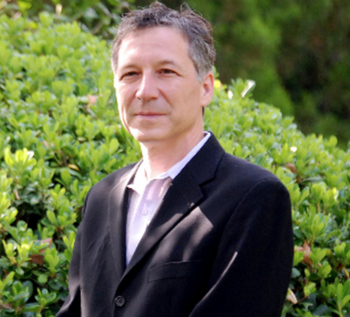
Edgar Franco Vivanco is a post-doctoral fellow at the University of Michigan. He studied a PhD in political science at Stanford University. During 2018-19, he was a pre-doctoral fellow at the Center on Democracy, Development, and the Rule of Law (CDDRL). Edgar is a collaborator with the Poverty, Governance, and Violence Lab at Stanford University, and with the Digging Early Colonial Mexico project at the University of Lancaster. Edgar’s research agenda explores how colonial-era institutions and contemporary criminal violence shape economic under-performance, particularly within Latin America. In his book project, Strategies of Indigenous Resistance and Assimilation to Colonial Rule, he examines the role Indigenous groups have played in the state-building process of the region since colonial times.
Post-doctoral fellow at the University of Michigan
Community-driven development programs that decentralized administrative, fiscal, and political functions have become a popular policy tool to deliver public services. We study a large reform in the city of Delhi that decentralized the management of discretionary school budgets to elected bodies of parents. Using household surveys, non-participant observation in schools, semi-structured interviews, and administrative data we ask if decentralization has brought expenditures closer in line to the preferences of parents? We find that expenditures are heavily skewed to the preferences of more traditionally powerful actors, namely men and members of the government bureaucracy.
Speaker Bio:
Image
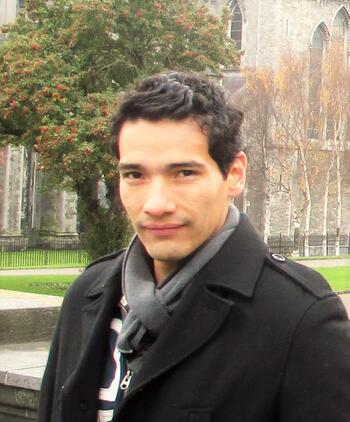
Emmerich Davies specializes in education policy and politics, the political economy of development, and the politics of service provision, with a regional focus on South Asia. His work has been published in Comparative Political Studies. His book manuscript examines the growth of non-state service provision in low-income democracies, and the consequences for democratic politics. Davies earned his B.A. in Economics and Political Science with honors from Stanford University in 2007, worked for two years for the Abdul Latif Jameel Poverty Action Lab in Kolkata, India, and Ph.D. in Political Science from the University of Pennsylvania. He is on leave for the 2019-2020 as the W. Glenn Campbell & Rita Ricardo-Campbell National Fellow and the Susan Louise Dyer Peace Fellow at the Hoover Institution.
Emmerich Davies
Assistant Professor of International Education at the Harvard Graduate School of Education
At any given moment there are hundreds of international negotiations being undertaken in numerous institutions and forums, touching upon every legal and social aspect, including cyber, trade, terrorism, telecommunications, environment and human rights, just to name a few. International investigation and monitoring groups, and international committees and specialized bodies, are routinely created, subjecting states to investigations and reviews. States are subject to strict reporting requirements, having to submit hundreds of detailed reports a year to different institutions. International courts and over 160 international dispute settlement mechanisms are at work in their respective areas– creating new bodies of law, and thousands of professional committees whether in economic blocs, international institutions, or other forums, are revising and creating new international norms. Black lists are being formed, alliances changing, and new actors, including multinational corporations, are now an integral player of the international arena.
The challenges states are facing in building capacity and training personnel to deal with this vast and evolving international scene are formidable, requiring substantial funds, human capital, leadership, strategic planning, specialized education, and extensive inter ministerial cooperation, just to name a few. Ramifications for a state for lack of capacity may be huge.
This talk will seek to take a birds eye view of the evolving international arena, and focus on some of the challenges states, particularly developing countries, have in building their capacity to enable effective navigation in this sphere. The talk will showcase the International Rule Making Project, which seeks to assist in the development of global tools and policies. The talk will also address the increasing participation of China, who openly seeks to reshape global governance, as a strong player in the international space, and the possible interconnections between all of these issues.
Speaker Bio:
Image
Dr. Shavit Matias was Deputy Attorney General of Israel in charge of international issues. She and the teams she led formed and implemented a strategic plan for Israel to deal with globalization and the numerous international institutions and forums. She formed and headed the Department for International Agreements and International Litigation, which deals with policy and law, globalization, international institutions, negotiations of bilateral and multilateral international agreements, joining international organizations, international investigations, and international litigation and arbitration in international forums. She spearheaded changes in inter-ministerial cooperation, training, and decision-making processes throughout government.
Dr. Matias regularly advised Prime Ministers and the Government on policy and law regarding international matters. She was a member of Israeli National Security Council teams on a range of national security challenges, national strategy building, international law, Middle East policy, counter-terrorism, and international conflicts. She headed inter ministerial committees, and worked with colleagues from around the world to develop international mechanisms, international tools, and law.
Matias represented the State of Israel in United Nations committees, international investigations of Israel, international and foreign courts, and co-headed Israel’s inter ministerial task force on matters relating to universal jurisdiction and issues relating to the laws of war. She represented the state in numerous bilateral and multilateral negotiations, including complex trade matters with the EU, joining the OECD, permanent-status issues with the Palestinians, and as a member of Israeli-Palestinian joint committees. She was also a member of Israeli government teams working with the international donor community on matters of Palestinian institution and capacity building, and a member of numerous policy teams.
Since 2014 she heads the Global Affairs and Conflict Resolution program at the Lauder School of Government IDC, and teaches courses on globalization, diplomacy, law, and conflict resolution. She is also on the Professional Advisory Board of the International Institute for Counter Terrorism. She is a recipient of the 2008 Award from Georgetown University Law Center for Outstanding Achievements in the Profession, and in 2017-2018 served on the President of Israel’s Committee for Doctoral Grants for Academic Excellence and Scientific Innovation.
Between 2013-2018 she was a fellow at the Hoover Institution and since 2018 is a visiting scholar at CDDRL heading the International Rule Making Project geared at developing global international tools enhancing good governance, rule of law, capacity building, and economic growth particularly in developing countries and areas of conflict.
Matias is a member of the Israeli bar and the New York bar. She clerked at the Supreme Court of Israel, received her LLB from Tel-Aviv University, her LLM from Georgetown University, and her Doctorate in International Law (S.J.D.) from George Washington University under the supervision of Judge Thomas Buergenthal.
CDDRL’s Program on Arab Reform and Democracy held its annual conference at Stanford University on October 11 and 12, titled “The Struggle for Political Change in the Arab World.” The conference is an outgrowth of ARD’s efforts to support new research on the dynamics of political change in the countries of the Arab world. Scholars from across different disciplines sought to understand how social, economic, and political dynamics at the national level, as well as international and regional conflict and power rivalries, impact struggles for political and social change in the region.
Overview of Panels and Speakers
Image
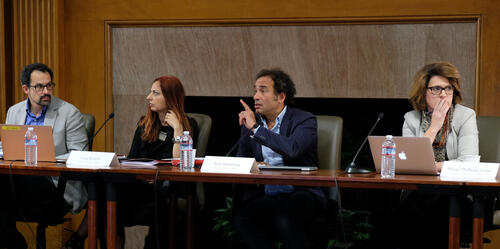
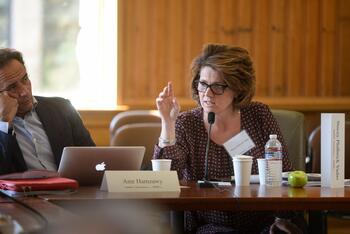
Following opening remarks by FSI Senior Fellow Larry Diamond, the first panel titled “The Boundaries of Authoritarianism post-Arab Uprisings” featured CDDRL Senior Research Scholar Amr Hamzawy. His paper examined how the regime of Abdel Fattah Al-Sisi has employed discursive strategies to discredit calls for democratic change in the country. Sean Yom, Associate Professor of Political Science at Temple University, outlined how the protest strategies of Jordanian youth have limited their effectiveness in advancing meaningful political change. University of California, Davis Scholar Samia Errazzouki discussed the failure of state-led political and economic reform in Morocco.
Chaired by Harvard University Fellow Hicham Alaoui, the second panel was titled “Popular Uprisings and Uncertain Transitions.” University of California, Santa Cruz Political Scientist Thomas Serres provided an overview of the economic disruptions that contributed to Algeria’s uprising. Lindsay Benstead, who is an Associate Professor of Political Science at Portland State University, analyzed the electoral successes of Tunisia’s Ennahda Party. Khalid Medani, Professor of Political Science at McGill University, explained how Sudanese protesters leveraged new strategies of contention to force Omar Al-Bashir out of power.
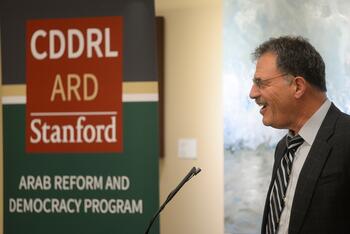
Farah Al-Nakib (right) and Michael Herb (left)
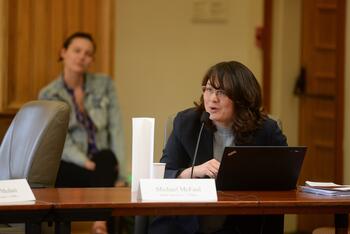
The third panel, titled “Politics, Succession and Sectarianism in the GCC States,” included Oxford University Fellow Toby Matthiesen, who discussed how Saudi Arabia and the GCC states have increasingly sought to protect their regimes by actively molding the politics of their autocratic patrons in the region, and by using new technologies to upgrade the effectiveness of their surveillance states. Georgia State University Political Scientist Michael Herb explained how the aging of the Saudi line of succession contributed to the political ascendancy of Crown Prince Mohammad Bin Salman and the decay of family rule in the country. Cal Poly Historian Farah Al-Nakib described how Kuwait’s royal family has used its sponsorship of large-scale development projects to sidestep the country’s political polarization, undermine the power of the parliament, and weaken public access to spaces of political contestation.
Image
The fourth panel focused on “Social Strife and Proxy Conflict in the Middle East.” Chatham House Scholar Lina Khatib described Syria’s transformation during the civil war from a highly centralized security state to a transactional state in which the regime depends heavily on local powerbrokers. Stacey Philbrick Yadav, Associate Professor and Chair of the Department of Political Science at Hobart and William Smith Colleges, discussed differences in how local communities in Yemen have been affected by the country’s conflict. David Patel, who serves as Associate Director for Research at the Crown Center for Middle East Studies at Brandeis University, argued that Iraq’s democratic institutions have been impressively robust to a series of existential challenges, but he also highlighted a widespread feeling among the Iraqi public that its parliamentary system is failing to deliver.
Image
Finally, the fifth panel examined the topic of “International Forces in the Arab Political Arena.” Stanford University Political Scientist Lisa Blaydes suggested that China’s efforts to involve itself in the regional economy may improve its reputation among economically-frustrated Arab citizens, but that such efforts also spell trouble for democracy and human rights in the Middle East. Hamid & Christina Moghadam Director of Iranian Studies at Stanford University Abbas Milani argued that Iran’s ideological commitment to exporting the Islamic Revolution has been remarkably consistent for several decades. Colin Kahl, Co-director of the Center for International Security and Cooperation at FSI, reviewed the strategies of US administrations toward the Middle East, and posited that President Trump’s approach of pursuing maximalist objectives with minimal commitments is particularly likely to heighten instability in the region. FSI Scholar Ayca Alemdaroglu emphasized that Turkey’s neo-Ottoman foreign policy has failed to achieve its objectives in the face of mounting regional upheaval.
Common Themes of Political Change and Continuity
Image
Several themes emerged from conference presentations. First, across the panels, scholars discussed the lessons learned by autocrats and activists alike in the aftermath of the Arab Spring, and the ways in which these lessons have transformed regional politics. Hamzawy emphasized that the Sisi regime in Egypt has increasingly relied on intensive repression over cooptation to maintain stability, while at the same time refusing to grant even limited political openings as existed under Hosni Mubarak’s presidency. In part, this change appears to be rooted in the regime’s belief that relaxing the state’s authoritarian posture had contributed to the revolutionary upheaval of 2011. Likewise, Matthiesen suggested that Saudi Arabia and the Gulf Cooperation Council States have learned to become more aggressive in strengthening their surveillance apparatus and policing popular discourse transnationally. By contrast, Serres discussed how the Algerian military and bureaucracy have responded to mass protests not by intensifying repression, but instead by attempting to coopt anti-corruption initiatives and democratic reforms to limit political and economic change. Similarly, regarding Kuwait, Al-Nakib illustrated how the restructuring of urban spaces has proved itself a subtle but successful strategy for the royal family to rehabilitate its reputation while limiting geographic focal points for popular politics.
Image
Activists have also learned their own lessons from the aftermath of the Arab Spring. According to Yom, Jordanian activists continue to look to the leaderless revolutions of Tunisia and Egypt as a model to be emulated. As a result, they prioritize agility and horizontality in their protests, and they forgo the organization of formal political movements. This approach has succeeded in acquiring short-term concessions from the regime but has failed to generate broader structural changes. On the other hand, activists in Sudan appear to have been more successful at using lessons from the Arab Spring to push for systematic transformations of their political system. According to Medani, Sudanese protesters developed novel tactics to avoid the repression of the coercive apparatus, and they were effective at gradually forging a counterhegemonic discourse that clearly exposed the regime’s failures to the public. Following the overthrow of Omar Al-Bashir, activists in Sudan have also insisted on dismantling the political and economic might of the deep state to avoid following Egypt’s path.
Image
Second, the conference discussion indicated widespread dissatisfaction with formal political institutions across the region. For instance, Hamzawy suggested that Sisi’s regime has been relatively successful at discrediting civilian political institutions, including the legislature and civilian-led ministries. Errazzouki highlighted widespread dissatisfaction in Morocco with existing political institutions. Likewise, Yom’s discussion of activists in Jordan emphasized their lack of interest in entering formal politics. In Kuwait, the royal court has found an opening to pursue urban development projects outside of normal institutions in part because of the public’s frustration with gridlock in the legislature. Patel speculated that frustration with the parliament and muhasasa system in Iraq may finally prompt major changes to the country’s political process.
Image
Third, despite this disillusionment with formal politics, these political institutions have proved remarkably durable in countries across the region. For example, though current frustrations may finally prompt change in Iraq, Patel also highlighted the resilience of the parliamentary system in the face of a sectarian civil war, US troop withdrawal, the rise of ISIS, and a number of other major challenges. For both Algeria and Sudan, Serres and Medani stressed that militaries continue to exercise significant influence despite the popular uprisings. Meanwhile, for Egypt, Hamzawy noted the firm grip of the current military regime on power, and for Morocco, Errazzouki described the lack of systematic changes to the country’s ruling monarchy, even after years of popular pressure.
Image
Fourth, this durability has not precluded a number of important shifts within existing political institutions. Regarding Syria, for instance, Khatib explained how the survival of Bashar al-Asad’s presidency has depended on moving state institutions away from a centralized security state to a transactional state reliant on local actors with a degree of independence from the regime. Herb described how the consensus-based family rule of the Saudi monarchy fell victim to deaths among the aging senior princes, which opened up opportunities for the king to appoint more officials in a manner that heightened his direct influence. Herb suggested that Mohammad Bin Salman recognized this change and knew that he would likely lose relevance upon his father’s death; as a result, he was motivated to gamble on consolidating his control while his father still held the power to issue royal decrees. In Algeria, the influence of the military and bureaucracy may remain paramount for now, but Serres also pointed out that protesters have succeeded in stripping away the civilian intermediaries who used to protect these institutions. Regarding the durability of local institutions, Yadav noted how pre-conflict and even pre-unification institutions in Yemen have continued to operate effectively in a number of local communities around the country.
Image
Fifth, foreign interventions will continue to destabilize the region and impede prospects for democratization or post-conflict reconstructions in the coming years. Khatib noted that Russia has positioned itself as the agenda setter who can bring the Syrian state back to its feet, but also that Russia and Iran are competing to profit off the country’s reconstruction. For Yemen, Yadav argued that fragmentation at the local level has important implications for best practices in the international community’s reconstruction efforts, but that current actors are not well positioned to understand these trends. Kahl predicted that the Middle East strategy of the Trump administration would likely contribute to further destabilization of the region because of its emphasis on empowering allies to do what they want and go after Iran while the United States maintains its distance. Meanwhile, Blaydes’ presentation on China’s regional involvement, Milani’s discussion of Iran’s efforts to export the Islamic Revolution, and Matthiesen’s observations about the GCC States’ authoritarian coordination all illustrated how intervening states are reducing prospects for democratic political change.
Image
Sixth, even as interventionist countries have contributed to the destabilization of the region, they have also confronted major obstacles themselves – and in some cases have failed outright to achieve their primary objectives. Khatib noted that Iran has faced backlash in Syria, while Abbas Milani and David Patel pointed to backlash against Iran in Iraq. Kahl emphasized that the Trump administration’s Middle East policy was unlikely to achieve its goals. Blaydes observed that China has not acquired greater salience in the Middle East despite its more active economic involvement, and individuals in many of the region’s countries – particularly those that are more developed – do not see China’s growth as a positive force. She also stressed the reputational risks China is taking in pursuing potentially unpopular investments through the Belt and Road Initiative. The GCC States are attempting to prop up strongmen in both Libya and Sudan, but this strategy has struggled in the face of local political dynamics; furthermore, the intervention in Yemen has been a disaster for Saudi Arabia and the UAE. Finally, Alemdaroglu stressed that Turkey’s ambitious “neo-Ottoman” foreign policy, which reflects a desire to revive Turkish influence in areas ruled by the Ottoman Empire, has largely failed. In particular, the architect of the policy, former foreign minister Ahmet Davutoglu, lost his job; the country miscalculated badly in how it handled the aftermath of the Arab Spring; and Turkey’s relations with many of its neighbors have soured.
Hero Image
ARD 2019 Annual Conference participants. Front row (from left): Sean Yom, Stacey Philbrick Yadav, Lindsay Benstead, David Patel, Michael Herb. Middle row (from left): Colin Kahl, Lina Khatib, Hicham Alaoui, Larry Diamond, Samia Errazzouki, Lisa Blaydes, Hesham Sallam. Back row (from left): Toby Matthiesen, Ayca Alemdaroglu, Abbas Milani, Amr Hamzawy, Michael McFaul, Scott Williamson
As the 2020 presidential campaign begins to take shape, there is widespread distrust of the fairness and accuracy of American elections. Four factors increasing the mistrust. Voter suppression has escalated as a Republican tool aimed to depress turnout of likely Democratic voters, fueling suspicion. Pockets of incompetence in election administration, often in large cities controlled by Democrats, have created an opening to claims of unfairness. Old-fashioned and new-fangled dirty tricks, including foreign and domestic misinformation campaigns via social media, threaten electoral integrity. Inflammatory rhetoric about “stolen” elections supercharges distrust among hardcore partisans.
Taking into account how each of these threats has manifested in recent years—most notably in the 2016 and 2018 elections—this presentation concludes with concrete steps that need to be taken to restore trust in American elections before the democratic process is completely undermined.
Speaker Bio:
Image
Professor Richard L. Hasen is Chancellor’s Professor of Law and Political Science at the University of California, Irvine. Hasen is a nationally recognized expert in election law and campaign finance regulation, writing as well in the areas of legislation and statutory interpretation, remedies, and torts. He is co-author of leading casebooks in election law and remedies.
From 2001-2010, he served (with Dan Lowenstein) as founding co-editor of the quarterly peer-reviewed publication, Election Law Journal. He is the author of over 100 articles on election law issues, published in numerous journals including the Harvard Law Review, Stanford Law Review and Supreme Court Review. He was elected to The American Law Institute in 2009 and serves as Reporter (with Professor Douglas Laycock) on the ALI’s law reform project: Restatement (Third) of Torts: Remedies. He also is an adviser on the Restatement (Third) of Torts: Concluding Provisions.
Professor Hasen was named one of the 100 most influential lawyers in America by The National Law Journal in 2013, and one of the Top 100 Lawyers in California in 2005 and 2016 by the Los Angeles and San Francisco Daily Journal.
Legal compliance has gotten a bad rap in international relations research. Compliance – the state of being on the “legal” side of a legal/illegal binary – has been largely set aside as a variable of interest in empirical studies of international law in favor of more substantive measures of behavioral change. Nevertheless, efforts to frame political science inquiry in terms of law’s effects have not succeeded in sidestepping compliance. To the contrary, none of the core functions of law (guiding behavior, assessing it, attributing responsibility, or assigning remedies) is possible without an applied concept of legal compliance as an orienting point on the horizon.This paper reclaims compliance as an essential concept for the empirical study of international law—albeit in a transformed state that emphasizes its potential for contextual variability and its essentially legal-political character.
Speaker Bio:
Image
Tonya Putnam (Ph.D., Stanford, 2005; J.D., Harvard 2002) is an Associate Professor of Political Science at Columbia University. Her work exploresthe intersectionsof international relations and international law in relation tointernational and transnational regulationand jurisdiction, human rights, international humanitarian law, migration, international dispute resolution, institutional design, and judicial politics.Professor Putnamis the author ofCourts Without Borders:Law, Politics, and U.S. Extraterritoriality(Cambridge University Press 2016). Herresearch has appeared inInternational Organization, International Security,Human Rights Review, Journal of Physical Securityand in edited volumes.She was a Post-DoctoralFellow at the Niehaus Center for Globalization and Governance at Princeton University and a Pre-and Post-Doctoral Fellow at CISAC.She is currently completing a second book on why and how social scientists should factor basic properties of law, such as its semantic indeterminacy, into theories and empirical models of its impact on behavior.Professor Putnam is also a member (inactive) of the California State Bar.
Resurrecting Compliance in Assessing Law's Impact on Behavior
What explains sustained mobilization — social movement resilience — in the face of severe autocratic repression? This question is especially relevant given the recent uptick in protest movements across the world. We examine this question through the case of Sudan’s popular uprising, which lasted from December 2018 until the country began a formal transition to democracy in July 2019. Drawing on in-depth field research during and after the uprising, we look at the role of organizational legitimacy, elite unity, and the evolution of repression evasion tactics. We find that the movement’s organizational form and mobilization tactics coevolved with the actions of the security apparatus.
Speaker Bio:
Image
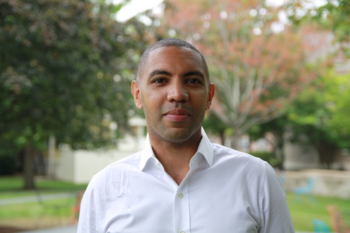
Mai Hassan is an Assistant Professor of Political Science at the University of Michigan and a current visiting fellow at CASBS. Her work has been published in various outlets, including the American Journal of Political Science, the Journal of Democracy, and the Journal of Politics. She received her PhD in Government from Harvard University in 2014.
Mai Hassan
Assistant Professor of Political Science at the University of Michigan
Abstract: Kristen Looney will be discussing her forthcoming work, Mobilizing for Development: The Modernization of Rural East Asia (Cornell U. Press 2020). This book tackles the question of how countries achieve rural development and offers a new way of thinking about East Asia’s political economy that challenges the developmental state paradigm. Through a comparison of Taiwan (1950s–1970s), South Korea (1950s–1970s), and China (1980s–2000s), the research shows that different types of development outcomes—improvements in agricultural production, rural living standards, and the village environment—were realized to different degrees, at different times, and in different ways. Looney argues that rural modernization campaigns played a central role in the region and that divergent development outcomes can be attributed to the interplay between campaigns and institutions. Relevant to political science, economic history, rural sociology, and Asian studies, the book enriches our understanding of state-led development and agrarian change.
Speaker Bio:
Image
Kristen Looney is an assistant professor of Asian Studies and Government at Georgetown University, where she teaches courses on Chinese and Comparative Politics. Her research is on rural development and governance and has previously appeared in The China Quarterly, The China Journal, and Current History. Her first book is forthcoming with Cornell University Press in spring 2020.
Kristen Looney
Assistant Professor of Asian Studies and Government at Georgetown University
In the face of mounting challenges from criminal activity and citizen demands for improved public safety, Mexico has undertaken significant efforts at police reform. Those efforts would presumably enhance the capacity of police forces to fight and deter crime. This paper explores the quantity and quality of police in Mexico, a federation where multi-tier government makes incentives for police professionalization more challenging than in unitary systems. The paper calculates, the true size of police forces, comparing them to all legal specialists in the use of violence, including private security guards at homes and businesses. It then estimates the implicit wage incentives given to experience and human capital formation in the different types of police corporations during the Calderón and Peña Nieto presidential administrations. Finally, we use a municipal cross section to gain further insight into the effects of police professionalization on interpersonal violence, as measured by homicide rates. The overall findings suggest that improving policing in Mexico is not merely a question of adding manpower or spending more budgetary resources, but of changing career incentives for greater professionalization.
Speaker Bio:
Image
Alberto Diaz-Cayeros joined the FSI faculty in 2013 after serving for five years as the director of the Center for US-Mexico studies at the University of California, San Diego. He earned his Ph.D at Duke University in 1997. He was an assistant professor of political science at Stanford from 2001-2008, before which he served as an assistant professor of political science at the University of California, Los Angeles. Diaz-Cayeros has also served as a researcher at Centro de Investigacion Para el Desarrollo, A.C. in Mexico from 1997-1999. His work has focused on federalism, poverty and violence in Latin America, and Mexico in particular. He has published widely in Spanish and English. His book Federalism, Fiscal Authority and Centralization in Latin America was published by Cambridge University Press in 2007 (reprinted 2016). His latest book (with Federico Estevez and Beatriz Magaloni) is: The Political Logic of Poverty Relief Electoral Strategies and Social Policy in Mexico. His work has primarily focused on federalism, poverty and economic reform in Latin America, and Mexico in particular, with more recent work addressing crime and violence, youth-at-risk, and police professionalization.
Encina Hall, C149
616 Jane Stanford Way
Stanford, CA 94305
(650) 725-0500
0
albertod@stanford.edu
Senior Fellow, Freeman Spogli Institute for International Studies
Professor, by courtesy, of Political Science
alberto_diaz-cayeros_2024.jpg
MA, PhD
Alberto Díaz-Cayeros is a Senior Fellow at Stanford University's Freeman Spogli Institute for International Studies (FSI), and co-director of the Democracy Action Lab (DAL), based at FSI's Center on Democracy, Development and Rule of Law (CDDRL). His research interests include federalism, poverty relief, indigenous governance, political economy of health, violence, and citizen security in Mexico and Latin America.
He is currently working on a project on cartography and the developmental legacies of colonial rule and governance in indigenous communities in Mexico.

 FSI researchers work to understand continuity and change in societies as they confront their problems and opportunities. This includes the implications of

 Farah Al-Nakib (right) and Michael Herb (left)