Society

FSI researchers work to understand continuity and change in societies as they confront their problems and opportunities. This includes the implications of migration and human trafficking. What happens to a society when young girls exit the sex trade? How do groups moving between locations impact societies, economies, self-identity and citizenship? What are the ethnic challenges faced by an increasingly diverse European Union? From a policy perspective, scholars also work to investigate the consequences of security-related measures for society and its values.

The Europe Center reflects much of FSI’s agenda of investigating societies, serving as a forum for experts to research the cultures, religions and people of Europe. The Center sponsors several seminars and lectures, as well as visiting scholars.

Societal research also addresses issues of demography and aging, such as the social and economic challenges of providing health care for an aging population. How do older adults make decisions, and what societal tools need to be in place to ensure the resulting decisions are well-informed? FSI regularly brings in international scholars to look at these issues. They discuss how adults care for their older parents in rural China as well as the economic aspects of aging populations in China and India.

-

**Please note all CDDRL events are scheduled using the Pacific Time Zone

About the Event:

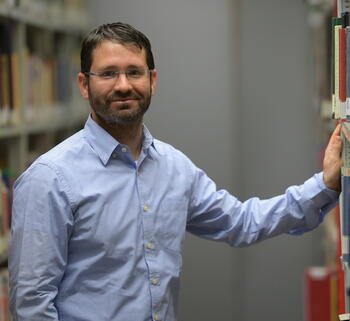
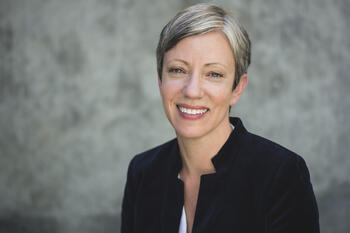
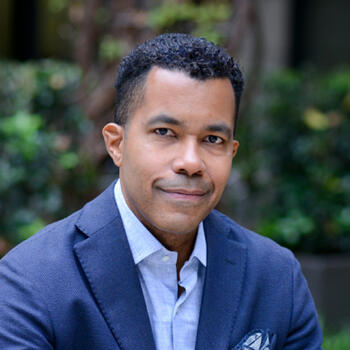
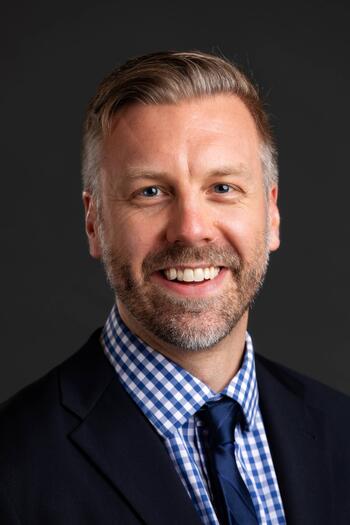
On November 3, in the midst of a pandemic, America elects its next President. CDDRL scholars will discuss the election results (or election challenges), Trump and Biden, key Congressional races, and what to expect between November and Inauguration Day. Join Bruce Cain, Nate Persily, Hakeem Jefferson, and Didi Kuo.

About the Speakers:

Bruce E. Cain is a Professor of Political Science at Stanford University and Director of the Bill Lane Center for the American West. He received a BA from Bowdoin College (1970), a B Phil. from Oxford University (1972) as a Rhodes Scholar, and a Ph D from Harvard University (1976). He taught at Caltech (1976-89) and UC Berkeley (1989-2012) before coming to Stanford. Professor Cain was Director of the Institute of Governmental Studies at UC Berkeley from 1990-2007 and Executive Director of the UC Washington Center from 2005-2012. His areas of expertise include political regulation, applied democratic theory, representation and state politics.

Nathaniel Persily is the James B. McClatchy Professor of Law at Stanford Law School, with appointments in the departments of Political Science, Communication and FSI.  Prior to joining Stanford, Professor Persily taught at Columbia and the University of Pennsylvania Law School, and as a visiting professor at Harvard, NYU, Princeton, the University of Amsterdam, and the University of Melbourne. Professor Persily’s scholarship and legal practice focus on American election law or what is sometimes called the “law of democracy,” which addresses issues such as voting rights, political parties, campaign finance, redistricting, and election administration. He has served as a special master or court-appointed expert to craft congressional or legislative districting plans for Georgia, Maryland, Connecticut, and New York, and as the Senior Research Director for the Presidential Commission on Election Administration. In addition to dozens of articles (many of which have been cited by the Supreme Court) on the legal regulation of political parties, issues surrounding the census and redistricting process, voting rights, and campaign finance reform.

Hakeem Jefferson is an Assistant Professor of Political Science at Stanford University. His research interests move at the intersection of American politics and social psychology. In particular, his current work examines the conditions under which members of stigmatized groups punish group members who transgress social norms. Moving beyond a study of identity that centers largely on the attitudes and predilections of dominant social groups, his work explores the psychological and instrumental considerations stigmatized individuals bring to bear in response to “bad” (negatively stereotyped) behavior from within their own group. Using African-Americans as the test case, this work builds on scholarship about the politics of respectability and in-group policing to inform conversations about Blacks’ attitudes toward punitive social policies.

Didi Kuo is the Associate Director for Research and Senior Research Scholar at the Center on Democracy, Development, and the Rule of Law at Stanford University. She is a scholar of comparative politics, with a focus on democratization, corruption and clientelism, political parties and institutions, and political reform. Her recent work examines changes to party organization, and the impact these changes have on the ability of governments to address challenges posed by global capitalism. She is the author of Clientelism, Capitalism, and Democracy: the rise of programmatic politics in the United States and Britain (Cambridge University Press, 2018), which examines the role of business against clientelism and the development of modern political parties in the nineteenth-century.

Online, via Zoom: REGISTER

Bruce Cain Professor of Political Science at Stanford University
Stanford Law School Neukom Building, Room N230 Stanford, CA 94305
650-725-9875
0
James B. McClatchy Professor of Law at Stanford Law School
Senior Fellow, Freeman Spogli Institute
Professor, by courtesy, Political Science
Professor, by courtesy, Communication
headshot_3.jpg

Nathaniel Persily is the James B. McClatchy Professor of Law at Stanford Law School, with appointments in the departments of Political Science, Communication, and FSI.  Prior to joining Stanford, Professor Persily taught at Columbia and the University of Pennsylvania Law School, and as a visiting professor at Harvard, NYU, Princeton, the University of Amsterdam, and the University of Melbourne. Professor Persily’s scholarship and legal practice focus on American election law or what is sometimes called the “law of democracy,” which addresses issues such as voting rights, political parties, campaign finance, redistricting, and election administration. He has served as a special master or court-appointed expert to craft congressional or legislative districting plans for Georgia, Maryland, Connecticut, New York, North Carolina, and Pennsylvania.  He also served as the Senior Research Director for the Presidential Commission on Election Administration. In addition to dozens of articles (many of which have been cited by the Supreme Court) on the legal regulation of political parties, issues surrounding the census and redistricting process, voting rights, and campaign finance reform, Professor Persily is coauthor of the leading election law casebook, The Law of Democracy (Foundation Press, 5th ed., 2016), with Samuel Issacharoff, Pamela Karlan, and Richard Pildes. His current work, for which he has been honored as a Guggenheim Fellow, Andrew Carnegie Fellow, and a Fellow at the Center for Advanced Study in the Behavioral Sciences, examines the impact of changing technology on political communication, campaigns, and election administration.  He is codirector of the Stanford Program on Democracy and the Internet, and Social Science One, a project to make available to the world’s research community privacy-protected Facebook data to study the impact of social media on democracy.  He is also a member of the American Academy of Arts and Sciences, and a commissioner on the Kofi Annan Commission on Elections and Democracy in the Digital Age.  Along with Professor Charles Stewart III, he recently founded HealthyElections.Org (the Stanford-MIT Healthy Elections Project) which aims to support local election officials in taking the necessary steps during the COVID-19 pandemic to provide safe voting options for the 2020 election. He received a B.A. and M.A. in political science from Yale (1992); a J.D. from Stanford (1998) where he was President of the Stanford Law Review, and a Ph.D. in political science from U.C. Berkeley in 2002.   

CV
Date Label
James B. McClatchy Professor of Law at Stanford Law School
Hakeem Jefferson Assistant Professor of Political Science at Stanford University

Encina Hall, C150
616 Jane Stanford Way
Stanford, CA 94305

0
Center Fellow, Freeman Spogli Institute for International Studies
didi_kuo_2023.jpg

Didi Kuo is a Center Fellow at the Freeman Spogli Institute for International Studies (FSI) at Stanford University. She is a scholar of comparative politics with a focus on democratization, corruption and clientelism, political parties and institutions, and political reform. She is the author of The Great Retreat: How Political Parties Should Behave and Why They Don’t (Oxford University Press) and Clientelism, Capitalism, and Democracy: the rise of programmatic politics in the United States and Britain (Cambridge University Press, 2018).

She has been at Stanford since 2013 as the manager of the Program on American Democracy in Comparative Perspective and is co-director of the Fisher Family Honors Program at CDDRL. She was an Eric and Wendy Schmidt Fellow at New America and is a non-resident fellow with the Carnegie Endowment for International Peace. She received a PhD in political science from Harvard University, an MSc in Economic and Social History from Oxford University, where she studied as a Marshall Scholar, and a BA from Emory University.

Date Label
Associate Director for Research and Senior Research Scholar at the Center on Democracy, Development, and the Rule of Law at Stanford University.
Seminars
-

**Please note all CDDRL events are scheduled using the Pacific Time Zone


About the Event:

Please join CDDRL as we kick off our 2020-21 seminar series with a panel on American democracy and the 2020 elections. Julia Azari (Marquette University), Ted Johnson (Brennan Center), and David Brady (Hoover Institute) will discuss the critical issues heading in to the Presidential elections this November.


About the Speakers:

Image
Julia Azari
Julia Azari is Associate Professor and Assistant Chair in the Department of Political Science at Marquette University. She holds Ph.D., M.A. and M.Phil. degrees in political science from Yale University, and a B.A. in political science from the University of Illinois at Urbana-Champaign. Her research and teaching interests include the American presidency, American political parties, the politics of the American state, and qualitative research methods.


Image
Theodore Johnson
Theodore R. Johnson is a senior fellow at the Brennan Center for Justice. In this role, he explores the intersection of race, politics, and public policy outcomes related to democratic reform. Prior to joining the Brennan Center, Dr. Johnson was a career military officer, research manager at Deloitte, and a national fellow at New America.

His work has appeared in The New York Times Magazine, The Washington Post, The Atlantic, and other national and niche publications. He is the author of the forthcoming book When the Stars Begin to Fall, which explores how national solidarity can help overcome the effects of racism. As a military officer served as a speechwriter to the Chairman of the Joint Chiefs of Staff and as a White House Fellow during the Obama administration, among other roles.
 
Dr. Johnson holds a B.S. in mathematics from Hampton University, an A.L.M. with a concentration in International Relations from Harvard University, and a Doctorate of Law and Policy from Northeastern University.


Image
David Brady
David Brady is deputy director and senior fellow at the Hoover Institution. He is also the Bowen H. and Janice Arthur McCoy Professor of Political Science and Ethics in the Stanford Graduate School of Business and professor of political science in the School of Humanities and Sciences at the university.  Brady is an expert on the U.S. Congress and congressional decision making.

Online, via Zoom: REGISTER


Julia Azari Associate Professor and Assistant Chair in the Department of Political Science at Marquette University
Theodore (Ted) R. Johnson Senior fellow at the Brennan Center for Justice

Hoover Memorial Bldg, Room 350
Stanford, California, 94305-6010

(650) 723-9702 (650) 723-1687
0
Morris M. Doyle Centennial Professor in Public Policy, Bowen H. & Janice Arthur McCoy Professor in Leadership Values, Professor of Political Science
brady.jpg

David Brady is deputy director and senior fellow at the Hoover Institution. He is also the Bowen H. and Janice Arthur McCoy Professor of Political Science and Ethics in the Stanford Graduate School of Business and professor of political science in the School of Humanities and Sciences at the university.

Brady is an expert on the U.S. Congress and congressional decision making. His current research focuses on the political history of the U.S. Congress, the history of U.S. election results, and public policy processes in general.

His recent publications include, with John Cogan, "Out of Step, Out of Office," American Political Science Review, March 2001; with John Cogan and Morris Fiorina, Change and Continuity in House Elections (Stanford University Press, 2000); Revolving Gridlock: Politics and Policy from Carter to Clinton (Westview Press, 1999); with John Cogan and Doug Rivers, How the Republicans Captured the House: An Assessment of the 1994 Midterm Elections (Hoover Essays in Public Policy, 1995); and The 1996 House Elections: Reaffirming the Conservative Trend (Hoover Essays in Public Policy, 1997). Brady is also author of Congressional Voting in a Partisan Era (University of Kansas Press, 1973) and Critical Elections in the U.S. House of Representatives (Stanford University Press, 1988).

Brady has been on continuing appointment at Stanford University since 1987. He was associate dean from 1997 to 2001 at Stanford University; a fellow at the center for Advanced Study in the Behavioral Sciences from 1985 to 1986 and again in 2001-2; the Autrey Professor at Rice University, 1980-87; and an associate professor and professor at the University of Houston, 1972-79.

In 1995 and 2000 he received the Congressional Quarterly Prize for the "best paper on a legislative topic." In 1992 he received the Dinkelspiel Award for Excellence in Undergraduate Teaching from Stanford University, and in 1993 he received the Phi Beta Kappa Award for best teacher at Stanford University.

Brady taught previously at Rice University, where he was honored with the George Brown Award for Superior Teaching. He also received the Richard F. Fenno Award of the American Political Science Association for the "best book on legislative studies" published in 1988-89.

He is a member of the American Academy of Arts and Sciences.

Brady received a B.S. degree from Western Illinois University and an M.A. in 1967 and a Ph.D. in 1970 from the University of Iowa. He was a C.I.C. scholar at the University of Michigan from 1964 to 1965.

Deputy director and senior fellow at the Hoover Institution
Seminars
-

* Please note all CDDRL events are scheduled using the Pacific Time Zone

About the event: Ahmet T. Kuru will talk about his award-winning new book Islam, Authoritarianism, and Underdevelopment: A Global and Historical Comparison (Cambridge University Press, 2019). Why do Muslim-majority countries have high levels of authoritarianism and low levels of socio-economic development in comparison to world averages? Kuru elaborates an argument about the ulema-state alliance as the cause of these problems in the Muslim world from the eleventh century to the present. Criticizing essentialist, post-colonialist, and new institutionalist alternative explanations, Kuru focuses on the relations between intellectual, economic, religious, and political classes in his own explanation.


Image
Ahmet Kuru
About the speaker:  Ahmet T. Kuru is Porteous Professor of Political Science at San Diego State University. Kuru received his PhD from the University of Washington and held a post-doc position at Columbia University. He is the author of award-winning Secularism and State Policies toward Religion: The United States, France, and Turkey (Cambridge UP) and the co-editor (with Alfred Stepan) of Democracy, Islam, and Secularism in Turkey (Columbia UP). His works have been translated into Arabic, Bosnian, Chinese, French, Indonesian, and Turkish. His 2019 book, Islam, Authoritarianism, and Underdevelopment: A Global and Historical Comparison (Cambridge UP) became the co-winner of the American Political Science Association's International History and Politics Section Best Book Award.


Ahmet Kuru Porteous Professor of Political Science at San Diego State University
Seminars
-

**Please note all CDDRL events are scheduled using the Pacific Time Zone


About the event: Governments in sub-Saharan Africa face tough choices in COVID-19 policy response. They have scarce resources but are under intense pressure to balance pandemic control with ensuring people have basic necessities -- while also staving off violence and political instability among distrustful publics. Until a vaccine is widely available, the primary way to combat COVID-19 is encouraging cooperation with non-pharmaceutical interventions (NPIs). Our research provides African governments with evidence on how to increase voluntary cooperation with NPIs. I will present preliminary results from ongoing data collection efforts designed to provide policy-relevant information for government decision makers in Nigeria, Sierra Leone, and Uganda. Evidence from endorsement, list, and vignette experiments offer insights into citizen compliance with health policies, the gap between individual attitudes and perceptions of peers' behavior, and the dangers of COVID-related misinformation.


Leah R. Rosenzweig

About the speaker: Leah is a postdoctoral fellow at Stanford University’s Center on Democracy Development and Rule of Law (CDDRL) and the Graduate School of Business in the Golub Capital Social Impact Lab. She received her Ph.D. in Political Science from the Massachusetts Institute of Technology, where she was a National Science Foundation Graduate Research Fellow. Her research centers on topics in comparative politics and the political economy of development. Her focus on the micro-foundations of political behavior to gain leverage on macro-political questions. How do autocrats survive? How can citizen-state relations be improved and government accountability strengthened? Can shared identities mitigate out-group animosity? Adopting a multi-method approach, use lab-in-the-field and online experiments, surveys, and in-depth field research to examine these questions in sub-Saharan Africa and the US. Her current book project reexamines the role of elections in authoritarian endurance and explains why citizens vote in elections with foregone conclusions in Tanzania and Uganda. Moving beyond conventional paradigms, her theory describes how a social norm of voting and accompanying social sanctions from peers contribute to high turnout in semi-authoritarian elections. In other ongoing projects, Her study is how national and pan-African identification stimulated through national sports games influence attitudes toward refugees, the relationship between identity, emotions, and belief in fake news, and how researchers can use Facebook as a tool for social science research.


Online, via Zoom: REGISTER


0
CDDRL Postdoctoral Scholar, 2020-21
thumbnail_leah1_small.jpg

My research centers on topics in comparative politics and the political economy of development. I focus on the micro-foundations of political behavior to gain leverage on macro-political questions. How do autocrats survive? How can citizen-state relations be improved and government accountability strengthened? Can shared identities mitigate out-group animosity? Adopting a multi-method approach, I use lab-in-the-field and online experiments, surveys, and in-depth field research to examine these questions in sub-Saharan Africa and the US. My current book project reexamines the role of elections in authoritarian endurance and explains why citizens vote in elections with foregone conclusions in Tanzania and Uganda. Moving beyond conventional paradigms, my theory describes how a social norm of voting and accompanying social sanctions from peers contribute to high turnout in semi-authoritarian elections. In other ongoing projects, I study how national and pan-African identification stimulated through national sports games influence attitudes toward refugees, the relationship between identity, emotions, and belief in fake news, and how researchers can use Facebook as a tool for social science research.

Postdoctoral fellow at Center on Democracy, Development and the Rule of Law
Seminars
-

**Please note all CDDRL events are scheduled using the Pacific Time Zone


About the Event:  American democracy has been more prone to crisis than we commonly recognize. Comparative studies of democracy suggest that four threats imperil democracy: political polarization, conflict over who belongs as a full member of society, high and rising economic inequality, and excessive executive power. We survey five periods of American history in which these threats have appeared in different configurations, posing recurring challenges to American democracy. When even one threat was present – as in the 1790s, the 1930s, or the 1970s – the nation risked backsliding. Twice – in the 1850s and again in the 1890s – three threats converged, leading to civil war and then precipitating the disenfranchisement of millions of African American men. Today, all four threats are present for the first time, presenting unprecedented danger to the American experiment.

Image

About the Speaker:  Robert C. Lieberman is Krieger-Eisenhower Professor of Political Science at Johns Hopkins University. He is the author of several award-winning books on American politics and previous served as provost of Johns Hopkins and dean of Columbia University’s School of International and Public Affairs.


Image
Image

Suzanne Mettler is the John L. Senior Professor of American Institutions in the Government Department at Cornell. She is the author five previous books, including, most recently, The Government-Citizen Disconnect and Degrees of Inequality: How the Politics of Higher Education Sabotaged the American Dream. She was recently awarded a Radcliffe Fellowship and a Guggenheim Award, and inducted into the American Academy of Arts and Sciences.


Image
Image

Online, via Zoom: REGISTER

Robert Liberman Krieger-Eisenhower Professor of Political Science at Johns Hopkins University
Suzanne Mettler John L. Senior Professor of American Institutions in the Government Department at Cornell University
Seminars
-

This event will take place on Zoom. Registration is required: https://stanford.zoom.us/webinar/register/WN_NzD-GVYjRY-vSxHkLmSzdQ

At a time when protests in the United States and around the world are bringing attention to systemic abuses committed by the police, many are asking important questions about what works in police reform. While significant scholarly attention has focused on how increases in police spending impact crime, far less attention has been paid to the efficacy of institutional reforms that reshape who joins the police, how police are trained, and rules and procedures that govern police-citizen relations. Drawing on comparative evidence from their own micro-level studies of police reform in Latin America, Africa, and Asia, Beatriz Magaloni and Jeremy Weinstein will explore the evidence base for prominent reforms now on the policy agenda including: community policing, external oversight, and the use of new technologies (e.g. body-worn cameras). Michael McFaul, director of the Freeman Spogli Institute for International Studies, will offer welcome remarks.

Lectures
0
George G.C. Parker Professor of Finance and Economics, Stanford Graduate School of Business
Director of the Corporations and Society Initiative, Stanford Graduate School of Business
Director of the Program on Capitalism and Democracy, Center on Democracy, Development and the Rule of Law
Senior Fellow, Stanford Institute for Economic Policy Research
Senior Fellow (by courtesy), Freeman Spogli Institute for International Studies
anat_admati-stanford-2021.jpg

Anat R. Admati is the George G.C. Parker Professor of Finance and Economics at Stanford University Graduate School of Business (GSB), a Faculty Director of the GSB Corporations and Society Initiative, and a senior fellow at Stanford Institute for Economic Policy Research. She has written extensively on information dissemination in financial markets, portfolio management, financial contracting, corporate governance and banking. Admati’s current research, teaching and advocacy focus on the complex interactions between business, law, and policy with focus on governance and accountability.

Since 2010, Admati has been active in the policy debate on financial regulations. She is the co-author, with Martin Hellwig, of the award-winning and highly acclaimed book The Bankers’ New Clothes: What’s Wrong with Banking and What to Do about It (Princeton University Press, 2013; bankersnewclothes.com). In 2014, she was named by Time Magazine as one of the 100 most influential people in the world and by Foreign Policy Magazine as among 100 global thinkers.

Admati holds BSc from the Hebrew University, MA, MPhil and PhD from Yale University, and an honorary doctorate from University of Zurich. She is a fellow of the Econometric Society, the recipient of multiple fellowships, research grants, and paper recognition, and is a past board member of the American Finance Association. She has served on a number of editorial boards and is a member of the FDIC’s Systemic Resolution Advisory Committee, a former member of the CFTC’s Market Risk Advisory Committee, and a former visiting scholar at the International Monetary Fund.

Date Label
Authors
News Type
News
Date
Paragraphs

In a webinar dated June 8, 2020, American University in Cairo Scholar Amr Adly presented findings from his new book Cleft Capitalism: The Social Origins of Failed Market Making in Egypt (Stanford University Press, 2020). Egypt has undergone significant economic liberalization under the auspices of the International Monetary Fund, the World Bank, USAID, and the European Commission. Yet after more than four decades of economic reform, the Egyptian economy still fails to meet popular expectations for inclusive growth, better standards of living, and high-quality employment. While many analysts point to cronyism and corruption, this study finds the root causes of this stagnation in the underlying social and political conditions of economic development. It offers a new explanation for why market-based development can fail to meet expectations: small businesses in Egypt are not growing into medium and larger businesses. The practical outcome of this missing middle syndrome is the continuous erosion of the economic and social privileges once enjoyed by the middle classes and unionized labor, without creating enough winners from market making. This in turn set the stage for alienation, discontent, and, finally, revolt. With this book, Adly uncovers both an institutional explanation for Egypt's failed market making, and sheds light on the key factors of arrested economic development across the Global South.


Hero Image
screen shot 2020 06 09 at 2 41 41 pm
All News button
1
Authors
News Type
News
Date
Paragraphs

In a webinar dated, May 27, 2020, Ohio University Historian Ziad Abu-Rish analyzed the trajectory of Lebanon's Uprising and the impact of the Covid-19 crisis on the contemporary political scene. Abu-Rish examined the multiple crises manifesting in Lebanon today and their impact on the fate of the uprising that began in October 2019. While the currency, fiscal, and infrastructural crises were central to the making of Lebanon’s uprising, he argued, the novel strategic innovations that the protesters made were key to shaping its trajectory relative to past protests. More recently, the COVID-19 pandemic has both exacerbated existing dynamics while also providing respite to the government and some of the traditional political parties. To watch the recording of the talk, please click below.


Hero Image
screen shot 2020 05 29 at 9 10 19 am
All News button
1
-

This event is co-sponsored by the Arab Studies Institute

ABSTRACT

This talk is based on the speaker's new book Cleft Capitalism: The Social Origins of Failed Market Making in Egypt (Stanford University Press, 2020). Egypt has undergone significant economic liberalization under the auspices of the International Monetary Fund, the World Bank, USAID, and the European Commission. Yet after more than four decades of economic reform, the Egyptian economy still fails to meet popular expectations for inclusive growth, better standards of living, and high-quality employment. While many analysts point to cronyism and corruption, this study finds the root causes of this stagnation in the underlying social and political conditions of economic development. It offers a new explanation for why market-based development can fail to meet expectations: small businesses in Egypt are not growing into medium and larger businesses. The practical outcome of this missing middle syndrome is the continuous erosion of the economic and social privileges once enjoyed by the middle classes and unionized labor, without creating enough winners from market making. This in turn set the stage for alienation, discontent, and, finally, revolt. With this book, Adly uncovers both an institutional explanation for Egypt's failed market making, and sheds light on the key factors of arrested economic development across the Global South.

SPEAKER BIO

Image
amr jpg 1

Amr Adly is an assistant professor in the department of political science at The American University in Cairo. He worked as a non-resident scholar at the Carnegie Middle East Center. He has also worked as a project manager at the Center on Democracy, Development, and the Rule of Law at Stanford University, where he was a postdoctoral fellow. Adly received his Ph.D. from the European University Institute in Florence. He is also author of Cleft Capitalism: The Social Origins of Egypt’s Failed Market Making (Stanford University Press, 2020) and State Reform and Development in the Middle East: The Cases of Turkey and Egypt (Routledge, 2012). He has been published in a number of peer-reviewed journals, including Geo-forum, Business and Politics, Turkish Studies, and Middle Eastern Studies. Adly is also a frequent contributor to print and online news sources.

Online; via Zoom: REGISTER

Seminars
Subscribe to Society