The Program on Liberation Technology at the Center on Democracy, Development, and the Rule of Law (CDDRL) hosted two events in May, which brought together the technology and activist communities in support of a common cause-Egypt. The Program benefitted tremendously from the presence of two Egyptian activists, Ahmed Saleh and Sabah Hamamou, who traveled from Cairo to share their experiences and contribute ideas to help build a community between Tahrir Square and Silicon Valley. These events were coordinated by Stanford and Silicon Valley technology firms interested in leveraging their expertise in technology innovation to provide practical benefits for pro-democracy activists in Egypt and beyond.
On May 14, the Program on Liberation Technology in partnership with the Stanford Peace Innovation Lab, Code the Change (a Stanford student group), CloudtoStreet, and Platform d, organized a Hack-a-Thon for Egypt at Stanford's design school. This event attracted more than 80 computer engineers, programmers, technologists, academics, activists, and members of the public. All expressed a firm commitment to volunteer their skills and time towards the development of technology applications to aid activists.
Volunteers connected in real time with Egyptian activists through videoconference and live presentations where they described the type of applications that would be beneficial to their work. Programmers and designers in the room listened intently as ideas for the following technologies were proposed; mobile phone applications for political mobilization, web-based training for election monitors, a crowdsourcing platform for constitutional negotiations, and a tool to monitor the Egyptian parliament.
Ahmed Saleh, a political activist and founder of the Kifaya movement (the Egyptian Movement for Change), provided a personal account of the revolution, captivating the audience's attention with his details of the 18 days leading up to President Mubarak's fall. Sabah Hamamou, a journalist and blogger, emphasized social media's impact on the public's capacity to organize and connect.
Hackers quickly got to work dividing into groups to begin designing the prototypes for some of the suggested applications. Sketching out designs on whiteboards and developing basic code, programmers worked late into the evening on four tangible projects: a web platform to crowdsource constitutional negotiations, a content management system for an Egyptian watchdog group to increase citizens’ ability to hold politicians to account, an election monitoring training and certification interface, and new visualizations of Twitter usage data emerging from the 18 days of protests.
Going forward, the teams will work with their Egyptian counterparts to scale-up their projects into applications with practical and broad application. The CloudtoStreet project led by CDDRL visiting scholar Ben Rowswell will work to incubate several of the projects and maintain connections with their Egyptian partners to aid in the implementation phase on the ground. A follow-on event to the Hack-a-Thon is planned for the summer quarter of 2011 to encourage the teams to continue the development of applications.
The second event hosted by the Program on Liberation Technology on May 20, brought executives from Google and Facebook to Stanford to explore social media's impact on democratic transition. More than 40 gathered to hear from Egyptian activists Saleh and Hamamou who spoke at length about their direct experience using social media and its impact on the uprisings.
According to Saleh, "Facebook had a humble start in 2008 (in Egypt) but quickly became viral when activists coordinated a national strike on April 6. This shocked the security services but they quickly learned from their mistakes.” The We Are All Khaled Said Facebook page communicated the message of the revolution, Saleh explained, but it still took a great deal of social mobilization to convince people to join the protests in Cairo. Once the power was cut, Saleh told the audience, the "keyboard activists" were then inspired to go to the streets.
If it wasn't for the world watching (the revolution) I am not sure we could have done it. -Sabah Hamamou
Hamamou showed a variety of YouTube videos featuring cartoons poking fun at the deposed regime, which were produced by small Egyptian media companies. In doing so, she highlighted the fact that social media is becoming increasingly more popular in Egypt as politicians and civil society groups use this tool for civic education and outreach. Sabah explained this by noting that "people want alternative ways of being entertained outside of traditional media." She continued by pointing out that, "if it wasn't for the world watching (the revolution) I am not sure we could have done it."
Both activists outlined practical steps that the technologists in the room could take to help aid their efforts. Saleh underscored the importance of secure communication, which is an enormous challenge for activists who are confronted with sophisticated technologies used by regimes to survey their communication. With limited funds, activists are unable to afford expensive circumvention systems and require software and secure tools that provide user-friendly and cheap solutions. Saleh ended by emphasizing that these secure communication technologies can save lives and are urgently needed.
Hamamou suggested that Silicon Valley-based technology companies should expand their grant-making and philanthropic programs to include Egypt where they can engage directly with NGOs on the ground. She specifically highlighted YouTube's Partnership program and Google's digital journalism grant, which currently have no formal presence in Egypt. A representative from Google explained that engagement in Egypt requires them to comply with local laws to use the Egypt domain, requiring them to censor materials that are not permitted by the authorities. These laws and limitations make it challenging to maximize freedom of expression in this kind of environment.
Both events allowed the Program on Liberation Technology and its partners to match the technological ingenuity of Silicon Valley with the needs of activists in Egypt. Looking forward, the Program will be building on the applications created and the community established around this cause to make a more profound impact on the efforts of pro-democracy activists in Egypt and beyond.
Note: News of the Hack-a-Thon spread quickly through both the traditional and social media sectors, eliciting a great deal of interest and coverage of this event. The initiative was featured on the We Are All Khaled Said Facebook page, home to over 100,000 international members generating an upwards of 350 "likes" and 80 comments. In addition, Fast Company.com published an article on the event and the Financial Post of Canada mentioned the CloudtoStreet project in their business section. See the links below to read more:
The Center on Democracy, Development, and the Rule of Law (CDDRL) at Stanford University is pleased to announce the 2012 class of Senior Honors Students. This marked the first year that CDDRL is officially an interdisciplinary honors program, allowing the Center to reach beyond the traditional international relations discipline and recruit students from computer science, economics, political science, history, and beyond.
The 2012 class is composed of 12 remarkable juniors with a global footprint and social conscious, who are interested in undertaking significant research in areas examining civil society in Sudan, Uganda's emerging oil economy, technology's impact on democracy, and transnational justice, among others. This diverse cohort was selected from among a competitive pool of applicants for the opportunity to join the CDDRL scholarly community for the 2011-12 academic year.
Honors students will spend four quarters participating in research seminars to refine their proposed thesis topic, while working in consultation with a CDDRL faculty advisor to supervise their project. In September, the group will travel to Washington DC for honors college where they will visit leading government and development organizations to witness policymaking in practice and consult with key decision-makers.
Please join CDDRL in congratulating the 2012 Senior Honors students and welcoming them to the Center.
Below are profiles of our 12 honors students highlighting their academic interests, what brought them to apply to CDDRL, and some fun facts.
Mitul Bhat
Mitul Bhat
Major: Economics, International Relations
Hometown: New Delhi
Perspective thesis topic: Relationship between income inequality and corruption in Latin America
What interests you about the field of Democracy, Development, and Rule of Law? I was lucky enough to grow up in several different countries, which I think gave me a very real awareness of how different economic development is across and even within countries. I want to better understand why the discrepancies exist and what can be done to help the people who suffer most from global inequity. I recognize that this is a multifaceted issue, with obstacles and potential solutions in government, civil society, the business sector, and elsewhere, and this is why I am interested in the combined field of Democracy, Development and the Rule of Law.
Why you are excited about joining the CDDRL community? I am drawn to the interdisciplinary nature of the Center -- an issue like development, in which I am particularly interested, cannot be solved through Political Science or Economics methods alone and so I can learn about the topic in a more well-balanced way. The chance to interact with professors and fellow students who are engaged in interesting work across all aspects of the field of democracy, development, and the rule of law, appeals to me as well.
Future aspiration post-Stanford: Work in the field of development economics
Fun fact about yourself: I have never broken a bone.
Shadi Bushra
Shadi Bushra
Major: International Relations/ Human Biology
Hometown: Khartoum, Sudan; Savage, MN
Perspective thesis topic: How can youth movements in Sudan promote democracy and government accountability?
What interests you about the field of Democracy, Development, and Rule of Law? The process of democratization is one of the most studied and least uniform among any of political science's many subfields. It has been proven to be correlated with greater welfare, higher standards of living, peace and more responsive government. Yet despite these documented effects, a large portion of the world is living under faux-democratic or authoritarian governments.
More personally, my own family left Sudan in the early years of the Bashir regime because my father was a political activist, although we return for summers. Having seen the first-hand effects of such repression on individuals and communities I am very interested in how democracy can be spread to those places where it is least likely. I think my country of Sudan is a good place to start.
Why you are excited about joining the CDDRL community? CDDRL boasts some of the greatest scholars in the field of democracy. It will be an honor and a pleasure to tap the Center's resources and minds to further my own understanding and research in the field.
Future aspiration post-Stanford: Perhaps working in journalism in Africa or the Middle East. Other options include working with an NGO or the UN in the aforementioned regions.
Fun fact about yourself: I love watching and practicing boxing, Brazilian jiu-jitsu and mixed martial arts. I'm also a budding photography enthusiast.
Colin Casey
Colin Casey
Major: Political Science
Hometown: Annapolis, Maryland
Perspective thesis topic: Political Economy of Conflict and Transition in Sudan
What interests you about the field of Democracy, Development, and Rule of Law?Throughout my time at Stanford I have been moved by both the remarkable successes and dramatic failures of economic development and political transformation across the globe. My work both inside and outside the classroom has forced me to confront the fact that today newspapers are filled with stories of both healthy political discourse and nation-sweeping political upheaval, of civil stability and civil war, of fabulous wealth and stunning poverty. The field of Democracy, Development, and Rule of Law has captivated my interest, therefore, not only because it is intellectually challenging but also because the questions that define it are critical to the well-being of people all over the world. Having the chance to explore these questions with the CDDRL program is an honor and a privilege.
Why you are excited about joining the CDDRL community? The opportunity to write an honors thesis with at CDDRL is an opportunity to explore, to engage, and to grapple. It is an opportunity to build upon the work I have done and to deepen my understanding of the work I will do. It is an opportunity to apply my love for critical thinking and problem solving, to journey further into the fascinating complexities of the developing world, and to face off with the awesome challenges of political and economic transformation. And because it provides me the privilege of utilizing extensive resources, working hands-on with leaders of the academic world, and sharing thoughts and theories on issues of global importance with other smart and passionate students, it is an opportunity that thrills me.
Future aspiration post-Stanford: After I graduate, I hope to work in the international development field. There are a number of organizations that are finding new and creative ways to stimulate emerging markets through investment and micro-finance, but the industry as a whole still suffers from structural inefficiencies, and there is great progress to be made both in terms of identifying viable and profitable enterprises and unleashing the enormous potential of the developing world.
Fun fact about yourself: Last summer, I rode my bike across the country from New Jersey to California to raise money for the Valentino Achak Deng Foundation, a San Francisco based organization that is building a school in Southern Sudan.
Nicholas DugdaleContent-Disposition: form-data; name="preferredphoto3"
1
Nicholas Dugdale
Nick Dugdale
Major: Political Science and Classics
Hometown: Corte Madera, CA
Perspective thesis topic: Tax Evasion in Greece (more specifically: what social, political, and economic factors promote widespread tax evasion, particularly in the Greek context)
What interests you about the field of Democracy, Development, and Rule of Law?
Why you are excited about joining the CDDRL community? CDDRL provides an amazing opportunity to work closely with the leading scholars in the field, as well as to collaborate with other students who share similar interests.
Future aspiration post-Stanford: Work in the international development field for the UN or a similar organization
Fun fact about yourself: I am a competitive sailor and have represented the US at 3 world championships.
Roxana Gharegozlou
Roxana Gharegozlou
Roxana Gharegozlou
Major: International Relations
Hometown: Tehran, Iran/ Vancouver, Canada
Prospective thesis topic: Transitional Justice: Assessing the Impact of Truth Commissions
What interests you about the field of Democracy, Development, and Rule of Law? The range of salient issues that the field encompasses and its potential to break new ground in theory, practice, and policy formation. I am particularly interested in the linkages between human rights and governance.
Why you are excited about joining the CDDRL community? I am looking forward to being part of a global network of talented scholars and practitioners whose insights and experiences will be an invaluable resource as I move forward with my research into democracy, development, and the rule of law.
Future aspiration post-Stanford: Fieldwork in human rights
Fun fact about yourself: I am originally from the Qashqa'i tribe of Iran.
Daniel Mattes
Daniel Mattes
Daniel Mattes
Major: International Relations (Minor in Modern Languages - Italian and Arabic)
Hometown: San Francisco, California
Perspective thesis topic: The International Criminal Court and Efforts at Localization of its Mission
What interests you about the field of Democracy, Development, and Rule of Law? My interests continue to center on the Middle East and Africa, two regions with the worst human rights records and most tragic histories of conflict, but ones that also offer clear opportunities for reform, growth, and inspirational transformation. The rule of law, most directly pertinent to my thesis topic, is and will continue to be a vital facet in encouraging domestic and global societies to respect the rights of their people. This field is filled with arduous challenges as well as tremendous opportunities that surface each day in the current events facing the world.
Why you are excited about joining the CDDRL community? The program at CDDRL offers a tremendous opportunity in the form of a smaller student group that is motivated for discussion, analysis, and research by the dynamic professors with whom they work, the great resources available to them by the Center, and their own personal desire to not only observe but also impact the world. I want a pragmatic and useful thesis that contributes to the creation of strong human rights protections and hope where there currently is none. CDDRL, its resources, and the faculty offer me such an opportunity.
Future aspiration post-Stanford: I would love to spend some more time in Italy (following my six months in Florence), but even more, I want to travel around the Middle East and Africa, both for personal interest and for career/academic opportunities. After that, I’m open to any opportunity that comes my way – whether that is law or graduate school, a job, or even the Peace Corps.
Fun fact about yourself: I live in a house called the Enchanted Broccoli Forest.
Hava Mirell
Major: History and the Law
Hometown: Los Angeles, CA
Perspective thesis topic: The Impact of International Diplomatic Pressure on Zimbabwe
What interests you about the field of Democracy, Development, and Rule of Law? As a history major focusing on Southern Africa, I'm constantly studying successful and unsuccessful democracies, failed development projects, and the complete absence of the rule of law. After studying these topics for the past three years and spending six months in South Africa, I want to use the CDDRL Honors Program to finally understand from a political science perspective why it is that democracy has or has not succeeded in Southern Africa, why corruption is so prevalent, and how we can improve economic growth in the region.
Why you are excited about joining the CDDRL community? I'm excited to join the CDDRL community because of the incredible resources, especially the brilliant faculty, that the Center offers. Nowhere else on campus can you ask a question about governance in Zimbabwe and receive a response from one of the leading experts on this topic. Just the opportunity to talk to the CDDRL faculty, let alone actually work with them and have them as advisors, is unbelievable. I'm beyond excited for the upcoming year.
Future aspiration post-Stanford: International human rights lawyer
Fun fact about yourself: I've never seen The LIttle Mermaid.
Jack Mosbacher
Jack Mosbacher
Jack Mosbacher
Major: Political Science
Hometown: Woodside, CA
Perspective thesis topic: The Implications of Uganda's Emerging Oil Economy
What interests you about the field of Democracy, Development, and Rule of Law? I am most interested in the emphasis on policy-making and the constantly evolving scholarship in this very contemporary area of academia.
Why you are excited about joining the CDDRL community? I am so excited to have the opportunity to work one-on-one with the wonderful researchers in the CDDRL community and to be a part of the international effort to promote improved governance and substantive rule of law in some of the world's darkest places.
Future aspiration post-Stanford: Chaplain in US Army.
Fun fact about yourself: I play on the baseball team at Stanford - but I also love musical theater and opera.
Jenna Nicholas
Jenna Nicholas
Jenna Nicholas
Major: International Relations
Hometown: London
Perspective thesis topic: What is the genesis, evolution and apparent trajectory of Chinese philanthropy, non-profits and social enterprise in China?
What interests you about the field of Democracy, Development, and Rule of Law? I think that often democracy, development and the rule of law are considered as independent entities but they are deeply interconnected with one another. As we promote any one of them, it is essential that we consider the causal effects on the other two.
Why you are excited about joining the CDDRL community? I am really excited about engaging with people who are all working on different areas of study and are willing and interested to share their research with each other. As we embark on trying to understand the complexities of democracy, development and the rule of law, it is fascinating to reflect upon cross-disciplinary approaches to issues, innovation of thoughts and ideas whilst at the same time appreciating consensus and respecting divergence of views.
Future aspiration post-Stanford: I am very interested in the integration of business with societal issues which leads to fields such as philanthro-capitalism, social entrepreneurship, micro-finance and venture philanthropy. I am particularly interested in models of organization which facilitate cooperative research and develop metrics of success in the developmental field. I intend to find a role for myself somewhere at the forefront of creative development which will have an impact on the world.
Fun fact about yourself: When I was 12 years old, I spoke on behalf of the Baha’i faith on the importance of protecting the environment for Commonwealth Day at Westminster Abbey. Before the event I was talking to Desmond Tutu and he gave me a high five for being cheeky! Recently I met him again at the Skoll World Forum and reminded him of our last encounter. This time he gave me two high fives and a hug!
Daniel Ong
Daniel Ong
Daniel Ong
Major: Computer Science
Hometown: Facebook
Physical Hometown: Singapore
Perspective thesis topic: How technology (mobile phones, email, twitter/fb) is changing the way social consciousness is formed- and how that affects democratic processes.
What interests you about the field of Democracy, Development, and Rule of Law? I may be majoring in a very different field, but the issues and questions that DDRL constantly visits are ones which come up constantly in my mind. If there was more time, I would have double majored in Political Science and CS- but right now, I'm focused on learning all I can and seeing how I can use technology to make things better.
Why you are excited about joining the CDDRL community? The conversations, and the chance to bounce ideas and thoughts off people who have so much domain knowledge in these areas. Just the chance to learn from them, and refine my ideas is invaluable in itself.
Future aspiration post-Stanford: Entrepreneur-in-Government, or startup
Fun fact about yourself: I am a machine which turns coffee into code (and hopefully, a thesis paper)
Annamaria Prati
Annamaria Prati
Annamaria Prati
Major: International Relations
Hometown: Mountain View, California
Perspective thesis topic: United Nations Electoral Assistance
What interests you about the field of Democracy, Development, and Rule of Law? This field works to answer some of the most pertinent questions of our time and can have widespread implications for the greater world.
Why you are excited about joining the CDDRL community? It is a great community of scholars that is working on incredibly interesting projects. CDDRL has shown me that research does not mean looking down from an ivory tower, and I am looking forward to learning more.
Future aspiration post-Stanford: Going to grad school
Fun fact about yourself: I play the harp
Otis Reid
Otis Reid
Major: Public Policy and Economics
Hometown: Chapel Hill, NC
Perspective thesis topic: Regulatory Development and Stock Market Effectiveness in Ghana
What interests you about the field of Democracy, Development, and Rule of Law? Development is, in my opinion, the central challenge of our time. I'm very excited about having the chance to help contribute to our knowledge of this field and ultimately to help accelerate the development process, especially in Sub-Saharan Africa. Given the interconnections between development, governance, and accountability, being at a center that looks at all three is particularly interesting.
Why you are excited about joining the CDDRL community? Honestly, it was the T-shirt that really got me ("Democracy Never Looked So Good"). No, more seriously, I'm very excited to have a chance to build more relationships across the different disciplines of democracy, development, and governance and to see how research can help to drive policy.
Future aspiration post-Stanford: After Stanford, I want to enter the policy-making community around development. I'm interested in the intersection of development and security, so I'd ultimately love to have a position on the National Security Council helping to coordinate development policy. (Professor Jeremy Weinstein's current position on the NSC is a model for the type of position that I'd like to hold.)
Fun fact about yourself: I spent my seventh grade year living in Paris, France - the second most time I've spent outside the country is last summer, which I spent in Accra, Ghana.
In this talk, we describe enormous opportunities for innovation in delivering information technology based services. We start by describing inefficiencies, estimated to be about $15 Trillion, in how the world operates today (e.g. in industries like transportation and healthcare), some of which can be eliminated by infusing more instrumentation and intelligence into these systems. We then describe some unique challenges faced in emerging economies like India, for example, much larger scales of operations (for anything involving people), lower price points, and the need to handle noisy data. We provide several examples of innovations in dealing with these challenges. One of them is Spoken Web, our attempt to create a new world wide web, accessible over the (mobile) phone network, for the masses in countries like India. The Spoken Web platform facilitates easy creation of user-generated content that populates "voice sites", allows contextual traversal of voice sites interconnected via hyperlinks based on the HyperSpeech Transfer Protocol, and provides simple search and navigation capabilities over this audio content. We present our experience from pilots conducted in villages that shows the potential for dissemination of information and services to the masses using Spoken Web and interesting possibilities regarding social networking in these communities. Finally, we describe several opportunities for improving efficiency, quality and value from delivering various kinds of services globally, and the computer science and multi-disciplinary problems that arise in that context.
Manish Gupta is the Director of IBM Research - India and Chief Technologist for IBM India/South Asia. He leads a team conducting research on technologies underlying innovation in Services, Software and Systems, and is leading the IBM Research activities across the world in the Mobile Web area. Previously, he has held senior leadership positions at IBM Research - India, IBM India Systems and Technology Lab, and the T. J. Watson Research Center, where he led research on software for the IBM Blue Gene supercomputer. IBM was awarded the 2008 National Medal of Technology and Innovation for the invention of the Blue Gene supercomputer by US President Barack Obama in October 2009. Manish received a B.Tech. in Computer Science from IIT Delhi in 1987 and a Ph.D. from the University of Illinois at Urbana-Champaign in 1992. He has co-authored over 70 papers, with more than 3000 citations in Google Scholar, in the areas of high performance compilers, parallel computing, and Java Virtual Machine optimizations, and has filed eighteen patents. Manish has received an Outstanding Innovation Award, two Outstanding Technical Achievement Awards and the Gerstner Team Award for Client Excellence at IBM, and has been invited to give keynotes at several international conferences and workshops. He is an ACM Distinguished Scientist and a member of the IBM Academy of Technology.
To begin his talk, Archon Fung poses the following question: why is there no "killer" ICT platform in politics? After all, there are highly disruptive platforms in social media, commerce and other realms. These so-called "killer" platforms tend to be characterized by three features: notably that many users adopt the ICT platform and abandon the old way of doing something; the new platform improves users' experience by changing how they do some activity; and the organizations using new killer platforms displace those that do not use them.
Fung proceeds to present explanations for this puzzle, following a brief clarification of the scope of his question. When Fung refers to politics, he is not referring to aspects like partisan mobilization, e-government or the public sphere; instead, he examines the potential for ICT platforms in the realms of decision-making, problem solving and accountability. While the typical level of resolution for discussion is on the macro effects of ICT as a social force, Fung's analysis stems from his narrowing in on ICT platforms (such as Facebook, Wikipedia, Ushahidi, and others) themselves.
The first argument Fung presents in answer to his initial question is that both the suppliers and the demanders are different in politics than in other areas (e.g. commerce). Politics is aggregative, characterized by collective action and results, not focused on "individual benefits and gratification" like commerce and social interaction might be.
Second, while it is possible to have parallel, collaborative production in some types of platforms (e.g. Wikipedia), production in politics is characterized by strategic action. Various examples can help illustrate that there are key differences between commerce and politics on the supply side. In commerce, Amazon's customers want books and Amazon wants to sell books. While citizens want influence in the public sphere, however, politicians and officials typically do not want to give citizens power to influence the public sphere. Although there are counterexamples, as in some cities (such as Belo Horizonte) in Brazil, where 10% of the electorate directly influences public spending online through the Participatory Budgeting process, these cases are few and far between.
Another important factor is that there are much more ambiguous benefits in politics than in other spheres. While it is well understood that amassing more Facebook, Amazon or Google users will result in more money or fame, it is less well know what the benefits of more public deliberation or accountability might be. Since the factors that explain platform success in other areas don't translate to politics, Fung concludes, there is less innovation in the supply side.
In order to understand cases in which ICT platforms have nevertheless become important on the local level, Fung and his colleagues carried out a large case study analysis of specific examples from Brazil, Chile, Kenya, India, and Slovakia. Through analyzing these cases, which include such examples as São Paolo's Cidade Democrática, Santiago's Reclamos, Nairobi's Budget Tracking Tool and others, the researchers arrive at three key conclusions.
ICT platforms that have had success within the realm of politics that Fung is interested in have been characterized by the predominance of professionals and organizations among their users. The main users of Cidade Democratica, for example, are organizations and professionals.
Second, ICTs do not necessarily act independently. Instead, journalism and media play an important role, and even make up the main base of users for platforms like Bratislava's Fair Play Alliance and Mumbai Votes. After all, ICT can help journalists reduce research costs and represents a neutral and credible source.
ICT's do not go around or undermine traditional NGOs and government. Instead, at least in the cases examined, they are typically effective because they operate through these existing organizations. Kiirti in Bangalore is one example.
The bottom line from Fung's case study analysis is that getting context right can be more important for an ICT platform's success than getting the technology right. Typically, the uptake of a platform only occurs once all other pieces are in place.
In the final part of his talk, Fung addressed audience questions, many of which related to Fung's chosen standards for a killer platform. One audience member asked why Facebook could not be considered a killer platform, given its many uses for political purposes. After all, Facebook enables a kind of action to occur that would have occurred before, since it can often be accessed even in countries where public gatherings may be restricted. Another questioned why Wikileaks was not considered a killer platform. Fung replied that while Wikileaks does bring together people and information better, a killer platform would need to transform the nature of politics from group to individuals, which no existing platform has yet achieved.
This two-day international forum at Stanford University brought together experts from academia, government, and industry to analyze leading cases of current institutional models for innovation in smart and green industries. Cases included multi-company collaborations, public-private partnerships, and government-funded consortia. To enable more focus and comparative analysis, sectors selected for focus included the built environment and intelligent transportation.
FORUM Speakers & DISCUSSANTS (listed in alphabetical order)
Rohit T. Aggarwala, Special Advisor to the Chair, C40 Cities Climate Leadership Group
Alan Beebe, Managing Director, China Greentech Initiative
Sven Beiker, Executive Director, Center for Automotive Research at Stanford (CARS)
Ann Bordetsky, North America Market Development, Better Place
Dennis Bracy, cEO, US-China Clean Energy Forum
Curtis R. Carlson, President and CEO, SRI International
Jaching Chou, Senior Transportation Analyst, Institute of Transportation
Stephen J. Eglash, Executive Director, Energy and Environment Affiliates Program, Stanford University
Henry Etzkowitz, President of Triple Helix Association; Senior Researcher, Human Sciences and Technology Advanced Research Institute (H-STAR), Stanford University; Visiting Professor at University of Edinburgh Business School
Gordon Feller, Director of Urban Innovation, Cisco Systems
TJ Glauthier, President, TJG Energy Associates, LLC
Russell Hancock, President & Chief Executive Officer, Joint Venture: Silicon Valley Network
Ted Howes, Business for Social Responsibility
Asim Hussain, Director of Product Marketing, Bloom Energy
Paul Chao-Chia Huang, Deputy General Director, Service Systems Technology Center, Industrial Technology Research Institute, Taiwan
Kristina M. Johnson, Former Under Secretary of Energy, U.S. Department of Energy
Allan King, Senior Manager, Institute for Information Industry, Taiwan
Michael Marlaire, Director, NASA Research Park
David Nieh, General Manager, Shui On Land Limited
Jon Sandelin, Senior Associate Emeritus, Office of Technology and Licensing, Stanford University
Gerald Sanders, CEO & Chairman, SkyTran
Tim Schweikert, President & CEO, China Region for GE Technology Infrastructure, GE
Jonathan Thorpe, Senior Vice President, Gale International
Kung Wang, Professor, China University of Technology
Sean Wang, President, ITRI International Inc.
Jonathan Woetzel, Director, McKinsey & Co; Co-Chair, Urban China Initiative
Questions for presentations and discussion included:
What roles are public-private partnerships and other forms of collaboration playing to advance innovations in smart green industries, such as in the built environment or intelligent transportation?
What innovations - not only in technologies and products but also in processes, models and platforms - are leading the way?
What results are emerging from living labs, leading cities, or other outstanding examples of public-private partnerships around the world?
How do results stack up against economic, energy and social metrics, e.g. economic productivity, quality of life, energy impact, financial payback, user response, etc.?
What are implications for business strategies?
What government policies are effectively nurturing advancement in these areas?
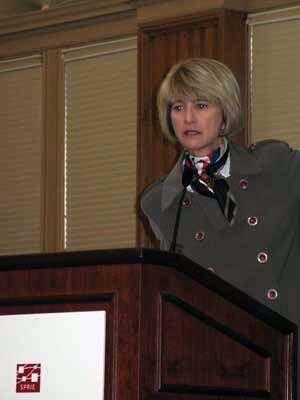
Outcomes will include policy recommendations as well as highlights to be included in a book published by SPRIE at Stanford.
Over the course of three short months, popular uprisings have toppled regimes in Tunisia and Egypt, sparked a civil war in Libya and created unrest in other parts of the Middle East. They also have raised a question in many people's minds: Are all authoritarian regimes now threatened by this new democratic wave? In particular, is China, a rising superpower, vulnerable to these forces?
The Communist government in Beijing is clearly worried. It has limited news coverage of the recent uprisings and has clamped down on democratic activists and foreign reporters, acting pre-emptively against anonymous calls on the Internet for China to have its own "Jasmine Revolution." A recent front-page editorial in the Beijing Daily, an organ of the city's party committee, declared that most people in the Middle East were unhappy with the protests in their countries, which were a "self-delusional ruckus" orchestrated by a small minority. For his part, President Hu Jintao has urged the strengthening of what has been dubbed the "Great Firewall"-the sophisticated apparatus of censorship and surveillance that the regime uses to control access to the Internet.
No social scientist or intelligence analyst predicted the specific timing or spread of the Arab uprising-the fact that it would start in Tunisia, of all places, that it would be triggered by an event like the self-immolation of a vegetable seller, or that protests would force the mighty Egyptian army to abandon Hosni Mubarak. Over the past generation, Arab societies have appeared stolidly stable. Why they suddenly exploded in 2011 is something that can be understood only in retrospect, if at all.
But this doesn't mean that we can't think about social revolutions in a more structured way. Even unpredictable things take place in a certain context, and the present-day situations of China and the Middle East are radically different. Most of the evidence suggests that China is pretty safe from the democratic wave sweeping other parts of the world-at least for now.
Perhaps the most relevant thinker for understanding the Middle East today and China tomorrow is the late Samuel Huntington-not the Huntington of "The Clash of Civilizations," who argued that there were fundamental incompatibilities between Islam and democracy, but the Huntington whose classic book "Political Order in Changing Societies," first published in 1968, laid out his theory of the development "gap."
Observing the high levels of political instability plaguing countries in the developing world during the 1950s and '60s, Mr. Huntington noted that increasing levels of economic and social development often led to coups, revolutions and military takeovers. This could be explained, he argued, by a gap between the newly mobilized, educated and economically empowered people and their existing political system-that is, between their hopes for political participation and institutions that gave them little or no voice. Attacks against the existing political order, he noted, are seldom driven by the poorest of the poor in such a society; they tend to be led, instead, by rising middle classes who are frustrated by the lack of political and economic opportunity.
All of these observations would seem to apply to Tunisia and Egypt. Both countries have made substantial social progress in recent decades. The Human Development Indices compiled by the United Nations (a composite measure of health, education and income) increased by 28% for Egypt and 30% for Tunisia between 1990 and 2010. The number of people going to school has grown substantially; Tunisia especially has produced large numbers of college graduates. And indeed, the protests in Tunisia and Egypt were led in the first instance by educated, tech-savvy middle-class young people, who expressed to anyone who would listen their frustrations with societies in which they were not allowed to express their views, hold leaders accountable for corruption and incompetence, or get a job without political connections.
Mr. Huntington stressed the destabilizing power of new social groups seeking political participation. People used to be mobilized by newspapers and radio; today they are spurred to action by cell phones, Facebook and Twitter, which allow them to share their grievances about the existing system and to learn about the possibilities of the larger world. This change in the Middle East has been incredibly rapid, and it has trumped, for now, old verities about the supposed passivity of Arab culture and the resistance of Islam to modernization.
But do these remarkable developments tell us anything about the possibility for future instability in China?
It is certainly true that the dry tinder of social discontent is just as present in China as in the Middle East. The incident that triggered the Tunisian uprising was the self-immolation of Mohamed Bouazizi, who had his vegetable cart repeatedly confiscated by the authorities and who was slapped and insulted by the police when he went to complain. This issue dogs all regimes that have neither the rule of law nor public accountability: The authorities routinely fail to respect the dignity of ordinary citizens and run roughshod over their rights. There is no culture in which this sort of behavior is not strongly resented.
This is a huge problem throughout China. A recent report from Jiao Tong University found that there were 72 "major" incidents of social unrest in China in 2010, up 20% over the previous year. Most outside observers would argue that this understates the real number of cases by perhaps a couple of orders of magnitude. Such incidents are hard to count because they often occur in rural areas where reporting is strictly controlled by the Chinese authorities.
The most typical case of outraged dignity in contemporary China is a local government that works in collusion with a private developer to take away the land of peasants or poor workers to make way for a glittery new project, or a company that dumps pollutants into a town's water supply and gets away with it because the local party boss stands to profit personally. Though corruption in China does not reach the predatory levels of certain African or Middle Eastern countries, it is nonetheless pervasive. People see and resent the privileged lives of the nation's elite and their children. The movie "Avatar" was a big hit in China in part because so many ordinary Chinese identified with the indigenous people it portrayed whose land was being stolen by a giant, faceless corporation.
There is, moreover, a huge and growing problem of inequality in China. The gains from China's remarkable growth have gone disproportionately to the country's coastal regions, leaving many rural areas far behind. China's Gini index-a standard measure of income inequality across a society-has increased to almost Latin American levels over the past generation. By comparison, Egypt and Tunisia have a much more equal income distribution.
According to Mr. Huntington, however, revolutions are made not by the poor but by upwardly mobile middle-class people who find their aspirations stymied, and there are lots of them in China. Depending on how you define it, China's middle class may outnumber the whole population of the United States. Like the middle-class people of Tunisia and Egypt, those in China have no opportunities for political participation. But unlike their Middle Eastern counterparts, they have benefited from a dramatically improving economy and a government that has focused like a laser beam on creating employment for exactly this group.
To the extent that we can gauge Chinese public opinion through surveys like Asia Barometer, a very large majority of Chinese feel that their lives have gotten better economically in recent years. A majority of Chinese also believe that democracy is the best form of government, but in a curious twist, they think that China is already democratic and profess to be satisfied with this state of affairs. This translates into a relatively low degree of support for any short-term transition to genuine liberal democracy.
Indeed, there is some reason to believe that the middle class in China may fear multiparty democracy in the short run, because it would unleash huge demands for redistribution precisely from those who have been left behind. Prosperous Chinese see the recent populist polarization of politics in Thailand as a warning of what democracy may bring.
The fact is that authoritarianism in China is of a far higher quality than in the Middle East. Though not formally accountable to its people through elections, the Chinese government keeps careful track of popular discontents and often responds through appeasement rather than repression. Beijing is forthright, for example, in acknowledging the country's growing income disparities and for the past few years has sought to mitigate the problem by shifting new investments to the poor interior of the country. When flagrant cases of corruption or abuse appear, like melamine-tainted baby formula or the shoddy school construction revealed by the Sichuan earthquake, the government holds local officials brutally accountable-sometimes by executing them.
Another notable feature of Chinese government is self-enforced leadership turnover. Arab leaders like Tunisia's Zine al-Abidine Ben Ali, Egypt's Mr. Mubarak and Libya's Col. Moammar Gadhafi never knew when to quit, hanging on 23, 30 and 41 years, respectively. Since Mao, the Chinese leadership has rigidly adhered to terms of about a decade. Mr. Hu, the current president, is scheduled to step down in 2012, when he is likely to be replaced by Vice President Xi Jinping. Leadership turnover means that there is more policy innovation, in sharp contrast to countries like Tunisia and Egypt, which have been stuck for decades in the rut of crony capitalism.
The Chinese government is also more clever and ruthless in its approach to repression. Sensing a clear threat, the authorities never let Western social media spread in the first place. Facebook and Twitter are banned, and content on websites and on China-based social media is screened by an army of censors. It is possible, of course, for word of government misdeeds to get out in the time between its first posting by a micro-blogger and its removal by a censor, but this cat-and-mouse game makes it hard for a unified social space to emerge.
A final critical way in which China's situation differs from that of the Middle East lies in the nature of its military. The fate of authoritarian regimes facing popular protests ultimately depends on the cohesiveness and loyalty of its military, police and intelligence organizations. The Tunisian army failed to back Mr. Ben Ali early on; after some waffling, the Egyptian army decided it would not fire on protesters and pushed Mr. Mubarak out of power.
In China, the People's Liberation Army is a huge and increasingly autonomous organization with strong economic interests that give it a stake in the status quo. As in the Tiananmen uprising in 1989, it has plenty of loyal units around the country that it could bring into Beijing or Shanghai, and they would not hesitate to fire on demonstrators. The PLA also regards itself as the custodian of Chinese nationalism. It has developed an alternative narrative of 20th-century history that places itself at the center of events like the defeat of Japan in the Pacific war and the rise of a modern China. It is very unlikely that the PLA would switch sides and support a democratic uprising.
The bottom line is that China will not catch the Middle Eastern contagion anytime soon. But it could easily face problems down the road. China has not experienced a major recession or economic setback since it set out on its course of economic reform in 1978. If the country's current property bubble bursts and tens of millions of people are thrown out of work, the government's legitimacy, which rests on its management of the economy, would be seriously undermined.
Moreover, Mr. Huntington's scenario of rising but unfulfilled expectations among the middle class may still play out. Though there is a labor shortage among low-skill workers in China today, there is a glut of the college educated. Every year into the future, China will graduate more than seven million people from its universities, up from fewer than a million in 1998, and many of them are struggling to find work suitable to their self-perceived status. Several million unemployed college graduates are far more dangerous to a modernizing regime than hundreds of millions of poor peasants.
There is also what the Chinese themselves call the "bad emperor" problem. China's historical achievement over the centuries has been the creation of high-quality centralized bureaucratic government. When authoritarian rulers are competent and reasonably responsible, things can go very well. Indeed, such decision-making is often more efficient than in a democracy. But there is no guarantee that the system will always produce good rulers, and in the absence of the rule of law and electoral checks on executive power, there is no way to get rid of a bad emperor. The last bad emperor, commonly (if quietly) acknowledged as such, was Mao. We can't know what future tyrant, or corrupt kleptocrat, may be waiting in the wings in China's future.
The truth is that, much as we might theorize about the causes of social revolution, human societies are far too complex, and change too rapidly, for any simple theory to provide a reliable guide. Any number of observers dismissed the power of the "Arab street" to bring about political change, based on their deep knowledge of the Middle East, and they were right every year-up until 2011.
The hardest thing for any political observer to predict is the moral element. All social revolutions are driven by intense anger over injured dignity, an anger that is sometimes crystallized by a single incident or image that mobilizes previously disorganized individuals and binds them into a community. We can quote statistics on education or job growth, or dig into our knowledge of a society's history and culture, and yet completely miss the way that social consciousness is swiftly evolving through a myriad of text messages, shared videos or simple conversations.
The central moral imponderable with regard to China is the middle class, which up to now has seemed content to trade political freedom for rising incomes and stability. But at some point this trade-off is likely to fail; the regime will find itself unable to deliver the goods, or the insult to the dignity of the Chinese people will become too great to tolerate. We shouldn't pretend that we can predict when this tipping point will occur, but its eventual arrival, as Samuel Huntington might have suggested, is bound up with the very logic of modernization itself.
The Program on Arab Reform and Democracy at the Center on Democracy, Development, and the Rule of Law (CDDRL) at Stanford University, the Safadi Foundation USA (SFUSA), and the Center on International Private Enterprise (CIPE), announce an open call for papers on behalf of the Safadi-Stanford Initiative for Policy Innovation (SSIPI).
SSIPI seeks policy-focused papers that provide clear and concise recommendations to the Lebanese authorities, the international donor community, and other regional groups. The objective of SSIPI is to promote new analysis on Lebanon. Qualified applicants have the academic freedom to choose a paper topic of their choice within the realm of economic development and entrepreneurship. Papers should include recommendations that address the linkages between economic development and institution building, security and civil peace, and other governance related issues. In addition, papers should reflect a deep understanding of the role of institutions and whether accelerated, more balanced economic growth, social and fiscal reforms, a particular process of economic development or new developing areas of entrepreneurialism, if any, could help in reducing the negative influences posed by confessionalism in the economy.
Abstracts should be submitted according to the guidelines below. Upon review of the abstracts by an independent reviewing committee, a select group of scholars will be chosen to submit their full paper and compete for the title of Safadi scholar of the Year. SSIPI will offer the Safadi Scholar of the Year the opportunity to develop a piece of research at CDDRL, led by Larry Diamond, as well as meet with strategic policy makers in Washington, DC. In addition, the scholar will have the chance to present their research at a policy conference in Washington, DC.
Requirements:
Deadline for one-page abstracts is March 31, 2011. Abstracts should be emailed to SSIPI.2011.Submissions@gmail.com. Please note "Abstract Submission" in subject of email. The selection committee warrants applicants from academia, the public and private sectors, and NGOs, either from Lebanon or abroad, who are working on economic development and entrepreneurship in Lebanon. Qualified candidates should hold a graduate degree from an accredited university. For more info please visit: Safadi-Stanford Initiative for Policy Innovation
WASHINGTON - Hours before the judge in the latest Mikhail Khodorkovsky trial announced yet another guilty verdict last week, Russia's most prominent political prisoner was already being attacked in cyberspace.
No, Khodorkovsky's Web site, the main source of news about the trial for many Russians, was not being censored. Rather, it had been targeted by so-called denial-of-service attacks, with most of the site's visitors receiving a "page cannot be found" message in their browsers.
Such attacks are an increasingly popular tool for punishing one's opponents, as evidenced by the recent online campaign against American corporations like Amazon and PayPal for mistreating WikiLeaks. It's nearly impossible to trace the perpetrators; many denial-of-service attacks go underreported, as it's often hard to distinguish them from cases where a Web site has been overwhelmed by a huge number of hits. Although most of the sites eventually get back online, denial-of-service attacks rarely generate as much outrage as formal government attempts to filter information on the Internet.
In the past, repressive regimes have relied on Internet firewalls to block dissidents from spreading forbidden ideas; China has been particularly creative, while countries like Tunisia and Saudi Arabia are never far behind. But the pro-Kremlin cyberattackers who hit Kodorkovsky's Web site may reveal more about the future of Internet control than Beijing's practice of adapting traditional censorship to new technology.
Under the Russian model - what I refer to as "social control" - no formal, direct censorship is necessary. Armies of pro-government netizens - which often include freelancing amateurs and computer-savvy members of pro-Kremlin youth movements - take matters into their own hands and attack Web sites they don't like, making them inaccessible even to users in countries that practice no Internet censorship at all.
Cyberattacks are just one of the growing number of ways in which the Kremlin harnesses its supporters to influence Web content. Most of the country's prime Internet resources are owned by Kremlin-friendly oligarchs and government-controlled companies. These sites rarely hesitate to suspend users or delete blog posts if they cross the line set by the government.
The Kremlin is also aggressively exploiting the Internet to spread propaganda and bolster government popularity, sometimes with comical zeal. Just last summer Vladimir Putin ordered the installation of Web cameras - broadcasting over the Internet in real-time - to monitor progress on new housing projects for victims of the devastating forest fires. This made for great PR - but few journalists inquired whether the victims had computers to witness this noble exercise in transparency (they didn't). Russia's security services and police also profit from digital surveillance, using social networking sites to gather intelligence and gauge the popular mood.
The Kremlin in fact practices very little formal Internet censorship, preferring social control to technological constraints. There is a certain logic to this. Outright censorship hurts its image abroad: Cyberattacks are too ambiguous to make it into most foreign journalists' reports about Russia's worsening media climate. By allowing Kremlin-friendly companies and vigilantes to police the digital commons, the government doesn't have to fret over every critical blog post.
One reason so many foreign observers overlook the Kremlin's harnessing of denial-of-service attacks is that they are used to more blatant measures of Internet control. China's draconian efforts to filter the Internet - characterized by Wired magazine in a 1997 article as the "Great Firewall of China" - harken back to the strict censorship of the airways by Communist governments during the Cold War. Back then it was possible to keep out or at least cut down on the influence of foreign ideas by jamming Western broadcasts. The Internet, however, has proven to be far too amorphous to dominate. So its better to co-opt it as much as possible by enabling private companies and pro-government bloggers to engage in "comment warfare" with the Politburo's foes.
Meanwhile, China itself is quietly adopting many measures practiced in Russia. The Web site of the Norwegian Nobel Committee came under repeated cyberattacks after it gave the 2010 award to the jailed Chinese dissident Liu Xiaobo. Many Chinese government officials are now asked to attend media training sessions and use their skills to help shape online public opinion rather than censor it.
In assessing the U.S. government's Internet freedom policy - announced a year ago by Hillary Clinton - one sees few signs that U.S. diplomats are aware of growing efforts by authoritarian governments to harness social forces to control the Internet. So far, most of Washington's efforts have been aimed at limiting the damage caused by technological control. But even here Washington has a spotty record: Just a few weeks ago the State Department gave an innovation award to Cisco, a company that played a key role in helping China build its firewall.
The eventual disappearance of Internet filtering in much of the world would count as a rather ambiguous achievement if it's replaced by an outburst of cyberattacks, an increase in the state's surveillance power, and an outpouring of insidious government propaganda. Policymakers need to stop viewing Internet control as just an outgrowth of the Cold War-era radio jamming and start paying attention to non-technological threats to online freedom.
Addressing the social dimension of Internet control would require political rather than technological solutions, but this is no good reason to cling to the outdated metaphor of the "Great Firewall."
Evgeny Morozov is a visiting scholar at Stanford University and the author of "The Net Delusion: The Dark Side of Internet Freedom."

 Mitul Bhat
 Shadi Bushra
 Colin Casey
 Nicholas DugdaleContent-Disposition: form-data; name="preferredphoto3"
 Roxana Gharegozlou
 Daniel Mattes
 Jack Mosbacher
 Jenna Nicholas
 Daniel Ong
 Annamaria Prati
 Otis Reid