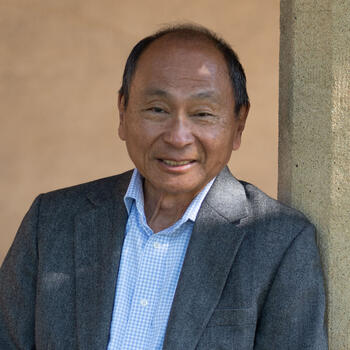
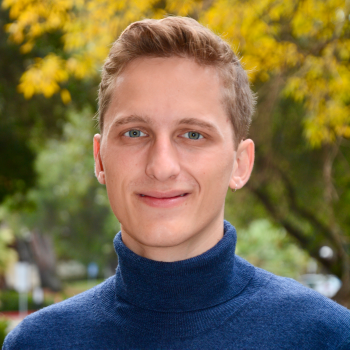
Environment

FSI scholars approach their research on the environment from regulatory, economic and societal angles. The Center on Food Security and the Environment weighs the connection between climate change and agriculture; the impact of biofuel expansion on land and food supply; how to increase crop yields without expanding agricultural lands; and the trends in aquaculture. FSE’s research spans the globe – from the potential of smallholder irrigation to reduce hunger and improve development in sub-Saharan Africa to the devastation of drought on Iowa farms. David Lobell, a senior fellow at FSI and a recipient of a MacArthur “genius” grant, has looked at the impacts of increasing wheat and corn crops in Africa, South Asia, Mexico and the United States; and has studied the effects of extreme heat on the world’s staple crops.

Authors
News Type
News
Date
Paragraphs

The Freeman Spogli Institute for International Studies (FSI) is pleased to welcome Kumi Naidoo as the next Frank E. and Arthur W. Payne Distinguished Lecturer. Effective November 7, 2023, Naidoo will be based at FSI’s Center on Democracy, Development and the Rule of Law (CDDRL), with a simultaneous affiliation at the Center for Food Security and the Environment (FSE).

The Payne Lectureship at FSI aims to raise public understanding of the complex policy issues facing the global community and advance international cooperation.

Naidoo has a distinguished career as an activist, including in South Africa, where he was an organizer of anti-apartheid activities. He was forced into exile in the United Kingdom under pressure from the pro-apartheid South African Security Police, but returned in 1990 following Nelson Mandela’s release from prison, whereupon he organized for the legalization of the African National Congress.

Naidoo turned his activism to the issues of climate change in 2009, when he joined Greenpeace International, serving as the executive director until 2015. In 2010, he released his first book, “Boiling Point: Can Citizen Action Save the World?”, in which he urges unity and cooperation in facing the urgency of the climate crisis. He has also served as the secretary general of Amnesty International and other global human rights organizations.

"FSI is lucky to be able to bring leaders like Dr. Naidoo to Stanford to help our community think about global challenges like climate change and development from new perspectives. With all of his experience as a frontline activist, Kumi is going to be a wonderful resource to our students and scholars,” says Michael McFaul, director of the Freeman Spogli Institute.


We need to reach people in their hearts, body and soul. I look forward to continuing to work on one of the solutions I have been pursuing which is the need to harness the power of arts and culture.
Kumi Naidoo
Payne Distinguished Lecturer


As the Payne Distinguished Lecturer, Naidoo will have the opportunity to teach a seminar to the Ford Dorsey Master’s in International Policy, mentor undergraduate and graduate students across FSI’s centers, and present the annual Payne Lecture in the winter of 2024. Naidoo’s multi-disciplinary expertise at the crossroads of social justice and environmental advocacy will bring welcome perspectives to the intellectual communities at CDDRL, FSE, and FSI, and across Stanford’s campus to places like the new Stanford Doerr School of Sustainability.

“At a time when we are seeing a convergence of multiple crises in the world and some troubling trends, including the rise of fascism, continuing climate denialism, a challenge to the multilateral system and more, I am pleased to have this opportunity to engage in reflective work on the question of ‘How can activism win bigger and faster?’” says Naidoo. 

He continues, “One of the key reasons we are not getting as much urgency and momentum to act on climate and intersecting challenges is the communications deficits activism comes up against: at an objective level, we face a challenging ownership structure of mainstream media which leaves little place for narratives and perspectives pushing for substantive structural and systemic change.”

“We are delighted to welcome Dr. Naidoo as this year’s Payne Lecturer,” shared Kathryn Stoner, Mosbacher Director of CDDRL. “With his remarkable background as a human rights activist and a global leader in environmental and social justice, Kumi brings a wealth of knowledge and insight that will undoubtedly spark meaningful conversations and inspire our students, faculty, and the greater Stanford community."

Previous Payne Distinguished Lecturers include Rose Gottemoeller, former deputy secretary of NATO; Ertharin Cousin, former U.S. Ambassador to the UN Agencies for Food and Agriculture; Brett McGurk, former presidential envoy to defeat ISIS; and Jung-Seung Shin, former Ambassador for the Republic of Korea, among others.

The Payne Lectureship is named for Frank E. Payne and Arthur W. Payne, brothers who gained an appreciation for global problems through their international business operations. The Payne Distinguished Lecturer is chosen for his or her international reputation as a leader, with an emphasis on visionary thinking; a broad, practical grasp of a given field; and the capacity to clearly articulate an important perspective on the global community and its challenges. 

Speaking to his upcoming time at Stanford, Kumi Naidoo outlined some of his goals for his research and lectureship while at FSI.

“At a subjective level, change agents tend to try to move people primarily by facts, figures, policy and rational arguments. This approach has tended to ignore the need to reach people in their hearts, body and soul. I look forward to continuing to work on one of the solutions I have been pursuing which is the need to harness the power of arts and culture, what increasingly is referred to as Artivism. I am hoping to use my time at Stanford University to interrogate these issues and share through my writing and podcast (Power, People and Planet) some of the perspectives that challenge the way that conventional activism has tried to foster structural and systemic change.”

Read More

2023 Fisher Family Summer Fellows in front of fountain
News

Applications for the 2024 Fisher Family Summer Fellows Program are Now Open

The program will run from Sunday, July 21, through Friday, August 9, 2024. Applications are due by 5:00 pm PST on Sunday, January 14, 2024.
Applications for the 2024 Fisher Family Summer Fellows Program are Now Open
Hero Image
Kumi Naidoo joins the Freeman Spogli Institute for International Studies as the 2023-24 Payne Distinguished Lecturer
Kumi Naidoo joins the Freeman Spogli Institute for International Studies as the 2023-24 Payne Distinguished Lecturer.
All News button
1
Subtitle

Naidoo brings a multi-disciplinary perspective from his experiences as a leader at Greenpeace International, Amnesty International, and other causes to the students and scholars at FSI and beyond.

0
kumi_headshot_-_kumi_naidoo.jpeg

Kumi Naidoo is a prominent South African human rights and environmental justice activist. At the age of fifteen, he organized school boycotts against the apartheid educational system in South Africa. His courageous actions made him a target for the Security Police, leading to his exile in the United Kingdom, where he remained until 1990. Upon his return to South Africa, Kumi played a pivotal role in the legalization of the African National Congress in his home province of KwaZulu Natal.

Kumi also served as the official spokesperson for the Independent Electoral Commission (IEC), responsible for overseeing the country's first democratic elections in April 1994. His dedication to democracy and justice led to notable international roles, including being the first person from the global South to lead Greenpeace International as Executive Director from 2009 to 2016. He later served as the Secretary General of Amnesty International from 2018 to 2020.

In the realm of education, Kumi has shared his expertise, lecturing at Fossil Free University and holding a Richard von Weizsäcker Fellowship at the Robert Bosch Academy until early 2022.

Currently, Kumi serves as a Senior Advisor for the Community Arts Network (CAN). He holds the position of Distinguished visiting lecturer at Stanford University’s Center for Democracy, Development and the Rule of Law, and is a Professor of Practice at the Thunderbird School of Global Management at Arizona State University. Additionally, he continues to represent global interests as a Global Ambassador for Africans Rising for Justice, Peace, and Dignity. He also holds positions as a Visiting Fellow at Oxford University and an Honorary Fellow at Magdalen College.

In a testament to his family's commitment to positive change, they have established the Riky Rick Foundation for the Promotion of Artivism, honoring the legacy of their son and brother, the now late South African rapper Rikhado “Riky Rick” Makhado through a commitment to supporting artivism and mental health in South Africa.

Kumi has authored and co-authored numerous books, the most recent being Letters To My Mother (2022), a personal and professional memoir that won the HSS 2023 non-fiction award by the National Institute Humanities and Social Sciences.

Payne Distinguished Lecturer, 2023-25
Date Label
Paragraphs

The National Environmental Policy Act (NEPA) of 1970 requires federal agencies to assess the environmental impact of proposed federal actions. NEPA thus affects delivery of a wide range of infrastructure projects. NEPA requires the completion of an Environmental Impact Statement (EIS) for environmentally impactful federal actions. For infrastructure projects this can entail significant delays. A typical EIS now takes about four and one-half years and is over 600 pages long. Some EIS’s take over a decade to complete. We provide the first detailed analysis of project approval times under NEPA by examining 1269 EIS permitting processes. We analyze empirically the well-defined interval from Notice of Intent to file to Record of Decision (ROD). We use a Cox proportional hazard model to estimate the impact of several factors on EIS duration. Factors include permits featuring major construction, those including private investment, those for projects located in states with restrictive environmental laws, those using the federal permitting “dashboard,” and those publishing a Supplemental EIS prior to the ROD. We find that privately financed projects receive faster permitting, while projects involving major construction, those undertaken in restrictive states, and those utilizing the federal permitting dashboard, face slower permitting times. We also explore links between EIS page counts and permitting time. Greater EIS page counts are associated with longer permitting times. We conclude by examining EIS completion during economic stimulus programs such as the American Recovery and Reinvestment Act (ARRA), as well as the frequency of EIS completion by the federal government.

All Publications button
1
Publication Type
Journal Articles
Publication Date
Journal Publisher
Journal of Regulatory Economics
Authors
Michael Bennon
-
NEPA Litigation Over Large Energy and Transport Infrastructure Projects with Michael Bennon

Despite five decades of experience, there is a considerable gap in legal and empirical study on the impacts of the National Environmental Policy Act (NEPA). Proponents of reform often claim NEPA litigation is a major obstacle for federal actions; others have concluded that litigation is not a major contributor of project cost escalation or delays. This webinar reviews the NEPA process and a recent study of the incidence and conditions of infrastructure project litigation under NEPA, using a data set of 355 major transportation and energy infrastructure projects that completed a federal environmental study between 2010 and 2018. Energy sectors with greater private financing have shorter permit durations and higher rates of litigation and cancellation, but also higher completion rates relative to transport sectors, which have greater public financing and lower litigation rates but longer permit timelines.

DATE: September 29, 2023
TIME: 12:00 – 1:00 PM (eastern time) / 9:00 - 10:00 am (pacific time)
PRESENTER: Michael Bennon, Stanford University

This event is co-sponsored by the Build America Center and the Center on Democracy, Development and the Rule of Law.

Online via Zoom.

Encina Hall
616 Jane Stanford Way
Stanford, CA 94305-6055

0
Research Scholar
mike_bennon_2022.jpg

Michael Bennon is a Research Scholar at CDDRL for the Global Infrastructure Policy Research Initiative. Michael's research interests include infrastructure policy, project finance, public-private partnerships and institutional design in the infrastructure sector. Michael also teaches Global Project Finance to graduate students at Stanford. Prior to Stanford, Michael served as a Captain in the US Army and US Army Corps of Engineers for five years, leading Engineer units, managing projects, and planning for infrastructure development in the United States, Iraq, Afghanistan and Thailand. 

Program Manager, Global Infrastructure Policy Research Initiative
Michael Bennon
Seminars
-
Michele Gelfand seminar

Over the past century, we have explored the solar system, split the atom, and wired the Earth, but somehow, despite all of our technical prowess, we have struggled to understand something far more important: our own cultural differences. Using a variety of methodologies, our research has uncovered is that many cultural differences reflect a simple, but often invisible distinction: The strength of social norms. Tight cultures have strong social norms and little tolerance for deviance, while loose cultures have weak social norms and are highly permissive. The tightness or looseness of social norms turns out to be a Rosetta Stone for human groups. It illuminates similar patterns of difference across nations, states, organizations, and social class, and the template also explains differences among traditional societies. It’s also a global fault line: conflicts we encounter can spring from the structural stress of tight-loose tension. By unmasking culture to reveal tight-loose dynamics, we can see fresh patterns in history, illuminate some of today’s most puzzling trends and events, and see our own behavior in a new light. At a time of intense political conflict and rapid social change, this template shows us that there is indeed a method to the madness, and that moderation – not tight or loose extremes – has never been more needed.

ABOUT THE SPEAKER


Michele Gelfand is the John H. Scully Professor of Cross-Cultural Management and Professor of Organizational Behavior at the Stanford Graduate School of Business School and Professor of Psychology by Courtesy. Gelfand uses field, experimental, computational and neuroscience methods to understand the evolution of culture and its multilevel consequences. Her work has been published in outlets such as Science, the Proceedings of the National Academy of Sciences, Psychological Science, Nature Human behavior, the Journal of Personality and Social Psychology, Journal of Applied Psychology, Academy of Management Journal, among others. Gelfand is the founding co-editor of the Advances in Culture and Psychology series (Oxford University Press). Her book Rule Makers, Rule Breakers: How Tight and Loose Cultures Wire the World was published by Scribner in 2018. She is the Past President of the International Association for Conflict Management and co-founder of the Society for the Study of Cultural Evolution. She received the 2016 Diener award from SPSP, the 2017 Outstanding International Psychologist Award from the American Psychological Association, the 2019 Outstanding Cultural Psychology Award from the Society for Personality and Social Psychology, the 2020 Rubin Theory-to-Practice award from the International Association of Conflict Management, the 2021 Contributions to Society award from the Academy of Management, and the Annaliese Research Award from the Humboldt Foundation. Gelfand was elected to the American Academy of Arts and Sciences, the National Academy of Sciences, and the Council on Foreign Relations.

Virtual to Public. Only those with an active Stanford ID with access to Encina E008 in Encina Hall may attend in person.

Hesham Sallam
Hesham Sallam

Virtual to Public. Only those with an active Stanford ID with access to Encina E008 in Encina Hall may attend in person.

Stanford Graduate School of Business 
655 Knight Way 
Stanford, CA 94305 

650.497.4507
0
John H. Scully Professor in Cross-Cultural Management and Professor of Organizational Behavior, Stanford GSB
Professor of Psychology (by courtesy), School of Humanities and Sciences
michele_gelfand_author_photo.jpg

Michele Gelfand is a Professor of Organizational Behavior at the Stanford Graduate School of Business and Professor of Psychology by Courtesy at Stanford University. Gelfand uses field, experimental, computational, and neuroscience methods to understand the evolution of culture — as well as its multilevel consequences for human groups. Her work has been cited over 20,000 times and has been featured in the Washington Post, the New York Times, the Boston Globe, National Public Radio, Voice of America, Fox News, NBC News, ABC News, The Economist, De Standard, among other outlets.

Gelfand has published her work in many scientific outlets such as Science, the Proceedings of the National Academy of Sciences, Proceedings of the Royal Society B, Psychological Science, Nature Scientific Reports, PLOS 1, the Journal of Personality and Social Psychology, Organizational Behavior and Human Decision Processes, Academy of Management Review, Academy of Management Journal, Research in Organizational Behavior, Journal of Applied Psychology, Annual Review of Psychology, American Psychologist, Journal of Cross-Cultural Psychology, Current Opinion in Psychology, among others. She has received over 13 million dollars in research funding from the National Science Foundation, Department of Defense, and the FBI.

She is the author of Rule Makers, Rule Breakers: How Tight and Loose Cultures Wire the World (Scribner, 2018) and co-editor of the following books: Values, Political Action, and Change in the Middle East and the Arab Spring (Oxford University Press, 2017); The Handbook of Conflict and Conflict Management (Taylor & Francis, 2013); and The Handbook of Negotiation and Culture (2004, Stanford University Press). Additionally, she is the founding co-editor of the Advances in Culture and Psychology Annual Series and the Frontiers of Culture and Psychology series (Oxford University Press). She is the past President of the International Association for Conflict Management, past Division Chair of the Conflict Division of the Academy of Management, and past Treasurer of the International Association for Cross-Cultural Psychology. She has received several awards and honors, such as being elected to the National Academy of Sciences (2021) and the American Academy of Arts and Sciences (2019), the 2017 Outstanding International Psychologist Award from the American Psychological Association, the 2016 Diener Award from the Society for Personality and Social Psychology, and the Annaliese Research Award from the Alexander von Humboldt Foundation.

CDDRL Affiliated Faculty
Michele Gelfand
Seminars
Authors
News Type
News
Date
Paragraphs

When you think of the climate crisis and the major impact it will have upon all corners of the world, one nation stands out as the epicenter of the unfolding cataclysmic changes: Bangladesh.

When Stephen Luby, MD, began working there two decades ago, the South Asian country was facing tremendous climate stress brought on by intermittent floods, extreme heat, cyclones and drought that threatened human life.


Continue reading in Stanford Magazine

Hero Image
Beyond Climate Dread cover image Anuj Shrestha
All News button
1
Subtitle

Stephen Luby is among a growing number of Stanford Medicine community members dedicated to finding solutions to urgent problems of planetary and human health.

-
A Conversation with Colombian President Gustavo Petro

Environmental and Social Justice:
A Look from Latin America


The Center on Democracy, Development and the Rule of Law is honored to host the President of Colombia, Gustavo Petro Urrego.

The world today is facing unprecedented economic, social, and environmental dynamics. As the global community continues to navigate these changes and challenges, political leaders seek to articulate fresh visions on how countries may steer a clear course. President Petro will provide a perspective from Latin America on the critical issues of environmental and social justice.

Following the president’s remarks, he will join Professor Alberto Díaz-Cayeros, Senior Fellow at FSI and director of the Stanford Center for Latin American Studies, for a discussion on the challenges of climate change, economic growth, and social inclusion that have historically bedeviled development in Latin America.

IMPORTANT: Large bags are not permitted into the building. All bags are subject to be searched. Seating is not guaranteed and is available on a first-come first-served basis. Please plan accordingly.

The event will also be available to livestream below.

This event is co-sponsored by the Center on Democracy, Development and the Rule of Law, the Center for Latin American Studies, Stanford in Government, and the Stanford Society for Latin American Politics.


Image
CDDRL, CLAS, SIG, and SSLAP logos


MEDIA CONTACT:
Nora Sulots, CDDRL Communications Manager

CEMEX Auditorium
Stanford Graduate School of Business
655 Knight Way, Stanford, CA 94305

SOLD OUT. Please tune into the livestream if you do not have a ticket. Only those registered may attend in person.

Panel Discussions
Date Label
-
Bennon Fukuyama seminar

Infrastructure development requires democracies to balance multiple, competing governance priorities. The representativeness of the decision-making process must be balanced against the benefits of impartial technical assessments by the civil service, and both must be balanced against the efficiency of infrastructure development and government actions. Using the California Environmental Quality Act (CEQA) as a case study, we will argue that California has become a “vetocracy” in which decisions in favor of collective action have become extremely difficult to arrive at. This presentation is based in part on CDDRL’s recent research on California governance, in collaboration with the California 100 Initiative. 

ABOUT THE SPEAKERS

Image
Francis Fukuyama
Francis Fukuyama has written widely on issues in development and international politics. His 1992 book, The End of History and the Last Man, has appeared in over twenty foreign editions. His most recent book, Identity: The Demand for Dignity and the Politics of Resentment, was published in September 2018. His latest book, Liberalism and Its Discontents, was published in the spring of 2022.

Dr. Fukuyama received his B.A. from Cornell University in classics, and his Ph.D. from Harvard in Political Science. He was a member of the Political Science Department of the RAND Corporation, and of the Policy Planning Staff of the US Department of State. From 1996-2000 he was Omer L. and Nancy Hirst Professor of Public Policy at the School of Public Policy at George Mason University, and from 2001-2010 he was Bernard L. Schwartz Professor of International Political Economy at the Paul H. Nitze School of Advanced International Studies, Johns Hopkins University. He served as a member of the President’s Council on Bioethics from 2001-2004.

Dr. Fukuyama holds honorary doctorates from Connecticut College, Doane College, Doshisha University (Japan), Kansai University (Japan), Aarhus University (Denmark), and the Pardee Rand Graduate School. He is a non-resident fellow at the Carnegie Endowment for International Peace and at the Center for Global Development. He is a member of the Board of Trustees of the Rand Corporation, the Board of Governors of the Pardee Rand Graduate School, and the Volcker Alliance. He is a member of the American Political Science Association and the Council on Foreign Relations. He is married to Laura Holmgren and has three children.
 

Image
Mike Bennon
Michael Bennon is a Research Scholar at CDDRL for the Global Infrastructure Policy Research Initiative. Michael's research interests include infrastructure policy, project finance, public-private partnerships and institutional design in the infrastructure sector. Michael also teaches Global Project Finance to graduate students at Stanford. Prior to Stanford, Michael served as a Captain in the US Army and US Army Corps of Engineers for five years, leading Engineer units, managing projects, and planning for infrastructure development in the United States, Iraq, Afghanistan and Thailand.
 

Virtual to Public. Only those with an active Stanford ID with access to E008 in Encina Hall may attend in person.

Didi Kuo

Virtual to Public. Only those with an active Stanford ID with access to E008 in Encina Hall may attend in person.

Encina Hall, C148
616 Jane Stanford Way
Stanford, CA 94305

0
Olivier Nomellini Senior Fellow at the Freeman Spogli Institute for International Studies
Director of the Ford Dorsey Master's in International Policy
Research Affiliate at The Europe Center
Professor by Courtesy, Department of Political Science
yff-2021-14290_6500x4500_square.jpg

Francis Fukuyama is the Olivier Nomellini Senior Fellow at Stanford University's Freeman Spogli Institute for International Studies (FSI), and a faculty member of FSI's Center on Democracy, Development and the Rule of Law (CDDRL). He is also Director of Stanford's Ford Dorsey Master's in International Policy, and a professor (by courtesy) of Political Science.

Dr. Fukuyama has written widely on issues in development and international politics. His 1992 book, The End of History and the Last Man, has appeared in over twenty foreign editions. His book In the Realm of the Last Man: A Memoir will be published in fall 2026.

Francis Fukuyama received his B.A. from Cornell University in classics, and his Ph.D. from Harvard in Political Science. He was a member of the Political Science Department of the RAND Corporation, and of the Policy Planning Staff of the US Department of State. From 1996-2000 he was Omer L. and Nancy Hirst Professor of Public Policy at the School of Public Policy at George Mason University, and from 2001-2010 he was Bernard L. Schwartz Professor of International Political Economy at the Paul H. Nitze School of Advanced International Studies, Johns Hopkins University. He served as a member of the President’s Council on Bioethics from 2001-2004. He is editor-in-chief of American Purpose, an online journal.

Dr. Fukuyama holds honorary doctorates from Connecticut College, Doane College, Doshisha University (Japan), Kansai University (Japan), Aarhus University (Denmark), the Pardee Rand Graduate School, and Adam Mickiewicz University (Poland). He is a non-resident fellow at the Carnegie Endowment for International Peace. He is a member of the Board of Trustees of the Rand Corporation, the Board of Trustees of Freedom House, and the Board of the Volcker Alliance. He is a fellow of the National Academy for Public Administration, a member of the American Political Science Association, and of the Council on Foreign Relations. He is married to Laura Holmgren and has three children.

(October 2025)

CV
Date Label

Encina Hall
616 Jane Stanford Way
Stanford, CA 94305-6055

0
Research Scholar
mike_bennon_2022.jpg

Michael Bennon is a Research Scholar at CDDRL for the Global Infrastructure Policy Research Initiative. Michael's research interests include infrastructure policy, project finance, public-private partnerships and institutional design in the infrastructure sector. Michael also teaches Global Project Finance to graduate students at Stanford. Prior to Stanford, Michael served as a Captain in the US Army and US Army Corps of Engineers for five years, leading Engineer units, managing projects, and planning for infrastructure development in the United States, Iraq, Afghanistan and Thailand. 

Program Manager, Global Infrastructure Policy Research Initiative
Seminars
Date Label
-

CDDRL's Fisher Family Honors Program trains students from any academic department at Stanford to prepare them to write a policy-relevant research thesis with global impact on a subject touching on democracy, development, and the rule of law. For our final Spring 2022 seminar, please join us to hear our Honors Program award winners present their research.

Adrian Scheibler, Firestone Medal winner
 

Image
Adrian Scheibler
Major: International Relations
Thesis Advisor: Christophe Crombez

Thesis Title: Challenging the State: Western European Regionalism in the Era of Financial Crisis

Abstract: The Global Financial Crisis and its aftershocks have substantially altered the Western European political landscape. But while the literature has extensively focused on the impacts of the economic hardship on traditional party competition, it has often failed to consider the center-periphery dimension. My thesis addresses both the demand for and supply of regionalist ideologies during the crisis. Using an original dataset containing 8 countries, 35 regions, and 128 regionalist parties, it finds that voters did not increase their support for regionalist parties during the crisis and may have even turned their backs on these political actors. In addition, I consider the reactions of regionalist parties in three Spanish autonomous communities - Catalonia, the Basque Country, and Galicia - to the crisis. I find evidence of regionalist mobilization on the issue and even some indications of radicalization of regionalist demands. Taken together, these findings raise interesting implications for the impacts of the financial crisis and the interaction between economic indicators, party competition, and voting patterns.


Michal Skreta, CDDRL Outstanding Thesis winner
 

Image
Michal Skreta
Major: Economics and Political Science
Thesis Advisor: Larry Diamond

Thesis Title: Babies, Money, and Power: Estimating Causal Effects of the “Family 500+” Child Benefit Program in Poland using the Synthetic Control Method

Abstract: The ‘Family 500+” child benefit program introduced in April 2016 by the government of Poland has become the single most expensive component of Polish social policy expenditure, yet past studies have rarely estimated the effects of the program through causal methods. In a novel application within this context, I propose using the synthetic control method as a causal identification strategy to empirically estimate country-level treatment effects of the program on fertility, poverty, and inequality. Treating 500+ as a natural experiment, I compare observational data from actual Poland with a synthetic counterfactual of Poland constructed from a weighted donor pool of other European countries through a data-driven selection procedure. My findings on fertility metrics are consistent with prior studies, being ambiguous and insignificant, indicating that the main short-term objective of the program has not been achieved. Meanwhile, I find that the program causally reduced the rate of people at risk of poverty in Poland by over 16%, including by more than 23% among children. I also find that the child benefit has led to a significant reduction in income inequality, being causally responsible for a decline of 5.9% in the Gini index and of 8.0% in the income quintile share ratio. While significant, the results on poverty and inequality are weaker than initially anticipated. My results are robust under in-space treatment reassignment placebo studies. The findings contribute to a growing literature on the causal effects of child benefit policy interventions applied on an aggregate unit level.


Virtual to Public. Only those with an active Stanford ID with access to E008 in Encina Hall may attend in person.

Stephen J. Stedman
Didi Kuo

Virtual to Public. Only those with an active Stanford ID with access to E008 in Encina Hall may attend in person.

0
CDDRL Honors Student, 2021-22
dsc01859_-_adrian_scheibler.jpg

Major: International Relations / Coterm Public Policy   
Minor: Economics
Hometown: Augst, Switzerland
Thesis Advisor: Christophe Crombez 

Tentative Thesis Title: Separatism in Western Europe: Ideologies and the European Union

Future aspirations post-Stanford: Continue with studies either in law or political science/economics.

A fun fact about yourself: I spent the coronavirus lockdown in Belgium.

0
CDDRL Honors Student, 2021-22
michal_skreta_-_michal_skreta.jpg

Major: Economics and Political Science   
Hometown: Warsaw, Poland
Thesis Advisor: Larry Diamond

Tentative Thesis Title: Babies, Money, and Power: Estimating Causal Effects of the “Family 500+” Child Benefit Program in Poland using the Synthetic Control Method

Future aspirations post-Stanford: I hope to ultimately pursue a career at the intersection of private and public sectors with a strong international focus as well as to continue my interdisciplinary education in graduate school.

A fun fact about yourself: I once got lost on a volcano in Guatemala.

Seminars
Date Label
0
CDDRL Honors Student, 2021-22
Carolyn Chun

Major: History
Hometown: Oak Brook, Illinois
Thesis Advisor: Stephen Stedman

Tentative Thesis Title: Modes of Knowing: Consequences of Methodological Approaches in World Bank Agricultural Policy

Future aspirations post-Stanford: I would like to pursue social impact work that leverages data to empower individuals and communities to advocate for effective policies and participate in civic discourse.

A fun fact about yourself: I enjoy hiking in U.S. national parks — eleven so far!

Subscribe to Environment