Governance

FSI's research on the origins, character and consequences of government institutions spans continents and academic disciplines. The institute’s senior fellows and their colleagues across Stanford examine the principles of public administration and implementation. Their work focuses on how maternal health care is delivered in rural China, how public action can create wealth and eliminate poverty, and why U.S. immigration reform keeps stalling. 

FSI’s work includes comparative studies of how institutions help resolve policy and societal issues. Scholars aim to clearly define and make sense of the rule of law, examining how it is invoked and applied around the world. 

FSI researchers also investigate government services – trying to understand and measure how they work, whom they serve and how good they are. They assess energy services aimed at helping the poorest people around the world and explore public opinion on torture policies. The Children in Crisis project addresses how child health interventions interact with political reform. Specific research on governance, organizations and security capitalizes on FSI's longstanding interests and looks at how governance and organizational issues affect a nation’s ability to address security and international cooperation.

-

Abstract:

Why do some former authoritarian elites face punishment for their misdeeds after democratic transition whereas others remain untouched or even end up being re-elected to political office, re-appointed in government, or on the boards of state-owned or major private enterprises? Drawing on a new dataset on the upper echelon of outgoing authoritarian elites in countries across Latin America over the last century, this project investigates for the first time why new democracies punish selected former authoritarian elites whereas others elide punishment entirely and even flourish under democracy.

Speaker Bio:

Image
albertus photo

Michael Albertus is the 2015-16 W. Glenn Campbell and Rita Ricardo-Campbell National Fellow and the William C. Bark National Fellow. He is an assistant professor in the Department of Political Science at the University of Chicago. His main research focus is on the political conditions under which governments implement egalitarian reforms.

His first book, Autocracy and Redistribution: The Politics of Land Reform, published by Cambridge University Press, examines why and when land reform programs are implemented. His second book project, Flawed by Design: Authoritarian Legacies Under Democracy, explores the role of outgoing authoritarian elite-designed institutions on democratic functioning. Other research interests include political regime transitions and stability, politics under dictatorship, clientelism, and civil conflict. Albertus' work has been published in the British Journal of Political Science, Comparative Political Studies, the Journal of Conflict Resolution, Economics & Politics, Comparative Politics, World Development, International Studies Quarterly, and Latin American Research Review.

Michael Albertus Assistant Professor in the Department of Political Science at the University of Chicago
Seminars
-

**This event is co-sponsored with CREES**

Abstract:

Twenty five years have passed since the dissolution of the Soviet Union (the USSR), when the fifteen new independent states of Eurasia started the process of regime transition and state- and nation-building. All of the former Soviet republics have the same departure point – the collapse of the USSR in 1991. Twenty five years later, in 2016, there is an enormous variation in the outcomes of regime transition across post-Soviet Eurasia: from autocracies (e.g., Belarus) to democracies (Baltic states). Thus, this experience of post-Soviet Eurasian states requires development of new theoretical approaches that would allow for better understanding of rapid dynamics in this part of the world and of the phenomenon of external dimension of regime transition in general.


Speaker Bio:

Image
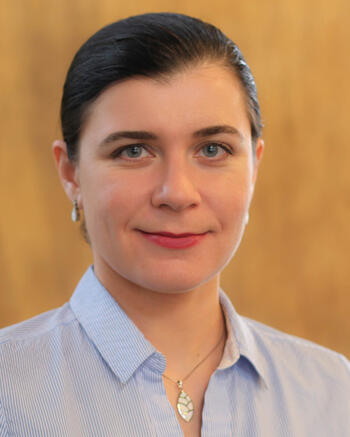
anastasia
Anastassia V. Obydenkova is a regional fellow at Davis Center for Russian and Eurasian Studies Harvard University. From September 2016, she joins the Institute for Regional and International Affairs of the Princeton University. Dr. Obydenkova is also a senior researcher at Higher School of Economics (Moscow); previously she was a senior researcher (Ramon-y-Cajal) of the Ministry of Innovation and Science of Spain, a research fellow at the London School of Economics, and a Fox Fellow at Yale University.

Anastassia V. Obydenkova holds a Ph.D. in Political and Social Science from the European University Institute (2006, Florence, Italy), M.A. from Central European University (Budapest, Hungary), and a Summa Cum Laude Diploma in Political Science and International Relations from Moscow Lomonosov State University; Diploma Cum Laude in Foreign Languages from the Department of Foreign Languages of the Moscow State University. Her main research interests are autocracies, democratization and regime transition, federalism, decentralization, sub-national political regimes, international organizations, and area studies (former Soviet States of Eurasia).

Anastassia V. Obydenkova Regional Fellow at Davis Center for Russian and Eurasian Studies, Harvard University
Seminars
-

Abstract:

The Varieties of Democracy (V-Dem) project is a large-scale data collection effort focused on the construction of a wide-ranging database different understandings of what democracy is (e.g., electoral democracy, liberal democracy, deliberative democracy, and egalitarian democracy). The V-Dem dataset is highly disaggregated (350 specific indicators), and it extends back to 1900 and covers virtually all sovereign and semi-sovereign polities of the world. In the talk, Skaaning will present the different features of the dataset, including the use of expert surveys, the employment of a sophisticated measurement model to take different levels of reliability and bias into account, and the challenge of establishing cross-country equivalence in the scores. The V-Dem dataset will be compared with the well-known democracy measures provided by Freedom House and Polity, and the analytical leverage will be illustrated with a few examples from ongoing research.

Speaker Bio:

Image
svend erik skaaning
Svend-Erik Skaaning is professor of political science at Aarhus University, Denmark, and he is co-principal investigator of the Varieties of Democracy (V-Dem) and Conflict and Democratization (CODE) projects. He has published numerous articles on democratization, civil liberties, and the rule of law in international journal, such as Journal of Democracy, Democratization, Perspectives on Politics, and Political Research Quarterly. Skaaning has also published a number of books on these issues, including Requisites of Democracy (Routledge), Democracy and Democratization in Comparative Perspective (Routledge), and The Rule of Law: Definition, Measures, Patterns, and Causes (Palgrave). Skaaning is currently working on a book manuscript on democracy and dictatorship in the interwar years and papers on relationship between democracy on the one hand and conflict and human development on the other.

Svend-Erik Skaaning Professor of Political Science, Aarhus University, Denmark
Seminars
-

Abstract:

Since the early 1990s, efforts to promote democracy throughout the world have proliferated, yet as many scholars and policy-makers lament, the effects of these democracy promotion programs are poorly understood. This article presents a randomized field experiment of a “real” democracy promotion program undertaken by a prominent international nongovernmental organization in Cambodia. We show that exposure to multi-party town hall meetings has positive effects on citizen knowledge about politics, attitudes towards democracy, and reported political behavior, but has null effects on citizen confidence in the political process. Several months after each intervention, qualitative evidence suggests that problem issues in treatment villages were more likely to be addressed than in control villages. Additionally, results from an election more than a year after the final intervention suggest longer term changes in voting behavior.


Speaker Bio:

Image
susan hyde
Susan D. Hyde is a Professor of Political Science and International Affairs at Yale University. Her research examines attempts by international actors to change politics or policies within sovereign states, particularly in the developing world. She earned her Ph.D. from the University of California, San Diego in 2006. She has held residential fellowships at the Brookings Institution in Washington, D.C. and Princeton University's Niehaus Center for Globalization and Governance.

Her first book, The Pseudo-Democrat's Dilemma: Why Election Observation Became an International Norm, was published by Cornell University Press in 2011, and has received the Chadwick F. Alger Prize for the best book on the subject of international organization and multilateralism, the best book award from the Comparative Democratization section of the American Political Science Association, and Yale’s 2012 Gustav Ranis International Book Prize. Her articles have appeared in the American Journal of Political Science, the ANNALS of the American Academy of Political and Social Sciences, the British Journal of Political Science, Comparative Political Studies, International Organization, The Journal of Politics, Perspectives on Politics, Political Analysis, and World Politics. She is the Executive Director of the EGAP (Evidence in Governance and Politics) research network.

Susan D. Hyde Professor of Political Science and International Affairs, Yale University
Seminars
-

Abstract:

The robots are coming, but whether they will be working on behalf of society or a small cadre of the super-rich is very much in doubt. Driverless cars, robotic helpers, and intelligent agents that promote our interests have the potential to usher in a new age of affluence and leisure — but the transition may be protracted and brutal unless we address the two great scourges of the modern developed world: volatile labor markets and income inequality. Innovative, free-market adjustments to our economic system and social policies are likely to be necessary to avoid an extended period of social turmoil.

Speaker Bio:

Image
jerry kaplan
Jerry Kaplan is widely known as an artificial intelligence expert, technical innovator, bestselling author, and futurist. He is currently a Fellow at the Center for Legal Informatics at Stanford University Law School and teaches philosophy, ethics, and impact of artificial intelligence as a visiting lecturer in the Computer Science department. His latest book, “Humans Need Not Apply: A Guide to Wealth and Work in the Age of Artificial Intelligence,” (Yale University Press) was selected by The Economist magazine as one of the top ten science and technology books of 2015, and is available in Chinese and Korean. His non-fiction narrative “Startup: A Silicon Valley Adventure” was named one of the top ten business books by Business Week, is available in Chinese, Japanese, and Portuguese, and was optioned to Sony Pictures.

Kaplan is the co-founder of four Silicon Valley startups, two of which became publicly traded companies. As an inventor and entrepreneur, Kaplan was a key contributor to the creation of numerous familiar technologies including tablet computers, smart phones, online auctions, and social computer games.

Kaplan holds an MSE and PhD in Computer and Information Science, specializing in Artificial Intelligence, from the University of Pennsylvania, and a BA in History and Philosophy of Science from the University of Chicago.

Jerry Kaplan Fellow at the Center for Legal Informatics, Stanford University
Seminars
News Type
Q&As
Date
Paragraphs

The Program on Arab Reform and Democracy (ARD) at Stanford’s Center on Democracy, Development, and the Rule of Law (CDDRL) is pleased to welcome Egyptian economist Samer Atallah as a visiting scholar for the 2015-16 academic year. Atallah has taught economics at the American University in Cairo (AUC) since 2011, and his work focuses on development economics and political economy of democratization. He is a leading contributor to debates on economic public policy in Egypt, and previously served as an advisor to the 2012 presidential campaign of Abdel-Moneim Abul-Fettouh. He holds a PhD in Economics from McGill University and a Masters Degree in Engineering from University of California, Berkeley. His research on the Arab world has received the support of the Arab Council for Social Sciences and the Economic Research Fund, and spans a wide range of areas, including; education, electoral behavior, public opinion, trade policies, and political institutions in resource dependent economies.

During his residency at CDDRL, Atallah will work on a series of publications examining salient questions in the political economy of the Arab World, including the impact of trade and capital flows on governance in Egypt and Tunisia, and the relationship between education and wealth inequality in Egypt. Atallah’s fellowship is generously funded by a grant from the Carnegie Corporation to support scholars from the Arab world. In the following interview, Atallah discusses his current research projects and their relevance to important public policy debates.


What are your research goals and priorities during your residency at CDDRL?

First of all, I would like to say that I am extremely delighted to be here and excited at this valuable opportunity to collaborate with distinguished scholars at CDDRL and Stanford University, which promises to be a nourishing environment for my research. 

My research agenda during my residency here at CDDRL includes working on two projects, both of which are related to broader questions of democratization and development. This first one is a comprehensive theoretical and empirical study investigating how political and economic institutions evolve as economies become integrated in the global economy. I am interested in understanding how trade and capital flows impact institutions - in the economic sense of the term - and the implications of that impact on political change. For instance, the experiences of economic liberalization in countries like Egypt and Tunisia had unquestionable consequences on the distribution of wealth within their respective societies. Economic liberalization policies had equally important effects on the performance and evolution of their legal, economic governance and political institutions. My own research seeks to investigate how these institutional changes have evolved and the impact of these processes on political change.  The second project is an empirical study examining the relationship between wealth inequality and educational inequality in Egypt.


In what ways do your projects speak to contemporary debates on the origins and trajectories of the Arab uprisings?

I would argue that the divergence in outcomes across the various uprisings in Arab region cannot be understood without seriously thinking about the different historical evolution of political and economic institutions in these countries. These institutions impact the functioning of the economy, its growth, and the social inclusiveness of that growth—factors that were very pertinent to the popular mobilization that advanced the post-2010 uprisings. Certainly these institutions are in part the product of how the economy is managed in a given country in the short-run. At the same time, they are the result of long-term external and internal factors that we need to investigate and understand.

A case in point is the bureaucratic apparatus in Egypt. That sizable bureaucracy is the outcome of a long-standing policy of guaranteed employment, which the government had adopted in the 1960s to secure political support. Whereas economic liberalization policies adopted by President Anwar al-Sadat in the 1970s shrunk the economic role of the state, the size of the bureaucracy, nevertheless, increased significantly. Thus, the question we confront as researchers is why have these institutions remained stagnant and shielded from change despite the fact the nature and priorities of the economy have shifted. This is a major concern in my own research.


What lessons, if any, does your work offer policy-makers involved in the areas of economic and human development?

My second project on inequality and education speaks to one of the central factors that have animated the post-2010 uprisings in the Arab world, namely economic inclusion. In the context of Egypt, educational inequality has contributed greatly to the huge disparities in income and wealth in the country. Exacerbating and reinforcing these disparities is an intergenerational dependency in educational attainment—that is, children of uneducated parents are highly likely to remain uneducated, and by implication, economically underprivileged. This is an area that leaves a lot of room for policy interventions.

But such interventions must be grounded in a better understanding of the causes of this dependency and why it persists. Toward that end, my research seeks to investigate how the type and range of assets in a given household affect schooling and education decisions. Other key determinants of these decisions include access to credit, spatial distribution of educational facilities, and volatility of household income. With a sufficiently nuanced understanding of the problem at hand, all of these factors present potential areas for policy interventions to alter the incentives for school enrolment and quality of education delivery. Such interventions could potentially lead to a better distribution of education and income in the long run.


What are the potentially important research questions that address Arab reform and democracy?

I believe the recent upheavals in the Arab world have pushed us to re-evaluate our understanding of the underlying reasons and implications of political and economic change. This has opened up a multitude of lines of inquiry related to the economic incentives and costs of political change. One such endeavor entails an ambitious effort to compare the evolution of social movements, economic policies, and political structures in the Arab world with other regions of the world. For instance, I think we could draw multiple parallels between the Arab experience and that of many Latin American countries, especially with respect to the role of military institutions, the impact of economic liberalization, social inequality, and civil society movements. Having said that, there is also a lot of work that needs be done in understanding and analyzing the divergent outcomes of the Arab uprisings.

Hero Image
fb img 1430070553548
All News button
1
Authors
News Type
Commentary
Date
Paragraphs

As part of a talk titled "Tunisia's Pathway to Democracy," former Tunisian Ministry of Industry, Energy, and Mines Kamel Ben Naceur spoke at the Program on Arab Reform and Democracy on March 2, 2016 about his experience in the 2014 technocratic government, which was tasked with helping bring the country's democratic transition back on track after a period of political turbulence. Mr. Ben Naceur, who is currently the Director for Sustainability, Technology, and Outlooks at the International Energy Agency, discussed how the technocratic government managed the challenges of organizing the country’s first fully democratic presidential and legislative elections, re-establishing security, and restoring economic fundamentals. He also examined the prospects for democratic and economic development in Tunisia one year after the appointment of the government that resulted from the 2014 elections.


Hero Image
screen shot 2016 03 06 at 5 30 04 pm
All News button
1
Authors
News Type
News
Date
Paragraphs

Stanford foreign policy experts discussed flashpoints around the world at an OpenXChange event this week.


Three of Stanford's most seasoned international affairs experts discussed foreign policy and diplomacy – and practiced a bit of it on stage, too – as they tackled the topics of refugees, Russia and other politically thorny issues at a campus forum March 1.

The event, "When the World Is Aflame," featured Condoleezza Rice, a Stanford political science professor and former U.S. secretary of state; Michael McFaul, director of Stanford's Freeman Spogli Institute for International Studies and former U.S. ambassador to Russia; and Jeremy Weinstein, a Stanford political science professor and former director for the National Security Council.

Janine Zacharia, a Stanford visiting lecturer in communication and former Jerusalem bureau chief and Middle East correspondent for the Washington Post, was the moderator.

The event was hosted by OpenXChange, a campus initiative to provide a forum for students and community members to focus on today's societal challenges.

"So you were resetting some of my policy?" Rice half-jokingly interjected, as McFaul discussed the objectives behind the U.S. trade talks with Russia a few years ago.

"It was not about making friends with the Russians – I want to make that clear," McFaul continued after the laughter in the audience died down. "And it wasn't that we needed to correct the wrongs from the previous period," he said, casting a quick glance over at Rice. "The Russians had an interest in giving the Iranians a nuclear weapon. Our answer was, no, and let's work with them to prevent that."

A series of trade sanctions with Russia were eventually accomplished, but as it turns out, McFaul noted, the political environment has since changed with Russia's aggression in Crimea, Ukraine and Syria.

Today's conflict in Syria was laid about four years ago, the panelists agreed, when the United States decided to aid the rebels and not overtly attack the current regime.

"There were reasons our president and others did not go down that path, but it was an invitation to others to play games in that environment," Weinstein said. "What their endgame is, we don't know."

Rice added that Russian President Vladimir Putin "does not mind countries that basically don't function." As such, "a stable, functioning Syria was never his definition of success."

Zacharia asked, "Are you saying we have yielded the endgame to the Russians in Syria? There is nothing we can do? And we're playing defense?"

"Yes," Rice answered.

"Wait, there is no endgame," McFaul said. "It's not that we yielded the endgame."

"Right," Rice replied.

Though the panelists' opinions differed at times, the trio of political science professors agreed on many points, including that international order is being tested, and that the refugee crisis is an overwhelming problem – one that the United States should help resolve.

"I'm a firm believer that America has a moral obligation to take [refugees]," Rice said. "But let's remember that we have to have a way to take them that is actually going to work within the system."

"We have a humanitarian architecture that simply isn't up to the task," Weinstein said. Securing congressional funding to reform the system will be a challenge.

What's more problematic, McFaul added, is that the current political rhetoric about how the United States should handle refugees is "based on fear."

"We're not having a rational debate about this in my opinion," McFaul said. "We have to fill the debate with empirical facts instead."

Public fears will continue as long as extreme Islamic State terrorist groups remain influential, "inspiring lone wolves like [those] in San Bernardino," Rice said, referring to the December 2015 terrorist attack there that killed 14 and injured 22 people.

"Somebody has got to defeat ISIS in its crib," Rice said. "They march in columns; they don't hide in caves like al-Qaeda. If CBS News can find them, then the American military can find them."

The tougher challenge, however, will be the task of influencing sectarian politics and creating a more stable state in the long term, Weinstein said.

Stanford – with its cache of expertise – should strive to shape the national dialogue with concrete facts and analyses, McFaul said. Inspiring students and giving them the foundational tools to become the new generation of policy leaders is also part of that, he said. Adding a course on Russian politics would also be an improvement, he said.

Weinstein is a senior fellow at the Freeman Spogli Institute. Rice, a former Stanford provost, is the Denning Professor in Global Business and the Economy at Stanford Graduate School of Business and the Thomas and Barbara Stephenson Senior Fellow at the Hoover Institution.

The panelists urged students to gain a deep knowledge of the areas and issues they care about.

"Know your facts," Rice emphasized.

"When you're making policy decisions at the table, the people who understand these places and understand the political dynamics – those are the people whose voices are second to none around the table," Weinstein said.

"And we need to get you prepared for that in a more robust way," McFaul said, inviting students to pass any ideas about this to him.

In terms of career choices, "there's nothing greater" than public service, he said. "Sometimes I would get goose pimples when I could stand in front of Russians with the American flag behind me, representing the United States of America."

Hero Image
16193 condi mike L.A. Cicero
All News button
1
Subscribe to Governance