Governance

FSI's research on the origins, character and consequences of government institutions spans continents and academic disciplines. The institute’s senior fellows and their colleagues across Stanford examine the principles of public administration and implementation. Their work focuses on how maternal health care is delivered in rural China, how public action can create wealth and eliminate poverty, and why U.S. immigration reform keeps stalling. 

FSI’s work includes comparative studies of how institutions help resolve policy and societal issues. Scholars aim to clearly define and make sense of the rule of law, examining how it is invoked and applied around the world. 

FSI researchers also investigate government services – trying to understand and measure how they work, whom they serve and how good they are. They assess energy services aimed at helping the poorest people around the world and explore public opinion on torture policies. The Children in Crisis project addresses how child health interventions interact with political reform. Specific research on governance, organizations and security capitalizes on FSI's longstanding interests and looks at how governance and organizational issues affect a nation’s ability to address security and international cooperation.

-

On 11/29/18 a group of leading experts on China and American foreign policy released “Chinese Influence and American Interests: Promoting Constructive Vigilance,” a report documenting Chinese efforts to influence American society. The report examines China's efforts to influence American institutions, including state and local governments, universities, think tanks, media, corporations, and the Chinese-American community, and differentiates between legitimate efforts--like public diplomacy--and improper interference, which demands greater awareness and a calibrated response.

In this special roundtable, two of the report’s co-editors, Orville Schell and Larry Diamond, and a Taiwanese scholar, Ji-Jen Hwang, will discuss the findings of the report and compare the forms and effects of Chinese “sharp power” in the United States with its practice in and toward Taiwan.

This event is co-sponsored by the US-Asia Security Initiative in the Asia-Pacific Research Center, and the Center on Democracy, Development, and the Rule of Law.  

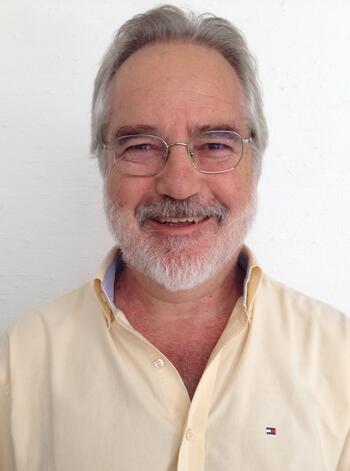
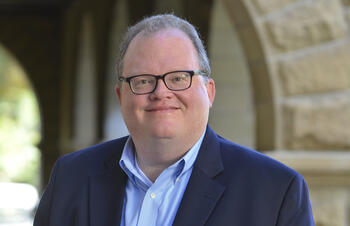
Orville Schell

Orville Schell is the Arthur Ross Director of the Center on U.S.-China Relations at Asia Society in New York. He is a former professor and Dean at the University of California, Berkeley’s Graduate School of Journalism. Schell was born in New York City, graduated Magna Cum Laude from Harvard University in Far Eastern History, was an exchange student at National Taiwan University in the 1960s, and earned a Ph.D. (Abd) at University of California, Berkeley in Chinese History. He worked for the Ford Foundation in Indonesia, covered the war in Indochina as a journalist, and has traveled widely in China since the mid-70s.

Schell is the author of fifteen books, ten of them about China, and a contributor to numerous edited volumes. His most recent books are: Wealth and Power, China’s long March to the 21st Century; Virtual Tibet; The China Reader: The Reform Years; and Mandate of Heaven: The Legacy of Tiananmen Square and the Next Generation of China’s Leaders. He has written widely for many magazine and newspapers, including The Atlantic MonthlyThe New YorkerTime, The New RepublicHarpersThe NationThe New York Review of BooksWiredForeign Affairs, the China Quarterly, and the New York Times, the Washington Post and the Los Angeles Times.

He is a Fellow at the Weatherhead East Asian Institute at Columbia University, a Senior Fellow at the Annenberg School of Communications at USC and a member of the Council on Foreign Relations. Schell is also the recipient of many prizes and fellowships, including a Guggenheim Fellowship, the Overseas Press Club Award, and the Harvard-Stanford Shorenstein Prize in Asian Journalism.

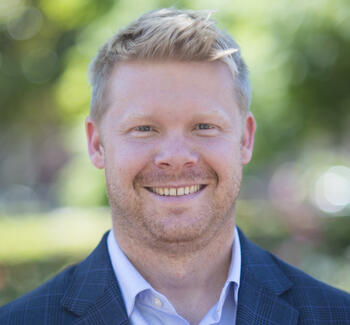
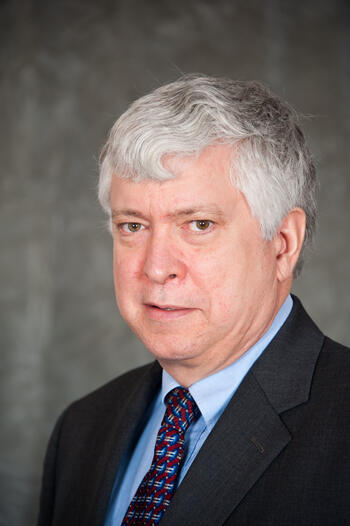
Larry Diamond

Larry Diamond is a senior fellow at the Hoover Institution and at the Freeman Spogli Institute for International Studies. For more than six years, he directed FSI’s Center on Democracy, Development, and the Rule of Law, where he now leads its Program on Arab Reform and Democracy and its Global Digital Policy Incubator. He is the founding co-editor of the Journal of Democracy and also serves as Senior Consultant at the International Forum for Democratic Studies of the National Endowment for Democracy. His research focuses on democratic trends and conditions around in the world, and on policies and reforms to defend and advance democracy.  His 2016 book, In Search of Democracy, explores the challenges confronting democracy and democracy promotion, gathering together three decades of his writing and research, particularly on Africa and Asia.  He has just completed a new book on the global crisis of democracy, which will be published in 2019, and is now writing a textbook on democratic development.

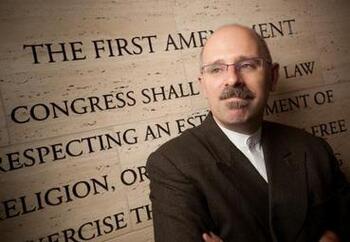
Karl Eikenberry

is Director of the U.S.-Asia Security Initiative and faculty member at the Shorenstein Asia-Pacific Research Center, faculty member of the Center for International Security and Cooperation, and Professor of Practice at Stanford University. He is also an affiliate with the FSI Center for Democracy, Development, and Rule of Law, and The Europe Center.

Prior to his arrival at Stanford, he served as the U.S. Ambassador to Afghanistan from 2009 until 2011. Before appointment as Chief of Mission on Kabul, Ambassador Eikenberry had a thirty-five year career in the United States Army, retiring in April 2009 with the rank of Lieutenant General. His military operational posts included commander and staff officer with mechanized, light, airborne, and ranger infantry units in the continental U.S., Hawaii, Korea, Italy, and Afghanistan as the Commander of the American-led Coalition forces. He held various policy and political-military positions, including Deputy Chairman of the North Atlantic Treaty Organization (NATO) Military Committee in Brussels, Belgium; Director for Strategic Planning and Policy for U.S. Pacific Command at Camp Smith, Hawaii; U.S. Security Coordinator and Chief of the Office of Military Cooperation in Kabul, Afghanistan; Assistant Army and later Defense Attaché at the United States Embassy in Beijing, China; Senior Country Director for China, Taiwan, Hong Kong and Mongolia in the Office of the Secretary of Defense; and Deputy Director for Strategy, Plans, and Policy on the Army Staff.

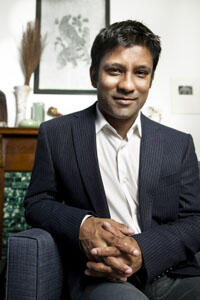
Ji-Jen Hwang

Dr. Ji-Jen Hwang is a Research Scholar in the Institute for East Asian Studies (IEAS) at UC Berkeley. Before that, he was a Professor & Program Director of the International Master Program in Strategic Studies at the National Defense University in the Republic of China (Taiwan). In 2014-15, Dr. Hwang was a visiting fellow with the Freeman Chair in China Studies at the Center for Strategic & International Studies (CSIS) located in Washington D.C. He also completed an internship at the United States Library of Congress while doing his Master’s coursework. A native of Taiwan, he holds a Ph.D. in politics from the University of Newcastle upon Tyne in the U.K., as well as a Masters in Library Science & Information Studies from the University of North Carolina. He has been working for a non-profit Think Tank based in Washington D.C. area as a Deputy Managing Director since April 2018. His current research is focused on relations between the United States, China, and Taiwan, in which he particularly aims to study how social media and the features in cyberspace have political impacts on these relations. He is well-known known as an expert in this area and been invited as a special lecturer to think tanks such as CSIS in Washington D.C., ASPI in Canberra, NATO, GlobalSec in Europe, and INSS in Seoul.


Philippines Conference Room
Encina Hall, 3rd Floor
616 Serra Mall, Stanford, CA 94305

Orville Schell
Larry Diamond
Ji-Jen Hwang
Karl Eikenberry
Panel Discussions
Paragraphs

The emergence of a global digital ecosystem has been a boon for global communication and the democratization of the means of distributing information. The internet, and the social media platforms and web applications running on it, have been used to mobilize pro-democracy protests and give members of marginalized communities a chance to share their voices with the world. However, more recently, we have also seen this technology used to spread propaganda and misinformation, interfere in election campaigns, expose individuals to harassment and abuse, and stir up confusion, animosity and sometimes violence in societies. Even seemingly innocuous digital technologies, such as ranking algorithms on entertainment websites, can have the effect of stifling diversity by failing to reliably promote content from underrepresented groups. At times, it can seem as if technologies that were intended to help people learn and communicate have been irreparably corrupted. It is easy to say that governments should step in to control this space and prevent further harms, but part of what helped the internet grow and thrive was its lack of heavy regulation, which encouraged openness and innovation. However, the absence of oversight has allowed dysfunction to spread, as malign actors manipulate digital technology for their own ends without fear of the consequences. It has also allowed unprecedented power to be concentrated in the hands of private technology companies, and these giants to act as de facto regulators with little meaningful accountability. So, who should be in charge of reversing the troubling developments in our global digital spaces? And what, if anything, can be done to let society keep reaping the benefits of these technologies, while protecting it against the risks?

All Publications button
1
Publication Type
Journal Articles
Publication Date
Authors
Eileen Donahoe
Authors
News Type
News
Date
Paragraphs


The two-day forum, part of a project of the American Academy of Arts and Sciences, led by the Freeman Spogli Institute’s Karl Eikenberry and Stephen Krasner, gathered experts to examine trends in civil wars and solutions moving forward.   


Image
Attendees at a two-day forum, part of a project of the American Academy of Arts and Sciences

The Council on Foreign Relations presently tracks six countries in a state of civil war, including three (South Sudan, Afghanistan, and Yemen) where the situation is currently worsening. Furthermore, three states (Central African Republic, Myanmar, and Nigeria) are experiencing sectarian violence with the potential to become larger conflicts. With two months still remaining in 2018, the combined fatalities in Afghanistan, Syria, and Yemen alone is fast approaching 100,000 for the year.

It was against this backdrop that Shorenstein APARC’s U.S.-Asia Security Initiative (USASI), the American Academy of Arts and Sciences (AAAS), and the School for International Studies at Peking University recently co-hosted the security workshop “Civil Wars, Intrastate Violence, and International Responses.” Held in Beijing, on October 22-23, the workshop brought together thirty-five U.S. and international experts to gain a wider perspective on intrastate violence and consider the possibilities for, and limits of, intervention. The workshop is the latest activity of the AAAS project on Civil Wars, Violence, and International Responses, chaired by Ambassador Karl Eikenberry, director of USASI, and by Stephen Krasner, senior fellow at the Freeman Spogli Institute for International Studies (FSI) and professor of international relations.

“Some of the major discussion topics included the appropriate political and economic development models to apply to fragile states recovering from internal conflict, justifications for intervention, and the likely impact of great power competition on the future treatment of civil wars." - Karl Eikenberry

Workshop participants included academics and professionals with expertise in political science, global health, diplomacy, refugee field work, United Nations, and the military. Countries represented at the table included the United States, Ethiopia, France, and China. Throughout the two-day session, they examined three crucial questions: What is the scope of intrastate conflicts and civil wars, and to what extent is it attributable to domestic or international factors? What types of threats to global security emanate from state civil wars? What policy options are available to regional powers and the international community to deal with such threats?


Image
USASI Director Karl Eikenberry addresses one of the sessions

USASI Director Karl Eikenberry addresses one of the sessions

China’s Emerging Role in Addressing Intrastate Violence

The workshop’s timing and location was prescient. Over the past two decades, China’s global exposure–through trade, investment, and financing–has increased dramatically. Coupled with a growing number of its citizens living abroad, China’s equity in other states has reached the point where it has a direct interest in those experiencing or are at risk of political instability and internal violence. Indeed, through its ambitious Belt and Road Initiative, China has the opportunity to help stabilize fragile states by stimulating economic development.

“The workshop revealed, at least for me, that China is backing away from its absolute defense of sovereignty and non-intervention,” said Stephen Krasner. “As Chinese interests have expanded around the world, and as both its investments and the number of its citizens living abroad have increased, the Chinese have become more concerned with political conditions in weakly governed countries.”

With China’s growing policy and academic interests in addressing civil wars and intrastate violence, as well as its higher international profile in places like United Nations peacekeeping operations, the Beijing event provided an excellent opportunity for Chinese experts to exchange views with their international colleagues.

Paul H. Wise, MD, MPH; Senior Fellow at Stanford Health Policy

Paul H. Wise, MD, MPH; Senior Fellow at Stanford Health Policy

Where We are Today, Where We Go Tomorrow

The Beijing workshop was arranged into four sessions, with themes focusing on trends in intrastate violence, the threats it poses to international security, the limits of intervention, and advice to policymakers.

Each panel included presentations of prepared papers, moderator comments, and an open discussion by all participants. A fifth and final session provided an opportunity to summarize the preceding discussions. The workshop then closed out with an open conversation, where participants offered insight and policy recommendations developed over the preceding two days of dialogue.

Image
Martha Crenshaw seated at round table
“The workshop,” observed Martha Crenshaw (shown above), a Senior Fellow at FSI, “was a unique opportunity to exchange views with Chinese colleagues on the subject of civil conflict in the contemporary world. A valuable learning experience for all of us."

The "Civil Wars, Intrastate Violence, and International Responses” workshop marks the second phase of the AAAS project by the same name that launched in 2015. The first phase of the project culminated in the publication of 28 essays across two volumes of the AAAS quarterly journal Dædalus. The ongoing second phase consists of a series of roundtables and workshops in which project participants engage with academics and with government and international organization officials to build a larger conceptual understanding of the threats posed by the collapse of state authority associated with civil wars, and to contribute to current policymaking. Project activities have included meetings with the United Nations leadership and staff; academic activities in the United States; sessions with the U.S. executive and legislative branches; and a visit to Nigeria.

Throughout the workshop, Chatham House Rule of non-attribution applied to all dialogue. A workshop report will be published by the co-hosts in early 2019.

The U.S.-Asia Security Initiative is part of Stanford University’s Walter H. Shorenstein Asia-Pacific Research Center (APARC). Led by former U.S. Ambassador and Lieutenant General (Retired) Karl Eikenberry, USASI seeks to further research, education, and policy relevant dialogues at Stanford University on contemporary Asia-Pacific security issues.

March 1, 2019 update: the workshop report is now available online. Download the report >> 

Group photo of Participants in the “Civil Wars, Intrastate Violence, and International Responses” workshop

Participants in the “Civil Wars, Intrastate Violence, and International Responses” workshop

Hero Image
Karl Eikeberry at Civil Wars, Intrastate Violence, and International Response Workshop
All News button
1
Authors
News Type
News
Date
Paragraphs

How can we make sense of the tragedy in Syria? Northwestern University political scientist Wendy Pearlman has conducted open-ended interviews with more than 300 displaced Syrians across the Middle East and Europe from 2012 to 2017. She has brought together these personal stories in the acclaimed new book, We Crossed a Bridge and It Trembled: Voices from Syria (HarperCollins 2017). In a talk dated February 7, 2018, Pearlman shared a selection of voices from the book, along with her own commentary and analysis, to explain the origins and evolution of the Syrian conflict, as well as what it has been like for the ordinary people who have lived its unfolding. Co-hosted by the Program on Arab Reform and Democracy and the Abbasi Program in Islamic Studies, the talk offered a humanistic interpretation of the current conflict in Syria and how it has transformed those who have experienced it. The video of the talk is available through the link below.


Hero Image
screen shot 2018 11 07 at 7 25 31 pm
All News button
1
-

Author Yochai Benkler sits down with Kelly Born to discuss Network Propaganda: Manipulation, Disinformation, and Radicalization in American Politics. According to the New Yorker, the Washington conventional wisdom presupposes a kind of symmetry between our polarized political parties. Liberals and conservatives, it is said, live in separate bubbles, where they watch different television networks, frequent different Web sites, and absorb different realities. The implication of this view is that both sides resemble each other in their twisted views of reality. Network Propaganda challenges that received wisdom through the most comprehensive study yet published on media coverage of American presidential politics from the start of the election cycle in April 2015 to the one year anniversary of the Trump presidency. Analyzing millions of news stories together with Twitter and Facebook shares, broadcast television and YouTube, the book provides a comprehensive overview of the architecture of contemporary American political communications. Through data analysis and detailed qualitative case studies of coverage of immigration, Clinton scandals, and the Trump Russia investigation, the book finds that “the right-wing media ecosystem differs categorically from the rest of the media environment,” and has been much more susceptible to “disinformation, lies and half-truths.”


Register for this free event online at:  pacscenter.stanford.edu/event


6:00—6:30 PM  Doors Open and Pre-Reception

6:30—7:30 PM  Program 7:30—8:00 PM

Q&A 8:00—8:30 PM  Book Signing and Post-Reception
 

PAUL BREST HALL 555 SALVATIERRA WALK STANFORD, CA 94305

Yochai Benkler Berkman Professor of Entrepreneurial Legal Studies at Harvard Law School
Kelly Born Program Officer, Madison Initiative, William and Flora Hewlett Foundation
Seminars
-

This event will be livestreamed. Click here to access the livestreaming page.

ABSTRACT

The clampdown on political dissent inside the Kingdom of Saudi Arabia (KSA) has attracted intense attention in the wake of the recent murder of journalist and opinion-shaper Jamal Khashoggi in Turkey earlier this month. This panel analyzes the murder of Khashoggi in the context of the foreign and domestic policies of KSA’s de facto ruler, Crown Prince Mohammed bin Salman. It also seeks to understand the implications of this event for freedom of expression in the Arab world, U.S.-Saudi relations, and the future of stability inside the Kingdom.


PANELISTS


Moderator: 
Larry Diamond 
Senior Fellow, FSI; 
Senior Fellow, Hoover Institution, 
Stanford University


Janine Zacharia 
Journalist; 
Carlos Kelly McClatchy Visiting Lecturer, Communication, 
Stanford University


Hesham Sallam 
Associate Director, ARD, 
Stanford University


Image
larry diamond 1

Larry Diamond is a senior fellow at the Hoover Institution and at the Freeman Spogli Institute for International Studies. For more than six years, he directed FSI’s Center on Democracy, Development, and the Rule of Law, where he now leads its Program on Arab Reform and Democracy and its Global Digital Policy Incubator. He is the founding co-editor of the Journal of Democracy and also serves as Senior Consultant at the International Forum for Democratic Studies of the National Endowment for Democracy. His research focuses on democratic trends and conditions around in the world, and on policies and reforms to defend and advance democracy.  His 2016 book, In Search of Democracy, explores the challenges confronting democracy and democracy promotion, gathering together three decades of his writing and research, particularly on Africa and Asia.  He has just completed a new book on the global crisis of democracy, which will be published in 2019, and is now writing a textbook on democratic development.


Image
jqa5a3jc 400x400

Janine Zacharia is the Carlos Kelly McClatchy Visiting Lecturer at Stanford University where she teaches journalism classes, including news reporting and writing fundamentals, and foreign correspondence. She was the Jerusalem Bureau Chief and Middle East Correspondent for the Washington Post from December 2009 through April 2011. During her time at the Washington Post, she reported widely throughout the Middle East beyond Israel, the West Bank and Gaza Strip, including assignments in Egypt, Jordan, Lebanon, Iraq, Bahrain, Saudi Arabia, the UAE and Turkey. She reported on the uprisings in Egypt and Bahrain as they began in early 2011. From 2005-2009, Ms. Zacharia worked as chief diplomatic correspondent for Bloomberg News based in Washington. During this period, she traveled to more than 40 countries with then U.S. Secretary of State Condoleezza Rice and other senior administration and military officials. Ms. Zacharia’s earlier career included five years as Washington bureau chief for the Jerusalem Post, and five years in Jerusalem working for various news outlets including the Reuters news agency. She was a regular contributor to the New Republic and has appeared routinely as a cable news analyst on MSNBC, CNN and other networks. She was also a regular panelist on Gwen Ifill’s Friday evening roundtable, Washington Week in Review. During the 2008-2009 academic year, Ms. Zacharia was awarded a Knight Journalism Fellowship at Stanford University. She earned her Bachelor’s of Arts degree in Literary Studies from Middlebury College and is originally from Long Island.


Image
hesham sallam headshot

Hesham Sallam is a Research Associate at CDDRL and serves as the Associate-Director of the Program on Arab Reform and Democracy. He is also a co-editor of Jadaliyya ezine and a former program specialist at the U.S. Institute of Peace. His research focuses on Islamist movements and the politics of economic reform in the Arab World. Sallam’s research has previously received the support of the Social Science Research Council and the U.S. Institute of Peace. Past institutional affiliations include Middle East Institute, Asharq Al-Awsat, and the World Security Institute. He is editor of Egypt's Parliamentary Elections 2011-2012: A Critical Guide to a Changing Political Arena (Tadween Publishing, 2013). Sallam received a Ph.D. in Government (2015) and an M.A. in Arab Studies (2006) from Georgetown University, and a B.A. in Political Science from the University of Pittsburgh (2003).


*An earlier list of speakers included Nora Doaiji, who could not participate on the panel due to unforeseen scheduling conflicts.


[[{"fid":"233836","view_mode":"crop_870xauto","fields":{"format":"crop_870xauto","field_file_image_description[und][0][value]":"","field_file_image_alt_text[und][0][value]":false,"field_file_image_title_text[und][0][value]":false,"field_credit[und][0][value]":"","field_caption[und][0][value]":"","thumbnails":"crop_870xauto"},"link_text":null,"type":"media","field_deltas":{"10":{"format":"crop_870xauto","field_file_image_description[und][0][value]":"","field_file_image_alt_text[und][0][value]":false,"field_file_image_title_text[und][0][value]":false,"field_credit[und][0][value]":"","field_caption[und][0][value]":"","thumbnails":"crop_870xauto"}},"attributes":{"class":"media-element file-crop-870xauto","data-delta":"10"}}]]


William J. Perry Conference Room,
Encina Hall, 2nd Floor, 616 Serra St,
Stanford, CA 94305

Panel Discussions
-
Has the age of party democracy passed? Parties throughout advanced democracies face challenges of voter distrust, declining associational ties, and the rise of far-right and populist movements. This conference brings together scholars of American and comparative parties and party systems to understand how and why parties have evolved, and to ask what role parties play in twenty-first century governance. 
Browse the conference webpage to learn more. 


Conferences
News Type
Commentary
Date
Paragraphs

"I really do think that the upcoming election in November is one of the most important in American history." 

NPR's Michel Martin speaks with Francis Fukuyma and Norman Eisen about what Brett Kavanaugh's confirmation means for the state of America. Listen here

Hero Image
ya qecpg
All News button
1
-

ABSTRACT

In 2011, as the Arab uprisings spread across the Middle East, Jordan remained more stable than any of its neighbors. Despite strife at its borders and an influx of refugees connected to the Syrian civil war and the rise of ISIS, as well as its own version of the Arab Spring with protests and popular mobilization demanding change, Jordan managed to avoid political upheaval. How did the regime survive in the face of the pressures unleashed by the Arab uprisings? What does its resilience tell us about the prospects for reform or revolutionary change?

In “Jordan and the Arab Uprisings,” Curtis R. Ryan explains how Jordan weathered the turmoil of the Arab Spring. Crossing divides between state and society, government and opposition, Ryan analyzes key features of Jordanian politics, including Islamist and leftist opposition parties, youth movements, and other forms of activism, as well as struggles over elections, reform, and identity. He details regime survival strategies, laying out how the monarchy has held out the possibility of reform while also seeking to coopt and contain its opponents. Ryan demonstrates how domestic politics were affected by both regional unrest and international support for the regime, and how regime survival and security concerns trumped hopes for greater change. While the Arab Spring may be over, Ryan shows that political activism in Jordan is not, and that struggles for reform and change will continue. Drawing on extensive fieldwork and interviews with a vast range of people, from grassroots activists to King Abdullah II, “Jordan and the Arab Uprisings” is a definitive analysis of Jordanian politics before, during, and beyond the Arab uprisings.


SPEAKER BIO

Image
jordan and the arab uprisings ryan
Curtis Ryan joined the Department of Government and Justice Studies at Appalachian State University in 2002. He received his B.A. in history and political science from Drew University, and his M.A. and Ph.D. in political science from the University of North Carolina at Chapel Hill. His areas of interest and expertise include international relations and foreign policy; international and regional security; comparative politics; Middle East politics; and inter-Arab relations and alliance politics. Ryan served as a Fulbright Scholar (1992–93) at the University of Jordan’s Center for Strategic Studies and was twice named a Peace Scholar by the United States Institute of Peace. In addition to his contributions to the Middle East Report, Ryan’s articles on Middle East politics have been published in the Middle East Journal, The British Journal of Middle East Studies, Studies in Ethnicity and Nationalism, World Politics Review, Middle East Insight, Arab Studies Quarterly and many others.He is the author of Jordan in Transition: From Hussein to Abdullah (Lynne Rienner Publishers, 2002) and Inter-Arab Alliances: Regime Security and Jordanian Foreign Policy (University Press of Florida, 2009).

William J. Perry Conference Room,
Encina Hall, 2nd Floor, 616 Serra St,
Stanford, CA 94305

Curtis Ryan Professor of Political Science Appalachian State University
Seminars
Subscribe to Governance