Governance

FSI's research on the origins, character and consequences of government institutions spans continents and academic disciplines. The institute’s senior fellows and their colleagues across Stanford examine the principles of public administration and implementation. Their work focuses on how maternal health care is delivered in rural China, how public action can create wealth and eliminate poverty, and why U.S. immigration reform keeps stalling. 

FSI’s work includes comparative studies of how institutions help resolve policy and societal issues. Scholars aim to clearly define and make sense of the rule of law, examining how it is invoked and applied around the world. 

FSI researchers also investigate government services – trying to understand and measure how they work, whom they serve and how good they are. They assess energy services aimed at helping the poorest people around the world and explore public opinion on torture policies. The Children in Crisis project addresses how child health interventions interact with political reform. Specific research on governance, organizations and security capitalizes on FSI's longstanding interests and looks at how governance and organizational issues affect a nation’s ability to address security and international cooperation.

Room 212, Crown Quadrangle
559 Nathan Abbott Way
Stanford, CA 94305-8610

650.736.8771
0
Lecturer in Residence, Stanford Law School
jamie-oconnell-3-400x400.jpg

Jamie O’Connell is a Lecturer in Residence at Stanford Law School. He teaches and writes on political and legal development and has particular expertise in law and development, transitional justice, democratization, post-conflict reconstruction, and business and human rights. Until 2018, he was a Senior Fellow of the Honorable G. William and Ariadna Miller Institute for Global Challenges and the Law at the University of California, Berkeley, School of Law, as well as a Lecturer in Residence, teaching both law and undergraduate students.

O’Connell has worked on human rights and development in over a dozen countries in Africa, the Americas, Asia, and Europe, under the auspices of the United Nations, local and international non-governmental organizations, and academic institutions. He co-founded International Professional Partnerships for Sierra Leone, a non-governmental organization that worked with the government of Sierra Leone to enhance the performance of its agencies and civil servants. Earlier in his career, O’Connell studied international business as a researcher at Harvard Business School, publishing numerous case studies. He has directed the Human Rights Clinic at the University of Sierra Leone and taught as a visitor at Harvard Law School and Columbia Law School. O’Connell clerked for the Honorable James R. Browning on the U.S. Court of Appeals for the Ninth Circuit and is admitted to practice in California (inactive status) and New York. In 2016-17, he was a visiting professor and Fulbright Senior Scholar at the University of Valencia (Spain) Faculty of Law.

O’Connell’s scholarship includes “Representation, Paternalism, and Exclusion: The Divergent Impacts of the AKP’s Populism on Human Rights In Turkey” in Human Rights in a Time of Populism: Challenges and Responses (2020); “When Prosecution Is Not Enough: How the International Criminal Court Can Prevent Atrocity and Advance Accountability by Emulating Regional Human Rights Institutions” (with James L. Cavallaro, Yale Journal of International Law, 2020); “Common Interests, Closer Allies: How Democracy in Arab States Can Benefit the West” (Stanford Journal of International Law, 2012); “Empowering the Disadvantaged after Dictatorship and Conflict: Legal Empowerment, Transitions and Transitional Justice,” in Legal Empowerment: Practitioners’ Perspectives (2010); “East Timor 1999,” in The Responsibility to Protect: Moving the Campaign Forward (2007); “Gambling with the Psyche: Does Prosecuting Human Rights Violators Console Their Victims?” (Harvard International Law Journal, 2005); “Here Interest Meets Humanity: How to End the War and Support Reconstruction in Liberia, and the Case for Modest American Leadership” (Harvard Human Rights Journal, 2004); and Sierra Leone’s Truth and Reconciliation Commission and Special Court: A Citizen’s Handbook (with Paul James-Allen and Sheku B.S. Lahai, 2003).

CDDRL Affiliated Scholar
Date Label
-

Abstract:

In dominant-party states, why do individuals vote in elections with foregone conclusions when they are neither bought nor coerced? I propose that a social norm of voting motivates turnout in these least-likely contexts. Motivated by the belief that regimes reward high turnout with public goods, citizens view elections as an opportunity for community-wide benefit and use social sanctions to enforce the norm. Using lab-in-the-field voting experiments together with survey data, I document the strong influence of a social norm of voting in two semi-authoritarian states in east Africa, Tanzania and Uganda. I find that norm compliance is driven by those most dependent on their local community. This project helps to explain high turnout in elections, individual-level variation in voting behavior, and authoritarian endurance. The results suggest that rather than government accountability, elections may instead be about local accountability to one's community.


Speaker Bio:

Image
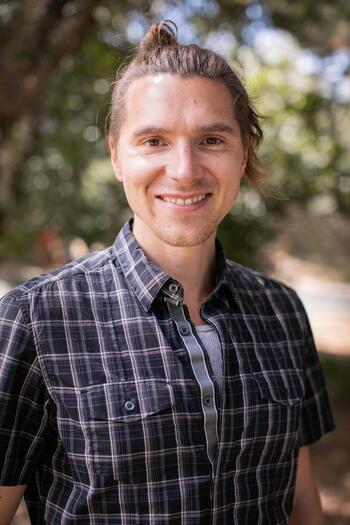
leah1 small
Leah is a postdoctoral research fellow at the Institute for Advanced Study in Toulouse, France and a research affiliate at MIT GOV/LAB. She received her PhD in political science from MIT in 2018. Leah studies political behavior in sub-Saharan Africa and examines questions of citizen engagement, compliance, and government accountability. Her current book project investigates how social norms of voting help to explain high turnout in dominant-party states in East Africa. She is also working on a project on urban informality in Lagos, Nigeria. Before starting graduate school, Leah worked as the program manager at Columbia University’s Earth Institute in Nigeria.


0
CDDRL Postdoctoral Scholar, 2020-21
thumbnail_leah1_small.jpg

My research centers on topics in comparative politics and the political economy of development. I focus on the micro-foundations of political behavior to gain leverage on macro-political questions. How do autocrats survive? How can citizen-state relations be improved and government accountability strengthened? Can shared identities mitigate out-group animosity? Adopting a multi-method approach, I use lab-in-the-field and online experiments, surveys, and in-depth field research to examine these questions in sub-Saharan Africa and the US. My current book project reexamines the role of elections in authoritarian endurance and explains why citizens vote in elections with foregone conclusions in Tanzania and Uganda. Moving beyond conventional paradigms, my theory describes how a social norm of voting and accompanying social sanctions from peers contribute to high turnout in semi-authoritarian elections. In other ongoing projects, I study how national and pan-African identification stimulated through national sports games influence attitudes toward refugees, the relationship between identity, emotions, and belief in fake news, and how researchers can use Facebook as a tool for social science research.

postdoctoral research fellow at the Institute for Advanced Study in Toulouse, France
Seminars
-

Abstract:

Using survey data from a variety of sources, I examine how multiple conceptions of American nationhood shaped respondents’ voting preferences in the 2016 U.S. presidential election and how the election outcome built on long-term changes in the distribution of nationalist beliefs in the U.S. population. The results suggest that nationalist beliefs constituted important cultural cleavages that were effectively mobilized by candidates from both parties. In particular, exclusionary varieties of nationalism were associated with Trump support in the Republican primary and the general election, while disengagement from the nation was predictive of Sanders support in the Democratic primary. Furthermore, over the past twenty years, nationalism has become sorted by party: Republicans have become predominantly ethno-nationalist, while Democrats have increasingly embraced a creedal conception of nationhood. The resulting mutual reinforcement of nationalist cleavages with other sources of distinction is likely to shape future elections and threaten the stability of U.S. democracy.


Speaker Bio:

Image
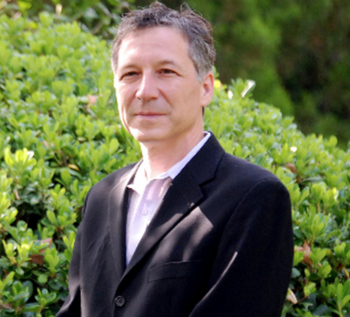
bonikowski   head shot   full size
Bart Bonikowski is Associate Professor of Sociology at Harvard University, Resident Faculty at the Minda de Gunzburg Center for European Studies, a Faculty Affiliate of the Weatherhead Center for International Affairs (where he co-directs the Research Cluster on Global Populism / Challenges to Democracy), and a 2018-19 Lenore Annenberg and Wallis Annenberg Fellow in Communication at Stanford University's Center for Advanced Study in the Behavioral Sciences. Relying on survey methods, computational text analysis, and experimental research, his work applies insights from cultural sociology to the study of politics in the United States and Europe, with a particular focus on nationalism, populism, and the rise of the radical right. His research has appeared in the American Sociological Review, Annual Review of Sociology, Social Forces, British Journal of Sociology, European Journal of Political Research, International Journal of Comparative Sociology, Brown Journal of World Affairs, and a number of other peer-reviewed journals and edited volumes.
 
Bart Bonikowski Associate Professor of Sociology at Harvard University
Seminars
News Type
Commentary
Date
Paragraphs

In this New York Times opinion piece on the global implications of Trump's leadership, columnist Thomas L. Friedman quotes Larry Diamond who points out that Trump's presence in the White House encourages leader's in African countries, such as Museveni in Uganda, to rule as long and as brutally as they want.  


Read it here.

Hero Image
unnamed 4
All News button
1
Subscribe to Governance