Science and Technology

Image
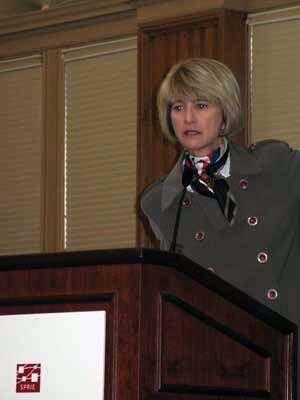
This two-day international forum at Stanford University brought together experts from academia, government, and industry to analyze leading cases of current institutional models for innovation in smart and green industries. Cases included multi-company collaborations, public-private partnerships, and government-funded consortia. To enable more focus and comparative analysis, sectors selected for focus included the built environment and intelligent transportation.

FORUM Speakers & DISCUSSANTS (listed in alphabetical order)

  • Rohit T. Aggarwala, Special Advisor to the Chair, C40 Cities Climate Leadership Group
  • Alan Beebe, Managing Director, China Greentech Initiative
  • Sven Beiker, Executive Director, Center for Automotive Research at Stanford (CARS)
  • Ann Bordetsky, North America Market Development, Better Place
  • Dennis Bracy, cEO, US-China Clean Energy Forum
  • Curtis R. Carlson, President and CEO, SRI International
  • Jaching Chou, Senior Transportation Analyst, Institute of Transportation
  • Stephen J. Eglash, Executive Director, Energy and Environment Affiliates Program, Stanford University
  • Henry Etzkowitz, President of Triple Helix Association; Senior Researcher, Human Sciences and Technology Advanced Research Institute (H-STAR), Stanford University; Visiting Professor at University of Edinburgh Business School
  • Gordon Feller, Director of Urban Innovation, Cisco Systems
  • TJ Glauthier, President, TJG Energy Associates, LLC
  • Russell Hancock, President & Chief Executive Officer, Joint Venture: Silicon Valley Network
  • Ted Howes, Business for Social Responsibility
  • Asim Hussain, Director of Product Marketing, Bloom Energy
  • Paul Chao-Chia Huang, Deputy General Director, Service Systems Technology Center, Industrial Technology Research Institute, Taiwan
  • Kristina M. Johnson, Former Under Secretary of Energy, U.S. Department of Energy
  • Jeffrey Heller, President, Heller Manus Architects
  • Allan King, Senior Manager, Institute for Information Industry, Taiwan
  • Michael Marlaire, Director, NASA Research Park
  • David Nieh, General Manager, Shui On Land Limited
  • Jon Sandelin, Senior Associate Emeritus, Office of Technology and Licensing, Stanford University
  • Gerald Sanders, CEO & Chairman, SkyTran
  • Tim Schweikert, President & CEO, China Region for GE Technology Infrastructure, GE
  • Jonathan Thorpe, Senior Vice President, Gale International
  • Kung Wang, Professor, China University of Technology
  • Sean Wang, President, ITRI International Inc.
  • Jonathan Woetzel, Director, McKinsey & Co; Co-Chair, Urban China Initiative

Questions for presentations and discussion included:

  • What roles are public-private partnerships and other forms of collaboration playing to advance innovations in smart green industries, such as in the built environment or intelligent transportation?
  • What innovations - not only in technologies and products but also in processes, models and platforms - are leading the way?
  • What results are emerging from living labs, leading cities, or other outstanding examples of public-private partnerships around the world?
  • How do results stack up against economic, energy and social metrics, e.g. economic productivity, quality of life, energy impact, financial payback, user response, etc.?
  • What are implications for business strategies?
  • What government policies are effectively nurturing advancement in these areas?

Outcomes will include policy recommendations as well as highlights to be included in a book published by SPRIE at Stanford.

Workshops
-

Dr. Farrell earned a Ph.D. in Government from Georgetown University in 2000. He also holds a B.A. and M.A. in Politics from University College Dublin. Previously, he served as Assistant Professor at the University of Toronto, and was a senior research fellow at the Max Planck Institute on Common Goods in Bonn, Germany. He has taught courses on the political economy of European integration, the politics of the Internet, and the comparative political economy of Europe at the University of Toronto and Georgetown University.

Dr. Farrell's publications include: "Constructing the International Foundations of E-Commerce: The EU-US Safe Harbor Agreement," in International Organization, 57,2 (2003); "Trust, Distrust, and Power," in Distrust, ed. Russell Hardin (Russell Sage Foundation, forthcoming); and "Trust and Political Economy: Comparing the Effects of Institutions on Inter-Firm Cooperation," in Comparative Political Studies (forthcoming). Dr. Farrell is a member of the American Political Science Association, the International Society for the New Institutional Economics, the International Studies Association, and the European Union Studies Association

Graham Stuart Lounge

Henry Farrell Associate Professor of Political Science and International Affairs Speaker George Washington University
Workshops
-

Ruth Grant is Professor of Political Science and Philosophy and Senior Fellow in the Kenan Institute for Ethics at Duke University. She specializes in political theory with a particular interest in early modern philosophy and political ethics. She is the author of John Locke's Liberalism and Hypocrisy and Integrity: Machiavelli, Rousseau and the Ethics of Politics. Her articles have appeared in a variety of journals with audiences in several fields, including political science, medicine, law, education, economics, and philosophy. She has received fellowship awards from the National Endowment for the Humanities, the American Council of Learned Societies, and the National Humanities Center. She earned a bachelor's degree in political science and a doctorate degree in political science from the University of Chicago. She is currently working on a project on ethics and incentives and leading a collaborative project exploring goodness.

Graham Stuart Lounge

Ruth Grant Senior Fellow, Kenan Institute for Ethics Speaker Duke University
Workshops
Authors
News Type
News
Date
Paragraphs

On February 24, the Program on Liberation Technology at the Center on Democracy, Development, and the Rule of Law (CDDRL) hosted a conference entitled Blogs and Bullets: Social Media and the Struggle for Social Change, in partnership with the United States Institute of Peace (USIP) and George Washington University's Institute for Public Diplomacy and Global Communication (GW). This event was a high-impact gathering of scholars, academics, and representatives from the Silicon Valley tech community, to examine a very timely subject--how social media is being used to advance political change in developing democracies.

Participants from Google, Facebook, the Berkman Center for Internet and Society at Harvard, eBay, and YouTube, among others, commented on how recent events in the Arab world have affected their work and the role Web 2.0 tools and mobile phones played to facilitate these citizen-based movements. The Blogs and Bullets research project was launched in 2010 to examine new media through an analytic framework to better understand its impact on contentious politics-whether positive or negative. This event was a rare opportunity to bring both the public and private sectors together to discuss this topic during a daylong closed door session, providing the ideal forum for cross sector collaborations to emerge.

While there was a broad consensus around the effectiveness of social media tools to advance political change, participants were encouraged to look beyond the anecdotal evidence available to employ a more rigorous and methodical approach to impact evaluation. They discussed the challenges involved in studying the affects of social media on contentious politics-from the research design to the scarcity of available data. Many participants used social media throughout the course of the meeting to communicate key findings and discussion points on Twitter and Facebook, opening up the discourse beyond the conference room.

The workshop culminated in a public session that drew over 150 participants eager to learn more from those working on the "frontlines of social media." Panelists included; Marc Lynch from GW, Clay Shirky of New York University (NYU), Olivia Ma of YouTube, Larry Diamond from Stanford University, and was moderated by Sheldon Himelfarb of USIP.

Marc Lynch, Director of Middle East Studies at GW and also know by his pseudonym, Abu Aardvark, for his popular blog on Foreign Policy's website, opened the panel by reflecting on the broader pattern of Arab politics in the 2000s and how surprised the academic community was by the uprising in Egypt, "They (young activists) succeeded at a time when all experts believed we were in a period of authoritarian retrenchment."

Lynch credited previous failed social movements for laying the groundwork for the January 25 revolution, which was catalyzed by the events in neighboring Tunisia. The use of social media had an enormous impact on Arab societies where mainstream media is so heavily censored.  Lynch described the cascading effect of these web 2.0 platforms, which sent video, audio, personal testimonies, and on the ground sources, directly to an international audience. However, Lynch cautioned against crediting just social media, "It is a huge mistake to think this is just about social media, al-Jazeera was absolutely critical."     

Himefarb introduced Olivia Ma, News Manager at YouTube, a Google owned video sharing site, by mentioning a study conducted by the Berkman Center of Harvard University, which found YouTube the most frequented website in the Arabic language blogosphere. YouTube has been an important platform for protestors who are documenting events on the ground across the Arab world and posting video content on YouTube to reach an international audience and raise awareness. This phenomenon is described by Ma as, "The democratization of media because the barrier to broadcasting has dropped allowing everyone the ability to document and bear witness to events".

Ma described a typical day for the news team at YouTube, which involves culling through all the recent video content covering events in any corner of the world to identify the trends, buzzing topics, and "hot videos." Popular videos are often identified by searching through Facebook and Twitter to identify those that are most often shared or 'liked' by users, something Ma identified as the "complex eco-system between all the social networks." While, many of the protest videos are quite graphic in nature, YouTube has classified these videos for educational and documentary purposes, allowing them to keep as much content on the site as possible.

Clay Shirky, Professor of New Media at NYU, provided an historic account of how IT has been used by both insurgents and autocrats in each revolution since the fall of communism. Shirky explained that, "New media tools have been powerful for insurgent movements but they must be built on a need for larger change in the public sphere. (Clay Shirky)New media tools have been powerful for insurgent movements but they must be built on a need for larger change in the public sphere."

Shirky believes the Egyptian revolution was successful because it was built on the foundation and learning from prior movements in Egypt, beginning with Kefaya in 2005, to the April 6 movement in 2008, and most recently with Iran's Green Movement.

Failed uprising have occurred in places, such as Sudan, because there were no established networks of trust and shallow social capital. Shirky described the power of social media to shift mindsets by drawing on a domestic example-in 2006 the American public would not have believed it was possible to elect an African American president until an Obama speech was broadcast on YouTube, outside of the mainstream media, changing the public's perception.

CDDRL Director Larry Diamond who oversees the Program on Liberation Technology, reflected on the first time he met young Egyptian bloggers and leaders of the youth movement, "The energy and freshness of the perspectives along with the agenda and content discussed amongst these young people was striking to the point of disarming." Diamond described the Egyptian youth movement and events in Tahrir Square as possessing a "Jeffersonian quality of the value of the individual and suspicion of authority."

Diamond emphasized the importance of the window onto the world that the Internet provides, which propels the individual from a passive observer to an active contributor. While, Diamond recognized the importance of ICT he also cited its limitations, "It (ICT) will bring down an authoritarian regime but not everyone can build political parties." Diamond continued by suggesting that ICT's are useful tools for emerging political parties to widen the arena for constitutional deliberation, set new rules of the game, and create a "freer and fairer deliberation space."

Surveying cyberspace that evening, it was exciting to follow all the discussion and dialogue across the various social media platforms describing the impact and value of this event in advancing ideas and partnerships. While, Blogs and Bullets was pivotal in moving the research agenda forward, it was clear that the story does not end here. More work needs to be done to collectively examine the impact of this emerging field beyond what we read in our daily Twitter feed.

To learn more about the USIP Blogs and Bullets initiation, please click here

To learn more about the CDDRL Program on Liberation Technology, please click here

Hero Image
Blogs Courtesy of Margarita Quihuis
All News button
1
-

Claire Hunsaker, VP of Product Management and Strategy: Claire manages Samasource's microwork platform, worker training and management tools, and corporate websites. She is responsible for keeping Samasource at the leading edge of virtual work technologies and integrating Samasource products with clients and service partners. Prior to Samasource, Claire was Director of Virtual Agent Acquisition at LiveOps and she has also worked in rural Vietnam with ADAPT to combat anti-human trafficking on the Vietnam/Cambodia border. As a management consultant with Katzenbach Partners, she supported national technology companies and non-profits with strategic planning. Claire holds a BA in English with departmental honors from Columbia College, and an MA in English Literature from the University of London, and an MBA from Stanford.

Co-sponsored by Stanford Association for International Development (SAID).

Encina Ground Floor Conference Room

Claire Hunsaker VP of Product Management and Strategy Speaker Samasource
Seminars
-

Please join the Center on Democracy, Development, and the Rule of Law as we celebrate the publication of Francis Fukuyama's latest book, The Origins of Political Order: From Prehuman Times to the French Revolution, which will be released in April by Farrar, Straus and Giroux. This first of a major two-volume work provides a sweeping account of how today's basic political institutions developed. Professor's Morris and Weingast will provide commentary and reflections on the book to engage in a substantive conversation about the important insights that Fukuyama highlights tracing the evolution of human history through the 18th century.  

Book signing and reception to follow.

Francis Fukuyama is the Olivier Nomellini Senior Fellow at the Freeman Spogli Institute for International Studies (FSI), resident in FSI's Center on Democracy, Development, and the Rule of Law, effective July 2010.  He comes to Stanford from the Paul H. Nitze School of Advanced International Studies (SAIS) of Johns Hopkins University, where he was the Bernard L. Schwartz Professor of International Political Economy and director of SAIS' International Development program.

Dr. Fukuyama has written widely on issues relating to questions concerning democratization and international political economy.  His book, The End of History and the Last Man, was published by Free Press in 1992 and has appeared in over twenty foreign editions. His most recent books are America at the Crossroads: Democracy, Power, and the Neoconservative Legacy, and Falling Behind: Explaining the Development Gap between Latin America and the United States.

Bechtel Conference Center

Encina Hall, C148
616 Jane Stanford Way
Stanford, CA 94305

0
Olivier Nomellini Senior Fellow at the Freeman Spogli Institute for International Studies
Director of the Ford Dorsey Master's in International Policy
Research Affiliate at The Europe Center
Professor by Courtesy, Department of Political Science
yff-2021-14290_6500x4500_square.jpg

Francis Fukuyama is the Olivier Nomellini Senior Fellow at Stanford University's Freeman Spogli Institute for International Studies (FSI), and a faculty member of FSI's Center on Democracy, Development and the Rule of Law (CDDRL). He is also Director of Stanford's Ford Dorsey Master's in International Policy, and a professor (by courtesy) of Political Science.

Dr. Fukuyama has written widely on issues in development and international politics. His 1992 book, The End of History and the Last Man, has appeared in over twenty foreign editions. His book In the Realm of the Last Man: A Memoir will be published in fall 2026.

Francis Fukuyama received his B.A. from Cornell University in classics, and his Ph.D. from Harvard in Political Science. He was a member of the Political Science Department of the RAND Corporation, and of the Policy Planning Staff of the US Department of State. From 1996-2000 he was Omer L. and Nancy Hirst Professor of Public Policy at the School of Public Policy at George Mason University, and from 2001-2010 he was Bernard L. Schwartz Professor of International Political Economy at the Paul H. Nitze School of Advanced International Studies, Johns Hopkins University. He served as a member of the President’s Council on Bioethics from 2001-2004. He is editor-in-chief of American Purpose, an online journal.

Dr. Fukuyama holds honorary doctorates from Connecticut College, Doane College, Doshisha University (Japan), Kansai University (Japan), Aarhus University (Denmark), the Pardee Rand Graduate School, and Adam Mickiewicz University (Poland). He is a non-resident fellow at the Carnegie Endowment for International Peace. He is a member of the Board of Trustees of the Rand Corporation, the Board of Trustees of Freedom House, and the Board of the Volcker Alliance. He is a fellow of the National Academy for Public Administration, a member of the American Political Science Association, and of the Council on Foreign Relations. He is married to Laura Holmgren and has three children.

(October 2025)

CV
Date Label
Francis Fukuyama Olivier Nomellini Senior Fellow at FSI, CDDRL Speaker
Barry Weingast Professor of Political Science Commentator Stanford University
Ian Morris Professor of History Commentator Stanford University
Conferences
Subscribe to Science and Technology