FSI researchers consider international development from a variety of angles. They analyze ideas such as how public action and good governance are cornerstones of economic prosperity in Mexico and how investments in high school education will improve China’s economy.
They are looking at novel technological interventions to improve rural livelihoods, like the development implications of solar power-generated crop growing in Northern Benin.
FSI academics also assess which political processes yield better access to public services, particularly in developing countries. With a focus on health care, researchers have studied the political incentives to embrace UNICEF’s child survival efforts and how a well-run anti-alcohol policy in Russia affected mortality rates.
FSI’s work on international development also includes training the next generation of leaders through pre- and post-doctoral fellowships as well as the Draper Hills Summer Fellows Program.
The LAD Program in Georgia will take place on January 18-22, 2016 and will be implemented jointly by CDDRL and the Economic Policy Research Center (EPRC) - a local think tank based in Tbilisi, Georgia. LAD in Georgia is supported by the Ilia State University.
"The Role of Public Policy in Private Sector Development" workshop is an intensive, five-day executive level training program that will teach selected participants how to be effective reform leaders, promoting sound public policies in complex and contentious settings. The LAD Program in Georgia will be led by CDDRL Director Francis Fukuyama of Stanford University and Professor Alan Trager of Johns Hopkins School of Advanced International Studies.
The application deadline has been extended to November 6th, 2015.
Based on first-hand participant-observation, this talk will examine the culture, politics, and spatiality of the Sunflower Movement. Taiwan's most significant social movement in decades, the Sunflower Movement not only blocked the passage of a major trade deal with China, but reshaped popular discourse and redirected Taiwan's political and cultural trajectory. It re-energized student and civil society, precipitated the historic defeat of the KMT in the 2014 local elections, and prefigured the DPP's strong position coming into the 2016 presidential and legislative election season.
The primary spatial tactic of the Sunflowers-- occupation of a government building-- was so successful that a series of protests in the summer of 2015 by high school students was partly conceived and represented as a "second Sunflower Movement". These students, protesting "China-centric" curriculum changes, attempted to occupy the Ministry of Education building. Thwarted by police, these students settled for the front courtyard, where a Sunflower-style pattern of encampments and performances emerged. While this movement did not galvanize the wider public as dramatically as its predecessor, it did demonstrate the staying power of the Sunflower Movement and its occupation tactics for an even younger cohort of activists.
The Sunflower Movement showed that contingent, street-level, grassroots action can have a major impact on Taiwan's cross-Strait policies, and inspired and trained a new generation of youth activists. But with the likely 2016 presidential win of the DPP, which has attempted to draw support from student activists while presenting a less radical vision to mainstream voters, what's in store for the future of Taiwanese student and civic activism? And with strong evidence of growing Taiwanese national identification and pro-independence sentiment, particularly among youth, what's in store for the future of Taiwan's political culture?
Speaker Bio
Ian Rowen in Taiwan's Legislative Yuan during the Sunflower Student Movement protest.
Ian Rowen is PhD Candidate in Geography at the University of Colorado, Boulder, and recent Visiting Fellow at the European Research Center on Contemporary Taiwan, Academia Sinica’s Institute of Sociology, and Fudan University. He participated in both the Sunflower and Umbrella Movements and has written about them for The Journal of Asian Studies, The Guardian, and The BBC (Chinese), among other outlets. He has also published about Asian politics and protest in the Annals of the Association of American Geographers (forthcoming) and the Annals of Tourism Research. His PhD research, funded by the US National Science Foundation, the Fulbright Program, and the Taiwan Foundation for Democracy, has focused on the political geography of tourism and protest in China, Taiwan, and Hong Kong.
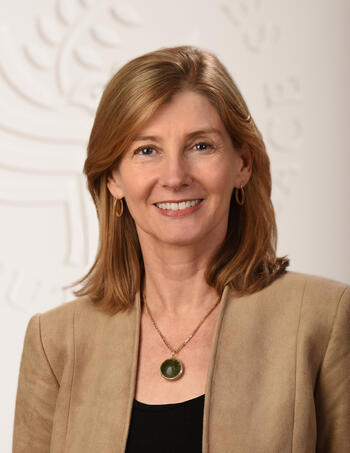
New President of the United States Institute of Peace, Nancy Lindborg, will discuss the global challenge of fragility and conflict, including a vision of the way forward. Ms. Lindborg’s remarks reflect a lifetime of working in the world’s most fragile regions and a time when the global humanitarian system is at a breaking point, with record numbers of people forcibly displaced globally.
Speaker Bio
Nancy Lindborg
Nancy Lindborg has served since February, 2015, as President of the United States Institute of Peace, an independent institution founded by Congress to provide practical solutions for preventing and resolving violent conflict around the world.
Ms. Lindborg has spent most of her career working in fragile and conflict affected regions around the world. Prior to joining USIP, she served as the Assistant Administrator for the Bureau for Democracy, Conflict and Humanitarian Assistance (DCHA) at USAID. From 2010 through early 2015, Ms. Lindborg led USAID teams focused on building resilience and democracy, managing and mitigating conflict and providing urgent humanitarian assistance. Ms. Lindborg led DCHA teams in response to the ongoing Syria Crisis, the droughts in Sahel and Horn of Africa, the Arab Spring, the Ebola response and numerous other global crises.
Prior to joining USAID, Ms. Lindborg was president of Mercy Corps, where she spent 14 years helping to grow the organization into a globally respected organization known for innovative programs in the most challenging environments. She started her international career working overseas in Kazakhstan and Nepal.
Ms. Lindborg has held a number of leadership and board positions including serving as co-president of the Board of Directors for the U.S. Global Leadership Coalition; co-founder and board member of the National Committee on North Korea; and chair of the Sphere Management Committee. She is a member of Council on Foreign Relations.
She holds a B.A and M.A. in English Literature from Stanford University and an M.A. in Public Administration from the John F. Kennedy School of Government at Harvard University.
Nancy Lindborg
President of the United States Institute of Peace
President of the United States Institute of Peace
Over the last four decades, the United States saw an explosion of digital technologies that penetrated every corner of the country, yet during the same time span, the American rate of poverty did not decrease and inequality skyrocketed. In other words, a golden age of innovation did not lead to better lives for poor people living in the world's most technologically advanced country. This simple fact, which flies in the face of Silicon Valley triumphalism, should give pause to foreign aid and international development efforts whose primary goal is to increase technology and its use.
Bio
Kentaro Toyama is W.K. Kellogg Associate Professor at the University of Michigan School of Information and a fellow of the Dalai Lama Center for Ethics and Transformative Values at MIT. Until 2009, Toyama was assistant managing director of Microsoft Research India, which he co-founded in 2005. At MSR India, he started the Technology for Emerging Markets research group, which conducts interdisciplinary research to understand how the world's poorest communities interact with electronic technology and to invent new ways for technology to support their socio-economic development. Prior to his time in India, Toyama did computer vision and machine learning research and taught mathematics at Ashesi University in Accra, Ghana. Toyama graduated from Yale with a PhD in Computer Science and from Harvard with a bachelor's degree in Physics. http://kentarotoyama.org
Wallenberg Theatre
450 Serra Mall #124
(The room is located in the main quad, across the road from Stanford Oval.)
Cellular networks are one of the most impactful technologies of the last century, with over 3.5 billion active users in just under 25 years of operation. However, over a billion people, primarily in rural areas, still live without this basic service. This is primarily because large-scale incumbent carriers cannot profitably serve these rural areas. One potential solution is "Community Cellular Networks": Small-scale, locally owned and operated cellular networks. These operate more efficiently by using local actors who know their communities. In this talk I will detail the community cellular model, its limitations, challenges, and the future through the lens of Endaga, the company we founded to commercialize the technology.
Bio
Kurtis Heimerl is a PhD candidate at UC Berkeley working under Eric Brewer in EECS and Tapan Parikh in the iSchool and will be joining the Department of Computer Science at the University of Washington in 2016. He is also a co-founder and the prior CEO of Endaga. His work focuses primarily bringing telecommunications access throughout the world by empowering actors within marginalized communities to solve their own communications problems.
Wallenberg Theatre
450 Serra Mall #124
(The room is located in the main quad, across the road from Stanford Oval.)
Human rights groups have only two assets: people and information. Learn about Benetech's decade of putting information technology tools into the hands of human rights activists, with the goal of making these two assets more effective in advancing the global cause of human rights.
Bio
Jim Fruchterman is the founder and CEO of Benetech, a Silicon Valley nonprofit technology company that develops software applications to address unmet needs of users in the social sector. He is the recipient of numerous awards recognizing his work as a pioneering social entrepreneur, including the MacArthur Fellowship, Caltech's Distinguished Alumni Award, the Skoll Award for Social Entrepreneurship, and the Migel Medal - the highest honor in the blindness field - from the American Foundation for the Blind. Since its founding in 1989, Benetech has touched the lives of hundreds of thousands of people. Its tools and services have transformed the ways in which people with disabilities access printed information, at-risk human rights defenders safely document abuse, and environmental practitioners succeed in their efforts to protect species and ecosystems. Through his work with Benetech and as a trailblazer in the field of social entrepreneurship, Jim continues to advance his vision of a world in which the benefits of technology reach all of humanity, not just the wealthiest and most able five percent.
Wallenberg Theatre
450 Serra Mall #124
(The room is located in the main quad, across the road from Stanford Oval.)
While social media pervades many aspects of our lives, it has not yet proved to be an effective tool for large scale decision making: crowds of hundreds, perhaps millions, of individuals collaborating together to come to consensus on difficult societal issues. The objective of this research is to develop an algorithmic and empirical understanding of large scale decision making, and experiment with real-life deployments of our algorithms. In this talk, he will first present his platform for voting in participatory budgeting elections, which has been used in over a dozen different elections. He will then describe the related algorithmic problem of knapsack voting, where voters have to allocate a fixed amount of funds among multiple projects. He will conclude by analyzing opinion formation processes in terms of their effect on polarization, and relate this to the design of recommendation systems for friends and contents.
Bio
Ashish Goel is a Professor of Management Science and Engineering and (by courtesy) Computer Science at Stanford University, and a member of Stanford's Institute for Computational and Mathematical Engineering. He received his PhD in Computer Science from Stanford in 1999, and was an Assistant Professor of Computer Science at the University of Southern California from 1999 to 2002. His research interests lie in the design, analysis, and applications of algorithms. Current application areas of interest include social networks, participatory democracy, Internet commerce, and large scale data processing. Professor Goel is a recipient of an Alfred P. Sloan faculty fellowship, a Terman faculty fellowship from Stanford, an NSF Career Award, and a Rajeev Motwani mentorship award. He was a coauthor on the paper that won the best paper award at WWW 2009, and an Edelman Laureate in 2014. Professor Goel was a research fellow and technical advisor at Twitter, Inc. from July 2009 to Aug 2014.
The CDDRL special events draw scholars and practitioners to the Center to comment on the most relevant and timely topics impacting the field of democracy, development, and the rule of law. The events attract members of the Stanford academic community and beyond who bring original analysis and thinking to bear on debates taking place within this field of study.
LAD's first event featuring regional and international experts who will discuss the main challenges that the problem of insecurity presents to governance and the institutions of Central America.
Using case studies, an analysis of the current situation in Colombia and various public and private strategies developed in the country to respond to the situation will be presented. After the presentations, there will be discussion and comments provided with the participation of attendees, faculty of INCAE and other guests.
The Leadership Academy for Development (LAD) offered a 1.5-day program consisting of two lectures and two case study discussions. The over-arching goal of the course program is to help country leaders explore the ways in which the private sector can play a more constructive role in economic development. The program consists of two components: lectures and case study discussions.
The lectures will cover the following topics: "What is Development? Understanding the Politics of Economic Change" and "New Approaches to Public Management."

 FSI researchers consider international development from a variety of angles. They analyze ideas such as how public action and good governance are cornerstones of economic prosperity in Mexico and how investments in high school education will improve China’s economy.
 Ian Rowen in Taiwan's Legislative Yuan during the Sunflower Student Movement protest.
 Nancy Lindborg


