Foreign Policy
-

Due to overwhelming demand, the Center on Democracy, Development and the Rule of Law has closed registration for this event. If you are still interested in attending this talk, please register on our wait list available here. 


Join us for a moderated conversation with Jeremy Weinstein, who recently returned to Stanford after serving as Deputy to the U.S. Ambassador to the United Nations.


Speaker Bio
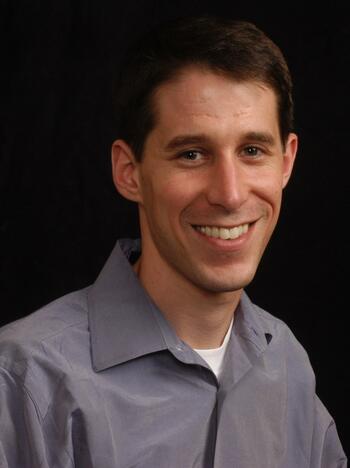
weinstein1 Jeremy Weinstein
Jeremy M. Weinstein is a Professor of Political Science and Senior Fellow at the Freeman Spogli Institute for International Studies. He is also a non-resident fellow at the Center for Global Development in Washington, D.C.

His research focuses on civil wars and political violence; ethnic politics and the political economy of development; and democracy, accountability, and political change. He is the author of Inside Rebellion: The Politics of Insurgent Violence (Cambridge University Press), which received the William Riker Prize for the best book on political economy. He is also the co-author of Coethnicity: Diversity and the Dilemmas of Collective Action (Russell Sage Foundation), which received the Gregory Luebbert Award for the best book in comparative politics. He has published articles in the American Political Science Review, American Journal of Political Science, Annual Review of Political Science, Journal of Conflict Resolution, Foreign Affairs, Foreign Policy, Journal of Democracy, World Policy Journal, and the SAIS Review.

Weinstein received the International Studies Association’s Karl Deutsch Award in 2013. The award is given to a scholar younger than 40 or within 10 years of earning a Ph.D. who has made the most significant contribution to the study of international relations. He also received the Dean’s Award for Distinguished Teaching at Stanford in 2007.

He has also worked at the highest levels of government on major foreign policy and national security challenges, engaging in both global diplomacy and national policy-making. Between 2013 and 2015, Weinstein served as the Deputy to the U.S. Ambassador to the United Nations and before that as the Chief of Staff at the U.S. Mission to the United Nations. As Deputy, Weinstein was a standing member of the National Security Council Deputies’ Committee – the sub-cabinet policy committee with primary responsibility for advising the National Security Council, the Cabinet, and the President on the full range of foreign policy issues, including global counterterrorism, nonproliferation, U.S. policy in the Middle East, the strategic rebalance to Asia, cyber threats, among a wide variety of other issues.

During President Obama’s first term, he served as Director for Development and Democracy on the National Security Council staff at the White House between 2009 and 2011. In this capacity, he played a key role in the National Security Council’s work on global development, democracy and human rights, and anti-corruption, with a global portfolio. Before joining the White House staff, Weinstein served as an advisor to the Obama campaign and, during the transition, as a member of the National Security Policy Working Group and the Foreign Assistance Agency Review Team.

Weinstein obtained a BA with high honors from Swarthmore College, and an MA and PhD in political economy and government from Harvard University. He is a member of the Council on Foreign Relations and serves on a number of non-profit boards and advisory groups.


Seminars
-

In this talk, Wellington Shih will provide a historical and legal overview of the Republic of China’s territorial claims in the South China Sea. He will also review the latest developments in the ongoing dispute between the People’s Republic of China, the ROC on Taiwan, and other claimants in the region, including the Philippines, and discuss the South China Sea Peace Initiative proposed by the administration of President Ma Ying-jeou. 

The Possible Approaches for Defusing Tensions in the South China Sea: A Taiwanese Perspective
Download pdf
Visiting scholar Ministry of Foreign Affairs, Republic of China (Taiwan)
Lectures
News Type
News
Date
Paragraphs


On Tuesday, June 2, 2015, CDDRL's Taiwan Democracy Project welcomed President Ma Ying-jeou of the Republic of China (Taiwan) as he addressed a crowd of over 200 in a talk commemorating the 70th anniversary of the end of World War II and the long history of the U.S.-R.O.C. relationship. The speech was accompanied by a panel Q&A discussion with Lanhee J. Chen, former chief policy advisor to U.S. Presidential Candidate Mitt Romney; Karl Eikenberry, former U.S. Ambassador to Afghanistan; and Thomas Fingar, former chairman of the National Intelligence Council. The event was moderated by William J. Perry, senior fellow at the Hoover Institution and former U.S. Secretary of Defense. 

This special event was co-sponsored by CDDRL's Taiwan Democracy Project; the Taipei Economic and Cultural Office, San Francisco; and the Office of the President of the Republic of China (Taiwan).
 

Click here to view photos from the event via our Facebook Album: http://on.fb.me/1QxpzQp


See below for press coverage of the event:

June 3, 2015

"Taiwan President Ma Ying-Jeou Holds Teleconference on 70th Anniversary of Second World War Victory"

Pacific News Center

"President Ma talks history in video conference"

Focus Taiwan News Channel

"Ma marks sacrifices of ROC armed forces during WWII"

Taiwan Today

Hero Image
img 4584
All News button
1
-

**LIVE WEBCAST WILL BE AVAILABLE HERE IMMEDIATELY PRIOR TO THE EVENT.**


[[{"fid":"219129","view_mode":"crop_870xauto","fields":{"format":"crop_870xauto","field_file_image_description[und][0][value]":"","field_file_image_alt_text[und][0][value]":"","field_file_image_title_text[und][0][value]":"","field_credit[und][0][value]":"","field_caption[und][0][value]":"","field_related_image_aspect[und][0][value]":"","thumbnails":"crop_870xauto","pp_lightbox":false,"pp_description":false},"type":"media","attributes":{"width":"870","class":"media-element file-crop-870xauto"}}]]

On June 2, 2015, the Taiwan Democracy Project at Stanford's Center on Democracy, Development and the Rule of Law (CDDRL) will host a special panel session featuring the President of the Republic of China (Taiwan), Ma Ying-jeou. President Ma will speak via live video feed to commemorate the 70th anniversary of the end of World War II and the long history of the U.S.-R.O.C. relationship. Following his prepared remarks, the president will engage in a question-and-answer session with the audience and a distinguished panel of leading Stanford faculty and fellows, chaired and moderated by the former Secretary of Defense of the United States, William J. Perry.


About the Speaker

Ma Ying-jeou has served as the President of the Republic of China (Taiwan) since May 2008. As president, Ma Ying-jeou has worked to address the repercussions of the global financial crisis, stepping up efforts to bring about a more diversified industrial structure and to jump-start new engines for economic growth in Taiwan. President Ma has also attached great importance to promoting energy conservation and carbon reduction, which has helped Taiwan’s energy efficiency to exceed two percent. In addition, his administration worked to craft a response to regional economic integration, successfully negotiating the landmark Economic Cooperation Framework Agreement (ECFA) with the People's Republic of China in 2010. President Ma's creative diplomacy has brought a significant improvement in cross-Strait relations while putting an end to a long and vituperative standoff between the two sides in the diplomatic sphere.


About the Panelists

William J. Perry is the Michael and Barbara Berberian Professor (emeritus) and a senior fellow at the Freeman Spogli Institute and the Hoover Institution, and serves as the director of the Preventive Defense Project at Stanford University. He was the Secretary of Defense for the United States from 1994-1997.


Lanhee J. Chen is the David and Diane Steffy Research Fellow at the Hoover Institution, as well as Lecturer in Public Policy and Law at Stanford University. He served as the chief policy adviser to 2012 U.S. presidential candidate Mitt Romney.


Karl Eikenberry is the William J. Perry Fellow in International Security at the Center for International Security and Cooperation at Stanford University.  He served as the U.S. Ambassador to Afghanistan and is a Lieutenant General, Retired, U.S. Army.


Thomas Fingar is the Oksenberg-Rohlen Distinguished Fellow in the Freeman Spogli Institute for International Studies at Stanford University. He served as the first deputy director of national intelligence for analysis and as chairman of the National Intelligence Council from 2005-2008.


Event Details

The live panel will take place in the Bechtel Conference Room of the Freeman Spogli Institute at Stanford University, at 616 Serra Street, from 5:45-7:00pm on June 2, 2015. An informal reception in the lobby of Encina Hall will follow.


This event is co-sponsored with the Taipei Economic and Cultural Office, San Francisco and the Office of the President of the Republic of China (Taiwan). It is free and open to the public. RSVP is required.


President Ma Ying-jeou
Lanhee J. Chen
Thomas Fingar
William J. Perry
Panel Discussions
Authors
News Type
Commentary
Date
Paragraphs

As part of the Arab Reform and Democracy Program's speaker series, George Mason University scholar Noura Erakat examined the political and legal contexts for the 2014 Gaza war. In July and August of 2014, hostilities in the Gaza Strip left 2,131 Palestinians and 71 Israelis dead, including 501 Palestinian children and one Israeli child. Of Gaza’s 1.8 million residents, 475,000 are living in temporary shelters or with other families because their homes have been severely damaged. The extent of destruction has raised questions around culpability for war crimes on all sides of the conflict.


Hero Image
screen shot 2015 05 05 at 7 53 47 am
All News button
1
Authors
News Type
Commentary
Date
Paragraphs

As part of the Arab Reform and Democracy Program's speaker series, University of Richmond Political Scientist Sheila Carapico discussed findings from her ground-breaking study Political Aid and Arab Activism: Democracy Promotion, Justice, and Representation (Cambridge University Press, 2013) which explores two decades’ worth of projects sponsored by American, European, and other transnational agencies in four key sub-fields: the rule of law, electoral design and monitoring, female empowerment, and civil society. European and US-based scholars and practitioners have debated the purposes and sometimes the (limited) macro-effects of programs designed to promote transitions from authoritarianism to democracy in Middle East countries. Yet this discussion often lacks analysis of on-the-ground experiences or ignores the cumulative wisdom of local counterparts and intermediaries. Carapico discussed controversies and contradictions surrounding projects in Egypt, Palestine, and Iraq (the three main cases) and Jordan, Morocco, Yemen, Algeria, Tunisia, and Lebanon (where democracy brokers also work) to help explain why so many feminists and other advocates for justice, free elections, and civic agency concluded that foreign funding is inherently political and paradoxical.


Hero Image
sheila shot
All News button
1
Subscribe to Foreign Policy