Institutions and Organizations
-

This is a virtual event. Please click here to register and generate a link to the talk. 
The link will be unique to you; please save it and do not share with others.


This event is co-sponsored by the Center on Democracy, Development, and the Rule of Law.

How does autocratic lobbying affect political outcomes and media coverage in democracies? This talk focuses on a dataset drawn from the public records of the US Foreign Agents Registration Act. It includes over 10,000 lobbying activities undertaken by the Chinese government between 2005 and 2019. The evidence suggests that Chinese government lobbying makes legislators at least twice as likely to sponsor legislation that is favorable to Chinese interests. Moreover, US media outlets that participated in Chinese-government sponsored trips subsequently covered China as less threatening. Coverage pivoted away from US-China military rivalry and the CCP’s persecution of religious minorities and toward US-China economic cooperation. These results suggest that autocratic lobbying poses an important challenge to democratic integrity.


Portrait of Erin Baggott CarterErin Baggott Carter is an Assistant Professor at the Department of Political Science and International Relations at the University of Southern California. There, she is also a Co-PI at the Lab on Non-Democratic Politics. She received a Ph.D. in Government from Harvard University, is currently a visiting scholar at the Stanford Center on Democracy, Development and the Rule of Law, and was previously a Fellow at the Stanford Center for International Security and Cooperation.

Dr. Carter's research focuses on Chinese politics and propaganda. She recently completed a book on autocratic propaganda based on an original dataset of eight million articles in Arabic, Chinese, English, French, Russian, and Spanish drawn from state-run newspapers in nearly 70 countries. She is currently working on a book on how domestic politics influence US-China relations. Her other work has appeared or is forthcoming in the British Journal of Political ScienceJournal of Conflict Resolution, and International Interactions. Her work has been featured by the New York Times, the Brookings Institution, and the Washington Post Monkeycage Blog.


Image
American and Chinese flags
This event is part of the 2021 Winter/Spring Colloquia series, Biden’s America, Xi’s China: What’s Now & What’s Next?, sponsored by APARC's China Program.


Via Zoom Webinar. Register at: https://bit.ly/3beG7Qz

Erin Baggott Carter Assistant Professor, Department of Political Science and International Relations, University of Southern California; Visiting Scholar, Center on Democracy, Development and the Rule of Law, Stanford University
Seminars

Department of Political Science
Stanford University
Encina Hall West, Room 307
Stanford, CA 94305-6044

(650) 725-7987
0
CDDRL Affiliated Faculty
Associate Professor, Political Science
adam_bonica.jpg

Adam Bonica is an Associate Professor of Political Science. His research is at the intersection of data science and politics, with interests in money in politics, campaigns and elections, the courts, and political methodology. His research has been published in journals such as the American Journal of Political Science, Political Analysis, Journal of Economic Perspectives, Journal of Law, Economics, and Organization, and JAMA Internal Medicine. His book, The Judicial Tug of War: How Lawyers, Politicians, and Ideological Incentives Shape the American Judiciary (with Maya Sen), examines the politicization of the American judiciary. 

CV
Date Label
Authors
News Type
News
Date
Paragraphs

On September 29, the APARC China Program hosted Thomas Fingar and Stephen Stedman for the program “Rebuilding International Institutions.” The program, which was moderated by China Program Director Jean Oi, examined the future of international institutions such as the United Nations (UN), World Trade Organization (WTO), and World Health Organization (WHO) in our evolving global political landscape. While Fingar and Stedman acknowledged that such institutions facilitated attainment of unprecedented peace and prosperity after WWII, they also asked difficult questions: Are these institutions still adequate? And if not, how will we change them?

Shorenstein APARC Fellow Thomas Fingar kicked off the session by asking whether or not US-China tensions would impede cooperation on major global challenges, or if those challenges were so serious as to render such rivalries immaterial. Perhaps the most obvious example of such a crisis is the current COVID-19 pandemic. The efforts to curb the virus’ spread not only by individual countries, but also by international organizations like the WHO, have proven largely inadequate. According to Fingar, our existing institutions need to be reformed or supplemented to deal with these types of threats. However, such an overhaul of our international systems will be difficult, he says.

How, then, will we go about such a massive project? Stephen Stedman, Deputy Director at Stanford’s Center on Democracy, Development, and the Rule of Law (CDDRL), responded by explaining that the current failure of international cooperation makes such undertakings tough. Globalization has been a double-edged sword: On one hand, more contact, perhaps inherently, leads to increased tension. The resurgence of traditional notions of sovereignty in 2010, kickstarted by the opposition of countries like Russia and China to what was seen as UN overreaching, has led to a reduction of international cooperation overall. On the other hand, Fingar posits that our interconnectedness may force us toward cooperation despite rivalries as we face more and more transnational threats. International institutions create rules to organize and manage our many interconnected relationships so that we can deal with our problems effectively and reduce friction.

Stedman also pointed to the upcoming US elections and the major impact their outcome will have on how these problems are addressed—or not. In the last four year, the United States has pulled back significantly from international institutions and agreements, leaving a gap that China has started to fill. Furthermore, despite the US’s retreat from international responsibility, the country still remains a critical actor in global initiatives. China’s embrace of a global leadership role is not inherently negative, but its future relationship with the US will need to be “managed in a way that you get greater cooperation and not just paralysis.” Stedman says that it is likely that progress will need to be made on a bilateral front in order to have productive conversations about international issues with China.

Concluding on an optimistic note, Fingar voiced his hope that the current tensions and negative perceptions between rivals might ultimately “be mitigated by success in dealing with a common problem,” because “experience does shape perceptions.”

A video recording of this program is available upon request. Please contact Callista Wells, China Program Coordinator at cvwells@stanford.edu with any inquiries.

Read More

Hero Image
Photograph of the UN building in Geneva, Switzerland Image by Mat Reding on Unsplash
All News button
1
Subtitle

Fingar and Stedman spoke as part of the APARC program “Rebuilding International Institutions,” which examined the future of international institutions such as the United Nations (UN), World Trade Organization (WTO), and World Health Organization (WHO) in our evolving global political landscape.

Date Label

Encina Hall
616 Jane Stanford Way
Stanford, CA 94305-6055

0
Research Scholar
mike_bennon_2022.jpg

Michael Bennon is a Research Scholar at CDDRL for the Global Infrastructure Policy Research Initiative. Michael's research interests include infrastructure policy, project finance, public-private partnerships and institutional design in the infrastructure sector. Michael also teaches Global Project Finance to graduate students at Stanford. Prior to Stanford, Michael served as a Captain in the US Army and US Army Corps of Engineers for five years, leading Engineer units, managing projects, and planning for infrastructure development in the United States, Iraq, Afghanistan and Thailand. 

Program Manager, Global Infrastructure Policy Research Initiative
-

This is a virtual event. Please click here to register and generate a link to the talk. 
The link will be unique to you; please save it and do not share with others.


Sponsored by the Stanford China Program and the Stanford Center at Peking University.
 

International institutions established after WWII and shaped by the Cold War facilitated attainment of unprecedented peace and prosperity.  But what worked well in the past may no longer be adequate to address the challenges and opportunities in the world these institutions helped to create.  Should legacy institutions be reformed, replaced, or supplemented by new mechanisms to manage new global challenges?  This program will examine whether existing institutions of global governance are adequate, and if not, why changing them will be difficult.


Image
Dr. Thomas Fingar
Thomas Fingar is a Shorenstein APARC Fellow in the Freeman Spogli Institute for International Studies at Stanford University. He was the inaugural Oksenberg-Rohlen Distinguished Fellow from 2010 through 2015 and the Payne Distinguished Lecturer at Stanford in 2009. From 2005 through 2008, he served as the first deputy director of national intelligence for analysis and, concurrently, as chairman of the National Intelligence Council. Fingar served previously as assistant secretary of the State Department’s Bureau of Intelligence and Research (2000-01 and 2004-05), principal deputy assistant secretary (2001-03), deputy assistant secretary for analysis (1994-2000), director of the Office of Analysis for East Asia and the Pacific (1989-94), and chief of the China Division (1986-89). Between 1975 and 1986 he held a number of positions at Stanford University, including senior research associate in the Center for International Security and Arms Control.

Fingar's most recent books are The New Great Game: China and South and Central Asia in the Era of Reform, editor (Stanford, 2016), Uneasy Partnerships: China and Japan, the Koreas, and Russia in the Era of Reform (Stanford, 2017), and Fateful Decisions: Choices that will Shape China’s Future, co-edited with Jean Oi (Stanford, 2020).
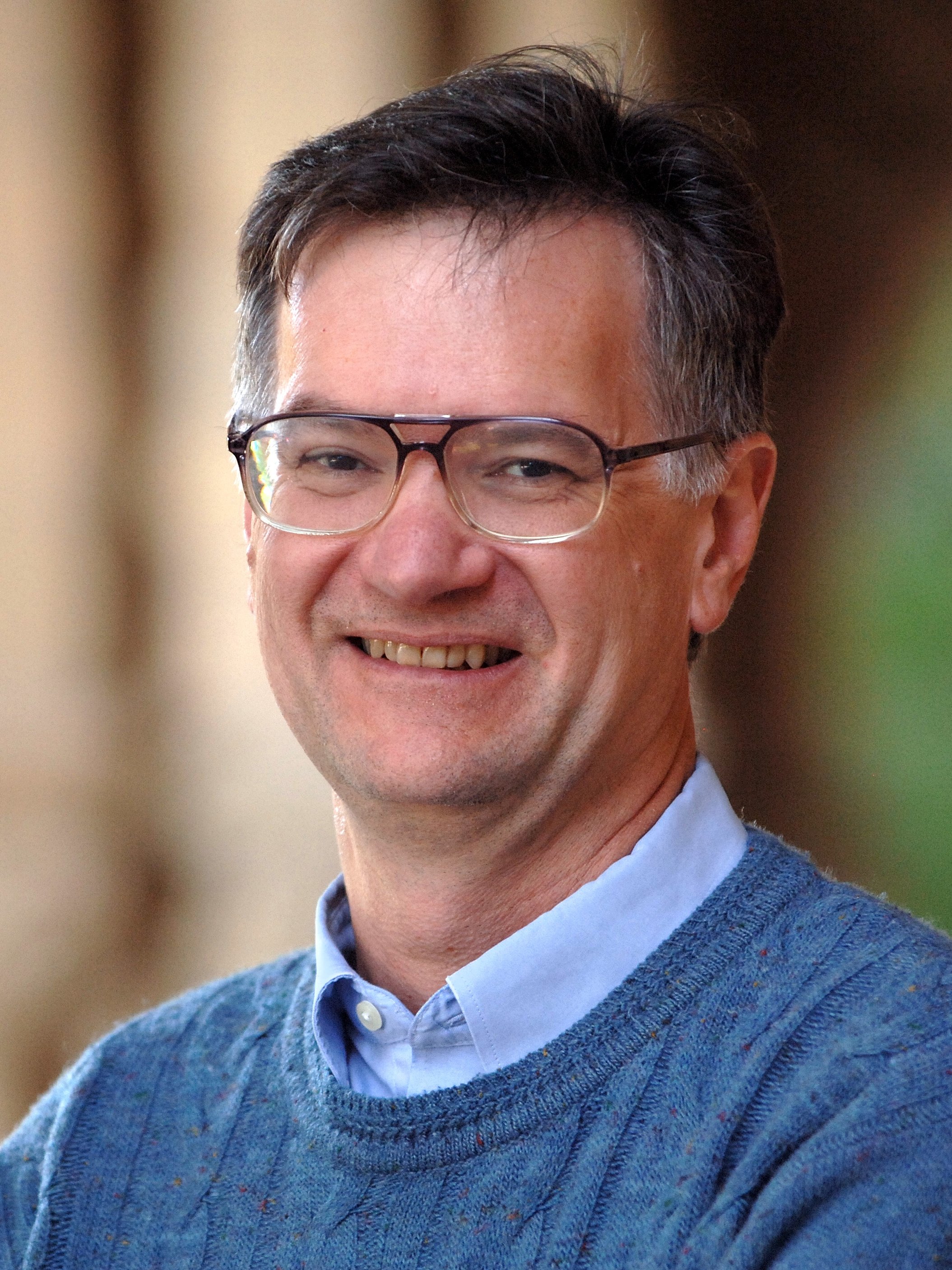
 

Dr. Stephen J. StedmanStephen Stedman is a Freeman Spogli senior fellow at the Center on Democracy, Development, and the Rule of Law and FSI, an affiliated faculty member at CISAC, and professor of political science (by courtesy) at Stanford University. 

In 2011-12 Professor Stedman served as the Director for the Global Commission on Elections, Democracy, and Security, a body of eminent persons tasked with developing recommendations on promoting and protecting the integrity of elections and international electoral assistance. The Commission is a joint project of the Kofi Annan Foundation and International IDEA, an intergovernmental organization that works on international democracy and electoral assistance. In 2003-04 Professor Stedman was Research Director of the United Nations High-level Panel on Threats, Challenges and Change and was a principal drafter of the Panel’s report, A More Secure World: Our Shared Responsibility. In 2005 he served as Assistant Secretary-General and Special Advisor to the Secretary- General of the United Nations, with responsibility for working with governments to adopt the Panel’s recommendations for strengthening collective security and for implementing changes within the United Nations Secretariat, including the creation of a Peacebuilding Support Office, a Counter Terrorism Task Force, and a Policy Committee to act as a cabinet to the Secretary-General.  His most recent book, with Bruce Jones and Carlos Pascual, is Power and Responsibility: Creating International Order in an Era of Transnational Threats (Washington DC: Brookings Institution, 2009).

Via Zoom Webinar. Register at: https://bit.ly/3b6qmKT

Thomas Fingar Shorenstein APARC Fellow, Stanford University
Stephen Stedman Deputy Director, Center on Democracy, Development and Rule of Law, Stanford University
Seminars
Paragraphs

American public service is under grave threat. It has been heavily politicized during the first Trump term, and in a second may deteriorate rapidly as cronyism, corruption, and incompetence become the new norms.

All Publications button
1
Publication Type
Journal Articles
Publication Date
Journal Publisher
Washington Monthly
Authors
Francis Fukuyama
Encina Hall, E112 616 Jane Stanford Way Stanford, CA 94305-6055  
0
CDDRL Postdoctoral Scholar, 2019-20
tesalia.jpg

Tesalia Rizzo holds a Ph.D. in Political Science at the Massachusetts Institute of Technology (MIT). Her research focuses on the demand and supply side of political mediation. Specifically, on how political (formal, informal or clientelist) intermediaries shape citizens’ attitudes and political engagement. She also works with non-governmental practitioners in Mexico to develop and test policies that disincentivize citizen reliance on clientelist and corrupt avenues of engaging with government and strengthen citizen demand for accountability. Her work with Mexican practitioners was awarded the 2017 Innovation in Transparency Award given by the Mexican National Institute for Access to Information (INAI). She is also a Research Fellow at MIT GOV/LAB and the Political Methodology Lab, at MIT. She is a graduate of the Instituto Tecnológico Autónomo de México (ITAM) in Mexico City. Prior to arriving at Stanford, she was a pre-doctoral fellow at the Center for US-Mexican Studies at University of California, San Diego and will join the Political Science Faculty at the University of California, Merced in 2020.

CV

Please join Larry Diamond, Senior fellow at the Freeman Spogli Institute for International Affairs and the Hoover Institution for the launch of his latest book, "Ill Winds: Saving Democracy from Russian Rage, Chinese Ambition, and American Complacency."


Featuring a Panel Conversation with:


Zin Mar Aung

Burmese MP and political activist


Vladimir Kara-Murza

Russian journalist and anti-corruption crusader


Cara McCormick

CEO, Chamberlain Project, Co-founder/Co-leader of The

Committee for Ranked Choice Voting in Maine


*Reception to follow

Bechtel Conference Center

Encina Hall

616 Serra Mall

Stanford, CA 94305

-

After the events of the Revolution of Dignity, Ukraine made a decisive historic choice in its shift towards democracy, notwithstanding current threats to security and sovereignty from Russia’s annexation of Crimea and the war in Donbas. Due to these circumstances, Ukraine is on the frontline of democracy between Russia and the West. In 2019, Ukrainians are facing major decisions in their country’s democratic development with the presidential and parliamentary elections. During the 2019 Presidential elections Ukrainians elected Volodymyr Zelenskiy, a former actor with no political background, with 73% of the vote. The more important Parliamentary elections are yet to come in the fall, and the resulting coalition will shape the future government.

In light of the elections the Ukrainian Emerging Leaders Program at the Stanford University Center on Democracy, Development and the Rule of Law has gathered DC-based policy makers, high-level Ukrainian state officials and parliamentarians to discuss lessons that should be learned from the presidential elections, and what can we take away looking toward the October 2019 parliamentary elections.

The Ukrainian Emerging Leaders Program at the Stanford University Center on Democracy, Development and the Rule of Law has organized a conference on these political developments to discuss pertinent policy issues that will affect Ukraine’s future. This conference reflects how UELP fellows are creating an important place for conversation on global development and Ukraine at Stanford University by raising key questions about the country’s future direction. They are also providing knowledge to their own community by connecting stakeholders in Ukraine to resources at Stanford and Silicon Valley.


VISIT CONFERENCE PAGE


Panels will include the following: 

9:15-10:45 Reforms in Ukraine

Since the Revolution of Dignity, Ukraine has been scrutinized for its record on implementing reforms. However, in the past five years there have been many more success stories than in the history of Ukrainian independence prior to 2014. This panel will explore some of the most successful reforms in post-Maidan Ukraine, such as steps taken to improve the health care system, economics, and anti-corruption efforts. Please join the discussion on Reforms Panel Moderated by former Ambassador Steven Pifer with the Minister of the Cabinet of Ministers of Ukraine Oleksandra Saenko, Acting Minister of Health of Ukraine Dr. Ulana Suprun,  Member of the Ukrainian Parliament Mustafa Nayem and the Ukrainian Emerging Leader Fellows at Stanford – Natalia Mykolska, former Trade Representative of Ukraine and Oleksandra Ustinova, former Board Member of the Anti-Corruption Action Center in Ukraine.


11:00-12:30 Church and Identity

On January 5, 2019 the tomos of autocephaly of the Ukrainian Orthodox Church was signed, thus granting independence for the Ukrainian church, after centuries of subjugation to Russia. This was a historic move for Ukraine on many levels, from its cultural significance to its role in fighting Russian propaganda as the churches under the Moscow Patriarchate were massively used for propaganda  Since then, at least 340 parishes that were formerly under the Moscow Patriarchate have joined with the newly independent church. The creation of an independent Ukrainian Orthodox Church is a watershed moment in the global understanding of Ukrainian identity. 


12:30-2:00 Luncheon: New Faces in Ukrainian Politics

In light of the upcoming 2019 parliamentary elections you will have the opportunity to meet representatives from major political parties and movements who are considered up and coming reformers in Ukraine. The goal is to engage parliamentarians and others in a discussion about the future of Ukrainian political development. Stanford will bring together reform-minded stakeholders from prominent political parties that will be contending in the October 2019 parliamentary elections so that a multitude of opinions can be voiced and debated.


2:15-3:45 Security and Foreign Policy

One of the largest challenges Ukraine’s next president will face is the security of the country against Russian aggression. The 2018 Kerch Strait incident not only demonstrated the relentlessness of Russia’s continued incursions on Ukrainian sovereignty, but raised questions as to how Ukraine and the West should act in light of such attacks. Whoever wins the spring 2019 presidential elections will face important strategic decisions in the war effort and cooperation with international allies.


4:00-5:30 Tech & Innovation: Shaping Ukrainian Future

IT industry is a growth engine of Ukraine’s economy. Ukraine IT outsourcing industry is a globally recognized leader. Tech ventures working with enterprise software, ML / AI, cyber security, life-science, big data management, gaming, agribusiness and e-commerce. Exports of Ukrainian ICT services is the third largest export sector showing constant growth. Foreign investments into the industry are increasing ($285 mln in 2018). Moreover, the number of SMEs tech companies is growing as well (4,000+ IT companies). Furthermore, from year to year the number of successful tech ventures with Ukrainian founding teams and R&D offices in Silicon Valley is increasing. Ukraine has the largest and fastest-growing engineering talent pool in Europe with 160,000 specialists in 2018 and 242,000 prognosis by 2025. The country’s universities and polytechnic institutes graduate over 100,000 new engineers annually incl. 23000+ IT graduates.


Koret-Taube Conference Center
366 Galvez Street
Stanford, CA 94305


Conferences
-

After the Revolution of Dignity Ukraine has faced a challenging combination: Hybrid war from Russia side and economic and institutional collapse. Years under Yanukovych rule in conjunction with a lingering post-Soviet legacy created a perfect storm and required rapid, powerful and tailored response both from Ukrainian government and donor community. Inspired by the signing of the EU-Ukraine Association agreement, as well as understanding the weakness of Ukrainian institutions, the Ukrainian Reforms Architecture project was created. Co-invented by EU and the European Bank for Reconstruction and Development (EBRD), the project focuses on different reform areas such as Public Administration Reform, Business Climate, Public Finance management, Privatization and SOE corporate governance, and many others. This panel of experts will discuss the results of the project on the Ukrainian reform process: What is the future of the project? Can these reforms sustain major political changes with this year's elections? And, if successful, can it be replicated in other countries? 

This event will be moderated by Francis Fukuyama, Mosbacher Director of the Center on Democracy, Development and the Rule of Law, and Steven Pifer, William J. Perry fellow at Stanford’s Freeman Spogli Institute for International Studies (FSI).


Speaker Bios

Image
fm2
Francis Malige is the Managing Director for Financial Institutions for the EBRD. He leads the Bank’s investments in the financial sector, including banks as well as insurance companies, non-bank financial institutions and capital market infrastructure companies, across three continents. He took up his role in August 2018. From 2014 to 2018, he served as Managing Director, Eastern Europe and the Caucasus, leading the Bank’s operations and policy initiatives in Ukraine, Belarus, Moldova, Armenia, Azerbaijan and Georgia. In Ukraine, he led the EBRD through the difficult post-revolution period, to develop a number of initiatives blending investment and policy impact, including the Ukraine Reforms Architecture 


Image
br
Bojana J. Reiner is Senior Governance Counsellor at the European Bank for Reconstruction and Development (EBRD), based in London. She has more than 20 years experience in public policy, private sector development, intelligence and investigations across EMEA, gained in prominent organizations worldwide. In her current role, Bojana leads the Ukraine Reforms Architecture (URA) programme, which is the EBRD’s flagship state capacity building initiative. In her previous roles at EBRD, she oversaw the delivery of key reform policy engagements across EMEA, deployed with around €100 million of donor funds annually.  


Image
dr
Dmytro Romanovych is an alumnus of the Ukrainian Emerging Leaders Program and current Senior Consultant for the Ukrainian Reforms Architecture project at the EBRD. Prior to this role, Romanovych worked at the Reform Delivery Office for the Cabinet of Ministers of Ukraine. Romanovych was an advisor to the Minister of Economy, and is responsible for deregulation and improving the business climate in Ukraine. In addition, he was an economic expert in the largest NGO coalition in Ukraine, the Reanimation Package of Reforms, which is the most influential non-governmental reform advocate in the country.


Image
nm

Nataliya Mykolska is the Trade Representative of Ukraine - Deputy Minister of Economic Development and Trade. In the government, Mykolska is responsible for developing and implementing consistent, predictable and efficient trade policy. She focuses on export strategy and promotion, building an effective system of state support for Ukrainian exports, free trade agreements, protecting Ukrainian trade interests in the World Trade Organization (WTO), dialogue with Ukrainian exporters, and removing trade barriers. Mykolska is the Vice-Chair of the International Trade Council and the Intergovernmental Committee on International Trade.

Francis Malige Managing Director, Financial Institutions European Bank for Reconstruction and Development (EBRD)
Bojana Reiner Senior Governance Counsellor EBRD
Dmytro Romanovych Senior Consultant for Ukrainian Reforms Architecture Project EBRD
0
Visiting Practitioner, Ukrainian Emerging Leaders Program 2018-19
natalia.jpg
Nataliya Mykolska is the Trade Representative of Ukraine - Deputy Minister of Economic Development and Trade. In the government, Mykolska is responsible for developing and implementing consistent, predictable and efficient trade policy. She focuses on export strategy and promotion, building an effective system of state support for Ukrainian exports, free trade agreements, protecting Ukrainian trade interests in the World Trade Organization (WTO), dialogue with Ukrainian exporters, and removing trade barriers. Mykolska is the Vice-Chair of the International Trade Council and the Intergovernmental Committee on International Trade.   In her position, Mykolska developed and adopted the first ever Export Strategy of Ukraine: Strategic Trade Development Roadmap of Ukraine for 2017-2021. She has concluded and launched free trade agreements with Canada and Israel, and initiated additional trade preferences by the EU. Due to her efforts, Ukraine has started actively using WTO mechanisms and procedures. Moreover, the Ministry initiated WTO proceedings against Russia in response to trade aggression. Mykolska established the Export Promotion Office at the Ministry to assist Ukrainian business, help them succeed on international markets and open new markets.   Mykolska has fifteen years of experience working as a legal counsel with a focus on international trade including WTO and free trade agreements, trade financing, cross-border trade transactions and contracts, franchising and other areas. Mykolska worked with governmental institutions to bring Ukraine in compliance with international obligations, including the EU-Ukraine Deep and Comprehensive Free Trade Area. She has been recognized as the No. 1 International Trade lawyer by Ukrainian Law Firms, and was recommended by the International Who’s Who of Business Lawyers and the International Who's Who of Trade & Customs Lawyers.   Mykolska graduated from the Ivan Franko National University of Lviv Faculty of Law in 2001, and completed her Master of European Studies Program at the Europa-Kolleg-Hamburg in 2002.  
Visiting Practitioner Ukrainian Emerging Leaders Program
Subscribe to Institutions and Organizations