-
Black Markets and Militants: Informal Networks in the Middle East and Africa

Khalid Mustafa Medani joins ARD to discuss his recently released book, Black Markets and Militants Informal Networks in the Middle East and Africa (Cambridge University Press, 2021).

Understanding the political and socio-economic factors which give rise to youth recruitment into militant organizations is at the heart of grasping some of the most important issues that affect the contemporary Middle East and Africa. In this book, Medani explains why youth are attracted to militant organizations, examining the specific role economic globalization, in the form of outmigration and expatriate remittance inflows, plays in determining how and why militant activists emerge. The study challenges existing accounts that rely primarily on ideology to explain militant recruitment.

Based on extensive fieldwork, Medani offers an in-depth analysis of the impact of globalization, neoliberal reforms, and informal economic networks as a conduit for the rise and evolution of moderate and militant Islamist movements and as an avenue central to the often violent enterprise of state-building and state formation. In an original contribution to the study of Islamist and ethnic politics more broadly, he thereby shows the importance of understanding when and under what conditions religious rather than other forms of identity become politically salient in the context of changes in local conditions.

ABOUT THE SPEAKER 

Image
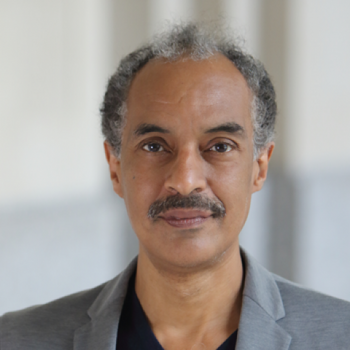
Khalid Medani
Dr. Khalid Mustafa Medani is currently associate professor of political science and Islamic Studies at McGill University, and he has also taught at Oberlin College and Stanford University. Dr. Medani received a B.A. in Development Studies from Brown University, an M.A. in Development Studies from the Center for Contemporary Arab Studies at Georgetown University, and a Ph.D. in Political Science from the University of California, Berkeley. His research focuses on the political economy of Islamic and Ethnic Politics in Africa and the Middle East.

Dr. Medani is the author of Black Markets and Militants: Informal Networks in the Middle East and Africa (Cambridge University Press, 2021) and he is presently completing another book manuscript on the causes and consequences of Sudan’s 2018 popular uprising and the prospects and obstacles for Democracy in that country. In addition, he has published extensively on civil conflict with a special focus on the armed conflicts in Sudan and Somalia. His work has appeared in Political Science and Politics (PS), the Journal of Democracy, the Journal of North African StudiesCurrent HistoryMiddle East ReportReview of African Political EconomyArab Studies Quarterly, and the UCLA Journal of Islamic Law.

Dr. Medani is a previous recipient of a Carnegie Scholar on Islam award from the Carnegie Corporation of New York (2007-2009) and in 2020-2021 he received a fellowship from the Woodrow Wilson International Center for Scholars to conduct research on his current book manuscript on the democratic transition in Sudan.

This event is co-sponsored by the Abbasi Program in Islamic Studies and the Center for African Studies at Stanford University.

Hesham Sallam

Online via Zoom

Khalid Mustafa Medani Associate Professor of Political Science and Islamic Studies McGill University
Lectures
Authors
News Type
News
Date
Paragraphs

As if the alleged Iranian plan to kill Saudi Arabia’s ambassador to the U.S. wasn’t strange and sinister enough, it offered an outlandish twist: American officials say the Iranian plotters wanted to hire a Mexican drug cartel to carry out the murder.

The charges laid out earlier this week are raising questions about how the United States should respond to Iran, skepticism about the Mexican underworld’s possible involvement and concerns about the growing, borderless network of global terrorism.

Mariano-Florentino Cuéllar, a law professor and co-director of the Center for International Security and Cooperation at the Freeman Spogli Institute for International Studies, and Beatriz Magaloni, an associate professor of political science and affiliated faculty of FSI’s Center on Democracy, Development and the Rule of Law, discuss the developing events.

President Obama is vowing to impose tougher sanctions on Iran. What good will they do?

Cuéllar: Countries use sanctions to achieve multiple goals. Sanctions often put pressure on the regime and disrupt the regime’s capacity to move money, pay for resources, and offer goods and services on the international market. Even if they are imperfectly enforced, sanctions can affect particular individuals or organizations within states. Separately, sanctions signal the resolve of the nation imposing them, and thus the United States can force discussion among governments and diplomats regarding how the international community will respond to a state violating international norms.

Do Mexican drug cartels have the ability and willingness to be the hired guns in global terrorist operations?

Magaloni: Drug cartels are increasingly diversifying their portfolios of crime. They’re not exclusively engaging in the trading of drugs. They’re also engaged in many other criminal activities, including kidnapping, and extortion. And some have engaged in human trafficking.

Can this extend to acts of terror beyond Mexico? At this moment – with the evidence I see – I find it difficult to believe.

Mexican drug gangs do not seem to have that much capacity to operate in the U.S. There is an implicit agreement between government officials in some states and the cartels, and that’s what allows them to operate, often with impunity. But right now, I don’t think they can orchestrate the same type of terror once they cross the border because they do not have the same networks in the US.

How do you expect the criminal case to play out?

Cuéllar:  The criminal complaint alleges that accused individuals sought the assistance of a Mexican drug cartel. Instead of negotiating with that organization, however, the accused ended up interacting with a confidential informant working for American law enforcement agencies. Prosecutors will nonetheless focus on the motivation of the accused and the possibility that individuals with such goals might succeed in forging alliances with transnational criminal organizations in the future.  

How is the criminal activity in Mexico affecting security in the region?

Cuéllar: Although Mexico is a country that faces considerable challenges involving security and state capacity, it is certainly not Somalia or Afghanistan. And the Attorney General indicated that the Mexican government worked closely with U.S. authorities investigating the alleged criminal conspiracy. Nonetheless, Mexico has become a focal point for the activity of certain large criminal organizations with the ability to operate across large territories and to harness different forms of expertise. 

While these criminal networks certainly affect the security environment in both Mexico and the United States, there is often something of a paradox in the nature of the threat they pose. The organizations with the greatest capacity to engage in complicated operations across borders tend to be the ones with the tightest hold on lucrative pieces of the drug trade. And they are probably the most skeptical of getting involved in something that will draw a massive response from the United States.

What may complicate the situation is that some of the criminal organizations are beginning to fragment in response to changing dynamics in illicit markets and conflict with Mexican authorities. Fragmentation tends to weaken hierarchies, disrupting the ability of leaders to discipline the subordinates capable of engaging in violent activity. Continuing fragmentation may further affect the security context, as individuals and smaller organizations compete for resources and seek new markets for illicit activity.

Hero Image
magaloni cuellar
All News button
1
News Type
News
Date
Paragraphs

FSI's Center for Democracy, Development and the Rule of Law (CDDRL) is pleased to announce the launch of a new research project entitled, "Promoting Popular Sovereignty in Statebuilding," to be conducted during the 2010-11 academic year.  Led by Ben Rowswell, a Canadian diplomat currently on leave as a Visiting Scholar at CDDRL, the project will draw on lessons from Afghanistan, Iraq and other countries recovering from conflict. Funding has been generously provided by the Canadian Department of Foreign Affairs and International Trade through the Global Peace and Security Fund.

Through a practitioner's lens, this project will develop a new approach to statebuilding that focuses on the local population and the need to foster accountability from those who exercise power over it-both state institutions and their sources of international support. It will examine constraints to effective statebuilding, particularly the emphasis placed on national sovereignty and the rush to transition. The final output of this research will be a volume for publication that will inform policy and programming approaches that help statebuilding efforts generate lasting stability.

A highlight of this project will be a two-day symposium held at CDDRL on February 25 and 26, 2011.  This event will bring Afghan officials, diplomats, the military, academia and non-governmental organizations to Stanford University to exchange experiences, review lessons and test conclusions suggested by the research. 

"It would be hard to find a more experienced, principled, and yet pragmatic practitioner than Ben Rowswell to lead this effort," said CDDRL Director Larry Diamond.  "Ever since I met him in Iraq in 2004, I have been deeply impressed with Ben's intellect, humanity, and operational ability."

Rowswell's experience in statebuilding spans three conflicts, from Somalia (1993) to Iraq (2003-05) and most recently Afghanistan (2008-10).  From 2009 to 2010, Rowswell served as Representative of Canada in Kandahar, at the heart of the Afghan conflict. In this position he directed the Kandahar Provincial Reconstruction Team, leading more than 100 American and Canadian diplomats, aid workers, civilian police and other experts. Prior to that, he served as Deputy Head of Mission of Canada's embassy in Kabul.

All News button
1
-

Born in New York in 1977, Nir Rosen has been reporting from Iraq since April of 2003 and has spent most of the last seven and a half years in Iraq. He recently returned from a trip to seven provinces in the country. He has also reported from Afghanistan, Pakistan, the former Yugoslavia, Somalia, the Democratic Republic of Congo, Uganda, Kenya, Mexico, Palestine, Lebanon, Syria, Jordan, Yemen, Turkey and Egypt. He has written for magazines such as The New Yorker, Rolling Stone and most major American publications. He has filmed documentaries. He is a Fellow at the New York University Center on Law and Security. His new book, Aftermath: Following the Bloodshed of America's Wars in the Muslim World, is about occupation, resistance, sectarianism and civil war from Iraq to Lebanon to Afghanistan.

CISAC Conference Room

Nir Rosen Writer, journalist, filmaker and Fellow Speaker The Center on Law and Security, NYU School of Law
Seminars
-

Ben Rowswell is a Canadian diplomat with a specialization in statebuilding and stabilization. As Representative of Canada in Kandahar from 2009 to 2010 he directed the Kandahar Provincial Reconstruction Team, leading a team of more than 100 American and Canadian diplomats, aid workers, civilian police and other experts in strengthening the provincial government at the heart of the Afghan conflict. Having served before that as Deputy Head of Mission in Kabul, Rowswell brings a practitioner's knowledge of Afghanistan and of statebuilding in general to the CDDRL.

His previous conflict experience includes two years as Canada's Chargé d'Affaires in Iraq between 2003 and 2005, and with the UN in Somalia in 1993. He has also served at the Canadian embassy in Egypt and the Permanent Mission to the UN, and as a foreign policy advisor to the federal Cabinet in Ottawa. An alumnus of the National Democratic Institute, he founded the Democracy Unit of the Canadian foreign ministry.

Rowswell is a Senior Associate of the Center for Strategic and International Studies and the co-editor of "Iraq: Preventing a New Generation of Conflict" (2007). He studied international relations at Oxford and at Georgetown University's School of Foreign Service.

CISAC Conference Room

Encina Hall
616 Serra Street
Stanford, CA 94305

0
CDDRL Visiting Scholar 2010-11
Rowswell_pic.jpg

Ben Rowswell is a Canadian diplomat with a specialization in statebuilding and stabilization. As Representative of Canada in Kandahar from 2009 to 2010 he directed the Kandahar Provincial Reconstruction Team, leading a team of more than 100 American and Canadian diplomats, aid workers, civilian police and other experts in strengthening the provincial government at the heart of the Afghan conflict. Having served before that as Deputy Head of Mission in Kabul, Rowswell brings a practitioner's knowledge of Afghanistan and of statebuilding in general to the CDDRL.

His previous conflict experience includes two years as Canada's Chargé d'Affaires in Iraq between 2003 and 2005, and with the UN in Somalia in 1993. He has also served at the Canadian embassy in Egypt and the Permanent Mission to the UN, and as a foreign policy advisor to the federal Cabinet in Ottawa. An alumnus of the National Democratic Institute, he founded the Democracy Unit of the Canadian foreign ministry.

Rowswell is a Senior Associate of the Center for Strategic and International Studies and the co-editor of "Iraq: Preventing a New Generation of Conflict" (2007). He studied international relations at Oxford and at Georgetown University's School of Foreign Service.

Ben Rowswell Visiting Scholar 2010-11 Speaker CDDRL
Seminars
Paragraphs

Somalia is once again on the front page--and the news isn't pretty. Since 2003, the country's seaside capital of Mogadishu has served as an arena for a battle of gladiators, pitting U.S.backed warlords against guntoting Islamic revolutionaries. With no capable or legitimate state to counter it, the Union of Islamic Courts emerged victorious last June, only to be felled in December by an enfeebled transitional government, formed in exile and backed by the Ethiopian military. A recent spate of assassinationstyle killings and suicide bombings herald the arrival of a new resistance movement intent on ejecting these foreign forces and the African Union troops now being dispatched to the country. Caught in the midst of this violent morass is Somalia's longsuffering population of 8.5 million, seeking order from whomever can provide it, simply hoping that the bully who comes out on top will care enough to reverse the country's economic collapse.

Somalia may be garnering headlines today, but the country's strife parallels the bloodshed in far too many of Africa's struggling nations.

All Publications button
1
Publication Type
Journal Articles
Publication Date
Journal Publisher
Foreign Policy
Authors
Authors
Jason M. Brownlee
News Type
Commentary
Date
Paragraphs

As the conflict in Iraq reminds us, nation building confounds its architects' designs with almost predictable regularity. Investments of time, resources, and specialized knowledge have not enabled large-scale political engineering. Instead, would-be nation builders have been frustrated by a proliferation of unintended consequences and their inability to elicit societal participation in their projects. Results depend more upon initial conditions prior to an intervention than the nation builder's exertions upon arrival.

Hence, the U.S. has performed most poorly when its mission required the most work (e.g., Somalia, Haiti, Iraq). Conversely, it has done best where it did less (Germany, Japan), deferring to old-regime civil servants and upgrading already functional institutions. Given the humbling record of Western powers at navigating the perils of macro-level political planning, the "how" of nation-building should be considered, in the formulation of Defense Secretary Donald Rumsfeld, a known unknown.

More likely, it is a known unknowable. The extent of unintended consequences and contingency in largescale political engineering makes disappointment certain and disaster likely.

Twentieth-century experiences belie the notion that nation-building successes will solve the problem of state failures. Forces trying to impose regime change and raise new state structures immediately grapple with societal inertia and their own deficit in understanding local politics.

This dilemma pushes would-be nation builders down one of two undesirable paths. Either they recognize their inability to restructure indigenous political arrangements or they attempt to do so in vain. Despite plans of change at the outset of nation building, those executing the project soon embrace a change of plans.

Thus, even the most committed states have been hampered by an inability to develop political capacity on the ground and improve upon the initial endowments of the country being occupied. Institutional value-added has been minimal, reflecting the problem of state instability back upon those who expected to solve it.

These patterns raise serious doubts about the chances of success in even the most well-intentioned of regimechange missions. They demarcate the limits of projecting state power abroad, whether for humanitarian or security purposes. The failures of imposed regime change lead to the conclusion that indigenous gradual political development-with all of its potential for authoritarianism and civil unrest-may be the optimal path for sustainable democratization and state building.

When comparing the uneven history of post-colonial development with the poor record of nation building we are left paraphrasing Churchill's endorsement of democracy as the worst kind of government except for the alternatives: Sovereign political development may be the worst form of government except for all those kinds of nation building that have been tried.

Infrastructural weakness is not a technical problem surmountable through systematic review of prior experiences. Indeed, the notion of "learning past lessons" deceptively implies that the current generation of academics and policymakers can succeed where their predecessors failed. The idea that nation building is a flawed but salvageable project prejudges its fundamental viability.

Once we have set our sights on rescuing an enterprise that has repeatedly frustrated its architects and their subjects, we screen out alternatives that more effectively serve the same development goals. We also risk funneling research down an intellectual cul-de-sac, at great cost in time, resources, and lives lost for those participating in failed regime-change missions. Therefore, a more productive direction for contemporary interest in nation building may mean backing up and reassessing the core problem of weak states, on one hand, and the limits of foreign intervention, on the other. Ensuring a positive impact on the country considered for intervention requires orienting the enterprise away from the takeover of state functions and toward the short-term provision of aid to local communities.

Apart from the futile pursuit of infrastructural power or the doomed deployment of despotic power (coercion), one can envision a third kind of influence, "regenerative power," which is exercised during relief efforts, such as emergency assistance following natural disasters.

Regenerative power involves neither the adoption of domestic state functions nor physical coercion. It denotes the ability of a state to develop infrastructure under the direction of the local population. For example, it means rebuilding a post office, but not delivering the mail. It is typified by the U.S. response to natural disaster relief within its own borders and abroad.

Regenerative power turns nation building on its head. Rather than imposing a blueprint from outside, participants respond to the needs of the affected community. It is restorative rather than transformative. There is no preexisting master plan for what the "final product" will be, but rather an organically evolving process in which the assisting group serves at the direction of the people being assisted.

The exercise of regenerative power is inherently limited in scale since it depends on local engagement rather than elite planning. It is inimical to macro-level ambitions but it also acquires a bounded effectiveness that imposed regime change lacks. Where nation building attempts to overwrite existing organization and only belatedly incorporates local understanding, disaster relief efforts and regenerative projects begin from the assumption that local communities know best their own needs. Existing social networks and patterns of authority are an asset, not a hindrance, and local know-how offers the principal tool for resolving local crises.

Rather than pursuing the often destructive delusion of interventionist state transformation, regenerative power starts from an interest in using state power for constructive purposes and a sober assessment of the limits of that aim. The assisting foreign groups serve under the direction of indigenous political leaders toward the achievement of physical reconstruction and emergency service provision.

With remarkable prescience Rumsfeld commented in October 2001, "I don't know people who are smart enough from other countries to tell other countries the kind of arrangements they ought to have to govern themselves."

The experience of twentieth century U.S. interventions and ongoing operations in Iraq supports his insight. Proponents of nation building or shared sovereignty arrangements have exaggerated the ability of powerful states to foster institutions in developing countries. The empirical record, from successful outcomes in Germany and Japan to dismal failures across the global south, shows the societies alleged to be most in need of strong institutions have proven the least tractable for foreign administration. Rather than transmitting new modes of organization, would-be nation builders have relied upon existing structures for governance.

This dependence on the very context that was intended for change reveals how little infrastructural power nation builders wield. They are consistently unable to implement political decisions through the local groups. Contrary to recent arguments that sustained effort and area expertise can enable success, nation building has foundered despite such investments.

Understanding that nation building is a "known unknowable" is crucial for redirecting intervention where it can be more effective. Advocates of humanitarian assistance should consider the merits of smaller, regenerative projects that can respond better to uncertainty and avoid the perils of large-scale political engineering.

All News button
1
Subscribe to Somalia