-

Abstract

After nearly five years since the start of the uprising, Syria finds itself divided and embattled, with no end in sight. More significantly, more than half of the Syrian population is displaced and the death toll surpassed 300,000 by all counts. The Syrian tragedy persists and, more than any other case of mass uprising in the region, continues to be shrouded in political power-plays and contradictions at the local, regional, and international levels. Defined increasingly by an absence of a clear favorable outcome, considering existing parties to the conflict, the logic of the lesser evil reigns supreme. This lecture is an attempt to understand the roots and dynamics of the tragic Syrian uprising, with particular attention to its background and to the recent Russian intervention.

Speaker Bio

Image
unnamed
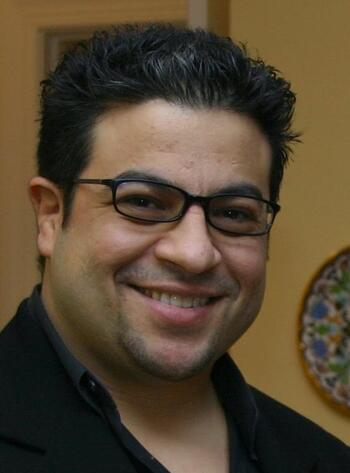
Bassam Haddad is Director of the Middle East Studies Program and Associate Professor in the Department of Public and International Affairs at George Mason University, and is Visiting Professor at Georgetown University. He is the author of Business Networks in Syria: The Political Economy of Authoritarian Resilience (Stanford University Press, 2011). Haddad is currently editing a volume on Teaching the Middle East After the Arab Uprisings, a book manuscript on pedagogical and theoretical approaches. His most recent books include two co-edited volumes: Dawn of the Arab Uprisings: End of an Old Order? (Pluto Press, 2012) and Mediating the Arab Uprisings (Tadween Publishing, 2013). Haddad serves as Founding Editor of the Arab Studies Journal a peer-reviewed research publication and is co-producer/director of the award-winning documentary film, About Baghdad, and director of the critically acclaimed film series, Arabs and Terrorism, based on extensive field research/interviews. More recently, he directed a film on Arab/Muslim immigrants in Europe, titled The "Other" Threat. Haddad is Co-Founder/Editor of Jadaliyya Ezine and serves on the Editorial Committee of Middle East Report. He is the Executive Director of the Arab Studies Institute, an umbrella for five organizations dealing with knowledge production on the Middle East and Founding Editor of Tadween Publishing.


This event is co-sponsored by The Markaz: Resource Center at Stanford University.


[[{"fid":"221861","view_mode":"crop_870xauto","fields":{"format":"crop_870xauto","field_file_image_description[und][0][value]":"Bassam Haddad January 21","field_file_image_alt_text[und][0][value]":"","field_file_image_title_text[und][0][value]":"","field_credit[und][0][value]":"","field_caption[und][0][value]":"","field_related_image_aspect[und][0][value]":"","thumbnails":"crop_870xauto"},"type":"media","attributes":{"width":"870","class":"media-element file-crop-870xauto"}}]]


CISAC Central Conference Room
Encina Hall, 2nd Floor
616 Serra St
Stanford, CA 94305

Bassam Haddad Associate Professor George Mason University
Seminars
News Type
News
Date
Paragraphs

A day after President Obama's address on the San Bernardino shootings, FSI Senior Fellow Larry Diamond speaks with Michael Krasny of NPR News on the U.S. response to global terrorist threats. In addition to a unified, international coalition, Diamond believes one of the keys to defeating ISIS lies with empowerment of the people of Iraq and Syria, addressing the need for political change in the region. Diamond was accompanied by Jessica Stern, research professor at Boston University and Shibley Telhami, senior fellow at the Center for Middle East Policy at the Brookings Institution.

Hero Image
21870887685 3479207ce9 o
All News button
1
News Type
News
Date
Paragraphs


On November 17, CDDRL’s Program on Arab Reform and Democracy (ARD) hosted Lina Khatib, a senior research associate with the Arab Reform Initiative, for a special talk on the Syrian crisis. Khatib was a co-founder of the ARD Program and managed its research agenda for four years before leaving CDDRL to lead the Carnegie Middle East Center in Beirut.

After conducting extensive fieldwork on the Syrian-Turkish border, Khatib provided a detailed analysis of ISIS’ origins and how they are benefitting from the unresolved crisis in Syria. Khatib also weighed in on the refugee crisis, as well as the regional rivalries that are using Syria as a proxy to exert themselves militarily. Khatib argued that a military solution to solving the ISIS problem is not the right approach, and encouraged the international community to begin engaging different members of the Syrian opposition, and rethinking their approach to international diplomatic negotiations.


Photo Album

Hero Image
dsc 0158
All News button
1
News Type
News
Date
Paragraphs

On November 10, CDDRL and the WSD Handa Center for Human Rights and International Justice welcomed Human Rights Watch's Director of Emergencies Peter Bouckaert and Sareta Ashraph, senior analyst on the UN Commission of Inquiry on the Syrian Arab Republic, for a discussion on the ongoing human rights and refugee crises in Syria. The talk was moderated by Stanford Law School's Beth Van Schaack, Leah Kaplan Visiting Professor in Human Rights.


Photo Album

Hero Image
22971714255 30876bbbb8 o
Human Rights Watch's Peter Bouckaert (left) and Sareta Ashraph (right), senior analyst at the UN Commission of Inquiry for the Syria, with Stanford Law School's Beth Van Schaack.
Christian Ollano
All News button
1
News Type
News
Date
Paragraphs

In a recent piece with Stanford News, FSI Senior Fellow Kathryn Stoner remarks on recent Russian military interventions in the Syrian conflict, suggesting that this re-engagement with the Middle East is a signal to Western powers of Putin's aim to become a global power. To read more, please click here

Hero Image
syria news (Photo: eXpose / Shutterstock)
All News button
1
-

**To RSVP, please email Jessie Brunner at jbrunner@stanford.edu.**

[[{"fid":"221010","view_mode":"crop_870xauto","fields":{"format":"crop_870xauto","field_file_image_description[und][0][value]":"","field_file_image_alt_text[und][0][value]":"","field_file_image_title_text[und][0][value]":"","field_credit[und][0][value]":"","field_caption[und][0][value]":"","field_related_image_aspect[und][0][value]":"","thumbnails":"crop_870xauto"},"type":"media","attributes":{"width":"870","class":"media-element file-crop-870xauto"}}]]
Abstract

As the protracted and chaotic conflict in Syria continues into its fifth year, Syrians of all backgrounds are being subjected to gross human rights violations. A growing number of parties to the conflict, including the Government and the Islamic State, display disregard for international legal conventions and employ tactics such as sexual violence, murder, and torture that have resulted in mass civilian casualties, large-scale displacement, and the destruction of Syria’s cultural heritage.


Peter Bouckaert

Peter Bouckaert is Human Rights Watch’s emergencies director, coordinating the organization’s response to major wars and other human rights crises. A Belgian-born Stanford Law School graduate, Bouckaert has conducted fact-finding missions around the world, including currently documenting Syrian refugees in Europe.

Sareta Ashraph

Sareta Ashraph specializes in international criminal, humanitarian, and human rights law and has served since 2012 as the Senior Analyst on the UN Commission of Inquiry on the Syrian Arab Republic, investigating and reporting on violations of international law in the context of ongoing events in Syria.


To RSVP, please email Jessie Brunner at jbrunner@stanford.edu.

Peter Bouckaert Director, Emergencies, Human Rights Watch
Sareta Ashraph Senior Analyst, UN Commission of Inquiry on the Syrian Arab Republic
Seminars
-

Abstract:

The uprisings that spread across the Middle East in 2011 created new hope for democratic change in the Arab world.  Four years later, the euphoria that greeted the Arab uprisings has given way to a far more somber mood, a recognition of the limits of mass protests to bring about political change, and acknowledgement that the region's entrenched authoritarian regimes are more resilient than many protesters imagined. Yet in responding to the challenge of mass politics, authoritarian regimes in the Middle East have not simply shown their resilience. In adapting to new challenges they have also changed, giving rise to new and more troubling forms of authoritarian rule, suggesting that the turmoil of recent years may be only the beginning of an extended period of political instability, violence, and repression in many parts of the Middle East.

Speaker Bio:

heydemann photo Steven Heydemann

Steven Heydemann serves as the vice president of Applied Research on Conflict at United States Institute of Peace. Heydemann is a political scientist who specializes in the comparative politics and the political economy of the Middle East, with a particular focus on Syria. His interests include authoritarian governance, economic development, social policy, political and economic reform and civil society. From 2003 to 2007, Heydemann directed the Center for Democracy and Civil Society at Georgetown University. From 1997 to 2001, he was an associate professor in the department of political science at Columbia University. Earlier, from 1990-1997, he directed the Social Science Research Council’s Program on International Peace and Security and Program on the Near and Middle East. Heydemann is the author of Authoritarianism in Syria: Institutions and Social Conflict, 1946-1970 (Cornell University Press, 1999), and editor of Networks of Privilege in the Middle East: The Politics of Economic Reform Revisited, (Palgrave Press, 2004), and War, Institutions and Social Change in the Middle East (University of California Press, 2000).

This event is co-sponsored by the Arab Studies Institute


[[{"fid":"217528","view_mode":"crop_870xauto","fields":{"format":"crop_870xauto","field_file_image_description[und][0][value]":"Steven Heydemann talk flyer","field_file_image_alt_text[und][0][value]":"","field_file_image_title_text[und][0][value]":"","field_credit[und][0][value]":"","field_caption[und][0][value]":"","field_related_image_aspect[und][0][value]":"","thumbnails":"crop_870xauto","pp_lightbox":false,"pp_description":false},"type":"media","attributes":{"height":506,"width":870,"class":"media-element file-crop-870xauto"}}]]

Goldman Conference Room
4th Floor East Wing E409
Encina Hall
616 Serra Street
Stanford, California 94305

Steven Heydemann Vice President, Applied Research on Conflict USIP
Seminars
Subscribe to Syria